When a foreign-trade company chooses an AI search visibility partner, the first thing to look at is not how well the other side packages concepts, but whether it can genuinely connect English product terms, buyer questions, product page evidence, technical accessibility, and review metrics. If your website faces overseas buyers and sells products such as custom metal parts, LED flood light, packaging machine, medical probe, cnc machining parts, ceramic dinnerware, waterproof connector, industrial valve supplier, or private label activewear manufacturer, the key question in judging an outside team is not whether it can talk about GEO, but whether it can make your website easier to understand, quote, and compare across AI answers, Google Search, product data pages, and the real inquiry path.
This article is not meant to make you buy a particular service right away; it offers a set of screening criteria for export manufacturers, production-oriented companies, and trading companies in China. You can use it to evaluate an in-house team, an outside partner, a content consultant, or a technical consultant, and you can also use it to check whether your existing foreign-trade website has the basic conditions needed to appear in AI answers. A good partner will first ask about your product lines, target countries, typical purchasing questions, English inquiry terms, current pages, and data access; an immature team tends to talk about concepts, tools, and scores first, yet cannot explain why your product pages fail to be understood correctly by AI or Google.
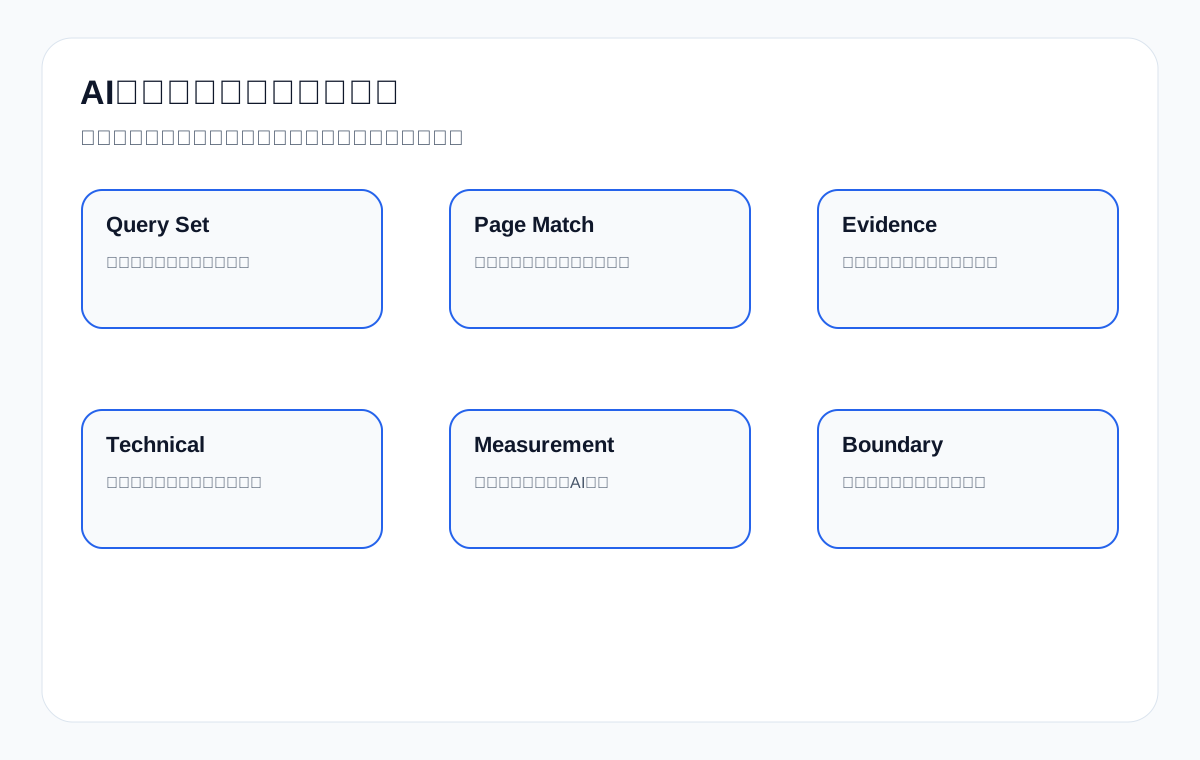
2. Benchmarking against the current Top1 and authoritative references: what they got right and what we need to add
This round benchmarked the current English search results and authoritative content related to “AI search visibility agency / how to choose GEO agency.” The leading pages we could see generally do three things well. First, they acknowledge that GEO and traditional Google optimization are not completely separate; GEO builds on pages that can be crawled and understood, on credible sources, and on structured content. Second, they stress that a service team needs the ability to monitor AI answers, brand mentions, citation rates, competitor co-occurrence, and multi-platform sampling. Third, they warn companies to be wary of approaches that only swap terminology, fail to explain their method, and promise definite results.
However, most of these pages target Western SaaS companies, B2B software firms, marketing teams, or local service businesses, and they lack the practical scenarios that Chinese export companies care about most: how to build a query set from English product terms, how to revise product and category pages, how to make certificates and specification tables easier for AI to cite, how to review inquiry quality, how to prioritize different product lines, and how to run a first-round diagnosis when you do not have full data access. The advance this article makes is to turn “how to choose an AI visibility partner” into a checklist that export companies can take directly to ask questions, assign scores, and use for acceptance.
Top1/authoritative reference comparison card
| Reference source | Strengths | Common gaps | How this article fills them |
|---|---|---|---|
| Andava: How to Choose the Best GEO Agency | Proposes evaluation points such as baseline testing, semantic strategy, and AI SERP share | Weak on export product pages, inquiry terms, and B2B factory scenarios | Adds English product term query sets, page roles, evidence modules, and inquiry review |
| WebFX: How to Choose a GEO Agency in 2026 | Stresses that AI visibility must be built on a search foundation and lists red flags and question checklists | Mostly general marketing judgment, missing the evidence structure of manufacturing products | Adds specification tables, certificates, application pages, downloads, and RFQ fields |
| ARGEO: 8 Questions to Ask Before Hiring a GEO or AI Visibility Agency | Focuses on methodology, multi-platform monitoring, and signal consistency | Does not explain how export companies can verify that the other side understands the product | Designs a 30-day trial collaboration process and a supplier question script |
| Gravton: How to Choose the Right GEO Agency | Stresses avoiding rebranded teams and focuses on competitive position in AI answers | Not detailed enough on website page assets and the inquiry path | Connects page mapping, AI citations, and GSC/GA4/inquiry sources |
| Google Search Central documentation | Provides reliable boundaries for crawling, indexing, structured data, and helpful content | Does not directly tell companies how to screen an outside team | Turns technical boundaries into questions export companies can ask and acceptance metrics |
3. First check whether the team understands the export purchasing path, not just how well it packages concepts
A foreign-trade company’s website is not just a content showcase. Overseas buyers typically go through several stages: discovering a problem, comparing options, screening suppliers, confirming specifications, verifying certificates, and discussing samples or quotes. If AI search visibility cannot enter these stages, it is hard for it to create business value. For example, when a buyer asks “which packaging machine is suitable for powder filling,” the AI needs to see your application page, product specifications, suitable materials, capacity range, and video or image descriptions. If all it finds is a general introduction, the answer system will struggle to treat you as a credible source.
So when choosing a partner, the first question is not “Have you done GEO before?” but “How would you break down our overseas purchasing path?” A reliable team will break target markets, customer types, product specifications, application scenarios, certification requirements, delivery lead times, and common inquiry questions into a query set, then use that query set to decide which content belongs on product pages, which on category pages, which deserves an application page, and which should become a resource page or FAQ.
Export purchasing path and content asset mapping table
| Purchasing stage | What the buyer asks | Example in export English | Which pages should answer |
|---|---|---|---|
| Problem discovery | What scenarios is this product suitable for | LED flood light for warehouse aisle | Application pages, category pages, guide pages |
| Option comparison | How to choose between materials, models, and processes | stainless steel vs brass waterproof connector | Comparison pages, product pages, FAQ |
| Capability verification | Can they produce to drawings, standards, and certificates | cnc machining parts ISO 9001 tolerance | Process pages, certificate pages, quality pages |
| Before requesting a quote | How are MOQ, lead time, samples, and packaging confirmed | private label activewear sample lead time | RFQ pages, process pages, product pages |
| Risk reduction | Are after-sales, testing, and export experience reliable | industrial valve supplier pressure test report | Resource pages, test documentation, case reviews |
If an outside team’s examples always revolve around its own industry, its own services, and its own tools rather than your products, your buyers, and your inquiry path, that suggests it has not yet entered your business context. Export companies should pay particular attention to this: AI search visibility is not about working a few industry buzzwords into a handful of articles, but about making product evidence, the company entity, page structure, and purchasing questions form a consistent information network.
4. Capability one: can the team build an English purchasing query set
The query set is the starting point of AI search visibility work. Without it, later monitoring, content rewriting, page mapping, and review easily lose focus. The query set an export company needs is not just a keyword list, but a library of test questions made up of product terms, application terms, question terms, comparison terms, certificate terms, inquiry terms, brand terms, and competitor terms.
Take custom metal parts as an example. An ordinary keyword might be only custom metal parts manufacturer. But questions closer to a purchasing decision would include: custom metal parts for automotive prototype, custom metal parts tolerance chart, custom metal parts MOQ China, custom aluminum parts anodizing supplier, and how to send drawing for custom metal quote. AI answers are often more readily triggered by these specific questions, because users describe their needs more fully in an AI conversation.
English purchasing query set scoring table
| Query type | Acceptable performance | Unacceptable performance | Questions the company can follow up with |
|---|---|---|---|
| Product terms | Covers core products, materials, models, processes, and industry naming | Lists only a few broad terms with no purchasing context | Ask them to provide 50 English question terms related to our products |
| Application terms | Can be split by industry, scenario, equipment, and environment | Only writes product names, no usage scenarios | Which pages answer the warehouse, marine, medical, and food grade scenarios |
| Comparison terms | Covers material, specification, supplier, and solution comparisons | No comparison intent | Which alternatives will buyers compare us with in AI |
| Evidence terms | Includes certification, testing, specifications, delivery, and samples | Focuses only on traffic terms | Which certificates and specifications should be stated publicly |
| Inquiry terms | Can connect RFQ fields with sales questions | Disconnected from real inquiries | Which queries are most likely to bring valid inquiries |
A mature partner will produce a first version of the query set in the first week and explain why each query matters, which page type it corresponds to, and which metric will be used to review it. It will not treat the query set as a one-off document; it will keep adjusting it based on GSC impression terms, GA4 landing pages, inquiry content, AI answer sampling, and sales feedback.
5. Capability two: can the team map the query set to page roles
AI visibility does not rely on articles alone. On an export website, the pages that actually carry the purchasing decision are usually category pages, product pages, application scenario pages, resource pages, quality pages, FAQ pages, and inquiry pages. If a partner only recommends “write more articles” but cannot judge which type of page should answer which question, you will soon see duplicated content, confused page intent, and a broken inquiry path.
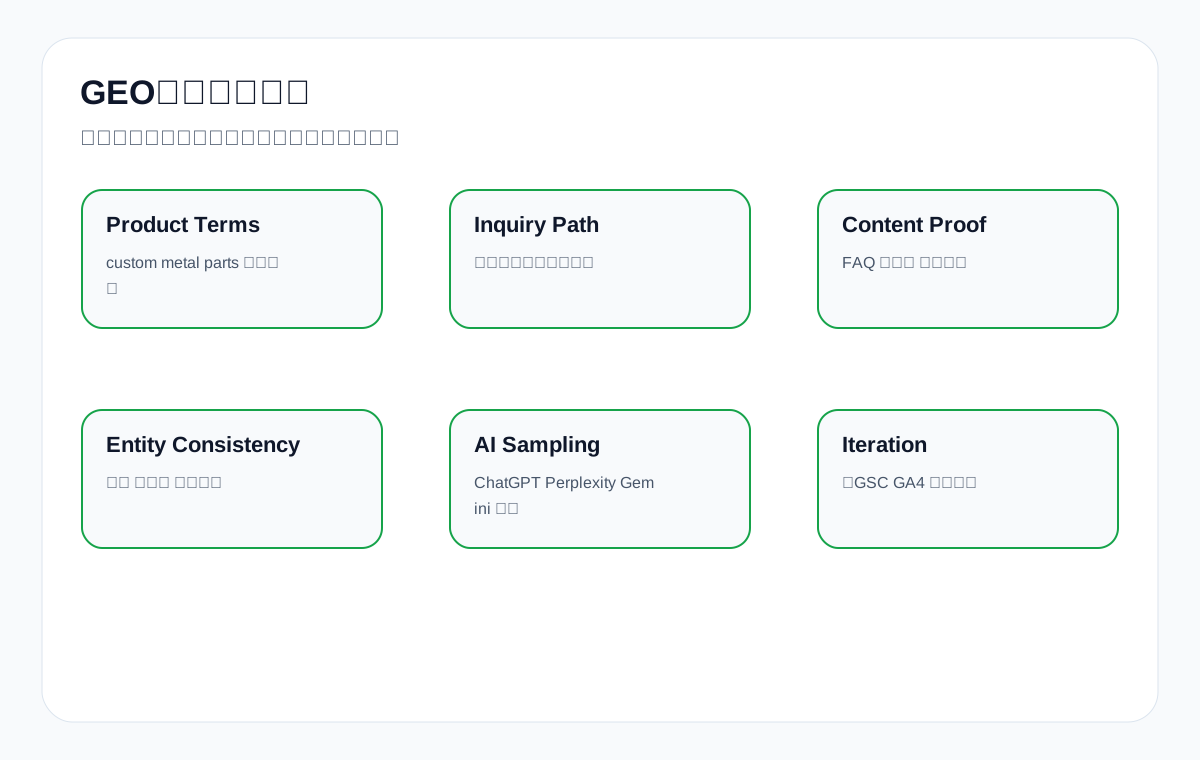
Query-to-page-role mapping matrix
| Query example | Intent type | Priority page | Modules to add |
|---|---|---|---|
| waterproof connector IP67 outdoor lighting | Application and certificate confirmation | Application page + product page | IP rating explanation, test conditions, applicable environments, FAQ |
| packaging machine for powder filling | Solution selection | Category page + application page | Material types, capacity range, equipment comparison, video explanation |
| ceramic dinnerware lead free certificate | Quality verification | Resource page + product page | Test standards, certificate downloads, export market notes |
| medical probe manufacturer OEM | Supplier screening | Process page + about page + inquiry page | Production capacity, cleanliness requirements, quality process, RFQ fields |
| private label activewear manufacturer low MOQ | Commercial terms confirmation | Category page + custom process page | MOQ, fabrics, sampling lead time, packaging options |
Page role mapping also helps a company decide investment priorities. For example, if a category page already gets impressions but has a low click-through rate, revise the title, summary, and above-the-fold answer first; if a product page gets clicks but no inquiries, add a specification table, application scenarios, an RFQ entry point, and FAQs first; if a resource page can be cited by AI but has no guided path, add internal links and inquiry prompts first. If a partner cannot explain these differences, it will struggle to turn AI visibility into reviewable growth actions.
6. Capability three: can the team add the evidence modules AI is more likely to cite
AI answers favor information that is clear, extractable, and verifiable. For an export company, evidence modules are not fancy copy but definition paragraphs, specification tables, specification ranges, material descriptions, test standards, certification explanations, application limits, delivery processes, FAQs, and download entry points. A qualified team should be able to tell you which pages lack definitions, which lack specifications, which lack application scenarios, and which lack risk disclosures.
List of citable evidence modules
| Module | Suitable pages | Example content | Why AI/buyers need it |
|---|---|---|---|
| Definition paragraph | Category pages, guide pages | What is CNC machining parts for prototype production? | Helps AI quickly identify the page topic and entity |
| Specification table | Product pages, category pages | Material、Tolerance、Surface finish、MOQ、Lead time | Makes comparison and structured data extraction easier |
| Application limits | Application pages, FAQ | IP67 connector can resist temporary immersion but not all chemical environments | Avoids exaggeration and improves credibility |
| Certificate explanation | Resource pages, quality pages | The scope of application of CE、RoHS、ISO 9001、FDA food contact | Buyers need to verify compliance risk |
| RFQ fields | Inquiry pages, product pages | Drawing、material、quantity、surface treatment、target market | Connects content needs to valid inquiries |
| Review metrics | Operations pages, internal dashboards | GSC query、GA4 event、inquiry source、AI citation sample | Judges whether content produces business signals |
To judge whether a team has evidence module capability, ask them to look at one of your product pages on the spot. If the page is for a waterproof connector and they only suggest “increase keyword density,” their value is limited; if they can point out that it lacks an IP rating explanation, wire diameter range, terminal material, operating temperature, application scenarios, certificate explanations, installation notes, and inquiry fields, they are closer to the real purchasing decision.
7. Capability four: does the team understand technical accessibility, not just content writing
AI search visibility still depends on basic technical conditions. Systems such as Google, Bing, and Perplexity all need to understand a company through web pages, indexes, links, structured data, and public sources. If a page’s main content depends on interactions that cannot be crawled, images have no text descriptions, important resources have no accessible links, and product pages have no clear headings or internal links, then no amount of content will be easy to find.
An export company does not need to handle every technical detail itself, but when choosing a partner it should confirm that the other side can at least check four categories of problems: crawling and indexing, page rendering, structured data, and internal links. For example: is the product list crawlable, is the specification table text, do images have alt text, are downloads accessible, is the canonical correct, does the sitemap include important pages, and do product pages have Breadcrumb, Product, or FAQ structured data.
Technical accessibility question checklist
| Check item | How the company can ask | What a reliable answer should include |
|---|---|---|
| Crawling and indexing | Which important pages have not been discovered or indexed by Google? | GSC coverage, sitemap, robots, noindex, and canonical checks |
| Page rendering | Does the main content only appear after interaction? | Text visibility, lazy loading, JS rendering, mobile checks |
| Structured data | Can products, FAQ, and organization information be understood by machines? | Schema types, field completeness, validation results, error fixes |
| Internal links | How do buyers and crawlers get from a guide to a product page? | Paths between related products, application pages, resource pages, and inquiry pages |
| Speed and experience | Does the above-the-fold experience affect overseas users opening the site and submitting inquiries? | Core page speed, image size, form usability, mobile experience |
One boundary should be stressed here: technical fixes cannot guarantee that a particular AI system will cite you, but they can reduce the problem of “having good content that simply cannot be found reliably.” A mature team will write technical issues into a priority list rather than calling every issue equally urgent.
8. Capability five: can the team handle company entity consistency
When AI answers mention a company, they draw on the website, third-party materials, brand name, product lines, address, contact details, certificates, social media, industry directories, and other public sources. If the company name, English brand, product lines, country markets, and certificate information are written inconsistently across pages, identification easily becomes confused. A particularly common problem for export companies is this: the official website uses one English name, Alibaba.com uses another, LinkedIn uses an abbreviation, and the product PDF still shows an old address.
Entity consistency checklist
| Entity information | Common problem | Expression to standardize | Review method |
|---|---|---|---|
| Company English name | Capitalization and suffixes differ across platforms | Legal name + brand name + common abbreviation | Check item by item across the website, PDFs, social media, and directories |
| Product lines | Category names are too broad or translated inconsistently | Keep LED flood light / solar street light / high bay light separate | See whether AI answers can identify the main business scope |
| Certificates and qualifications | Only images are posted, with no text explanation | ISO 9001 for quality management, RoHS for material compliance | Two-way links between resource pages and product pages |
| Contact details | Country codes, emails, and addresses are inconsistent | Standardize phone, email, address, and inquiry entry points | Spot-check company information in Google and AI answers |
| Target markets | Pages do not state the main export regions | Experience in markets such as North America、EU、Middle East | Check whether inquiry sources match the target markets |
A qualified team will not treat entity consistency as an optional detail. It will ask you to provide the company’s English name, brand name, product catalog, certificates, target markets, major trade shows, frequently used email addresses, and links to public materials, and it will organize this information onto key pages. For AI visibility, clear and consistent entity information is a long-term asset.
9. Capability six: can the team design a reviewable AI answer sampling method
AI visibility cannot be judged from a single screenshot. Answers can change across platforms, times, and phrasings. The mature approach is to build a fixed query set and sample it on a regular cycle across ChatGPT, Perplexity, Gemini, Google AI Overviews, or other relevant entry points, recording whether the brand appears, whether the official website is cited, whether competitors are mentioned, whether product attributes in the answer are accurate, and whether any misinformation appears.
An export company can ask a partner to provide a sampling table rather than just showing a nice-looking score. At minimum, the sampling table should record the query, platform, date, answer summary, brands mentioned, sources cited, competitor co-occurrence, errors, and recommended actions. Only then can AI visibility move from “did we seem to show up” to a sustainable review.
AI answer sampling record table
| Field | Record example | What it tells you |
|---|---|---|
| Query | best industrial valve supplier for steam system | Corresponds to a real buyer question |
| Platform and date | Perplexity / 2026-05-26 | Prevents a single result from standing in for a long-term trend |
| Whether the brand is mentioned | Two competitors mentioned, our site not mentioned | Judges entity visibility |
| Whether the official website is cited | An industry directory was cited, the product page was not | Judges whether the website’s evidence is sufficient |
| Errors in the answer | The pressure rating was written incorrectly | Specifications and resource pages need to be added |
| Next action | Improve the product specification table and add internal links to application pages | Turns monitoring into page improvements |
Sampling frequency can start at once a week, focusing on 20 to 50 high-value queries. Do not try to cover thousands of queries at the start, because an export company first needs to validate the method: which queries matter most to inquiries, which pages are most likely to be cited, which competitors appear frequently, and which information AI misunderstands.
10. Capability seven: can the team review GSC, GA4, inquiries, and AI citations together
AI search visibility is not an isolated metric. For an export company, the ultimate question is whether it helps more qualified buyers understand you, trust you, and enter the inquiry path. For that reason, a review should combine at least four types of data: GSC queries and page impressions, GA4 landing pages and events, inquiry form fields and sources, and brand mentions and website citations in AI answers.
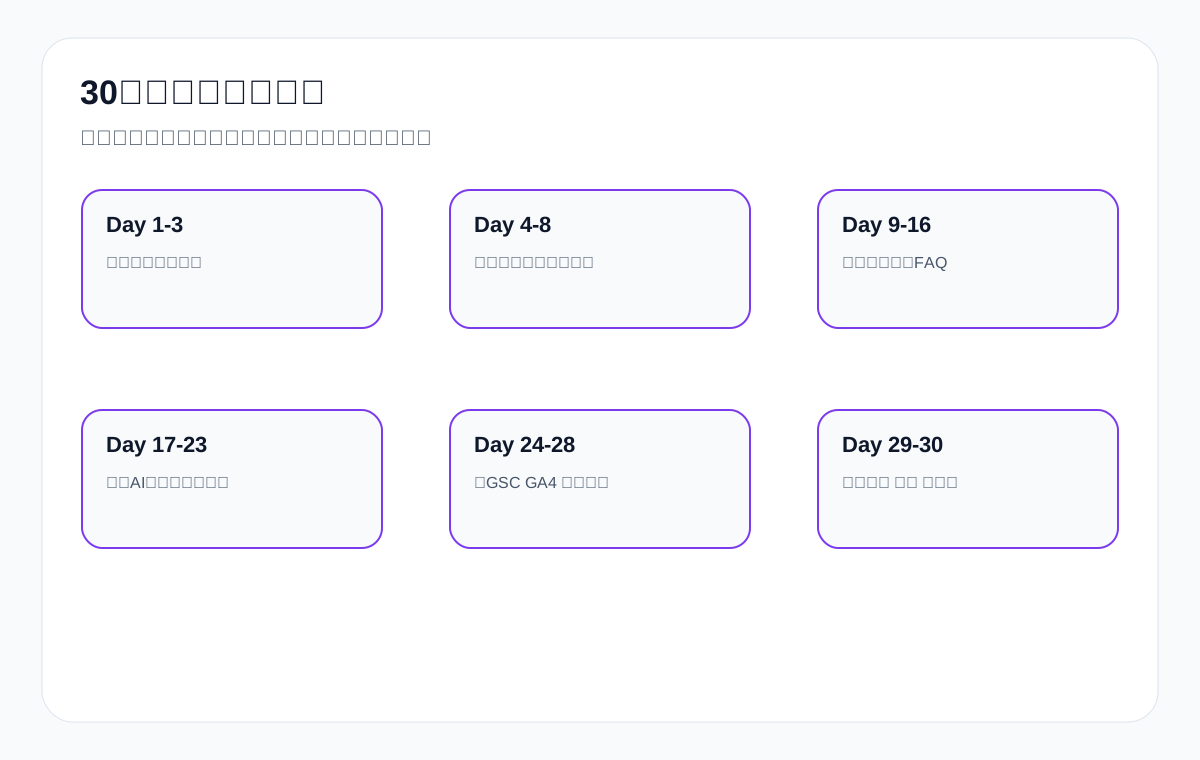
Combining four types of review metrics
| Metric source | What to look at | Corresponding action | What not to misread |
|---|---|---|---|
| GSC | Queries, impressions, clicks, pages | Adjust titles, FAQ, internal links, content depth | Do not look only at average position |
| GA4 | Landing pages, time on site, form events, download events | Optimize paths, resource entry points, and inquiry buttons | Do not treat every visit as a valid opportunity |
| Inquiry system | Product, quantity, country, application scenario, source | Work backward to high-value queries and page modules | Do not look only at inquiry volume |
| AI sampling | Brand mentions, website citations, competitor co-occurrence, errors | Add evidence, revise entity descriptions, add resource pages | Do not treat one screenshot as a long-term result |
| Sales feedback | Questions customers ask often, reasons quotes fail | Add FAQ, terms explanations, and qualifying fields | Do not ignore offline or email feedback |
If a partner only provides an “AI visibility score” but cannot explain the queries, pages, and inquiry relationships behind it, a company will find it hard to decide what to do next. A better review format is: which queries got impressions this month, which pages were clicked, which inquiries came from relevant pages, whether AI answers have started citing the website, which questions competitors appear in, and which page modules should be added next month.
11. Capability eight: does the team define risk boundaries and avoid promises it cannot control
Neither AI search nor Google Search is a system that a company or an outside team can fully control. Any claim that promises a definite ranking, definite inquiries, or definite AI recommendations should be treated with caution. A reliable team will clearly separate controllable work from uncontrollable results: what is controllable is page quality, technical accessibility, entity consistency, evidence modules, query set monitoring, and review cadence; what is uncontrollable is platform algorithms, competitor actions, shifts in market demand, and the specific output of any single AI answer.
Risk boundary assessment table
| Statement | Risk level | How the company should respond |
|---|---|---|
| We can guarantee that a certain query will always surface a fixed result | High risk | Ask them to explain platform changes, the sampling method, and uncontrollable factors |
| We first build a query set and a baseline, then improve and review page by page | Reasonably sound | Ask for a sample table and a 30-day validation plan |
| Writing more content alone will get you into AI answers | High risk | Follow up on product evidence, technical accessibility, and citation sources |
| First check product pages, resource pages, entity information, and structured data | Reasonably sound | Ask them to list priorities and the path of impact |
| The same script works for every industry | High risk | Ask them to give on-the-spot examples using your product terms and inquiry terms |
Before signing, a company should write the boundaries clearly: which pages will be changed, which queries will be monitored, which data needs to be provided, which metrics will be reviewed monthly, and which results are only trend observations. This protects both the company’s budget and the working relationship, and it prevents uncontrollable results from becoming later disputes.
How to verify official evidence, delivery acceptance, and service boundaries
When choosing an AI search visibility service team, the biggest risk is listening only to concepts.
Concepts that sound smooth do not mean the deliverables can be rechecked. A genuinely useful collaboration plan puts the query set, pages, entity materials, crawl status, Search Console, GA4, and AI answer sampling into the same table. Every item can state its source, and it can also state what it does not prove.
If a new export website has not yet produced query or page row data in Search Console, the report should say so clearly: there is currently no search performance row data to analyze, so the first step is only to establish a monitoring baseline. This stage must not be written up as keyword gains or losses, and it must not be written up as some AI answer having stably adopted the website’s content.
Official resources and team deliverable field mapping table
| Official resource | Deliverable field it can support | What to check at acceptance |
|---|---|---|
| Google Search Central: AI features and your website | Whether pages are suitable for Google to crawl, index, and understand; whether AI features still depend on baseline search quality. | Whether key pages are accessible, indexable, and clearly themed; the report must not present AI visibility as a directly controllable result. |
| Search Console Help: Performance report | Clicks, impressions, CTR, average position, queries, pages, country, and device dimensions. | The delivery report must state the date range, filter conditions, and export method; when there is no row data, it must say “no analyzable data at this time.” |
| Google Analytics Help: About events | On-site behaviors such as inquiry button clicks, form submissions, email clicks, and WhatsApp clicks. | Event naming, trigger conditions, and conversion definitions must be recheckable; you cannot just write “traffic improved.” |
| OpenAI Platform: Bots | robots and log checks related to OpenAI crawl access. | robots.txt and server logs must not unintentionally block key crawls; if restrictions are needed, the business reason must be stated. |
| Bing Webmaster Blog: AI Performance | Observation definitions related to AI Performance in Bing Webmaster Tools. | If the account can see this module, record AI impressions, citations, and clicks; if it is not available yet, list it as a future observation item. |
| IndexNow: Documentation | A URL submission channel after key pages are updated. | Whether pages are submitted after updates and whether submissions return normally; it only aids discovery and does not directly create search performance. |
Service team deliverable acceptance checklist
| Deliverable | Acceptable standard | Unacceptable signal |
|---|---|---|
| English purchasing query set | Grouped by product terms, scenario terms, question terms, brand terms, and competitor terms, with the purpose of each group explained. | Only a string of popular terms is given, with no explanation of the page mapping. |
| Page role mapping | Each query group corresponds to the homepage, a category page, a product page, an article page, or an FAQ module. | Every term is assigned to an article, with no tasks for product pages or category pages. |
| Entity and evidence materials table | Lists the company name, brand, factory capabilities, certificates, product specifications, service regions, and publicly shareable proof materials. | Only says “the company is strong,” with no verifiable materials. |
| Technical accessibility check | Checks index status, robots, canonical, structured data, core page links, and mobile readability. | Only delivers content drafts, without checking whether pages can be crawled and understood. |
| AI answer sampling records | A fixed query set, platform, date, answer screenshots, whether the official website was cited, and which page was cited. | Only says “AI can see it,” with no sampling records. |
| Monthly review table | Puts Search Console, GA4, inquiries, AI sampling, and page changes into the same table. | The report piles up screenshots without explaining what to change next. |
Delivery boundaries: methods and evidence can be delivered; uncontrollable results cannot
| Can be written into a contract or acceptance form | Should not be written as a result promise |
|---|---|
| Build a query set, page mapping, monitoring template, and monthly review cadence. | A certain AI answer will definitely use the website’s content. |
| Add page facts, specifications, certificates, FAQ, structured data, and internal links. | The same answer will appear for every query term. |
| Check Search Console, GA4, robots, logs, and Bing Webmaster Tools. | Search performance row data will definitely appear in the short term. |
| Keep a record of every page change, submission, sampling run, and observation conclusion. | Writing uncontrollable visibility as a service result. |
So when you look at a partner, you can ask very specific questions: which table will you deliver? Which column comes from an official tool? Which column comes from manual sampling? Which column is only an observation? If these questions cannot be answered clearly, then no matter how polished the proposal looks, sign it more slowly.
If you want to break this down further, read this article together with the AI search visibility partner capability checklist and the GEO diagnosis deliverable checklist. One looks at the people, one looks at the deliverables, and one looks at the diagnosis fields.
12. Supplier screening scorecard: how to assign 100 points
If you need to compare several partners quickly, you can use the 100-point scorecard below. It is best to have each one spend 20 to 30 minutes giving a preliminary walkthrough of one of your product lines, rather than just looking at a generic proposal. When scoring, do not judge only by fluency; look at whether they can describe your products, pages, evidence, and review path.
100-point scorecard for an AI search visibility partner
| Dimension | Points | Excellent performance | Signal for deducting points |
|---|---|---|---|
| Understanding of export purchasing | 15 | Can break down purchasing stages, product terms, inquiry questions, and application scenarios | Talks only about traffic and concepts, never asks about product details |
| Query set capability | 15 | Can build an English purchasing question library and prioritize it | Only provides a list of broad terms |
| Page mapping capability | 15 | Can determine the division of labor among product pages, category pages, application pages, and resource pages | Suggests writing an article for every question |
| Evidence module capability | 15 | Can add specification tables, certificate explanations, FAQ, and RFQ fields | Only changes titles and a few paragraphs of copy |
| Technical judgment capability | 15 | Can check crawling, indexing, structured data, and internal links | Does not look at the technical foundation at all |
| Review capability | 15 | Can combine GSC, GA4, inquiries, and AI sampling | Only provides a one-off report or a single score |
| Risk boundaries | 10 | Makes no uncontrollable promises and can explain the validation cycle | Promises definite results or refuses to explain the method |
Generally speaking, a score below 60 is not a reason to enter a formal partnership; 60 to 75 allows a small trial collaboration; 75 to 85 is suitable for starting with one product line; and only above 85 should you consider covering more pages. Scoring is not about formalities; it is about helping a company grasp the key questions during the conversation.
13. The 18 questions you must ask before signing
- How would you build an English purchasing query set for custom metal parts or our core products?
- Will the query set distinguish product terms, application terms, comparison terms, certificate terms, inquiry terms, and brand terms?
- How do you decide whether a question should be answered by a product page, a category page, an application page, or a resource page?
- Can you point out on the spot which evidence modules one of our product pages is missing?
- Will you check whether Google can crawl and index the key pages?
- Will you check structured data, internal links, image alt text, download links, and mobile experience?
- Which platforms, how many queries, and what frequency will the AI answer sampling cover?
- Will you record competitor co-occurrence, website citations, answer errors, and next actions?
- How will you put GSC, GA4, inquiry sources, and AI sampling into the same review table?
- If a page gets impressions but no clicks, what will you change first?
- If AI mentions competitors but not us, how will you diagnose it?
- If inquiry volume rises but quality falls, how will you adjust the pages?
- Will you ask us to provide our product catalog, certificates, sales questions, and target markets?
- What will a 30-day trial collaboration deliver, and which results are only trend observations?
- What exactly do you not promise?
- If we do not have full data access, what will you do in the first round?
- How do you avoid writing content as a technical explanation for peers rather than decision advice for buyers?
- How do you ensure the examples use export English product terms rather than generic marketing industry words?
The value of these questions is that they get close to real capability. A mature team is usually not afraid of follow-up questions, because its work inherently requires product materials, page diagnostics, and review metrics; an immature team tends to stay at the conceptual level and cannot ground the questions in pages and business.
14. Red flags: be cautious when these appear
Common red flags
| Red flag | Why it is dangerous | How the company should handle it |
|---|---|---|
| Does not ask about product lines or target markets | Cannot build an effective query set | Ask them to use your products as examples |
| Only shows tool screenshots | A score cannot represent actionable page improvements | Ask them to explain the queries, pages, and metric sources |
| Suggests writing all content as long articles | May overlook the value of product pages and resource pages | Ask for page role mapping |
| Promises definite results | Ignores platform uncertainty | Ask them to clearly separate controllable work from uncontrollable factors |
| Does not examine inquiry quality | May bring low-value traffic | Ask them to connect form fields with sales feedback |
| Examples are detached from export products | Does not understand buyer language | Ask them to break down a real English product term on the spot |
A red flag does not mean the other side definitely cannot be worked with; it reminds you not to invest on a large scale. You can start with a trial collaboration covering one product line, a dozen or so queries, and two or three pages, to see whether the other side can produce clear diagnostics and improvement suggestions.
15. The 30-day trial collaboration process: validate the method first, then scale up investment
For an export company trying AI search visibility for the first time, it is advisable to run a 30-day trial collaboration rather than covering the whole site from the start. The goal of the trial is not to prove a particular result immediately, but to verify whether the team has query set, page diagnosis, content evidence, technical check, and review capabilities.
30-day trial collaboration schedule
| Stage | Task | Deliverable | Acceptance focus |
|---|---|---|---|
| Days 1-3 | Confirm product lines, target markets, sales questions, and the query set | 20-50 English purchasing queries | Whether the queries are close to real purchasing contexts |
| Days 4-8 | Check key pages and technical accessibility | Page diagnosis table, issue priorities | Whether specific page problems are identified |
| Days 9-16 | Add evidence modules and FAQ | Update recommendations or body modules | Whether specifications, certificates, applications, and RFQ are added |
| Days 17-23 | AI answer sampling and competitor co-occurrence records | Sampling table, error points, citation sources | Whether answer changes can be explained |
| Days 24-28 | Combine GSC, GA4, and inquiry feedback | Review table, next-step list | Whether data is turned into page actions |
| Days 29-30 | Decide whether to continue, adjust, or pause | Collaboration recommendations and scope boundaries | Whether there is a clear priority order |
After the trial ends, if the other side can only provide a conceptual report with no page-level suggestions, query-level records, or next actions, it is not suitable to expand the scope. If the other side can make it clear which pages to change first, why to change them, and how to review the results, then the method is relatively reliable even if there is no obvious inquiry change in the short term.
16. What different types of export companies should focus on when choosing
Company type and selection focus
| Company type | Content difficulty | Which team capability to prioritize |
|---|---|---|
| Factory-type company | Many technical specifications but weak page presentation | Evidence modules, product page structure, resource page organization |
| Trading company | Many product lines with large differences | Query set grouping, category page division of labor, brand entity consistency |
| Custom manufacturing company | Inquiries depend on drawings and specifications | RFQ fields, process pages, sampling flow, and case boundaries |
| Consumer goods exporter | Many images and styles, many purchasing scenarios | Category pages, application scenarios, MOQ, and packaging descriptions |
| Equipment and machinery company | Long decision cycles and complex technical questions | Application pages, comparison tables, maintenance documentation, videos, and downloads |
For example, an equipment company selling packaging machines needs application scenarios, capacity, material compatibility, after-sales, and installation instructions even more; a company selling ceramic dinnerware needs material, glaze, food-contact standards, packaging, breakage rates, and target market explanations; a company making medical probes needs process boundaries, quality control, cleanliness requirements, and compliance explanations. When choosing a team, it is best to have them give examples using three of your product categories to see whether they can articulate the differences.
17. What materials the company needs to prepare internally
AI search visibility collaboration is not something an outside team completes on its own. An export company needs to prepare its product catalog, main product lines, target markets, typical inquiries, certificate materials, product images, technical specifications, FAQs, sales feedback, and existing data access. The clearer the materials, the easier it is for an outside team to write pages that read like a real purchasing advisor rather than a generic introduction.
Company material preparation checklist
| Material | Purpose | Minimum requirement |
|---|---|---|
| Product catalog | Build product terms and category page structure | English product names, models, materials, applications |
| Typical inquiries | Identify real purchasing questions | Emails or form questions with privacy removed |
| Certificates and test materials | Add credible evidence | Certificate names, scope of application, validity notes |
| Sales feedback | Judge inquiry quality | Common reasons for lost deals, closing terms, customer countries |
| Website data | Review impressions, clicks, and conversions | GSC, GA4, form events, or email sources |
| Competitor list | Build a baseline for comparing AI answers and Google | 3-10 competitor URLs, overseas or domestic |
If the materials are not yet complete, you can still start with one product line. For example, start with waterproof connector, organize 20 core English questions, 5 main models, 3 application scenarios, 2 certificate explanations, and one inquiry field table, and that is enough to start the first round of page diagnostics.
18. What to look at in the monthly review meeting after the collaboration starts
In the monthly review meeting, do not just listen to “how much content was produced this month.” A more effective review structure is: which queries were monitored this month, which AI answers changed, which pages Google showed, which pages brought visits or inquiries, which product terms showed new demand, and which questions need more materials.
Monthly review meeting agenda
| Agenda item | Key question | Output |
|---|---|---|
| Query set changes | Which English purchasing questions were added, removed, or reprioritized | Updated query list |
| Page performance | Which pages have impressions, clicks, time on page, and inquiry signals | Page action list |
| AI answer sampling | How brand, website, competitor, and error information changed | Citation and error correction list |
| Inquiry quality | Which pages and questions high-value inquiries come from | Content and form optimization suggestions |
| Next month’s priorities | Whether to change product pages, application pages, resource pages, or FAQ first | 3-5 specific tasks |
During the review, avoid looking at a single metric only. If AI answer citations increase but inquiries do not change, the page path may be weak; if inquiries increase but quality is low, the page may not provide enough qualifying information; if GSC impressions increase but clicks are low, the titles and summaries may not be clear enough; if customers keep asking the same question, the FAQ or resource pages are not good enough yet.
19. FAQ: common questions from export companies choosing an AI search visibility partner
Does an AI search visibility partner have to understand traditional Google optimization?
Yes. AI visibility is not a new island detached from web fundamentals. Crawling, indexing, page structure, internal links, structured data, content quality, and entity consistency still matter. The difference is that the review metrics now also include AI answer sampling, brand mentions, website citations, and competitor co-occurrence.
Can an export company start without much GSC data?
Yes, but lower your expectations. Start by using sales questions, product materials, competitor pages, and an AI answer baseline to build a first version of the query set. Once GSC has more impressions and clicks, use the real query terms to refine page titles, FAQ, and content structure.
Should I look at case studies first when choosing a team?
You can, but do not look only at screenshots. What matters more is having the other side explain the query set, page actions, review metrics, and uncontrollable factors in the case. Whether they can break down your product on the spot often says more about their capability than generic case studies do.
If the website does not appear in AI answers, does that mean the collaboration is ineffective?
You cannot judge from a single result. Look at the trend of a fixed query set across multiple platforms and multiple points in time, and combine it with Google impressions, page visits, inquiry sources, and competitor co-occurrence. A short-term absence of citations may mean insufficient evidence, an unclear entity, or pages that have not yet been reliably discovered.
Do all technical articles have to be very long?
Not necessarily. What matters is satisfying search intent and purchasing decisions. Core methodology, diagnostic guides, and high-value product topics can become long articles; contact pages, navigation pages, and pricing entry pages are better suited to clear conversion and trust explanations, and should not be padded with words.
How often should a partner review results?
At the beginning, we suggest reviewing queries and page actions once a week, with a formal review once a month. AI answers fluctuate, so a single result cannot represent a trend; periodic records are more valuable than one-off screenshots.
Should we change articles first or product pages first?
It depends on query intent. When buyers ask about specifications, certificates, MOQ, lead time, and application scenarios, product pages, category pages, application pages, and resource pages are usually more important; when the question is more about explaining a method or a selection guide, articles and topic pages are better suited to handle it.
How do you judge whether an outside team really understands export trade?
Have them give on-the-spot examples using your product terms, such as LED flood light, cnc machining parts, ceramic dinnerware, or packaging machine, and see whether they can describe the buyer’s questions, how the page should handle them, the evidence modules, and the inquiry fields.
Will AI search visibility replace Google organic search?
It should not be understood that way in the short term. A more realistic approach is to look at AI visibility, Google impressions, brand search, direct visits, and the inquiry path together. AI may change how people discover things, but web content, technical foundations, and credible evidence remain the underlying assets.
If the budget is limited, what is the minimum viable scope?
Choose one main product line, 20-50 English purchasing queries, 3-5 core pages, and a 30-day review cycle. Validate the query set, page diagnosis, evidence reinforcement, and sampling method first, then decide whether to expand to more product lines.
20. Final judgment: a reliable team makes the next step clear rather than just asking you to believe a concept
When an export company chooses an AI search visibility partner, the final test is one outcome: after the conversation, are you clearer about your English purchasing query set, page problems, evidence gaps, technical risks, and review method? If all you understood were a few new concepts, and you still do not know which page to change next week, which table to fill in, which materials to request from sales, or which queries to monitor, then the conversation has not yet created enough value.
A better working relationship should be transparent, explainable, and reviewable. The team will tell you which things can be done, which things take time, and which results cannot be promised; it will put AI answers, Google data, and inquiry feedback back into your products and pages; and it will revise content in language that export buyers understand rather than a technical display written for peers. For Chinese export manufacturers and trading companies, this is the direction in which AI search visibility is truly worth investing.
{
“@context”: “https://schema.org”,
“@type”: “FAQPage”,
“mainEntity”: [
{
“@type”: “Question”,
“name”: “Target query terms mapped to real questions from export companiesnQuery typeEnglish or Chinese queryBuyer’s real intentWhich page should handle itnService selectionhow to choose GEO agencyWants to judge whether a partner is reliableDeliver a judgment checklist, a question list, and acceptance criterianAI visibilityAI search visibility consulting for B2BWants to know whether the brand and website can appear in AI answersAI answer baseline, query set, citation monitoringnProduct discoverybest LED flood light supplier for warehouseComparing suppliers and application scenariosCategory pages, application pages, specification tables, case descriptionsnInquiry decisioncustom metal parts tolerance quoteJudging whether the part can be machined and asking for a quoteProduct pages, process pages, RFQ fields, quality standardsnRisk confirmationwaterproof connector IP67 certificateVerifying certificates and applicable environmentsCertificate explanations, test methods, downloadable materialsnn2. Benchmarking against the current Top1 and authoritative references: what they got right and what we need to addnThis round benchmarked the current English search results and authoritative content related to “AI search visibility agency / how to choose GEO agency.” The leading pages we could see generally do three things well. First, they acknowledge that GEO and traditional Google optimization are not completely separate; GEO builds on pages that can be crawled and understood, on credible sources, and on structured content. Second, they stress that a service team needs the ability to monitor AI answers, brand mentions, citation rates, competitor co-occurrence, and multi-platform sampling. Third, they warn companies to be wary of approaches that only swap terminology, fail to explain their method, and promise definite results.nHowever, most of these pages target Western SaaS companies, B2B software firms, marketing teams, or local service businesses, and they lack the practical scenarios that Chinese export companies care about most: how to build a query set from English product terms, how to revise product and category pages, how to make certificates and specification tables easier for AI to cite, how to review inquiry quality, how to prioritize different product lines, and how to run a first-round diagnosis when you do not have full data access. The advance this article makes is to turn “how to choose an AI visibility partner” into a checklist that export companies can take directly to ask questions, assign scores, and use for acceptance.nTop1/authoritative reference comparison cardnReference sourceStrengthsCommon gapsHow this article fills themnAndava: How to Choose the Best GEO AgencyProposes evaluation points such as baseline testing, semantic strategy, and AI SERP shareWeak on export product pages, inquiry terms, and B2B factory scenariosAdds English product term query sets, page roles, evidence modules, and inquiry reviewnWebFX: How to Choose a GEO Agency in 2026Stresses that AI visibility must be built on a search foundation and lists red flags and question checklistsMostly general marketing judgment, missing the evidence structure of manufacturing productsAdds specification tables, certificates, application pages, downloads, and RFQ fieldsnARGEO: 8 Questions to Ask Before Hiring a GEO or AI Visibility AgencyFocuses on methodology, multi-platform monitoring, and signal consistencyDoes not explain how export companies can verify that the other side understands the productDesigns a 30-day trial collaboration process and a supplier question scriptnGravton: How to Choose the Right GEO AgencyStresses avoiding rebranded teams and focuses on competitive position in AI answersNot detailed enough on website page assets and the inquiry pathConnects page mapping, AI citations, and GSC/GA4/inquiry sourcesnGoogle Search Central documentationProvides reliable boundaries for crawling, indexing, structured data, and helpful contentDoes not directly tell companies how to screen an outside teamTurns technical boundaries into questions export companies can ask and acceptance metricsnn3. First check whether the team understands the export purchasing path, not just how well it packages conceptsnA foreign-trade company’s website is not just a content showcase. Overseas buyers typically go through several stages: discovering a problem, comparing options, screening suppliers, confirming specifications, verifying certificates, and discussing samples or quotes. If AI search visibility cannot enter these stages, it is hard for it to create business value. For example, when a buyer asks “which packaging machine is suitable for powder filling,” the AI needs to see your application page, product specifications, suitable materials, capacity range, and video or image descriptions. If all it finds is a general introduction, the answer system will struggle to treat you as a credible source.nSo when choosing a partner, the first question is not “Have you done GEO before?” but “How would you break down our overseas purchasing path?” A reliable team will break target markets, customer types, product specifications, application scenarios, certification requirements, delivery lead times, and common inquiry questions into a query set, then use that query set to decide which content belongs on product pages, which on category pages, which deserves an application page, and which should become a resource page or FAQ.nExport purchasing path and content asset mapping tablenPurchasing stageWhat the buyer asksExample in export EnglishWhich pages should answernProblem discoveryWhat scenarios is this product suitable forLED flood light for warehouse aisleApplication pages, category pages, guide pagesnOption comparisonHow to choose between materials, models, and processesstainless steel vs brass waterproof connectorComparison pages, product pages, FAQnCapability verificationCan they produce to drawings, standards, and certificatescnc machining parts ISO 9001 toleranceProcess pages, certificate pages, quality pagesnBefore requesting a quoteHow are MOQ, lead time, samples, and packaging confirmedprivate label activewear sample lead timeRFQ pages, process pages, product pagesnRisk reductionAre after-sales, testing, and export experience reliableindustrial valve supplier pressure test reportResource pages, test documentation, case reviewsnnIf an outside team’s examples always revolve around its own industry, its own services, and its own tools rather than your products, your buyers, and your inquiry path, that suggests it has not yet entered your business context. Export companies should pay particular attention to this: AI search visibility is not about working a few industry buzzwords into a handful of articles, but about making product evidence, the company entity, page structure, and purchasing questions form a consistent information network.n4. Capability one: can the team build an English purchasing query setnThe query set is the starting point of AI search visibility work. Without it, later monitoring, content rewriting, page mapping, and review easily lose focus. The query set an export company needs is not just a keyword list, but a library of test questions made up of product terms, application terms, question terms, comparison terms, certificate terms, inquiry terms, brand terms, and competitor terms.nTake custom metal parts as an example. An ordinary keyword might be only custom metal parts manufacturer. But questions closer to a purchasing decision would include: custom metal parts for automotive prototype, custom metal parts tolerance chart, custom metal parts MOQ China, custom aluminum parts anodizing supplier, and how to send drawing for custom metal quote. AI answers are often more readily triggered by these specific questions, because users describe their needs more fully in an AI conversation.nEnglish purchasing query set scoring tablenQuery typeAcceptable performanceUnacceptable performanceQuestions the company can follow up withnProduct termsCovers core products, materials, models, processes, and industry namingLists only a few broad terms with no purchasing contextAsk them to provide 50 English question terms related to our productsnApplication termsCan be split by industry, scenario, equipment, and environmentOnly writes product names, no usage scenariosWhich pages answer the warehouse, marine, medical, and food grade scenariosnComparison termsCovers material, specification, supplier, and solution comparisonsNo comparison intentWhich alternatives will buyers compare us with in AInEvidence termsIncludes certification, testing, specifications, delivery, and samplesFocuses only on traffic termsWhich certificates and specifications should be stated publiclynInquiry termsCan connect RFQ fields with sales questionsDisconnected from real inquiriesWhich queries are most likely to bring valid inquiriesnnA mature partner will produce a first version of the query set in the first week and explain why each query matters, which page type it corresponds to, and which metric will be used to review it. It will not treat the query set as a one-off document; it will keep adjusting it based on GSC impression terms, GA4 landing pages, inquiry content, AI answer sampling, and sales feedback.n5. Capability two: can the team map the query set to page rolesnAI visibility does not rely on articles alone. On an export website, the pages that actually carry the purchasing decision are usually category pages, product pages, application scenario pages, resource pages, quality pages, FAQ pages, and inquiry pages. If a partner only recommends “write more articles” but cannot judge which type of page should answer which question, you will soon see duplicated content, confused page intent, and a broken inquiry path.nFigure 2: When evaluating a partner, an export company should look at whether it can combine queries, pages, evidence, and review metrics.nQuery-to-page-role mapping matrixnQuery exampleIntent typePriority pageModules to addnwaterproof connector IP67 outdoor lightingApplication and certificate confirmationApplication page + product pageIP rating explanation, test conditions, applicable environments, FAQnpackaging machine for powder fillingSolution selectionCategory page + application pageMaterial types, capacity range, equipment comparison, video explanationnceramic dinnerware lead free certificateQuality verificationResource page + product pageTest standards, certificate downloads, export market notesnmedical probe manufacturer OEMSupplier screeningProcess page + about page + inquiry pageProduction capacity, cleanliness requirements, quality process, RFQ fieldsnprivate label activewear manufacturer low MOQCommercial terms confirmationCategory page + custom process pageMOQ, fabrics, sampling lead time, packaging optionsnnPage role mapping also helps a company decide investment priorities. For example, if a category page already gets impressions but has a low click-through rate, revise the title, summary, and above-the-fold answer first; if a product page gets clicks but no inquiries, add a specification table, application scenarios, an RFQ entry point, and FAQs first; if a resource page can be cited by AI but has no guided path, add internal links and inquiry prompts first. If a partner cannot explain these differences, it will struggle to turn AI visibility into reviewable growth actions.n6. Capability three: can the team add the evidence modules AI is more likely to citenAI answers favor information that is clear, extractable, and verifiable. For an export company, evidence modules are not fancy copy but definition paragraphs, specification tables, specification ranges, material descriptions, test standards, certification explanations, application limits, delivery processes, FAQs, and download entry points. A qualified team should be able to tell you which pages lack definitions, which lack specifications, which lack application scenarios, and which lack risk disclosures.nList of citable evidence modulesnModuleSuitable pagesExample contentWhy AI/buyers need itnDefinition paragraphCategory pages, guide pagesWhat is CNC machining parts for prototype production?Helps AI quickly identify the page topic and entitynSpecification tableProduct pages, category pagesMaterial、Tolerance、Surface finish、MOQ、Lead timeMakes comparison and structured data extraction easiernApplication limitsApplication pages, FAQIP67 connector can resist temporary immersion but not all chemical environmentsAvoids exaggeration and improves credibilitynCertificate explanationResource pages, quality pagesThe scope of application of CE、RoHS、ISO 9001、FDA food contactBuyers need to verify compliance risknRFQ fieldsInquiry pages, product pagesDrawing、material、quantity、surface treatment、target marketConnects content needs to valid inquiriesnReview metricsOperations pages, internal dashboardsGSC query、GA4 event、inquiry source、AI citation sampleJudges whether content produces business signalsnnTo judge whether a team has evidence module capability, ask them to look at one of your product pages on the spot. If the page is for a waterproof connector and they only suggest “increase keyword density,” their value is limited; if they can point out that it lacks an IP rating explanation, wire diameter range, terminal material, operating temperature, application scenarios, certificate explanations, installation notes, and inquiry fields, they are closer to the real purchasing decision.n7. Capability four: does the team understand technical accessibility, not just content writingnAI search visibility still depends on basic technical conditions. Systems such as Google, Bing, and Perplexity all need to understand a company through web pages, indexes, links, structured data, and public sources. If a page’s main content depends on interactions that cannot be crawled, images have no text descriptions, important resources have no accessible links, and product pages have no clear headings or internal links, then no amount of content will be easy to find.nAn export company does not need to handle every technical detail itself, but when choosing a partner it should confirm that the other side can at least check four categories of problems: crawling and indexing, page rendering, structured data, and internal links. For example: is the product list crawlable, is the specification table text, do images have alt text, are downloads accessible, is the canonical correct, does the sitemap include important pages, and do product pages have Breadcrumb, Product, or FAQ structured data.nTechnical accessibility question checklistnCheck itemHow the company can askWhat a reliable answer should includenCrawling and indexingWhich important pages have not been discovered or indexed by Google?GSC coverage, sitemap, robots, noindex, and canonical checksnPage renderingDoes the main content only appear after interaction?Text visibility, lazy loading, JS rendering, mobile checksnStructured dataCan products, FAQ, and organization information be understood by machines?Schema types, field completeness, validation results, error fixesnInternal linksHow do buyers and crawlers get from a guide to a product page?Paths between related products, application pages, resource pages, and inquiry pagesnSpeed and experienceDoes the above-the-fold experience affect overseas users opening the site and submitting inquiries?Core page speed, image size, form usability, mobile experiencennOne boundary should be stressed here: technical fixes cannot guarantee that a particular AI system will cite you, but they can reduce the problem of “having good content that simply cannot be found reliably.” A mature team will write technical issues into a priority list rather than calling every issue equally urgent.n8. Capability five: can the team handle company entity consistencynWhen AI answers mention a company, they draw on the website, third-party materials, brand name, product lines, address, contact details, certificates, social media, industry directories, and other public sources. If the company name, English brand, product lines, country markets, and certificate information are written inconsistently across pages, identification easily becomes confused. A particularly common problem for export companies is this: the official website uses one English name, Alibaba.com uses another, LinkedIn uses an abbreviation, and the product PDF still shows an old address.nEntity consistency checklistnEntity informationCommon problemExpression to standardizeReview methodnCompany English nameCapitalization and suffixes differ across platformsLegal name + brand name + common abbreviationCheck item by item across the website, PDFs, social media, and directoriesnProduct linesCategory names are too broad or translated inconsistentlyKeep LED flood light / solar street light / high bay light separateSee whether AI answers can identify the main business scopenCertificates and qualificationsOnly images are posted, with no text explanationISO 9001 for quality management, RoHS for material complianceTwo-way links between resource pages and product pagesnContact detailsCountry codes, emails, and addresses are inconsistentStandardize phone, email, address, and inquiry entry pointsSpot-check company information in Google and AI answersnTarget marketsPages do not state the main export regionsExperience in markets such as North America、EU、Middle EastCheck whether inquiry sources match the target marketsnnA qualified team will not treat entity consistency as an optional detail. It will ask you to provide the company’s English name, brand name, product catalog, certificates, target markets, major trade shows, frequently used email addresses, and links to public materials, and it will organize this information onto key pages. For AI visibility, clear and consistent entity information is a long-term asset.n9. Capability six: can the team design a reviewable AI answer sampling methodnAI visibility cannot be judged from a single screenshot. Answers can change across platforms, times, and phrasings. The mature approach is to build a fixed query set and sample it on a regular cycle across ChatGPT, Perplexity, Gemini, Google AI Overviews, or other relevant entry points, recording whether the brand appears, whether the official website is cited, whether competitors are mentioned, whether product attributes in the answer are accurate, and whether any misinformation appears.nAn export company can ask a partner to provide a sampling table rather than just showing a nice-looking score. At minimum, the sampling table should record the query, platform, date, answer summary, brands mentioned, sources cited, competitor co-occurrence, errors, and recommended actions. Only then can AI visibility move from “did we seem to show up” to a sustainable review.nAI answer sampling record tablenFieldRecord exampleWhat it tells younQuerybest industrial valve supplier for steam systemCorresponds to a real buyer questionnPlatform and datePerplexity / 2026-05-26Prevents a single result from standing in for a long-term trendnWhether the brand is mentionedTwo competitors mentioned, our site not mentionedJudges entity visibilitynWhether the official website is citedAn industry directory was cited, the product page was notJudges whether the website’s evidence is sufficientnErrors in the answerThe pressure rating was written incorrectlySpecifications and resource pages need to be addednNext actionImprove the product specification table and add internal links to application pagesTurns monitoring into page improvementsnnSampling frequency can start at once a week, focusing on 20 to 50 high-value queries. Do not try to cover thousands of queries at the start, because an export company first needs to validate the method: which queries matter most to inquiries, which pages are most likely to be cited, which competitors appear frequently, and which information AI misunderstands.n10. Capability seven: can the team review GSC, GA4, inquiries, and AI citations togethernAI search visibility is not an isolated metric. For an export company, the ultimate question is whether it helps more qualified buyers understand you, trust you, and enter the inquiry path. For that reason, a review should combine at least four types of data: GSC queries and page impressions, GA4 landing pages and events, inquiry form fields and sources, and brand mentions and website citations in AI answers.nFigure 3: We recommend validating the method first with a small 30-day trial collaboration before deciding whether to expand the page scope.nCombining four types of review metricsnMetric sourceWhat to look atCorresponding actionWhat not to misreadnGSCQueries, impressions, clicks, pagesAdjust titles, FAQ, internal links, content depthDo not look only at average positionnGA4Landing pages, time on site, form events, download eventsOptimize paths, resource entry points, and inquiry buttonsDo not treat every visit as a valid opportunitynInquiry systemProduct, quantity, country, application scenario, sourceWork backward to high-value queries and page modulesDo not look only at inquiry volumenAI samplingBrand mentions, website citations, competitor co-occurrence, errorsAdd evidence, revise entity descriptions, add resource pagesDo not treat one screenshot as a long-term resultnSales feedbackQuestions customers ask often, reasons quotes failAdd FAQ, terms explanations, and qualifying fieldsDo not ignore offline or email feedbacknnIf a partner only provides an “AI visibility score” but cannot explain the queries, pages, and inquiry relationships behind it, a company will find it hard to decide what to do next. A better review format is: which queries got impressions this month, which pages were clicked, which inquiries came from relevant pages, whether AI answers have started citing the website, which questions competitors appear in, and which page modules should be added next month.n11. Capability eight: does the team define risk boundaries and avoid promises it cannot controlnNeither AI search nor Google Search is a system that a company or an outside team can fully control. Any claim that promises a definite ranking, definite inquiries, or definite AI recommendations should be treated with caution. A reliable team will clearly separate controllable work from uncontrollable results: what is controllable is page quality, technical accessibility, entity consistency, evidence modules, query set monitoring, and review cadence; what is uncontrollable is platform algorithms, competitor actions, shifts in market demand, and the specific output of any single AI answer.nRisk boundary assessment tablenStatementRisk levelHow the company should respondnWe can guarantee that a certain query will always surface a fixed resultHigh riskAsk them to explain platform changes, the sampling method, and uncontrollable factorsnWe first build a query set and a baseline, then improve and review page by pageReasonably soundAsk for a sample table and a 30-day validation plannWriting more content alone will get you into AI answersHigh riskFollow up on product evidence, technical accessibility, and citation sourcesnFirst check product pages, resource pages, entity information, and structured dataReasonably soundAsk them to list priorities and the path of impactnThe same script works for every industryHigh riskAsk them to give on-the-spot examples using your product terms and inquiry termsnnBefore signing, a company should write the boundaries clearly: which pages will be changed, which queries will be monitored, which data needs to be provided, which metrics will be reviewed monthly, and which results are only trend observations. This protects both the company’s budget and the working relationship, and it prevents uncontrollable results from becoming later disputes.nHow to verify official evidence, delivery acceptance, and service boundariesnWhen choosing an AI search visibility service team, the biggest risk is listening only to concepts.nConcepts that sound smooth do not mean the deliverables can be rechecked. A genuinely useful collaboration plan puts the query set, pages, entity materials, crawl status, Search Console, GA4, and AI answer sampling into the same table. Every item can state its source, and it can also state what it does not prove.nIf a new export website has not yet produced query or page row data in Search Console, the report should say so clearly: there is currently no search performance row data to analyze, so the first step is only to establish a monitoring baseline. This stage must not be written up as keyword gains or losses, and it must not be written up as some AI answer having stably adopted the website’s content.nOfficial resources and team deliverable field mapping tablennnOfficial resourceDeliverable field it can supportWhat to check at acceptancennnGoogle Search Central: AI features and your websiteWhether pages are suitable for Google to crawl, index, and understand; whether AI features still depend on baseline search quality.Whether key pages are accessible, indexable, and clearly themed; the report must not present AI visibility as a directly controllable result.nSearch Console Help: Performance reportClicks, impressions, CTR, average position, queries, pages, country, and device dimensions.The delivery report must state the date range, filter conditions, and export method; when there is no row data, it must say “no analyzable data at this time.”nGoogle Analytics Help: About eventsOn-site behaviors such as inquiry button clicks, form submissions, email clicks, and WhatsApp clicks.Event naming, trigger conditions, and conversion definitions must be recheckable; you cannot just write “traffic improved.”nOpenAI Platform: Botsrobots and log checks related to OpenAI crawl access.robots.txt and server logs must not unintentionally block key crawls; if restrictions are needed, the business reason must be stated.nBing Webmaster Blog: AI PerformanceObservation definitions related to AI Performance in Bing Webmaster Tools.If the account can see this module, record AI impressions, citations, and clicks; if it is not available yet, list it as a future observation item.nIndexNow: DocumentationA URL submission channel after key pages are updated.Whether pages are submitted after updates and whether submissions return normally; it only aids discovery and does not directly create search performance.nnnService team deliverable acceptance checklistnnnDeliverableAcceptable standardUnacceptable signalnnnEnglish purchasing query setGrouped by product terms, scenario terms, question terms, brand terms, and competitor terms, with the purpose of each group explained.Only a string of popular terms is given, with no explanation of the page mapping.nPage role mappingEach query group corresponds to the homepage, a category page, a product page, an article page, or an FAQ module.Every term is assigned to an article, with no tasks for product pages or category pages.nEntity and evidence materials tableLists the company name, brand, factory capabilities, certificates, product specifications, service regions, and publicly shareable proof materials.Only says “the company is strong,” with no verifiable materials.nTechnical accessibility checkChecks index status, robots, canonical, structured data, core page links, and mobile readability.Only delivers content drafts, without checking whether pages can be crawled and understood.nAI answer sampling recordsA fixed query set, platform, date, answer screenshots, whether the official website was cited, and which page was cited.Only says “AI can see it,” with no sampling records.nMonthly review tablePuts Search Console, GA4, inquiries, AI sampling, and page changes into the same table.The report piles up screenshots without explaining what to change next.nnnDelivery boundaries: methods and evidence can be delivered; uncontrollable results cannotnnnCan be written into a contract or acceptance formShould not be written as a result promisennnBuild a query set, page mapping, monitoring template, and monthly review cadence.A certain AI answer will definitely use the website’s content.nAdd page facts, specifications, certificates, FAQ, structured data, and internal links.The same answer will appear for every query term.nCheck Search Console, GA4, robots, logs, and Bing Webmaster Tools.Search performance row data will definitely appear in the short term.nKeep a record of every page change, submission, sampling run, and observation conclusion.Writing uncontrollable visibility as a service result.nnnSo when you look at a partner, you can ask very specific questions: which table will you deliver? Which column comes from an official tool? Which column comes from manual sampling? Which column is only an observation? If these questions cannot be answered clearly, then no matter how polished the proposal looks, sign it more slowly.nIf you want to break this down further, read this article together with the AI search visibility partner capability checklist and the GEO diagnosis deliverable checklist. One looks at the people, one looks at the deliverables, and one looks at the diagnosis fields.n12. Supplier screening scorecard: how to assign 100 pointsnIf you need to compare several partners quickly, you can use the 100-point scorecard below. It is best to have each one spend 20 to 30 minutes giving a preliminary walkthrough of one of your product lines, rather than just looking at a generic proposal. When scoring, do not judge only by fluency; look at whether they can describe your products, pages, evidence, and review path.n100-point scorecard for an AI search visibility partnernDimensionPointsExcellent performanceSignal for deducting pointsnUnderstanding of export purchasing15Can break down purchasing stages, product terms, inquiry questions, and application scenariosTalks only about traffic and concepts, never asks about product detailsnQuery set capability15Can build an English purchasing question library and prioritize itOnly provides a list of broad termsnPage mapping capability15Can determine the division of labor among product pages, category pages, application pages, and resource pagesSuggests writing an article for every questionnEvidence module capability15Can add specification tables, certificate explanations, FAQ, and RFQ fieldsOnly changes titles and a few paragraphs of copynTechnical judgment capability15Can check crawling, indexing, structured data, and internal linksDoes not look at the technical foundation at allnReview capability15Can combine GSC, GA4, inquiries, and AI samplingOnly provides a one-off report or a single scorenRisk boundaries10Makes no uncontrollable promises and can explain the validation cyclePromises definite results or refuses to explain the methodnnGenerally speaking, a score below 60 is not a reason to enter a formal partnership; 60 to 75 allows a small trial collaboration; 75 to 85 is suitable for starting with one product line; and only above 85 should you consider covering more pages. Scoring is not about formalities; it is about helping a company grasp the key questions during the conversation.n13. The 18 questions you must ask before signingnHow would you build an English purchasing query set for custom metal parts or our core products? Will the query set distinguish product terms, application terms, comparison terms, certificate terms, inquiry terms, and brand terms? How do you decide whether a question should be answered by a product page, a category page, an application page, or a resource page? Can you point out on the spot which evidence modules one of our product pages is missing? Will you check whether Google can crawl and index the key pages? Will you check structured data, internal links, image alt text, download links, and mobile experience? Which platforms, how many queries, and what frequency will the AI answer sampling cover? Will you record competitor co-occurrence, website citations, answer errors, and next actions? How will you put GSC, GA4, inquiry sources, and AI sampling into the same review table? If a page gets impressions but no clicks, what will you change first? If AI mentions competitors but not us, how will you diagnose it? If inquiry volume rises but quality falls, how will you adjust the pages? Will you ask us to provide our product catalog, certificates, sales questions, and target markets? What will a 30-day trial collaboration deliver, and which results are only trend observations? What exactly do you not promise? If we do not have full data access, what will you do in the first round? How do you avoid writing content as a technical explanation for peers rather than decision advice for buyers? How do you ensure the examples use export English product terms rather than generic marketing industry words?nThe value of these questions is that they get close to real capability. A mature team is usually not afraid of follow-up questions, because its work inherently requires product materials, page diagnostics, and review metrics; an immature team tends to stay at the conceptual level and cannot ground the questions in pages and business.n14. Red flags: be cautious when these appearnCommon red flagsnRed flagWhy it is dangerousHow the company should handle itnDoes not ask about product lines or target marketsCannot build an effective query setAsk them to use your products as examplesnOnly shows tool screenshotsA score cannot represent actionable page improvementsAsk them to explain the queries, pages, and metric sourcesnSuggests writing all content as long articlesMay overlook the value of product pages and resource pagesAsk for page role mappingnPromises definite resultsIgnores platform uncertaintyAsk them to clearly separate controllable work from uncontrollable factorsnDoes not examine inquiry qualityMay bring low-value trafficAsk them to connect form fields with sales feedbacknExamples are detached from export productsDoes not understand buyer languageAsk them to break down a real English product term on the spotnnA red flag does not mean the other side definitely cannot be worked with; it reminds you not to invest on a large scale. You can start with a trial collaboration covering one product line, a dozen or so queries, and two or three pages, to see whether the other side can produce clear diagnostics and improvement suggestions.n15. The 30-day trial collaboration process: validate the method first, then scale up investmentnFor an export company trying AI search visibility for the first time, it is advisable to run a 30-day trial collaboration rather than covering the whole site from the start. The goal of the trial is not to prove a particular result immediately, but to verify whether the team has query set, page diagnosis, content evidence, technical check, and review capabilities.n30-day trial collaboration schedulenStageTaskDeliverableAcceptance focusnDays 1-3Confirm product lines, target markets, sales questions, and the query set20-50 English purchasing queriesWhether the queries are close to real purchasing contextsnDays 4-8Check key pages and technical accessibilityPage diagnosis table, issue prioritiesWhether specific page problems are identifiednDays 9-16Add evidence modules and FAQUpdate recommendations or body modulesWhether specifications, certificates, applications, and RFQ are addednDays 17-23AI answer sampling and competitor co-occurrence recordsSampling table, error points, citation sourcesWhether answer changes can be explainednDays 24-28Combine GSC, GA4, and inquiry feedbackReview table, next-step listWhether data is turned into page actionsnDays 29-30Decide whether to continue, adjust, or pauseCollaboration recommendations and scope boundariesWhether there is a clear priority ordernnAfter the trial ends, if the other side can only provide a conceptual report with no page-level suggestions, query-level records, or next actions, it is not suitable to expand the scope. If the other side can make it clear which pages to change first, why to change them, and how to review the results, then the method is relatively reliable even if there is no obvious inquiry change in the short term.n16. What different types of export companies should focus on when choosingnCompany type and selection focusnCompany typeContent difficultyWhich team capability to prioritizenFactory-type companyMany technical specifications but weak page presentationEvidence modules, product page structure, resource page organizationnTrading companyMany product lines with large differencesQuery set grouping, category page division of labor, brand entity consistencynCustom manufacturing companyInquiries depend on drawings and specificationsRFQ fields, process pages, sampling flow, and case boundariesnConsumer goods exporterMany images and styles, many purchasing scenariosCategory pages, application scenarios, MOQ, and packaging descriptionsnEquipment and machinery companyLong decision cycles and complex technical questionsApplication pages, comparison tables, maintenance documentation, videos, and downloadsnnFor example, an equipment company selling packaging machines needs application scenarios, capacity, material compatibility, after-sales, and installation instructions even more; a company selling ceramic dinnerware needs material, glaze, food-contact standards, packaging, breakage rates, and target market explanations; a company making medical probes needs process boundaries, quality control, cleanliness requirements, and compliance explanations. When choosing a team, it is best to have them give examples using three of your product categories to see whether they can articulate the differences.n17. What materials the company needs to prepare internallynAI search visibility collaboration is not something an outside team completes on its own. An export company needs to prepare its product catalog, main product lines, target markets, typical inquiries, certificate materials, product images, technical specifications, FAQs, sales feedback, and existing data access. The clearer the materials, the easier it is for an outside team to write pages that read like a real purchasing advisor rather than a generic introduction.nCompany material preparation checklistnMaterialPurposeMinimum requirementnProduct catalogBuild product terms and category page structureEnglish product names, models, materials, applicationsnTypical inquiriesIdentify real purchasing questionsEmails or form questions with privacy removednCertificates and test materialsAdd credible evidenceCertificate names, scope of application, validity notesnSales feedbackJudge inquiry qualityCommon reasons for lost deals, closing terms, customer countriesnWebsite dataReview impressions, clicks, and conversionsGSC, GA4, form events, or email sourcesnCompetitor listBuild a baseline for comparing AI answers and Google3-10 competitor URLs, overseas or domesticnnIf the materials are not yet complete, you can still start with one product line. For example, start with waterproof connector, organize 20 core English questions, 5 main models, 3 application scenarios, 2 certificate explanations, and one inquiry field table, and that is enough to start the first round of page diagnostics.n18. What to look at in the monthly review meeting after the collaboration startsnIn the monthly review meeting, do not just listen to “how much content was produced this month.” A more effective review structure is: which queries were monitored this month, which AI answers changed, which pages Google showed, which pages brought visits or inquiries, which product terms showed new demand, and which questions need more materials.nMonthly review meeting agendanAgenda itemKey questionOutputnQuery set changesWhich English purchasing questions were added, removed, or reprioritizedUpdated query listnPage performanceWhich pages have impressions, clicks, time on page, and inquiry signalsPage action listnAI answer samplingHow brand, website, competitor, and error information changedCitation and error correction listnInquiry qualityWhich pages and questions high-value inquiries come fromContent and form optimization suggestionsnNext month’s prioritiesWhether to change product pages, application pages, resource pages, or FAQ first3-5 specific tasksnnDuring the review, avoid looking at a single metric only. If AI answer citations increase but inquiries do not change, the page path may be weak; if inquiries increase but quality is low, the page may not provide enough qualifying information; if GSC impressions increase but clicks are low, the titles and summaries may not be clear enough; if customers keep asking the same question, the FAQ or resource pages are not good enough yet.n19. FAQ: common questions from export companies choosing an AI search visibility partnernDoes an AI search visibility partner have to understand traditional Google optimization?”,
“acceptedAnswer”: {
“@type”: “Answer”,
“text”: “Yes. AI visibility is not a new island detached from web fundamentals. Crawling, indexing, page structure, internal links, structured data, content quality, and entity consistency still matter. The difference is that the review metrics now also include AI answer sampling, brand mentions, website citations, and competitor co-occurrence.”
}
},
{
“@type”: “Question”,
“name”: “Can an export company start without much GSC data?”,
“acceptedAnswer”: {
“@type”: “Answer”,
“text”: “Yes, but lower your expectations. Start by using sales questions, product materials, competitor pages, and an AI answer baseline to build a first version of the query set. Once GSC has more impressions and clicks, use the real query terms to refine page titles, FAQ, and content structure.”
}
},
{
“@type”: “Question”,
“name”: “Should I look at case studies first when choosing a team?”,
“acceptedAnswer”: {
“@type”: “Answer”,
“text”: “You can, but do not look only at screenshots. What matters more is having the other side explain the query set, page actions, review metrics, and uncontrollable factors in the case. Whether they can break down your product on the spot often says more about their capability than generic case studies do.”
}
},
{
“@type”: “Question”,
“name”: “If the website does not appear in AI answers, does that mean the collaboration is ineffective?”,
“acceptedAnswer”: {
“@type”: “Answer”,
“text”: “You cannot judge from a single result. Look at the trend of a fixed query set across multiple platforms and multiple points in time, and combine it with Google impressions, page visits, inquiry sources, and competitor co-occurrence. A short-term absence of citations may mean insufficient evidence, an unclear entity, or pages that have not yet been reliably discovered.”
}
},
{
“@type”: “Question”,
“name”: “Do all technical articles have to be very long?”,
“acceptedAnswer”: {
“@type”: “Answer”,
“text”: “Not necessarily. What matters is satisfying search intent and purchasing decisions. Core methodology, diagnostic guides, and high-value product topics can become long articles; contact pages, navigation pages, and pricing entry pages are better suited to clear conversion and trust explanations, and should not be padded with words.”
}
}
]
}
Continue reading this set of GEO resources
If you are systematically studying GEO and AI search visibility, we suggest continuing with the articles below. Understand the concepts first, then move on to diagnosis, monitoring, content structure, and collaboration boundaries.
- What is Schema structured data: which types export websites should add for SEO and AI search
- Henan Tianwen Network Technology Co., Ltd.: a note on our Google SEO and GEO methodology
- How to choose an AI search visibility service team: a capability checklist for export companies judging a GEO partner
- How to judge the most reliable AI search visibility service team in China: don’t look at AI promises, look at visibility evidence
- What is the difference between an AI search visibility consultant and a service team: how export companies should choose
- What to check before a GEO partner quotes: the AI visibility baseline matters more than a package
This page is machine-translated from the Simplified Chinese version and awaiting human review. It has not yet been proofread.