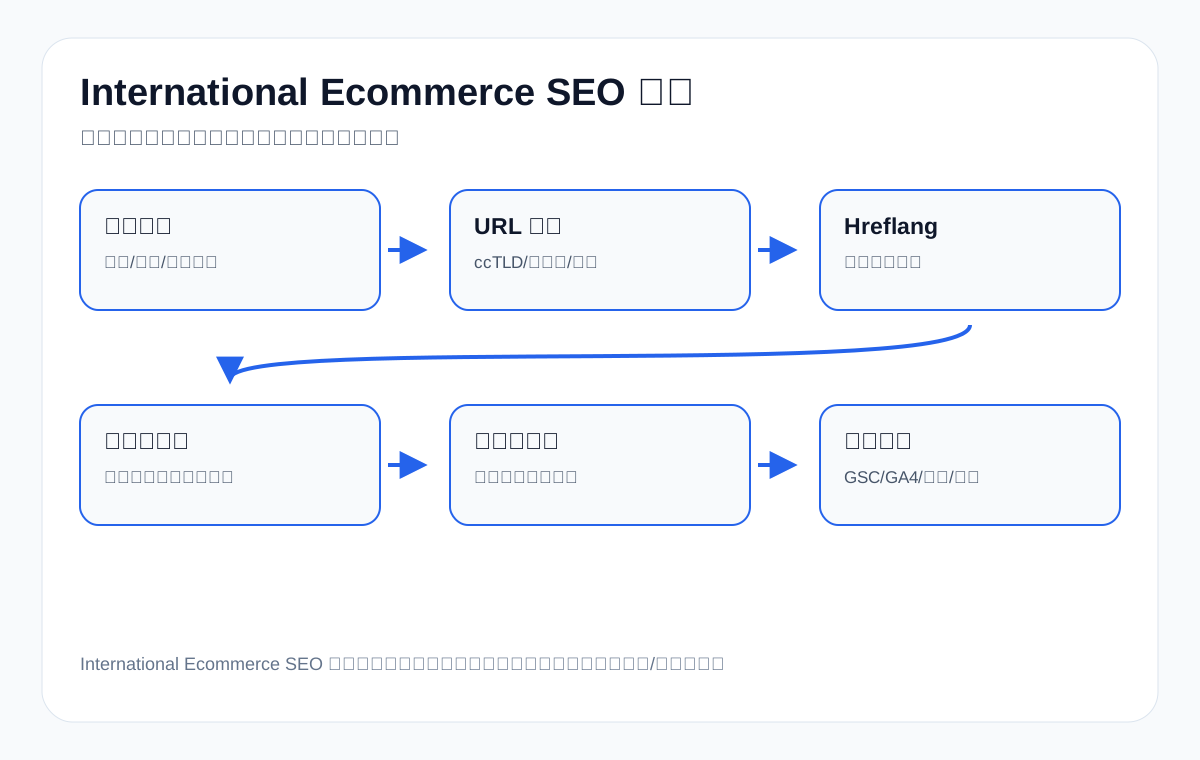
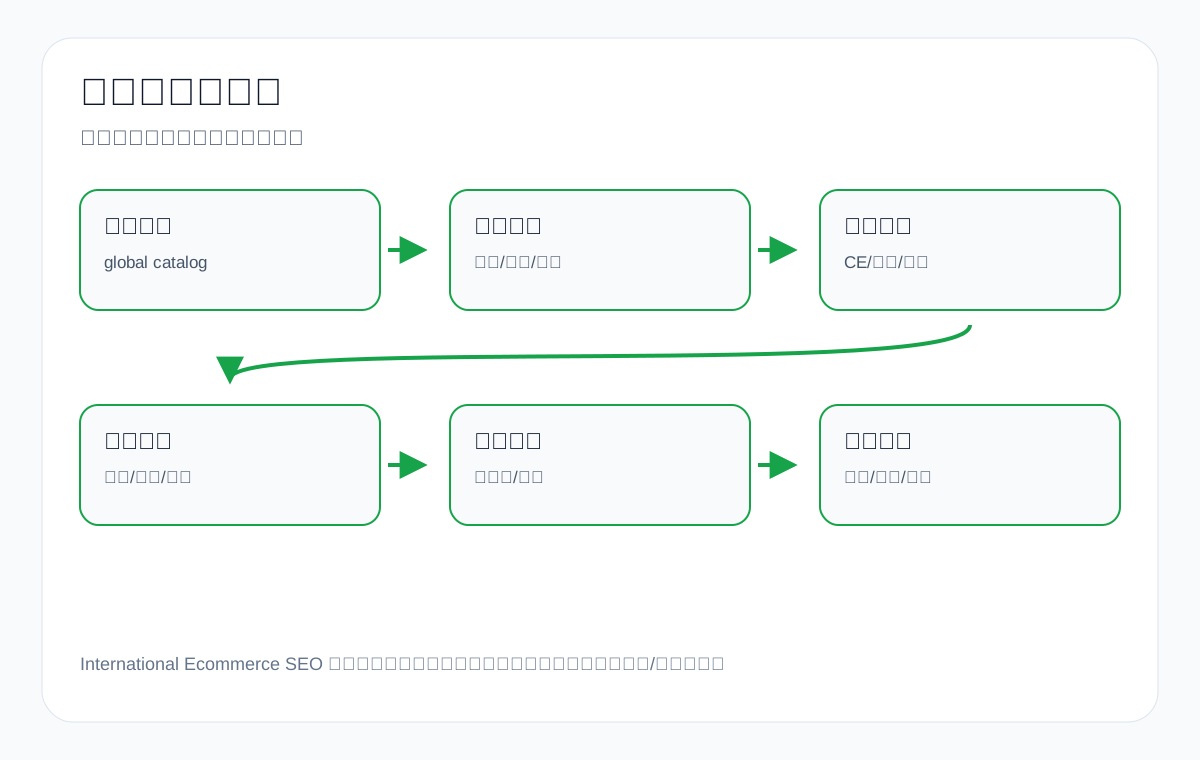
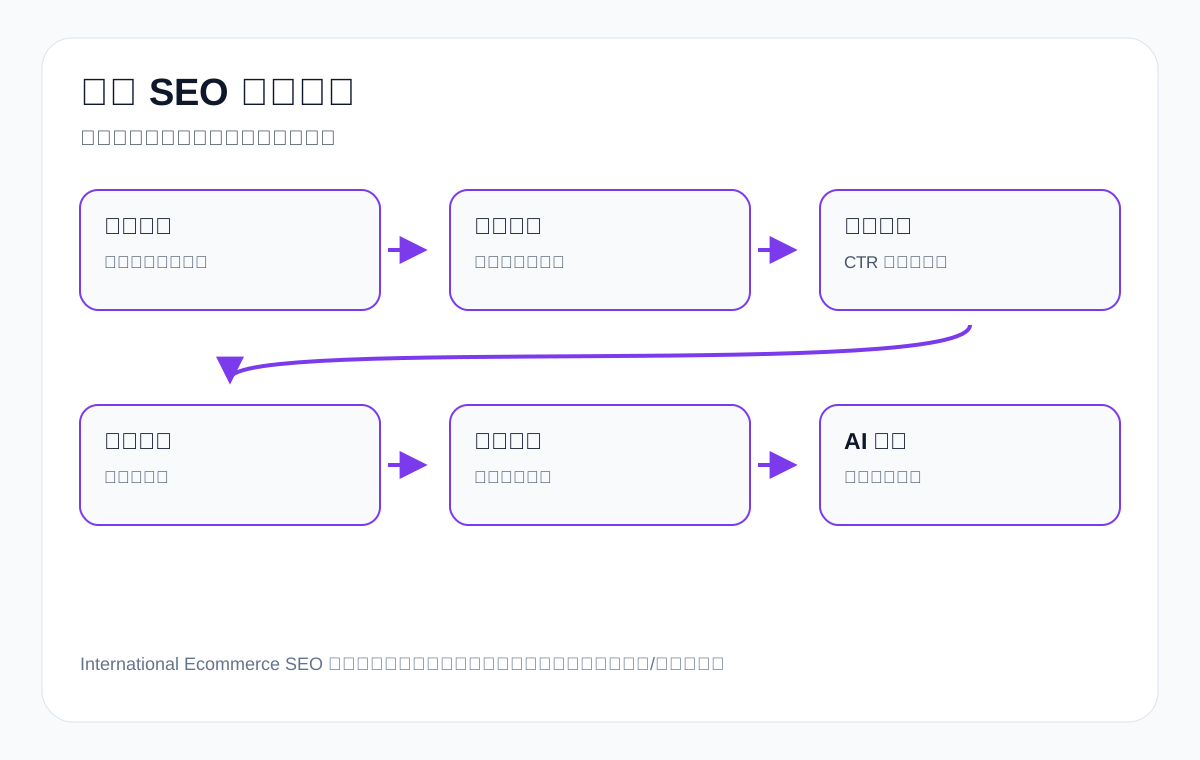
International Ecommerce SEO is search optimization for multi-country, multi-language, multi-currency, and cross-border buying scenarios. It is not just translating a website into several languages or switching on a currency selector. It is about making both Google and overseas buyers understand which page serves which country, which language, which product category, and which price/inventory/logistics/certification conditions.
For Chinese export factories and trading companies, the difficulty of international ecommerce SEO lies in the fact that products such as custom metal parts, LED flood light, packaging machine, medical probe, cnc machining parts, ceramic dinnerware, waterproof connector, industrial valve supplier, and private label activewear manufacturer have different search terms, certifications, specifications, units, delivery terms, and purchasing questions in different markets. If pages are only translated literally, without handling category pages, product pages, hreflang, canonical, internal links, inventory, and inquiry review, indexing confusion and low-quality traffic quickly follow.
Top1 benchmark conclusion: official multi-region principles + ecommerce page execution
This page takes Google Search Central’s documentation on managing multi-region/multilingual sites, hreflang, internationalized URLs, and ecommerce/product structured data as its authoritative baseline, and also refers to mainstream international ecommerce SEO guides. The strength of the authoritative baseline is that it explains language and region targeting, URL architecture, canonical, sitemaps, and duplicate content risk clearly.
The gap in these materials is that they rarely explain, from the perspective of Chinese export businesses, how to plan English product terms, national markets, category pages, product pages, multiple currencies, inventory, inquiry quality, and AI citations together. This article adds an executable sequence, decision tables, export product examples, and 90-day review metrics.
International Ecommerce SEO decision table
| Decision item | Common choices | Suitable scenarios | Risks |
|---|---|---|---|
| URL architecture | ccTLD / subdirectory / subdomain | Independent operation or unified management across countries | Split authority, maintenance cost, tagging errors |
| Language strategy | English / multilingual / regional English | When market language differences are significant | Machine translation weakens trust |
| Currency and pricing | Single currency / multiple currencies | B2C or products with clear pricing | Exchange rates, taxes, and inventory out of sync |
| Category pages | Globally uniform / market-customized | When search terms differ across markets | Translating without changing intent |
| Product pages | Uniform specifications / local materials | When certifications and specifications differ by region | Duplicate pages and inventory confusion |
| Review | Site-wide aggregate / market breakdown | Operating in multiple markets at once | Cannot tell which country is working |
Step 1: First decide whether you really need international ecommerce SEO
Not every export website needs multilingual, multi-currency, and multi-region pages from the start. If the target market is concentrated in English-speaking countries, doing English product pages, category pages, and inquiry paths well first may be more stable than hastily launching many languages.
Plan international ecommerce SEO when GSC already shows queries from multiple countries, the sales team genuinely serves multiple markets, product specifications and certifications differ by region, or a B2C/cross-border store needs local pricing.
Applied to products such as custom metal parts, LED flood light, packaging machine, medical probe, cnc machining parts, ceramic dinnerware, waterproof connector, industrial valve supplier, and private label activewear manufacturer, the core of international SEO is not the number of pages, but whether each country and language version truly answers local buyers’ questions and can route traffic to the right category, product, resource, and inquiry path.
Step 2: Market selection matters more than the number of languages
Many companies assume that more languages are always better, but what really matters is priority markets. The United States, Germany, the United Kingdom, the Middle East, Latin America, and Southeast Asia differ in search phrasing, certifications, logistics, payment, and purchasing habits.
Use historical inquiries, orders, trade shows, advertising, GSC country data, and sales feedback to identify priority markets first, then decide URL architecture and content depth.
Applied to products such as custom metal parts, LED flood light, packaging machine, medical probe, cnc machining parts, ceramic dinnerware, waterproof connector, industrial valve supplier, and private label activewear manufacturer, the core of international SEO is not the number of pages, but whether each country and language version truly answers local buyers’ questions and can route traffic to the right category, product, resource, and inquiry path.
Step 3: URL architecture determines later maintenance difficulty
Common architectures include ccTLDs, subdomains, and subdirectories. ccTLDs build strong local trust but cost more to maintain; subdirectories are easier to manage centrally; subdomains suit partly independent operations.
Small and mid-sized export teams are usually better off with subdirectories such as /en-us/, /de/, and /es/, provided that content, hreflang, canonical, sitemaps, and internal links can be maintained.
Applied to products such as custom metal parts, LED flood light, packaging machine, medical probe, cnc machining parts, ceramic dinnerware, waterproof connector, industrial valve supplier, and private label activewear manufacturer, the core of international SEO is not the number of pages, but whether each country and language version truly answers local buyers’ questions and can route traffic to the right category, product, resource, and inquiry path.
Export products and international SEO page mapping
| Product | Country or regional differences | Page focus | Review metrics |
|---|---|---|---|
| LED flood light | The US focuses on UL/installation, the EU on CE/energy efficiency | Category pages + application pages | Country queries, category clicks, inquiry models |
| custom metal parts | Material and tolerance wording differs by industry | Capability pages + material pages | Drawing uploads, RFQ completeness |
| packaging machine | Food, pharmaceutical, and personal care scenarios differ | Application pages + product pages | Application term impressions, sample inquiries |
| medical probe | Compliance, sterilization, compatible devices | Technical pages + product pages | Document downloads, compliance inquiries |
| ceramic dinnerware | Retail, hotel, and food service channels differ | Collection pages + OEM pages | Samples, packaging, MOQ |
| waterproof connector | Outdoor lighting, solar, and marine applications | Category pages + FAQ | IP rating terms, application page paths |
Step 4: Hreflang is not a multilingual switch
Hreflang tells Google which pages are versions in different languages or for different regions. It cannot replace translation quality, and it will not make low-quality local pages rank automatically.
Each group of pages must reference the others in return, canonical must point to the page itself, language and region codes must be correct, and content intent must be equivalent.
Applied to products such as custom metal parts, LED flood light, packaging machine, medical probe, cnc machining parts, ceramic dinnerware, waterproof connector, industrial valve supplier, and private label activewear manufacturer, the core of international SEO is not the number of pages, but whether each country and language version truly answers local buyers’ questions and can route traffic to the right category, product, resource, and inquiry path.
Step 5: Multiple currencies affect both SEO and conversion
Multiple currencies are not only a front-end display issue; they also affect buyer trust, price comprehension, tax expectations, and page duplication. If B2B custom products cannot publish prices, the page can clearly explain how quoting works and which currencies are used.
For example, custom metal parts may be quoted by drawing and material, so fixed displayed prices are unsuitable; ceramic dinnerware or a private label activewear manufacturer may be able to show MOQ, sample fees, and bulk price ranges.
Applied to products such as custom metal parts, LED flood light, packaging machine, medical probe, cnc machining parts, ceramic dinnerware, waterproof connector, industrial valve supplier, and private label activewear manufacturer, the core of international SEO is not the number of pages, but whether each country and language version truly answers local buyers’ questions and can route traffic to the right category, product, resource, and inquiry path.
Step 6: Cross-border category pages cannot simply be translated
Category pages are the core of international ecommerce SEO. Different countries may search for the same product with different wording and care about different specifications, certifications, and logistics. Simply translating an English category page into German or Spanish is usually not enough.
In the US market, LED flood light pages may emphasize warehouse, UL, and voltage; in the EU market, CE and energy efficiency; in the Middle East, heat resistance and outdoor installation.
Applied to products such as custom metal parts, LED flood light, packaging machine, medical probe, cnc machining parts, ceramic dinnerware, waterproof connector, industrial valve supplier, and private label activewear manufacturer, the core of international SEO is not the number of pages, but whether each country and language version truly answers local buyers’ questions and can route traffic to the right category, product, resource, and inquiry path.
Multilingual URL and hreflang checklist
| Checklist item | Correct approach | Common mistakes | Impact |
|---|---|---|---|
| Language and region codes | en-us, en-gb, de-de, and so on, matching the page | Using only en or the wrong country | Google struggles to match the market |
| Reciprocal references | Every page in the group declares the others | One-way tags only | hreflang may not work |
| canonical | Points to the page’s own language version | Everything canonicalized to the English main site | Local pages cannot be indexed |
| Equivalent content | Same intent but localizable | Completely unrelated pages pointing at each other | Confusing signals |
| Sitemaps | Include language versions | Submitting only main-site URLs | Slower discovery |
| Inventory status | Local pages are genuinely usable | Out-of-stock pages stay heavily indexed | Worse user experience and quality |
Step 7: Product pages must handle country differences
Product pages need to state the applicable market, certifications, packaging, lead time, samples, after-sales service, installation, and document versions. If the same product has different specifications in different markets, the page must distinguish them clearly.
For waterproof connector, cable specifications, IP ratings, application environments, and certifications may vary by market; medical probe requires even more care with compliance and compatible devices.
Applied to products such as custom metal parts, LED flood light, packaging machine, medical probe, cnc machining parts, ceramic dinnerware, waterproof connector, industrial valve supplier, and private label activewear manufacturer, the core of international SEO is not the number of pages, but whether each country and language version truly answers local buyers’ questions and can route traffic to the right category, product, resource, and inquiry path.
Step 8: Inventory and out-of-stock pages affect experience
Cross-border ecommerce often has a common problem: local pages can be found in search, but the product is out of stock, not sellable in the region, has no available price, or is not supported by logistics. When search traffic arrives and cannot act, both user experience and commercial value suffer.
For B2B export sites without real-time inventory, the page should still explain samples, lead time, customization, minimum order quantity, and how to request a quote.
Applied to products such as custom metal parts, LED flood light, packaging machine, medical probe, cnc machining parts, ceramic dinnerware, waterproof connector, industrial valve supplier, and private label activewear manufacturer, the core of international SEO is not the number of pages, but whether each country and language version truly answers local buyers’ questions and can route traffic to the right category, product, resource, and inquiry path.
Step 9: Control indexing of filter and parameter pages
Multiple languages, multiple currencies, filters, sorting, and pagination generate a large number of URLs. Not every filter combination should be indexed. High-value combinations can become stable category pages, while low-value parameters should not create duplicate pages.
For example, when cnc machining parts are combined by material, surface finish, tolerance, and industry, choose the combinations that have search demand and business value.
Applied to products such as custom metal parts, LED flood light, packaging machine, medical probe, cnc machining parts, ceramic dinnerware, waterproof connector, industrial valve supplier, and private label activewear manufacturer, the core of international SEO is not the number of pages, but whether each country and language version truly answers local buyers’ questions and can route traffic to the right category, product, resource, and inquiry path.
Category page localization content table
| Module | Global page approach | Local market enhancement | Example |
|---|---|---|---|
| Title | Product family name | Add local phrasing and purchasing intent | LED flood light supplier for US warehouse |
| Specifications | Generic specs | Add local certifications/standards | CE, UL, RoHS, IP rating |
| Currency | Uniform US dollars | Support display for the target market | USD/EUR/GBP or a quote explanation |
| Logistics | Vague shipping statements | Lead time, samples, packaging, port | sample lead time, bulk packing |
| FAQ | Global questions | Local taxes, certifications, after-sales | EU import, US voltage |
| Internal links | Link only to products | Link to applications, resources, inquiries | warehouse lighting guide |
Step 10: Localization is not literal translation
Localization must cover vocabulary, units, certifications, shipping, payment, customer questions, and page tone. A literally translated page may be linguistically correct but still not match purchasing habits.
An industrial valve supplier page must explain pressure units, material standards, industry applications, certificates, and after-sales communication in each market.
Applied to products such as custom metal parts, LED flood light, packaging machine, medical probe, cnc machining parts, ceramic dinnerware, waterproof connector, industrial valve supplier, and private label activewear manufacturer, the core of international SEO is not the number of pages, but whether each country and language version truly answers local buyers’ questions and can route traffic to the right category, product, resource, and inquiry path.
Step 11: Differentiate duplicate content by role
International sites easily accumulate large numbers of similar pages. Avoid pages that only swap the currency and country name for each region. Every local page should have its own search phrasing, certification notes, logistics notes, FAQ, and case leads.
If there is not enough differentiation, it is better to keep a global English page first and expand into priority markets step by step.
Applied to products such as custom metal parts, LED flood light, packaging machine, medical probe, cnc machining parts, ceramic dinnerware, waterproof connector, industrial valve supplier, and private label activewear manufacturer, the core of international SEO is not the number of pages, but whether each country and language version truly answers local buyers’ questions and can route traffic to the right category, product, resource, and inquiry path.
Step 12: Sitemaps must cover language versions
Sitemaps help with discovery but do not replace internal links and hreflang. A multilingual sitemap must include the corresponding URLs and keep lastmod consistent with actual updates.
Important category and product pages should also be discoverable through navigation, footers, articles, and related products.
Applied to products such as custom metal parts, LED flood light, packaging machine, medical probe, cnc machining parts, ceramic dinnerware, waterproof connector, industrial valve supplier, and private label activewear manufacturer, the core of international SEO is not the number of pages, but whether each country and language version truly answers local buyers’ questions and can route traffic to the right category, product, resource, and inquiry path.
90-day review table
| Timeframe | What to look at | Tools | Action |
|---|---|---|---|
| 7 days | Page status, indexing, hreflang errors | GSC, logs | Fix status codes and tags |
| 30 days | Whether local queries appear | GSC by country/page | Add titles, FAQ, internal links |
| 60 days | Category page clicks and paths | GA4 | Revise the first screen and recommended products |
| 90 days | Inquiry countries and product quality | Forms, CRM | Adjust market priorities |
| Ongoing | AI citations and brand descriptions | AI search observation | Add citable facts and tables |
Step 13: Be careful with internal links across markets
A user on a US page clicking through to a German page creates a confusing experience. Different language/region pages should link first to content in the same language and market, then offer a clear switch entry point.
Articles, categories, products, and resource pages should form paths within the same market directory.
Applied to products such as custom metal parts, LED flood light, packaging machine, medical probe, cnc machining parts, ceramic dinnerware, waterproof connector, industrial valve supplier, and private label activewear manufacturer, the core of international SEO is not the number of pages, but whether each country and language version truly answers local buyers’ questions and can route traffic to the right category, product, resource, and inquiry path.
Step 14: Structured data must match local content
Structured data such as Product, Breadcrumb, Organization, and FAQ must match the actual page content. Price, inventory, reviews, currency, and language must not contradict what is displayed on the front end.
If B2B products do not publish prices, do not fabricate fixed quotes; use the inquiry path and product attributes to improve understanding.
Applied to products such as custom metal parts, LED flood light, packaging machine, medical probe, cnc machining parts, ceramic dinnerware, waterproof connector, industrial valve supplier, and private label activewear manufacturer, the core of international SEO is not the number of pages, but whether each country and language version truly answers local buyers’ questions and can route traffic to the right category, product, resource, and inquiry path.
Step 15: International ecommerce SEO must integrate with the sales loop
Organic traffic from multiple countries does not equal business growth. Look at which country inquiries come from, which products they ask about, whether quantity and specifications match, whether delivery is possible, and whether sales follow-up runs smoothly.
GA4 and the CRM must record the language directory, country, product, form fields, and deal stage.
Applied to products such as custom metal parts, LED flood light, packaging machine, medical probe, cnc machining parts, ceramic dinnerware, waterproof connector, industrial valve supplier, and private label activewear manufacturer, the core of international SEO is not the number of pages, but whether each country and language version truly answers local buyers’ questions and can route traffic to the right category, product, resource, and inquiry path.
International Ecommerce SEO decision table
| Decision item | Common choices | Suitable scenarios | Risks |
|---|---|---|---|
| URL architecture | ccTLD / subdirectory / subdomain | Independent operation or unified management across countries | Split authority, maintenance cost, tagging errors |
| Language strategy | English / multilingual / regional English | When market language differences are significant | Machine translation weakens trust |
| Currency and pricing | Single currency / multiple currencies | B2C or products with clear pricing | Exchange rates, taxes, and inventory out of sync |
| Category pages | Globally uniform / market-customized | When search terms differ across markets | Translating without changing intent |
| Product pages | Uniform specifications / local materials | When certifications and specifications differ by region | Duplicate pages and inventory confusion |
| Review | Site-wide aggregate / market breakdown | Operating in multiple markets at once | Cannot tell which country is working |
Step 16: AI search amplifies the value of structured content
AI answers more easily extract clear market information, product parameters, certifications, logistics, and FAQ. If facts are inconsistent across country pages, AI may describe them inaccurately.
Cross-border pages should provide citable definitions, tables, and facts rather than only marketing slogans.
Applied to products such as custom metal parts, LED flood light, packaging machine, medical probe, cnc machining parts, ceramic dinnerware, waterproof connector, industrial valve supplier, and private label activewear manufacturer, the core of international SEO is not the number of pages, but whether each country and language version truly answers local buyers’ questions and can route traffic to the right category, product, resource, and inquiry path.
Step 17: Starting with a few markets is more stable than expanding all at once
When an export team has limited resources, choose 1–3 priority markets first, build category pages, product pages, application pages, FAQ, and inquiry paths in depth, then replicate what worked in other markets.
This has more long-term value than launching 10 languages at once with very thin content.
Applied to products such as custom metal parts, LED flood light, packaging machine, medical probe, cnc machining parts, ceramic dinnerware, waterproof connector, industrial valve supplier, and private label activewear manufacturer, the core of international SEO is not the number of pages, but whether each country and language version truly answers local buyers’ questions and can route traffic to the right category, product, resource, and inquiry path.
Step 18: Review by country and by page
Rising site-wide organic traffic can mask problems. Review GSC, GA4, and the CRM separately by country, language directory, category page, product page, and inquiry page.
If the German directory gets impressions but no clicks, the problem may be titles and language phrasing; if the US directory gets clicks but weak inquiries, the page may lack evidence or delivery information.
Applied to products such as custom metal parts, LED flood light, packaging machine, medical probe, cnc machining parts, ceramic dinnerware, waterproof connector, industrial valve supplier, and private label activewear manufacturer, the core of international SEO is not the number of pages, but whether each country and language version truly answers local buyers’ questions and can route traffic to the right category, product, resource, and inquiry path.
Export products and international SEO page mapping
| Product | Country or regional differences | Page focus | Review metrics |
|---|---|---|---|
| LED flood light | The US focuses on UL/installation, the EU on CE/energy efficiency | Category pages + application pages | Country queries, category clicks, inquiry models |
| custom metal parts | Material and tolerance wording differs by industry | Capability pages + material pages | Drawing uploads, RFQ completeness |
| packaging machine | Food, pharmaceutical, and personal care scenarios differ | Application pages + product pages | Application term impressions, sample inquiries |
| medical probe | Compliance, sterilization, compatible devices | Technical pages + product pages | Document downloads, compliance inquiries |
| ceramic dinnerware | Retail, hotel, and food service channels differ | Collection pages + OEM pages | Samples, packaging, MOQ |
| waterproof connector | Outdoor lighting, solar, and marine applications | Category pages + FAQ | IP rating terms, application page paths |
Step 19: Common misconception one: switching on a plugin counts as international SEO
Translation or multi-currency plugins are only tools; they cannot automatically solve search intent, page quality, hreflang, duplicate content, category page depth, or inquiry conversion.
Tools handle presentation; strategy handles page value.
Applied to products such as custom metal parts, LED flood light, packaging machine, medical probe, cnc machining parts, ceramic dinnerware, waterproof connector, industrial valve supplier, and private label activewear manufacturer, the core of international SEO is not the number of pages, but whether each country and language version truly answers local buyers’ questions and can route traffic to the right category, product, resource, and inquiry path.
Step 20: Common misconception two: all countries share one set of content
If target markets have different concerns, fully shared content leaves pages without local trust.
At minimum, core category and product pages in priority markets should add local search terms, certifications, units, logistics, and FAQ.
Applied to products such as custom metal parts, LED flood light, packaging machine, medical probe, cnc machining parts, ceramic dinnerware, waterproof connector, industrial valve supplier, and private label activewear manufacturer, the core of international SEO is not the number of pages, but whether each country and language version truly answers local buyers’ questions and can route traffic to the right category, product, resource, and inquiry path.
Execution checklist: where to start with international ecommerce SEO
- Identify 1–3 priority countries; do not roll out all languages at once
- Choose a URL architecture and fix the rules
- Build a list of category and product pages for priority markets
- Configure hreflang and self-referencing canonical for each language/region page group
- Check that multi-currency, taxes, logistics, inventory, and quote explanations are consistent
- Add local search terms, certifications, units, and FAQ to core category pages
- Control indexing of filter pages, sort pages, and parameter pages
- Use GSC to review queries by country and page
- Use GA4 to review paths and conversions in different language directories
- Use inquiry forms/CRM to record country, product, quantity, currency, and quality
- Adjust page content and priorities by market every 30–90 days
International Ecommerce SEO decision table
| Decision item | Common choices | Suitable scenarios | Risks |
|---|---|---|---|
| URL architecture | ccTLD / subdirectory / subdomain | Independent operation or unified management across countries | Split authority, maintenance cost, tagging errors |
| Language strategy | English / multilingual / regional English | When market language differences are significant | Machine translation weakens trust |
| Currency and pricing | Single currency / multiple currencies | B2C or products with clear pricing | Exchange rates, taxes, and inventory out of sync |
| Category pages | Globally uniform / market-customized | When search terms differ across markets | Translating without changing intent |
| Product pages | Uniform specifications / local materials | When certifications and specifications differ by region | Duplicate pages and inventory confusion |
| Review | Site-wide aggregate / market breakdown | Operating in multiple markets at once | Cannot tell which country is working |
Export products and international SEO page mapping
| Product | Country or regional differences | Page focus | Review metrics |
|---|---|---|---|
| LED flood light | The US focuses on UL/installation, the EU on CE/energy efficiency | Category pages + application pages | Country queries, category clicks, inquiry models |
| custom metal parts | Material and tolerance wording differs by industry | Capability pages + material pages | Drawing uploads, RFQ completeness |
| packaging machine | Food, pharmaceutical, and personal care scenarios differ | Application pages + product pages | Application term impressions, sample inquiries |
| medical probe | Compliance, sterilization, compatible devices | Technical pages + product pages | Document downloads, compliance inquiries |
| ceramic dinnerware | Retail, hotel, and food service channels differ | Collection pages + OEM pages | Samples, packaging, MOQ |
| waterproof connector | Outdoor lighting, solar, and marine applications | Category pages + FAQ | IP rating terms, application page paths |
Multilingual URL and hreflang checklist
| Checklist item | Correct approach | Common mistakes | Impact |
|---|---|---|---|
| Language and region codes | en-us, en-gb, de-de, and so on, matching the page | Using only en or the wrong country | Google struggles to match the market |
| Reciprocal references | Every page in the group declares the others | One-way tags only | hreflang may not work |
| canonical | Points to the page’s own language version | Everything canonicalized to the English main site | Local pages cannot be indexed |
| Equivalent content | Same intent but localizable | Completely unrelated pages pointing at each other | Confusing signals |
| Sitemaps | Include language versions | Submitting only main-site URLs | Slower discovery |
| Inventory status | Local pages are genuinely usable | Out-of-stock pages stay heavily indexed | Worse user experience and quality |
Category page localization content table
| Module | Global page approach | Local market enhancement | Example |
|---|---|---|---|
| Title | Product family name | Add local phrasing and purchasing intent | LED flood light supplier for US warehouse |
| Specifications | Generic specs | Add local certifications/standards | CE, UL, RoHS, IP rating |
| Currency | Uniform US dollars | Support display for the target market | USD/EUR/GBP or a quote explanation |
| Logistics | Vague shipping statements | Lead time, samples, packaging, port | sample lead time, bulk packing |
| FAQ | Global questions | Local taxes, certifications, after-sales | EU import, US voltage |
| Internal links | Link only to products | Link to applications, resources, inquiries | warehouse lighting guide |
90-day review table
| Timeframe | What to look at | Tools | Action |
|---|---|---|---|
| 7 days | Page status, indexing, hreflang errors | GSC, logs | Fix status codes and tags |
| 30 days | Whether local queries appear | GSC by country/page | Add titles, FAQ, internal links |
| 60 days | Category page clicks and paths | GA4 | Revise the first screen and recommended products |
| 90 days | Inquiry countries and product quality | Forms, CRM | Adjust market priorities |
| Ongoing | AI citations and brand descriptions | AI search observation | Add citable facts and tables |
FAQ: Common questions about International Ecommerce SEO
Is international ecommerce SEO the same as multilingual SEO?
Not exactly. Multilingual is one part of it; international ecommerce SEO also has to handle regions, currencies, inventory, logistics, certifications, category pages, product pages, and order/inquiry quality.
Do export B2B websites need multiple currencies?
If products are highly customized, published multi-currency prices are not strictly necessary, but the page needs to explain the quoting method, sample fees, MOQ, payment, and delivery terms.
Can hreflang solve duplicate content?
It helps Google match language and region versions, but it cannot replace content quality or correct canonical. Low-quality or non-equivalent pages remain at risk.
Can multilingual pages be machine translated?
They can serve as a first draft, but priority market pages must be checked by a human for search terms, terminology, certifications, units, FAQ, and purchasing language.
Do category pages need to be written separately for each country?
Priority markets should be optimized separately. If market differences are small, a global English page can be used first; if search terms, certifications, and logistics differ clearly, localized category pages are needed.
Should filter pages be indexed by Google?
Only filter combinations with stable search demand and business value are worth indexing; the rest should be controlled through canonical, robots, parameter rules, or internal links.
How do you judge which country market is worth SEO investment?
Look at GSC country queries, GA4 behavior, inquiry sources, order/CRM quality, sales feedback, and profit margin, not just visit volume.
Can you guarantee rankings for a country page?
No. International SEO is affected by competition, language quality, brand, product, price, logistics, and algorithms. We can commit to diagnosis, execution, and review, but not to results outside our control.
Conclusion: international ecommerce SEO should expand narrowly, execute deeply, and review by market
The key to International Ecommerce SEO is not the number of languages, but whether products such as custom metal parts, LED flood light, packaging machine, medical probe, cnc machining parts, ceramic dinnerware, waterproof connector, industrial valve supplier, and private label activewear manufacturer can be correctly discovered, understood, and turned into inquiries in target country markets. Choose priority markets first, get URL, hreflang, category pages, product pages, localized content, technical controls, and data review right, and then expand gradually. That is the more stable way to build long-term export assets.
Official sources and acceptance boundaries for international ecommerce SEO
International ecommerce SEO cannot be judged by the number of language versions alone. Multilingual pages, multiple currencies, category pages, and product pages must all be checked for indexability, canonical pages, region and language tags, crawlable links, and real conversion events.
| Official source | What it can support | Boundaries it cannot cross |
|---|---|---|
| Google: Localized versions | Verify the matching relationships among hreflang, language, and region pages | Correct tags do not mean every country will see impressions |
| Google: Consolidate duplicate URLs | Determine canonical pages for multi-currency, multi-filter, and duplicate product pages | canonical is a signal, not a command to force indexing |
| Google: Sitemaps overview | Confirm whether important language and category pages are in the sitemap | Submitting a sitemap does not guarantee indexing |
| Google: SEO Starter Guide | Check titles, content, links, images, and mobile fundamentals | Passing the basics cannot be written up as existing traffic |
| Search Console Performance report | Observe real search performance by country, page, and query | If there are no rows, keep the baseline and do not write trends |
Diagnostic acceptance table
| Checklist item | Fields to record | How to write during low-data periods |
|---|---|---|
| Indexing basics | index/follow, canonical, sitemap, robots, HTTP status codes | State only the current accessible status; do not write performance conclusions |
| Page evidence | Title, body, images, links, structured data, update time | If material is missing, list the gaps; do not add fabricated cases |
| Search data | GSC query/page/date/country/device | If GSC shows zero rows, write zero rows; do not extrapolate rankings |
| Conversion observation | GA4 events, forms, downloads, inquiry entry points | If there are no events, fix collection first, then make judgments |
Continue reading this SEO series
If you are working through export website SEO systematically, continue with the articles below. Clarify crawling, indexing, content, links, and review relationships first, then decide which page to change next.
- How to do Programmatic SEO: a guide to scaled pages, index risk, and quality thresholds for export websites
- How to do Marketplace SEO: a guide to marketplace listing pages, seller pages, on-site search, and inquiry paths
- How to do WordPress SEO: a guide to indexing, speed, and content structure optimization for export websites
- How to do ecommerce SEO: how category pages, product pages, filter pages, and content pages should divide the work on export websites
- How to do product page SEO: a guide to titles, FAQ, Schema, and internal link optimization for export product pages
- How to do local SEO: a guide to Google Business Profile, reviews, NAP, and local pages
{
“@context”: “https://schema.org”,
“@type”: “FAQPage”,
“mainEntity”: [
{
“@type”: “Question”,
“name”: “International Ecommerce SEO decision tableDecision itemCommon choicesSuitable scenariosRisksURL architectureccTLD / subdirectory / subdomainIndependent operation or unified management across countriesSplit authority, maintenance cost, tagging errorsLanguage strategyEnglish / multilingual / regional EnglishWhen market language differences are significantMachine translation weakens trustCurrency and pricingSingle currency / multiple currenciesB2C or products with clear pricingExchange rates, taxes, and inventory out of syncCategory pagesGlobally uniform / market-customizedWhen search terms differ across marketsTranslating without changing intentProduct pagesUniform specifications / local materialsWhen certifications and specifications differ by regionDuplicate pages and inventory confusionReviewSite-wide aggregate / market breakdownOperating in multiple markets at onceCannot tell which country is workingnStep 1: First decide whether you really need international ecommerce SEONot every export website needs multilingual, multi-currency, and multi-region pages from the start. If the target market is concentrated in English-speaking countries, doing English product pages, category pages, and inquiry paths well first may be more stable than hastily launching many languages. Plan international ecommerce SEO when GSC already shows queries from multiple countries, the sales team genuinely serves multiple markets, product specifications and certifications differ by region, or a B2C/cross-border store needs local pricing.nApplied to products such as custom metal parts, LED flood light, packaging machine, medical probe, cnc machining parts, ceramic dinnerware, waterproof connector, industrial valve supplier, and private label activewear manufacturer, the core of international SEO is not the number of pages, but whether each country and language version truly answers local buyers’ questions and can route traffic to the right category, product, resource, and inquiry path.nStep 2: Market selection matters more than the number of languagesMany companies assume that more languages are always better, but what really matters is priority markets. The United States, Germany, the United Kingdom, the Middle East, Latin America, and Southeast Asia differ in search phrasing, certifications, logistics, payment, and purchasing habits. Use historical inquiries, orders, trade shows, advertising, GSC country data, and sales feedback to identify priority markets first, then decide URL architecture and content depth.nApplied to products such as custom metal parts, LED flood light, packaging machine, medical probe, cnc machining parts, ceramic dinnerware, waterproof connector, industrial valve supplier, and private label activewear manufacturer, the core of international SEO is not the number of pages, but whether each country and language version truly answers local buyers’ questions and can route traffic to the right category, product, resource, and inquiry path.nStep 3: URL architecture determines later maintenance difficultyCommon architectures include ccTLDs, subdomains, and subdirectories. ccTLDs build strong local trust but cost more to maintain; subdirectories are easier to manage centrally; subdomains suit partly independent operations. Small and mid-sized export teams are usually better off with subdirectories such as /en-us/, /de/, and /es/, provided that content, hreflang, canonical, sitemaps, and internal links can be maintained.nApplied to products such as custom metal parts, LED flood light, packaging machine, medical probe, cnc machining parts, ceramic dinnerware, waterproof connector, industrial valve supplier, and private label activewear manufacturer, the core of international SEO is not the number of pages, but whether each country and language version truly answers local buyers’ questions and can route traffic to the right category, product, resource, and inquiry path.nExport products and international SEO page mappingProductCountry or regional differencesPage focusReview metricsLED flood lightThe US focuses on UL/installation, the EU on CE/energy efficiencyCategory pages + application pagesCountry queries, category clicks, inquiry modelscustom metal partsMaterial and tolerance wording differs by industryCapability pages + material pagesDrawing uploads, RFQ completenesspackaging machineFood, pharmaceutical, and personal care scenarios differApplication pages + product pagesApplication term impressions, sample inquiriesmedical probeCompliance, sterilization, compatible devicesTechnical pages + product pagesDocument downloads, compliance inquiriesceramic dinnerwareRetail, hotel, and food service channels differCollection pages + OEM pagesSamples, packaging, MOQwaterproof connectorOutdoor lighting, solar, and marine applicationsCategory pages + FAQIP rating terms, application page pathsnStep 4: Hreflang is not a multilingual switchHreflang tells Google which pages are versions in different languages or for different regions. It cannot replace translation quality, and it will not make low-quality local pages rank automatically. Each group of pages must reference the others in return, canonical must point to the page itself, language and region codes must be correct, and content intent must be equivalent.nApplied to products such as custom metal parts, LED flood light, packaging machine, medical probe, cnc machining parts, ceramic dinnerware, waterproof connector, industrial valve supplier, and private label activewear manufacturer, the core of international SEO is not the number of pages, but whether each country and language version truly answers local buyers’ questions and can route traffic to the right category, product, resource, and inquiry path.nStep 5: Multiple currencies affect both SEO and conversionMultiple currencies are not only a front-end display issue; they also affect buyer trust, price comprehension, tax expectations, and page duplication. If B2B custom products cannot publish prices, the page can clearly explain how quoting works and which currencies are used. For example, custom metal parts may be quoted by drawing and material, so fixed displayed prices are unsuitable; ceramic dinnerware or a private label activewear manufacturer may be able to show MOQ, sample fees, and bulk price ranges.nApplied to products such as custom metal parts, LED flood light, packaging machine, medical probe, cnc machining parts, ceramic dinnerware, waterproof connector, industrial valve supplier, and private label activewear manufacturer, the core of international SEO is not the number of pages, but whether each country and language version truly answers local buyers’ questions and can route traffic to the right category, product, resource, and inquiry path.nStep 6: Cross-border category pages cannot simply be translatedCategory pages are the core of international ecommerce SEO. Different countries may search for the same product with different wording and care about different specifications, certifications, and logistics. Simply translating an English category page into German or Spanish is usually not enough. In the US market, LED flood light pages may emphasize warehouse, UL, and voltage; in the EU market, CE and energy efficiency; in the Middle East, heat resistance and outdoor installation.nApplied to products such as custom metal parts, LED flood light, packaging machine, medical probe, cnc machining parts, ceramic dinnerware, waterproof connector, industrial valve supplier, and private label activewear manufacturer, the core of international SEO is not the number of pages, but whether each country and language version truly answers local buyers’ questions and can route traffic to the right category, product, resource, and inquiry path.nMultilingual URL and hreflang checklistChecklist itemCorrect approachCommon mistakesImpactLanguage and region codesen-us, en-gb, de-de, and so on, matching the pageUsing only en or the wrong countryGoogle struggles to match the marketReciprocal referencesEvery page in the group declares the othersOne-way tags onlyhreflang may not workcanonicalPoints to the page’s own language versionEverything canonicalized to the English main siteLocal pages cannot be indexedEquivalent contentSame intent but localizableCompletely unrelated pages pointing at each otherConfusing signalsSitemapsInclude language versionsSubmitting only main-site URLsSlower discoveryInventory statusLocal pages are genuinely usableOut-of-stock pages stay heavily indexedWorse user experience and qualitynStep 7: Product pages must handle country differencesProduct pages need to state the applicable market, certifications, packaging, lead time, samples, after-sales service, installation, and document versions. If the same product has different specifications in different markets, the page must distinguish them clearly. For waterproof connector, cable specifications, IP ratings, application environments, and certifications may vary by market; medical probe requires even more care with compliance and compatible devices.nApplied to products such as custom metal parts, LED flood light, packaging machine, medical probe, cnc machining parts, ceramic dinnerware, waterproof connector, industrial valve supplier, and private label activewear manufacturer, the core of international SEO is not the number of pages, but whether each country and language version truly answers local buyers’ questions and can route traffic to the right category, product, resource, and inquiry path.nStep 8: Inventory and out-of-stock pages affect experienceCross-border ecommerce often has a common problem: local pages can be found in search, but the product is out of stock, not sellable in the region, has no available price, or is not supported by logistics. When search traffic arrives and cannot act, both user experience and commercial value suffer. For B2B export sites without real-time inventory, the page should still explain samples, lead time, customization, minimum order quantity, and how to request a quote.nApplied to products such as custom metal parts, LED flood light, packaging machine, medical probe, cnc machining parts, ceramic dinnerware, waterproof connector, industrial valve supplier, and private label activewear manufacturer, the core of international SEO is not the number of pages, but whether each country and language version truly answers local buyers’ questions and can route traffic to the right category, product, resource, and inquiry path.nStep 9: Control indexing of filter and parameter pagesMultiple languages, multiple currencies, filters, sorting, and pagination generate a large number of URLs. Not every filter combination should be indexed. High-value combinations can become stable category pages, while low-value parameters should not create duplicate pages. For example, when cnc machining parts are combined by material, surface finish, tolerance, and industry, choose the combinations that have search demand and business value.nApplied to products such as custom metal parts, LED flood light, packaging machine, medical probe, cnc machining parts, ceramic dinnerware, waterproof connector, industrial valve supplier, and private label activewear manufacturer, the core of international SEO is not the number of pages, but whether each country and language version truly answers local buyers’ questions and can route traffic to the right category, product, resource, and inquiry path.nCategory page localization content tableModuleGlobal page approachLocal market enhancementExampleTitleProduct family nameAdd local phrasing and purchasing intentLED flood light supplier for US warehouseSpecificationsGeneric specsAdd local certifications/standardsCE, UL, RoHS, IP ratingCurrencyUniform US dollarsSupport display for the target marketUSD/EUR/GBP or a quote explanationLogisticsVague shipping statementsLead time, samples, packaging, portsample lead time, bulk packingFAQGlobal questionsLocal taxes, certifications, after-salesEU import, US voltageInternal linksLink only to productsLink to applications, resources, inquirieswarehouse lighting guidenStep 10: Localization is not literal translationLocalization must cover vocabulary, units, certifications, shipping, payment, customer questions, and page tone. A literally translated page may be linguistically correct but still not match purchasing habits. An industrial valve supplier page must explain pressure units, material standards, industry applications, certificates, and after-sales communication in each market.nApplied to products such as custom metal parts, LED flood light, packaging machine, medical probe, cnc machining parts, ceramic dinnerware, waterproof connector, industrial valve supplier, and private label activewear manufacturer, the core of international SEO is not the number of pages, but whether each country and language version truly answers local buyers’ questions and can route traffic to the right category, product, resource, and inquiry path.nStep 11: Differentiate duplicate content by roleInternational sites easily accumulate large numbers of similar pages. Avoid pages that only swap the currency and country name for each region. Every local page should have its own search phrasing, certification notes, logistics notes, FAQ, and case leads. If there is not enough differentiation, it is better to keep a global English page first and expand into priority markets step by step.nApplied to products such as custom metal parts, LED flood light, packaging machine, medical probe, cnc machining parts, ceramic dinnerware, waterproof connector, industrial valve supplier, and private label activewear manufacturer, the core of international SEO is not the number of pages, but whether each country and language version truly answers local buyers’ questions and can route traffic to the right category, product, resource, and inquiry path.nStep 12: Sitemaps must cover language versionsSitemaps help with discovery but do not replace internal links and hreflang. A multilingual sitemap must include the corresponding URLs and keep lastmod consistent with actual updates. Important category and product pages should also be discoverable through navigation, footers, articles, and related products.nApplied to products such as custom metal parts, LED flood light, packaging machine, medical probe, cnc machining parts, ceramic dinnerware, waterproof connector, industrial valve supplier, and private label activewear manufacturer, the core of international SEO is not the number of pages, but whether each country and language version truly answers local buyers’ questions and can route traffic to the right category, product, resource, and inquiry path.n90-day review tableTimeframeWhat to look atToolsAction7 daysPage status, indexing, hreflang errorsGSC, logsFix status codes and tags30 daysWhether local queries appearGSC by country/pageAdd titles, FAQ, internal links60 daysCategory page clicks and pathsGA4Revise the first screen and recommended products90 daysInquiry countries and product qualityForms, CRMAdjust market prioritiesOngoingAI citations and brand descriptionsAI search observationAdd citable facts and tablesnStep 13: Be careful with internal links across marketsA user on a US page clicking through to a German page creates a confusing experience. Different language/region pages should link first to content in the same language and market, then offer a clear switch entry point. Articles, categories, products, and resource pages should form paths within the same market directory.nApplied to products such as custom metal parts, LED flood light, packaging machine, medical probe, cnc machining parts, ceramic dinnerware, waterproof connector, industrial valve supplier, and private label activewear manufacturer, the core of international SEO is not the number of pages, but whether each country and language version truly answers local buyers’ questions and can route traffic to the right category, product, resource, and inquiry path.nStep 14: Structured data must match local contentStructured data such as Product, Breadcrumb, Organization, and FAQ must match the actual page content. Price, inventory, reviews, currency, and language must not contradict what is displayed on the front end. If B2B products do not publish prices, do not fabricate fixed quotes; use the inquiry path and product attributes to improve understanding.nApplied to products such as custom metal parts, LED flood light, packaging machine, medical probe, cnc machining parts, ceramic dinnerware, waterproof connector, industrial valve supplier, and private label activewear manufacturer, the core of international SEO is not the number of pages, but whether each country and language version truly answers local buyers’ questions and can route traffic to the right category, product, resource, and inquiry path.nStep 15: International ecommerce SEO must integrate with the sales loopOrganic traffic from multiple countries does not equal business growth. Look at which country inquiries come from, which products they ask about, whether quantity and specifications match, whether delivery is possible, and whether sales follow-up runs smoothly. GA4 and the CRM must record the language directory, country, product, form fields, and deal stage.nApplied to products such as custom metal parts, LED flood light, packaging machine, medical probe, cnc machining parts, ceramic dinnerware, waterproof connector, industrial valve supplier, and private label activewear manufacturer, the core of international SEO is not the number of pages, but whether each country and language version truly answers local buyers’ questions and can route traffic to the right category, product, resource, and inquiry path.nInternational Ecommerce SEO decision tableDecision itemCommon choicesSuitable scenariosRisksURL architectureccTLD / subdirectory / subdomainIndependent operation or unified management across countriesSplit authority, maintenance cost, tagging errorsLanguage strategyEnglish / multilingual / regional EnglishWhen market language differences are significantMachine translation weakens trustCurrency and pricingSingle currency / multiple currenciesB2C or products with clear pricingExchange rates, taxes, and inventory out of syncCategory pagesGlobally uniform / market-customizedWhen search terms differ across marketsTranslating without changing intentProduct pagesUniform specifications / local materialsWhen certifications and specifications differ by regionDuplicate pages and inventory confusionReviewSite-wide aggregate / market breakdownOperating in multiple markets at onceCannot tell which country is workingnStep 16: AI search amplifies the value of structured contentAI answers more easily extract clear market information, product parameters, certifications, logistics, and FAQ. If facts are inconsistent across country pages, AI may describe them inaccurately. Cross-border pages should provide citable definitions, tables, and facts rather than only marketing slogans.nApplied to products such as custom metal parts, LED flood light, packaging machine, medical probe, cnc machining parts, ceramic dinnerware, waterproof connector, industrial valve supplier, and private label activewear manufacturer, the core of international SEO is not the number of pages, but whether each country and language version truly answers local buyers’ questions and can route traffic to the right category, product, resource, and inquiry path.nStep 17: Starting with a few markets is more stable than expanding all at onceWhen an export team has limited resources, choose 1–3 priority markets first, build category pages, product pages, application pages, FAQ, and inquiry paths in depth, then replicate what worked in other markets. This has more long-term value than launching 10 languages at once with very thin content.nApplied to products such as custom metal parts, LED flood light, packaging machine, medical probe, cnc machining parts, ceramic dinnerware, waterproof connector, industrial valve supplier, and private label activewear manufacturer, the core of international SEO is not the number of pages, but whether each country and language version truly answers local buyers’ questions and can route traffic to the right category, product, resource, and inquiry path.nStep 18: Review by country and by pageRising site-wide organic traffic can mask problems. Review GSC, GA4, and the CRM separately by country, language directory, category page, product page, and inquiry page. If the German directory gets impressions but no clicks, the problem may be titles and language phrasing; if the US directory gets clicks but weak inquiries, the page may lack evidence or delivery information.nApplied to products such as custom metal parts, LED flood light, packaging machine, medical probe, cnc machining parts, ceramic dinnerware, waterproof connector, industrial valve supplier, and private label activewear manufacturer, the core of international SEO is not the number of pages, but whether each country and language version truly answers local buyers’ questions and can route traffic to the right category, product, resource, and inquiry path.nExport products and international SEO page mappingProductCountry or regional differencesPage focusReview metricsLED flood lightThe US focuses on UL/installation, the EU on CE/energy efficiencyCategory pages + application pagesCountry queries, category clicks, inquiry modelscustom metal partsMaterial and tolerance wording differs by industryCapability pages + material pagesDrawing uploads, RFQ completenesspackaging machineFood, pharmaceutical, and personal care scenarios differApplication pages + product pagesApplication term impressions, sample inquiriesmedical probeCompliance, sterilization, compatible devicesTechnical pages + product pagesDocument downloads, compliance inquiriesceramic dinnerwareRetail, hotel, and food service channels differCollection pages + OEM pagesSamples, packaging, MOQwaterproof connectorOutdoor lighting, solar, and marine applicationsCategory pages + FAQIP rating terms, application page pathsnStep 19: Common misconception one: switching on a plugin counts as international SEOTranslation or multi-currency plugins are only tools; they cannot automatically solve search intent, page quality, hreflang, duplicate content, category page depth, or inquiry conversion. Tools handle presentation; strategy handles page value.nApplied to products such as custom metal parts, LED flood light, packaging machine, medical probe, cnc machining parts, ceramic dinnerware, waterproof connector, industrial valve supplier, and private label activewear manufacturer, the core of international SEO is not the number of pages, but whether each country and language version truly answers local buyers’ questions and can route traffic to the right category, product, resource, and inquiry path.nStep 20: Common misconception two: all countries share one set of contentIf target markets have different concerns, fully shared content leaves pages without local trust. At minimum, core category and product pages in priority markets should add local search terms, certifications, units, logistics, and FAQ.nApplied to products such as custom metal parts, LED flood light, packaging machine, medical probe, cnc machining parts, ceramic dinnerware, waterproof connector, industrial valve supplier, and private label activewear manufacturer, the core of international SEO is not the number of pages, but whether each country and language version truly answers local buyers’ questions and can route traffic to the right category, product, resource, and inquiry path.nExecution checklist: where to start with international ecommerce SEOIdentify 1–3 priority countries; do not roll out all languages at onceChoose a URL architecture and fix the rulesBuild a list of category and product pages for priority marketsConfigure hreflang and self-referencing canonical for each language/region page groupCheck that multi-currency, taxes, logistics, inventory, and quote explanations are consistentAdd local search terms, certifications, units, and FAQ to core category pagesControl indexing of filter pages, sort pages, and parameter pagesUse GSC to review queries by country and pageUse GA4 to review paths and conversions in different language directoriesUse inquiry forms/CRM to record country, product, quantity, currency, and qualityAdjust page content and priorities by market every 30–90 daysnInternational Ecommerce SEO decision tableDecision itemCommon choicesSuitable scenariosRisksURL architectureccTLD / subdirectory / subdomainIndependent operation or unified management across countriesSplit authority, maintenance cost, tagging errorsLanguage strategyEnglish / multilingual / regional EnglishWhen market language differences are significantMachine translation weakens trustCurrency and pricingSingle currency / multiple currenciesB2C or products with clear pricingExchange rates, taxes, and inventory out of syncCategory pagesGlobally uniform / market-customizedWhen search terms differ across marketsTranslating without changing intentProduct pagesUniform specifications / local materialsWhen certifications and specifications differ by regionDuplicate pages and inventory confusionReviewSite-wide aggregate / market breakdownOperating in multiple markets at onceCannot tell which country is workingnExport products and international SEO page mappingProductCountry or regional differencesPage focusReview metricsLED flood lightThe US focuses on UL/installation, the EU on CE/energy efficiencyCategory pages + application pagesCountry queries, category clicks, inquiry modelscustom metal partsMaterial and tolerance wording differs by industryCapability pages + material pagesDrawing uploads, RFQ completenesspackaging machineFood, pharmaceutical, and personal care scenarios differApplication pages + product pagesApplication term impressions, sample inquiriesmedical probeCompliance, sterilization, compatible devicesTechnical pages + product pagesDocument downloads, compliance inquiriesceramic dinnerwareRetail, hotel, and food service channels differCollection pages + OEM pagesSamples, packaging, MOQwaterproof connectorOutdoor lighting, solar, and marine applicationsCategory pages + FAQIP rating terms, application page pathsnMultilingual URL and hreflang checklistChecklist itemCorrect approachCommon mistakesImpactLanguage and region codesen-us, en-gb, de-de, and so on, matching the pageUsing only en or the wrong countryGoogle struggles to match the marketReciprocal referencesEvery page in the group declares the othersOne-way tags onlyhreflang may not workcanonicalPoints to the page’s own language versionEverything canonicalized to the English main siteLocal pages cannot be indexedEquivalent contentSame intent but localizableCompletely unrelated pages pointing at each otherConfusing signalsSitemapsInclude language versionsSubmitting only main-site URLsSlower discoveryInventory statusLocal pages are genuinely usableOut-of-stock pages stay heavily indexedWorse user experience and qualitynCategory page localization content tableModuleGlobal page approachLocal market enhancementExampleTitleProduct family nameAdd local phrasing and purchasing intentLED flood light supplier for US warehouseSpecificationsGeneric specsAdd local certifications/standardsCE, UL, RoHS, IP ratingCurrencyUniform US dollarsSupport display for the target marketUSD/EUR/GBP or a quote explanationLogisticsVague shipping statementsLead time, samples, packaging, portsample lead time, bulk packingFAQGlobal questionsLocal taxes, certifications, after-salesEU import, US voltageInternal linksLink only to productsLink to applications, resources, inquirieswarehouse lighting guiden90-day review tableTimeframeWhat to look atToolsAction7 daysPage status, indexing, hreflang errorsGSC, logsFix status codes and tags30 daysWhether local queries appearGSC by country/pageAdd titles, FAQ, internal links60 daysCategory page clicks and pathsGA4Revise the first screen and recommended products90 daysInquiry countries and product qualityForms, CRMAdjust market prioritiesOngoingAI citations and brand descriptionsAI search observationAdd citable facts and tablesnFAQ: Common questions about International Ecommerce SEOnIs international ecommerce SEO the same as multilingual SEO?”,
“acceptedAnswer”: {
“@type”: “Answer”,
“text”: “Not exactly. Multilingual is one part of it; international ecommerce SEO also has to handle regions, currencies, inventory, logistics, certifications, category pages, product pages, and order/inquiry quality.”
}
},
{
“@type”: “Question”,
“name”: “Do export B2B websites need multiple currencies?”,
“acceptedAnswer”: {
“@type”: “Answer”,
“text”: “If products are highly customized, published multi-currency prices are not strictly necessary, but the page needs to explain the quoting method, sample fees, MOQ, payment, and delivery terms.”
}
},
{
“@type”: “Question”,
“name”: “Can hreflang solve duplicate content?”,
“acceptedAnswer”: {
“@type”: “Answer”,
“text”: “It helps Google match language and region versions, but it cannot replace content quality or correct canonical. Low-quality or non-equivalent pages remain at risk.”
}
},
{
“@type”: “Question”,
“name”: “Can multilingual pages be machine translated?”,
“acceptedAnswer”: {
“@type”: “Answer”,
“text”: “They can serve as a first draft, but priority market pages must be checked by a human for search terms, terminology, certifications, units, FAQ, and purchasing language.”
}
},
{
“@type”: “Question”,
“name”: “Do category pages need to be written separately for each country?”,
“acceptedAnswer”: {
“@type”: “Answer”,
“text”: “Priority markets should be optimized separately. If market differences are small, a global English page can be used first; if search terms, certifications, and logistics differ clearly, localized category pages are needed.”
}
}
]
}
This page is machine-translated from the Simplified Chinese version and awaiting human review. It has not yet been proofread.