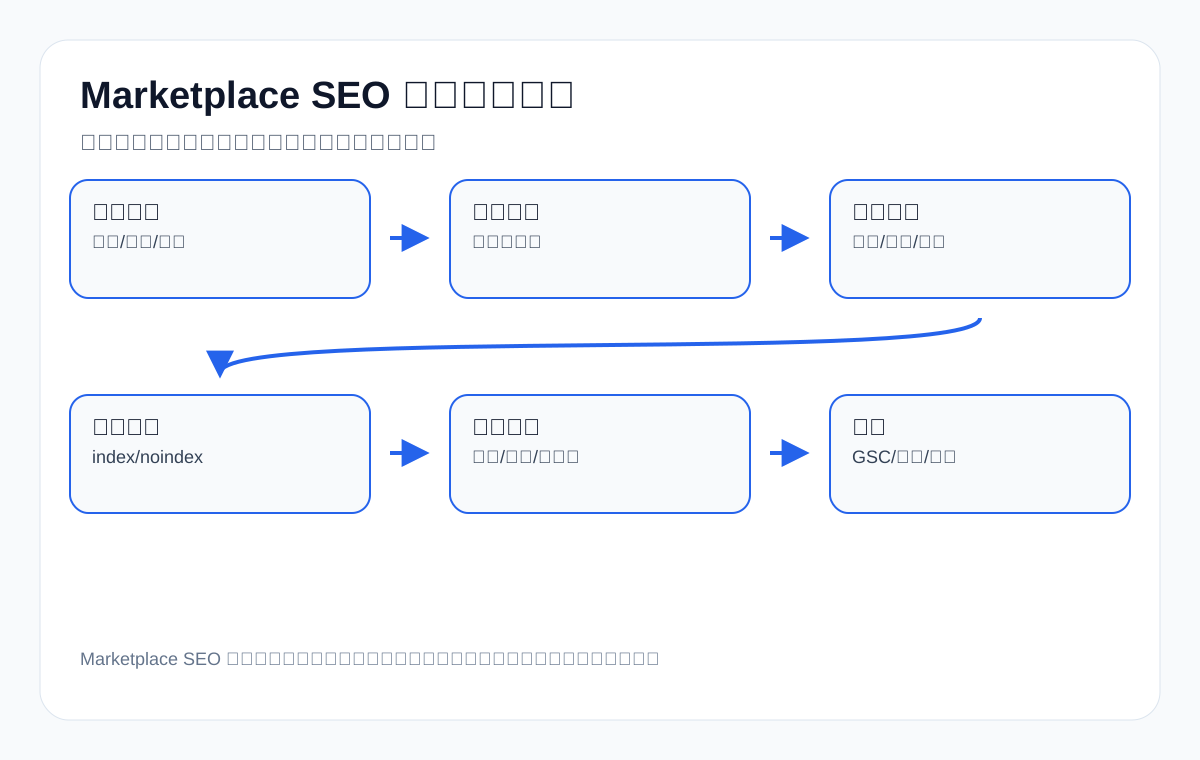
Marketplace SEO suits platform-type, multi-seller, directory-style, B2B supply-and-demand matching, or large product-catalog websites. It differs from ordinary foreign-trade independent-site SEO: an ordinary site usually optimizes the homepage, product pages, category pages, article pages, and inquiry pages; a Marketplace must also handle seller pages, listing pages, filter pages, internal search pages, regional pages, reviews/UGC, empty-result pages, duplicate-parameter pages, and large-scale URL quality control.
For Chinese foreign-trade companies, Marketplace SEO does not necessarily mean only large platforms such as Alibaba. An industry directory site, a supplier matching site, a multi-factory onboarding site, a spare parts library, a product selection database, or even a B2B site with a large number of products and filter combinations can run into similar problems. For example, a multi-supplier directory for custom metal parts, an LED flood light product listing, a packaging machine seller page, medical probe specification search, cnc machining parts process filtering, a ceramic dinnerware wholesale directory, waterproof connector model filtering, an industrial valve supplier regional listing, and a private label activewear manufacturer private-label supplier directory all need to decide which pages are worth indexing and which pages should be restricted.
SERP Top 1 / Authority Benchmark Comparison Card
+
| Benchmark source | What it gets right | Gap | How this site strengthens it |
|---|---|---|---|
| Google ecommerce URL structure and faceted navigation documentation | Emphasizes URLs, filtering, duplication, crawl waste, and index control. | Official rules do not directly break down seller pages and inquiry paths for a B2B marketplace. | Turn them into a review table for listing pages, seller pages, search pages, and inquiries. |
| Search Engine Journal Marketplace SEO | Covers large platforms, categories, sellers, UGC, and technical governance. | Leans toward general platform growth and lacks scenarios for Chinese foreign-trade B2B product keywords. | Use foreign-trade product directories and supplier pages as examples. |
| Enterprise / Ecommerce SEO guides | Emphasize pages at scale, internal links, page structure rules, and crawl budget. | Tend to treat every page at scale as an indexable asset. | Add an index quality matrix and controls for low-value pages. |
| Google helpful content | Emphasizes content that is useful, trustworthy, and meets user needs. | Does not provide quality thresholds for marketplace pages. | Establish standards for page quality, seller profiles, result counts, and conversion. |
+
+
+
+
How Marketplace SEO differs from ordinary ecommerce SEO
+
On an ordinary ecommerce site, a single merchant usually controls all product data, so the number of pages is relatively manageable. The difficulty with a Marketplace is that pages are generated from combinations of products, sellers, regions, categories, filters, reviews, and search behavior, so the number of URLs can balloon quickly. The more platform-like a website is, the more it must avoid putting large numbers of low-quality pages into the index.
+
| Dimension | Ordinary ecommerce site | Marketplace | SEO risk |
|---|---|---|---|
| Page source | Created proactively by the merchant | Automatically combined from products, sellers, filters, and search | Surge in low-quality URLs |
| Content quality | Relatively consistent | Seller profiles and product data vary widely | Thin and duplicate content |
| Index control | Mainly categories and products | Categories, listings, sellers, search, regions, parameters | Crawl waste |
| Conversion path | Add to cart or inquiry | Contact seller, compare prices, submit requirements, inquiry matching | Complex path |
| Trust sources | Brand, reviews, product evidence | Seller profiles, platform rules, reviews, certifications | UGC quality and moderation |
+
+
Page tiering: which pages are worth indexing
+
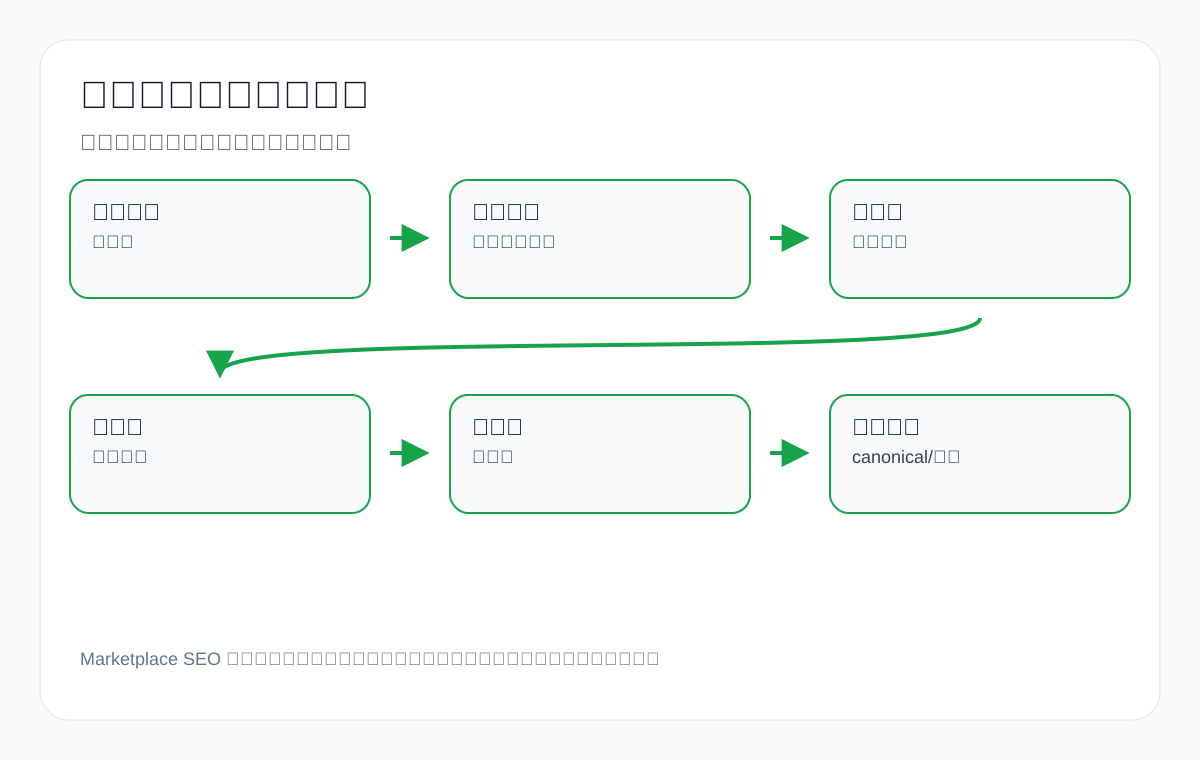
The first step in Marketplace SEO is page tiering. Not every listing page, filter page, and internal search page is worth indexing. The criteria should include: whether there is real search demand, whether there are enough results, whether the content is unique, whether the page can capture commercial intent, whether there are internal link entry points, and whether it can provide a conversion path.
+
+
| Page type | Indexing recommended? | Quality threshold | Foreign-trade example |
|---|---|---|---|
| Core category page | Recommended | Has category description, results, filters, FAQ, internal links | LED flood light suppliers |
| High-value combination listing page | Selectively open | Has search demand, enough results, unique description | waterproof connector IP67 suppliers |
| Seller page | Open once the threshold is met | Complete profile, enough products, clear reviews and certifications | cnc machining parts manufacturer profile |
| Internal search page | Cautious by default | Open only with stable demand and high-quality results | search results for packaging machine |
| Empty-result page | Not recommended | No results or very few results | Non-existent model combinations |
| Duplicate parameter page | Restrict | Content is almost identical | Duplicate sorting, color, and price parameters |
+
+
Category page SEO: the most stable entry point for a platform
+
Core category pages are the SEO pages most worth investing in on a Marketplace. A category page should resemble a small topic hub, not just a product list. It needs to explain what purchasing problem the category solves, which filter dimensions exist, how to choose a supplier, whether the products/sellers in the results are sufficient, what the common FAQs are, and how to send an inquiry next.
+
| Category page module | Purpose | Foreign-trade example | Review metric |
|---|---|---|---|
| Category description | Helps search engines and buyers understand the topic | valve type, material, and pressure for industrial valve supplier | Category keyword impressions and CTR |
| Filter dimensions | Helps buyers narrow the range | LED flood light by wattage, IP rating, and application | Filter clicks and time on listing pages |
| Supplier/product quality | Ensures results are valuable | Seller profiles, certifications, reviews, product count | Low bounce and inquiry quality |
| FAQ | Covers long-tail questions | MOQ, sample, lead time, certification | Question keyword impressions |
| Inquiry entry point | Captures commercial actions | Request Quote, Compare Suppliers | Inquiries and matching submissions |
+
+
Listing and filter pages: when to open them to indexing
+
Listing and filter pages are the biggest source of URL explosions. For example, waterproof connector can be combined by IP rating, pin count, cable size, material, application, country, and supplier type. If every combination is opened to indexing, Google will crawl a large number of similar pages. The right approach is to open only combinations that have real search demand, enough results, unique content, and clear commercial value.
+
| Filter combination | Open? | Basis for judgment | Action |
|---|---|---|---|
| waterproof connector IP67 | Can be considered | Has search demand and enough results | Write a unique description and FAQ |
| waterproof connector IP67 3 pin black sort price desc | Do not open | Sorting parameters and overly fine combinations | canonical or restrict crawling |
| LED flood light 100W outdoor | Can be considered | Clear commercial intent | Use as a listing page or category page |
| packaging machine blue low price page 7 | Do not open | Low-value duplicate pagination | Control pagination and parameters |
+
+
Seller page SEO: quality thresholds matter more than quantity
+
If seller pages on a Marketplace are too low in quality, they drag down overall page quality. A seller page worth indexing cannot consist only of a company name and a few products. It should include a seller introduction, main products, certifications, factory or trading status, target markets, MOQ, delivery capability, reviews, contact details, product count, FAQs, and verifiable materials.
+
| Seller page module | Why it matters | Example | Low-quality sign |
|---|---|---|---|
| Main products | Lets search engines understand the seller’s capabilities | cnc machining parts, custom metal parts | Only a company profile |
| Certifications/qualifications | Builds trust | ISO, CE, RoHS, industry documents | No evidence or exaggeration |
| Product count | Proves the seller page has substance | At least enough products and categories | Only 1–2 empty products |
| Reviews/transaction signals | Helps judge credibility | Real reviews, response rate, profile completeness | Spam reviews or duplicate content |
| Inquiry entry point | Captures buyer actions | Contact Supplier, Request Quote | Missing contact details |
+
+
Internal search pages: cautious by default, do not open them all
+
Internal search pages are often misused as SEO pages. Whatever a user searches for, the system generates a URL, and if all of them are indexable, they produce large numbers of thin, empty-result, duplicate, and low-quality pages. The general recommendation is that internal search pages should not be opened to indexing by default; only a small number of stable search result pages with search demand, enough results, and controllable content are worth converting into formal category or topic pages.
+
| Search page type | Recommendation | Reason | Alternative action |
|---|---|---|---|
| High-frequency core search | Convert into a formal category page | There is demand and it can be maintained | Create a landing page |
| Low-frequency long-tail search | Not recommended for indexing | Quality is uncontrollable | Serve users with internal search |
| Empty-result search | Do not index | No content value | Recommend related categories or submit a requirement |
| Misspelled/garbled search | Do not index | Low-quality URL | Correct and redirect to internal results |
| Seasonal trending terms | Depends | May have short-term demand | Create a temporary topic or campaign page |
+
+
UGC and reviews: quality governance is the foundation of SEO
+
Reviews, Q&A, seller profiles, and product descriptions on a Marketplace are often contributed by users or sellers. UGC can increase trust, but it can also create spam. A platform needs moderation rules, duplicate detection, sensitive-word handling, image quality standards, review authenticity mechanisms, and structured presentation. For foreign-trade B2B, reviews are not necessarily as numerous as in B2C, but supplier profiles and product descriptions must meet a quality threshold.
+
| UGC type | Value | Risk | Governance |
|---|---|---|---|
| Seller introduction | Supplements company capabilities | Copy-paste, exaggeration | Structured field entry and moderation |
| Product description | Covers long-tail keywords | Duplication, low quality, keyword stuffing | Minimum word count and data requirements |
| Buyer reviews | Increases trust | Spam reviews, fake reviews | Moderation and anomaly detection |
| Q&A | Covers purchasing questions | Duplicate and meaningless questions | Merge similar questions and display them in a structured way |
| Images | Improves authenticity | Stolen images, low resolution | Image moderation and alt text standards |
+
+
B2B foreign-trade Marketplace scenario examples
+
| Scenario | Core pages | SEO risk | Optimization action |
|---|---|---|---|
| custom metal parts supplier directory | Process categories, seller pages, RFQ page | Thin seller pages, confusing process keywords | Add material/process filters and drawing upload |
| LED flood light listing platform | Category pages, application pages, filter pages | Duplicate filter combinations | Open only high-value combinations |
| packaging machine equipment matching | Material categories, seller pages, requirement submission page | Low-quality search pages | Turn high-frequency searches into formal pages |
| medical probe specification library | Specification pages, compatibility pages, supplier pages | Missing compliance information | Add documents, scope statements, and quality thresholds |
| private label activewear manufacturer directory | Seller pages, fabric filters, MOQ filters | Incomplete seller profiles | Require fabric, sample, and logo method information |
+
+
Technical governance: how canonical, noindex, robots, and sitemap work together
+
Technical governance for Marketplace SEO cannot rely on a single tag. canonical is used to consolidate signals across similar pages, noindex is used for pages that should not enter the index but remain accessible, robots is used to control crawl paths, and sitemap is used to submit high-value URLs. These tools must be used together and must not conflict with one another.
+
| Tool | Suitable scenario | Not suitable for | Note |
|---|---|---|---|
| canonical | Sorting, minor filtering, duplicate listings | Pages with completely different intent | The target page must be genuinely relevant |
| noindex | Low-value search pages, thin seller pages | Core pages that need to rank long term | Do not also block crawling, or the noindex cannot be seen |
| robots | Restrict crawling of infinite parameters | Pages already indexed that need removal | Avoid accidentally blocking resources and core pages |
| sitemap | Submit core categories, quality listings, seller pages | Submitting all parameter pages | Keep lastmod trustworthy |
| Internal links | Allocate crawling and authority | Randomly linking all combination pages | Put only high-value pages in navigation |
+
+
How internal search data feeds back into SEO
+
Internal search data is a valuable asset for a Marketplace. What users search for on-site shows what they cannot find, what the platform lacks, whether category naming is accurate, and which product terms are worth building formal pages for. Do not directly let all search result pages be indexed, but you can use internal search data to discover formal category pages, FAQs, and supplier recruitment directions.
+
| Internal search signal | Description | Action | Example |
|---|---|---|---|
| High-frequency terms with results | Stable demand | Consider creating a category or topic page | waterproof connector IP67 |
| High-frequency zero-result terms | The platform lacks stock or naming does not match | Add products/sellers or fix synonyms | ceramic dinnerware hotel use |
| Spelling variants | Users express things in many ways | Add search correction and synonyms | cnc machined parts / cnc machining parts |
| Country/region terms | Buyers have regional preferences | Consider regional pages or supply capability statements | industrial valve supplier UAE |
| Price/MOQ terms | Strong commercial intent | Add pricing factors and inquiry information | private label activewear MOQ |
+
+
URL rules: platform pages must not grow freely on default parameters
One of the biggest problems with a Marketplace is runaway URL rules. Sorting, filtering, region, price, page number, search term, seller status, stock status, color, and model can all generate URLs. Without governance, Google will crawl a large number of similar pages, while core category pages fail to get enough crawling and authority. URL rules must be defined clearly at the very beginning of website development.
| URL type | SEO value | Handling recommendation | Foreign-trade example |
|---|---|---|---|
| Core category URL | High | Stable, indexable, included in sitemap | /led-flood-light-suppliers/ |
| Filter URL with demand | Medium-high | Open manually, write a unique description | /waterproof-connectors/ip67/ |
| Sorting URL | Low | canonical to the main listing or restrict | ?sort=price_desc |
| Pagination URL | Depends | Ensure it is crawlable without creating duplicate titles | /page/2/ |
| Internal search URL | Low to medium | noindex by default, convert high-frequency terms into formal pages | ?s=packaging+machine |
| Empty-result URL | Low | Do not index, recommend related categories | Non-existent model combination |
How to write platform category page content so it does not read like an empty list
Many platform category pages have only filters and a product list, with no text description. Such pages are somewhat useful to users, but semantically weak for search engines and AI systems. A category page should at minimum explain: what this category is, which purchasing scenarios it suits, what the common filter dimensions are, how to compare sellers, and what information to provide when sending an inquiry.
| Category page content | What to write | Example | Value |
|---|---|---|---|
| Category definition | Explain the product scope in 2–3 sentences | waterproof connectors are used in outdoor equipment, electrical connections, and waterproof environments | Helps machines understand the topic |
| Filter description | Explain the important filter dimensions | IP rating, pin count, cable size, application | Helps buyers choose |
| Supplier assessment | Explain which seller data to look at | Certifications, product count, response rate, sample capability | Increases trust |
| Inquiry information | Tells buyers what to submit | Model, quantity, target country, application, drawings | Improves inquiry quality |
| FAQ | Answers common purchasing questions | MOQ, lead time, sample, customization | Covers long-tail demand |
Platform seller page quality scoring table
Whether a seller page is opened to indexing should be based on an explicit score, not on generating an indexable page as soon as a seller registers. Scoring can include profile completeness, product count, certifications, image quality, reviews, responsiveness, whether there is duplicate content, and whether target-market information is present.
| Scoring item | High-quality sign | Low-quality sign | Handling |
|---|---|---|---|
| Profile completeness | Company, products, capabilities, and markets are clear | Only a company name | Do not index below the threshold |
| Product count | Enough products and categories | Only 1 product or empty products | Open after it is completed |
| Certifications/documents | Certifications and scope of application are clear | No evidence or exaggeration | Require document upload |
| Image quality | Real product, factory, and application images | Stolen, low-resolution, duplicate images | Moderate images |
| Reviews/response | Real reviews, timely responses | Spam reviews or no response | Lower recommendation weight |
| Duplicate content | Descriptions are differentiated | Copying platform default copy | Require a rewrite |
RFQ and inquiry pages: the commercial loop of platform SEO
A Marketplace should not chase listing page traffic alone; it must also let buyers send high-quality RFQs. The RFQ form on a B2B platform should be designed around product, quantity, specifications, target country, application, budget, attachments, and communication method. Too few fields leave sellers unable to quote; too many fields lower the submission rate, so a balance is needed.
| Field | Suitable products | Mobile/desktop recommendation | Review metric |
|---|---|---|---|
| Product name | All scenarios | Auto-fill from the listing or seller page | Whether the inquiry matches a category |
| Quantity | Wholesale, custom, equipment | Allow range selection | Share of invalid inquiries |
| Specifications/model | connector, valve, medical probe | Prompt for key parameters | Number of seller follow-up questions |
| Application scenario | lighting, packaging, industrial parts | A short text field is enough | Inquiry match rate |
| Attachments | cnc machining, custom parts | Support drawing and image upload | Share of inquiries with attachments |
| Target country | Export business | Dropdown or auto-detection | Market match rate |
On-site recommendations and internal links: keep buyers from stopping at a single listing page
Internal links on a Marketplace are not just an SEO structure; they are also the path by which buyers discover suppliers and products. Category pages should link to high-quality combination pages, popular sellers, related categories, and sourcing guides; seller pages should link to main products, similar products, reviews, and RFQ; search pages should recommend related categories and popular filters. Internal links should serve the buyer journey, not pile up pages at random.
| Page | Recommended links | Purpose | Example |
|---|---|---|---|
| Core category page | High-value filters, popular suppliers, FAQ | Channel long-tail demand | LED flood light → outdoor / warehouse |
| Combination listing page | Parent category, related parameters, RFQ | Avoid orphan pages | IP67 connector → waterproof connector |
| Seller page | Main products, reviews, inquiry entry point | Improve trust and conversion | CNC supplier → aluminum parts |
| Search page | Related categories and popular searches | Guide users to maintainable pages | zero result → submit sourcing request |
| Sourcing guide | Category pages, seller pages, RFQ | Move informational demand into the commercial path | packaging machine guide → suppliers |
AI/GEO perspective: how platform pages can be understood more accurately
AI search needs pages that are clear, structured, and verifiable. If a Marketplace has only product lists and seller cards, AI struggles to understand accurately what the platform offers. Category pages and seller pages should have definition sentences, filter descriptions, supplier quality standards, FAQs, and data tables. AI citations change, so fixed citations cannot be promised, but the foundation for pages to be understood accurately can be improved.
| Page | Citable content | Example | How to observe |
|---|---|---|---|
| Category page | Category definition and selection criteria | How to choose waterproof connector suppliers | Whether AI cites the official category description |
| Seller page | Main products, certifications, markets, MOQ | private label activewear manufacturer profile | Whether AI describes it accurately |
| Sourcing guide | Decision tables and steps | packaging machine sourcing checklist | Whether AI cites the table content |
| RFQ page | List of information to submit | drawing, quantity, material, country | Whether AI suggests reasonable information |
A 30-60-90 day review cadence for Marketplace SEO
| Timeframe | What to look at | Possible problem | Action |
|---|---|---|---|
| 30 days | Indexing, crawling, initial GSC impressions | Core pages are not discovered, parameter pages are crawled too much | Add sitemap, internal links, robots/canonical |
| 60 days | Queries for category and listing pages | Queries are scattered or low-value pages take impressions | Adjust index strategy and titles |
| 90 days | Internal search, RFQ, seller page conversion | Traffic without inquiries or low-quality seller pages | Optimize RFQ, seller thresholds, and recommendation logic |
Faceted navigation governance: which filter dimensions may generate pages
Faceted navigation is the core challenge of Marketplace SEO. Filter dimensions themselves are not bad; the problem is uncontrolled combinations. A platform should first sort filter dimensions into three groups: “can generate SEO pages,” “only serve user filtering,” and “should not generate URLs.” Foreign-trade products in particular require distinguishing parameters with search demand from pure sorting parameters.
| Filter dimension | Suitable for generating pages? | Criteria | Example |
|---|---|---|---|
| Product type | Suitable | Clear search demand and results | packaging machine / filling machine |
| Core specifications | Selectively suitable | Buyers search for it directly | IP67 waterproof connector |
| Application scenario | Suitable | Clear commercial intent | LED flood light for warehouse |
| Material | Selectively suitable | Affects purchasing decisions | stainless steel valve supplier |
| Color/sorting | Usually not suitable | Low search value or duplicate | ?color=blue&sort=price |
| Stock status | Usually not suitable | Changes frequently | in stock only |
For example, the IP rating and pin count of a waterproof connector may have search value, but color, sorting, and stock status are usually not suitable for generating separate indexable pages. The wattage, application, and outdoor/indoor attributes of an LED flood light may be worth building pages for, but price sorting and temporary discounts are not suitable as SEO URLs.
Pagination and infinite scroll: make products discoverable without creating duplicates
Marketplaces commonly use pagination or infinite scroll to display large numbers of products. From an SEO standpoint, products in the core listing must be discoverable, while duplicate pagination titles, thin content, and confusing parameters must be avoided. With infinite scroll, if there is no accessible pagination URL, search engines may only see the first batch of results; if every paginated page has the same title, duplicate signals are created.
| Display method | Risk | Recommendation | Suitable scenario |
|---|---|---|---|
| Traditional pagination | Duplicate titles, low value on deep pages | Keep crawlable links and control deep-page quality | Large category pages |
| Infinite scroll | Later results are undiscoverable | Provide pagination URLs or a load-more link | Mobile listings |
| Load more | Loaded only via JS | Make sure there are accessible URLs underneath | Product listings |
| Sorted pagination | Many duplicate combinations | canonical sorting parameters to the main listing | Price/popularity sorting |
| Empty pagination | Low-value URL | Avoid generating it or return a sensible status | Combination pages with too few results |
Regional pages: foreign-trade Marketplaces must handle country and city terms carefully
Many B2B platforms consider building supplier by country or manufacturer in country pages. Regional pages present an opportunity, but they can easily become thin content. If the platform genuinely has sellers, products, and purchasing demand in the corresponding region, regional pages can be built; if country/city combinations are generated only to cover keywords, they create low-quality pages.
| Regional page type | Recommended? | Quality requirement | Example |
|---|---|---|---|
| Target-market supply capability page | Can be done | Explain export experience, certifications, shipping, and service | industrial valve supplier for UAE projects |
| Seller location page | Depends | Enough sellers and genuine filtering value | cnc machining suppliers in Guangdong |
| Buyer target-country page | Can be done | Center on certifications, logistics, payment, and standards | LED flood light for Europe market |
| City combination page | Caution | Must have genuine localized content and results | Overly fine-grained city pages usually have low value |
| Auto-generated country page | Not recommended | No sellers or content differences | Vague country supplier pages |
Handling low-quality pages: delete, merge, noindex, or add content
After a Marketplace has been running for some time, low-quality pages are inevitable. They cannot all simply be deleted; the decision should be based on whether the page has search demand, historical traffic, conversions, and whether its content can be completed.
| Page situation | Handling method | Reason | Note |
|---|---|---|---|
| Has search demand but thin content | Add content | It can become a high-value page | Add descriptions, FAQ, results, and CTA |
| Duplicate parameter page | canonical or restrict | Avoid signal dilution | Do not harm core filter pages |
| Low-quality seller page | noindex or require more information | Protect overall platform quality | Give sellers clear completion standards |
| Empty-result page | noindex or do not generate | No search value | Keep a user recommendation path |
| Expired campaign page | Merge or redirect | Avoid dead and thin pages | Keep valuable historical content |
| Old combination page with no traffic or conversions | Merge/do not index | Reduce crawl waste | Check GSC and logs first |
How to use structured data on a Marketplace
Structured data cannot compensate for low-quality content, but it can help search engines understand page entities. Common structured data on a Marketplace includes Breadcrumb, Product, ItemList, Organization, FAQ, and Review (where policy allows). When using it, make sure the visible content on the page matches the structured data, and do not put false information in structured data that the page does not display.
| Structured data | Applicable pages | Value | Note |
|---|---|---|---|
| Breadcrumb | Category, listing, seller, product pages | Explains hierarchy | Consistent with page navigation |
| ItemList | Listing and category pages | Helps understand the list | Do not mark up low-quality results |
| Product | Product pages | Describes the product entity | Prices, stock, and reviews must be real |
| Organization | Seller pages | Describes the seller entity | Company information must be accurate |
| FAQ | Category and guide pages | Covers purchasing questions | Q&A must be visible on the page |
| Review | Review/product pages | Enhances trust | Follow review policies and avoid fake reviews |
Marketplace SEO team collaboration checklist
Platform SEO cannot be completed by the content team alone. Product managers decide filters and URLs, developers decide rendering and index control, operations handles seller profiles, sales or customer service feeds back on inquiry quality, and SEO handles demand assessment and review. Every role needs to know its deliverables.
| Role | Responsible for | Deliverable | Acceptance metric |
|---|---|---|---|
| Product manager | Page types, filter logic, RFQ flow | Page rules and interaction specs | Filters work and paths are clear |
| Development | URLs, canonical, noindex, performance | Technical implementation and test records | Crawling, indexing, and speed are normal |
| Operations | Seller profiles, product quality, UGC moderation | Profile completeness rules | Fewer low-quality pages |
| SEO | Keywords, page tiering, internal links, review | Index strategy and content list | GSC and log improvements |
| Sales/customer service | Inquiry quality and buyer questions | RFQ field suggestions and FAQ | More complete inquiries |
Pre-publish acceptance checklist
| Acceptance item | Pass criteria | Risk if failed |
|---|---|---|
| Page tiering | Categories, combinations, sellers, search, and empty results all have a strategy | Uncontrolled URLs |
| Index control | index/noindex/canonical/robots/sitemap do not conflict | Core pages are not indexed or low-quality pages proliferate |
| Content quality | Core pages have descriptions, FAQ, filters, and an inquiry entry point | Thin listing pages |
| Seller quality | Low-quality seller pages do not enter the index | Overall quality declines |
| Internal search | High-frequency terms feed categories and low-quality search pages are not indexed | Search pages proliferate |
| Conversion path | RFQ fields and seller contact paths are clear | Traffic without inquiries |
| Review data | GSC, logs, GA4, internal search, and CRM are trackable | Cannot judge the effect of actions |
Product data standards: the underlying source of platform page quality
Marketplace page quality ultimately depends on product and seller data. If product data itself lacks titles, specifications, images, applications, certifications, MOQ, delivery, and after-sales information, category pages and listing pages are hard to strengthen. A platform should set minimum data standards for each category rather than letting sellers fill in whatever they like.
| Data field | Why it matters | Foreign-trade example | Minimum requirement |
|---|---|---|---|
| Product title | Determines search and listing comprehension | IP67 Waterproof Connector 4 Pin | Include the product term and key specifications |
| Specification parameters | Helps buyers filter | voltage, material, size, pressure | Key category fields are required |
| Application scenario | Connects industry terms and purchasing demand | warehouse, food packaging, medical device | At least 2–3 real applications |
| Images | Improves trust and decision efficiency | Product, detail, and application images | Clear, real, and with alt text |
| MOQ/samples | Reduces ineffective communication | private label activewear MOQ | State the range and influencing factors |
| Certifications/documents | Supports compliance assessment | CE, RoHS, ISO, datasheet | State the scope of application |
Risk control: do not let growth demands harm platform trust
Platform websites easily open up more pages in pursuit of index volume, but low-quality pages harm long-term trust. SEO decisions must be combined with risk control: fake sellers, duplicate products, stolen images, exaggerated certifications, spam reviews, induced inquiries, incorrect prices, and expired stock can all affect user experience and search quality.
| Risk | Sign | SEO impact | Governance action |
|---|---|---|---|
| Fake sellers | Profiles are untrue or contact is impossible | User trust declines | Verify qualifications and contact details |
| Duplicate products | Multiple sellers copy the same description | Duplicate content | Require differentiated fields |
| Stolen images | Images come from other websites | Trust and copyright risk | Image moderation and appeal mechanism |
| Exaggerated certifications | Unverified document scope | Misleads buyers | Review certification fields |
| Spam reviews | Duplicate, meaningless, fake reviews | UGC quality declines | Review risk control and merging |
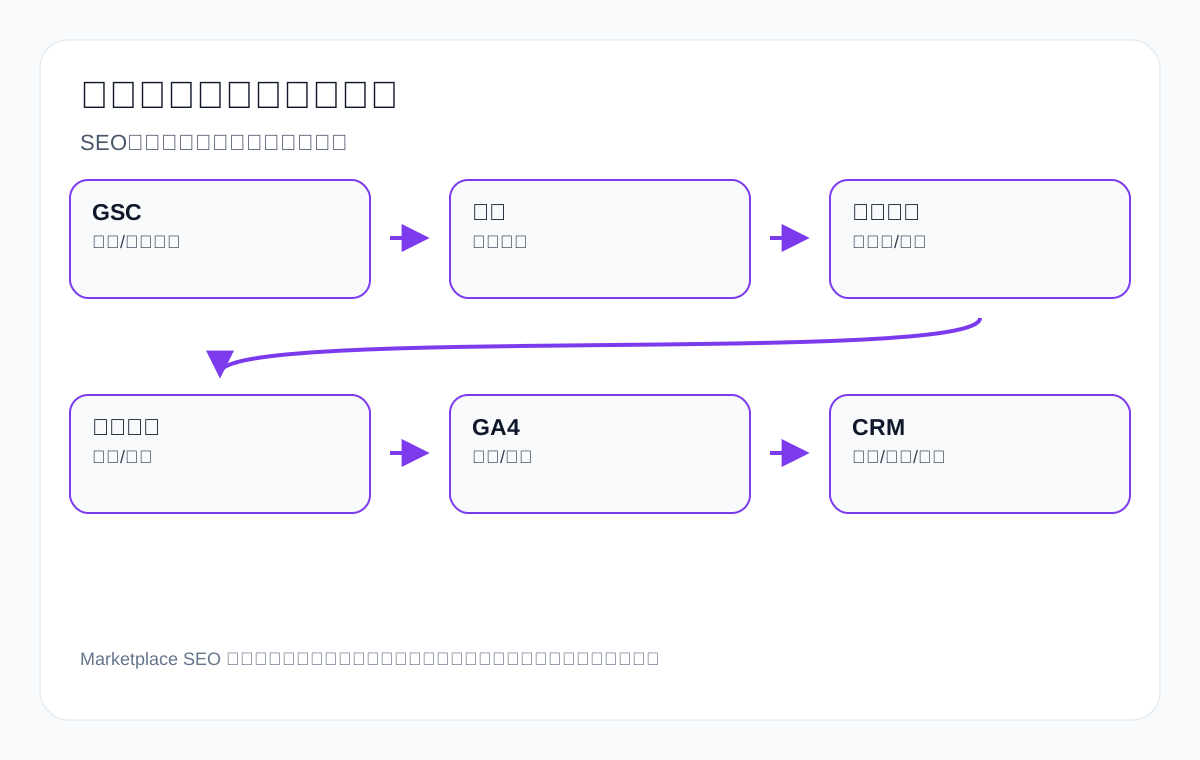
Review metrics: what to look at after Marketplace SEO work
+
+
| Metric | Cycle | What to look at | Action |
|---|---|---|---|
| GSC page types | 30–60 days | Which queries categories, listings, and seller pages each bring | Adjust indexing and titles |
| Log crawling | Monthly | Whether Googlebot is wasting effort on parameters and empty results | Restrict low-value URLs |
| Internal search | Monthly | High-frequency terms, zero-result terms, converting terms | Create categories or add sellers |
| Seller quality | Monthly | Profile completeness, product count, reviews, response | noindex low-quality pages or add data |
| GA4 paths | 30–90 days | Paths from listings to seller and inquiry pages | Optimize recommendations and CTAs |
| Inquiry quality | 60–90 days | Whether it includes product, quantity, country, and use | Optimize the RFQ form |
| AI citation observation | 60–90 days | Whether AI cites category, seller, or data pages | Add definition sentences and evidence tables |
+
+
Common misconceptions
+
-
+
- Believing more pages are always better and opening up every filter and internal search page.
- Having no data threshold for seller pages, so large numbers of thin pages enter the index.
- Category pages contain only a list, with no description, FAQ, filter logic, or inquiry entry point.
- Internal search pages are indexable by default, producing empty-result and garbled pages.
- Looking only at organic traffic and not at crawl logs, internal search, or inquiry quality.
- Applying ordinary ecommerce SEO methods directly to a multi-seller platform.
- Ignoring UGC moderation, so spam content affects page quality.
- Using your own service keywords as examples, which cannot illustrate the real scenarios of a foreign-trade product platform.
+
+
+
+
+
+
+
+
+
+
FAQ: Common Marketplace SEO questions
+
What is the biggest difference between Marketplace SEO and ordinary ecommerce SEO?
A Marketplace has sellers, listings, filters, search, reviews, and a large number of combination pages. The core is quality control for pages at scale, not just optimizing individual product pages.
+
Should all filter pages be indexed?
No. Only combination pages with real search demand, enough results, unique content, and clear commercial value are suitable for opening to indexing.
+
Can internal search pages be used for SEO?
By default, be cautious. High-frequency, stable search terms with enough results can be turned into formal category or topic pages, but it is not advisable to let all search result pages enter the index directly.
+
What quality must a seller page reach to be indexed?
At a minimum, it needs a complete seller profile, main products, enough products, certification or trust information, review/response signals, and a clear contact entry point.
+
How should empty-result pages be handled?
Empty-result pages usually should not be indexed. You can recommend related categories, popular searches, or a requirement submission entry point to users, but do not let them become index pages.
+
Does a Marketplace need log analysis?
Yes. Logs show whether Googlebot is heavily crawling low-value parameter pages, empty-result pages, and duplicate pages, and they are an important basis for governance of SEO at scale.
+
How can a B2B Marketplace improve inquiry quality?
Category pages and seller pages should prompt for product, specifications, quantity, country, application, document uploads, and contact preferences, so that the RFQ form stays closer to purchasing needs.
+
What impact do AI/GEO have on a Marketplace?
AI is more likely to cite category, seller, or data pages that are clearly structured, complete, and highly credible. Platforms should add definition sentences, FAQs, parameter tables, and seller trust information, but should not promise fixed citation results.
+
+
Conclusion: the goal of Marketplace SEO is “controllable scale”
+
The difficulty with Marketplace SEO is not a lack of pages, but too many pages, uneven quality, complex parameters, inconsistent seller profiles, and uncontrollable internal search. The genuinely effective approach is to tier pages: strengthen core category pages, selectively open high-value listing pages, set quality thresholds for seller pages, keep search pages cautious by default, restrict indexing for empty-result and duplicate-parameter pages, and continuously govern UGC and reviews.
+
For foreign-trade platforms, directory sites, and multi-supplier B2B websites, SEO is not only a traffic issue; it also concerns whether buyers can find suitable suppliers, whether seller profiles are credible, whether inquiries are complete, and whether the platform concentrates crawl resources on high-value pages. Whether the subject is custom metal parts, LED flood light, packaging machine, medical probe, waterproof connector, or private label activewear manufacturer, page scale must serve purchasing decisions rather than manufacture low-quality URLs.
+
Official references and Marketplace SEO acceptance boundaries
SEO for platform listing pages and seller pages requires looking at page content, product structured data, crawlable links, and internal search capture at the same time. What can be optimized is page quality and discoverability, not platform algorithm results.
| Official source | What it is used to judge | Acceptance boundary |
|---|---|---|
| Google: Product structured data | Check how product name, price, stock, reviews, and other product information are expressed | Valid structured data does not guarantee rich results will be displayed |
| Google: Structured data intro | Confirm structured data matches visible content | Markup cannot replace body content and product facts |
| Google: Make your links crawlable | Confirm there are crawlable entry points between listing, seller, and product pages | Internal search result pages are not necessarily suitable for indexing |
| Google: Helpful content | Check whether pages meet buyers’ selection and comparison needs | Copied product titles cannot make a high-quality page |
| Search Console Performance report | Observe real queries by platform page and product page | When there is no data, keep only the page list |
Low-data-period review checklist
| Check item | Record fields | How to write during a low-data period |
|---|---|---|
| Index entry | index/follow, canonical, sitemap, internal links, HTTP status code | Record only the current accessible state; do not write judgments about search results |
| Content evidence | Page role, product or service data, images, structured data, update date | List gaps when data is insufficient; do not add fabricated cases |
| Search Console | query, page, country, device, date window | If GSC shows zero rows, write zero rows; do not extrapolate rankings or clicks |
| GA4 review | Forms, downloads, email clicks, inquiry entry points, key events | If there are no events, fix tracking first; do not write conversion conclusions |
Continue reading this SEO series
If you are systematically working through foreign-trade website SEO, it is worth continuing with the articles below. First clarify how crawling, indexing, content, links, and review relate to one another, then decide which page to change next.
- How to do International Ecommerce SEO: A guide to multilingual, multicurrency, and cross-border category page optimization
- How to do Amazon SEO: A guide to titles, bullet points, images, keywords, and conversion rate
- How to do WordPress SEO: A guide to indexing, speed, and content structure optimization for foreign-trade websites
- How to do ecommerce SEO: How category pages, product pages, filter pages, and content pages should divide responsibilities on a foreign-trade website
- How to do product page SEO: A guide to title, FAQ, Schema, and internal link optimization for foreign-trade product pages
- How to do local SEO: A guide to Google Business Profile, reviews, NAP, and local pages
{
“@context”: “https://schema.org”,
“@type”: “FAQPage”,
“mainEntity”: [
{
“@type”: “Question”,
“name”: “What is the biggest difference between Marketplace SEO and ordinary ecommerce SEO?”,
“acceptedAnswer”: {
“@type”: “Answer”,
“text”: “A Marketplace has sellers, listings, filters, search, reviews, and a large number of combination pages. The core is quality control for pages at scale, not just optimizing individual product pages.”
}
},
{
“@type”: “Question”,
“name”: “Should all filter pages be indexed?”,
“acceptedAnswer”: {
“@type”: “Answer”,
“text”: “No. Only combination pages with real search demand, enough results, unique content, and clear commercial value are suitable for opening to indexing.”
}
},
{
“@type”: “Question”,
“name”: “Can internal search pages be used for SEO?”,
“acceptedAnswer”: {
“@type”: “Answer”,
“text”: “By default, be cautious. High-frequency, stable search terms with enough results can be turned into formal category or topic pages, but it is not advisable to let all search result pages enter the index directly.”
}
},
{
“@type”: “Question”,
“name”: “What quality must a seller page reach to be indexed?”,
“acceptedAnswer”: {
“@type”: “Answer”,
“text”: “At a minimum, it needs a complete seller profile, main products, enough products, certification or trust information, review/response signals, and a clear contact entry point.”
}
},
{
“@type”: “Question”,
“name”: “How should empty-result pages be handled?”,
“acceptedAnswer”: {
“@type”: “Answer”,
“text”: “Empty-result pages usually should not be indexed. You can recommend related categories, popular searches, or a requirement submission entry point to users, but do not let them become index pages.”
}
}
]
}
This page is machine-translated from the Simplified Chinese version and awaiting human review. It has not yet been proofread.