Bottom line first: Quotes from Google SEO partner teams vary widely, usually not because of “keyword pricing” itself, but because the number of pages, technical issues, content assets, export product complexity, review frequency, and depth of collaboration all differ. If a quote only says “optimize X keywords,” it is hard to judge the real workload.
When export companies do SEO, common product terms might be custom metal parts, LED flood light, packaging machine, waterproof connector. These terms are not just about rankings; they also involve whether product pages can be indexed, whether category pages explain the supply range, whether technical articles answer procurement questions, and whether the inquiry path is clear.
Official-source boundaries: for a Google SEO quote, look first at workload, data definitions, and acceptance fields
Quotes from Google SEO partner teams vary widely, usually not because some team is “mysterious,” but because the workload included in the quote is completely different. One quote covers only a few articles; another covers technical diagnosis, page inventory, product information, category pages, product pages, GSC, GA4, AI samples, monthly reviews, and sales feedback — naturally the price will not be the same.
When export companies compare quotes, they should not just ask “how much.” A better question is: which URLs will this quote check, and does it include sitemap, robots, canonical, structured data, GSC, GA4, page rewrites, product information confirmation, inquiry events, AI visibility samples, and review cadence? For product lines such as custom metal parts, LED flood light, packaging machine, medical probe, waterproof connector, industrial valve supplier, ceramic dinnerware, and private label activewear manufacturer, the page facts and procurement fields differ, and the quote should reflect that difference in work.
Official sources mapped to Google SEO quote acceptance fields
| Official source | What it maps to in a quote | What can be verified | What it must not be written as |
|---|---|---|---|
| Google Search Central: SEO Starter Guide | Page-level basic optimization | Whether titles, body copy, image descriptions, internal links, and page purpose serve real users. | Must not be written as a guaranteed ranking or a guaranteed click result. |
| Google Search Central: Search Essentials | Basic search eligibility | Whether pages are accessible and indexable, and whether spammy and misleading content is avoided. | Basic compliance does not mean search performance has already been achieved. |
| Google Search Central: Sitemaps overview | URL discovery path | Whether key articles, category pages, product pages, application pages, and resource pages are included in the sitemap. | A URL being in the sitemap does not mean the page is indexed. |
| Google Search Central: robots.txt introduction | Crawling rules | Whether pages, images, PDFs, JS/CSS, and product assets are mistakenly blocked. | robots allowing a page does not mean the page will be shown. |
| Google Search Central: canonical URL guidelines | canonical and duplicate URLs | Whether parameter pages, pagination, filter pages, variant pages, and multilingual URLs have a clear canonicalization strategy. | canonical is not a forced command, nor a ranking promise. |
| Google Search Central: Structured data general guidelines | Structured data boundaries | Whether Schema fields come from visible page content, and whether plugin duplicate output and fabricated fields are avoided. | Schema is not a rich result or AI answer controller. |
| Google Search Central: Page experience | Page experience | Whether mobile usability, loading experience, intrusive elements, and page readability affect users. | Passing experience checks does not mean ranking higher. |
| Search Console Help: Performance report | GSC performance review | query, page, clicks, impressions, CTR, average position, country, device. | When there is no GSC row data, you must not fill in rankings, clicks, or CTR. |
| Search Console Help: URL Inspection tool | Single URL inspection | Indexing, crawling, canonical, and the version Google sees for key URLs. | A single URL being inspectable does not mean it has already been shown. |
| Google Analytics Help: About events | GA4 behavior events | On-site actions such as forms, email, WhatsApp, downloads, RFQ, and button clicks. | Event changes cannot directly substitute for search performance. |
| Google Analytics Help: Recommended events for online sales | Ecommerce path events | Events such as view_item, select_item, add_to_cart, and purchase can help observe the product path. | B2B inquiry sites still need to look separately at RFQ, email, and downloads. |
| Google Search Central: AI features and your website | Basic AI search boundaries | AI features still depend on pages being accessible, indexable, having clear content, and consistent structured data. | Must not promise that AI answers will definitely use the official site. |
| OpenAI Platform: Bots | AI crawler access | The purpose and access boundaries of OAI-SearchBot, GPTBot, and ChatGPT-User must be checked separately. | Allowing a bot access does not mean AI search results will change. |
| Bing Webmaster Blog: AI Performance | Bing AI observation | If visible in the account, you can record citations, cited pages, and grounding query phrases. | A citation is not a ranking, an answer position, or an inquiry result. |
| IndexNow: Documentation | URL update notification | After adding, updating, or deleting URLs, record the submission time, URL list, and returned status. | HTTP 200 only means the notification was received, not that the page is indexed. |
Why quotes differ so much: break the work into nine categories first
The same “Google SEO optimization” label can cover a quote with just a few articles or a quote that includes site technology, product pages, inquiry paths, and review meetings. When comparing quotes, first see whether the nine categories of work are spelled out, then look at the price.
| Type of work | Common low-price wording | Verifiable wording | Export site example |
|---|---|---|---|
| Page inventory | Optimize a number of keywords. | List the counts of home page, category pages, product pages, application pages, resource pages, article pages, and inquiry pages. | For LED flood light, at minimum you should look at category pages, application pages, product pages, and certification pages. |
| Technical diagnosis | Check website issues. | Status codes, sitemap, robots, index/follow, canonical, Schema, mobile tables. | Whether the waterproof connector parameter pages are diluted by filter URLs. |
| Content material | Write SEO articles. | Product facts, specifications, MOQ, lead time, certificates, packaging, FAQ, and RFQ fields. | custom metal parts needs drawing, material, tolerance, quantity. |
| Product page rewrites | Optimize page content. | List URLs, fields, rewrite depth, and reviewer by product line. | medical probe must verify compatible models and data downloads. |
| Category page rewrites | Optimize category pages. | Product family descriptions, application scenarios, representative products, internal links, FAQ, and Schema. | industrial valve supplier should be broken down clearly by material, pressure, and use. |
| Data configuration | Install analytics tools. | GSC, GA4, Bing, events, forms, email, downloads, and RFQ fields. | packaging machine should look at capacity data downloads and inquiry fields. |
| AI visibility | Includes AI search optimization. | Query sets, answer samples, official site citations, competitor sources, wrong facts, and retest frequency. | private label activewear manufacturer should look at MOQ, fabric, sample. |
| Review frequency | Monthly report. | 30-60-90 day reviews, data scope, meeting cadence, next month’s URL list. | Look at organic search, AI samples, and inquiry quality by product line. |
| Handover boundaries | Materials belong to the client. | How account permissions, query sets, URL tables, change logs, screenshots, and export files are handed over. | After the engagement ends, the company can still keep reviewing. |
Do a page inventory before quoting: without a URL list, a quote easily distorts
The biggest difference in quotes is often the number of pages. A site with 20 product pages and a site with 200 product pages, 30 category pages, and multiple resource pages cannot be estimated with the same workload. Before asking for a quote, an export company should at least list its core URLs.
| Page type | Why it affects the quote | What the quote should state clearly | Acceptance evidence |
|---|---|---|---|
| Home page | Carries the brand entity, main products, markets, and core entry points. | Whether the brand, product families, internal links, and structured data are checked. | Page screenshots, source code, Schema, internal link table. |
| Category pages | Usually carry product family and application terms and are core entry points for export sites. | How many category pages will be changed, and which fields each page will add. | Category URLs, body copy, representative products, FAQ. |
| Product pages | Specifications, images, MOQ, packaging, lead time, and RFQ fields need business confirmation. | Number of pages, sources of product facts, review process. | Before-and-after summaries, specification tables, inquiry entry points. |
| Application pages | Solve procurement scenario questions and connect solution terms with product pages. | Number of scenarios, target markets, candidate products, and risk notes. | Application URLs, product internal links, decision tables. |
| Resource pages | Certificates, manuals, datasheets, and installation and maintenance materials affect credibility. | HTML summaries, download events, file accessibility. | Resource URLs, download links, GA4 events. |
| Article pages | Explain questions but cannot replace commercial pages. | Topics, internal links, cited sources, update frequency. | Article URLs, internal link tables, official links. |
| Inquiry pages | Ultimately capture the procurement action. | Form fields, email, WhatsApp, RFQ events. | Event configuration, test records, sales feedback fields. |
Technical debt clearly widens the quote gap: not every site starts from the same point
Some sites are simply thin on content; others have problems with crawling, indexing, duplicate URLs, speed, and structured data. A higher quote for the latter is normal, because it cannot be solved by writing a few paragraphs.
| Technical debt | Consequence of underestimating | What the quote should include | How to re-check |
|---|---|---|---|
| Messy sitemap | Key product pages and resource pages are hard to discover. | Sitemap list, missing URLs, redundant URLs, submission records. | Sitemap, GSC, URL list. |
| robots misblocking | Pages or assets cannot be crawled normally. | Rule checks, asset access, image and PDF access. | robots file, status codes, logs. |
| Messy canonical | Filter pages, parameter pages, and variant pages dilute each other. | Duplicate URL table, canonicalization strategy, key page confirmation. | Source code, URL Inspection tool, GSC. |
| Schema conflicts | Structured data and visible page content are inconsistent. | Product, Breadcrumb, Article, FAQ field checks. | Official testing tools, source code, page body copy. |
| Mobile table overflow | Resource and parameter pages are unreadable on mobile. | Mobile checks, table layout, image sizes. | 390px screenshots or browser checks. |
| Speed and asset issues | Product page usability drops and users struggle to complete an inquiry. | Images, caching, scripts, core page loading issues. | PageSpeed, browser, server logs. |
Without GSC data, quote conclusions must be downgraded
If Search Console has no query, page, or page-query rows in the last 28 or 90 days, the quote description must not claim existing rankings, impressions, clicks, CTR, or inquiry changes. At this stage, what can be quoted is baseline diagnosis, page inventory, technical fixes, event configuration, page actions, and a review framework; future platform performance must not be written as something that has already happened.
| Current evidence | What the quote can say | What the quote should not say | Follow-up review |
|---|---|---|---|
| GSC has no query and page rows | Build query sets, URL mapping, and a GSC/GA4 review framework. | Existing ranking, click, or CTR improvements. | Re-check query, page, and page-query in 7-14 days. |
| Page inventory is organized | The scope of URLs that need diagnosis and rewriting has been confirmed. | These pages have already gained search performance. | Look at indexing status, GSC, logs, and sitemap. |
| Technical issues are listed | Baselines such as sitemap, robots, canonical, and Schema have been confirmed. | Technical fixes will definitely bring rankings. | Verify item by item, then look at real data. |
| GA4 events pending configuration | Later you will be able to observe form, email, download, and RFQ actions. | The number of inquiries has already increased. | Combine with source, page, product, and sales feedback. |
| AI samples to be established | The AI question set and answer samples can be included in reviews. | AI platforms have already adopted the official site. | Continuously retest with a fixed question set. |
How to compare different quotes: look at fields, not adjectives
Quote descriptions often contain many pretty words: professional, comprehensive, systematic, long-term tracking. What can actually be compared is not these words but fields. The clearer the fields, the easier the later acceptance check.
| Comparison item | Unclear quote | Clear quote | How the company should ask |
|---|---|---|---|
| Number of URLs | Optimize the website. | Diagnose 60 URLs and rewrite 12 core pages. | Please list URL types and counts. |
| Page depth | Optimize titles and content. | Titles, body copy, specification tables, FAQ, image alt, Schema, internal links. | Down to which fields will each page type be changed? |
| Data permissions | Provide data analysis. | The company owns primary access to GSC, GA4, and Bing; the service provider has collaborative access. | Who owns the accounts and exported data? |
| Review report | Produce a report every month. | Review against four tables: GSC, GA4, AI samples, and inquiry feedback. | Does the report include raw tables? |
| Boundary description | Continuously improve results. | Write controllable actions and external platform results separately. | Which parts are work, and which can only be observed? |
Why a 30-60-90 day review cadence affects the quote
Review frequency is not a formality. Checking once every 30 days versus casually sending a screenshot once a quarter is a completely different workload. A genuinely useful review connects page actions, GSC, GA4, AI samples, inquiry quality, and the next URL list.
| Cycle | What the service provider should do | What the company should provide | Suitable for judging what |
|---|---|---|---|
| Days 0-30 | Page inventory, technical diagnosis, query sets, event definitions, first batch of page actions. | Product information, target markets, account permissions, reviewers. | Whether the baseline is established. |
| Days 31-60 | Re-check whether GSC has query/page rows and whether GA4 events work properly. | Inquiry records, sales feedback, information gaps. | Whether observable data is starting to appear. |
| Days 61-90 | Combine AI samples, Bing citations, GSC, GA4, and inquiry quality to give the next round’s list. | Real inquiry quality, deal-blocking points, changes in product priority. | Which pages to change first in the next round. |
Quote boundaries: quote the work, not external platform results
A reliable quote spells out controllable work clearly, and uncontrollable results clearly as well. What a service provider can quote is diagnosis, page actions, technical fixes, data configuration, reviews, and handover; it cannot write search systems, AI platforms, and buyer behavior as definite results.
| Scope | Can be written into the quote | Can only be observed | Acceptance materials |
|---|---|---|---|
| Technical baseline | sitemap, robots, canonical, Schema, status codes, mobile tables. | When search systems crawl or display. | Source code, status codes, GSC, screenshots. |
| Page rewrites | Fields for category pages, product pages, application pages, resource pages, article pages, and inquiry pages. | A certain page ranking in a certain position for a long time. | Before-and-after summaries, URL tables, review records. |
| Content material | Product facts, FAQ, certificates, specifications, RFQ fields, and internal links. | Buyers will definitely send an inquiry. | Information sources, page body copy, sales confirmation. |
| AI observation | Query sets, answer samples, cited URLs, competitor sources, and wrong facts. | A certain platform adopting the official site for the long term. | Sample tables, screenshot numbers, retest dates. |
| Data review | GSC, GA4, Bing, AI samples, inquiry fields, and sales feedback. | Trends or business conclusions when there is no data. | Export files, event lists, report dates. |
How to write quote attachments: turn a verbal scope into handover-ready material
Many quotes look similar, and the real difference hides in the attachments. Export companies should not only read the main quote document but also see whether the attachments can be handed over. If they can, the service provider knows what it is doing; if not, things easily turn into verbal explanations later.
| Attachment | Minimum content | Why it affects the quote | Acceptance method |
|---|---|---|---|
| URL list | Home page, category pages, product pages, application pages, resource pages, article pages, inquiry pages. | Without a URL list, the workload cannot be judged. | Mark each URL with page type, status, and action. |
| Product information list | Product lines, specifications, certifications, MOQ, packaging, lead time, target markets. | The more information is missing, the more time the service provider needs to ask and verify. | Publish only after the company’s business or sales team confirms. |
| Technical checklist | sitemap, robots, canonical, Schema, status codes, mobile tables. | Technical issues add troubleshooting and retest costs. | Source code, screenshots, status codes, and re-check dates. |
| Data permission table | GSC, GA4, Bing, server logs, forms, and inquiry records. | Without permissions, only a page baseline can be done, not a full review. | Accounts, permission levels, authorization dates, and export methods. |
| Review template | GSC, GA4, AI samples, inquiry feedback, next month’s URL list. | The more specific the review, the less likely later work goes off track. | Update against the same fields every month and keep the raw tables. |
If two quotes differ greatly in price, first align the attachments item by item. One team delivers only article titles; another delivers a URL list, product information sheet, technical checklist, event fields, AI sample table, and review template — these are not the same service. The point of comparing quotes is not to push the price to the lowest, but to confirm what verifiable material each dollar corresponds to.
1. Quote differences first come from the number of pages and page types
A project that only changes the home page and a few articles is a completely different workload from one that must organize dozens of product pages, category pages, technical articles, old URLs, and inquiry paths.
| Page type | Common work | Why it affects the quote |
|---|---|---|
| Home page | Clarify product range, industry positioning, and key entry points | Affects the site theme and the buyer’s first judgment |
| Product pages | Titles, specifications, applications, FAQ, internal links, structured information | High volume, and requires real product information |
| Category pages | Supply range, selection logic, product differences, related product paths | Carries mid-to-high intent queries and cannot just be a list of images |
| Technical articles | Answer questions about materials, processes, certifications, procurement risks, and quality verification | Determines whether long-tail procurement questions are covered |
| Old pages | Merge, redirect, noindex, rewrite, or keep | Poor handling drags down indexing and theme consistency |
2. The more technical debt, the less a quote can look only at keywords
SEO is not just writing content. Google’s official documentation repeatedly stresses the basics: crawling, indexing, sitemaps, robots, and page understandability. If a site has many 404s, duplicate URLs, messy canonical tags, unindexed key pages, and slow template loading, the quote will naturally be higher.
| Technical issue | What low-cost solutions often ignore | A more complete approach |
|---|---|---|
| Indexing anomalies | Only look at keyword rankings | Check GSC coverage, page status, sitemap, and crawl paths |
| Duplicate pages | Keep writing new articles | Handle canonical, merge thin pages, standardize internal links |
| 404s and redirects | Do not touch historical URLs | Build an old URL list and handle high-value link entry points |
| Page speed | Only provide tool screenshots | Distinguish template, image, script, server, and plugin issues |
| Structured data | Add Schema carelessly | Use appropriate markup by page type and avoid wrong or duplicate markup |
3. Content assets determine quote depth
If a company already has complete product information, English specifications, application cases, certification descriptions, and FAQ, the SEO team can organize the content into pages faster. If the information is thin, the partner team needs to first help sort out buyer questions, and this work will also be reflected in the quote.
When information is sufficient
- Existing product specification tables, materials, dimensions, processes, certifications, and application scenarios.
- Existing English product pages, but structure, titles, and internal links need optimization.
- Existing common customer questions that can be turned into FAQ and technical articles.
- Existing GSC data, so pages can be prioritized by real queries.
When information is insufficient
- Product pages have only a few images and a one-line description.
- Category pages have no selection logic, just a stack of products.
- The company cannot explain what target buyers ask most often.
- No GSC, GA4, or inquiry event records.
4. Industry competition and export product complexity also widen price gaps
SEO difficulty varies greatly across export industries. Standardized low-price products, industrial equipment, custom manufacturing, and certification-sensitive products have different requirements for page evidence and content depth.
| Industry or product type | SEO focus | Source of quote difference |
|---|---|---|
| Custom manufacturing | Materials, processes, precision, lead time, quality verification | Requires extensive technical explanation and case-based questions |
| Lighting products | Wattage, application, certification, installation, lifespan, comparison | Many specifications and application scenarios; high demands on category pages |
| Packaging machinery | Material types, capacity, automation level, after-sales | Long buyer decision cycles; needs technical articles for support |
| Consumer goods OEM | MOQ, sampling, packaging, certification, lead time | Inquiry paths and FAQ affect conversion |
| Industrial components | Specifications, compatibility, durability, industry applications | Many long-tail terms; both product and category pages must be detailed |
5. The more frequent the review, the higher the cost but the clearer the problems
Many quote differences come from review depth. Sending one screenshot at the end of the month versus monthly organizing of GSC, page actions, query changes, indexing status, and next-step priorities are not the same cost.
| Review method | What it includes | Suitable for what situation |
|---|---|---|
| Basic monthly report | Traffic, keywords, page change summary | Few site issues and already stable data |
| Action review | Which pages were changed this month, why, and what changed | Pages are being continuously reworked |
| Technical re-check | Indexing, crawling, 404s, speed, structured data | Site migration, redesign, or high technical debt |
| Query mapping review | New queries, corresponding pages, content gaps | Many export long-tail terms and procurement questions |
| Inquiry path review | Organic traffic to product pages, contact pages, form events | Values the commercial conversion path |
6. What cheap quotes usually leave out
Cheap is not necessarily bad, but a company should know where the cheapness is. If these gaps are not explained, they easily turn into disputes about results later.
- Not looking at GSC and estimating keywords only with third-party tools.
- Not handling old URLs, 404s, duplicate pages, and indexing anomalies.
- Only writing articles, not changing product pages and category pages.
- Not recording which pages were changed each month.
- Not specifying who provides content material and who confirms technical facts.
- Not handling inquiry paths, only looking at ranking screenshots.
- Mixing AI search, SEO rankings, and inquiry results into one promise.
7. An expensive quote should be expensive for a reason
A high quote does not automatically mean professionalism. A company can ask the other party to break the price into clear modules instead of glossing over it with “full-service optimization.”
| Module | Should explain | Checkable evidence |
|---|---|---|
| Diagnosis | How many pages are checked, which technical items, which data sources | Diagnosis table, screenshots, URL list |
| Content | How many pages are changed, how many new articles are written, which product materials are used | Page change records, content outlines, live URLs |
| Technical | Which issues are handled by the SEO team and which require developer support | Fix list, status codes, GSC changes |
| Review | Review cycle, fields, meeting or report format | Monthly reports, action records, next-step plans |
| Collaboration | What materials the company provides and how often it confirms | Material lists, confirmation records |
8. How to compare two quotes when requesting a quote
- First look at whether there is GSC and on-site page diagnosis, not first at the number of keywords.
- See whether the quote distinguishes home page, product pages, category pages, technical articles, and old pages.
- See whether it explains how export English product terms and buyer questions map to pages.
- See whether it includes basic checks such as indexing, robots, sitemap, canonical, and 404s.
- See whether the monthly report records actions, not just result screenshots.
- See whether content ownership, account permissions, and material ownership are clear.
- See whether it avoids writing rankings, inquiries, and AI answers as definite results — uncontrollable promises.
9. What a reasonable quote description should include
A healthier quote description usually includes the following:
- Project stage assessment: new site, old site, post-migration, content rebuild, technical fix.
- Data basis: GSC, GA4, site crawl, page inventory, product information.
- Page scope: which URLs and page types are the focus.
- Query scope: core product terms, procurement question terms, application scenario terms.
- Work modules: diagnosis, technical fixes, content rework, internal links, review.
- Boundaries: which development, advertising, link building, translation, or external result promises are not included.
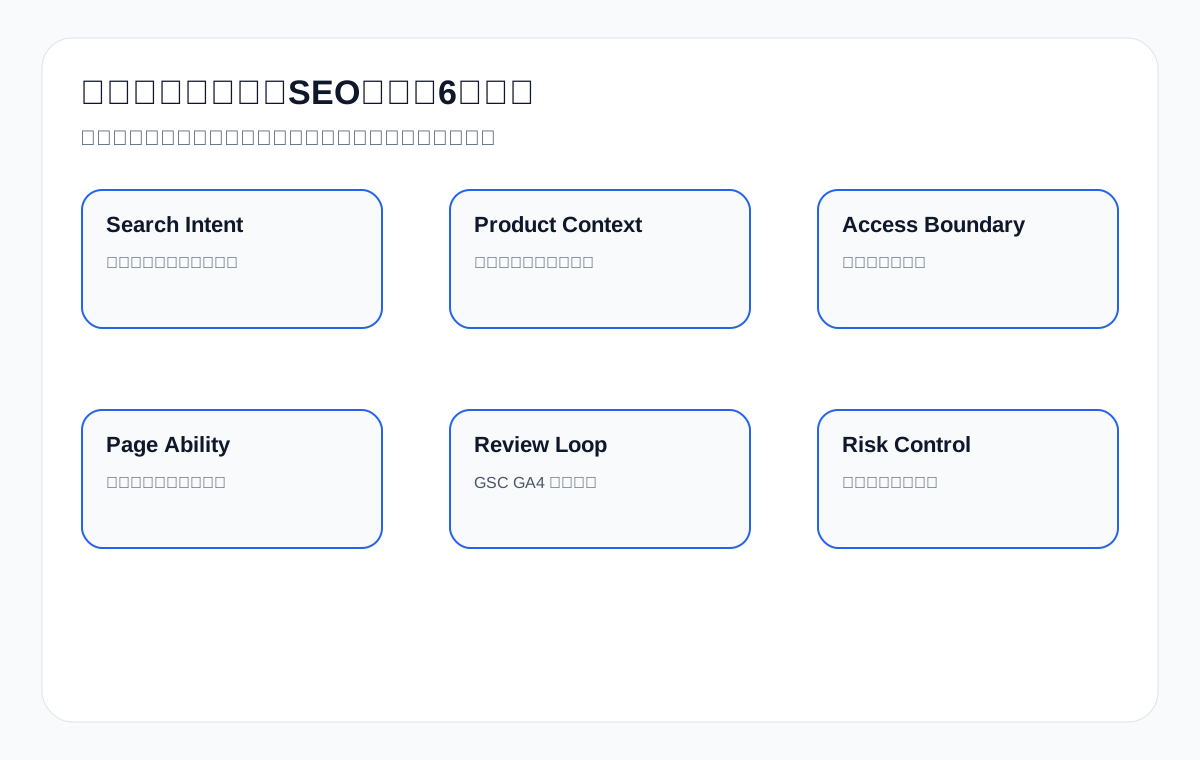
Google SEO quote scoring model: put different quotes in the same table
When an export company receives two or three Google SEO quotes, it is easiest to be led by the total price. One quote is low, one is high, and the gap looks large, but if page counts, technical debt, content material, data definitions, and review frequency are not broken out, the prices are not comparable.
A more reliable approach is to first put each quote into the same scoring table. The scoring table is not meant to label partner teams, but to let the company know: what this money actually buys — diagnosis, page rework, content building, data tracking, review meetings, or merely a list of suggestions.
| Scoring dimension | 0-point performance | 1-point performance | 2-point performance | Why it affects price |
|---|---|---|---|---|
| Page inventory | Only says “site-wide optimization.” | Lists page types. | Lists specific URLs, page roles, priorities, and current issues. | Determines how many pages need diagnosis and rewriting. |
| Technical baseline | Only says “technical optimization.” | Lists a few check items. | Lists status codes, sitemap, robots, canonical, mobile, structured data, and URL Inspection. | Determines whether crawl and index errors must be investigated first. |
| Product information | Does not ask the company to provide information. | Asks for a basic product introduction. | Asks for specifications, images, certifications, applications, FAQ, sales questions, and RFQ fields. | Determines whether the content can answer procurement decisions. |
| Data definitions | Does not mention GSC or GA4. | Only says “we look at data.” | Specifies query/page, events, date ranges, handling of no-row data, and review fields. | Determines whether changes can be explained later. |
| Execution scope | Only gives suggestions. | Changes a few articles or titles. | Actually changes product pages, category pages, resource pages, FAQ, internal links, and inquiry paths. | Determines whether the work lands on page assets. |
| Risk boundaries | Writes external results. | Partial warnings. | Clearly separates controllable deliverables from uncontrollable external results. | Determines whether expectations for the engagement are clear. |
How to do a page inventory: look at URLs first, then keywords
Many quote differences come from page inventory. A site with only a home page, a few product cards, and a contact page works differently; a site with hundreds of product pages, multiple category pages, application pages, technical resource pages, and multilingual pages also works differently. If URLs are not listed before quoting, a complex site is easily quoted as a simple one.
Page inventory is not about rewriting every page, but about judging priority. A custom metal parts site may first change pages related to materials, processes, tolerances, and drawing uploads; an LED flood light site may first change wattage, IP rating, installation scenarios, and certification descriptions; a packaging machine site may first change material, speed, cleaning, maintenance, and quote fields.
| Page type | What to look at before quoting | Common issues | Quote impact |
|---|---|---|---|
| Home page | Product range, target markets, navigation entry points. | Only talks about corporate slogans, not product lines. | Determines whether entry points should be restructured first. |
| Category pages | Whether they handle supplier, manufacturer, and factory queries. | Only product cards, no selection guidance. | Determines the number of category page reworks. |
| Product pages | Specifications, images, FAQ, certifications, applications, RFQ entry. | Insufficient facts, weak inquiry path. | Determines the rewrite depth of each page. |
| Resource pages | Whether they answer procurement decisions and technical questions. | Vague content that cannot support sales explanations. | Determines the scope of content cluster building. |
| Inquiry pages | Fields, attachments, contact details, event tracking. | Only a generic form. | Determines whether GA4 events and RFQ structure need to be added. |
How technical debt affects quotes: the same ten pages can start from completely different points
With the same ten pages, some sites only need content added, while others must first handle crawling, indexing, redirects, canonical URLs, mobile tables, and structured data. The latter naturally costs more, because it is not simply writing content but first clarifying whether search engines and users can properly see the pages.
Technical debt does not necessarily have to be fixed all at once. A quote should better spell out tiers: which issues affect core pages being discovered, which affect understanding of page topics, and which are only long-term experience optimization. That way the company knows where the first-phase money goes and which issues can wait.
| Technical item | Low complexity | High complexity | Acceptance evidence |
|---|---|---|---|
| Status codes and redirects | Core URLs consistently return 200. | Historical migrations, multi-level redirects, messy old URLs. | URL spot-check tables and status code records. |
| sitemap | Important pages are all in the sitemap. | Multilingual, multi-product-line, old pages mixed in. | Sitemap hit and update time records. |
| robots | No obvious misblocking. | Directories or assets were temporarily blocked. | robots rules and key URL checks. |
| canonical | Most pages point to a reasonable preferred URL. | Many parameter pages, filter pages, and duplicate pages. | Preferred URL spot-check records. |
| Mobile tables | Body copy and tables do not overflow horizontally. | Old templates and complex tables break the screen. | Mobile screenshots or scripted checks. |
Without GSC data, a quote must first establish a baseline
If Search Console has no query/page row data in the last 28 and 90 days, a quote can still be made, but it must not be written as “expand optimization based on existing search performance.” In that case, the first phase is better called baseline building: confirm whether pages are discoverable, confirm whether content facts are complete, confirm whether GA4 events can observe the inquiry path, and confirm how later monthly reports will be recorded.
A zero-row baseline is not bad news. It just reminds both sides that data for judging search performance is currently missing. The quote should write “observed facts” and “results to be observed” separately.
| Current evidence | What the quote can say | What the quote should not say | Next step |
|---|---|---|---|
| GSC has no query/page row data | Build a URL baseline, submit the sitemap, spot-check indexing, and record date ranges. | Do not write keyword growth forecasts. | Wait for data to appear, then review by query/page. |
| GA4 events not configured | Plan form, email, WhatsApp, download, and button events. | Do not write existing conversion attribution. | First make key actions observable. |
| Insufficient page facts | Add specifications, applications, certifications, FAQ, images, and inquiry fields. | Do not write that filling them in will definitely generate inquiries. | Keep correcting with sales feedback. |
| Insufficient AI samples | Record questions, platforms, dates, sources, and page actions. | Do not write that external AI answers will use the official site. | Retest periodically and observe source changes. |
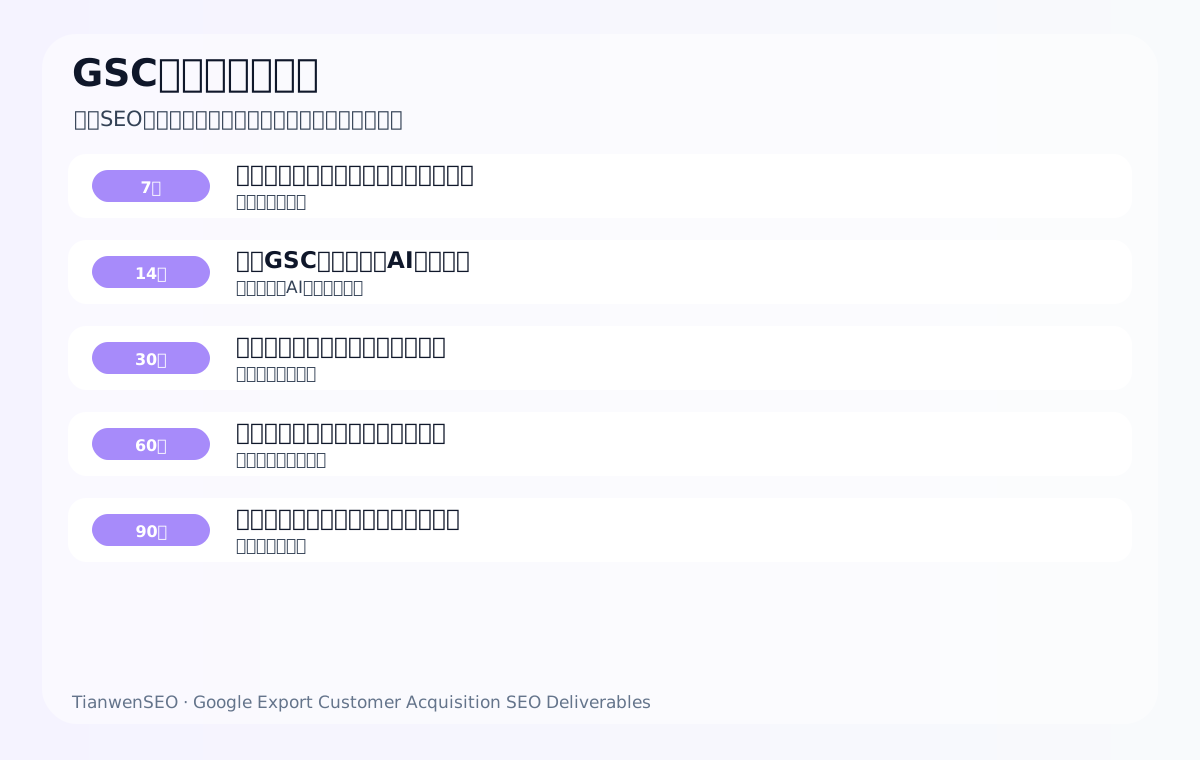
Break the quote into work packages: don’t mix diagnosis, execution, and review together
A clear quote usually breaks the work into three packages: a diagnosis package, an execution package, and a review package. The diagnosis package confirms problems, the execution package changes pages, and the review package observes data and decides the next round. When the three are mixed, it easily becomes “optimizing every month” while the company does not know what was actually completed.
| Work package | Input | Actions | Output | Acceptance method |
|---|---|---|---|---|
| Diagnosis package | URL list, GSC, GA4, product information. | Check crawling, indexing, page roles, content gaps. | Issue list and priorities. | Each issue maps to a URL and evidence. |
| Execution package | Confirmed pages and information. | Change titles, body copy, FAQ, tables, internal links, and CTA. | Updated URLs and change records. | Visible on the front end, index/follow, normal on mobile. |
| Review package | GSC, GA4, inquiry feedback, action records. | Analyze by query, page, event, and sales feedback. | Review tables and next-step actions. | Only write observed facts and items to be observed. |
How to run a quote meeting: the boss, operations, and sales look at different fields
An SEO quote is not something operations alone can judge. The boss looks at budget, timeline, and risk; operations looks at URLs, content, and data; sales looks at product facts, customer questions, and inquiry paths. Only after all three have reviewed it is the quote unlikely to have its terms repeatedly changed during execution.
| Role | Focus before quoting | Questions for the partner team | Later acceptance |
|---|---|---|---|
| Boss | Budget, timeline, permissions, handover. | Which results are not directly controllable, and which assets belong to the company. | Whether the scope was delivered and whether data can be retained. |
| Operations | URL list, GSC, GA4, page actions. | Which pages will be changed each month and how they will be recorded. | Whether front-end content, event tracking, and review tables are consistent. |
| Sales | Product specifications, procurement questions, quoting difficulties. | How the page explains MOQ, samples, lead time, and certifications. | Whether the page reduces repeated communication. |
How to run a low-budget project: narrower scope, not fewer records
When the budget is limited, there is no need to overhaul the whole site from the start. You can first pick one product line, one group of category pages, a few resource pages, and one inquiry path as a sample. The scope can be small, but the records cannot be few. Without records, even a cheap project is hard to review.
| Budget tier | Suggested scope | Must keep | Can defer |
|---|---|---|---|
| Low budget | 1 product line, 3 to 5 core URLs. | URL list, page actions, GSC baseline, GA4 events. | Synchronized expansion across multiple product lines. |
| Medium budget | 2 to 3 product lines, category pages and product pages changed together. | Content material, internal links, FAQ, RFQ path, and monthly reviews. | Complex competitor breakdowns and weekly reviews. |
| High budget | Multiple product lines, multiple markets, multiple page types. | Complete data definitions, technical baseline, sales feedback, and handover assets. | Uncontrollable results still cannot be written as promises. |
The first week after the quote is approved: freeze the baseline first, don’t rush a large-scale rewrite
In the first week after the engagement starts, the most important thing is to freeze the baseline. Record URLs, page roles, current issues, GSC status, GA4 events, product information gaps, and the first batch of page actions. Later, when pages and data change, everyone will know where the change started.
| First-week action | Deliverable | Acceptance criteria | Purpose |
|---|---|---|---|
| URL inventory | Page list. | Includes URL, role, priority. | Determine the first batch’s work scope. |
| Data baseline | Current GSC and GA4 status. | Write data if there is data; write a zero-row baseline if there is none. | Avoid making up conclusions later. |
| Technical spot check | Status codes, sitemap, robots, canonical. | No obvious blockers on key pages. | Rule out basic errors. |
| Information confirmation | Product specifications, images, FAQ, certifications, sales questions. | The company confirms the facts. | Reduce content rework. |
| Review table | Actions, dates, URLs, evidence, next steps. | Every action is traceable. | Serves as the basis for monthly reports. |
FAQ
Is it reasonable for a Google SEO quote to be based on the number of keywords?
It can only serve as a very rough reference. Export SEO should look more at pages, technical issues, content material, and review depth. One keyword may correspond to multiple pages and multiple buyer questions, so it cannot be judged simply by count.
Why do some quotes cost only a few thousand while others cost much more?
The difference usually comes from whether technical diagnosis, page rework, content organization, GSC reviews, old URL handling, and product information organization are included. If a cheap quote only does a few articles or a tool report, its work scope is naturally smaller.
Which pages should an export website optimize first?
Usually start with the product pages, category pages, core technical articles, and contact paths that can capture inquiries. The specific order should be judged together with GSC data, indexing status, product profit, and buyer search intent.
Can a quote promise rankings or inquiries?
It is not advisable to write it as a fixed guarantee. A more reasonable approach is to commit to diagnosis, page rework, content delivery, technical fixes, review cadence, and data records, and to keep observing changes in search performance.
Related reading and official resources
- What to confirm before a Google SEO service contract: goals, permissions, deliverables, and risk boundaries
- What to look at before a Google SEO partner team quotes: don’t rush to ask for the price
- What to look at before a GEO partner team quotes: the AI visibility baseline matters more than the package
- SEO diagnosis and optimization: a guide to troubleshooting indexing, rankings, technical issues, and inquiry paths for export websites
- Google Search Central: SEO Starter Guide
- Google Search Central: Sitemaps overview
- Google Search Central: Robots.txt introduction
Keep reading this SEO series
If you are systematically organizing export website SEO, it is worth continuing with the following articles. First clarify how crawling, indexing, content, links, and reviews relate to each other, then decide which page to change next.
- How to read a Google SEO diagnosis report: which issues to fix first and which to observe first
- What to confirm before a Google SEO service contract: goals, permissions, deliverables, and risk boundaries
- How to judge the most reliable export website building and promotion service teams in China: don’t look at promises, look at diagnosis and evidence
- What Google export lead-generation optimization includes: technology, content, GSC reviews, and a deliverables list
- How to choose a Google SEO outsourcing team: permissions, division of labor, reviews, and risk boundaries
- What is the difference between a Google export website optimization consultant and an export website building and promotion service team: how to choose what suits you better
{
“@context”: “https://schema.org”,
“@type”: “FAQPage”,
“mainEntity”: [
{
“@type”: “Question”,
“name”: “Is it reasonable for a Google SEO quote to be based on the number of keywords?”,
“acceptedAnswer”: {
“@type”: “Answer”,
“text”: “It can only serve as a very rough reference. Export SEO should look more at pages, technical issues, content material, and review depth. One keyword may correspond to multiple pages and multiple buyer questions, so it cannot be judged simply by count.”
}
},
{
“@type”: “Question”,
“name”: “Why do some quotes cost only a few thousand while others cost much more?”,
“acceptedAnswer”: {
“@type”: “Answer”,
“text”: “The difference usually comes from whether technical diagnosis, page rework, content organization, GSC reviews, old URL handling, and product information organization are included. If a cheap quote only does a few articles or a tool report, its work scope is naturally smaller.”
}
},
{
“@type”: “Question”,
“name”: “Which pages should an export website optimize first?”,
“acceptedAnswer”: {
“@type”: “Answer”,
“text”: “Usually start with the product pages, category pages, core technical articles, and contact paths that can capture inquiries. The specific order should be judged together with GSC data, indexing status, product profit, and buyer search intent.”
}
},
{
“@type”: “Question”,
“name”: “Can a quote promise rankings or inquiries?”,
“acceptedAnswer”: {
“@type”: “Answer”,
“text”: “It is not advisable to write it as a fixed guarantee. A more reasonable approach is to commit to diagnosis, page rework, content delivery, technical fixes, review cadence, and data records, and to keep observing changes in search performance.”
}
}
]
}
This page is machine-translated from the Simplified Chinese version and awaiting human review. It has not yet been proofread.