Keyword research is not about exporting the keywords in a tool, and it is not about ranking them by search volume alone. It means finding the questions, product terms, specification terms, application-scenario terms, and inquiry terms that overseas buyers actually search for, then deciding whether each one should be handled by a category page, a product page, an application page, a technical article, a resource page, or an inquiry page. For Chinese export manufacturers, factories, and trading companies, the final output of keyword research is not a keyword list but a page map and an execution priority order.
If you sell custom metal parts, LED flood light, packaging machine, medical probe, cnc machining parts, ceramic dinnerware, waterproof connector, industrial valve supplier, or private label activewear manufacturer, your keyword research must follow the buyer’s decision process: how they describe the product, how they compare specifications, how they screen suppliers, how they prepare an inquiry, and how they verify certificates and documents.
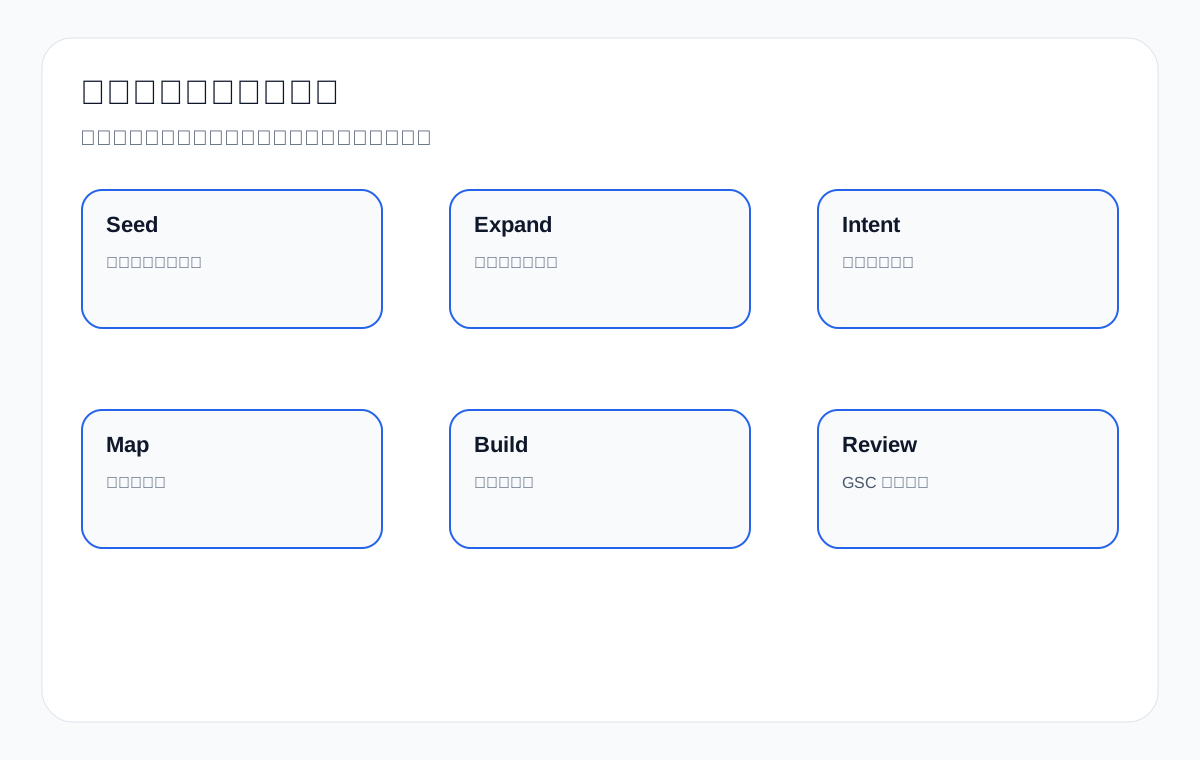
Part 2: Top 1 and authoritative benchmark comparison: what tool tutorials miss
Among current authoritative benchmarks, Ahrefs’ Keyword Research: The Beginner’s Guide defines keyword research as discovering the valuable queries target customers search for in Google, and stresses that search volume, traffic potential, ranking difficulty, search intent, and business value all need to be considered. Ahrefs’ guides on keyword intent and search intent further emphasize judging what searchers really want based on the SERP. Semrush’s guides on keyword research and keyword mapping emphasize finding terms with tools, analyzing intent, matching pages, and mapping target terms to the pages that satisfy search intent.
These guides are strong on complete tool methods, clear intent judgment, and general SEO. Their gap is that they do not go far enough in implementation for B2B export product sites. They rarely explain how a Chinese manufacturer should place terms such as waterproof connector supplier, IP67 connector, connector for marine cable, connector datasheet, and MOQ onto category pages, product pages, application pages, resource pages, and FAQs respectively; they also rarely fold inquiry quality and sales feedback into keyword priority.
Top 1 / authoritative benchmark gap card
| Benchmark content | Strengths | Gap for export companies | What this article adds |
|---|---|---|---|
| Ahrefs Keyword Research Guide | Complete framework for search volume, difficulty, intent, and business value | Lacks export product pages and inquiry scenarios | Adds English product terms, page roles, and sales feedback |
| Ahrefs Search Intent/Keyword Intent | Clear SERP intent judgment | Does not detail the division of labor among B2B long decision-cycle pages | Adds purchasing stages and a page-type matrix |
| Semrush Keyword Research/Mapping | Complete tool workflow and keyword mapping | Leans toward tool operation and lacks factory product data implementation | Adds product lines, resource pages, inquiry pages, and a review dashboard |
Part 3: The right output of keyword research: not a keyword list, but a page map
Many export companies end keyword research with nothing but a spreadsheet of keywords, search volume, KD, and CPC. Such a list is only raw material; it cannot directly guide website optimization. Truly executable keyword research should output at least: keyword groups, search intent, target pages, page types, business value, content modules, resource needs, priority, and review metrics.
Keyword research output table
| Field | Description | Export example |
|---|---|---|
| Keyword | The English term a buyer searches | waterproof connector for marine |
| Intent | Informational, comparison, supplier screening, inquiry, document download | Application scenario + supplier screening |
| Page type | Category page, product page, application page, article page, resource page, inquiry page | Application page + product entry |
| Content module | What needs to be answered | IP rating, material, cable diameter, application environment, FAQ |
| Business value | Whether it maps to key products and profit | High-value industrial connector |
| Review metrics | What to look at after launch | GSC queries, GA4 events, inquiry-to-product match |
Part 4: Step 1: Generate seed terms from product lines and purchasing questions
Do not start seed terms from a tool alone. Start from your own product lines, customer questions, sales scripts, catalogs, drawings, certificates, application industries, and competitor pages. The most valuable keyword sources for an export company are often found in sales chat logs, inquiry emails, product catalogs, and customer drawings.
Seed term sources
| Source | How to extract | Example |
|---|---|---|
| Product catalog | Product name, model, material, specification | cnc machining parts, waterproof connector |
| Sales inquiries | Questions customers ask often and the words they use | MOQ, lead time, custom logo, IP67 |
| Technical documents | Specifications, certificates, tests, applications | RoHS, tolerance, beam angle, datasheet |
| Industry applications | Customer use scenarios | warehouse lighting, marine cable, powder packaging |
| Competitor pages | Titles, categories, FAQs, downloadable materials | supplier, manufacturer, factory, custom |
Part 5: Step 2: Expand English long-tail terms
When expanding keywords, do not just chase more terms. Expand around the purchasing stage: product terms, specification terms, application terms, question terms, comparison terms, supplier terms, document terms, and inquiry terms.
English long-tail expansion
| Expansion direction | Keyword pattern | Example |
|---|---|---|
| Product + supplier | product + supplier/manufacturer/factory | industrial valve supplier, ceramic dinnerware manufacturer |
| Product + specification | product + specification | LED flood light 200W IP66, waterproof connector 4 pin |
| Product + application | product + for + application | packaging machine for powder, connector for marine cable |
| Product + question | how to choose/use/compare product | how to choose cnc machining tolerance |
| Product + document | product + datasheet/catalog/certificate | medical probe datasheet, valve certificate |
| Product + inquiry | product + MOQ/sample/custom | private label activewear manufacturer MOQ |
Part 6: Step 3: Judge search intent; do not let search volume mislead you
High search volume does not mean a term is worth pursuing. In B2B export, many high-value terms have low volume but clear intent. To judge intent, look at the SERP: are the ranking pages product pages, category pages, articles, directories, videos, images, forums, or e-commerce listings? The SERP already tells you what Google believes users want.
Search intent judgment table
| SERP signal | Likely intent | Page strategy |
|---|---|---|
| Many supplier directories and manufacturer pages | Supplier screening | Build a category page or capability page |
| Many specific product pages and specification pages | Product specification confirmation | Build product pages and resource pages |
| Many tutorials and guides | Informational research | Build technical articles or selection guides |
| Many comparison and best pages | Commercial comparison | Build comparison tables and selection criteria |
| Many images and product listings | Visual/style judgment | Strengthen images, sets, packaging, and product listings |
Part 7: Step 4: Map keywords to page types
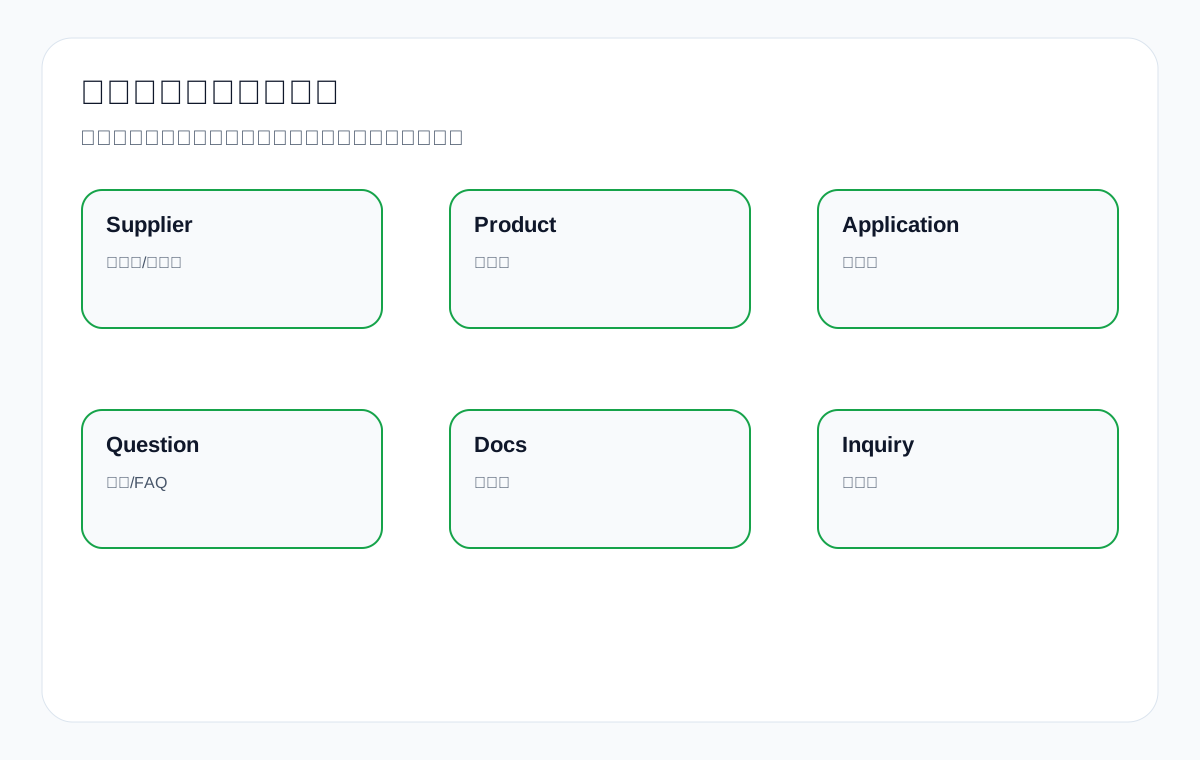
Keyword-to-page-type matrix
| Keyword type | Example | Page type | Page focus |
|---|---|---|---|
| Supplier term | custom metal parts manufacturer | Category page / capability page | Processes, equipment, materials, certificates, lead time |
| Product term | LED flood light 200W IP66 | Product page | Specifications, images, certifications, downloads, inquiry |
| Application term | packaging machine for powder | Application page | Materials, capacity, bag type, selection criteria |
| Question term | how to choose waterproof connector | Technical article / FAQ | Steps, decision tables, pitfalls, product entry |
| Document term | medical probe datasheet | Resource page | Files, versions, applicable models, downloads |
| Inquiry term | private label activewear manufacturer MOQ | FAQ / inquiry page | MOQ, samples, process, form fields |
Part 8: Step 5: Group keywords so multiple pages do not fight over the same intent
Keyword grouping is not about piling similar terms together. It assigns the terms that share one search intent to the same page so that multiple pages do not compete with each other. A single product line can have several pages, but each page must play a different role.
Keyword grouping example
| Group | Terms included | Target page |
|---|---|---|
| waterproof connector supplier | waterproof connector supplier, waterproof connector manufacturer | Category page |
| IP67 connector specs | IP67 waterproof connector, 4 pin waterproof connector | Product page / specification page |
| marine application | waterproof connector for marine, connector for outdoor cable | Application page |
| selection guide | how to choose waterproof connector, IP67 vs IP68 connector | Technical article |
| datasheet | waterproof connector datasheet, connector catalog | Resource page |
Part 9: Step 6: Rank keywords and build high-business-value pages first
Keyword priority cannot depend on search volume alone. Look at business value, search intent, competition difficulty, existing page foundation, document readiness, sales feedback, and review feasibility together.
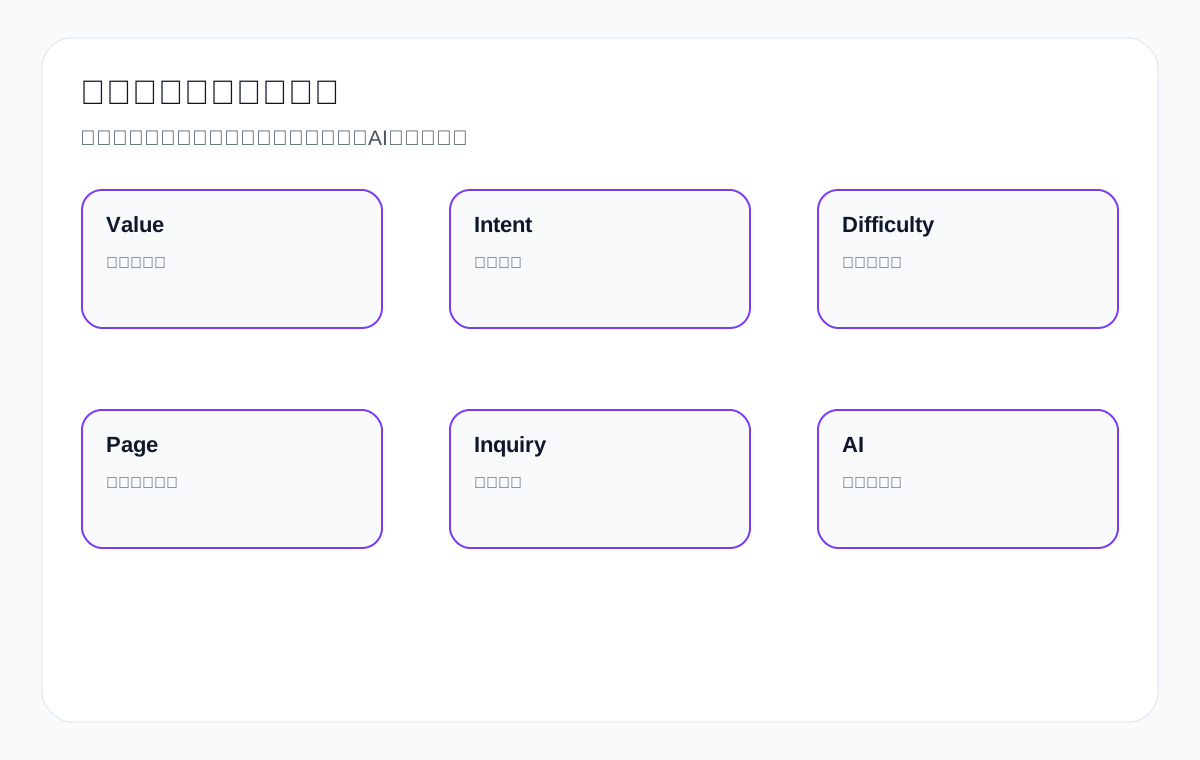
Keyword priority scoring
| Dimension | High-score signal | Low-score signal |
|---|---|---|
| Business value | Maps to profit products or key markets | Low-profit or non-priority products |
| Search intent | Clear purchasing or comparison intent | Generic knowledge or a poor business fit |
| Competition difficulty | Existing pages have a chance to break in | Strong brands and platforms dominate |
| Page foundation | Relevant pages and materials already exist | Must be built from scratch and materials are missing |
| Sales feedback | Customers ask often and inquiry value is high | Sales considers it unimportant |
| Review feasibility | Trackable through GSC/GA4/inquiries | No way to judge follow-up results |
Part 10: Use GSC to find existing opportunities
If your site already has data, GSC is one of the most important keyword sources. You can look for opportunities with high impressions but low clicks, rankings between 8 and 20, queries that do not fully match the page, or impressions in target countries where the page is weak.
GSC opportunity assessment
| Signal | Explanation | Action |
|---|---|---|
| High impressions, low clicks | Title or description does not match | Rewrite the title, improve the description and above-the-fold content |
| Ranking 8-20 | There is a foundation worth strengthening | Add content, internal links, FAQs, and documents |
| Query lands on the wrong page | Keyword mapping is misaligned | Adjust the target page and internal links |
| Few impressions in the target country | Weak market signal or mismatched page | Add country-specific evidence or application content |
| Long-tail terms growing | The topic is starting to be understood | Expand related product pages and articles |
Part 11: How to use competitor keywords: find page gaps, not copy-paste
The goal of competitor keyword research is not to copy every term a competitor uses. It is to see which of their pages handle supplier terms, specification terms, application terms, and document terms, and which modules are more complete than ours.
Competitor analysis table
| What to look at | Question | How we use it |
|---|---|---|
| Title structure | How they express the product and intent | Judge whether our titles are too generic |
| Page type | Whether they use a category page, product page, or article | Decide whether we need a new page |
| Content modules | Whether they have specifications, tables, FAQs, downloads | Add purchasing evidence |
| Internal link structure | How articles lead to product pages | Improve on-site paths |
| Document evidence | Whether certificates, catalogs, and datasheets are clear | Add resource pages and downloads |
Part 12: How sales feedback feeds into keyword research
Sales teams hear every day how customers describe products, and those words are often closer to real inquiries than tool-generated terms. Keyword research should collect sales feedback every month: what product customers ask about, what words they use, which country they come from, what purchasing stage they are in, and why they did not continue.
From sales feedback to keywords
| Sales feedback | Keyword opportunity | Page action |
|---|---|---|
| Customer asks about MOQ | product + MOQ | Add cooperation terms to the FAQ / inquiry page |
| Customer asks about certificates | product + certificate | Add scope of application to certificate pages and product pages |
| Customer asks about material | product + material | Add material tables to product pages and technical articles |
| Customer asks about application | product for application | Add scenarios and selection guidance to application pages |
| Customer sends a drawing | custom product drawing | Add upload and drawing requirements to the inquiry page |
Part 13: Common pitfalls: why keyword research turns into a useless keyword list
Pitfall table
| Pitfall | Consequence | Correct approach |
|---|---|---|
| Looking only at search volume | Ignoring low-volume, high-value purchasing terms | Combine business value and inquiry quality |
| Writing articles for every term | Commercial terms have no proper page to handle them | Map by page type |
| Not checking the SERP | Content format does not match intent | Check the page types in the top results first |
| Not asking sales | The list drifts away from real customer language | Collect inquiry questions monthly |
| Not reviewing | No idea which terms work after launch | Iterate with GSC, GA4, and inquiry feedback |
Part 14: Keyword research examples for different product lines
Product line examples
| Product line | Keyword direction | Page recommendation |
|---|---|---|
| custom metal parts | manufacturer, material, tolerance, surface finish, drawing | Category page, process page, technical article, inquiry page |
| LED flood light | wattage, IP rating, beam angle, warehouse, outdoor | Product page, application page, selection guide |
| packaging machine | powder, granule, liquid, speed, bag type | Application page, product page, selection checklist |
| medical probe | material, sterilization, compatible device, certificate | Resource page, product page, FAQ |
| ceramic dinnerware | custom logo, hotel, set, packaging, MOQ | Category page, image page, FAQ |
| industrial valve supplier | pressure rating, material, water treatment, chemical | Category page, application page, certificate page |
Part 15: FAQ: common questions about keyword research
What is keyword research?
It is the process of discovering the terms target customers search for, judging search intent, assessing business value, and mapping keywords to the right pages.
Where should keyword research for an export website start?
Start from product lines, sales inquiries, customer questions, competitor pages, GSC data, and English SERPs, not from a keyword list exported from a tool alone.
Are low-volume terms worth pursuing?
If they map to a high-value product, clear purchasing intent, or an important application scenario, they are worth pursuing. Many effective B2B export terms do not have high search volume.
Should a keyword go on an article or a product page?
It depends on intent. Supplier terms and product terms usually need a category page or product page, question terms suit articles, and document terms suit resource pages.
Can one page target multiple keywords?
Yes, but those terms must belong to the same search intent. Different intents should go to different pages.
How do you avoid keyword cannibalization?
Do keyword mapping first, and define each page’s primary intent, supporting terms, and internal link relationships so multiple pages do not fight over the same intent.
Are a tool’s KD and search volume trustworthy?
They are useful references, but they cannot replace SERP judgment, business value, and sales feedback.
Can you still do keyword research with little GSC data?
Start with product lines, competitors, Google suggestions, sales questions, and the SERP; iterate once data arrives.
Is keyword research still important in the age of AI search?
Yes, but it should expand into query sets and question sets, paying attention to how AI answers understand products, brands, and official website evidence.
How often should keyword research be reviewed?
Review key pages monthly with GSC, GA4, and inquiry feedback, and update the keyword map once a quarter.
Part 16: SERP benchmarking: read the top results to judge page format, not to copy
Keyword research must examine the current SERP. A tool tells you the term exists; the SERP tells you what kind of page users want. For example, if you search how to choose waterproof connector and most of the top results are guides and technical articles, you should not handle it with a product page alone; if you search waterproof connector supplier and most top results are supplier category pages and directories, you need a category page or capability page.
SERP observation checklist
| Observation | What to look at | How to decide |
|---|---|---|
| Page type | Articles, product pages, category pages, directories, videos, images | Decide your own target page type |
| Title pattern | Whether supplier, manufacturer, guide, or datasheet appears | Judge search intent and title wording |
| Content modules | Whether tables, FAQs, downloads, images, or comparisons appear | Decide which modules to add |
| Commerciality | Whether quotes, MOQ, manufacturers, or catalogs appear | Judge whether the query is close to the inquiry stage |
| Authoritative sources | The share of Google, industry media, directories, and manufacturer sites | Judge competition and credibility requirements |
SERP benchmarking is not about copying the Top 1 content; it confirms page format and gaps. Our pages must cover the information the top results already provide and add the export company’s own product facts, certificates, specifications, inquiry path, and review metrics.
Part 17: Keyword priority example: how to rank terms within one product line
The following uses waterproof connector as an example. One product line will have supplier terms, specification terms, application terms, question terms, document terms, and inquiry terms. You do not work on all of them at once; rank them first by business value and page foundation.
waterproof connector keyword ranking example
| Keyword | Intent | Target page | Priority | Reason |
|---|---|---|---|---|
| waterproof connector supplier | Supplier screening | Category page / capability page | High | High business value; must handle purchasing intent |
| IP67 waterproof connector 4 pin | Product specification | Product page | High | Specific specifications are clear and easy to convert into inquiries |
| waterproof connector for marine | Application scenario | Application page | High | Clear scenario; inquiry quality may be high |
| how to choose waterproof connector | Question research | Technical article | Medium-high | Can lead to product pages and application pages |
| waterproof connector datasheet | Document download | Resource page | Medium | Suitable for internal evaluation and AI citation |
| cheap waterproof connector | Price-driven | FAQ or defer | Low | May not match the target customer |
This logic can be copied to product lines such as LED flood light, packaging machine, and custom metal parts. Prioritize terms with high business value, an existing page foundation that can be improved, and clear sales feedback, rather than blindly chasing the highest search volume.
Part 18: How to turn a keyword map into a team-ready execution sheet
A keyword map should be understandable to content, product, sales, and development teams, not just SEO staff. Every row must state the page goal, required materials, owner, and review method.
Keyword map fields
| Field | Example |
|---|---|
| Keyword group | packaging machine for powder / powder packing machine |
| Page URL | /powder-packaging-machine/ |
| Page type | Application page or product category page |
| Search intent | Powder material packaging solutions and equipment selection |
| Materials needed | Material range, speed, bag type, accuracy, video, cases, FAQ |
| Internal owners | Product supplies specifications, sales supplies customer questions, development handles the form |
| Review metrics | GSC queries, GA4 events, inquiry-to-material match |
Such a table can become an execution plan directly. In the monthly review, you do not go find a new batch of keywords; you look at how the pages from the previous batch performed, then decide whether to add content, rewrite titles, add internal links, or create new pages.
Part 19: Keyword cannibalization: why multiple pages fighting over one term slows results
Keyword cannibalization is common on export websites: several articles all cover custom metal parts, several product page titles are nearly identical, and both a category page and an article target the same supplier term. The result is that the search system does not know which page fits best, and the pages cannot build clear authority with each other.
Cannibalization diagnostic table
| Signal | Possible cause | Fix |
|---|---|---|
| Multiple pages get impressions for the same query | Overlapping page intent | Designate a primary page and make the others supporting internal links |
| A category page and an article compete for a supplier term | The article title is overly commercial | Shift the article to question intent and link it to the category page |
| Several product page titles are similar | Product differences are not made clear | Add model, specifications, application, and canonical judgment |
| GSC clicks are scattered | Page roles are unclear | Redo keyword mapping and internal links |
| SERP rankings are unstable | The search system keeps testing pages | Strengthen the primary page’s content and external/internal signals |
Solving cannibalization is not about deleting all the pages; it is about clarifying the division of labor. Articles answer questions, category pages handle supplier screening, product pages answer specification questions, and resource pages provide evidence.
Part 20: Find terms in customer language, not just internal company jargon
Internal factory names are not necessarily what overseas buyers search for. For example, a company may call a product “floodlight” internally, while overseas customers search for LED flood light, outdoor floodlight, or warehouse LED lighting; a company may call a part a “waterproof joint” internally, while customers search for waterproof connector, IP67 connector, or cable connector for marine.
From internal names to customer search terms
| Internal name | Likely English search terms | How to verify |
|---|---|---|
| Machined metal parts | custom metal parts, cnc machining parts, metal stamping parts | Check competitor titles, GSC, and customer emails |
| Waterproof joint | waterproof connector, IP67 connector, circular waterproof connector | Check SERP product pages and specification terms |
| Packaging machine | packaging machine, packing machine, powder packing machine | Check application terms and industry directories |
| Ceramic tableware | ceramic dinnerware, hotel dinnerware set, custom ceramic tableware | Check image SERPs and procurement directories |
| Sportswear OEM | private label activewear manufacturer, OEM sportswear supplier | Check brand and supply chain pages |
Part 21: Country and region terms: when they are worth doing
Export companies often ask whether to target country + product keywords. The answer depends on the business and the SERP. If you genuinely serve a market and have certifications, logistics, cases, or agent resources there, you can create country-related content; if you write generic country pages only to cover keywords, the value is low.
Country term decision table
| Situation | Recommendation |
|---|---|
| Many inquiries from the target country | Consider country-related FAQs or application notes |
| The product has country certification requirements | State the applicable standards on certificate pages and product pages |
| The SERP is dominated by local suppliers | Carefully assess whether there is a competitive opportunity |
| The only signal is that search volume looks good | Do not force a country page without evidence |
| Sales has real cases or logistics experience | You can create market notes and FAQs |
Part 22: In the age of AI search, keyword research must expand into query sets
AI search differs from traditional Google search in that users more often type complete questions. Export companies should expand keyword research into query sets: how would a buyer ask an AI about suppliers, specifications, comparisons, certificates, and risks?
AI query set examples
| Traditional keyword | AI question |
|---|---|
| waterproof connector supplier | Which waterproof connector supplier is suitable for marine cable assembly? |
| packaging machine for powder | How should I choose a packaging machine for fine powder products? |
| custom metal parts manufacturer | What should I check before choosing a custom metal parts manufacturer in China? |
| LED flood light IP66 | Is IP66 enough for outdoor LED flood light installation? |
| private label activewear manufacturer MOQ | What MOQ questions should I ask a private label activewear manufacturer? |
These AI questions can guide website pages in reverse: provide citable definitions, decision tables, FAQs, downloadable documents, and clear company entity information.
Part 23: From keywords to content outlines: do not let writing drift from the page goal
Write the outline only after the keyword and page type are decided. The outline should be designed around search intent and the purchasing stage, not stuffed with subheadings just to cover more terms.
Outline generation rules
| Page type | Outline focus |
|---|---|
| Category page | Product range, supply capability, application industries, certificates, product list, FAQ |
| Product page | Specifications, materials, applications, certificates, downloads, similar products, inquiry |
| Application page | Scenario problems, selection criteria, matching products, pitfalls, inquiry information |
| Technical article | Definitions, steps, decision tables, examples, FAQ, entries to related pages |
| Resource page | Document types, applicable products, versions, downloads, common questions |
Part 24: Monthly review workflow for keyword research
Monthly review workflow
| Step | Question |
|---|---|
| Review GSC | Which queries are new, and which pages are getting impressions |
| Review GA4 | Which landing pages drive downloads, form submissions, or contact actions |
| Review inquiries | Which keyword groups correspond to valid inquiries |
| Review sales feedback | What questions did customers ask that pages do not answer |
| Review AI answers | Whether the brand, products, and website materials are understood correctly |
| Update the map | Which pages to add, merge, defer, or strengthen |
Part 25: Minimum viable version: start with one product line
If resources are limited, do not start with site-wide keyword research. Pick one key product line first and complete the full loop from finding terms to grouping, mapping, pages, and review.
Minimum version for one product line
| Page | Keyword group |
|---|---|
| Category page | product supplier / manufacturer / factory |
| Product page | product + specification / model / material |
| Application page | product for application / industry |
| Technical article | how to choose / compare / troubleshoot product |
| Resource page | datasheet / catalog / certificate |
| Inquiry page | MOQ / sample / custom / quote questions |
Once one product line works end to end, copy the process to the next one. This makes quality easier to guarantee than doing hundreds of keywords at once, and it is easier for sales and product teams to support.
Part 26: The owner’s test: is a keyword research report useful?
Owner’s scorecard
| Question | Useful report | Useless report |
|---|---|---|
| Can it guide page building? | Every keyword group has a target page | Only keywords and search volume |
| Is it close to the business? | Ranked by product line, profit, and target country | Ranked only by search volume |
| Does it include sales input? | Includes customer questions and inquiry feedback | Comes entirely from a tool |
| Can it be reviewed? | States GSC, GA4, and inquiry metrics | No follow-up verification method |
| Does it avoid cannibalization? | Defines primary and supporting pages | Multiple pages fight over the same term |
Part 27: Worked example: one round of keyword research for packaging machine
Suppose a factory’s main product is packaging machine. The first step is not to target the big term packaging machine, but to break the product into lines such as powder packaging machine, granule packing machine, liquid filling machine, vertical packaging machine, and automatic packaging line, then expand around materials, packaging format, capacity, industry, and after-sales questions.
packaging machine example
| Keyword group | Intent | Target page | Content module |
|---|---|---|---|
| powder packaging machine | Application/product filtering | Application page or category page | Powder flowability, dosing method, speed, bag type, dust removal |
| automatic packaging machine supplier | Supplier screening | Category page / capability page | Equipment range, factory capability, after-sales, cases, certificates |
| packaging machine for food powder | Industry application | Application page | Food safety, cleaning, materials, capacity, packaging specifications |
| how to choose powder packing machine | Question research | Technical article | Selection steps, material testing, common pitfalls, inquiry checklist |
| packaging machine manual | Document needs | Resource page | manual, video, spare parts, maintenance |
The outcome of this round of keyword research is not “write more packaging machine articles” but a page portfolio: a category page handles supplier terms, an application page handles material terms, product pages handle specific equipment and specifications, technical articles answer selection questions, resource pages provide the manual and catalog, and the inquiry page guides customers to submit material, speed, bag type, and automation requirements.
Part 28: Worked example: building a keyword map for custom metal parts
Keyword research for custom metal parts depends more on processes, materials, tolerances, and drawings. Buyers may not know the final supplier’s name, but they will search questions such as CNC machining tolerance, aluminum custom parts, stainless steel surface finish, metal stamping parts manufacturer, and drawing file for quote.
custom metal parts keyword map
| Keyword group | Page | Material needs |
|---|---|---|
| custom metal parts manufacturer | Category page / capability page | Process range, materials, equipment, inspection, certificates |
| cnc machining parts tolerance | Technical article / resource page | Tolerance tables, inspection methods, material effects |
| aluminum cnc machining parts | Product/category page | Aluminum grades, surface treatment, application industries |
| surface finish for metal parts | Technical article | Anodizing, electroplating, powder coating, brushing comparison |
| upload drawing for quote | Inquiry page | Drawing format, material, quantity, surface treatment fields |
This example shows that keyword research must serve the sales process. If a customer’s drawing information is incomplete, sales has to keep following up; the keywords and pages must not only bring visits but also help customers prepare the material, quantity, tolerance, surface treatment, and application before they send an inquiry.
Part 29: Pre-publish check: is the keyword page really ready?
Pre-publish checklist
| Check | Question |
|---|---|
| Intent consistency | Do the title, H1, above-the-fold content, and body serve the same search intent? |
| Correct page type | Do supplier terms land on a category page and question terms on an article? |
| Sufficient product evidence | Are specifications, certificates, images, downloads, and FAQs adequate? |
| Complete internal links | Does the article link to product pages, category pages, and resource pages? |
| Clear inquiry path | Are the CTA, form, upload, and contact details usable? |
| Trackable review | Can GSC, GA4, form events, and inquiry sources be recorded? |
| Sales confirmation | Are product claims, specifications, MOQ, lead time, and certificates accurate? |
If these checks do not pass, a page will struggle to become a high-quality search result even if it covers the keywords. In the end, export SEO keyword research must answer one question: can the customer understand the page, trust it, and submit a valid inquiry?
Part 30: Final checklist: what a complete round of keyword research must deliver
- Target product lines, target countries, and business priorities.
- Seed term sources: product catalogs, inquiries, sales feedback, competitors, GSC, and the SERP.
- Keyword groups: supplier terms, product terms, specification terms, application terms, question terms, document terms, and inquiry terms.
- Search intent judgments and a record of SERP page types.
- A keyword-to-page-type mapping table.
- Content modules and material needs for each page.
- Page priority scoring: business value, difficulty, page foundation, and sales feedback.
- An internal link plan and the inquiry path.
- Review metrics for GSC, GA4, inquiry quality, and AI citations.
- A monthly update mechanism, not a one-off keyword list.
When these 10 items are complete, keyword research stops being paperwork and becomes the infrastructure for content, pages, technology, sales collaboration, and review on an export website.
Part 16: Execution checklist: complete one round of export keyword research from scratch
- List key product lines, profit products, and target countries.
- Extract seed terms from product catalogs, inquiry emails, sales questions, and certificate documents.
- Expand product terms, supplier terms, specification terms, application terms, question terms, document terms, and inquiry terms.
- Check the SERP group by group to judge page type and search intent.
- Map keywords to category pages, product pages, application pages, article pages, resource pages, and inquiry pages.
- Rank them by business value, competition difficulty, page foundation, and sales feedback.
- List content modules, material needs, internal links, and CTAs for priority pages.
- After launch, review with GSC, GA4, inquiry sources, and sales feedback.
- Update the keyword map every month and do not treat the list as a one-off document.
Part 17: Final judgment: keyword research is the page decision system for an export website
Good keyword research tells an export company which page should handle each English product term, which purchasing questions each page should answer, what product evidence each content module needs, and what data to look at every month. It is not a keyword list exported from a tool; it is the bridge between website structure, content production, sales feedback, and data review.
Once keyword research is truly implemented, your website will no longer publish articles blindly, and product pages will no longer show only images and specifications. Every page has a clear search intent, every keyword has a page role, and every piece of inquiry feedback can feed into the next round of page optimization. This is the foundation for long-term SEO and GEO growth on an export website.
{
“@context”: “https://schema.org”,
“@type”: “FAQPage”,
“mainEntity”: [
{
“@type”: “Question”,
“name”: “Search intent breakdownnnQuery type The user’s real question What this article answersnnConcept understanding What exactly is keyword research Defined as the decision process from demand to pagesnFinding terms Where to find English product terms and long-tail terms Methods for seed terms, competitors, GSC, customer questions, and the SERPnGrouping and mapping How keywords are grouped and assigned to pages Grouped by supplier terms, product terms, application terms, question terms, and document termsnPriority Which terms and pages to do first Ranked by business value, intent, difficulty, page foundation, and inquiry feedbacknnPart 2: Top 1 and authoritative benchmark comparison: what tool tutorials missnAmong current authoritative benchmarks, Ahrefs’ Keyword Research: The Beginner’s Guide defines keyword research as discovering the valuable queries target customers search for in Google, and stresses that search volume, traffic potential, ranking difficulty, search intent, and business value all need to be considered. Ahrefs’ guides on keyword intent and search intent further emphasize judging what searchers really want based on the SERP. Semrush’s guides on keyword research and keyword mapping emphasize finding terms with tools, analyzing intent, matching pages, and mapping target terms to the pages that satisfy search intent.nThese guides are strong on complete tool methods, clear intent judgment, and general SEO. Their gap is that they do not go far enough in implementation for B2B export product sites. They rarely explain how a Chinese manufacturer should place terms such as waterproof connector supplier, IP67 connector, connector for marine cable, connector datasheet, and MOQ onto category pages, product pages, application pages, resource pages, and FAQs respectively; they also rarely fold inquiry quality and sales feedback into keyword priority.nTop 1 / authoritative benchmark gap cardnnBenchmark content Strengths Gap for export companies What this article addsnnAhrefs Keyword Research Guide Complete framework for search volume, difficulty, intent, and business value Lacks export product pages and inquiry scenarios Adds English product terms, page roles, and sales feedbacknAhrefs Search Intent/Keyword Intent Clear SERP intent judgment Does not detail the division of labor among B2B long decision-cycle pages Adds purchasing stages and a page-type matrixnSemrush Keyword Research/Mapping Complete tool workflow and keyword mapping Leans toward tool operation and lacks factory product data implementation Adds product lines, resource pages, inquiry pages, and a review dashboardnnPart 3: The right output of keyword research: not a keyword list, but a page mapnMany export companies end keyword research with nothing but a spreadsheet of keywords, search volume, KD, and CPC. Such a list is only raw material; it cannot directly guide website optimization. Truly executable keyword research should output at least: keyword groups, search intent, target pages, page types, business value, content modules, resource needs, priority, and review metrics.nKeyword research output tablennField Description Export examplennKeyword The English term a buyer searches waterproof connector for marinenIntent Informational, comparison, supplier screening, inquiry, document download Application scenario + supplier screeningnPage type Category page, product page, application page, article page, resource page, inquiry page Application page + product entrynContent module What needs to be answered IP rating, material, cable diameter, application environment, FAQnBusiness value Whether it maps to key products and profit High-value industrial connectornReview metrics What to look at after launch GSC queries, GA4 events, inquiry-to-product matchnnPart 4: Step 1: Generate seed terms from product lines and purchasing questionsnDo not start seed terms from a tool alone. Start from your own product lines, customer questions, sales scripts, catalogs, drawings, certificates, application industries, and competitor pages. The most valuable keyword sources for an export company are often found in sales chat logs, inquiry emails, product catalogs, and customer drawings.nSeed term sourcesnnSource How to extract ExamplennProduct catalog Product name, model, material, specification cnc machining parts, waterproof connectornSales inquiries Questions customers ask often and the words they use MOQ, lead time, custom logo, IP67nTechnical documents Specifications, certificates, tests, applications RoHS, tolerance, beam angle, datasheetnIndustry applications Customer use scenarios warehouse lighting, marine cable, powder packagingnCompetitor pages Titles, categories, FAQs, downloadable materials supplier, manufacturer, factory, customnnPart 5: Step 2: Expand English long-tail termsnWhen expanding keywords, do not just chase more terms. Expand around the purchasing stage: product terms, specification terms, application terms, question terms, comparison terms, supplier terms, document terms, and inquiry terms.nEnglish long-tail expansionnnExpansion direction Keyword pattern ExamplennProduct + supplier product + supplier/manufacturer/factory industrial valve supplier, ceramic dinnerware manufacturernProduct + specification product + specification LED flood light 200W IP66, waterproof connector 4 pinnProduct + application product + for + application packaging machine for powder, connector for marine cablenProduct + question how to choose/use/compare product how to choose cnc machining tolerancenProduct + document product + datasheet/catalog/certificate medical probe datasheet, valve certificatenProduct + inquiry product + MOQ/sample/custom private label activewear manufacturer MOQnnPart 6: Step 3: Judge search intent; do not let search volume mislead younHigh search volume does not mean a term is worth pursuing. In B2B export, many high-value terms have low volume but clear intent. To judge intent, look at the SERP: are the ranking pages product pages, category pages, articles, directories, videos, images, forums, or e-commerce listings? The SERP already tells you what Google believes users want.nSearch intent judgment tablennSERP signal Likely intent Page strategynnMany supplier directories and manufacturer pages Supplier screening Build a category page or capability pagenMany specific product pages and specification pages Product specification confirmation Build product pages and resource pagesnMany tutorials and guides Informational research Build technical articles or selection guidesnMany comparison and best pages Commercial comparison Build comparison tables and selection criterianMany images and product listings Visual/style judgment Strengthen images, sets, packaging, and product listingsnnPart 7: Step 4: Map keywords to page typesnFigure 2: Different keywords should map to different pages, rather than every term being turned into an article.nKeyword-to-page-type matrixnnKeyword type Example Page type Page focusnnSupplier term custom metal parts manufacturer Category page / capability page Processes, equipment, materials, certificates, lead timenProduct term LED flood light 200W IP66 Product page Specifications, images, certifications, downloads, inquirynApplication term packaging machine for powder Application page Materials, capacity, bag type, selection criterianQuestion term how to choose waterproof connector Technical article / FAQ Steps, decision tables, pitfalls, product entrynDocument term medical probe datasheet Resource page Files, versions, applicable models, downloadsnInquiry term private label activewear manufacturer MOQ FAQ / inquiry page MOQ, samples, process, form fieldsnnPart 8: Step 5: Group keywords so multiple pages do not fight over the same intentnKeyword grouping is not about piling similar terms together. It assigns the terms that share one search intent to the same page so that multiple pages do not compete with each other. A single product line can have several pages, but each page must play a different role.nKeyword grouping examplennGroup Terms included Target pagennwaterproof connector supplier waterproof connector supplier, waterproof connector manufacturer Category pagenIP67 connector specs IP67 waterproof connector, 4 pin waterproof connector Product page / specification pagenmarine application waterproof connector for marine, connector for outdoor cable Application pagenselection guide how to choose waterproof connector, IP67 vs IP68 connector Technical articlendatasheet waterproof connector datasheet, connector catalog Resource pagennPart 9: Step 6: Rank keywords and build high-business-value pages firstnKeyword priority cannot depend on search volume alone. Look at business value, search intent, competition difficulty, existing page foundation, document readiness, sales feedback, and review feasibility together.nFigure 3: Keyword priority should consider business value, intent, competition, page foundation, inquiry quality, and AI citations together.nKeyword priority scoringnnDimension High-score signal Low-score signalnnBusiness value Maps to profit products or key markets Low-profit or non-priority productsnSearch intent Clear purchasing or comparison intent Generic knowledge or a poor business fitnCompetition difficulty Existing pages have a chance to break in Strong brands and platforms dominatenPage foundation Relevant pages and materials already exist Must be built from scratch and materials are missingnSales feedback Customers ask often and inquiry value is high Sales considers it unimportantnReview feasibility Trackable through GSC/GA4/inquiries No way to judge follow-up resultsnnPart 10: Use GSC to find existing opportunitiesnIf your site already has data, GSC is one of the most important keyword sources. You can look for opportunities with high impressions but low clicks, rankings between 8 and 20, queries that do not fully match the page, or impressions in target countries where the page is weak.nGSC opportunity assessmentnnSignal Explanation ActionnnHigh impressions, low clicks Title or description does not match Rewrite the title, improve the description and above-the-fold contentnRanking 8-20 There is a foundation worth strengthening Add content, internal links, FAQs, and documentsnQuery lands on the wrong page Keyword mapping is misaligned Adjust the target page and internal linksnFew impressions in the target country Weak market signal or mismatched page Add country-specific evidence or application contentnLong-tail terms growing The topic is starting to be understood Expand related product pages and articlesnnPart 11: How to use competitor keywords: find page gaps, not copy-pastenThe goal of competitor keyword research is not to copy every term a competitor uses. It is to see which of their pages handle supplier terms, specification terms, application terms, and document terms, and which modules are more complete than ours.nCompetitor analysis tablennWhat to look at Question How we use itnnTitle structure How they express the product and intent Judge whether our titles are too genericnPage type Whether they use a category page, product page, or article Decide whether we need a new pagenContent modules Whether they have specifications, tables, FAQs, downloads Add purchasing evidencenInternal link structure How articles lead to product pages Improve on-site pathsnDocument evidence Whether certificates, catalogs, and datasheets are clear Add resource pages and downloadsnnPart 12: How sales feedback feeds into keyword researchnSales teams hear every day how customers describe products, and those words are often closer to real inquiries than tool-generated terms. Keyword research should collect sales feedback every month: what product customers ask about, what words they use, which country they come from, what purchasing stage they are in, and why they did not continue.nFrom sales feedback to keywordsnnSales feedback Keyword opportunity Page actionnnCustomer asks about MOQ product + MOQ Add cooperation terms to the FAQ / inquiry pagenCustomer asks about certificates product + certificate Add scope of application to certificate pages and product pagesnCustomer asks about material product + material Add material tables to product pages and technical articlesnCustomer asks about application product for application Add scenarios and selection guidance to application pagesnCustomer sends a drawing custom product drawing Add upload and drawing requirements to the inquiry pagennPart 13: Common pitfalls: why keyword research turns into a useless keyword listnPitfall tablennPitfall Consequence Correct approachnnLooking only at search volume Ignoring low-volume, high-value purchasing terms Combine business value and inquiry qualitynWriting articles for every term Commercial terms have no proper page to handle them Map by page typenNot checking the SERP Content format does not match intent Check the page types in the top results firstnNot asking sales The list drifts away from real customer language Collect inquiry questions monthlynNot reviewing No idea which terms work after launch Iterate with GSC, GA4, and inquiry feedbacknnPart 14: Keyword research examples for different product linesnProduct line examplesnnProduct line Keyword direction Page recommendationnncustom metal parts manufacturer, material, tolerance, surface finish, drawing Category page, process page, technical article, inquiry pagenLED flood light wattage, IP rating, beam angle, warehouse, outdoor Product page, application page, selection guidenpackaging machine powder, granule, liquid, speed, bag type Application page, product page, selection checklistnmedical probe material, sterilization, compatible device, certificate Resource page, product page, FAQnceramic dinnerware custom logo, hotel, set, packaging, MOQ Category page, image page, FAQnindustrial valve supplier pressure rating, material, water treatment, chemical Category page, application page, certificate pagennPart 15: FAQ: common questions about keyword researchnWhat is keyword research?”,
“acceptedAnswer”: {
“@type”: “Answer”,
“text”: “It is the process of discovering the terms target customers search for, judging search intent, assessing business value, and mapping keywords to the right pages.”
}
},
{
“@type”: “Question”,
“name”: “Where should keyword research for an export website start?”,
“acceptedAnswer”: {
“@type”: “Answer”,
“text”: “Start from product lines, sales inquiries, customer questions, competitor pages, GSC data, and English SERPs, not from a keyword list exported from a tool alone.”
}
},
{
“@type”: “Question”,
“name”: “Are low-volume terms worth pursuing?”,
“acceptedAnswer”: {
“@type”: “Answer”,
“text”: “If they map to a high-value product, clear purchasing intent, or an important application scenario, they are worth pursuing. Many effective B2B export terms do not have high search volume.”
}
},
{
“@type”: “Question”,
“name”: “Should a keyword go on an article or a product page?”,
“acceptedAnswer”: {
“@type”: “Answer”,
“text”: “It depends on intent. Supplier terms and product terms usually need a category page or product page, question terms suit articles, and document terms suit resource pages.”
}
},
{
“@type”: “Question”,
“name”: “Can one page target multiple keywords?”,
“acceptedAnswer”: {
“@type”: “Answer”,
“text”: “Yes, but those terms must belong to the same search intent. Different intents should go to different pages.”
}
}
]
}
Official basis and acceptance boundaries for keyword research
Keyword research is not about listing as many terms as possible. An export website must judge query intent, page role, indexable content, actual GSC rows, and inquiry actions together.
| Official source | What it can support | Boundary it cannot cross |
|---|---|---|
| Search Console Performance report | Use real query and page data to correct the keyword list | Without GSC rows, you cannot write about existing search demand |
| Google: SEO Starter Guide | Map keywords to titles, body content, links, and page structure | A keyword appearing on a page does not mean the page has value |
| Google: Helpful content | Judge whether content solves a real user task | You must not pile up low-quality paragraphs just to cover terms |
| Google: Ranking systems guide | Understand that beyond query matching there are quality and context signals | You must not treat keyword density as a ranking formula |
| Google Analytics 4 events | Observe inquiry and conversion actions after the keyword page | Conversion events cannot replace search impression data |
Diagnostic acceptance table
| Check | Field to record | How to write during a low-data period |
|---|---|---|
| Indexing foundation | index/follow, canonical, sitemap, robots, HTTP status code | Write only the current accessibility state, not performance conclusions |
| Page evidence | Title, body, images, links, structured data, last updated | If materials are missing, list the gaps; do not invent cases |
| Search data | GSC query/page/date/country/device | If GSC has zero rows, write zero rows; do not extrapolate rankings |
| Conversion observation | GA4 events, forms, downloads, inquiry entry points | If there are no events, fix collection first before making judgments |
Continue reading this set of SEO resources
If you are systematically working through SEO for an export website, continue with the articles below. First clarify how crawling, indexing, content, links, and review relate to one another, then decide which page to improve next.
- What is technical SEO: crawling, indexing, speed, structured data, and export inquiries
- What is on-page SEO: a guide to titles, H1-H3, body content, and image optimization for export websites
- How to do content SEO: a guide to search intent, information gain, and indexable content
- How to do keyword research: product terms, search intent, and the page mapping process for export websites
- How to mine competitor keywords: from competitor pages and English product terms to inquiry opportunities
- How to choose keyword tools: choose by diagnostic scenario, not by working through a tool list
This page is machine-translated from the Simplified Chinese version and awaiting human review. It has not yet been proofread.