When many export businesses start optimizing an English website, they first ask a question that seems obviously right: should we buy Ahrefs, Semrush, or Moz, or start with Google’s free tools? If you answer that question directly, it easily turns into a list of tools; but what really shapes the outcome is not the tool’s name, it is the diagnostic scenario you need to solve right now. A new site needs to find its first batch of product terms; an established site needs to find pages in GSC with high impressions but low clicks; a company preparing to enter the US market needs to validate regional demand; when a product page gets no inquiries, you need to judge whether the terms are attached to the wrong page type; when updating content, you need to judge whether the term is outdated, the demand has shifted, or the page simply does not capture the demand in the right way.
This article is written for Chinese export manufacturers, factories, and trading companies. It is not organized around “which tool is best” but around “which data answers which question.” You will see how to map export English terms such as custom metal parts, LED flood light, packaging machine, medical probe, cnc machining parts, ceramic dinnerware, waterproof connector, industrial valve supplier, and private label activewear manufacturer to category pages, product pages, application pages, article pages, and inquiry pages, instead of cramming every keyword into one general tutorial.
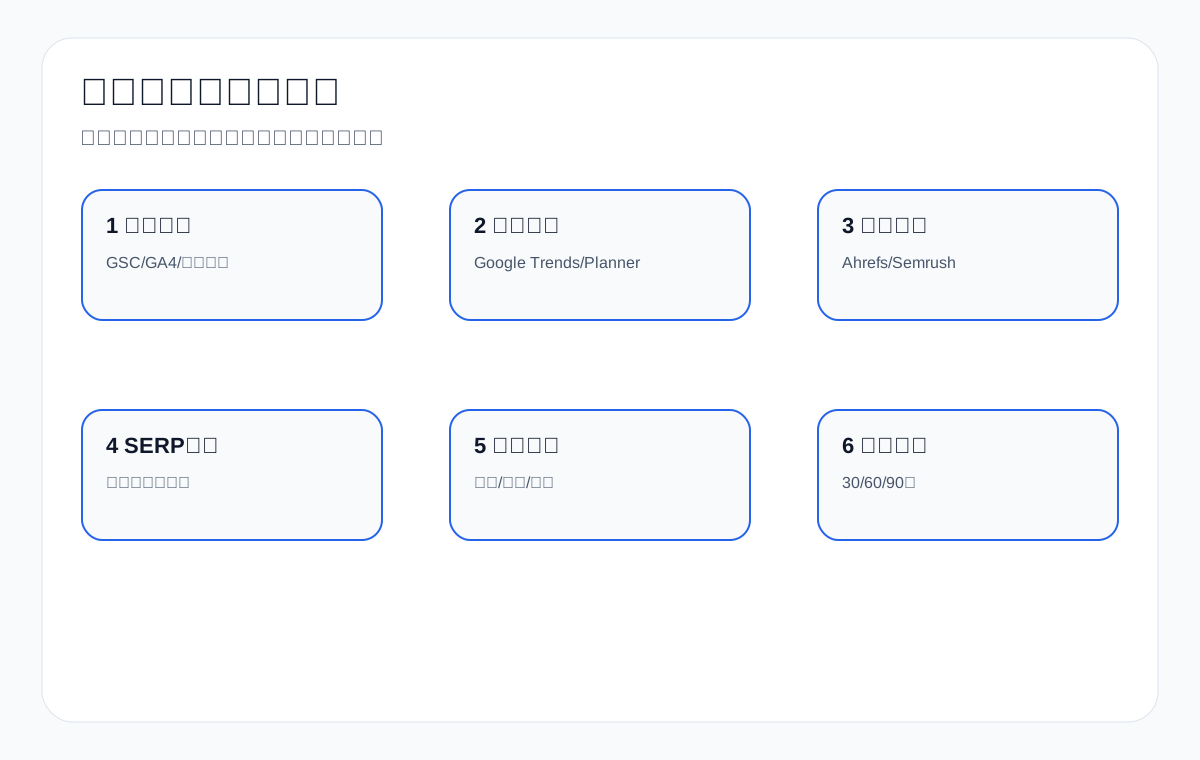
1. The conclusion first: choosing a keyword tool starts with six diagnostic scenarios
If you only ask “which keyword tool is better,” you usually end up with a long list of tools: some say Ahrefs is good for backlinks and competitors, some say Semrush is good for keyword databases and gap analysis, some say Google Keyword Planner is free, and some say Google Trends shows seasonality. They can all be useful, but they answer questions about tool capabilities, not about your business. What an export website really needs to ask is: are we missing product terms, country-market judgment, page mapping, content topics, or inquiry-quality review? Different questions require completely different data.
Overview table: keyword tool selection scenarios
| Diagnostic scenario | Preferred tools | Core judgment | Risk reminder |
|---|---|---|---|
| New site with no data | Google Suggest, Keyword Planner, Google Trends | Start with product families, application scenarios, and purchasing modifiers | Don’t look only at search volume; check whether the SERP lets a new site in |
| Existing site with impressions but no inquiries | GSC, GA4, CRM/inquiry records | Find terms with high impressions, low clicks, and no action after landing | First judge whether the page is attached to the wrong intent |
| Want competitor gap analysis | Ahrefs, Semrush, manual SERP observation | See which competitor pages capture product-family and question terms | Don’t copy a competitor’s keyword list wholesale |
| Content update priorities | GSC date comparison, rank tracking, page conversion | Look at impression decline, CTR decline, and URL mismatch | Update pages with business value first |
| Multi-country markets | Google Trends, GSC countries, regional SERP results | Look at wording differences across the US, Europe, the Middle East, and Southeast Asia | Don’t apply Chinese procurement habits to English-speaking markets |
| AI search visibility | AI Overviews observation, cited-page records, structured content checks | See whether definitions, tables, and FAQs are easy to cite | Don’t promise a fixed AI recommendation |
For example, if a manufacturer making LED flood light has just launched an English site with no GSC data, the first step is not to buy the most expensive tool. Instead, use Google Suggest, Keyword Planner, and manual SERP observation to break terms such as flood light supplier, outdoor LED flood light, LED flood light for warehouse, and IP65 flood light into product families, application scenarios, and specification intent. Another factory making cnc machining parts with two years of site data may see many queries in GSC with high impressions but low CTR. Its priority is not to keep expanding terms, but to judge whether the current page titles, content depth, and page types match buyer intent.
Boundaries of official documentation: keyword tools answer only part of the question, they cannot decide your page strategy for you
Keyword tools are useful, but they are not the decision itself.
Before choosing tools, an export business needs to distinguish several kinds of data: Google Search Console shows the search performance your own website has already had; Google Ads Keyword Planner leans toward advertising and keyword planning; Google Trends shows trends and regional interest; third-party tools show data they collect and estimate themselves; GA4 shows on-site behavior.
These data sources have different definitions. Mix them together and you will easily get the page wrong.
Acceptance boundaries between official documentation and keyword tools
| Source | What it is good for answering | What it cannot directly establish |
|---|---|---|
| Search Console Help: Performance report | Your own site’s query, page, clicks, impressions, CTR, average position, country, and device in Google Search. | It cannot discover every potential keyword; when there is no row data, you must not invent search performance. |
| Google Ads Help: Use Keyword Planner | Ad keyword planning, related-term expansion, and estimates for campaign planning. | Ad-side search volume cannot be equated directly with organic SEO priority. |
| Google Trends Help: FAQ about Google Trends data | Observe region, time, and trend changes to judge whether demand is seasonal or differs by market. | It cannot replace page-level search performance or inquiry-quality judgment. |
| Google Search Central: SEO Starter Guide | Bring keywords back to page content, user needs, and crawlable, understandable structure. | You cannot just pile up pages from a keyword list. |
| Google Search Central: AI features and your website | In the AI search era, pages still need to be accessible, indexable, and clearly written so search systems can understand them. | Writing AI-related words does not mean your content will be used in AI answers. |
| Google Analytics Help: About events | Observe on-site actions such as form submissions, email, WhatsApp, downloads, and button clicks. | Tool search volume cannot replace real conversion review. |
| Ahrefs Blog: Keyword Research | Use as a third-party reference for keyword expansion, difficulty, SERP, and competitor observation. | A single tool’s score cannot be treated as the final page priority. |
| Moz: Keyword Research | Understand search demand, keyword grouping, and content-intent judgment. | It cannot replace export product facts and sales feedback. |
Tool selection acceptance checklist: every tool should map to a diagnostic scenario
| Diagnostic scenario | Data to look at | Page action | Risk boundary |
|---|---|---|---|
| New site, no data | Product terms, competitor terms, Google Trends, Keyword Planner, SERP page types. | First build a baseline of product pages, category pages, application pages, and resource pages. | Do not write conclusions about GSC rankings or clicks. |
| Existing GSC impressions | query, page, country, device, CTR, average position. | Revise titles, body copy, FAQs, internal links, and product facts page by page. | Do not look only at search volume while ignoring pages and inquiries. |
| Competitor gap | Third-party tool keyword lists, competitor page types, SERP results, citation sources. | Decide whether you need new pages, merged pages, or more resource material. | Do not copy a competitor’s keyword list. |
| AI search visibility | A fixed query set, AI answer sampling, brand mentions, citations of your site, factual errors. | Add clear, citable facts, tables, FAQs, and entity consistency. | Do not promise placement on a specific AI platform. |
| Business review | GA4 events, inquiry products, countries, parameters, sales feedback. | Feed effective terms back into page structure and resource modules. | Do not treat a tool’s keyword list as a business result. |
How to write keyword tool conclusions when there is no GSC data
If Search Console still has no query or page row data, keyword research can still be done, but the conclusions must be restrained.
You can write: seed terms, product terms, application-scenario terms, competitor terms, page mapping, and follow-up review fields have been established. You cannot write: a certain term already has rankings, CTR, or click improvement. The search volume, trends, difficulty, and related terms a tool provides can only serve as reference for building pages and baselines.
| Current evidence | Conclusions you can write | Conclusions you cannot write |
|---|---|---|
| No GSC row data yet | There is no analyzable search performance yet; a baseline must be established first. | A certain keyword has already improved. |
| Third-party tool has a keyword list | Can be used as a source of candidate terms and competitor observation. | A tool score equals real conversion priority. |
| Google Trends shows a trend | Regional and time changes can be observed. | Trend popularity means the site will get organic clicks. |
| GA4 events can be observed | On-site behavior and inquiry actions can be reviewed later. | Current inquiries are already coming from a certain keyword. |
Choosing a keyword tool ultimately comes back to pages and business: which URL should this term live on, which procurement question does it answer, and which fields will you use to review it after publishing?
2. Why a “keyword tool list” misleads export businesses
Keyword research for an export website is not about sorting a tool’s export by search volume and then picking a few big-looking terms to write articles about. English B2B procurement terms have several characteristics: first, the same product may have product-family terms, material terms, specification terms, application terms, industry terms, country terms, supplier terms, and quote terms; second, high-volume terms do not necessarily bring inquiries, while low-volume terms may be closer to purchasing; third, buyers use completely different expressions at different stages — early on they ask how to choose, at the comparison stage they search “vs” or “best,” and at the purchasing stage they search manufacturer, supplier, custom, quote, and OEM.
Take waterproof connector. If you look only at search volume in a tool, you might pick the broad term waterproof connector; but what actually suits a page may be waterproof circular connector, M12 waterproof connector, IP67 waterproof connector supplier, waterproof connector for outdoor lighting, or custom waterproof cable connector. They map to different pages: some suit a category page, some suit a product page, some suit an application page, and some suit an article page. If a tool hands you 1,000 terms and you have no page-role judgment, you will end up with mixed content, pages competing with each other, product pages that do not convert, and article pages stealing commercial terms.
3. Judge the page type first, then decide which tool to use for finding terms
An export website is not a media site. Keywords ultimately have to land on pages that can carry business. A good keyword-tool selection process must first answer: which type of page should carry this term? If the answer is unclear, the stronger the tool and the more data it exports, the easier it is for the team to get confused. The table below can serve as a basic check before keyword mapping on an export website.
Export website page types and keyword matching table
| Page type | Terms it suits | Export English example | Page task |
|---|---|---|---|
| Category page | Product families, supplier, manufacturer, wholesale | LED flood light supplier | Capture demand from buyers looking for a supplier, manufacturer, or category set |
| Product page | Model, specification, material, certification, size | M12 waterproof connector IP67 | Capture demand from buyers who already know the specs or are ready to request a quote |
| Application page | for industry/scenario/equipment/material | packaging machine for snacks | Capture scenario demand from buyers who don’t know which product to choose |
| Article page | how to, what is, vs, checklist | how to choose cnc machining parts supplier | Capture demand for learning, comparison, judgment, and risk elimination |
| Resource page | datasheet, manual, catalog, standard | medical probe datasheet | Capture demand for downloading materials, checking parameters, and technical confirmation |
| Inquiry page | quote, sample, custom, OEM | custom metal parts quote | Capture demand for quotes, samples, customization, and contact |
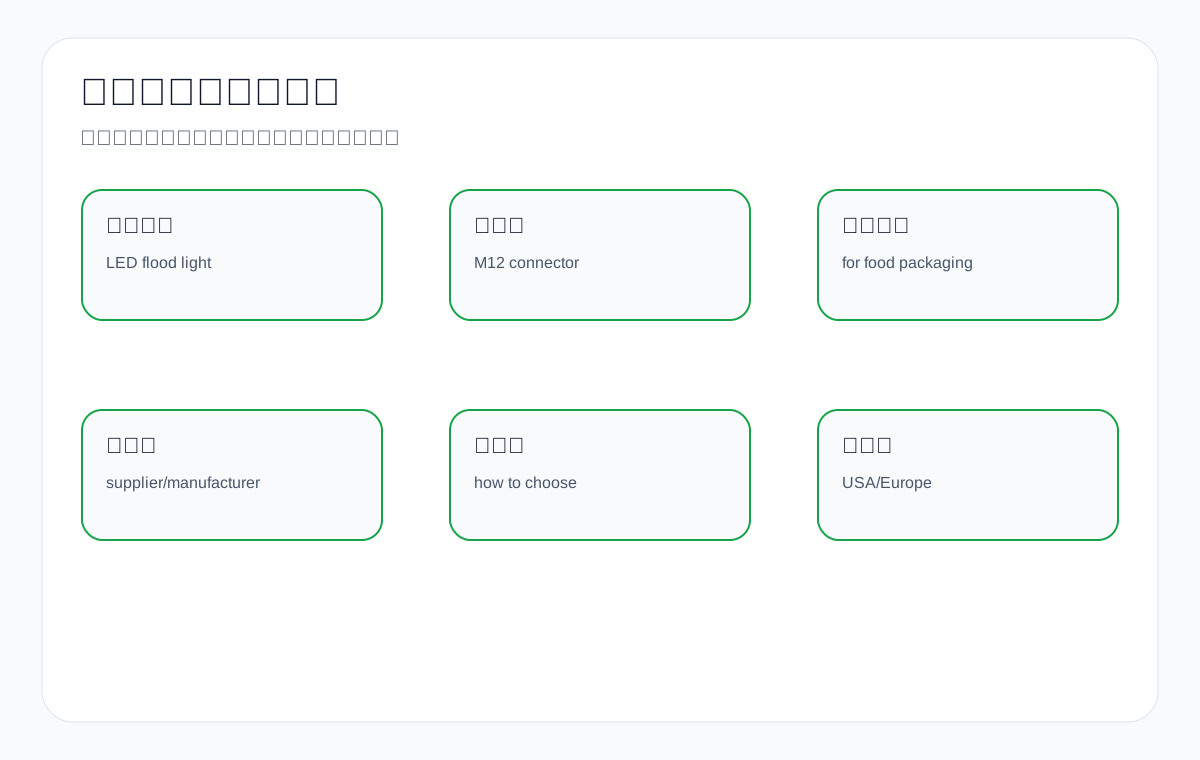
Take packaging machine as an example. packaging machine supplier looks more like a category or commercial landing page; automatic packaging machine for snacks looks more like an application page; how to choose packaging machine looks more like an article; vertical packaging machine model number looks more like a product page; packaging machine troubleshooting may belong to after-sales or a knowledge base. You can find terms with Ahrefs, Semrush, or Keyword Planner, but only page-type judgment can decide where those terms should be written.
4. How common keyword tools divide the work: not who replaces whom, but who answers which question
Many export businesses have limited budgets and cannot buy every tool from the start. The right approach is to divide tools into four categories: real on-site data, market-demand expansion, competitor and link data, and page-performance review. Free and paid tools are not superior and subordinate; they are complementary. Google Search Console can tell you which queries have already reached your site, but it cannot tell you all the demand you have not yet covered; third-party tools can give you a large number of candidate terms, but they cannot prove those terms suit your business; manual SERP observation is the slowest, yet it can judge page intent.
Keyword tool division-of-labor table
| Tool/data source | Questions it suits | Value for an export website | Usage boundary |
|---|---|---|---|
| Google Search Console | Real queries, pages, and country performance for an existing site | You can see the impressions and clicks the site has already received | It cannot discover new-market terms with no coverage at all |
| Google Trends | Seasonality, regional interest, term comparisons | Good for judging whether LED flood light has seasonal swings | It cannot replace page-level keyword mapping |
| Keyword Planner | Ad search volume, CPC, country markets | Good for estimating rough demand for commercial terms | Organic search intent still needs a SERP check |
| Google Suggest/PAA | Question terms, long-tail terms, buyer phrasing | Good for finding phrasings like how to choose, best material, and supplier | It does not provide full search volume or competition strength |
| Ahrefs | Competitor pages, backlinks, keyword gaps | Good for seeing why competing pages rank | Third-party data must be cross-checked against real search results |
| Semrush | Keyword databases, competitor gaps, SERP features, intent labels | Good for quickly expanding topics and organizing groups | Tool groupings do not equal page structure directly |
| Manual SERP observation | Judge whether the results page leans toward products, categories, articles, or platforms | It prevents writing pure tutorials for purchasing terms | Time-consuming, but essential for key pages |
| GA4/CRM | Judge whether a term brings valid visits and inquiries | It separates traffic terms from business terms | Requires site analytics and inquiry records together |
If you are a factory making ceramic dinnerware, Keyword Planner may show search volume for dinnerware, ceramic plates, and porcelain dinnerware; Google Trends can tell you whether certain seasonal and regional terms are changing; Semrush or Ahrefs can show whether competitors rank through category, collection, blog, or marketplace pages; GSC can tell you whether your own site already gets impressions for ceramic dinnerware manufacturer, custom dinner plates, restaurant dinnerware supplier, and similar terms. Only by combining these data can you form a page plan.
5. Scenario one: a new export site with no data — how to choose your first set of keyword tools
When a new site has no GSC history, the easiest mistake is to look only at search volume. For factories and trading companies, the more important first stage is building a “product term map”: core product families, subcategories, material specifications, application scenarios, buyer-identity terms, country/region terms, and question terms. You can start with Google Suggest, People Also Ask, Keyword Planner, Google Trends, and manual SERP observation to build a basic keyword set, then use third-party tools to fill in competitor gaps.
The steps can go like this: first list 10–30 real product names in English, such as custom metal parts, cnc machining parts, waterproof connector, and medical probe; then add purchasing modifiers to each product, such as supplier, manufacturer, factory, custom, OEM, wholesale, and quote; then add application scenarios, such as for automotive, for medical device, for outdoor lighting, and for food packaging; finally open Google search results and see whether the first page is mostly product pages, category pages, article pages, B2B platform pages, or brand pages. If the first page is mostly categories and product pages, don’t write only articles; only when the first page is full of how to, guide, and comparison results do you need knowledge-type content.
First batch of keyword collection for a new site
| Step | What to do | Example | Output |
|---|---|---|---|
| 1 | List real product names in English | custom metal parts, LED flood light | Product seed terms |
| 2 | Add buyer-identity terms | supplier, manufacturer, factory, OEM | Commercial-intent terms |
| 3 | Add specification and material terms | IP67, stainless steel, CNC aluminum | Product page/category page terms |
| 4 | Add application-scenario terms | for warehouse, for medical device | Application page terms |
| 5 | Observe SERP page types | Category pages, product pages, article pages, platform pages | Page-type judgment |
| 6 | Do page mapping | One term group maps to one main page | Content plan |
6. Scenario two: you already have GSC data — how to use tools to find “impressions but no conversion” opportunities
Keyword research for an established site cannot start only with external tools. When you already have real data, GSC is often closer to reality than any third-party tool. Look at queries, pages, countries, and dates first, not just average position. If a page gets a lot of impressions but a low CTR, the title may be unclear, or the search intent may be mismatched; if a query gets impressions but lands on the wrong page, you may need to build a more suitable category or application page; if a country gets impressions but converts poorly, the page language, certifications, logistics, or inquiry entry point may not address local purchasing concerns.
For example, a company doing industrial valve supplier may see queries in GSC such as valve supplier, industrial valve manufacturer, stainless steel ball valve supplier, and valve for chemical plant. You should first group them by page type: supplier/manufacturer may suit a commercial page, stainless steel ball valve suits a category or product page better, and for chemical plant suits an application page better. Only then use Ahrefs or Semrush to see whether competitors have corresponding pages, rather than adding all these terms to a single page.
GSC opportunity diagnosis table
| Symptom | Possible cause | Further verification tool | Suggested action |
|---|---|---|---|
| High impressions, low clicks | Title and snippet don’t answer purchasing intent | SERP title comparison, GSC CTR | Rewrite the title and the above-the-fold answer |
| Clicks but no inquiries | Term too broad or page call-to-action too weak | GA4 paths, inquiry records | Add a product selection table and inquiry entry point |
| Query lands on the wrong page | Unclear page mapping | GSC page dimension, SERP observation | Build better-matching category/application pages |
| Big differences across countries | Different wording or certification needs by market | Trends, country SERPs | Add country-market explanations |
| Large ranking fluctuations | Unstable page role and internal-link signals | Rank tracking, internal link checks | Clarify the main page and strengthen internal links |
7. Scenario three: competitor keyword gaps — don’t copy a competitor’s keyword list
Ahrefs and Semrush are both well suited to studying competitors, but export businesses need to be especially careful with competitor data. The terms a competitor page ranks for may not suit your site; a product line a competitor has may not be something you produce; terms a competitor earns through brand, backlinks, or platform authority may not be something a new site can take on right away. The goal of competitor analysis is not to copy a keyword list but to identify opportunities where they have a page for it and you don’t.
For example, if you do private label activewear manufacturer, a competitor may have pages such as yoga leggings manufacturer, custom sports bra manufacturer, seamless activewear supplier, and private label gym wear manufacturer. You should look at whether those pages are category pages, application pages, service pages, or article pages, then judge whether you have the corresponding product capability, image material, MOQ, material descriptions, size range, production process, and inquiry handling. Without those capabilities, writing the same terms is not only unprofessional, it also brings low-quality visits.
Competitor gap screening table
| Competitor keyword opportunity | Can you do it? | Basis for judgment | Page action |
|---|---|---|---|
| Competitor ranks with a product page | Can consider | We have a similar product and specification material | Create or strengthen a product page |
| Competitor ranks with an application page | Prioritize | We can explain the industry scenario and selection criteria | Write an application page |
| Competitor captures purchasing terms with articles | Be cautious | Does the SERP lean toward tutorials or commercial pages? | You may need a commercial page rather than an article |
| Competitor ranks for brand terms | Don’t chase | Brand demand cannot be replicated | Only cover comparison and alternative scenarios |
| Competitor has unrelated product lines | Don’t do it | Not part of our core capability | Avoid attracting invalid inquiries |
| Competitor has high-quality FAQs | Learn the structure | The questions are real and procurement-related | Add FAQs and decision tables |
8. Scenario four: validating seasonality and country markets — when Google Trends is more useful
Export websites often face multi-country markets, and the same English term may have different demand strength and seasonal rhythm in different countries. The value of Google Trends is not that it tells you accurate search volume, but that it reveals trends, regional differences, seasonal swings, and the relative relationship between terms. For industries such as LED lighting, garden products, holiday packaging, outdoor equipment, and agricultural machinery, this kind of judgment matters especially.
For example, LED flood light may be affected in different regions by project procurement, the outdoor lighting season, and energy-saving retrofit policies; ceramic dinnerware may be affected by holiday purchasing, the dining season, and the gift season; packaging machine may be tied to trade shows, industry peak seasons, and the food processing season. After checking trends with Trends, use Keyword Planner or third-party tools to estimate demand, then use the SERP to check page types, and only then decide whether to update a category page, write an application page, or schedule seasonal content.
Seasonality and country-market judgment table
| Question to answer | Preferred data | Export example | Content action |
|---|---|---|---|
| Which country is more interested | Google Trends regions, GSC countries | waterproof connector USA vs Germany | Add a country-market explanation |
| When demand rises | Trends time curve, historical inquiries | LED flood light peak season | Update category pages and FAQs in advance |
| Which term is more common | Trends term comparison, SERP results | dinnerware vs tableware | Unify titles and page wording |
| Is it only a short-term spike | Trends long-term curve, news/trade shows | packaging machine fair | Don’t blindly create a long-term page |
| Do you need country pages | SERP regional differences, certification needs | industrial valve standards | Add regional explanations when needed |
9. Scenario five: during content updates, how keyword tools help you judge “what to change”
Content refresh is not about rewriting the whole page the moment you see a ranking drop. The role of keyword tools in content updates is to help you judge where the decline comes from: demand changed, the SERP page type changed, a competitor added more complete content, the title no longer earns clicks, page speed or mobile experience got worse, or your content does not cover the new questions. Different causes call for different actions.
Take a page related to medical probe as an example. If the page used to get impressions for medical probe manufacturer and impressions are now falling, check whether the SERP has shifted from supplier pages toward medical device platforms or technical resource pages; if clicks are falling but rankings hold, the title may fail to mention certifications, applications, or customization capability; if there are visits but few inquiries, the page may lack the material, compatible devices, sterilization methods, MOQ, and sample lead time that buyers use to make purchasing decisions. Tools only give you signals; a real update has to go back to the buyer’s questions.
Content update decision table
| Signal | What not to do right away | What to judge first | Recommended action |
|---|---|---|---|
| Ranking decline | Don’t rewrite the whole page | Has the SERP page type changed? | Fill the gap or adjust the page role |
| CTR decline | Don’t just add keywords | Does the title answer the purchasing question? | Rewrite the title, snippet, and above-the-fold content |
| Impression decline | Don’t delete content blindly | Is demand seasonal, or has the term variant shifted? | Add new terms and related FAQs |
| Traffic without inquiries | Don’t just chase more traffic | Do the traffic terms have commercial intent? | Add a selection table and action entry points |
| Multiple URLs competing for the same term | Don’t simply merge them | Is the intent really the same? | Clarify the main page and supporting pages |
10. How to turn a tool’s keyword list into an executable page plan
Keyword research most often gets stuck at “we have a lot of terms but don’t know how to write them.” The solution is to turn terms from a list into a page plan. Every term should be tagged with four labels: search intent, page type, business value, and current coverage status. Then organize content by page type, not by the order a tool exported it. That is how you avoid cramming too many intents into one page and avoid multiple pages covering the same set of terms over and over.
It is advisable to build a keyword mapping table with fields such as: keyword, product line, country market, search intent, page type, current URL, whether impressions already exist, whether inquiries already exist, SERP top page type, content gap, priority, and next action. For an export business, priority should not be decided by search volume alone; it should also consider product margin, delivery capability, certification advantages, MOQ, competition difficulty, inquiry quality, and whether a page can carry the term.
Keyword mapping field table
| Field | Why it’s needed | Example |
|---|---|---|
| Keyword | Record the real English expression | custom metal parts manufacturer |
| Product line | Keep irrelevant terms out of the plan | CNC/stamping/casting |
| Country market | Judge regional differences | USA, Germany, UAE |
| Search intent | Distinguish learning, comparison, and purchasing | commercial investigation |
| Page type | Determine the content format | Category page/product page/application page/article page |
| Current URL | Avoid duplicate builds | /cnc-machining-parts/ |
| GSC performance | See real impressions and clicks | impressions, CTR, country |
| Business value | Not all traffic is worth pursuing | High margin/stable capacity/inquiry quality |
| Next action | Form an executable plan | Update, merge, create, internal link |
11. Don’t treat a tool’s difficulty score as the only decision
Many tools give keywords a difficulty score, but export businesses cannot treat it as the only decision. Difficulty scores are usually based on signals such as ranking pages, backlinks, and domain strength. They help you judge how strong the competition is, but they do not directly represent business value. A very low-difficulty term may have no purchasing intent; a higher-difficulty term that matches your core product and profit may still be worth building for the long term. A real decision should look at the SERP, page type, competitor content, your product capability, existing authority, and conversion path at the same time.
For example, custom metal parts may be fairly competitive, but if your factory has stable machining capability, material selection, surface treatment, inspection standards, and export experience, you can build a content cluster through product-family pages, process pages, application pages, and technical articles. Conversely, a low-difficulty generic question term that cannot bring buyers should not consume core resources. Tool difficulty is a reference, not a steering wheel.
12. In the AI search era, keyword tools must also look at “citable information”
Answer-style search such as AI Overviews, ChatGPT, and Gemini has changed how some information is obtained, but it has not changed the underlying logic of export websites: pages must be clear, credible, parseable, and citable. Keyword tools are still useful, but you cannot look only at traditional rankings. You also need to check whether pages have clear definitions, comparison tables, step lists, FAQs, product parameters, application scenarios, evidence sources, and explicit entity information. AI systems are more likely to cite pages that are clearly structured, information-dense, and free of exaggerated claims.
For example, an article about choosing a waterproof connector has little value if it only says “good quality, low price” in general terms; if it explains the difference between IP67 and IP68, pin counts, wire gauge, housing material, operating temperature, application scenarios, test standards, purchasing questions, and the consequences of choosing wrong, it is easier for buyers to understand and more likely to be extracted by answer-style search. Keyword tools find the questions; page structure makes the answers understandable.
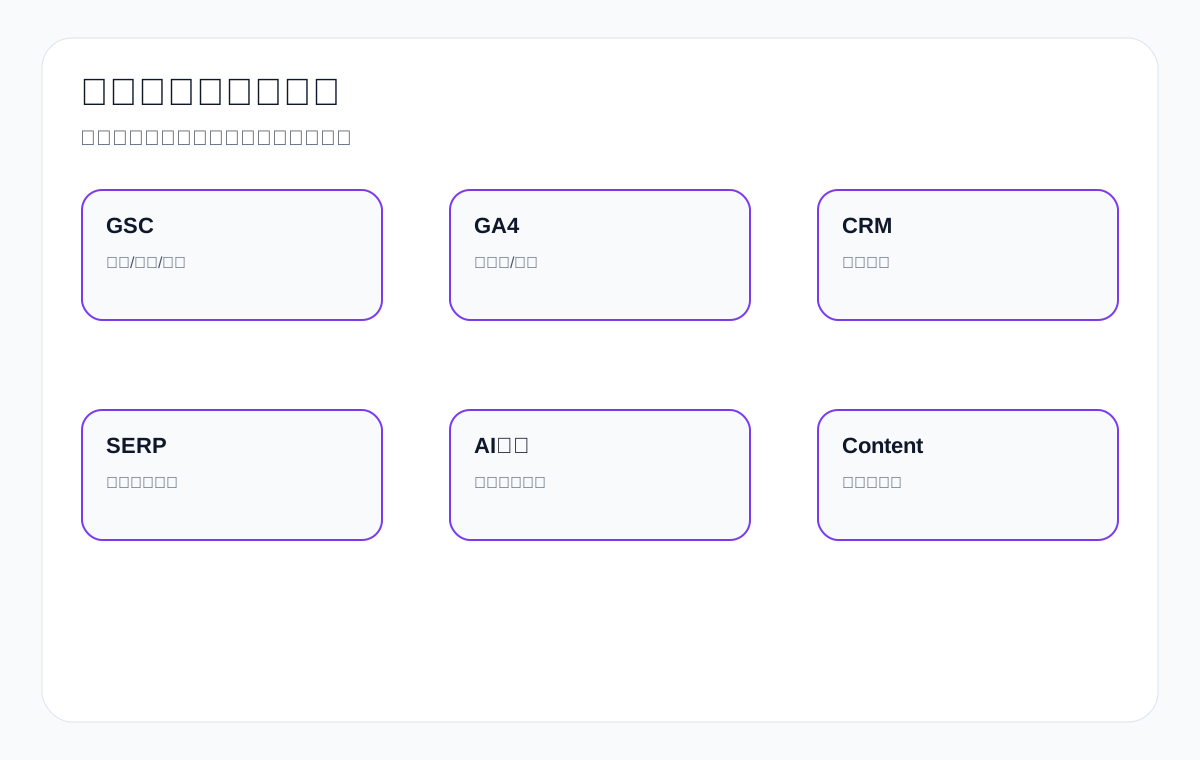
13. A practical workflow for choosing keyword tools: from question to page, not from term to term
Step 1: Confirm your business boundaries
First list your main products, exportable markets, strong processes, delivery capability, and the needs you cannot take on. This keeps unrelated traffic off the site. A factory making cnc machining parts should not write about plastic injection molding just because a term has high search volume; a company doing industrial valve supplier work should not put household faucet terms into its core plan either.
Step 2: Confirm the diagnostic scenario
New sites, established sites, competitor gaps, content updates, country markets, and AI visibility call for different tools. Don’t open a tool and export data at random when you haven’t defined the problem.
Step 3: Collect seed terms
Extract real terms from product catalogs, quotations, customer emails, trade show materials, English product specifications, and sales feedback. The wording in sales emails is often closer to the inquiry scenario than tool terms.
Step 4: Expand term groups
Use Suggest, PAA, Keyword Planner, Trends, Ahrefs, and Semrush to expand product-family, specification, application, purchasing, question, and comparison terms.
Step 5: Observe the SERP
Look at the first page of search results for every important term. If the results are mostly platforms and category pages, capture them with a commercial page; if they are mostly tutorials and guides, then write an article.
Step 6: Map pages
Assign keywords to category pages, product pages, application pages, article pages, resource pages, or inquiry pages. A main page should carry only one core intent, and supporting pages should help it through internal links.
Step 7: Write the content gap
Don’t just write titles. Record what the top pages already cover, what they lack, and what you can add, such as parameter tables, selection tables, application images, FAQs, certification explanations, and inquiry checklists.
Step 8: Review after publishing
Use GSC, GA4, inquiry sources, and AI citation observations to review results, not just ranking screenshots.
14. How export businesses should configure keyword tools at different budgets
A higher budget is not always better. What matters is whether the tool combination covers your decision questions. A new site can start with free tools and manual SERP work to build a foundation; once you have some content and data, add Ahrefs or Semrush for competitor gaps and keyword expansion; as content volume grows, add rank tracking, log analysis, content audits, and AI visibility observation. Don’t buy many tools when you have no capacity to execute content, and don’t stop researching just because you lack paid tools.
Budget and tool combination recommendations
| Stage | Tool combination | Suits | Key actions |
|---|---|---|---|
| Zero budget to start | GSC, GA4, Trends, Suggest, PAA, SERP observation | Newly launched export sites or sites with tight budgets | Build a product-term map and page mapping |
| Light budget | Free tools + a single paid tool used short-term | Sites with 20–100 pages | Fill competitor gaps and content update priorities |
| Steady investment | GSC/GA4 + Ahrefs or Semrush + rank tracking | Factories/trading companies doing ongoing English SEO | Review queries, pages, and inquiry quality monthly |
| Mature stage | The above + log/content audits/AI citation observation | Multi-product-line, multi-country, multilingual sites | Build content assets and a cross-market optimization mechanism |
15. Common pitfalls: the more tools you use, the messier it gets
Pitfall 1: Looking only at search volume
High-volume terms do not necessarily have purchasing intent. Export businesses should also look at page type, commercial modifiers, country markets, and inquiry quality.
Pitfall 2: Writing all terms into one article
This leads to confused page intent. Product-family terms, model terms, application terms, and question terms should each be carried by different pages.
Pitfall 3: Copying competitor keywords
A competitor ranking does not mean you have the same product capability, supply chain, certifications, and page authority.
Pitfall 4: Ignoring real GSC data
An existing site must first look at the queries and page performance it has already earned, otherwise it misses low-cost update opportunities.
Pitfall 5: Replacing human judgment with tool groupings
Tools can cluster, but they cannot fully understand your product lines, profit, capacity, and customer quality.
Pitfall 6: Treating the difficulty score as a conclusion
A difficulty score can only help judge competitive strength; it cannot replace business priority.
Pitfall 7: Ignoring SERP page types
If the search results are mostly product pages, a longer tutorial you write may still not match.
Pitfall 8: Doing keywords only, never reviewing
Without GSC, GA4, inquiry sources, and sales feedback, keyword research stays on paper.
16. Post-publish review metrics: keyword tools must ultimately return to business results
Export SEO reviews cannot look only at rankings. If a page’s rankings rise but it brings no qualified inquiries, the term may be wrong, the page may capture demand poorly, the product may not match, or the inquiry entry point may be unclear. It is advisable to review in stages at 7 days, 30 days, 60 days, and 90 days. Early on, look at crawling and the appearance of queries; in the middle, look at clicks and page interaction; later, look at inquiry relevance and sales feedback.
Keyword research review metrics table
| Time | Search metrics | Page metrics | Business metrics |
|---|---|---|---|
| 7 days | Whether new content is crawled and the URL appears consistently | Whether the page opens normally and images load | Don’t judge inquiries yet; look at indexing and crawling first |
| 30 days | Whether target queries and close long-tail variants appear in GSC | Whether landing pages, dwell time, scroll, and bounce are reasonable | Whether related inquiries, sample requests, and spec confirmations appear |
| 60 days | Whether impressions, CTR, countries, and page matching improve | Whether internal link paths drive visits to product/category pages | Whether inquiry quality moves closer to the target product line |
| 90 days | Ranking stability and whether page intent is clear | Whether FAQs, case explanations, or comparison tables are needed | Whether there are signs of pre-sale communication, quotes, and RFQ growth |
When reviewing, put GSC queries and actual inquiry records side by side. For example, if the packaging machine page brings visits but all inquiries ask about small household equipment while you only make industrial equipment, then the page must clearly state boundaries such as machine capacity, application, factory use, and MOQ; if the waterproof connector page has traffic but no inquiries, you may need to add wire gauge, certifications, images, a specification table, and a quote entry point; if private label activewear manufacturer gets a lot of visits but a high bounce rate, the MOQ, fabric, sizes, and sampling lead time may not be explained clearly.
17. FAQ: common questions from export businesses about choosing keyword tools
Do export websites have to buy Ahrefs or Semrush?
Not necessarily. A new site can start with Google Search Console, GA4, Trends, Keyword Planner, Suggest, PAA, and manual SERP observation. Paid tools are good for competitor gaps, keyword expansion, and content priorities, but they cannot replace page mapping and business judgment.
Can Google Keyword Planner’s search volume be used directly for SEO?
It can be a reference, but it cannot be used directly as an organic search decision. It leans toward advertising, its volume ranges can be coarse, and it cannot tell you the SERP page type. Important terms still need a look at search results, GSC, and business value.
If a keyword has low difficulty, should it be prioritized?
Not necessarily. A low-difficulty term with no purchasing intent may bring useless visits. Export businesses should look more at product fit, inquiry value, whether a page can carry the term, and the quality of competing pages.
Why do tools export many terms, yet the articles get no inquiries?
Common reasons are treating informational terms as purchasing terms, mismatching page types, titles and content that don’t answer what buyers care about, or missing product parameters, selection tables, images, certifications, MOQ, sampling lead time, and an inquiry entry point.
Can you still do keyword research when there is no data in GSC?
Yes. A new site starts with product material, customer emails, Google Suggest, PAA, Trends, Keyword Planner, and SERP observation. Once pages go live, use real GSC queries to keep refining.
Will AI search make keyword tools obsolete?
No, but the way you use them changes. You still need to know user questions and product terms; pages just need to be more structured: definitions, tables, steps, FAQs, parameters, decision criteria, and credible explanations matter more.
Can one keyword map to multiple pages?
Yes, but distinguish intent. For example, LED flood light supplier suits a category/commercial page, how to choose LED flood light suits an article, and 100W LED flood light suits a product page. Don’t let multiple pages answer the same primary intent.
How often should you review keyword performance?
For new content, check crawling and initial queries at 7 days, impressions and clicks at 30 days, page interaction at 60 days, and at 90 days combine inquiry quality to decide whether to update, add FAQs, adjust internal links, or rewrite the title.
How does tool output feed into sales review?
The terms selected with keyword tools must ultimately feed into sales and operations reviews, not sit in a content spreadsheet. Each month you can put GSC queries, landing pages, inquiry sources, customer countries, product lines, and quote results in one table to see which terms bring real purchasing discussions and which are only learning visits. That way the next round of keyword research stays closer to the business instead of repeatedly chasing traffic terms that look busy but cannot explain purchasing demand.
18. Final criterion: choosing the right question matters more than choosing the right tool
The value of keyword tools is to help export businesses reduce blind judgment, not to decide your website’s direction for you. Truly executable keyword research should start from products, markets, pages, and inquiries: first confirm whether you need to solve new-site term selection, established-site updates, competitor gaps, country markets, content decay, or AI visibility; then choose the corresponding tools; then use the SERP to judge page types; finally land the terms on category pages, product pages, application pages, article pages, resource pages, and inquiry pages.
If you chase only a tool list, you will get more data; if you choose tools by diagnostic scenario, you will get a clearer page plan. For export manufacturers and trading companies, the ultimate goal is not to own the most keywords, but to make it easier for real buyers to find the right page through English product terms, application-scenario terms, comparison terms, and inquiry terms, and to complete their judgment, trust, and contact on that page.
{
“@context”: “https://schema.org”,
“@type”: “FAQPage”,
“mainEntity”: [
{
“@type”: “Question”,
“name”: “Keyword research review metrics tablenTime Search metrics Page metrics Business metricsn7 days Whether new content is crawled and the URL appears consistently Whether the page opens normally and images load Don’t judge inquiries yet; look at indexing and crawling firstn30 days Whether target queries and close long-tail variants appear in GSC Whether landing pages, dwell time, scroll, and bounce are reasonable Whether related inquiries, sample requests, and spec confirmations appearn60 days Whether impressions, CTR, countries, and page matching improve Whether internal link paths drive visits to product/category pages Whether inquiry quality moves closer to the target product linen90 days Ranking stability and whether page intent is clear Whether FAQs, case explanations, or comparison tables are needed Whether there are signs of pre-sale communication, quotes, and RFQ growthnnWhen reviewing, put GSC queries and actual inquiry records side by side. For example, if the packaging machine page brings visits but all inquiries ask about small household equipment while you only make industrial equipment, then the page must clearly state boundaries such as machine capacity, application, factory use, and MOQ; if the waterproof connector page has traffic but no inquiries, you may need to add wire gauge, certifications, images, a specification table, and a quote entry point; if private label activewear manufacturer gets a lot of visits but a high bounce rate, the MOQ, fabric, sizes, and sampling lead time may not be explained clearly.n17. FAQ: common questions from export businesses about choosing keyword toolsnDo export websites have to buy Ahrefs or Semrush?”,
“acceptedAnswer”: {
“@type”: “Answer”,
“text”: “Not necessarily. A new site can start with Google Search Console, GA4, Trends, Keyword Planner, Suggest, PAA, and manual SERP observation. Paid tools are good for competitor gaps, keyword expansion, and content priorities, but they cannot replace page mapping and business judgment.”
}
},
{
“@type”: “Question”,
“name”: “Can Google Keyword Planner’s search volume be used directly for SEO?”,
“acceptedAnswer”: {
“@type”: “Answer”,
“text”: “It can be a reference, but it cannot be used directly as an organic search decision. It leans toward advertising, its volume ranges can be coarse, and it cannot tell you the SERP page type. Important terms still need a look at search results, GSC, and business value.”
}
},
{
“@type”: “Question”,
“name”: “If a keyword has low difficulty, should it be prioritized?”,
“acceptedAnswer”: {
“@type”: “Answer”,
“text”: “Not necessarily. A low-difficulty term with no purchasing intent may bring useless visits. Export businesses should look more at product fit, inquiry value, whether a page can carry the term, and the quality of competing pages.”
}
},
{
“@type”: “Question”,
“name”: “Why do tools export many terms, yet the articles get no inquiries?”,
“acceptedAnswer”: {
“@type”: “Answer”,
“text”: “Common reasons are treating informational terms as purchasing terms, mismatching page types, titles and content that don’t answer what buyers care about, or missing product parameters, selection tables, images, certifications, MOQ, sampling lead time, and an inquiry entry point.”
}
},
{
“@type”: “Question”,
“name”: “Can you still do keyword research when there is no data in GSC?”,
“acceptedAnswer”: {
“@type”: “Answer”,
“text”: “Yes. A new site starts with product material, customer emails, Google Suggest, PAA, Trends, Keyword Planner, and SERP observation. Once pages go live, use real GSC queries to keep refining.”
}
}
]
}
Keep reading this SEO series
If you are systematically working through export website SEO, it is worth continuing with the articles below. Get the relationships between crawling, indexing, content, links, and review straight first, then decide which page to change next.
- How to judge backlink quality: a guide to relevance, trusted sources, and risk control
- How to do internal linking: a guide to export site structure, anchor text, topic clusters, and inquiry paths
- How to do content SEO: a guide to search intent, information gain, and indexable content
- How to do keyword research: a workflow for export product terms, search intent, and page mapping
- How to mine competitor keywords: from competitor pages and English product terms to inquiry opportunities
- How to do keyword mapping: a guide to export keyword mapping, page intent, and cannibalization repair
This page is machine-translated from the Simplified Chinese version and awaiting human review. It has not yet been proofread.