SEO rank monitoring cannot be about watching where a single keyword sits today. For export manufacturers and trading companies in China, a far more valuable approach is to look at keyword groups, target pages, SERP layouts, competitor pages, GSC impressions and clicks, GA4 visit paths, and inquiry quality together. Ranking is only one signal, not the final conclusion.
If your website sells custom metal parts, LED flood light, packaging machine, medical probe, cnc machining parts, ceramic dinnerware, waterproof connector, industrial valve supplier, or private label activewear manufacturer, rank monitoring should be designed around the procurement path: are product-family terms stable, do specification terms land on product pages, do application terms reach application pages, do comparison terms bring product clicks, and do quote terms bring more specific inquiries?
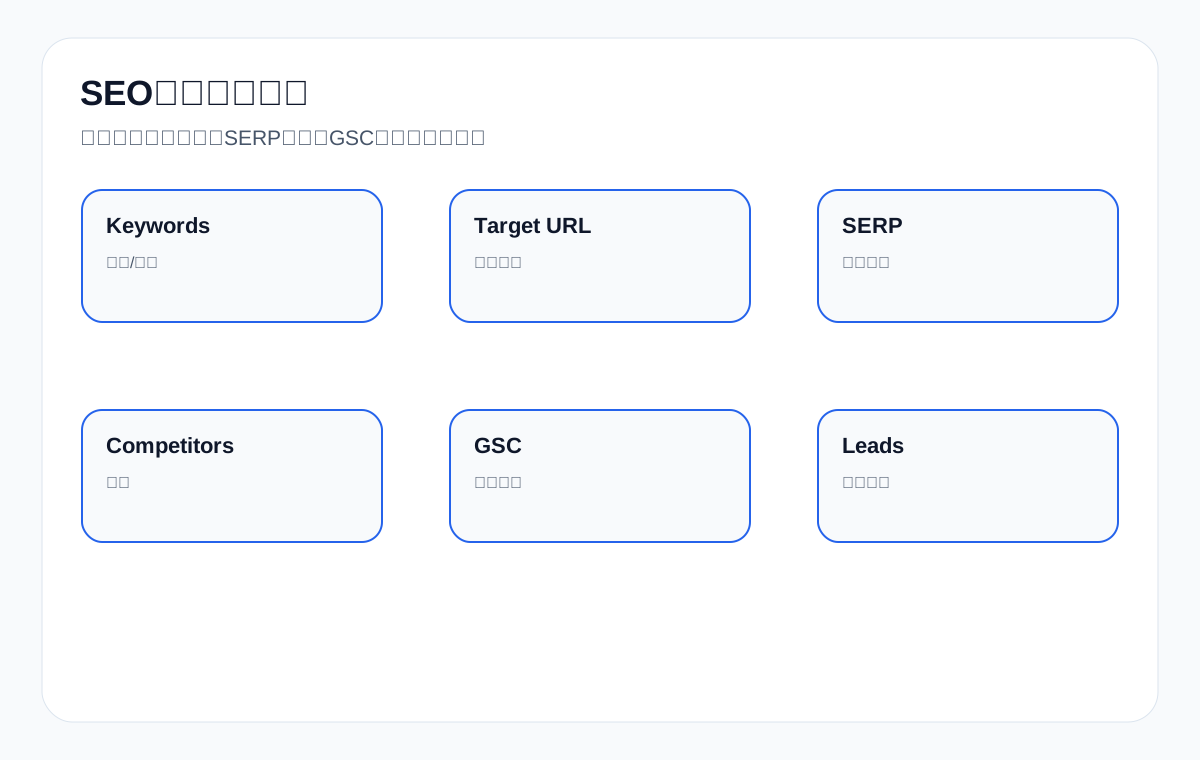
Boundaries of official documentation: SEO rank monitoring is not about watching positions but about reviewing search performance
For an export website, the first principle of rank monitoring is not to check a keyword’s position every day, but to put keywords, pages, average position, impressions, clicks, CTR, SERP layout, and inquiry actions into the same table. A screenshot of a single keyword only shows the search results at one moment; it cannot show whether a page has truly achieved stable search performance.
Google Search Console’s Performance report provides query, page, clicks, impressions, CTR, and average position. The average position here is an average measure; it is not the position seen by a particular user, in a particular city, or in a single manual search. When export businesses look at rankings, they should first establish a baseline using official data, then use third-party rank trackers to add region, device, SERP feature, and competitor observations.
If GSC currently has no query or page row data, rank monitoring cannot be written up as “existing terms are fluctuating.” At this stage, you can only build baselines for keyword groups, target URLs, SERP samples, index status, and GA4 events. Once row data appears, move on to reviewing page performance.
Mapping table: official documentation and SEO rank monitoring acceptance fields
| Official documentation entry | What rank monitoring can review | Export website fields | What conclusions cannot be drawn directly |
|---|---|---|---|
| Search Console Help: Performance report | query, page, clicks, impressions, CTR, average position. | Product terms, page URLs, impressions, clicks, and average position. | Cannot equate average position with the position in a single manual search. |
| Search Console Help: How are you performing on Google? | The observation boundaries of performance reports such as Search, News, and Discover. | First distinguish organic search performance; do not mix sources together. | Cannot attribute all traffic changes to SEO rankings. |
| Google Search Central: Debugging drops in Google Search traffic | Use the Performance report and trend analysis to troubleshoot traffic declines. | Diagnose ranking declines, impression declines, and click declines separately. | Cannot immediately change pages the moment fluctuations appear. |
| Search Console Help: URL Inspection tool | See the indexed version of a page that Google knows about. | Whether the target URL is indexable and whether the canonical is accepted. | Cannot by itself prove a page will achieve search performance. |
| Search Console Help: Inspect and troubleshoot a single page | Troubleshoot the index and crawl status of a single page. | When rankings are abnormal, first check whether the page can still be understood by Google. | Cannot replace query/page trend analysis. |
| Google Search Central: SEO Starter Guide | Whether the page serves real users first, and whether titles, body text, and links are clear. | Whether product pages and article pages match buyer search intent. | Cannot turn rank monitoring into nothing but title edits. |
| Google Search Central: Search Essentials | The boundaries of crawling, indexing, quality, and spam policies. | First confirm that a page meets the basic conditions for entering search results. | Cannot treat basic compliance as a performance conclusion. |
| Google Search Central: AI features and your website | In the AI search environment, pages must still be accessible, indexable, and clear in content. | Record AI Overviews, PAA, citation samples, and traditional rankings separately. | Cannot write AI answer samples as ranking results. |
| Google Analytics Help: About events | Record user actions such as forms, downloads, email, and WhatsApp. | Whether ranking terms actually lead to inquiry paths. | Cannot directly interpret a rise in rankings as an improvement in inquiry quality. |
| Google Search Console | Access the Search Console tools and report entry points. | Account permissions, data export, and page and query reviews. | Cannot replace a company’s own data access with unauthorized screenshots. |
SEO rank monitoring acceptance checklist: keywords, pages, SERP, GSC, and inquiries must be separated
A qualified rank monitoring table should answer at least five questions: which term is being monitored, which page is the target, whether the SERP layout has changed, how GSC performance looks, and what visits and inquiry actions the page brings. If any one is missing, it becomes easy to misread normal fluctuation as a problem later.
| Acceptance field | How to record | Export example | Review purpose |
|---|---|---|---|
| Keyword group | Group by product-family terms, specification terms, application terms, comparison terms, resource terms, and quote terms. | custom metal parts quote, LED flood light IP66. | Determine whether the term is a commercial entry, a resource entry, or a procurement-decision entry. |
| Target URL | Bind each term to its intended page and record the page that actually ranks. | waterproof connector supplier maps to a category page, not a random blog post. | Reveal page mismatch and internal linking problems. |
| GSC data | Record impressions, clicks, CTR, and average position at the query/page level. | The industrial valve supplier page has impressions but low clicks. | Determine whether it is a ranking problem, a title click problem, or a page-matching problem. |
| SERP layout | Record AI Overviews, PAA, image packs, videos, shopping modules, and competitor page types. | A video pack appears for the packaging machine query. | Decide whether video, FAQ, or image resources are needed. |
| Index status | Use URL Inspection to spot-check whether target URLs are indexable and whether canonicals are clear. | The medical probe datasheet page has not entered the expected indexed version. | Separate technical problems from content problems. |
| GA4 events | Record forms, catalog downloads, email clicks, WhatsApp, and RFQ buttons. | ceramic dinnerware catalog download. | Determine whether ranking terms bring effective procurement actions. |
| Page actions | Record the date of every title, body, FAQ, product specification, internal link, and image update. | Added a specification table and application FAQ to the M12 connector page. | Correlate ranking changes with page actions. |
When there is no GSC row data, rank monitoring can only establish a baseline first
New sites, recently migrated sites, and sites that have just connected to Search Console may temporarily have no query or page row data. Rank monitoring can still be done at this time, but conclusions must be downgraded: build a baseline first, and do not judge performance.
| Current evidence | Monitoring that can be done | Conclusions that should not be written | Next step |
|---|---|---|---|
| GSC query/page has 0 rows | Build tables for keyword groups, target URLs, SERP samples, and index spot checks. | A certain keyword already has ranking potential. | Check weekly whether new queries and pages appear. |
| Target URL not confirmed | First map keywords to category pages, product pages, resource pages, or article pages. | Ranking fluctuations come from content quality. | Add URL mapping and internal links. |
| GA4 events not configured | First plan inquiry, download, email, and button events. | Rank monitoring can already explain inquiry performance. | Build an event baseline. |
| SERP samples not recorded | First record region, language, device, date, and SERP features. | One manual search represents global rankings. | Re-test with a fixed methodology. |
| Page index status unclear | First use URL Inspection to spot-check key pages. | If a page does not rank, the keyword must be wrong. | Rule out noindex, canonical, crawling, and indexing problems. |
Boundaries of diagnosing ranking declines: first separate impressions, clicks, average position, and SERP changes
A ranking decline is not a single problem. It may be a drop in a page’s average position, or it may be that more long-tail terms entered the statistics and pulled the average down; it may be a drop in impressions, or a change in SERP layout that reduced clicks. When diagnosing, separate the fields.
| Symptom | Check first | Possible cause | Suggested action |
|---|---|---|---|
| impressions fall and clicks fall too | GSC date comparison, SERP samples, index status. | Search demand declined, the page dropped out of major queries, or a technical problem. | First check URL Inspection and the page change log. |
| impressions rise while average position falls | New queries and new pages. | More long-tail terms entered the statistics and pulled the average position down. | Do not rush to change core pages; first look at the types of newly added terms. |
| average position is stable while CTR falls | Titles and snippets, SERP features, competitor titles. | AI Overviews, PAA, image packs, or competitor snippets are affecting clicks. | Optimize titles, snippets, FAQs, and page entry points. |
| Third-party tools show a decline while GSC shows no obvious change | Region, device, sampling time, and target URL. | The rank tracker uses a different sampling methodology. | Observe consistently with the same methodology; do not decide based on a single day’s screenshot. |
| Rankings are unchanged but inquiry quality declines | GA4 events, form fields, sales feedback. | Term intent is not procurement-oriented enough, and the page receives it weakly. | Add specifications, MOQ, certifications, applications, and RFQ entry points. |
30-60-90 day ranking review: use official data as the main thread and tool screenshots as a supplement
Rank monitoring needs a rhythm. Checking every day creates anxiety; checking only once every three months is too slow. For export B2B, weekly observation, monthly review, and quarterly judgment work better. In the short term, look at indexability and impressions; in the medium term, look at query/page matching; in the long term, look at inquiry paths and page actions.
| Timeframe | What to watch in GSC | What to watch in SERP | What to watch in GA4 and inquiries | Suitable judgments |
|---|---|---|---|---|
| 30 days | Whether query/page data appears and whether key URLs have impressions. | Layout for major terms, competitor page types, AI Overview/PAA. | Whether events are recorded properly. | Whether the baseline is established and whether URLs can be discovered. |
| 60 days | Whether target pages receive the intended keyword groups and whether CTR is abnormal. | Whether SERP features affect click space. | Whether product page visits and resource downloads can be observed. | Whether titles, snippets, FAQs, and internal links need adjustment. |
| 90 days | Query themes, page performance, average position, and click trends. | Whether competitor page types have changed. | RFQs, email, WhatsApp, and sales feedback. | Whether to expand the product line, merge pages, or rebuild pages. |
First benchmark current rank monitoring methods: what tools can see and what they easily miss
Among the current authoritative benchmarks for rank tracking and SERP monitoring, Ahrefs Rank Tracker emphasizes global regions, mobile and desktop, SERP features, ranking history, target URLs, competitors, and SERP history; Semrush Position Tracking emphasizes daily position tracking, visibility, competitors, and SERP features; Google Search Console provides real queries, impressions, clicks, CTR, and average position. Together they show that rank monitoring cannot look at just one number; it must look at position, page, layout, and trend.
The strength of these tools and guides is rich data and clear trends; the shortfall is that most are aimed at SEO teams or general websites, and few combine the product pages, category pages, application pages, resource pages, and inquiry pages of Chinese export B2B with sales quality. This article brings rank monitoring down to the export business: which terms to chase, how to group them, how to diagnose fluctuations, when to change titles, when to add content, and when to leave things alone.
Keyword grouping for export rank monitoring
| Term group | Monitoring purpose | English example | Target page | Frequency |
|---|---|---|---|---|
| Core product terms | See whether the commercial entry is stable | waterproof connector supplier | Category page/core product page | Weekly or monthly |
| Model and specification terms | See whether product pages receive long-tail traffic | M12 waterproof connector IP67 | Product page | Monthly |
| Application scenario terms | See whether application pages are discovered | connector for packaging machine | Application page/product page | Monthly |
| Comparison and decision terms | See whether articles influence procurement decisions | IP65 vs IP67 LED flood light | Comparison article/FAQ | Monthly |
| Resource terms | See whether resource pages support procurement | medical probe datasheet | Resource page/product page | Monthly |
| Quote and sample terms | See conversion-intent terms | custom metal parts quote | Inquiry page/product page | Monthly |
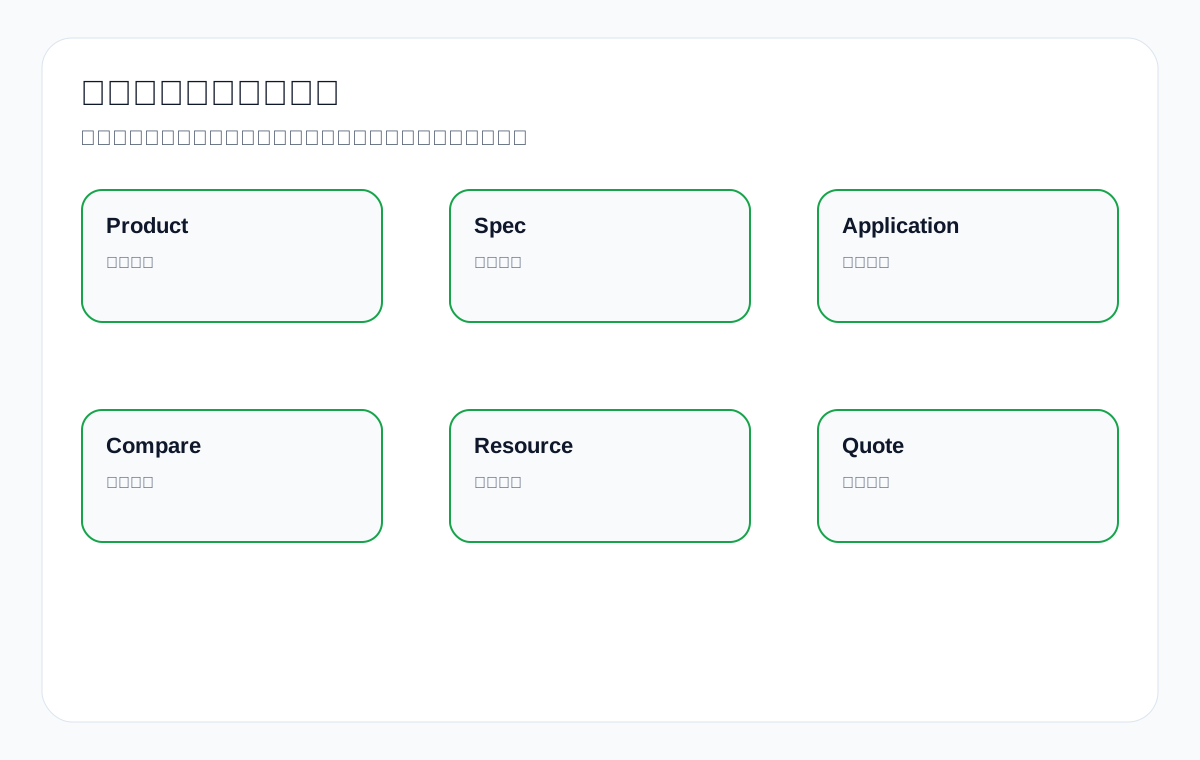
Step 1: Build keyword groups, not just keyword lists
A keyword list only tells you which terms to watch; keyword groups tell you the business intent. For export sites, it is recommended to divide terms at least into product-family terms, specification and model terms, application scenario terms, comparison and decision terms, resource download terms, quote and sample terms, brand terms, and competitor terms. Each group should have target pages, priority, target market, and review metrics.
Keyword group field design
| Field | Description | Example | Why it matters |
|---|---|---|---|
| Group | Group name | waterproof connector product terms | Makes it easier to see overall trends |
| Intent | Search intent | supplier / spec / application / quote | Determines page type |
| Target URL | Target page | /waterproof-connector/ | Determine whether the wrong page ranks |
| Market | Target region | US / Germany / Global English | Rankings are affected by region |
| Device | Device | mobile / desktop | Mobile and desktop layouts differ |
| Priority | Business priority | P0 / P1 / P2 | Determines review frequency |
| Lead value | Inquiry value | high / medium / low | Avoid chasing only traffic terms |
Step 2: Bind every keyword to a target URL
Recording only “what position waterproof connector supplier ranks” is not enough. You must know whether the page ranking is the intended one. If a category page should rank but an article page rises instead, it may mean the category page is too weak; if the same term is ranked sometimes by a product page and sometimes by an article page, there may be keyword cannibalization or mixed intent.
Target URL mismatch diagnosis table
| Symptom | Possible cause | Export example | Handling |
|---|---|---|---|
| An article page ranks for a commercial term | Category or product page content is weak | An article ranks for LED flood light supplier | Strengthen the category page and link to it from the article |
| Multiple product pages compete for the same term | Variant pages are split too finely | Multiple M12 connector pages compete with each other | Merge them or clarify variant differences |
| The homepage ranks for a product term | Product/category pages lack authority | The homepage ranks for custom metal parts | Build a core category page and link internally |
| A resource page ranks for a product term | The product page does not explain enough | A datasheet page ranks for medical probe | Add resource entry points and explanations to the product page |
| An inquiry page ranks for an informational term | Content pages are missing | A quote page ranks for how to choose supplier | Add a guide page and link to the inquiry page |
Step 3: Watch SERP layout changes, not just positions
A third-place ranking can have completely different value in different SERP layouts. If the results page shows an AI Overview, People Also Ask, image pack, video, Shopping, ads, forum discussions, or a local pack, the click opportunity for organic results changes. This is why tools such as Ahrefs have incorporated SERP features into rank monitoring.
How SERP features affect export terms
| SERP change | Impact on clicks | What to look at | Page action |
|---|---|---|---|
| AI Overview appears | Organic result clicks may be compressed | Whether the official site is cited and what the answer covers | Add definitions, tables, FAQs, and authoritative information |
| PAA increases | Question intent strengthens | Whether the questions relate to procurement | Add FAQs and question-based articles |
| Image pack appears | Visual evidence matters | Whether product images are optimized | Add product images, alt text, and file names |
| Shopping/merchant results | Product attributes matter more | Whether product structured data exists | Check Product Schema and resources |
| Video results appear | Operation or demonstration needs strengthen | Whether video or animated images are needed | Add installation, testing, and operation videos |
| Forums/discussions appear | User experience and risk questions strengthen | What buyers worry about | Add risks, misconceptions, and FAQs |
Step 4: Diagnose ranking fluctuations first; do not change pages immediately
Daily ranking fluctuations are normal, especially for new sites, long-tail terms, and topics where the SERP is changing. When you see a decline, do not immediately rewrite the page. First determine whether it is a single-term fluctuation, a group-wide decline, a target URL change, a SERP layout change, a competitor strengthening, an indexing technical problem, or a seasonal change.
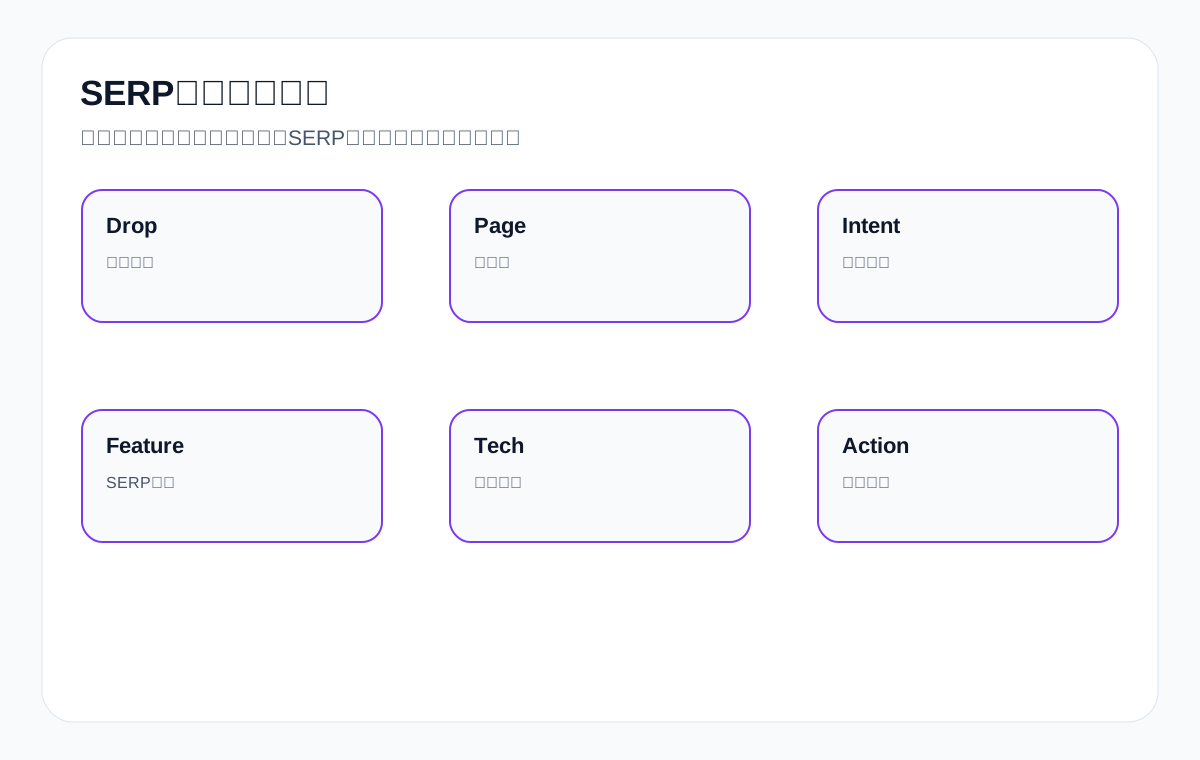
Ranking change diagnosis table
| Symptom | Possible cause | Suggested action | Verification method |
|---|---|---|---|
| A single term declines while the page and other terms in the group are stable | Normal fluctuation or a short-term SERP change | Observe; do not rush to change | Watch the 7-14 day trend |
| An entire group of product terms declines | Page quality, technical issues, or competitors strengthening | Check target pages, internal links, and content gaps | Update core pages |
| Rankings have not fallen but clicks have | Weak titles or SERP feature compression | Look at CTR, layout, AI Overview/PAA | Change titles/add structured content |
| The target URL changed | Keyword cannibalization or intent mismatch | Confirm which page is more suitable | Merge, add internal links, adjust titles |
| Competitor page types changed | Search intent changed | Re-examine the top result page types | Adjust page roles |
| GSC impressions rise but inquiries are weak | Traffic intent is not commercial enough or the page converts weakly | Add products, resources, and CTAs | Look at paths and form fields |
Step 5: How to use GSC average position and third-party rank tools together
GSC’s average position comes from real impressions, but it is affected by query, region, device, personalization, and long-tail terms; third-party rank trackers can hold keywords, region, and device constant, but they do not necessarily equal real traffic. Neither replaces the other; they cross-check each other. GSC is suited to real queries and page performance, while rank tools are suited to fixed core terms and competitor changes.
Division of labor among rank monitoring tools
| Tool/data source | Best for | Suitable stage | Limitation |
|---|---|---|---|
| GSC | Real queries, pages, clicks, impressions, average position | Basic for all sites | Not suitable for precise daily rankings |
| Ahrefs Rank Tracker | Country/city, mobile/desktop, SERP features, target URLs, competitors, historical trends | Needed for long-term tracking of core terms | Cost and data methodology need to be understood |
| Semrush Position Tracking | Daily keyword positions, device/region, competitors, SERP features, visibility | When a Semrush setup already exists | Tool data and GSC methodology differ |
| Manual SERP spot checks | See the real layout and top page types | For important fluctuations or key pages | Small sample and affected by environment |
| GA4/CRM | Visit paths, inquiry quality, conversion fields | Judge business value | Requires event and field setup |
Step 6: Do not ignore inquiry quality in export site rank monitoring
A term that rises in rankings but brings only irrelevant inquiries is not necessarily a good signal; a long-tail term with little traffic whose inquiries include a clear model, quantity, drawings, and certification requirements may be more worth investing in. Export SEO rank monitoring must include inquiry quality in the review.
Combined judgment of rankings and inquiry quality
| Ranking/GSC performance | Inquiry performance | Judgment | Next step |
|---|---|---|---|
| Rankings rise, inquiries unchanged | The page may bring only informational traffic | Check CTAs and product internal links | Add product entry points and inquiry fields |
| Impressions rise, clicks low | Titles or descriptions are weak and SERP appeal is insufficient | Change Title/Meta and the first screen | Watch CTR changes |
| Clicks rise, inquiries become more specific | Page intent matches | Continue adding related long-tail content | Expand keyword groups |
| Rankings fall, inquiries stable | May be fluctuation in non-core terms | Do not rush to change core pages | Watch group and page trends |
| Rankings stable, inquiries fall | A market or page conversion problem | Look at GA4 paths and forms | Optimize conversion modules |
Step 7: When a competitor’s rankings rise, look at page type and content evidence
A competitor overtaking you does not necessarily mean it simply has more backlinks. It may have a better-matching page type, titles closer to procurement intent, a more complete specification table, more specific FAQs, more credible images and resources, a citation in the AI Overview, or coverage of application scenarios you do not have. When monitoring competitors, first record what type of URL overtook you, then break down the content gap.
Competitor ranking change breakdown table
| Competitor change | What to check | Export page example | How we respond |
|---|---|---|---|
| A category page overtakes you | Product range, filters, FAQ, internal links | LED flood light category | Add product range and selection table to the category page |
| A product page overtakes you | Specifications, images, Schema, resources | M12 connector product | Add specification table and FAQ |
| An application page overtakes you | Scenario explanations, recommended products, case boundaries | packaging machine connector | Add application pages and product internal links |
| An article page overtakes you | Decision criteria, tables, depth | how to choose cnc supplier | Add a selection table and procurement checklist |
| A resource page overtakes you | datasheet/catalog accessibility | medical probe datasheet | Add resource pages and download instructions |
Step 8: How to set monitoring frequency so daily fluctuations do not lead you around
For core commercial terms, check for anomalies weekly; for ordinary long-tail terms, a monthly review is enough. After a new page goes live, watch indexing and initial impressions for the first 30 days, queries and page matching at 60 days, and clicks, paths, and inquiry quality at 90 days. Staring at all keywords every day makes you vulnerable to noise and can lead to wrong changes.
Rank monitoring cadence table
| Cycle | What to watch | Purpose | Output |
|---|---|---|---|
| Weekly | Large fluctuations in core terms, indexing anomalies, brand term anomalies | Spot risks | Handle only anomalies; do not make major changes |
| Monthly | Group trends, target URLs, SERP features, competitor changes | Decide page updates | Output page actions |
| Quarterly | GSC growth, inquiry quality, content asset performance | Adjust content and product line priorities | Rearrange keyword groups |
| After a redesign | Target page rankings and indexing | Avoid breaking things | Save the pre-change baseline |
Step 9: Handling priorities after a ranking decline
If rankings decline, handle it from low to high risk. First confirm the data methodology and SERP layout, then check indexing and technical issues, then look at competitors and intent, and only then decide whether to change titles, add FAQs, add specification tables, add application pages, adjust internal links, or merge pages. Do not attribute every decline to content not being long enough.
Ranking decline handling priorities
| Priority | Check item | Action | When to escalate |
|---|---|---|---|
| P0 | Whether the page is accessible, indexable, and has a correct canonical | Fix technical problems | Core page anomaly |
| P1 | Whether the target URL changed | Handle cannibalization and wrong pages | Multiple URLs ranking in turn |
| P2 | Whether the SERP layout changed | Add FAQs, images, structured information | AI/PAA/image pack appears |
| P3 | Whether competitor content strengthened | Add tables, resources, applications, and FAQs | Competitor consistently ahead |
| P4 | Whether titles and descriptions are outdated | Make small adjustments to click messaging | Impressions but low clicks |
| P5 | Whether the page role does not match | Restructure or merge pages | Intent has clearly changed |
Step 10: Build a rank monitoring record table
Rank monitoring is best done with a fixed record table rather than scattered screenshots. Each row records the keyword, group, target page, current position, previous position, GSC impressions and clicks, SERP features, competitor changes, inquiry signals, and actions. Only then can data be turned into page update tasks.
Rank monitoring record fields
| Field | Example | Description |
|---|---|---|
| Keyword | waterproof connector supplier | Full keyword |
| Group | Product / Supplier | Term group |
| Target URL | /waterproof-connector/ | Intended page |
| Current position | 8 | Fixed tool position |
| Previous position | 11 | Trend |
| GSC clicks/impressions | 12 / 980 | Real search performance |
| SERP features | PAA, AI Overview | Layout changes |
| Competitor URL | competitor.com/connectors/ | Competitor page |
| Lead signal | 2 RFQs with pin count | Inquiry quality |
| Action | Add IP rating FAQ and internal links | Next step |
Export product line rank monitoring example: custom metal parts
Take custom metal parts as an example. If you monitor only the broad term “custom metal parts,” it is hard to guide optimization. A more reasonable approach is to break terms into product family, processing method, material, tolerance, quote, and supplier selection. That way you can tell whether commercial terms or informational terms are rising, and whether product pages have opportunity or articles and inquiry pages need strengthening.
| Term group | English term example | Target page | How to interpret ranking changes | Page action |
|---|---|---|---|---|
| Product family | custom metal parts manufacturer | Category/capability page | Represents the core commercial entry | Add capabilities, materials, quality inspection, FAQ |
| Process | cnc machining parts supplier | Process page/category page | Represents process-related procurement demand | Add equipment, tolerances, drawing requirements |
| Material | stainless steel custom parts | Material page/product page | Represents a niche demand | Add material comparisons and application scenarios |
| Quote | custom metal parts quote | Inquiry page/product page | Stronger conversion intent | Add RFQ fields and a quote resource checklist |
| Risk | cnc machining tolerance guide | Guide page | Pre-purchase decision questions | Add tolerance tables, misconceptions, and internal links |
If impressions for “cnc machining tolerance guide” grow while “custom metal parts quote” does not change, it means informational content may be getting discovered but the commercial conversion entry has not been established. At that point, do not just keep writing articles; direct the article’s internal links toward the machining capability page, product pages, and inquiry page.
Export product line rank monitoring example: LED flood light and industrial valve
Industrial products and lighting products are especially susceptible to specification terms, certification terms, and application terms. For example, rank monitoring for LED flood light should not look only at LED flood light supplier; it should also look at IP rating, wattage, installation scenario, certification, and application. industrial valve supplier should look at material, pressure, medium, standard, industry application, and resource terms.
| Product line | Term group | Example query | Target page | Review focus |
|---|---|---|---|---|
| LED flood light | Wattage terms | 150W LED flood light | Product page | Specifications, images, certifications, and inquiry entry points |
| LED flood light | Scenario terms | LED flood light for warehouse | Application page | Installation height, light efficacy, scenario images |
| LED flood light | Comparison terms | IP65 vs IP67 LED flood light | Article/FAQ | Explain the difference and link to the product page |
| industrial valve | Material terms | stainless steel valve for chemical processing | Application page/product page | Medium, pressure, temperature, standard |
| industrial valve | Resource terms | industrial valve datasheet | Resource page | Specifications and download paths |
When these term groups are monitored together, it becomes easier to spot problems: if product terms are stable but application terms are weak, application pages are insufficient; if application terms have impressions but product pages get few clicks, internal links and recommended products are weak; if resource terms show demand but there is no page, resource pages are an opportunity.
Export product line rank monitoring example: medical probe, ceramic dinnerware, and activewear
Different products have different rank monitoring priorities. medical probe focuses more on compatible models, datasheets, material safety, and standards; ceramic dinnerware focuses more on material, sets, packaging, food contact, and wholesale; private label activewear manufacturer focuses more on fabric, MOQ, samples, sizes, customization, and branded packaging. Do not monitor every industry with the same set of ranking terms.
| Product | High-value term group | Corresponding page | Action after a ranking change |
|---|---|---|---|
| medical probe | compatibility, datasheet, material, sterile packaging | Product page/resource page | Add compatibility tables, resource downloads, and quality explanations |
| ceramic dinnerware | wholesale, porcelain vs stoneware, export packaging | Category page/comparison article | Add material comparisons, packaging images, and MOQ FAQ |
| private label activewear | MOQ, fabric, sample, manufacturer | Service/product page | Add fabric tables, sampling process, sizes, and packaging explanations |
| packaging machine | capacity, food factory, maintenance, spare parts | Application page/product page | Add capacity tables, application images, and after-sales FAQ |
How to map ranking changes to page update tasks
The greatest value of rank monitoring is turning data into page tasks. For example, a decline in a term group does not necessarily mean “write another article”; it may be that the category page lacks filters and FAQ, the product page lacks a specification table, the application page lacks scenario images, the resource page lacks download instructions, or the inquiry page lacks RFQ fields. Every ranking review should output specific page actions.
| Data symptom | Page judgment | Update task | Priority |
|---|---|---|---|
| Low impressions for product-family terms | The category page theme is unclear | Rewrite the category page’s first screen, product range, FAQ, and internal links | High |
| Specification terms are ranked by articles | Product page specification content is weak | Add a specification table, model images, and Schema to the product page | High |
| No impressions for application terms | Application pages are missing or scenario content is thin | Build application pages and link to related products | Medium-high |
| High clicks on comparison terms but no inquiries | Articles lack a commercial path | Add product recommendations and inquiry entry points | Medium |
| Resource terms appear but there is no page | Resource demand is not being received | Build catalog/datasheet pages | Medium |
| Quote term rankings are weak | The inquiry or product page lacks conversion information | Add an RFQ checklist, MOQ, samples, and form fields | High |
The boundary between “normal fluctuation” and “needs action” in rank monitoring
Many teams get nervous the moment a ranking moves from 5th to 8th, but that kind of fluctuation may be entirely normal. What deserves more attention is: whether it has declined for several consecutive weeks; whether the same term group declined together; whether the target URL changed; whether GSC clicks dropped significantly; whether inquiry quality declined; and whether there is a technical anomaly or a SERP layout change. If it is just a short-term fluctuation in a single term, major action is usually unnecessary.
| Situation | Whether action is needed | Basis for judgment | Action |
|---|---|---|---|
| A single term moves up or down 3 positions | Usually observe | Other terms in the group and clicks are stable | Just record it |
| A core term group declines for consecutive periods | Needs diagnosis | Multiple terms, multiple URLs, falling clicks | Check pages and competitors |
| The target URL is replaced | Needs action | Wrong page ranking or cannibalization | Adjust internal links and page roles |
| Rankings stable but CTR falls | Need to check the SERP | AI/PAA/ads or weak titles | Change titles, add FAQs, review the layout |
| Rankings fall but inquiries are stable | Handle cautiously | May be fluctuation in low-value terms | Look at commercial term groups first |
| A page suddenly drops out of the index | Handle immediately | GSC and URL inspection anomalies | Check noindex, canonical, robots, and the server |
SERP feature changes: how to record AI Overviews, PAA, and image packs
Export businesses often overlook SERP features. For example, a product term that used to show 10 blue links now shows an AI Overview, PAA, and an image pack; even if your ranking has not changed, the click-through rate may fall. Recording SERP features is not about chasing trends; it is about judging what type of content a page needs to add.
| SERP feature | What it says users want | Page strengthening direction | Export example |
|---|---|---|---|
| AI Overview | Needs a synthesized answer and credible sources | Add definitions, tables, FAQs, and entity information | what is waterproof connector |
| People Also Ask | Strong question-type demand | Add real FAQs and short answers | MOQ, sample, certification |
| Image pack | Visual judgment matters | Add product images, dimension drawings, and application images | ceramic dinnerware sets |
| Video | Strong operation or demonstration demand | Add installation, testing, and operation videos | packaging machine operation |
| Shopping/Merchant | Stronger product attribute and price intent | Check Product Schema and attributes | LED flood light 150W |
| Forums/Reddit | Many real experience and risk discussions | Add misconceptions, risks, and selection advice | choose activewear manufacturer |
How to use GSC to find opportunity terms not in your rank tracker
Rank tools usually monitor the terms you enter in advance, but GSC shows the long-tail terms that actually appear. During the monthly review, export page queries from GSC and find new terms with growing impressions, low CTR, positions 4-20, and relevance to inquiries, then decide whether to add them to the rank tracker or supplement page content.
| GSC signal | Meaning | Action | Example |
|---|---|---|---|
| High impressions, low clicks | Titles/descriptions are not appealing or the layout is compressed | Change Title/Meta or add structured content | LED flood light supplier |
| Position 4-20 | There is a foundation but it is not strong enough | Add content, internal links, FAQs, and images | waterproof connector IP67 |
| New long-tail terms appear | There is new demand opportunity | Add to a term group or create a new module | cnc machining parts tolerance |
| The wrong page gets impressions | Page roles are confused | Adjust the target page and internal links | An article ranks for a product term |
| Brand terms grow | Brand awareness is changing | Look at sources and conversion paths | company name + product |
The relationship between rank monitoring and content publishing time
After new content is published, do not judge success or failure by rankings the same day. Export long-form articles, product pages, or application pages usually go through several stages: discovery, crawling, indexing, initial impressions, query expansion, clicks, and inquiry feedback. Looking at different metrics at different stages helps avoid misjudgment.
| Stage | Time reference | What to watch | What not to do |
|---|---|---|---|
| Discovery and indexing | 1-14 days after publication | Whether the URL is indexable and whether the sitemap and internal links are normal | Do not rush to overhaul titles and body text |
| Initial impressions | 2-6 weeks | Whether related queries appear in GSC | Do not look only at rankings for core broad terms |
| Query expansion | 1-3 months | Long-tail terms, target URLs, and CTR | Do not ignore wrong-page rankings |
| Commercial review | After 3 months | Visit paths, inquiry quality, and term group trends | Do not judge value by traffic alone |
How to talk about rankings when reporting to the team
When reporting rankings to a boss or sales team, do not just say “a term went up/down.” A more valuable reporting structure is: this month’s core term group trends, which pages drove growth, which SERP layout changes affected clicks, which competitor pages rose, which inquiries became more specific, and which pages will be changed next month. Only then does rank monitoring become a decision-making tool.
| Reporting module | Should include | Avoid | Output action |
|---|---|---|---|
| Term group trends | Product terms, specification terms, application terms, quote terms | Listing only 100 scattered terms | Identify priority product lines |
| Page performance | Growing pages, declining pages, mismatched pages | Talking only about average position | Schedule page updates |
| SERP changes | AI, PAA, images, video, ads | Ignoring layout changes | Add corresponding content modules |
| Competitor changes | Rising URLs and page types | Saying only that competitors are stronger | Break down content and trust gaps |
| Inquiry quality | Product, quantity, market, resource completeness | Looking only at inquiry volume | Optimize conversion paths |
How to combine rank monitoring with AI visibility monitoring
As AI Overviews and AI search grow, rank monitoring cannot look only at traditional blue links. For high-value queries, simultaneously record the traditional ranking, SERP features, whether an AI answer appears, whether the official site is cited, and whether competitors are mentioned. This helps determine whether a click decline is a ranking problem, a title problem, AI answer interception, or a page that is not citable enough.
| Combined signal | Possible explanation | Optimization direction | Example |
|---|---|---|---|
| High ranking but no AI citation | The page can rank but is not extractable enough | Add definitions, tables, FAQs | what is medical probe |
| Low ranking but cited by AI | Page information is clear but traditional authority is weak | Add internal links and related content | custom metal parts quote checklist |
| Rankings fall and AI mentions competitors | Competitor content and authority are stronger | Break down competitor pages and add evidence | industrial valve material selection |
| AI appears but clicks fall | The answer may satisfy part of the demand | Strengthen in-depth resources and conversion entry points | IP65 vs IP67 LED flood light |
Basic configuration checklist before rank monitoring
Before starting systematic monitoring, make sure the basic configuration is complete. Otherwise the ranking changes you see may be unexplainable and cannot be translated into page actions.
- Build keyword groups for core product lines instead of entering scattered terms.
- Bind a target page and page type to each keyword group.
- Confirm target market, language, device, and region settings.
- Connect GSC and regularly export page query data.
- Record key GA4 paths and inquiry events.
- Add product, quantity, market, and resource completeness fields to the inquiry form.
- Save the SERP layout and rising competitor URLs once a month.
- Before any major page change, save the pre-change title, content, rankings, and GSC baseline.
Ranking data methodology: why different tools show different results
Export businesses are often puzzled: Ahrefs shows 6th, Semrush shows 9th, GSC average position is 14, and their own search does not show the site at all. Differences are normal, because region, device, language, personalization, search time, SERP features, and tool databases all affect results. What really matters is not making every tool’s numbers agree, but looking at trends using the same methodology.
| Source of difference | Impact | Handling | Export site recommendation |
|---|---|---|---|
| Region | Results differ in the US, Germany, and the UK | Set by target market | Track core markets separately |
| Device | Mobile and desktop layouts differ | At least monitor core terms on mobile | Export buyers also do a lot of initial screening on mobile |
| Personalization | Manual searches are affected by history | Use tools and incognito spot checks | Do not draw conclusions from a single result on your own computer |
| Long-tail mixing | GSC average position includes a large number of queries | Break it down by page and query | Look at term groups rather than the site-wide average |
| SERP features | AI/PAA/images affect clicks | Record layout changes | Ranking reports must include SERP notes |
It is recommended to always state the data methodology in reports: monitoring tool, region, device, date, keyword group, and target page. That way the team discusses trends and actions rather than arguing about “what position it really is.”
When to merge pages and when to keep multiple pages
Rank monitoring exposes keyword cannibalization: multiple pages ranking in turn, target URLs changing, GSC queries scattered, and no stable entry for the same term group. At that point pages may need to be merged, but you should not merge just because terms look similar. For an export site, check whether page roles really overlap: category pages, product pages, application pages, article pages, and resource pages can all center on the same product, but they receive different intents.
| Situation | Recommendation | Reason | Example |
|---|---|---|---|
| Two articles answer the same question | Merge into a stronger guide | Avoid scattered content | Both cover how to choose connector |
| A category page and a product page compete for the same broad term | Strengthen the category page and focus the product page on specifications | The page roles differ | waterproof connector supplier |
| Both an application page and a product page rank for scenario terms | Keep both and interlink them | One covers the scenario, the other the product | connector for packaging machine |
| Multiple variant pages have nearly identical content | Merge them or add differences | Avoid thin duplication | activewear pages that differ only by color |
| A resource page ranks for a product term | Keep the resource page and strengthen the product page | Resource demand and purchase demand differ | medical probe datasheet |
What a 90-day ranking review report should include
A fairly complete ranking review every 90 days helps avoid looking only at short-term fluctuations. The report should answer: which term groups are growing, which pages have become entry points, which pages are mismatched, which SERP features changed noticeably, which competitors have replaced us, which content updates were effective, which inquiries are of better quality, and which pages to prioritize changing next quarter.
| Report module | Core question | Evidence | Next step |
|---|---|---|---|
| Term group growth | Which product lines have greater search opportunity | Rank tools + GSC impressions | Deepen category and product pages |
| Page performance | Which URLs serve as lead acquisition entry points | GSC pages, GA4 entry points | Add internal links and conversion modules |
| Mismatch and cannibalization | Which terms are ranked by the wrong pages | Target URL change records | Merge, restructure, or adjust internal links |
| SERP changes | Whether AI/PAA/images/video affect clicks | SERP screenshots and tool records | Add FAQs, images, video, or tables |
| Competitor gap | Why competitors rose | Top page structure comparison | Add evidence, resources, application pages |
| Inquiry quality | Whether traffic is closer to procurement | CRM fields and form content | Optimize inquiry and product pages |
A 90-day review does not need to pursue rising rankings for every keyword; it needs to confirm that content assets are accumulating in the right direction: product pages are more complete, category pages are clearer, application pages receive scenarios better, articles lead to products, resource pages support procurement, and inquiries are more specific.
How rank monitoring can serve content prioritization instead of creating more to-dos
Ranking data easily creates a long list of to-dos: you want to change every declining term, chase every competitor, and write an article for every new long-tail term. But export sites have limited resources, so you must prioritize by business value and page gaps. Handle term groups with high inquiry value, high impression opportunity, a clear target page, and a clear content gap first; temporarily set aside terms that are low value, unclear in intent, or unrelated to the product line.
| Priority criterion | High priority | Low priority | Example |
|---|---|---|---|
| Business value | Quote, sample, supplier, and specification terms | General encyclopedia and low-relevance questions | custom metal parts quote ranks above what is metal |
| Page foundation | An existing related page can be enhanced | Needs to be built from scratch with unclear value | An existing waterproof connector category page |
| Search signal | GSC already has impressions or positions 4-20 | No signal at all and uncertain | LED flood light IP65 impressions growing |
| Conversion path | Can link to products/inquiries/resources | Cannot connect to business pages | packaging machine application guide |
| Competitor gap | The gap is specific and can be filled | Knowing only that a competitor is strong with no clear action | Add specification tables and FAQs |
Common misconceptions about rank monitoring
SEO rank monitoring misconceptions and corrections
| Misconception | Why it is wrong | Correct approach |
|---|---|---|
| Looking only at a single term’s position | Fluctuation noise is high and cannot represent the whole | Look at trends by term group and target page |
| Treating rank tools and GSC as the same | The data methodologies differ | Look at fixed terms and real queries separately |
| Changing pages the moment you see a decline | It may just be a short-term SERP fluctuation | Diagnose before acting |
| Not binding target URLs | You cannot see cannibalization or wrong pages | Bind every term to a target page |
| Ignoring SERP features | The position is the same but the click opportunity differs | Record AI, PAA, images, video, and so on |
| Not looking at inquiry quality | Traffic and business value become disconnected | Combine GA4 and CRM fields |
FAQ: common questions about export SEO rank monitoring
Does an export website need to check keyword rankings every day?
It is not recommended to manually check all terms every day. Core commercial terms can be checked weekly for anomalies, and ordinary long-tail terms reviewed monthly. What matters more is term group trends, target URLs, GSC impressions and clicks, and inquiry quality.
Why do rank tools and Google Search Console data disagree?
The two use different methodologies. Rank tools usually hold keywords, region, and device constant, while GSC comes from real impressions and includes more long-tail, regional, and device variation. They should cross-check each other rather than being forced to agree.
Should an article be changed immediately when rankings decline?
Not necessarily. First check whether it is a single-term fluctuation, a group decline, a target URL change, a SERP feature change, a competitor strengthening, or a technical problem. Changing without diagnosing can make things messier.
What should be done when rankings have not changed but clicks fall?
Check whether the SERP layout now shows an AI Overview, PAA, ads, or an image pack, and also check whether titles and descriptions are weak. At that point you may need to change the click messaging, add FAQs, or strengthen structured content.
Should a new site with no rankings be monitored?
Yes, with lightweight monitoring. For a new site, first look at indexing, GSC impressions, long-tail queries, and whether target pages match; do not stare only at the top 10. Rank monitoring should help reveal page and content gaps.
Which terms should export B2B focus on more?
Prioritize product-family terms, specification and model terms, application scenario terms, comparison and decision terms, resource terms, and quote and sample terms. Do not chase only broad terms, and do not chase only brand terms.
Is rank monitoring still useful now that AI search has appeared?
It is still useful, but the metrics must expand. In addition to traditional rankings, look at AI Overviews, brand mentions, official site citations, SERP features, and inquiry quality.
Conclusion: the goal of rank monitoring is to guide the next step, not to create anxiety
For an export website, SEO rank monitoring is ultimately not about reporting a term’s rise or fall every day, but about judging which pages need updating, which keyword groups are forming opportunities, which SERP changes affect clicks, which competitor pages are worth learning from, and which traffic actually brings clearer inquiries.
When you put product terms such as custom metal parts, LED flood light, packaging machine, medical probe, cnc machining parts, ceramic dinnerware, waterproof connector, industrial valve supplier, and private label activewear manufacturer into a review system of term groups, pages, SERPs, and inquiries, rank monitoring truly shifts from “watching positions” to “guiding lead growth.”
{
“@context”: “https://schema.org”,
“@type”: “FAQPage”,
“mainEntity”: [
{
“@type”: “Question”,
“name”: “Export rank monitoring keyword groupsnTerm group | Monitoring purpose | English example | Target page | FrequencynCore product terms | Check whether the commercial entry is stable | waterproof connector supplier | Category page/core product page | Weekly or monthlynModel and specification terms | Check whether product pages receive long-tail traffic | M12 waterproof connector IP67 | Product page | MonthlynApplication scenario terms | Check whether application pages are discovered | connector for packaging machine | Application page/product page | MonthlynComparison and decision terms | Check whether articles influence procurement decisions | IP65 vs IP67 LED flood light | Comparison article/FAQ | MonthlynResource terms | Check whether resource pages support procurement | medical probe datasheet | Resource page/product page | MonthlynQuote and sample terms | Check conversion-intent terms | custom metal parts quote | Inquiry page/product page | MonthlynnFigure 2: Group first, then monitor. Scattered term watching rarely guides page actions.nStep 1: Build keyword groups, not just keyword listsnA keyword list only tells you which terms to watch; keyword groups tell you the business intent. For export sites, it is recommended to divide terms at least into product-family terms, specification and model terms, application scenario terms, comparison and decision terms, resource download terms, quote and sample terms, brand terms, and competitor terms. Each group should have target pages, priority, target market, and review metrics.nKeyword group field designnField | Description | Example | Why it mattersnGroup | Group name | waterproof connector product terms | Makes it easier to see overall trendsnIntent | Search intent | supplier / spec / application / quote | Determines page typenTarget URL | Target page | /waterproof-connector/ | Determine whether the wrong page ranksnMarket | Target region | US / Germany / Global English | Rankings are affected by regionnDevice | Device | mobile / desktop | Mobile and desktop layouts differnPriority | Business priority | P0 / P1 / P2 | Determines review frequencynLead value | Inquiry value | high / medium / low | Avoid chasing only traffic termsnnStep 2: Bind every keyword to a target URLnRecording only u201cwhat position waterproof connector supplier ranksu201d is not enough. You must know whether the page ranking is the intended one. If a category page should rank but an article page rises instead, it may mean the category page is too weak; if the same term is ranked sometimes by a product page and sometimes by an article page, there may be keyword cannibalization or mixed intent.nTarget URL mismatch diagnosis tablenSymptom | Possible cause | Export example | HandlingnAn article page ranks for a commercial term | Category or product page content is weak | An article ranks for LED flood light supplier | Strengthen the category page and link to it from the articlenMultiple product pages compete for the same term | Variant pages are split too finely | Multiple M12 connector pages compete with each other | Merge them or clarify variant differencesnThe homepage ranks for a product term | Product/category pages lack authority | The homepage ranks for custom metal parts | Build a core category page and link internallynA resource page ranks for a product term | The product page does not explain enough | A datasheet page ranks for medical probe | Add resource entry points and explanations to the product pagenAn inquiry page ranks for an informational term | Content pages are missing | A quote page ranks for how to choose supplier | Add a guide page and link to the inquiry pagennStep 3: Watch SERP layout changes, not just positionsnA third-place ranking can have completely different value in different SERP layouts. If the results page shows an AI Overview, People Also Ask, image pack, video, Shopping, ads, forum discussions, or a local pack, the click opportunity for organic results changes. This is why tools such as Ahrefs have incorporated SERP features into rank monitoring.nHow SERP features affect export termsnSERP change | Impact on clicks | What to look at | Page actionnAI Overview appears | Organic result clicks may be compressed | Whether the official site is cited and what the answer covers | Add definitions, tables, FAQs, and authoritative informationnPAA increases | Question intent strengthens | Whether the questions relate to procurement | Add FAQs and question-based articlesnImage pack appears | Visual evidence matters | Whether product images are optimized | Add product images, alt text, and file namesnShopping/merchant results | Product attributes matter more | Whether product structured data exists | Check Product Schema and resourcesnVideo results appear | Operation or demonstration needs strengthen | Whether video or animated images are needed | Add installation, testing, and operation videosnForums/discussions appear | User experience and risk questions strengthen | What buyers worry about | Add risks, misconceptions, and FAQsnnStep 4: Diagnose ranking fluctuations first; do not change pages immediatelynDaily ranking fluctuations are normal, especially for new sites, long-tail terms, and topics where the SERP is changing. When you see a decline, do not immediately rewrite the page. First determine whether it is a single-term fluctuation, a group-wide decline, a target URL change, a SERP layout change, a competitor strengthening, an indexing technical problem, or a seasonal change.nFigure 3: Diagnose the cause of a ranking fluctuation before deciding whether to change the page.nRanking change diagnosis tablenSymptom | Possible cause | Suggested action | Verification methodnA single term declines while the page and other terms in the group are stable | Normal fluctuation or a short-term SERP change | Observe; do not rush to change | Watch the 7-14 day trendnAn entire group of product terms declines | Page quality, technical issues, or competitors strengthening | Check target pages, internal links, and content gaps | Update core pagesnRankings have not fallen but clicks have | Weak titles or SERP feature compression | Look at CTR, layout, AI Overview/PAA | Change titles/add structured contentnThe target URL changed | Keyword cannibalization or intent mismatch | Confirm which page is more suitable | Merge, add internal links, adjust titlesnCompetitor page types changed | Search intent changed | Re-examine the top result page types | Adjust page rolesnGSC impressions rise but inquiries are weak | Traffic intent is not commercial enough or the page converts weakly | Add products, resources, and CTAs | Look at paths and form fieldsnnStep 5: How to use GSC average position and third-party rank tools togethernGSC’s average position comes from real impressions, but it is affected by query, region, device, personalization, and long-tail terms; third-party rank trackers can hold keywords, region, and device constant, but they do not necessarily equal real traffic. Neither replaces the other; they cross-check each other. GSC is suited to real queries and page performance, while rank tools are suited to fixed core terms and competitor changes.nDivision of labor among rank monitoring toolsnTool/data source | Best for | Suitable stage | LimitationnGSC | Real queries, pages, clicks, impressions, average position | Basic for all sites | Not suitable for precise daily rankingsnAhrefs Rank Tracker | Country/city, mobile/desktop, SERP features, target URLs, competitors, historical trends | Needed for long-term tracking of core terms | Cost and data methodology need to be understoodnSemrush Position Tracking | Daily keyword positions, device/region, competitors, SERP features, visibility | When a Semrush setup already exists | Tool data and GSC methodology differnManual SERP spot checks | See the real layout and top page types | For important fluctuations or key pages | Small sample and affected by environmentnGA4/CRM | Visit paths, inquiry quality, conversion fields | Judge business value | Requires event and field setupnnStep 6: Do not ignore inquiry quality in export site rank monitoringnA term that rises in rankings but brings only irrelevant inquiries is not necessarily a good signal; a long-tail term with little traffic whose inquiries include a clear model, quantity, drawings, and certification requirements may be more worth investing in. Export SEO rank monitoring must include inquiry quality in the review.nCombined judgment of rankings and inquiry qualitynRanking/GSC performance | Inquiry performance | Judgment | Next stepnRankings rise, inquiries unchanged | The page may bring only informational traffic | Check CTAs and product internal links | Add product entry points and inquiry fieldsnImpressions rise, clicks low | Titles or descriptions are weak and SERP appeal is insufficient | Change Title/Meta and the first screen | Watch CTR changesnClicks rise, inquiries become more specific | Page intent matches | Continue adding related long-tail content | Expand keyword groupsnRankings fall, inquiries stable | May be fluctuation in non-core terms | Do not rush to change core pages | Watch group and page trendsnRankings stable, inquiries fall | A market or page conversion problem | Look at GA4 paths and forms | Optimize conversion modulesnnStep 7: When a competitor’s rankings rise, look at page type and content evidencenA competitor overtaking you does not necessarily mean it simply has more backlinks. It may have a better-matching page type, titles closer to procurement intent, a more complete specification table, more specific FAQs, more credible images and resources, a citation in the AI Overview, or coverage of application scenarios you do not have. When monitoring competitors, first record what type of URL overtook you, then break down the content gap.nCompetitor ranking change breakdown tablenCompetitor change | What to check | Export page example | How we respondnA category page overtakes you | Product range, filters, FAQ, internal links | LED flood light category | Add product range and selection table to the category pagenA product page overtakes you | Specifications, images, Schema, resources | M12 connector product | Add specification table and FAQnAn application page overtakes you | Scenario explanations, recommended products, case boundaries | packaging machine connector | Add application pages and product internal linksnAn article page overtakes you | Decision criteria, tables, depth | how to choose cnc supplier | Add a selection table and procurement checklistnA resource page overtakes you | datasheet/catalog accessibility | medical probe datasheet | Add resource pages and download instructionsnnStep 8: How to set monitoring frequency so daily fluctuations do not lead you aroundnFor core commercial terms, check for anomalies weekly; for ordinary long-tail terms, a monthly review is enough. After a new page goes live, watch indexing and initial impressions for the first 30 days, queries and page matching at 60 days, and clicks, paths, and inquiry quality at 90 days. Staring at all keywords every day makes you vulnerable to noise and can lead to wrong changes.nRank monitoring cadence tablenCycle | What to watch | Purpose | OutputnWeekly | Large fluctuations in core terms, indexing anomalies, brand term anomalies | Spot risks | Handle only anomalies; do not make major changesnMonthly | Group trends, target URLs, SERP features, competitor changes | Decide page updates | Output page actionsnQuarterly | GSC growth, inquiry quality, content asset performance | Adjust content and product line priorities | Rearrange keyword groupsnAfter a redesign | Target page rankings and indexing | Avoid breaking things | Save the pre-change baselinennStep 9: Handling priorities after a ranking declinenIf rankings decline, handle it from low to high risk. First confirm the data methodology and SERP layout, then check indexing and technical issues, then look at competitors and intent, and only then decide whether to change titles, add FAQs, add specification tables, add application pages, adjust internal links, or merge pages. Do not attribute every decline to content not being long enough.nRanking decline handling prioritiesnPriority | Check item | Action | When to escalatenP0 | Whether the page is accessible, indexable, and has a correct canonical | Fix technical problems | Core page anomalynP1 | Whether the target URL changed | Handle cannibalization and wrong pages | Multiple URLs ranking in turnnP2 | Whether the SERP layout changed | Add FAQs, images, structured information | AI/PAA/image pack appearsnP3 | Whether competitor content strengthened | Add tables, resources, applications, and FAQs | Competitor consistently aheadnP4 | Whether titles and descriptions are outdated | Make small adjustments to click messaging | Impressions but low clicksnP5 | Whether the page role does not match | Restructure or merge pages | Intent has clearly changednnStep 10: Build a rank monitoring record tablenRank monitoring is best done with a fixed record table rather than scattered screenshots. Each row records the keyword, group, target page, current position, previous position, GSC impressions and clicks, SERP features, competitor changes, inquiry signals, and actions. Only then can data be turned into page update tasks.nRank monitoring record fieldsnField | Example | DescriptionnKeyword | waterproof connector supplier | Full keywordnGroup | Product / Supplier | Term groupnTarget URL | /waterproof-connector/ | Intended pagenCurrent position | 8 | Fixed tool positionnPrevious position | 11 | TrendnGSC clicks/impressions | 12 / 980 | Real search performancenSERP features | PAA, AI Overview | Layout changesnCompetitor URL | competitor.com/connectors/ | Competitor pagenLead signal | 2 RFQs with pin count | Inquiry qualitynAction | Add IP rating FAQ and internal links | Next stepnnnExport product line rank monitoring example: custom metal partsnTake custom metal parts as an example. If you monitor only the broad term u201ccustom metal parts,u201d it is hard to guide optimization. A more reasonable approach is to break terms into product family, processing method, material, tolerance, quote, and supplier selection. That way you can tell whether commercial terms or informational terms are rising, and whether product pages have opportunity or articles and inquiry pages need strengthening.nTerm group | English term example | Target page | How to interpret ranking changes | Page actionnProduct family | custom metal parts manufacturer | Category/capability page | Represents the core commercial entry | Add capabilities, materials, quality inspection, FAQnProcess | cnc machining parts supplier | Process page/category page | Represents process-related procurement demand | Add equipment, tolerances, drawing requirementsnMaterial | stainless steel custom parts | Material page/product page | Represents a niche demand | Add material comparisons and application scenariosnQuote | custom metal parts quote | Inquiry page/product page | Stronger conversion intent | Add RFQ fields and a quote resource checklistnRisk | cnc machining tolerance guide | Guide page | Pre-purchase decision questions | Add tolerance tables, misconceptions, and internal linksnnIf impressions for u201ccnc machining tolerance guideu201d grow while u201ccustom metal parts quoteu201d does not change, it means informational content may be getting discovered but the commercial conversion entry has not been established. At that point, do not just keep writing articles; direct the article’s internal links toward the machining capability page, product pages, and inquiry page.nnExport product line rank monitoring example: LED flood light and industrial valvenIndustrial products and lighting products are especially susceptible to specification terms, certification terms, and application terms. For example, rank monitoring for LED flood light should not look only at LED flood light supplier; it should also look at IP rating, wattage, installation scenario, certification, and application. industrial valve supplier should look at material, pressure, medium, standard, industry application, and resource terms.nProduct line | Term group | Example query | Target page | Review focusnLED flood light | Wattage terms | 150W LED flood light | Product page | Specifications, images, certifications, and inquiry entry pointsnLED flood light | Scenario terms | LED flood light for warehouse | Application page | Installation height, light efficacy, scenario imagesnLED flood light | Comparison terms | IP65 vs IP67 LED flood light | Article/FAQ | Explain the difference and link to the product pagenindustrial valve | Material terms | stainless steel valve for chemical processing | Application page/product page | Medium, pressure, temperature, standardnindustrial valve | Resource terms | industrial valve datasheet | Resource page | Specifications and download pathsnnWhen these term groups are monitored together, it becomes easier to spot problems: if product terms are stable but application terms are weak, application pages are insufficient; if application terms have impressions but product pages get few clicks, internal links and recommended products are weak; if resource terms show demand but there is no page, resource pages are an opportunity.nnExport product line rank monitoring example: medical probe, ceramic dinnerware, and activewearnDifferent products have different rank monitoring priorities. medical probe focuses more on compatible models, datasheets, material safety, and standards; ceramic dinnerware focuses more on material, sets, packaging, food contact, and wholesale; private label activewear manufacturer focuses more on fabric, MOQ, samples, sizes, customization, and branded packaging. Do not monitor every industry with the same set of ranking terms.nProduct | High-value term group | Corresponding page | Action after a ranking changenmedical probe | compatibility, datasheet, material, sterile packaging | Product page/resource page | Add compatibility tables, resource downloads, and quality explanationsnceramic dinnerware | wholesale, porcelain vs stoneware, export packaging | Category page/comparison article | Add material comparisons, packaging images, and MOQ FAQnprivate label activewear | MOQ, fabric, sample, manufacturer | Service/product page | Add fabric tables, sampling process, sizes, and packaging explanationsnpackaging machine | capacity, food factory, maintenance, spare parts | Application page/product page | Add capacity tables, application images, and after-sales FAQnnnHow to map ranking changes to page update tasksnThe greatest value of rank monitoring is turning data into page tasks. For example, a decline in a term group does not necessarily mean u201cwrite another articleu201d; it may be that the category page lacks filters and FAQ, the product page lacks a specification table, the application page lacks scenario images, the resource page lacks download instructions, or the inquiry page lacks RFQ fields. Every ranking review should output specific page actions.nData symptom | Page judgment | Update task | PrioritynLow impressions for product-family terms | The category page theme is unclear | Rewrite the category page’s first screen, product range, FAQ, and internal links | HighnSpecification terms are ranked by articles | Product page specification content is weak | Add a specification table, model images, and Schema to the product page | HighnNo impressions for application terms | Application pages are missing or scenario content is thin | Build application pages and link to related products | Medium-highnHigh clicks on comparison terms but no inquiries | Articles lack a commercial path | Add product recommendations and inquiry entry points | MediumnResource terms appear but there is no page | Resource demand is not being received | Build catalog/datasheet pages | MediumnQuote term rankings are weak | The inquiry or product page lacks conversion information | Add an RFQ checklist, MOQ, samples, and form fields | HighnnnThe boundary between u201cnormal fluctuationu201d and u201cneeds actionu201d in rank monitoringnMany teams get nervous the moment a ranking moves from 5th to 8th, but that kind of fluctuation may be entirely normal. What deserves more attention is: whether it has declined for several consecutive weeks; whether the same term group declined together; whether the target URL changed; whether GSC clicks dropped significantly; whether inquiry quality declined; and whether there is a technical anomaly or a SERP layout change. If it is just a short-term fluctuation in a single term, major action is usually unnecessary.nSituation | Whether action is needed | Basis for judgment | ActionnA single term moves up or down 3 positions | Usually observe | Other terms in the group and clicks are stable | Just record itnA core term group declines for consecutive periods | Needs diagnosis | Multiple terms, multiple URLs, falling clicks | Check pages and competitorsnThe target URL is replaced | Needs action | Wrong page ranking or cannibalization | Adjust internal links and page rolesnRankings stable but CTR falls | Need to check the SERP | AI/PAA/ads or weak titles | Change titles, add FAQs, review the layoutnRankings fall but inquiries are stable | Handle cautiously | May be fluctuation in low-value terms | Look at commercial term groups firstnA page suddenly drops out of the index | Handle immediately | GSC and URL inspection anomalies | Check noindex, canonical, robots, and the servernnnSERP feature changes: how to record AI Overviews, PAA, and image packsnExport businesses often overlook SERP features. For example, a product term that used to show 10 blue links now shows an AI Overview, PAA, and an image pack; even if your ranking has not changed, the click-through rate may fall. Recording SERP features is not about chasing trends; it is about judging what type of content a page needs to add.nSERP feature | What it says users want | Page strengthening direction | Export examplenAI Overview | Needs a synthesized answer and credible sources | Add definitions, tables, FAQs, and entity information | what is waterproof connectornPeople Also Ask | Strong question-type demand | Add real FAQs and short answers | MOQ, sample, certificationnImage pack | Visual judgment matters | Add product images, dimension drawings, and application images | ceramic dinnerware setsnVideo | Strong operation or demonstration demand | Add installation, testing, and operation videos | packaging machine operationnShopping/Merchant | Stronger product attribute and price intent | Check Product Schema and attributes | LED flood light 150WnForums/Reddit | Many real experience and risk discussions | Add misconceptions, risks, and selection advice | choose activewear manufacturernnnHow to use GSC to find opportunity terms not in your rank trackernRank tools usually monitor the terms you enter in advance, but GSC shows the long-tail terms that actually appear. During the monthly review, export page queries from GSC and find new terms with growing impressions, low CTR, positions 4-20, and relevance to inquiries, then decide whether to add them to the rank tracker or supplement page content.nGSC signal | Meaning | Action | ExamplenHigh impressions, low clicks | Titles/descriptions are not appealing or the layout is compressed | Change Title/Meta or add structured content | LED flood light suppliernPosition 4-20 | There is a foundation but it is not strong enough | Add content, internal links, FAQs, and images | waterproof connector IP67nNew long-tail terms appear | There is new demand opportunity | Add to a term group or create a new module | cnc machining parts tolerancenThe wrong page gets impressions | Page roles are confused | Adjust the target page and internal links | An article ranks for a product termnBrand terms grow | Brand awareness is changing | Look at sources and conversion paths | company name + productnnnThe relationship between rank monitoring and content publishing timenAfter new content is published, do not judge success or failure by rankings the same day. Export long-form articles, product pages, or application pages usually go through several stages: discovery, crawling, indexing, initial impressions, query expansion, clicks, and inquiry feedback. Looking at different metrics at different stages helps avoid misjudgment.nStage | Time reference | What to watch | What not to donDiscovery and indexing | 1-14 days after publication | Whether the URL is indexable and whether the sitemap and internal links are normal | Do not rush to overhaul titles and body textnInitial impressions | 2-6 weeks | Whether related queries appear in GSC | Do not look only at rankings for core broad termsnQuery expansion | 1-3 months | Long-tail terms, target URLs, and CTR | Do not ignore wrong-page rankingsnCommercial review | After 3 months | Visit paths, inquiry quality, and term group trends | Do not judge value by traffic alonennnHow to talk about rankings when reporting to the teamnWhen reporting rankings to a boss or sales team, do not just say u201ca term went up/down.u201d A more valuable reporting structure is: this month’s core term group trends, which pages drove growth, which SERP layout changes affected clicks, which competitor pages rose, which inquiries became more specific, and which pages will be changed next month. Only then does rank monitoring become a decision-making tool.nReporting module | Should include | Avoid | Output actionnTerm group trends | Product terms, specification terms, application terms, quote terms | Listing only 100 scattered terms | Identify priority product linesnPage performance | Growing pages, declining pages, mismatched pages | Talking only about average position | Schedule page updatesnSERP changes | AI, PAA, images, video, ads | Ignoring layout changes | Add corresponding content modulesnCompetitor changes | Rising URLs and page types | Saying only that competitors are stronger | Break down content and trust gapsnInquiry quality | Product, quantity, market, resource completeness | Looking only at inquiry volume | Optimize conversion pathsnnnHow to combine rank monitoring with AI visibility monitoringnAs AI Overviews and AI search grow, rank monitoring cannot look only at traditional blue links. For high-value queries, simultaneously record the traditional ranking, SERP features, whether an AI answer appears, whether the official site is cited, and whether competitors are mentioned. This helps determine whether a click decline is a ranking problem, a title problem, AI answer interception, or a page that is not citable enough.nCombined signal | Possible explanation | Optimization direction | ExamplenHigh ranking but no AI citation | The page can rank but is not extractable enough | Add definitions, tables, FAQs | what is medical probenLow ranking but cited by AI | Page information is clear but traditional authority is weak | Add internal links and related content | custom metal parts quote checklistnRankings fall and AI mentions competitors | Competitor content and authority are stronger | Break down competitor pages and add evidence | industrial valve material selectionnAI appears but clicks fall | The answer may satisfy part of the demand | Strengthen in-depth resources and conversion entry points | IP65 vs IP67 LED flood lightnnnBasic configuration checklist before rank monitoringnBefore starting systematic monitoring, make sure the basic configuration is complete. Otherwise the ranking changes you see may be unexplainable and cannot be translated into page actions.nBuild keyword groups for core product lines instead of entering scattered terms. Bind a target page and page type to each keyword group. Confirm target market, language, device, and region settings. Connect GSC and regularly export page query data. Record key GA4 paths and inquiry events. Add product, quantity, market, and resource completeness fields to the inquiry form. Save the SERP layout and rising competitor URLs once a month. Before any major page change, save the pre-change title, content, rankings, and GSC baseline.nnnRanking data methodology: why different tools show different resultsnExport businesses are often puzzled: Ahrefs shows 6th, Semrush shows 9th, GSC average position is 14, and their own search does not show the site at all. Differences are normal, because region, device, language, personalization, search time, SERP features, and tool databases all affect results. What really matters is not making every tool’s numbers agree, but looking at trends using the same methodology.nSource of difference | Impact | Handling | Export site recommendationnRegion | Results differ in the US, Germany, and the UK | Set by target market | Track core markets separatelynDevice | Mobile and desktop layouts differ | At least monitor core terms on mobile | Export buyers also do a lot of initial screening on mobilenPersonalization | Manual searches are affected by history | Use tools and incognito spot checks | Do not draw conclusions from a single result on your own computernLong-tail mixing | GSC average position includes a large number of queries | Break it down by page and query | Look at term groups rather than the site-wide averagenSERP features | AI/PAA/images affect clicks | Record layout changes | Ranking reports must include SERP notesnnIt is recommended to always state the data methodology in reports: monitoring tool, region, device, date, keyword group, and target page. That way the team discusses trends and actions rather than arguing about u201cwhat position it really is.u201dnnWhen to merge pages and when to keep multiple pagesnRank monitoring exposes keyword cannibalization: multiple pages ranking in turn, target URLs changing, GSC queries scattered, and no stable entry for the same term group. At that point pages may need to be merged, but you should not merge just because terms look similar. For an export site, check whether page roles really overlap: category pages, product pages, application pages, article pages, and resource pages can all center on the same product, but they receive different intents.nSituation | Recommendation | Reason | ExamplenTwo articles answer the same question | Merge into a stronger guide | Avoid scattered content | Both cover how to choose connectornA category page and a product page compete for the same broad term | Strengthen the category page and focus the product page on specifications | The page roles differ | waterproof connector suppliernBoth an application page and a product page rank for scenario terms | Keep both and interlink them | One covers the scenario, the other the product | connector for packaging machinenMultiple variant pages have nearly identical content | Merge them or add differences | Avoid thin duplication | activewear pages that differ only by colornA resource page ranks for a product term | Keep the resource page and strengthen the product page | Resource demand and purchase demand differ | medical probe datasheetnnnWhat a 90-day ranking review report should includenA fairly complete ranking review every 90 days helps avoid looking only at short-term fluctuations. The report should answer: which term groups are growing, which pages have become entry points, which pages are mismatched, which SERP features changed noticeably, which competitors have replaced us, which content updates were effective, which inquiries are of better quality, and which pages to prioritize changing next quarter.nReport module | Core question | Evidence | Next stepnTerm group growth | Which product lines have greater search opportunity | Rank tools + GSC impressions | Deepen category and product pagesnPage performance | Which URLs serve as lead acquisition entry points | GSC pages, GA4 entry points | Add internal links and conversion modulesnMismatch and cannibalization | Which terms are ranked by the wrong pages | Target URL change records | Merge, restructure, or adjust internal linksnSERP changes | Whether AI/PAA/images/video affect clicks | SERP screenshots and tool records | Add FAQs, images, video, or tablesnCompetitor gap | Why competitors rose | Top page structure comparison | Add evidence, resources, application pagesnInquiry quality | Whether traffic is closer to procurement | CRM fields and form content | Optimize inquiry and product pagesnnA 90-day review does not need to pursue rising rankings for every keyword; it needs to confirm that content assets are accumulating in the right direction: product pages are more complete, category pages are clearer, application pages receive scenarios better, articles lead to products, resource pages support procurement, and inquiries are more specific.nnHow rank monitoring can serve content prioritization instead of creating more to-dosnRanking data easily creates a long list of to-dos: you want to change every declining term, chase every competitor, and write an article for every new long-tail term. But export sites have limited resources, so you must prioritize by business value and page gaps. Handle term groups with high inquiry value, high impression opportunity, a clear target page, and a clear content gap first; temporarily set aside terms that are low value, unclear in intent, or unrelated to the product line.nPriority criterion | High priority | Low priority | ExamplenBusiness value | Quote, sample, supplier, and specification terms | General encyclopedia and low-relevance questions | custom metal parts quote ranks above what is metalnPage foundation | An existing related page can be enhanced | Needs to be built from scratch with unclear value | An existing waterproof connector category pagenSearch signal | GSC already has impressions or positions 4-20 | No signal at all and uncertain | LED flood light IP65 impressions growingnConversion path | Can link to products/inquiries/resources | Cannot connect to business pages | packaging machine application guidenCompetitor gap | The gap is specific and can be filled | Knowing only that a competitor is strong with no clear action | Add specification tables and FAQsnnnCommon misconceptions about rank monitoringnSEO rank monitoring misconceptions and correctionsnMisconception | Why it is wrong | Correct approachnLooking only at a single term’s position | Fluctuation noise is high and cannot represent the whole | Look at trends by term group and target pagenTreating rank tools and GSC as the same | The data methodologies differ | Look at fixed terms and real queries separatelynChanging pages the moment you see a decline | It may just be a short-term SERP fluctuation | Diagnose before actingnNot binding target URLs | You cannot see cannibalization or wrong pages | Bind every term to a target pagenIgnoring SERP features | The position is the same but the click opportunity differs | Record AI, PAA, images, video, and so onnNot looking at inquiry quality | Traffic and business value become disconnected | Combine GA4 and CRM fieldsnnFAQ: common questions about export SEO rank monitoringnDoes an export website need to check keyword rankings every day?”,
“acceptedAnswer”: {
“@type”: “Answer”,
“text”: “It is not recommended to manually check all terms every day. Core commercial terms can be checked weekly for anomalies, and ordinary long-tail terms reviewed monthly. What matters more is term group trends, target URLs, GSC impressions and clicks, and inquiry quality.”
}
},
{
“@type”: “Question”,
“name”: “Why do rank tools and Google Search Console data disagree?”,
“acceptedAnswer”: {
“@type”: “Answer”,
“text”: “The two use different methodologies. Rank tools usually hold keywords, region, and device constant, while GSC comes from real impressions and includes more long-tail, regional, and device variation. They should cross-check each other rather than being forced to agree.”
}
},
{
“@type”: “Question”,
“name”: “Should an article be changed immediately when rankings decline?”,
“acceptedAnswer”: {
“@type”: “Answer”,
“text”: “Not necessarily. First check whether it is a single-term fluctuation, a group decline, a target URL change, a SERP feature change, a competitor strengthening, or a technical problem. Changing without diagnosing can make things messier.”
}
},
{
“@type”: “Question”,
“name”: “What should be done when rankings have not changed but clicks fall?”,
“acceptedAnswer”: {
“@type”: “Answer”,
“text”: “Check whether the SERP layout now shows an AI Overview, PAA, ads, or an image pack, and also check whether titles and descriptions are weak. At that point you may need to change the click messaging, add FAQs, or strengthen structured content.”
}
},
{
“@type”: “Question”,
“name”: “Should a new site with no rankings be monitored?”,
“acceptedAnswer”: {
“@type”: “Answer”,
“text”: “Yes, with lightweight monitoring. For a new site, first look at indexing, GSC impressions, long-tail queries, and whether target pages match; do not stare only at the top 10. Rank monitoring should help reveal page and content gaps.”
}
}
]
}
Continue reading this SEO series
If you are systematically working through export website SEO, it is worth continuing with the articles below. First clarify the relationships among crawling, indexing, content, links, and review, then decide which page to change next.
- How to use Google Search Console: which data to check first for export website SEO diagnosis
- How to do SEO log analysis: a guide to crawlers, status codes, crawl budget, and export website diagnosis
- How to do content SEO: a guide to search intent, information gain, and indexable content
- How to do keyword research: export product terms, search intent, and page mapping workflow
- How to mine competitor keywords: from competitor pages and English product terms to inquiry opportunities
- How to choose keyword tools: choose by diagnostic scenario, not by working through a tool checklist
This page is machine-translated from the Simplified Chinese version and awaiting human review. It has not yet been proofread.