Competitor SEO analysis for export businesses is not about exporting a competitor’s keywords, and it is not about checking how long their articles are or how high their domain authority is. A genuinely useful competitor analysis answers three questions: which pages the competitor uses to capture a buyer’s search intent; which modules on those pages help Google, AI systems, and buyers understand the product; and whether what your site lacks is a new page, a content module, an internal linking path, technical accessibility, or an inquiry capture point.
For example, with custom metal parts or cnc machining parts you cannot look only at competitor keywords. You also need to see whether competitors have material pages, process pages, tolerance explanations, drawing upload, and a quote document checklist. With LED flood light you cannot look only at search volume. You also need to see whether the competitor’s category pages are split by outdoor, warehouse, stadium, IP rating, and wattage. With packaging machine you need to see whether they built pages around powder, liquid, granule, food, small business, and similar intents. This article benchmarks Ahrefs competitor analysis, competitor keywords, content gap, and Semrush competitor analysis methods, then turns them into an actionable checklist for export factories and trading companies.
Where official documentation ends: competitor SEO analysis is not about imitating rivals, but about completing a verifiable page system
Competitor SEO analysis goes off track easily. See a long article on a rival site and you write a long article too. See an FAQ and you add an FAQ too. See an AI answer mention a website and you assume you can reproduce the same result. For an export website, none of that is solid enough.
A more reliable approach is to break competitor pages into officially verifiable fields: whether the page meets search fundamentals, whether the target URL can be discovered, whether robots and canonical are clear, whether structured data is compliant, whether Search Console shows query and page performance, and whether GA4 can observe on-site behavior. Competitors provide reference points only; they cannot replace your own evidence.
Official documentation and competitor analysis: what each source can and cannot support
| Official documentation entry point | What it can support | What it cannot establish directly |
|---|---|---|
| Google Search Central: SEO Starter Guide | Pages should serve real user needs and help search engines discover, understand, and present content. | You cannot mechanically add words just because a competitor’s article is longer. |
| Google Search Central: Search Essentials | Check whether a page meets baseline requirements for crawlability, indexability, compliant content, and spam policies. | A competitor’s page structure is not proof that page quality is acceptable. |
| Search Console Help: Performance report | Use query, page, clicks, impressions, CTR, and average position to judge your site’s actual search performance. | Competitor rankings cannot replace your own GSC data. |
| Google Analytics Help: About events | Observe on-site behavior such as forms, downloads, clicks, and inquiry entry points. | A single on-site event does not by itself mean SEO succeeded. |
| Google Search Central: Sitemaps overview | Confirm whether new pages inspired by competitors are included in your sitemap. | Submitting a sitemap does not guarantee that pages will be indexed. |
| Google Search Central: robots.txt introduction | Confirm whether pages and key resources are allowed to be crawled. | robots.txt cannot fix low-quality pages that are already indexed. |
| Google Search Central: preferred URL guidance | Turn duplicate themes found in competitor analysis into canonical, consolidation, or redirect decisions. | Declaring a canonical does not guarantee that Google will accept it. |
| Google Search Central: Structured data general guidelines | Check whether product, FAQ, and article structured data follow the general rules. | Schema cannot replace real product facts. |
| Google Search Central: AI features and your website | AI search still requires pages that are accessible, indexable, clearly written, and understandable. | You cannot promise that AI answers will cite or recommend your site. |
| Search Console Help: URL Inspection tool | Spot-check newly created or updated pages for indexed version, live test, canonical, and indexability. | It cannot by itself prove that a page will earn rankings or inquiries. |
Competitor SEO analysis checklist: every gap must become a page-level action
| Review field | What to record | Signs of failure |
|---|---|---|
| Target queries | List product head terms, supplier terms, application terms, question terms, and quote terms separately. | Exporting a pile of keywords with no search intent. |
| SERP page types | Record whether the top results are product pages, category pages, articles, marketplace pages, videos, or directory pages. | Using a blog post to serve clearly product-page intent. |
| Target URL on your site | Each gap maps to a create, update, consolidate, add internal link, or noindex action. | Only “keep optimizing,” with no URL and no owner. |
| Official technical fields | sitemap, robots, canonical, structured data, and URL Inspection spot checks. | Looking only at competitor content and never checking your own accessibility. |
| Business evidence | Product documentation, images, certifications, FAQs, sales questions, and inquiry paths. | Copying competitor modules without your own product facts. |
| Review definitions | Record GSC performance, GA4 events, inquiry sources, and AI citation observations separately. | Merging rankings, clicks, inquiries, and AI visibility into one conclusion. |
When there is no GSC row data yet, keep competitor analysis conclusions more restrained
If Search Console has no query or page row data yet, you can still do competitor analysis, but conclusions can only go as far as “gaps in the page system and verifiable fields.” You cannot write “rankings will improve once this is filled in,” and you cannot write “a certain page is already bringing clicks.”
| Current evidence | Conclusions you can write | Conclusions you cannot write |
|---|---|---|
| GSC has no query/page row data yet | There is no search performance to analyze yet; target URLs and a review baseline must be established first. | Competitor analysis has already produced impression or click growth. |
| A competitor has a certain module | That module can serve as a reference for information type, but it must be rewritten using your own product facts. | Copying it will earn your site the same rankings. |
| Your site added a product page or FAQ | You can review the new facts, internal links, structure, and accessibility. | This will definitely bring inquiries. |
| An AI answer mentions a competitor | You can observe the cited source, page type, and whether the description is accurate. | Your site can secure a permanent AI citation. |
Delivery boundaries: deliver an analysis checklist, not uncontrollable outcomes
The deliverables of competitor SEO analysis should be a page map, a gap list, an official field check, page actions, and a review cadence. What can be promised is “investigate the problems clearly, list the page tasks clearly, and complete the verifiable fields.” What cannot be promised is a specific ranking, a specific number of inquiries, a specific AI citation, or a specific search result position.
SERP Top 1 / authoritative benchmark comparison card
| Benchmark source | What it gets right | Gap | How your site can improve |
|---|---|---|---|
| Ahrefs competitor analysis | Emphasizes identifying real competitors and comparing traffic sources, pages, and keyword opportunities. | Tool-oriented process, with little on landing export product pages, category pages, and inquiry pages. | Turn keyword gaps into export page types and inquiry actions. |
| Ahrefs competitor keywords / content gap | Explains how to find keywords where competitors rank and your site does not. | Easily misused as “export the keyword list and write articles for all of them.” | Judge the SERP page type first, then decide between product page, category page, industry page, or article. |
| Semrush SEO competitor analysis | Covers competitor keywords, traffic, backlinks, and content gaps. | Heavy on generic commercial scenarios, light on long B2B export decision chains. | Add technical documentation, product evidence, sales questions, and GSC/GA4/inquiry reviews. |
| Google helpful content | Emphasizes original analysis, complete explanations, user value, and trustworthy sources. | Does not provide a specific competitor analysis method. | Increase information gain with customer questions, export product terms, and evidence tables. |
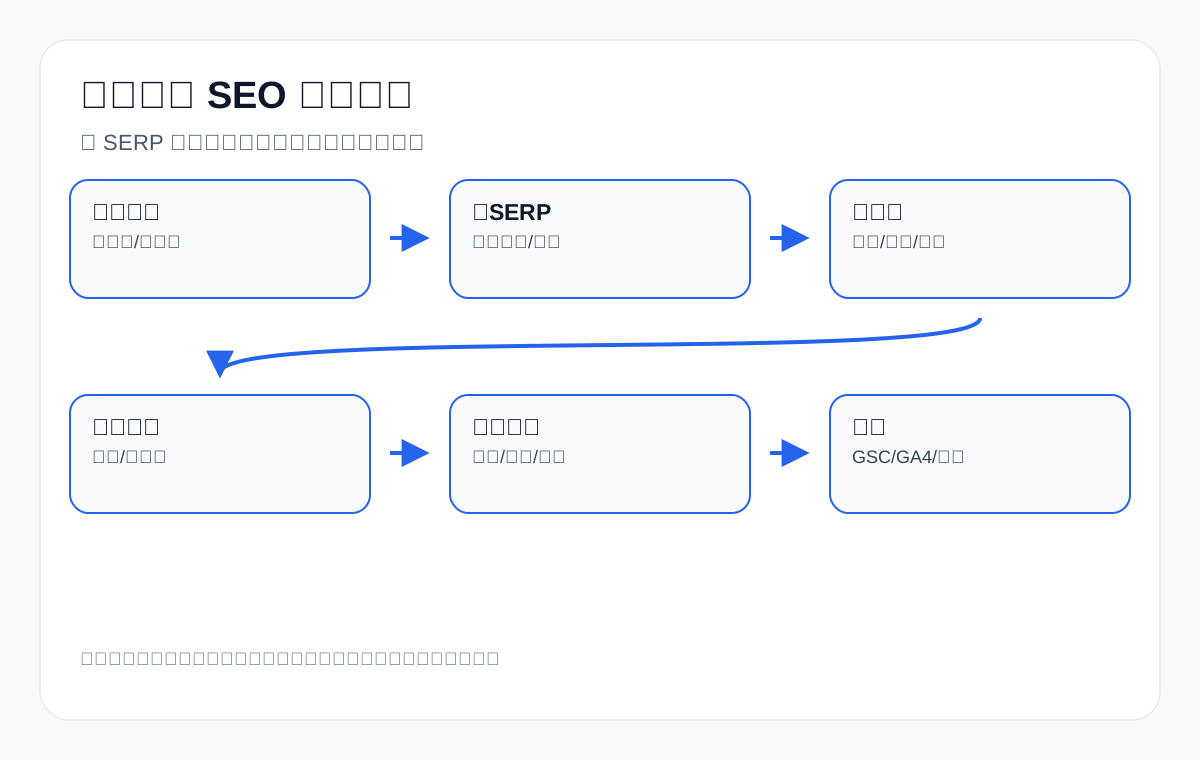
Step 1: Identify who your real SEO competitors are
Export businesses often treat big industry brands, marketplace stores, B2C retail sites, encyclopedia sites, YouTube videos, and local distributors all as competitors. In SEO analysis you must first separate three groups: business competitors, SERP competitors, and pure information results. What truly deserves deep analysis are the sites that appear consistently for your target queries, use similar page types, and can capture the same kind of buyer intent.
| Competitor type | Analyze in depth? | Why | Export example |
|---|---|---|---|
| Website of a manufacturer in the same category | Yes, priority | Page types, product documentation, and inquiry paths are the closest match | cnc machining parts manufacturer |
| Website of a trading company | Depends | May cover a wide product range but shows weak process evidence | industrial valve supplier |
| Marketplace listing pages | For reference | Useful for observing buyer filter dimensions, but not to be copied wholesale | Alibaba LED flood light listings |
| Encyclopedia / media articles | Reference for informational intent | Good for definitions and questions, but they do not capture inquiries | waterproof connector guide |
| Video / image results | Supplementary | Shows that users want demonstrations or visual evidence | packaging machine video |
Step 2: Read SERP page types by query
Competitor analysis cannot skip the SERP. Searching the same product term with different modifiers leads to different page types. custom metal parts manufacturer may call for a capability page; custom metal parts tolerance may call for a technical article; cnc machining aluminum parts may call for a material or process page; cnc machining parts quote may call for quote documents and an inquiry page. Without reading the SERP, you easily use an article to chase product-page intent, or a product page to capture a tutorial term.
| Query type | Common SERP page | Action on your site | What not to do |
|---|---|---|---|
| Product head term | Product pages, category pages, manufacturer pages | Strengthen product and category pages, not just write articles | Replace commercial pages with blog posts |
| Supplier term | Manufacturer capability pages, marketplace listings, directory pages | Add factory capabilities, certifications, MOQ, and inquiry paths | Write only a company introduction |
| Application term | Industry pages, solution pages, case boundary pages | Build industry application pages | Cram every application into one product page |
| Comparison term | Articles, selection guides, FAQs | Write comparison tables and decision criteria | Write only one-sided advantages |
| Quote term | Pricing factor pages, inquiry pages, FAQs | Explain influencing factors and the document checklist | State fixed prices without a basis |
Step 3: Break down the competitor’s page system, not just one page
Strong competitors are usually not remarkable because one page is very long, but because the page system is complete: category pages capture head terms, product detail pages capture model terms, industry pages capture application terms, technical articles capture question terms, FAQs capture long-tail questions, inquiry pages capture quote actions, and internal links tie these pages together. When doing competitor analysis, export businesses should draw the competitor’s page system and then map it against their own gaps.
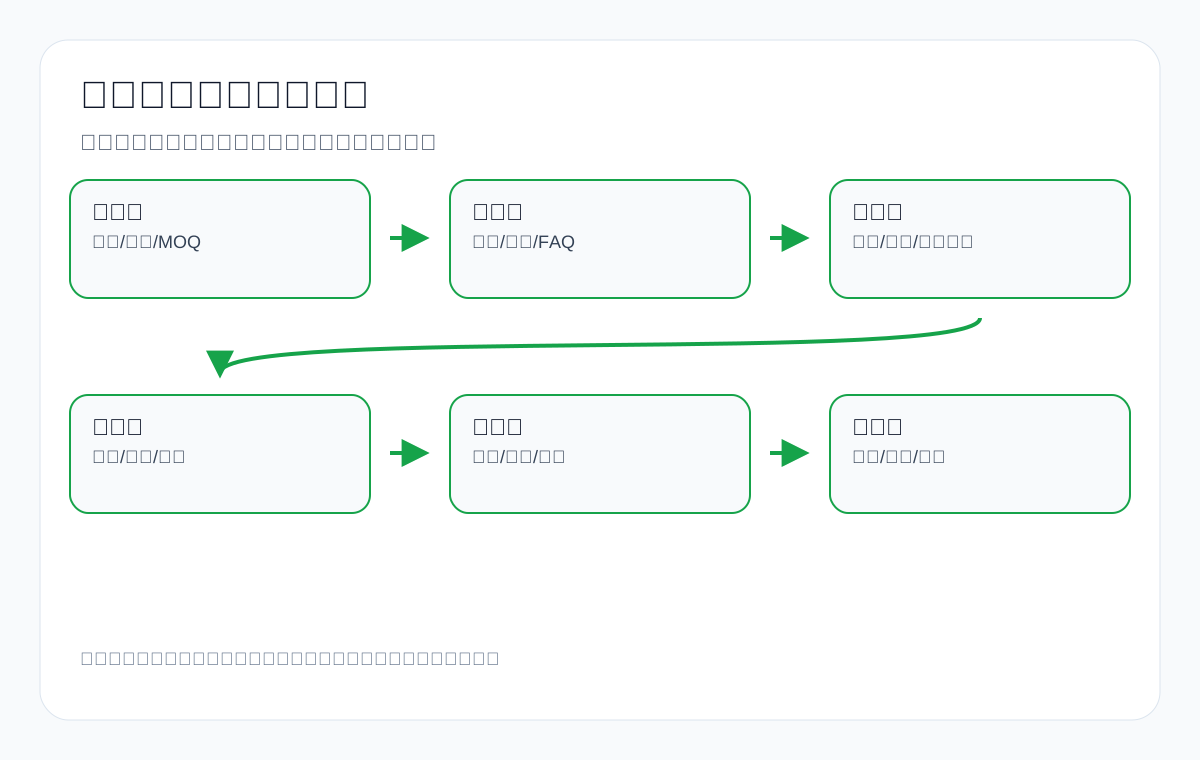
| Page type | How to spot a competitor’s strength | Common gap on your site | Action |
|---|---|---|---|
| Product page | Complete specifications, materials, applications, images, and FAQs | Only a short description and an image | Add specification tables, buying questions, and inquiry documents |
| Category page | Has category explanations, series differences, filters, and FAQs | Shows only a product list | Add category content and application entry points |
| Industry page | Discusses problems and product combinations by application scenario | No industry pages at all | Create application scenario pages |
| Technical article | Solves selection, comparison, maintenance, and material questions | Articles stay vague and general | Add decision tables, processes, and internal links |
| Resource page | Provides catalog, datasheet, certification, drawing | Documents are scattered or missing | Organize downloads and HTML summaries |
| Inquiry page | Prompts for specifications, quantity, country, application, and attachments | Only a generic form | Add a document checklist and product association |
Step 4: Break down competitor content modules
When looking at competitor pages, do not just copy headings. Record which modules they have and what buying problem each module solves. A strong export product page usually includes: an above-the-fold answer, product series, specification table, material/process, application scenarios, certifications and quality, production capacity, packaging and delivery, FAQ, related products, downloadable documents, and an inquiry entry point. Whichever module your site lacks, turn it into a specific task.
| Module | Why the competitor is strong | How your site can add it | Export example |
|---|---|---|---|
| Above-the-fold answer | Quickly explains the product, application, and the limits of its advantages | Answer the buying question in 100–150 words | Which processes and materials custom metal parts support |
| Specification table | Buyers can filter quickly | Add material, dimensions, tolerance, certification, and MOQ | IP rating and pin count for waterproof connectors |
| Application scenarios | Lets buyers judge whether it fits their industry | Build paragraphs or pages by industry | LED flood light used in warehouse and stadium settings |
| FAQ | Covers long-tail questions and sales concerns | Distill from sales emails and GSC queries | Speed, changeover, and samples for packaging machines |
| Evidence | Images, testing, processes, and certifications build trust | Add publishable product evidence and boundary statements | Compatibility and quality documents for medical probes |
Step 5: Turn content gaps into page actions
A content gap is not “the competitor has 20 H2s, so we add 20 H2s too.” A gap must become an action: create a page, update a page, consolidate pages, add FAQs, add internal links, add images, add specification tables, add downloadable documents, add inquiry paths. Every action needs a target URL and a review metric.
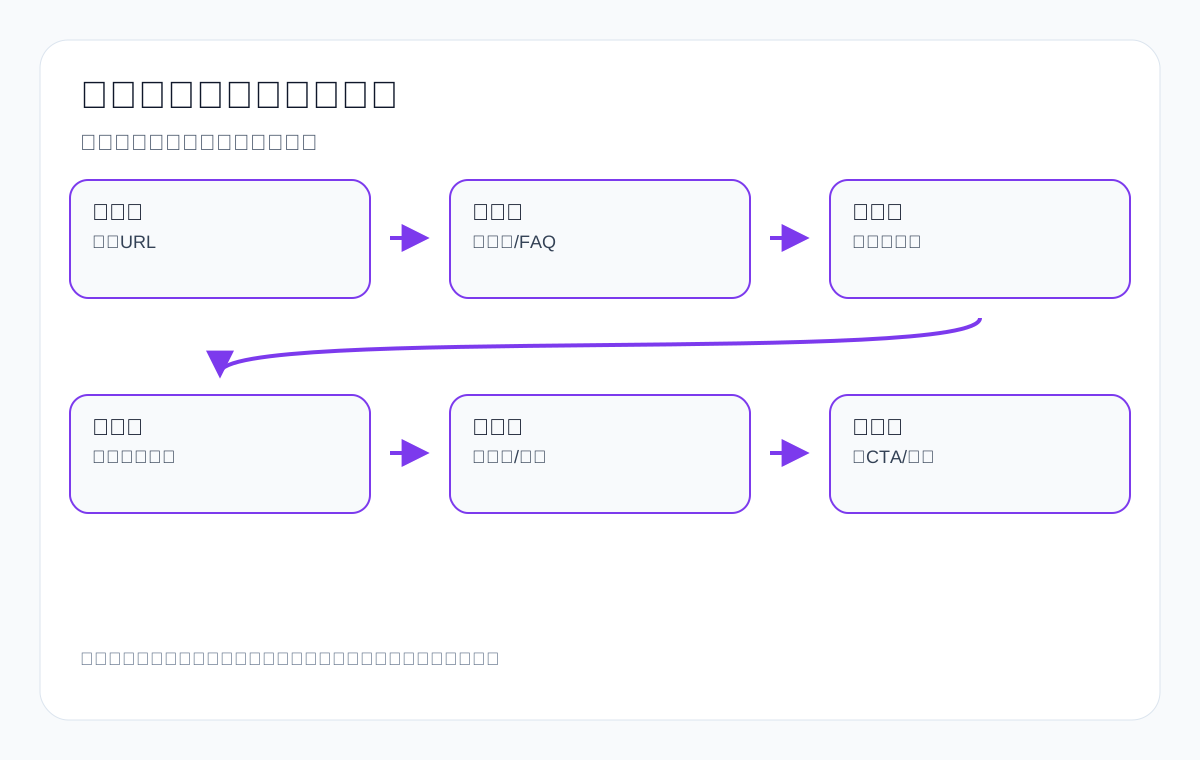
| Finding | Action | Target page | Review metric |
|---|---|---|---|
| Competitor has industry application pages, your site does not | Create application pages | industry/application URL | Application term impressions and inquiries |
| Competitor category pages have FAQs, your site does not | Add FAQs | Category page | Long-tail question terms, CTR |
| Your article is competing for a product head term | Adjust the page mapping | Product page / article page | GSC queries concentrate on the target URL |
| Competitor has more complete image evidence | Add product images, application images, process diagrams | Product page / industry page | Dwell time, scroll depth, inquiry quality |
| Competitor inquiry pages give clearer prompts | Add a document checklist | Inquiry page / product page CTA | Inquiry completeness |
Export case 1: how to break down competitors for cnc machining parts
When analyzing competitors for cnc machining parts, you cannot just look at who ranks higher. Break down whether they have process pages, material pages, surface finishing pages, tolerance explanations, industry applications, drawing upload, quality control, and a quoting process. Procurement engineers care not only about “can you machine it,” but also about materials, precision, lead time, minimum quantity, inspection reports, and communication cost.
| Competitor module | What it shows | Gap assessment for your site | Action |
|---|---|---|---|
| Material capabilities | Can machine aluminum, stainless steel, brass, and more | Does your site only say metal parts | Add a material module or material page |
| Tolerance guide | Explains precision ranges and limits | Does your site lack engineering judgment | Add tolerance explanations and drawing requirements |
| Surface finishing | Lists anodizing, plating, powder coating | Does your site lack surface finishing terms | Add a process table and application images |
| RFQ process | Tells customers to provide drawings, quantity, material | Is your inquiry process too vague | Add a quote document checklist |
Export case 2: how to break down competitors for LED flood light
LED flood light competitor analysis should look at category pages and application pages. Strong competitors usually do not just list products; they present the selection logic by wattage, lumen, IP rating, beam angle, mounting, application, and certification. If your site only shows product cards, it will struggle to capture long-tail commercial intent.
| Search intent | Likely competitor page | Action on your site | Metric |
|---|---|---|---|
| outdoor LED flood light | Category page | Add outdoor scenarios and IP ratings | Query growth on the category page |
| warehouse LED flood light | Application page | Create a warehouse lighting page | Application term clicks and inquiries |
| IP65 vs IP66 flood light | Comparison article / FAQ | Add a waterproof rating decision table | Question term impressions |
| LED flood light manufacturer | Capability page / category page | Add factory capabilities, certifications, MOQ | Supplier term performance |
Export case 3: how to break down competitors for packaging machine
Competitor pages for packaging machine are usually split by material, industry, packaging format, automation level, and capacity. Check whether they have pages for powder, granule, liquid, food, small business, vertical packing, and filling sealing. If your site has only one broad category page, it will struggle to cover specific buying intents.
| Competitor page | Intent captured | Possible action on your site | Inquiry value |
|---|---|---|---|
| powder packaging machine | Powder packaging equipment | Create or strengthen the category page | Customers will provide material and capacity |
| liquid filling machine | Liquid filling | Split into a separate product line | Fewer mismatched inquiries |
| small business packaging machine | Small-scale startup | Write a selection article | Captures budget and beginner questions |
| food packaging machine | Food industry application | Build an industry page | Emphasizes hygiene and material requirements |
Export case 4: how to break down competitors for private label activewear manufacturer
private label activewear manufacturer competitor analysis should check whether capability pages clearly explain fabric, MOQ, sample process, logo method, size chart, packaging, production lead time, and quality control. Strong competitors write the private label process as steps a buyer can understand, rather than just saying “customization supported.”
| Module | Buyer question | Action on your site | Review |
|---|---|---|---|
| Fabric options | What fabrics can be used | Add a fabric table and application notes | Fabric-related inquiries |
| MOQ | Can small batches be produced | Explain what drives MOQ | Fewer low-quality inquiries |
| Sample process | How long do samples take and how are they approved | Add a process diagram | More sample inquiries |
| Logo methods | Difference between printing, embroidery, and heat transfer | Add a process comparison table | Process term impressions |
How to analyze competitor internal linking
Internal linking is not about counting links. It is about the paths from information pages to commercial pages, from product pages to industry pages, and from industry pages to inquiry pages. Strong competitors let users move naturally within the same topic. For example, a waterproof connector guide links to the waterproof connector category, the category page links to a drawing download and request a quote, and the FAQ links to related models.
| Internal link location | What to look at | Action on your site | Avoid |
|---|---|---|---|
| Mid-article body | Whether it links naturally to product or application pages | Add contextual links | Piling links only at the end of the article |
| Navigation / breadcrumbs | Whether the hierarchy is clear | Improve categories and parent-child relationships | Making all pages flat |
| Related products | Whether it helps comparison | Add same-series or alternative products | Randomly recommending irrelevant pages |
| FAQ internal links | Whether questions lead to deeper pages | Link question terms to guides or product pages | FAQs that answer without routing users onward |
How to analyze competitor images, tables, and evidence
Export sites do not compete on text alone. Buyers look at product photos, detail shots, application images, factory photos, inspection photos, specification tables, process diagrams, and certification documents. If a competitor has clearer images and tables, Google, AI, and buyers will all find its pages easier to understand. Your site cannot simply copy images; it must add its own real product documentation and publishable evidence.
| Evidence type | Where the competitor is strong | How your site should add it | Note |
|---|---|---|---|
| Product detail images | Shows connectors, materials, dimensions | Photograph real product details and write alt text | Do not steal competitor images |
| Specification table | Buyers can compare quickly | Use HTML tables for key specifications | Do not use image-only tables |
| Process diagram | Explains sample, production, QC | Turn the sales process into a diagram | Do not make uncontrollable promises |
| Certification documents | Builds trust | List available documents and their scope | Do not overstate certifications without evidence |
Scoring priorities after competitor analysis
Once gaps are found, prioritize the tasks. Not everything a competitor has must be done immediately. Handle first the tasks with high commercial value, clear search intent, a matching page type, available content material, and a positive effect on the inquiry path.
| Scoring dimension | High-score criteria | Low-score criteria | Action |
|---|---|---|---|
| Commercial value | Captures purchasing, quoting, or supplier intent | Only generic knowledge traffic | High scores first |
| Page gap | Your site has no corresponding page | An existing page is only slightly lacking | Decide between creating and updating |
| Material availability | Product images, specifications, FAQs, and sales feedback exist | Materials are seriously missing | Gather materials before writing |
| Competitive intensity | Top pages are strong but have obvious gaps | Top pages are authoritative with few gaps | Choose an angle you can break through |
| Conversion impact | Can improve inquiry quality and paths | Only increases page views | Commercial pages first |
Data preparation before competitor analysis
Before starting the analysis, organize your own baseline data. Without it, competitor analysis easily turns into “let’s see what others do well.” For an export site, you need at least your core product lines, target countries, current core URLs, GSC queries, GA4 conversion paths, sales inquiry questions, product documentation, and an existing page inventory. Only then can you judge whether a competitor’s advantage is worth pursuing.
| Material to prepare | Purpose | Export example | What to do if missing |
|---|---|---|---|
| Core product lines | Define the scope of analysis | custom metal parts, cnc machining parts | Rank by profit and inquiry value first |
| Target countries | Judge SERP and language differences | United States, Germany, Australia, Middle East | Choose the main export markets first |
| Current URLs | Map against competitor page types | Product pages, category pages, industry pages | Run an on-site URL inventory first |
| GSC queries | See existing impressions and mismatches | supplier, manufacturer, price, MOQ | Do a public-layer analysis first when access is unavailable |
| Sales questions | Discover real buying concerns | sample, lead time, drawing, certification | Interview the sales team |
| Product documentation | Judge whether content can be added | Specifications, images, certifications, processes, applications | Gather materials before expanding pages |
How to read page types quickly from the SERP
When reading the SERP, do not just note the rankings. Classify the top 10 results by page type: manufacturer site, marketplace listing, product category, product detail, technical article, video, image, encyclopedia, directory site, PDF. The proportion of page types tells you what kind of page should serve that term.
| SERP signal | What it means | Action on your site | Example |
|---|---|---|---|
| Mostly manufacturer sites | Strong commercial supplier intent | Strengthen product and capability pages | industrial valve supplier |
| Mostly marketplace listings | Buyers want to compare suppliers and prices | Add filter dimensions, MOQ, and quote explanations | ceramic dinnerware wholesale |
| Mostly tutorial articles | Strong informational and selection intent | Write a selection guide and link to commercial pages | IP67 vs IP68 connector |
| Mostly videos | Users need to see the process in action | Add videos, animated images, and process explanations | packaging machine working principle |
| Mostly images | Appearance and application judgment matter | Add product images, scene images, and alt text | LED flood light mounting bracket |
| Mostly PDFs | Users need spec sheets or standards | Provide HTML summaries and downloadable documents | medical probe specification |
How to break down competitor titles and above-the-fold content
Titles and above-the-fold content determine whether users keep reading, and they also shape Google’s initial understanding of the page topic. When analyzing competitor titles, check whether they include product terms, scenario terms, supplier terms, region terms, model terms, or question terms. When analyzing above-the-fold content, check whether it quickly answers the buyer’s most pressing question.
| Analysis point | Strong competitor signal | Common problem on your site | Improvement direction |
|---|---|---|---|
| Title | Product term + supplier/application/core differentiator | Title is vague or only the brand name | Add English product terms and intent modifiers |
| H1 | Clearly states the page’s role | H1 does not match the page content | Make the H1 match the product, category, or guide |
| First paragraph | Directly answers who it suits and what it solves | Opens with self-praise or vague claims | Write about buying questions and capability boundaries |
| CTA | Matches the current stage | Every page only has Contact Us | Tier by document download, quote, and sample |
| Trust elements | Specifications, certifications, process, and factory capability are clear | Evidence is missing | Add publishable documents and images |
How to break down competitor FAQs and sales questions
FAQs are a very important but often overlooked module in export competitor analysis. Strong competitors put the questions their sales team answers repeatedly onto the page: MOQ, sample, lead time, custom logo, certification, warranty, material, drawing, shipping, payment. Your site can compile its own Q&A from competitor FAQs, People Also Ask, GSC long-tail queries, and business emails.
| FAQ source | What you can find | Export example | Page action |
|---|---|---|---|
| Competitor FAQ | Common buying questions in the industry | What is the MOQ for custom activewear? | Add private label process and MOQ explanations |
| PAA | Questions searchers ask next | How to choose LED flood light wattage? | Add a selection table |
| GSC queries | Long-tail impressions your site already has | waterproof connector IP67 vs IP68 | Add a comparison FAQ |
| Sales emails | Real concerns in inquiries | Can you make parts from my drawing? | Add drawing upload and a quote document checklist |
| Support chat | Blockers before conversion | sample cost, lead time, shipping | Add explanations near the CTA |
How to avoid keyword cannibalization after competitor analysis
The most common mistake after competitor analysis is turning every finding into a new article. That creates multiple pages competing for the same intent. The right approach is keyword mapping first: one core intent is served by one primary page, and supporting pages add detail through internal links. Product head terms belong to product and category pages, application terms to industry pages, question terms to articles or FAQs, and quote terms to pricing factor pages or inquiry pages.
| Keyword found | Page that should serve it | Internal link relationship | Avoid |
|---|---|---|---|
| custom metal parts manufacturer | Capability page / product line page | Link to materials, processes, and quote guide | Writing it as a generic blog post |
| cnc machining aluminum parts | Material / process page | Link to the CNC capability page and inquiry page | Multiple pages competing for the same term |
| LED flood light for warehouse | Application page | Link to the flood light category page | Stuffing it into every product page |
| packaging machine price | Pricing factor / inquiry page | Link to the material category page | Writing a fixed price promise |
| waterproof connector selection guide | Selection article | Link to the connector category page | Not routing users to product pages |
How to read competitor backlinks and brand signals
Backlinks are not the only focus of export competitor analysis, but they help explain why a competitor appears more trustworthy. Check whether it is cited by industry directories, associations, trade shows, media, customer resource pages, and technical documentation pages. For small and mid-sized export businesses, do not interpret backlink analysis as buying links. Instead, find resources that build trust publicly: trade show pages, industry directories, certification bodies, supply chain partners, technical documents, downloadable materials, and brand consistency.
| Signal | Explanation | Action your site can take | Note |
|---|---|---|---|
| Industry directory citations | The competitor is discoverable in the industry ecosystem | Complete legitimate directory and company profiles | Do not use spam directories |
| Trade show pages | Public exhibition participation or industry exposure | Organize trade show and product documentation pages | Only list real participation details |
| Certification / standards links | Builds trust | Publish verifiable certifications and their scope | Do not overstate certification scope |
| Technical resource citations | The content has reference value | Produce selection guides, specification tables, and downloads | Avoid plagiarizing documents |
| Brand consistency | Company name, address, and product capabilities match | Align About, Contact, social media, and directories | Do not create multiple conflicting versions |
What a competitor analysis deliverable should look like
An actionable competitor analysis should not contain only screenshots and conclusions. It should include a page inventory, a gap table, priorities, responsible materials, target URLs, and review metrics. Export businesses can treat it as a website content roadmap.
| Deliverable | Content | Purpose |
|---|---|---|
| Target query list | Product terms, application terms, supplier terms, question terms | Define the scope of analysis |
| SERP page type table | Top page types for each query | Decide page roles |
| Competitor page system map | Product pages, category pages, industry pages, articles, resource pages | Find structural gaps |
| Content module gap table | Specifications, FAQ, images, evidence, CTA | Generate specific update tasks |
| Priority list | Ranked by commercial value, gap, materials, and difficulty | Decide what to do first |
| Review metrics table | GSC, GA4, inquiries, AI citation observations | Judge whether actions worked |
Client-perspective review before publishing a competitor analysis
If a competitor analysis page only discusses tools and terminology, clients still will not know how to change their website after reading it. Before publishing, review it from the client’s perspective: does it use English export product terms, does it explain page types, does it include tables and workflows, can it turn gaps into create or update tasks, does it explain review metrics, and does it avoid uncontrollable promises?
| Review item | Pass criteria | Failing signs |
|---|---|---|
| Reader | Written for export factories and trading companies | Written only for SEO practitioners |
| Examples | Uses English product terms and buying questions | Defaults to examples from your own service terms |
| Structure | Includes workflow diagrams, matrices, tables, and FAQs | Only paragraphs of explanation |
| Actions | Clearly specifies create, update, consolidate, and internal link additions | Only “keep optimizing” |
| Review | Includes GSC, GA4, inquiries, and AI citation observations | Looks at rankings only |
| Boundaries | Does not promise uncontrollable outcomes | Implies guaranteed rankings or inquiries |
Competitors in different target markets must not be lumped together
Export businesses often serve the United States, Europe, the Middle East, and Southeast Asia at the same time, but SERPs and buying preferences can differ by market. The US market may care more about specifications, certifications, case boundaries, and fast quoting; the European market may care more about standards, materials, sustainability, compliance, and technical documents; the Middle East market may care more about project applications, weather resistance, delivery, and local distribution; Southeast Asia may care more about price, MOQ, installation, and after-sales support. Competitor analysis should be grouped by target country, not mixed together as one set of English results.
| Market | May care more about | Focus of competitor analysis | Page action |
|---|---|---|---|
| United States | Specifications, lead time, quoting efficiency, quality evidence | Product page specifications and the RFQ path | Add a quote document checklist and specification tables |
| Europe | Standards, certifications, materials, compliance documentation | Certifications and technical documents | Add certification scope and document downloads |
| Middle East | Project applications, weather resistance, delivery capability | Industry application pages and project scenarios | Add outdoor, high temperature, and project supply content |
| Southeast Asia | Price, MOQ, after-sales support, installation | FAQs and sales questions | Add MOQ, sample, installation, and support Q&A |
| South America | Payment, shipping, spare parts, language | Contact paths and multilingual materials | Add Spanish materials, shipping, and payment explanations |
For example, industrial valve supplier may need to emphasize standards, materials, and certifications in the European market, while emphasizing project applications and weather resistance in the Middle East. ceramic dinnerware may be judged on dishwasher safe, lead-free, and custom packaging in Western retail scenarios, while hotel procurement scenarios focus on durability, restocking, MOQ, and the completeness of the series. If competitor analysis does not separate markets, the page actions it produces will easily be distorted.
Competitor technical SEO belongs in the analysis too
A competitor may be strong not only because its content is better, but because its pages are easier to crawl, index, render, and understand. When doing competitor analysis, export sites can check the competitor’s page speed, mobile content consistency, URL hierarchy, canonical, structured data, image alt text, status codes, sitemap, robots, and pagination/filter handling. Of course, you do not need to and should not intrude on the competitor’s website; only observe the publicly accessible layer.
| Technical signal | Competitor performance | Check on your site | Action |
|---|---|---|---|
| URL hierarchy | Category and product paths are clear | Are your URLs messy | Improve navigation and breadcrumbs |
| Mobile content | The mobile version keeps specifications, FAQs, and internal links | Does your mobile site lack content | Align content between mobile and desktop |
| Structured data | Product, FAQ, Breadcrumb are clear | Does your site output key Schema | Add structured data |
| Image assets | Reasonable sizes, specific alt text | Are your images too large or missing alt text | Compress images and add descriptions |
| Pagination / filters | Important categories are discoverable | Do your filters rely only on JS | Keep crawlable paths |
| Index control | Important pages are indexable, duplicates are clearly controlled | Do you have noindex or canonical errors | Fix indexing rules |
How to break down competitor resource pages and downloads
Many export competitors are strong not because of their blog, but because of their resource pages: catalog, datasheet, drawing, installation guide, maintenance manual, certification, material sheet, size chart, color card, sample policy. Buyers need these documents before deciding, and AI systems also find it easier to extract facts from clear resource pages.
| Resource type | Applicable products | Where the competitor is strong | Action on your site |
|---|---|---|---|
| Datasheet | waterproof connector, medical probe, industrial valve | Specifications and standards are clear | Provide an HTML summary + PDF download |
| Drawing | custom metal parts, cnc machining parts | Makes engineering communication easier | Explain accepted drawing formats |
| Installation guide | LED flood light, valve, connector | Reduces pre-sales questions | Add installation notes and application scenarios |
| Size chart | private label activewear manufacturer | Supports private label communication | Add sizes, fabrics, and the sample process |
| Catalog | ceramic dinnerware, lighting, machinery | Makes browsing easier for buyers | Compress the PDF and add category entry points |
+
How competitor analysis supports AI/GEO visibility
Competitor SEO analysis now also includes AI/GEO visibility: when AI answers a buying question, does it cite the competitor’s website, does it describe the competitor’s product capabilities accurately, and does it cite a product page, article page, resource page, or third-party page? This observation is not about promising that AI answers will use your site. It is about discovering which page structures machines understand more easily.
| AI/GEO observation point | How to check | What it means | Action on your site |
|---|---|---|---|
| Cited sources | Use target product questions to see whether AI cites the official website | Whether the website has citable content | Add definition sentences, FAQs, and evidence tables |
| Description accuracy | Check whether AI misstates the company’s capabilities | Whether entity and product information is clear | Align how the company, products, and capabilities are described |
| Page type | See whether product pages, articles, or resource pages are cited | Which page types are easier to extract from | Add similar citable modules |
| Missing questions | See answers where AI cites no official website | SERP and website materials may be insufficient | Add authoritative documents and structured content |
+
The 30-60-90 day review cadence after competitor analysis
After a competitor analysis is published or executed, you cannot judge the results on the same day. Export SEO pages need time to be crawled, indexed, understood, displayed, clicked, and converted. A 30-60-90 day review cadence is recommended.
| Timing | What to check | Judgment | Next step |
|---|---|---|---|
| 30 days | Indexing, initial GSC impressions, page crawling | Whether pages are discovered and understood | Add internal links, submit the sitemap, fix titles |
| 60 days | Queries, target URLs, CTR, page paths | Whether pages enter the expected topic | Add FAQs, adjust page mapping |
| 90 days | Inquiry sources, inquiry quality, AI citation observations | Whether it helps the business path | Strengthen high-value pages or consolidate low-performing content |
If after 90 days there are impressions but no clicks, the title and above-the-fold content may not match well. If there are clicks but no inquiries, the product evidence, pricing factors, form, or CTA may not be clear enough. If there are inquiries but quality is low, the page may be capturing broad terms without explaining MOQ, specifications, and scope of application. Reviews must be specific to pages and queries, not just site-wide averages.
Review metrics: what to check after the analysis is done
| Metric | Cycle | What to check | Action |
|---|---|---|---|
| GSC queries | 30–60 days | Whether new product terms appear where competitors were covered and your site was not | Add FAQs, titles, internal links |
| Target URL | 30–60 days | Whether queries land on the expected page | Fix mapping and canonical |
| CTR | 30–60 days | Whether titles match buying intent better | Adjust title/meta and above-the-fold content |
| GA4 paths | 60–90 days | Whether users move from articles to product or inquiry pages | Improve CTAs and internal links |
| Inquiry sources | 60–90 days | Whether inquiries come from newly created or updated pages | Strengthen high-value pages |
| AI citation observations | 60–90 days | Whether AI cites the website or describes product capabilities accurately | Add definition sentences, evidence tables, and FAQs |
Common mistakes
- Treating every high-ranking website as a direct competitor, without separating page types and business types.
- Exporting keywords only, without looking at how specific pages capture search intent.
- Seeing a long competitor article and blindly adding words, without adding product evidence and page paths.
- Cramming content from multiple competitor pages into one page on your site, which mixes intents.
- Copying competitor structures, images, or wording without your own product documentation and judgment.
- Looking only at rankings, not at the inquiry path and inquiry quality.
- Ignoring mobile, images, tables, FAQs, and structured data.
- Using SEO service terms as examples, so export clients cannot see how the method applies to them.
FAQ: common questions about competitor SEO analysis
Does competitor SEO analysis start with exporting a rival’s keywords?
Keywords can be an entry point, but they cannot be the endpoint. Export businesses should look more closely at the page types, product documentation, internal linking paths, and inquiry actions behind those keywords.
How many competitors should you analyze?
For each core query, look at 3–5 direct SERP competitors, then add 1–2 strong industry sites as structural references. Do not put every large site into the same table.
Should you target every keyword a competitor ranks for?
Not necessarily. Check whether it fits your product capabilities, target market, profit margin, available materials, and page capacity to capture it.
Competitors publish very long articles. Should ours be longer too?
Length is not the only standard. Look at which buying questions, tables, images, FAQs, evidence, and internal links they cover. What your site needs to add is valuable gaps, not empty words.
Marketplace pages rank at the top. Is there still room for an independent site?
Yes, but avoid competing on plain listings. An independent site should strengthen product expertise, application scenarios, document completeness, factory capabilities, and the inquiry path.
Can we reference a competitor’s images and tables?
You can reference the information type, but you cannot copy it. Build your own evidence with your product images, specifications, certifications, processes, and sales questions.
How often should competitor analysis be done?
Review core product lines quarterly. Re-analyze when a new product launches, a target market changes, GSC queries shift, or a major competitor redesigns its site.
How do you know whether competitor analysis worked?
Check whether it produced clear page tasks, and whether GSC queries, target URLs, GA4 paths, inquiry sources, and AI citation observations show improvement signals after publication.
Conclusion: the goal of competitor analysis is a better export page system
Competitor SEO analysis is not about imitating rivals, and it is not about proving that rivals are strong. Its value lies in breaking external search results down into a page system your site can execute: which product pages need specifications, which category pages need explanations, which industry pages should be created, which technical articles should answer buying questions, which internal links should connect to commercial pages, and which inquiry entry points should be clearer.
For export factories and trading companies, strong content is not abstract SEO terminology. It means giving product terms such as custom metal parts, LED flood light, packaging machine, medical probe, waterproof connector, industrial valve supplier, and private label activewear manufacturer suitable pages to capture them. Competitor analysis does not promise stable rankings or inquiry results, but it reduces blind writing and brings every page closer to real buying needs.
Keep reading this SEO series
If you are working through export website SEO systematically, the articles below are a good next step. Clarify how crawling, indexing, content, links, and review fit together first, then decide which page to change next.
- Technical SEO audit checklist: a diagnostic guide to crawling, indexing, structure, and inquiry paths for export websites
- How to do keyword research: export product terms, search intent, and the page mapping process
- How to do content SEO: a guide to search intent, information gain, and indexable content
- How to mine competitor keywords: from competitor pages and English product terms to inquiry opportunities
- How to choose keyword tools: select by diagnostic scenario, not by following a tool list
- How to do keyword mapping: a guide to export keyword mapping, page intent, and fixing cannibalization
{
“@context”: “https://schema.org”,
“@type”: “FAQPage”,
“mainEntity”: [
{
“@type”: “Question”,
“name”: “Does competitor SEO analysis start with exporting a rival’s keywords?”,
“acceptedAnswer”: {
“@type”: “Answer”,
“text”: “Keywords can be an entry point, but they cannot be the endpoint. Export businesses should look more closely at the page types, product documentation, internal linking paths, and inquiry actions behind those keywords.”
}
},
{
“@type”: “Question”,
“name”: “How many competitors should you analyze?”,
“acceptedAnswer”: {
“@type”: “Answer”,
“text”: “For each core query, look at 3–5 direct SERP competitors, then add 1–2 strong industry sites as structural references. Do not put every large site into the same table.”
}
},
{
“@type”: “Question”,
“name”: “Should you target every keyword a competitor ranks for?”,
“acceptedAnswer”: {
“@type”: “Answer”,
“text”: “Not necessarily. Check whether it fits your product capabilities, target market, profit margin, available materials, and page capacity to capture it.”
}
},
{
“@type”: “Question”,
“name”: “Competitors publish very long articles. Should ours be longer too?”,
“acceptedAnswer”: {
“@type”: “Answer”,
“text”: “Length is not the only standard. Look at which buying questions, tables, images, FAQs, evidence, and internal links they cover. What your site needs to add is valuable gaps, not empty words.”
}
},
{
“@type”: “Question”,
“name”: “Marketplace pages rank at the top. Is there still room for an independent site?”,
“acceptedAnswer”: {
“@type”: “Answer”,
“text”: “Yes, but avoid competing on plain listings. An independent site should strengthen product expertise, application scenarios, document completeness, factory capabilities, and the inquiry path.”
}
}
]
}
This page is machine-translated from the Simplified Chinese version and awaiting human review. It has not yet been proofread.