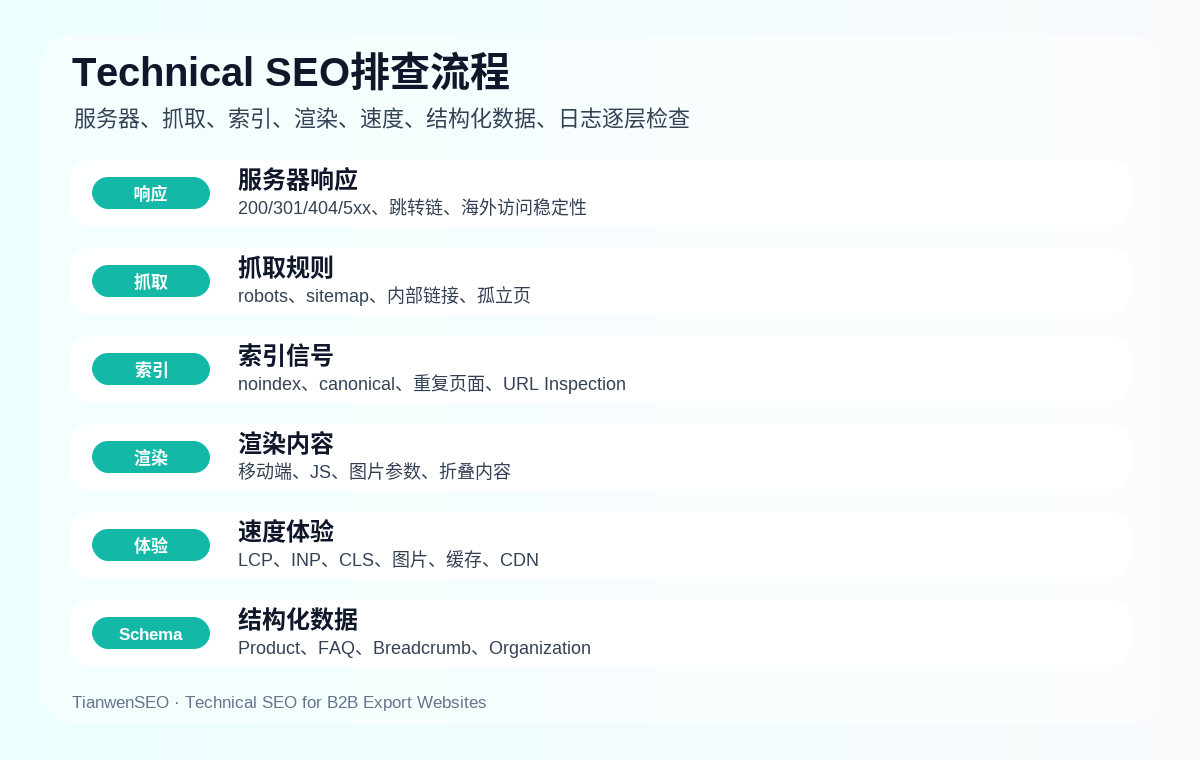
A technical SEO audit is the process of systematically checking whether a website can be discovered, crawled, rendered, indexed, understood, and converted by search engines. For export businesses, it is not just about running one tool report; it means judging whether core product pages, category pages, application pages, technical articles, downloadable materials, and the inquiry path face technical obstacles.
If you sell custom metal parts, LED flood light, packaging machine, medical probe, cnc machining parts, ceramic dinnerware, waterproof connector, industrial valve supplier, private label activewear manufacturer, technical issues directly affect whether overseas buyers can find the right page: whether important product pages are noindexed, whether old models return 404s, whether category pages load only through JS, whether images are too large, whether parameters are hidden on mobile, whether schema is wrong, and whether forms cannot be submitted. This article uses a technical audit checklist to break the problems into executable steps.
Step 1: Define the scope of the technical SEO audit first
Defining the scope of a technical SEO audit first should start from business importance. Not all technical problems have the same priority; problems on core product, category, application, and inquiry pages should be handled first.
Across product lines such as custom metal parts, LED flood light, packaging machine, medical probe, cnc machining parts, ceramic dinnerware, waterproof connector, industrial valve supplier, and private label activewear manufacturer, each issue should be tagged during the audit with its specific URL, page type, affected product line, fix action, and review metric. Only then can you avoid ending up with a pile of tool screenshots and no idea what to fix next.
| Module | Common issues | How to check |
|---|---|---|
| Crawling | robots, 403, 5xx, JS blocking | GSC, logs, crawlers |
| Indexing | noindex, canonical, duplication | GSC coverage and URL inspection |
| Structure | click depth, orphan pages | Site crawler and internal link report |
| Speed | large images, too many plugins | CWV, PageSpeed, server logs |
| Schema | wrong fields, fake reviews | Rich results test and source code |
| Conversion | form/WhatsApp/download failures | GA4, form testing, CRM |
Step 2: Crawling checks
Crawling checks should start from business importance. Not all technical problems have the same priority; problems on core product, category, application, and inquiry pages should be handled first.
Across product lines such as custom metal parts, LED flood light, packaging machine, medical probe, cnc machining parts, ceramic dinnerware, waterproof connector, industrial valve supplier, and private label activewear manufacturer, each issue should be tagged during the audit with its specific URL, page type, affected product line, fix action, and review metric. Only then can you avoid ending up with a pile of tool screenshots and no idea what to fix next.
Step 3: Indexing checks
Indexing checks should start from business importance. Not all technical problems have the same priority; problems on core product, category, application, and inquiry pages should be handled first.
Across product lines such as custom metal parts, LED flood light, packaging machine, medical probe, cnc machining parts, ceramic dinnerware, waterproof connector, industrial valve supplier, and private label activewear manufacturer, each issue should be tagged during the audit with its specific URL, page type, affected product line, fix action, and review metric. Only then can you avoid ending up with a pile of tool screenshots and no idea what to fix next.
| Module | Common issues | How to check |
|---|---|---|
| Crawling | robots, 403, 5xx, JS blocking | GSC, logs, crawlers |
| Indexing | noindex, canonical, duplication | GSC coverage and URL inspection |
| Structure | click depth, orphan pages | Site crawler and internal link report |
| Speed | large images, too many plugins | CWV, PageSpeed, server logs |
| Schema | wrong fields, fake reviews | Rich results test and source code |
| Conversion | form/WhatsApp/download failures | GA4, form testing, CRM |
Step 4: Rendering checks
Rendering checks should start from business importance. Not all technical problems have the same priority; problems on core product, category, application, and inquiry pages should be handled first.
Across product lines such as custom metal parts, LED flood light, packaging machine, medical probe, cnc machining parts, ceramic dinnerware, waterproof connector, industrial valve supplier, and private label activewear manufacturer, each issue should be tagged during the audit with its specific URL, page type, affected product line, fix action, and review metric. Only then can you avoid ending up with a pile of tool screenshots and no idea what to fix next.
Step 5: Site structure checks
Site structure checks should start from business importance. Not all technical problems have the same priority; problems on core product, category, application, and inquiry pages should be handled first.
Across product lines such as custom metal parts, LED flood light, packaging machine, medical probe, cnc machining parts, ceramic dinnerware, waterproof connector, industrial valve supplier, and private label activewear manufacturer, each issue should be tagged during the audit with its specific URL, page type, affected product line, fix action, and review metric. Only then can you avoid ending up with a pile of tool screenshots and no idea what to fix next.
| Module | Common issues | How to check |
|---|---|---|
| Crawling | robots, 403, 5xx, JS blocking | GSC, logs, crawlers |
| Indexing | noindex, canonical, duplication | GSC coverage and URL inspection |
| Structure | click depth, orphan pages | Site crawler and internal link report |
| Speed | large images, too many plugins | CWV, PageSpeed, server logs |
| Schema | wrong fields, fake reviews | Rich results test and source code |
| Conversion | form/WhatsApp/download failures | GA4, form testing, CRM |
Step 6: Internal linking checks
Internal linking checks should start from business importance. Not all technical problems have the same priority; problems on core product, category, application, and inquiry pages should be handled first.
Across product lines such as custom metal parts, LED flood light, packaging machine, medical probe, cnc machining parts, ceramic dinnerware, waterproof connector, industrial valve supplier, and private label activewear manufacturer, each issue should be tagged during the audit with its specific URL, page type, affected product line, fix action, and review metric. Only then can you avoid ending up with a pile of tool screenshots and no idea what to fix next.
Step 7: Sitemap checks
Sitemap checks should start from business importance. Not all technical problems have the same priority; problems on core product, category, application, and inquiry pages should be handled first.
Across product lines such as custom metal parts, LED flood light, packaging machine, medical probe, cnc machining parts, ceramic dinnerware, waterproof connector, industrial valve supplier, and private label activewear manufacturer, each issue should be tagged during the audit with its specific URL, page type, affected product line, fix action, and review metric. Only then can you avoid ending up with a pile of tool screenshots and no idea what to fix next.
| Module | Common issues | How to check |
|---|---|---|
| Crawling | robots, 403, 5xx, JS blocking | GSC, logs, crawlers |
| Indexing | noindex, canonical, duplication | GSC coverage and URL inspection |
| Structure | click depth, orphan pages | Site crawler and internal link report |
| Speed | large images, too many plugins | CWV, PageSpeed, server logs |
| Schema | wrong fields, fake reviews | Rich results test and source code |
| Conversion | form/WhatsApp/download failures | GA4, form testing, CRM |
Step 8: robots and noindex checks
robots and noindex checks should start from business importance. Not all technical problems have the same priority; problems on core product, category, application, and inquiry pages should be handled first.
Across product lines such as custom metal parts, LED flood light, packaging machine, medical probe, cnc machining parts, ceramic dinnerware, waterproof connector, industrial valve supplier, and private label activewear manufacturer, each issue should be tagged during the audit with its specific URL, page type, affected product line, fix action, and review metric. Only then can you avoid ending up with a pile of tool screenshots and no idea what to fix next.
Step 9: canonical checks
canonical checks should start from business importance. Not all technical problems have the same priority; problems on core product, category, application, and inquiry pages should be handled first.
Across product lines such as custom metal parts, LED flood light, packaging machine, medical probe, cnc machining parts, ceramic dinnerware, waterproof connector, industrial valve supplier, and private label activewear manufacturer, each issue should be tagged during the audit with its specific URL, page type, affected product line, fix action, and review metric. Only then can you avoid ending up with a pile of tool screenshots and no idea what to fix next.
| Module | Common issues | How to check |
|---|---|---|
| Crawling | robots, 403, 5xx, JS blocking | GSC, logs, crawlers |
| Indexing | noindex, canonical, duplication | GSC coverage and URL inspection |
| Structure | click depth, orphan pages | Site crawler and internal link report |
| Speed | large images, too many plugins | CWV, PageSpeed, server logs |
| Schema | wrong fields, fake reviews | Rich results test and source code |
| Conversion | form/WhatsApp/download failures | GA4, form testing, CRM |
Step 10: Duplicate content checks
Duplicate content checks should start from business importance. Not all technical problems have the same priority; problems on core product, category, application, and inquiry pages should be handled first.
Across product lines such as custom metal parts, LED flood light, packaging machine, medical probe, cnc machining parts, ceramic dinnerware, waterproof connector, industrial valve supplier, and private label activewear manufacturer, each issue should be tagged during the audit with its specific URL, page type, affected product line, fix action, and review metric. Only then can you avoid ending up with a pile of tool screenshots and no idea what to fix next.
Step 11: 404 and redirect checks
404 and redirect checks should start from business importance. Not all technical problems have the same priority; problems on core product, category, application, and inquiry pages should be handled first.
Across product lines such as custom metal parts, LED flood light, packaging machine, medical probe, cnc machining parts, ceramic dinnerware, waterproof connector, industrial valve supplier, and private label activewear manufacturer, each issue should be tagged during the audit with its specific URL, page type, affected product line, fix action, and review metric. Only then can you avoid ending up with a pile of tool screenshots and no idea what to fix next.
| Module | Common issues | How to check |
|---|---|---|
| Crawling | robots, 403, 5xx, JS blocking | GSC, logs, crawlers |
| Indexing | noindex, canonical, duplication | GSC coverage and URL inspection |
| Structure | click depth, orphan pages | Site crawler and internal link report |
| Speed | large images, too many plugins | CWV, PageSpeed, server logs |
| Schema | wrong fields, fake reviews | Rich results test and source code |
| Conversion | form/WhatsApp/download failures | GA4, form testing, CRM |
Step 12: Mobile checks
Mobile checks should start from business importance. Not all technical problems have the same priority; problems on core product, category, application, and inquiry pages should be handled first.
Across product lines such as custom metal parts, LED flood light, packaging machine, medical probe, cnc machining parts, ceramic dinnerware, waterproof connector, industrial valve supplier, and private label activewear manufacturer, each issue should be tagged during the audit with its specific URL, page type, affected product line, fix action, and review metric. Only then can you avoid ending up with a pile of tool screenshots and no idea what to fix next.
Step 13: Core Web Vitals and speed
Core Web Vitals and speed should start from business importance. Not all technical problems have the same priority; problems on core product, category, application, and inquiry pages should be handled first.
Across product lines such as custom metal parts, LED flood light, packaging machine, medical probe, cnc machining parts, ceramic dinnerware, waterproof connector, industrial valve supplier, and private label activewear manufacturer, each issue should be tagged during the audit with its specific URL, page type, affected product line, fix action, and review metric. Only then can you avoid ending up with a pile of tool screenshots and no idea what to fix next.
| Module | Common issues | How to check |
|---|---|---|
| Crawling | robots, 403, 5xx, JS blocking | GSC, logs, crawlers |
| Indexing | noindex, canonical, duplication | GSC coverage and URL inspection |
| Structure | click depth, orphan pages | Site crawler and internal link report |
| Speed | large images, too many plugins | CWV, PageSpeed, server logs |
| Schema | wrong fields, fake reviews | Rich results test and source code |
| Conversion | form/WhatsApp/download failures | GA4, form testing, CRM |
Step 14: Image and asset checks
Image and asset checks should start from business importance. Not all technical problems have the same priority; problems on core product, category, application, and inquiry pages should be handled first.
Across product lines such as custom metal parts, LED flood light, packaging machine, medical probe, cnc machining parts, ceramic dinnerware, waterproof connector, industrial valve supplier, and private label activewear manufacturer, each issue should be tagged during the audit with its specific URL, page type, affected product line, fix action, and review metric. Only then can you avoid ending up with a pile of tool screenshots and no idea what to fix next.
Step 15: Structured data checks
Structured data checks should start from business importance. Not all technical problems have the same priority; problems on core product, category, application, and inquiry pages should be handled first.
Across product lines such as custom metal parts, LED flood light, packaging machine, medical probe, cnc machining parts, ceramic dinnerware, waterproof connector, industrial valve supplier, and private label activewear manufacturer, each issue should be tagged during the audit with its specific URL, page type, affected product line, fix action, and review metric. Only then can you avoid ending up with a pile of tool screenshots and no idea what to fix next.
| Module | Common issues | How to check |
|---|---|---|
| Crawling | robots, 403, 5xx, JS blocking | GSC, logs, crawlers |
| Indexing | noindex, canonical, duplication | GSC coverage and URL inspection |
| Structure | click depth, orphan pages | Site crawler and internal link report |
| Speed | large images, too many plugins | CWV, PageSpeed, server logs |
| Schema | wrong fields, fake reviews | Rich results test and source code |
| Conversion | form/WhatsApp/download failures | GA4, form testing, CRM |
Step 16: Multilingual and hreflang
Multilingual and hreflang should start from business importance. Not all technical problems have the same priority; problems on core product, category, application, and inquiry pages should be handled first.
Across product lines such as custom metal parts, LED flood light, packaging machine, medical probe, cnc machining parts, ceramic dinnerware, waterproof connector, industrial valve supplier, and private label activewear manufacturer, each issue should be tagged during the audit with its specific URL, page type, affected product line, fix action, and review metric. Only then can you avoid ending up with a pile of tool screenshots and no idea what to fix next.
Step 17: WooCommerce/product catalog checks
WooCommerce/product catalog checks should start from business importance. Not all technical problems have the same priority; problems on core product, category, application, and inquiry pages should be handled first.
Across product lines such as custom metal parts, LED flood light, packaging machine, medical probe, cnc machining parts, ceramic dinnerware, waterproof connector, industrial valve supplier, and private label activewear manufacturer, each issue should be tagged during the audit with its specific URL, page type, affected product line, fix action, and review metric. Only then can you avoid ending up with a pile of tool screenshots and no idea what to fix next.
| Module | Common issues | How to check |
|---|---|---|
| Crawling | robots, 403, 5xx, JS blocking | GSC, logs, crawlers |
| Indexing | noindex, canonical, duplication | GSC coverage and URL inspection |
| Structure | click depth, orphan pages | Site crawler and internal link report |
| Speed | large images, too many plugins | CWV, PageSpeed, server logs |
| Schema | wrong fields, fake reviews | Rich results test and source code |
| Conversion | form/WhatsApp/download failures | GA4, form testing, CRM |
Step 18: Elementor page checks
Elementor page checks should start from business importance. Not all technical problems have the same priority; problems on core product, category, application, and inquiry pages should be handled first.
Across product lines such as custom metal parts, LED flood light, packaging machine, medical probe, cnc machining parts, ceramic dinnerware, waterproof connector, industrial valve supplier, and private label activewear manufacturer, each issue should be tagged during the audit with its specific URL, page type, affected product line, fix action, and review metric. Only then can you avoid ending up with a pile of tool screenshots and no idea what to fix next.
Step 19: Downloadable materials and PDFs
Downloadable materials and PDFs should start from business importance. Not all technical problems have the same priority; problems on core product, category, application, and inquiry pages should be handled first.
Across product lines such as custom metal parts, LED flood light, packaging machine, medical probe, cnc machining parts, ceramic dinnerware, waterproof connector, industrial valve supplier, and private label activewear manufacturer, each issue should be tagged during the audit with its specific URL, page type, affected product line, fix action, and review metric. Only then can you avoid ending up with a pile of tool screenshots and no idea what to fix next.
| Module | Common issues | How to check |
|---|---|---|
| Crawling | robots, 403, 5xx, JS blocking | GSC, logs, crawlers |
| Indexing | noindex, canonical, duplication | GSC coverage and URL inspection |
| Structure | click depth, orphan pages | Site crawler and internal link report |
| Speed | large images, too many plugins | CWV, PageSpeed, server logs |
| Schema | wrong fields, fake reviews | Rich results test and source code |
| Conversion | form/WhatsApp/download failures | GA4, form testing, CRM |
Step 20: Inquiry form path
The inquiry form path should start from business importance. Not all technical problems have the same priority; problems on core product, category, application, and inquiry pages should be handled first.
Across product lines such as custom metal parts, LED flood light, packaging machine, medical probe, cnc machining parts, ceramic dinnerware, waterproof connector, industrial valve supplier, and private label activewear manufacturer, each issue should be tagged during the audit with its specific URL, page type, affected product line, fix action, and review metric. Only then can you avoid ending up with a pile of tool screenshots and no idea what to fix next.
Step 21: How to use GSC
How to use GSC should start from business importance. Not all technical problems have the same priority; problems on core product, category, application, and inquiry pages should be handled first.
Across product lines such as custom metal parts, LED flood light, packaging machine, medical probe, cnc machining parts, ceramic dinnerware, waterproof connector, industrial valve supplier, and private label activewear manufacturer, each issue should be tagged during the audit with its specific URL, page type, affected product line, fix action, and review metric. Only then can you avoid ending up with a pile of tool screenshots and no idea what to fix next.
| Module | Common issues | How to check |
|---|---|---|
| Crawling | robots, 403, 5xx, JS blocking | GSC, logs, crawlers |
| Indexing | noindex, canonical, duplication | GSC coverage and URL inspection |
| Structure | click depth, orphan pages | Site crawler and internal link report |
| Speed | large images, too many plugins | CWV, PageSpeed, server logs |
| Schema | wrong fields, fake reviews | Rich results test and source code |
| Conversion | form/WhatsApp/download failures | GA4, form testing, CRM |
Step 22: How to use logs
How to use logs should start from business importance. Not all technical problems have the same priority; problems on core product, category, application, and inquiry pages should be handled first.
Across product lines such as custom metal parts, LED flood light, packaging machine, medical probe, cnc machining parts, ceramic dinnerware, waterproof connector, industrial valve supplier, and private label activewear manufacturer, each issue should be tagged during the audit with its specific URL, page type, affected product line, fix action, and review metric. Only then can you avoid ending up with a pile of tool screenshots and no idea what to fix next.
Step 23: GA4 and CRM review
GA4 and CRM review should start from business importance. Not all technical problems have the same priority; problems on core product, category, application, and inquiry pages should be handled first.
Across product lines such as custom metal parts, LED flood light, packaging machine, medical probe, cnc machining parts, ceramic dinnerware, waterproof connector, industrial valve supplier, and private label activewear manufacturer, each issue should be tagged during the audit with its specific URL, page type, affected product line, fix action, and review metric. Only then can you avoid ending up with a pile of tool screenshots and no idea what to fix next.
| Module | Common issues | How to check |
|---|---|---|
| Crawling | robots, 403, 5xx, JS blocking | GSC, logs, crawlers |
| Indexing | noindex, canonical, duplication | GSC coverage and URL inspection |
| Structure | click depth, orphan pages | Site crawler and internal link report |
| Speed | large images, too many plugins | CWV, PageSpeed, server logs |
| Schema | wrong fields, fake reviews | Rich results test and source code |
| Conversion | form/WhatsApp/download failures | GA4, form testing, CRM |
Step 24: AI citation perspective
The AI citation perspective should start from business importance. Not all technical problems have the same priority; problems on core product, category, application, and inquiry pages should be handled first.
Across product lines such as custom metal parts, LED flood light, packaging machine, medical probe, cnc machining parts, ceramic dinnerware, waterproof connector, industrial valve supplier, and private label activewear manufacturer, each issue should be tagged during the audit with its specific URL, page type, affected product line, fix action, and review metric. Only then can you avoid ending up with a pile of tool screenshots and no idea what to fix next.
Step 25: custom metal parts audit case
The custom metal parts audit case should start from business importance. Not all technical problems have the same priority; problems on core product, category, application, and inquiry pages should be handled first.
Across product lines such as custom metal parts, LED flood light, packaging machine, medical probe, cnc machining parts, ceramic dinnerware, waterproof connector, industrial valve supplier, and private label activewear manufacturer, each issue should be tagged during the audit with its specific URL, page type, affected product line, fix action, and review metric. Only then can you avoid ending up with a pile of tool screenshots and no idea what to fix next.
| Module | Common issues | How to check |
|---|---|---|
| Crawling | robots, 403, 5xx, JS blocking | GSC, logs, crawlers |
| Indexing | noindex, canonical, duplication | GSC coverage and URL inspection |
| Structure | click depth, orphan pages | Site crawler and internal link report |
| Speed | large images, too many plugins | CWV, PageSpeed, server logs |
| Schema | wrong fields, fake reviews | Rich results test and source code |
| Conversion | form/WhatsApp/download failures | GA4, form testing, CRM |
Step 26: LED flood light audit case
The LED flood light audit case should start from business importance. Not all technical problems have the same priority; problems on core product, category, application, and inquiry pages should be handled first.
Across product lines such as custom metal parts, LED flood light, packaging machine, medical probe, cnc machining parts, ceramic dinnerware, waterproof connector, industrial valve supplier, and private label activewear manufacturer, each issue should be tagged during the audit with its specific URL, page type, affected product line, fix action, and review metric. Only then can you avoid ending up with a pile of tool screenshots and no idea what to fix next.
Step 27: packaging machine audit case
The packaging machine audit case should start from business importance. Not all technical problems have the same priority; problems on core product, category, application, and inquiry pages should be handled first.
Across product lines such as custom metal parts, LED flood light, packaging machine, medical probe, cnc machining parts, ceramic dinnerware, waterproof connector, industrial valve supplier, and private label activewear manufacturer, each issue should be tagged during the audit with its specific URL, page type, affected product line, fix action, and review metric. Only then can you avoid ending up with a pile of tool screenshots and no idea what to fix next.
| Module | Common issues | How to check |
|---|---|---|
| Crawling | robots, 403, 5xx, JS blocking | GSC, logs, crawlers |
| Indexing | noindex, canonical, duplication | GSC coverage and URL inspection |
| Structure | click depth, orphan pages | Site crawler and internal link report |
| Speed | large images, too many plugins | CWV, PageSpeed, server logs |
| Schema | wrong fields, fake reviews | Rich results test and source code |
| Conversion | form/WhatsApp/download failures | GA4, form testing, CRM |
Step 28: medical probe audit case
The medical probe audit case should start from business importance. Not all technical problems have the same priority; problems on core product, category, application, and inquiry pages should be handled first.
Across product lines such as custom metal parts, LED flood light, packaging machine, medical probe, cnc machining parts, ceramic dinnerware, waterproof connector, industrial valve supplier, and private label activewear manufacturer, each issue should be tagged during the audit with its specific URL, page type, affected product line, fix action, and review metric. Only then can you avoid ending up with a pile of tool screenshots and no idea what to fix next.
Step 29: waterproof connector audit case
The waterproof connector audit case should start from business importance. Not all technical problems have the same priority; problems on core product, category, application, and inquiry pages should be handled first.
Across product lines such as custom metal parts, LED flood light, packaging machine, medical probe, cnc machining parts, ceramic dinnerware, waterproof connector, industrial valve supplier, and private label activewear manufacturer, each issue should be tagged during the audit with its specific URL, page type, affected product line, fix action, and review metric. Only then can you avoid ending up with a pile of tool screenshots and no idea what to fix next.
| Module | Common issues | How to check |
|---|---|---|
| Crawling | robots, 403, 5xx, JS blocking | GSC, logs, crawlers |
| Indexing | noindex, canonical, duplication | GSC coverage and URL inspection |
| Structure | click depth, orphan pages | Site crawler and internal link report |
| Speed | large images, too many plugins | CWV, PageSpeed, server logs |
| Schema | wrong fields, fake reviews | Rich results test and source code |
| Conversion | form/WhatsApp/download failures | GA4, form testing, CRM |
Step 30: Technical audit priorities
Technical audit priorities should start from business importance. Not all technical problems have the same priority; problems on core product, category, application, and inquiry pages should be handled first.
Across product lines such as custom metal parts, LED flood light, packaging machine, medical probe, cnc machining parts, ceramic dinnerware, waterproof connector, industrial valve supplier, and private label activewear manufacturer, each issue should be tagged during the audit with its specific URL, page type, affected product line, fix action, and review metric. Only then can you avoid ending up with a pile of tool screenshots and no idea what to fix next.
Step 31: Common misconceptions
Common misconceptions should start from business importance. Not all technical problems have the same priority; problems on core product, category, application, and inquiry pages should be handled first.
Across product lines such as custom metal parts, LED flood light, packaging machine, medical probe, cnc machining parts, ceramic dinnerware, waterproof connector, industrial valve supplier, and private label activewear manufacturer, each issue should be tagged during the audit with its specific URL, page type, affected product line, fix action, and review metric. Only then can you avoid ending up with a pile of tool screenshots and no idea what to fix next.
| Module | Common issues | How to check |
|---|---|---|
| Crawling | robots, 403, 5xx, JS blocking | GSC, logs, crawlers |
| Indexing | noindex, canonical, duplication | GSC coverage and URL inspection |
| Structure | click depth, orphan pages | Site crawler and internal link report |
| Speed | large images, too many plugins | CWV, PageSpeed, server logs |
| Schema | wrong fields, fake reviews | Rich results test and source code |
| Conversion | form/WhatsApp/download failures | GA4, form testing, CRM |
FAQ: Common questions about technical SEO audits
Is a technical SEO audit just a matter of running tools?
No. Tools can surface clues, but you must combine them with GSC, logs, front-end sampling, GA4, CRM, and business priorities.
Should I fix technical issues first or write content first?
If crawling, indexing, rendering, speed, or forms have serious problems, fix the technical side first; if the fundamentals are sound, then add content and internal links.
Do all 404s need to be fixed?
Prioritize 404s that have backlinks, internal links, historical traffic, product replacement relationships, and business value.
Do Core Web Vitals always affect rankings?
They are one of the experience signals. More importantly, speed affects users and crawling, but speed alone cannot be promised to change ranking results.
What are the most common technical issues on export product sites?
Thin product pages, category pages that load through JS, oversized images, 404s on old products, duplicated specification pages, content hidden on mobile, and missing form tracking.
How soon should I review after an audit?
Recheck P0/P1 issues in 7–14 days, review indexing and query terms in 30–60 days, and review inquiry quality in 60–90 days.
How should a technical audit be reported?
Report by issue, affected page, affected product line, priority, fix action, owner, and review metric.
Conclusion: Technical SEO audits must fix the business path
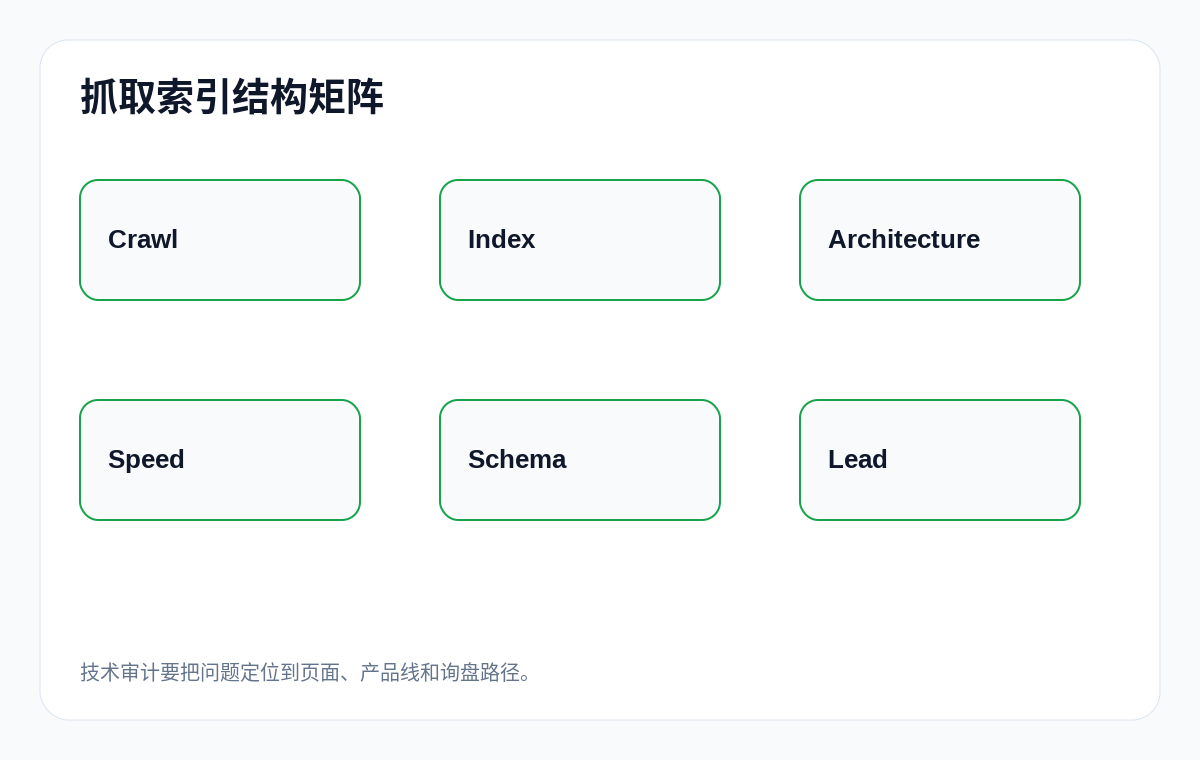
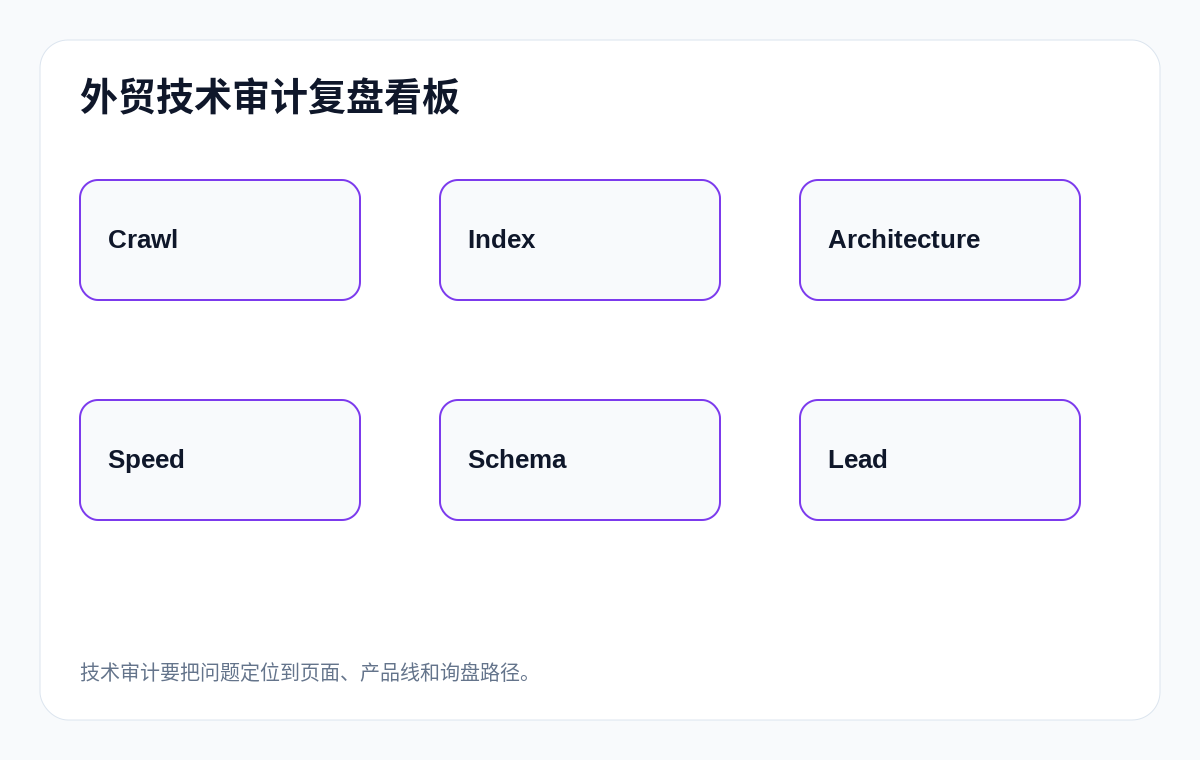
A technical SEO audit is not about generating a report; it is about making export product pages for custom metal parts, LED flood light, packaging machine, medical probe, cnc machining parts, ceramic dinnerware, waterproof connector, industrial valve supplier, and private label activewear manufacturer easier to discover, index, understand, and convert into inquiries. A genuinely effective audit connects crawling, indexing, structure, speed, Schema, and the conversion path, and keeps validating them with GSC, logs, GA4, and CRM.
Official sources and acceptance boundaries for technical SEO audits
A technical SEO audit cannot just list problems. Every issue needs evidence, scope of impact, a fix action, acceptance fields, and a review date. When there is no data, establish a baseline first.
| Official source | What it can support | Boundary it cannot cross |
|---|---|---|
| Google: How Search works | Diagnose crawling, indexing, and serving as separate stages | Cannot expand one technical item into the cause of all results |
| Google: SEO Starter Guide | Covers titles, content, links, images, and mobile fundamentals | Completing a checklist is not completing the outcome |
| Google: Sitemaps overview | Confirms discovery entry points for important URLs | Submitting a sitemap does not equal indexing |
| Google: robots meta tag | Checks page-level index controls | An incorrect noindex can disqualify a page |
| Google: JavaScript SEO basics | Confirms rendering and resource accessibility | Tool screenshots cannot replace verification in the search system |
Diagnostic acceptance table
| Check item | Fields to record | How to write during low-data periods |
|---|---|---|
| Indexing fundamentals | index/follow, canonical, sitemap, robots, HTTP status code | Write only the current accessible state, not performance conclusions |
| Page evidence | title, body, images, links, structured data, last updated | If material is missing, list the gaps; do not add invented cases |
| Search data | GSC query/page/date/country/device | If GSC shows zero rows, write zero rows; do not extrapolate rankings |
| Conversion observation | GA4 events, forms, downloads, inquiry entry points | If there are no events, fix collection first before making judgments |
Continue reading this SEO series
If you are systematically working through export website SEO, we suggest continuing with the articles below. First clarify the relationships among crawling, indexing, content, links, and review, then decide which page to change next.
- How to do content SEO: a guide to search intent, information gain, and indexable content
- How to do competitor SEO analysis: a guide to page types, content gaps, and export inquiry opportunities
- Google crawling, indexing, and ranking process: a diagnostic guide for export websites from indexing to inquiry
- How search engines work: a guide to crawling, indexing, ranking, and export website diagnostics
- Sitemap technical guide: sitemap submission, index diagnostics, and troubleshooting common errors
- How to check Googlebot content accessibility: a guide to rendering, text, links, and resources
{
“@context”: “https://schema.org”,
“@type”: “FAQPage”,
“mainEntity”: [
{
“@type”: “Question”,
“name”: “Is a technical SEO audit just a matter of running tools?”,
“acceptedAnswer”: {
“@type”: “Answer”,
“text”: “No. Tools can surface clues, but you must combine them with GSC, logs, front-end sampling, GA4, CRM, and business priorities.”
}
},
{
“@type”: “Question”,
“name”: “Should I fix technical issues first or write content first?”,
“acceptedAnswer”: {
“@type”: “Answer”,
“text”: “If crawling, indexing, rendering, speed, or forms have serious problems, fix the technical side first; if the fundamentals are sound, then add content and internal links.”
}
},
{
“@type”: “Question”,
“name”: “Do all 404s need to be fixed?”,
“acceptedAnswer”: {
“@type”: “Answer”,
“text”: “Prioritize 404s that have backlinks, internal links, historical traffic, product replacement relationships, and business value.”
}
},
{
“@type”: “Question”,
“name”: “Do Core Web Vitals always affect rankings?”,
“acceptedAnswer”: {
“@type”: “Answer”,
“text”: “They are one of the experience signals. More importantly, speed affects users and crawling, but speed alone cannot be promised to change ranking results.”
}
},
{
“@type”: “Question”,
“name”: “What are the most common technical issues on export product sites?”,
“acceptedAnswer”: {
“@type”: “Answer”,
“text”: “Thin product pages, category pages that load through JS, oversized images, 404s on old products, duplicated specification pages, content hidden on mobile, and missing form tracking.”
}
}
]
}
This page is machine-translated from the Simplified Chinese version and awaiting human review. It has not yet been proofread.
Further Reading on This B2B SEO & GEO Topic
- What is SEO: An introductory guide for B2B Export Websites covering crawling, indexing, ranking, and ultimately driving Inquiries
- How to Troubleshoot Orphan Pages: A Guide to Fixing Isolated Pages, Sitemaps, and Internal Links in Body Text
- GSC Indexing Diagnostics and Googlebot Crawl Architecture Hub for B2B Websites
- B2B Google SEO Tutorials
- B2B Export Website Development Architecture