Google SEO company promising to get you to the first page — is that credible? First look at what it means by “first page.” If it is only analyzing opportunities, breaking down competitive difficulty, and explaining what actions can be taken, that can be discussed. If it directly writes a specific keyword, a specific position, or a specific timeframe as a guaranteed result, be cautious.
SEO is not buying an ad slot. It is more like giving a website a long-term health check, repairing the roads, and building a reference library. When a foreign trade website targets English product keywords such as cnc machining parts, LED flood light, packaging machine, or industrial valve supplier, competition, page quality, crawling, indexing, content matching, and brand signals all affect the outcome. No outside team can directly control Google’s ranking system.
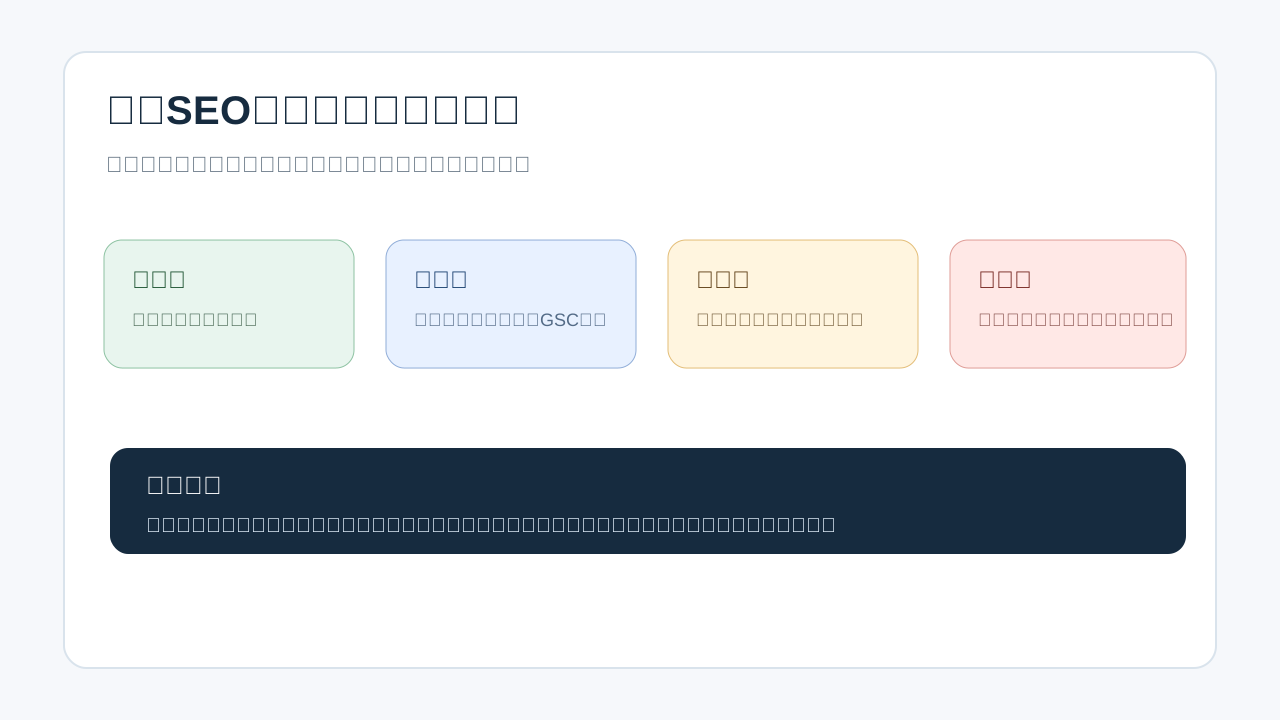
The conclusion first: ranking opportunities can be assessed, but fixed positions cannot be promised
A professional SEO company can do three things: assess keyword opportunities, point out gaps in current pages, and create a reviewable optimization plan. For example, if a page already has impressions but its average position is beyond 20, you can discuss the title, opening paragraph, content coverage, internal links, page speed, structured data, and external trust signals. That is called an opportunity assessment.
But if the other party simply says “this keyword will definitely reach the first page” without explaining the technical and content path, that is not professional judgment — it is a sales pitch. In Do you need an SEO?, Google officially reminds website owners to treat ranking promises with caution, and suggests asking an SEO whether it follows Search Essentials, how expected results will be measured, and whether it will share change records and the reasons behind its recommendations.
So the real question is not “Can you get me to the first page?” but:
- Which pages, queries, competitors, and technical conditions do you base the opportunity assessment on?
- Which URLs do you plan to change? What is the goal for each URL?
- Will you use Search Console to review impressions, clicks, queries, and page changes?
- Will you explain which results are not directly under your control?
- Will you keep change records, timestamps, and acceptance evidence?
Official evidence: a few key Google reminders about hiring an SEO
Judgments like these cannot rely on industry experience alone. Google’s official documentation already points in a clear direction. Putting these official sources into your acceptance criteria helps you avoid being led astray by fine-sounding words.
| Official source | What judgment it can support | What it means for contract acceptance | What it must not be written as |
|---|---|---|---|
| Google: Do you need an SEO? | Before hiring an SEO, ask about experience, methods, expected results, communication, and change records | Make “will it explain its actions” part of the selection criteria | Do not write first-page rankings as a purchasable result |
| Google Search Essentials | Crawling, indexing, quality, and compliance are baseline thresholds | Rule out technical and quality deal-breakers first | Do not say that meeting the baseline guarantees impressions |
| Google spam policies | Identify high-risk practices that manipulate the search system | List black-box backlinks, mass low-quality pages, and misleading content as red lines | Do not package short-term abnormal fluctuations as long-term capability |
| Search Console Performance report | View queries, pages, countries, devices, impressions, and clicks | Review by page and query dimension instead of looking only at screenshots | Do not write a small number of impressions as stable traffic |
| URL Inspection tool | Check the crawl, index, and canonical URL status of a single URL | Confirm whether Google has processed the page after changes | Do not write that submitting a sitemap means the page has been recrawled |
| Page indexing report | View indexing issues by page group | Handle not indexed, discovered, and crawled but not indexed separately | Do not treat the number of indexed pages as organic search performance |
| Google: Optimizing for generative AI search | AI search still depends on a foundation of crawlable, indexable, useful content | GEO cannot be separated from SEO fundamentals and page quality | Do not promise that a particular AI answer will definitely use this site |
| OpenAI crawlers | Check whether the server mistakenly blocks public crawlers | Include crawler accessibility in the technical checks for AI search | Do not claim this proves ChatGPT will definitely cite a page |
Why “reaching the first page” is not a deliverable the vendor can directly control
Search results are determined by multiple systems and signals working together. Whether a page can be crawled, whether it enters the index, whether it matches a query, whether it is more useful than a competitor’s page, the user’s country and device, shifts in search intent, and competitor updates all affect the outcome. An SEO company can influence some of these factors, but it cannot take over the entire search system.
This is also why a professional contract should specify “delivered actions” and “acceptance evidence” rather than an external platform result. For example, it can state: complete a technical audit and fix noindex issues, canonicals, sitemaps, internal links, titles, H1s, opening paragraphs, structured data, image alt text, page speed, and content gaps. It can also state: conduct a monthly GSC review by page and query dimension. But it should not treat the position of a single keyword as the only deliverable.
Foreign trade businesses should pay particular attention to this. Many product keywords are not a one-to-one match between a Chinese term and an English term. Behind custom metal parts there may be material, process, tolerance, industry, purchase quantity, certification, and country market. A page has to answer all of these questions at once to have a chance of being understood by the search system. Focusing only on the words “first page” means ignoring the page-level work that can truly improve results.
How to grade the four types of ranking claims
Not every statement about rankings is a problem. The problem lies in whether an uncontrollable result is presented as a guaranteed deliverable. You can look at them in four risk categories.
| Type of claim | Risk level | How to understand it | What to ask next |
|---|---|---|---|
| Analyzing first-page opportunity for a certain type of keyword | Low | This is an opportunity assessment, not a promise of results | Which pages, competitors, GSC data, and search intent it is based on |
| Treating pages ranked 4-20 as optimization targets | Low to medium | Pages that already have impressions are usually better to handle first | How to confirm the page has been crawled and how to re-check it after changes |
| Promising a fixed position within a fixed period | High | It easily packages an uncontrollable result as a contract promise | Whether it can clearly state uncontrollable factors, failure scenarios, and refund boundaries |
| Not explaining the method, only emphasizing special channels | Very high | It may involve high-risk backlinks, disguised traffic, or rule-violating tactics | Whether it follows Search Essentials and whether it discloses change records |
What SEO deliverables are truly acceptance-testable
Acceptance-testable means both sides can see it, review it, and trace it. External platform results can serve as observation signals, but they are not suitable as the only deliverable. The items below are better suited to being written into execution and review.
| Delivery module | Acceptance-testable material | How to verify | Boundary |
|---|---|---|---|
| Technical crawl diagnosis | robots, sitemap, canonical, status codes, redirects, mobile readability | Re-check with URL Inspection, source code, and crawl tools | Fixing technical issues does not mean gaining impressions immediately |
| Index quality diagnosis | Lists of indexed, not indexed, discovered, and crawled-but-not-indexed URLs | Cross-check with the Page indexing report and URL Inspection | Submitting a URL does not mean it has been processed |
| Content intent optimization | Title, H1, opening paragraph, H2, FAQ, tables, internal links, official sources | Compare each page against search intent and competitor pages | More complete content does not mean an immediate change in position |
| Semantic reinforcement for foreign trade products | Product parameters, processes, materials, applications, certifications, purchasing questions | Check whether the page can answer pre-purchase questions | Do not replace product facts with generic company introductions |
| Internal links and topic clusters | Paths among pillar pages, service pages, article pages, and product pages | Export the internal link graph and check for orphan pages and broken links | Internal links are paths for understanding, not a ranking switch |
| Monthly GSC review | Pages, queries, countries, devices, impressions, clicks, average position | Look at 28-day and 90-day trends, not just one day’s screenshot | A small amount of data can only suggest leads; it cannot be written as a stable conclusion |
12 questions to ask before signing
Asking questions is not being difficult. The more specific your questions, the more clearly you can tell whether the other party is doing SEO or selling a nice-sounding line.
- Which GSC data will you look at first? The page dimension or the query dimension?
- Which URLs will you check? Why handle these URLs first?
- How do you determine whether a page has a technical problem, a content problem, or a competition problem?
- Will you provide before-and-after change records? Which fields do those records include?
- Will you explain which actions are under your control and which results are not?
- How do you handle discovered-but-not-indexed, crawled-but-not-indexed, and canonical URL mismatch issues?
- How do you determine the purchasing intent behind an English product keyword?
- Will you link foreign trade product pages, process pages, application pages, and article pages into topic clusters?
- Which official documents do you cite as the basis for technical and content judgments?
- How do you avoid low-quality backlinks, mass thin pages, and templated content?
- How do you review AI search visibility? How are the question bank, dates, engines, and cited sources recorded?
- If there is no obvious change within 60 days, how will you explain it and adjust?
Why foreign trade websites are more easily misled by “first page” claims
Foreign trade owners usually want results, and that is normal. The problem is that the search path for foreign trade SEO is very long. Before an inquiry, there may first be product keywords, material keywords, application keywords, problem keywords, comparison keywords, supplier keywords, certification keywords, and price keywords. Each type of keyword calls for a different page type.
Take private label activewear manufacturer, for example. Users may care about MOQ, fabric, sizing, sampling, lead time, packaging, certification, and export experience. Building only a homepage or one short article makes it very hard to cover the full need. A more reliable approach is to break the website into product families, process capabilities, application scenarios, quality control, FAQ, authorized case study pages, and contact entry points. Here, “authorized case study pages” means project materials with public permission, not stories made up on the spot.
If an SEO company only says a keyword can reach the first page without discussing the page system, that is very dangerous. Even if a keyword fluctuates on some day, it may not bring in valid inquiries. Truly valuable SEO should get more high-intent pages discovered, understood, and continuously reviewed.
What to look at in a GSC review, and what not to
Search Console is a basic tool for judging SEO changes, but it can also be misused. The right way to use it is to look at trends, pages, queries, and time windows. The wrong way is to take one screenshot and present it as the entire result.
| GSC field | Professional view | Common misreading | Review action |
|---|---|---|---|
| Impressions | Shows that a page or query has a chance to appear | Treating impressions directly as traffic | Break them down by page and query |
| Clicks | Shows that users entered the website | Treating clicks directly as inquiries | Combine with GA4 events and contact entry points |
| Average position | An average across many impressions | Judging overall change from one day’s data | Look at 28-day, 90-day, and page group data |
| Query | Reflects whether search intent is close to the product | Only counting the number of keywords | Group by informational, comparison, and purchasing queries |
| lastCrawlTime | Shows when Google last processed the URL | Submitting a sitemap and saying it has been processed | Confirm the crawl time is later than the page modification time |
URL Inspection is the first acceptance gate for ranking promises
Many disputes can be resolved first with URL Inspection. After a page is changed, first check whether Google has recrawled it. If the crawl time is earlier than the modification time, the new content cannot yet be treated as the version Google has processed. If the crawl status is failed, there is still a problem at the technical layer. If the canonical URL does not match, Google may have chosen another version.
Therefore, contract acceptance should clearly state: after key URLs are modified, record the submission time, crawl time, indexing status, the canonical URL Google selected, the page source code, and screenshots. This way, even if rankings have not changed, you can tell whether it is “Google has not processed it yet,” “the page was processed but competition is insufficient,” or “the direction itself is wrong.”
This is more useful than a line about “reaching the first page.” Because it can guide the next step.
AI search and GEO cannot escape this boundary either
Many companies now talk about SEO, GEO, AEO, and AI search together. The direction is right, but the boundaries need to be clearer. Google’s guidance on generative AI search explains that AI search still depends on a foundation of crawlable, indexable, useful content. In other words, GEO is not a shortcut around SEO.
For scenarios such as ChatGPT, Perplexity, and Google AI Overviews, what can be done is: check whether public pages are accessible, whether the brand entity is clear, whether product facts are complete, whether Q&A content can be extracted, whether the OpenAI crawler or other public crawlers are mistakenly blocked, and whether AI samples are recorded against the question bank. What cannot be done is writing a particular external platform answer as a directly deliverable, guaranteed result.
| AI/GEO action | Acceptance-testable evidence | Reasonable conclusion | What it must not be written as |
|---|---|---|---|
| Brand entity reinforcement | Company introduction, service boundaries, author information, contact details | The website entity is clearer | AI will definitely use this company |
| Product fact table | Materials, specifications, applications, certifications, FAQ | The page is better suited to answering purchasing questions | A particular answer will definitely cite the official website |
| AI sample observation | Question bank, dates, engines, answer summaries, cited URLs | Certain sources appear or do not appear in the sample | Long-term visibility has been established |
| Crawler accessibility | robots, server logs, public crawler documentation | Reduced risk of being mistakenly blocked | Crawler access means the answer will be used |
How contracts and quotes should be written to be solid
A solid SEO contract should not just say “do rankings.” It should clearly state the phases, scope, pages, deliverables, acceptance methods, review cycle, and boundaries. The more commercial the keyword, the more clearly these need to be spelled out.
| Contract item | Recommended wording | Acceptance material | Risky wording |
|---|---|---|---|
| Diagnosis scope | List URLs, templates, product lines, and country markets | Diagnosis sheet and screenshots of issues | Only writing “site-wide optimization” |
| Technical fixes | List items such as status codes, robots, sitemap, canonical, and mobile tables | Before-and-after comparison of fixes | Only writing “technical handling” |
| Content optimization | Write the title, opening paragraph, H2s, tables, FAQ, internal links, and official sources per page | Page URLs and change records | Only writing “publish articles every month” |
| Review method | Produce GSC page/query dimensions, indexing status, and next steps every month | Reports, data screenshots, raw exports | Only sending tool scores |
| Result boundaries | Explain that search impressions, clicks, and AI adoption are affected by the platform and competition | Boundary clauses and review notes | Writing organic results as a guaranteed deliverable |
Red flags: be careful with these statements
Some statements are not necessarily illegal, but they easily send a project off track. When you hear them, it is best to keep asking questions.
- Giving results directly without looking at the website, GSC, or the product.
- Talking only about first-page keywords, not pages and search intent.
- Showing only screenshots, without a time range or data source.
- Being unwilling to explain backlink sources, content sources, and change records.
- Mixing Google Ads, organic search, and AI search into a single result.
- Treating tool scores as SEO performance.
- Treating the number of indexed pages as traffic quality.
- Treating a single AI answer as long-term visibility.
- Asking a business to hand over high-level permissions without explaining what will be changed.
- Promising a great deal, but the contract has no reviewable fields.
Green flags: how reliable teams usually talk
Reliable teams tend not to overpromise. They break the problem down, bring out the data, and separate what is controllable from what is not.
- They ask about the business first: products, countries, profit, lead time, certifications, target customers.
- They check the technical side first: robots, sitemap, status codes, canonical, mobile, speed.
- They look at GSC first: which pages have impressions, which queries are close to the business, which URLs have not been processed.
- They define pages first: which become pillar pages, which become product pages, which become article pages, which should be merged.
- They explain boundaries first: what can be changed, what has to wait for crawling, what is affected by competition.
- They set up the review first: export fixed fields every month and record page changes and crawl times.
- They make conservative promises first: deliver diagnosis, actions, evidence, and reviews, without writing external results as guarantees.
A practical judgment: change the question from “rankings” to “chain of evidence”
If you are evaluating a Google SEO company, you can rephrase your question. Do not ask “Can you get me to the first page?” Ask “Can you build out the chain of evidence?”
The chain of evidence includes:
- Whether the current page can be crawled.
- Whether the current page is indexed.
- Whether the current page has impressions.
- Which queries the impressions come from.
- Whether the queries are close to the product and purchasing intent.
- Whether the page answers the questions behind these queries.
- What content, structure, and evidence competitor pages have that yours does not.
- What was changed this time.
- Whether Google recrawled the page after the changes.
- How the data changes after 28 and 90 days.
Once you have asked this set of questions, a lot of empty talk naturally disappears. Because empty talk has no fields.
How Henan Tianwen Network Technology Co., Ltd. should describe this type of service
On pages like this, Henan Tianwen Network Technology Co., Ltd. should emphasize method and boundaries: technical SEO diagnosis, GSC data reviews, GEO content structure, AI search sample observation, and a page system for English foreign trade product keywords. Do not use overblown claims. The more restrained, the more professional.
Externally, it can be expressed this way: we help businesses build a website content system that is crawlable, indexable, understandable, and reviewable; we use Search Console and page-level evidence to set priorities; we use official documentation to constrain our methods; and we use monthly reviews to explain changes and next steps. This statement is steadier than “reaching the first page,” and better suited to a long-term project.
FAQ: about Google SEO companies’ first-page promises
Can a Google SEO company not talk about rankings at all?
It can. It can analyze opportunities, competitive difficulty, page gaps, and optimization paths. The problem is that it cannot write search system results as a guaranteed deliverable. Professional statements should focus on acceptance-testable actions and evidence.
If the other party charges based on performance, is that necessarily a problem?
Not necessarily. It depends on how performance is defined. If performance only looks at the position of a certain keyword on a certain day, the risk is very high. If performance includes technical fixes, content going live, GSC reviews, an increase in effective pages, and improved query coverage, it is much easier to verify.
If a keyword is already on the first page, does it still need ongoing SEO?
It depends on whether the keyword brings business value, and also on whether the page is stable and can cover more related questions. A first-page position is not the finish line. For foreign trade websites, you also need to look at the inquiry path, product page quality, country markets, and conversion actions.
Why is URL Inspection important?
Because it tells you the status of the last time Google processed the URL. If a page has just been changed and the crawl time is still earlier than the modification time, you cannot say the new content has been processed by Google.
In the age of AI search, is SEO still important?
Yes. Google’s guidance on generative AI search also treats crawlable, indexable, useful content as the foundation. GEO is more like adding entities, facts, a question bank, and citation structure on top of SEO — it is not starting over from scratch.
What materials should a foreign trade business ask for before signing?
Ask for a diagnosis sheet, a URL priority list, a monthly review template, and a boundary statement. Then see whether the other party is willing to work according to these materials. If you only get verbal results, it will be very hard to judge later whether the project has actually improved.
A 90-day review rhythm: turning claims into checkable actions
If a business has already decided to work together, it can split the first three months into three stages. Stage one looks at technical issues and indexing, stage two looks at content and internal links, and stage three looks at queries and page changes. This way, reviews will not focus only on the position of one keyword.
| Stage | Key actions | Deliverable materials | Review focus |
|---|---|---|---|
| Days 1-30 | Technical diagnosis, URL grouping, indexing status check | Issue list, URL priorities, Search Console baseline | First confirm that pages can be discovered and processed |
| Days 31-60 | Rewriting core pages, strengthening internal links, completing product fact tables | Change records, page list, internal link paths | See whether the changes land on real URLs |
| Days 61-90 | GSC query review, competitor gap re-check, next round of page planning | Page/query reports, indexing re-check, next-step task list | See whether search intent is closer to the business |
This rhythm has one advantage: even if there is no obvious ranking change in the short term, you can still tell where things are stuck. Is it that Google has not reprocessed the page, that the query terms are not accurate enough, that the page content has not answered purchasing questions, or that competitors keep updating? Knowing the sticking point is what makes the next step possible.
Which fields should an acceptance report include
Many SEO reports look thick but are actually hard to review. A professional report does not need to be fancy, but its fields must be complete. When the fields are complete, communication costs are low.
| Report field | Why it is needed | Minimum acceptable requirement | Common gap |
|---|---|---|---|
| URL | Every action must land on a page | Write the canonical URL, not a vague page name | Only writing “optimized the article” |
| Modification time | Used to compare against the crawl time | Record the specific date and version | Only writing “handled this month” |
| What was changed | Judge whether the action actually affects page quality | Describe changes to the title, opening paragraph, tables, FAQ, internal links, images, and so on | Only writing “content optimization” |
| Official basis | Avoid changing the site based on a hunch | Can be traced to Google documentation or Search Console evidence | Only citing third-party tool scores |
| Re-check result | Judge whether the action was processed by the search system | Record URL Inspection, indexing status, and GSC page dimensions | Only posting ranking screenshots |
| Next steps | Keep the project moving forward | Write next month’s URLs, the reasons, and the acceptance method | Only writing “continue to observe” |
Different page types cannot use the same kind of promise
Homepages, service pages, product pages, article pages, and category pages carry different tasks. Promising the same ranking result for all of them is unprofessional in itself.
| Page type | Main task | Suitable acceptance method | Unsuitable statement |
|---|---|---|---|
| Homepage | Brand entity, business scope, core entry points | Brand keywords, internal paths, core service entry points | One homepage covering all product keywords |
| Service page | Explain service content, process, boundaries, and acceptance | Commercial keyword coverage, inquiry paths, internal link support | Only piling up company introductions |
| Product page | Answer specification, material, application, and purchasing questions | Product queries, images, parameters, FAQ completeness | All products sharing one description |
| Article page | Explain problems, compare options, build trust | Long-tail queries, internal links, official sources, extractable answers | Only writing short Q&As to pad the count |
| Category page | Organize product families and purchasing paths | Product lists, filtering logic, representative applications, upstream and downstream links | Only product thumbnails, with no text descriptions |
Backlink and content risks also belong in the boundaries
Some teams bundle ranking claims with backlink packages. Backlinks themselves are not off-limits, but source, relevance, anchor text, growth pace, and whether they can be explained all matter. This is where the value of the Search spam policies lies: they remind businesses not to take manipulative actions for the sake of short-term performance.
The same goes for content. Using AI tools to help organize structure is fine, but you should not use a large number of low-value pages to cover every keyword variant. Google’s guidance on generative AI content also emphasizes quality, accuracy, and relevance. For foreign trade websites, what is truly valuable is writing product facts, purchasing questions, process experience, and acceptance boundaries clearly — not copying a pile of generic paragraphs.
Therefore, the contract should specify as clearly as possible: no backlinks whose source cannot be explained, no clusters of low-quality pages, no misleading redirects, no hidden text, and no substituting tool scores for real page quality. These boundaries may look conservative, but they can protect the website’s long-term assets.
Polishing pages like 5279 into GEO assets
This article is itself an example. It is not meant to pile up the term “Google SEO company,” but to answer one clear question: when someone promises first-page rankings, how should a business judge it? This question is well suited to being extracted by AI search, because it has a clear conclusion, official sources, risk tiers, acceptance tables, and an FAQ.
For a page to become a GEO asset, it must meet at least a few conditions: the question is clear, the answer is direct, the tables can be understood on their own, the boundaries are unambiguous, the sources can be verified, and the internal links connect to a larger topic cluster. Only then is it easier for a large model to recognize the structured knowledge on the page when answering related questions.
But restraint is needed here too. A GEO asset does not mean it will definitely be adopted by AI; it means the page is better suited to being understood and cited. What can be delivered is the page structure and evidence, not an external platform’s final choice.
A minimum acceptance template you can ask for directly before signing
If a business does not have the energy to write a complex contract, it can ask for a minimum acceptance template first. The template does not need to be long, but it must be traceable. Each item corresponds to a URL, a piece of evidence, and a re-check time.
- URLs handled this month: list the canonical URL, page type, and reason for handling.
- State before changes: record the indexing status, crawl time, core issues, and GSC baseline.
- Actions taken: describe changes to the title, opening paragraph, H2s, tables, FAQ, images, internal links, official sources, and so on.
- Post-change re-check: record whether the page is accessible, whether robots is set to index/follow, and whether mobile tables overflow.
- GSC re-check: record URL Inspection, page impressions, query changes, and the time window.
- AI search observation: record the question bank, engine, date, answer summary, and cited sources; do not draw conclusions from a single answer.
- Next month’s plan: explain which URLs to continue changing, why these come first, and what signals you expect to observe.
This template pulls communication back from “what results do you promise” to “what did you do, where is the evidence, and how do we judge the next step.” For long-term SEO and GEO projects, that is more reliable than a nice slogan.
Related reading
- Signs a Google SEO company is unreliable: which claims to be wary of
- How to choose a Google SEO company
- What Google SEO services include
- What GEO diagnosis services include
- Are free AI search visibility tools enough?
- What is Google SEO
Conclusion: caution is not pessimism, it is professionalism
A Google SEO company promising first-page rankings sounds satisfying, but truly professional work is usually not that simple. A professional team looks at the data first, then the pages, then the technical side, then the competition, then the review. It will tell you what can be done, what has to wait, and what is affected by the platform and the market.
What a business should buy is not a line about results, but a system that keeps improving: clearer pages, smoother crawling, more stable indexing, queries closer to the business, and content that is easier for search and AI systems to understand. Building that system is what SEO with true long-term value looks like.
{
“@context”: “https://schema.org”,
“@type”: “FAQPage”,
“mainEntity”: [
{
“@type”: “Question”,
“name”: “Can a Google SEO company not talk about rankings at all?”,
“acceptedAnswer”: {
“@type”: “Answer”,
“text”: “It can. It can analyze opportunities, competitive difficulty, page gaps, and optimization paths. The problem is that it cannot write search system results as a guaranteed deliverable. Professional statements should focus on acceptance-testable actions and evidence.”
}
},
{
“@type”: “Question”,
“name”: “If the other party charges based on performance, is that necessarily a problem?”,
“acceptedAnswer”: {
“@type”: “Answer”,
“text”: “Not necessarily. It depends on how performance is defined. If performance only looks at the position of a certain keyword on a certain day, the risk is very high. If performance includes technical fixes, content going live, GSC reviews, an increase in effective pages, and improved query coverage, it is much easier to verify.”
}
},
{
“@type”: “Question”,
“name”: “If a keyword is already on the first page, does it still need ongoing SEO?”,
“acceptedAnswer”: {
“@type”: “Answer”,
“text”: “It depends on whether the keyword brings business value, and also on whether the page is stable and can cover more related questions. A first-page position is not the finish line. For foreign trade websites, you also need to look at the inquiry path, product page quality, country markets, and conversion actions.”
}
},
{
“@type”: “Question”,
“name”: “Why is URL Inspection important?”,
“acceptedAnswer”: {
“@type”: “Answer”,
“text”: “Because it tells you the status of the last time Google processed the URL. If a page has just been changed and the crawl time is still earlier than the modification time, you cannot say the new content has been processed by Google.”
}
},
{
“@type”: “Question”,
“name”: “In the age of AI search, is SEO still important?”,
“acceptedAnswer”: {
“@type”: “Answer”,
“text”: “Yes. Google’s guidance on generative AI search also treats crawlable, indexable, useful content as the foundation. GEO is more like adding entities, facts, a question bank, and citation structure on top of SEO — it is not starting over from scratch.”
}
}
]
}
This page is machine-translated from the Simplified Chinese version and awaiting human review. It has not yet been proofread.