The core of hreflang and international SEO is to make Google understand that the same product, category, application, or article has different versions in different languages and regions, and which version should be shown to which user. It solves a “language/region matching” problem; it is not a button that automatically improves rankings.
For Chinese export factories and trading companies, the value of hreflang lies in preventing product pages such as custom metal parts, LED flood light, packaging machine, medical probe, cnc machining parts, ceramic dinnerware, waterproof connector, industrial valve supplier, and private label activewear manufacturer from competing for indexation across multilingual, multi-region, multi-currency sites, showing pages for the wrong country, or leading buyers into a market version that does not suit them.
Top1 benchmark conclusion: Google’s official rules are the baseline, but export sites still have to solve page groups and inquiry quality
This page uses Google Search Central’s official localized versions/hreflang documentation, its guidance on managing multi-region sites, and mainstream international SEO guides as its authoritative baseline. The official baseline emphasizes that a page group must use correct language-region codes, return links to one another, be indexable, and work correctly with canonical, and can be declared through HTML, HTTP headers, or an XML sitemap.
The gap in the official documentation is that it will not decide for an export business which product pages, category pages, and application pages should form a page group, nor does it explain how to combine GSC, GA4, inquiry sources, CRM, and AI citations to review whether international SEO actually brings in customers from target markets. This article fills in those practical judgments.
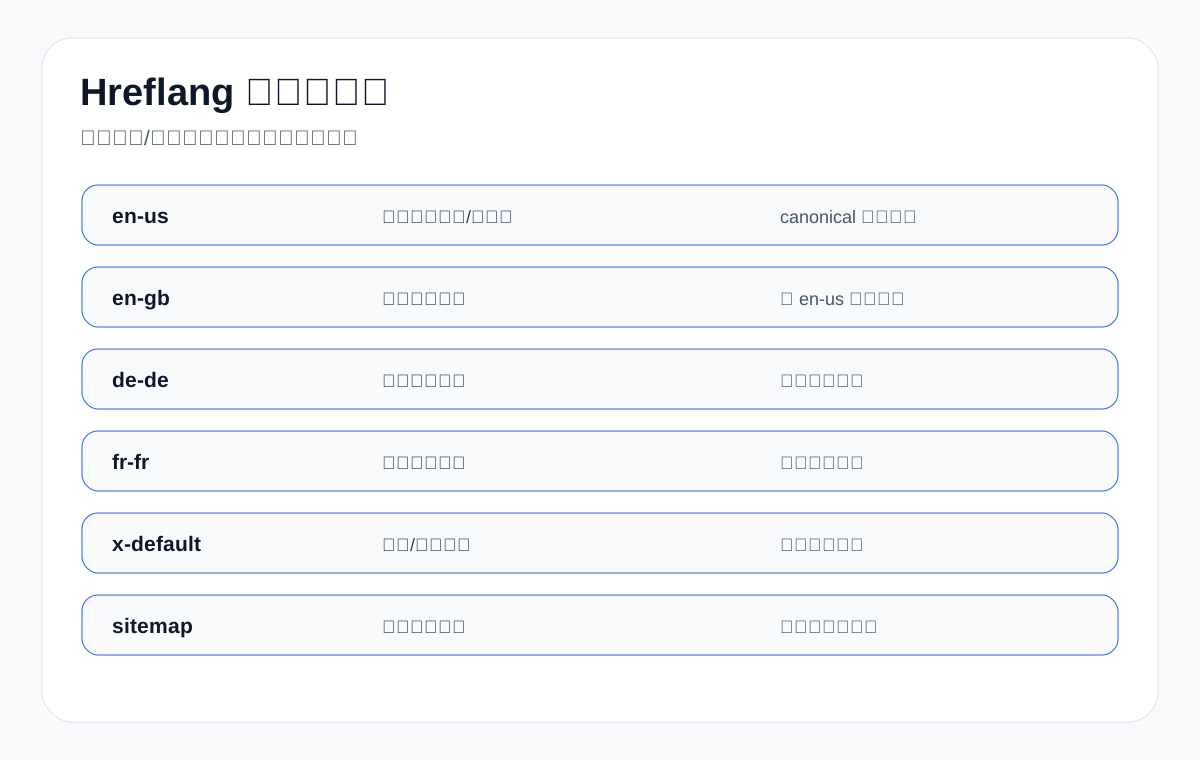
Hreflang basic rules table
| Rule | Correct practice | Incorrect pattern | Consequence |
|---|---|---|---|
| Self-reference | Each version declares itself | Declaring only other languages | Incomplete signals |
| Return links | A points to B and B points to A | One-way declaration | The markup may be ignored |
| Language codes | en-us, de-de, fr-fr | Inconsistent casing such as en-uk, zh-cn | Wrong region matching |
| canonical | Points to its own equivalent page | All point to the English main site | Local pages are hard to index |
| Content equivalence | Localized for the same product/intent | Different products pointing to each other | Confusion for users and search |
| x-default | Default entry or language selector page | Pointing arbitrarily to one market | Poor experience for unmatched users |
Step 1: First understand what problem hreflang solves
Hreflang is not a ranking accelerator but a language and region matching signal. It tells Google that the same content or the same intent has multiple equivalent versions in different languages and regions, and that the right version should be shown to the right user.
If a US buyer searches for LED flood light but sees a German catalog, a German user sees the English main site when searching, or multiple language pages compete for indexation, then hreflang and the international SEO architecture need to be checked.
Applied to products such as custom metal parts, LED flood light, packaging machine, medical probe, cnc machining parts, ceramic dinnerware, waterproof connector, industrial valve supplier, and private label activewear manufacturer, the test is not whether language pages have been generated, but whether the page groups are equivalent, the markup is consistent, the content is localized, and buyers enter the correct market path.
Step 2: Do not treat hreflang as a translation button
Translation plugins can generate language pages, but hreflang requires correct URL groups, return links, self-references, canonical, sitemaps, and content equivalence.
If any one link in the chain is wrong, Google may ignore the markup or even keep only one main version.
Applied to products such as custom metal parts, LED flood light, packaging machine, medical probe, cnc machining parts, ceramic dinnerware, waterproof connector, industrial valve supplier, and private label activewear manufacturer, the test is not whether language pages have been generated, but whether the page groups are equivalent, the markup is consistent, the content is localized, and buyers enter the correct market path.
Step 3: Define the language-region page groups first
Each hreflang group should revolve around the same product, category, application, or question. Pages for different products, different intents, or different stock statuses must not be forced to point to one another.
The US category page for custom metal parts can correspond to the German category page, but it cannot correspond to the German-language page for ceramic dinnerware.
Applied to products such as custom metal parts, LED flood light, packaging machine, medical probe, cnc machining parts, ceramic dinnerware, waterproof connector, industrial valve supplier, and private label activewear manufacturer, the test is not whether language pages have been generated, but whether the page groups are equivalent, the markup is consistent, the content is localized, and buyers enter the correct market path.
Export page hreflang mapping table
| Page type | Can it form an hreflang group | Key requirement | Example |
|---|---|---|---|
| Category page | Yes | Same product family, localized for different markets | LED flood light /en-us/ and /de/ |
| Product page | Yes | Same product or equivalent specifications | waterproof connector M12 |
| Application page | Yes | Same application scenario, localized | packaging machine for frozen food |
| Article page | Yes | Same question expressed in different languages | how to choose cnc machining parts |
| Contact page | Use caution | Consistent country service range | quote/sample request |
| Different product pages | Should not | Do not declare each other | A valve page must not point to a dinnerware page |
Step 4: Language and region codes must be standard
Common codes include en-us, en-gb, de-de, fr-fr, es-es, and es-mx. Do not write non-standard region codes such as en-uk.
Incorrect codes make it hard for search engines to understand the target market and also make diagnosis more complicated.
Applied to products such as custom metal parts, LED flood light, packaging machine, medical probe, cnc machining parts, ceramic dinnerware, waterproof connector, industrial valve supplier, and private label activewear manufacturer, the test is not whether language pages have been generated, but whether the page groups are equivalent, the markup is consistent, the content is localized, and buyers enter the correct market path.
Step 5: Every page must self-reference
A self-referencing hreflang is an important signal of a stable page group. A page must declare not only its other language and region versions but also itself.
For example, /en-us/led-flood-light/ must include an en-us reference pointing to itself while also declaring equivalent pages such as en-gb, de-de, and x-default.
Applied to products such as custom metal parts, LED flood light, packaging machine, medical probe, cnc machining parts, ceramic dinnerware, waterproof connector, industrial valve supplier, and private label activewear manufacturer, the test is not whether language pages have been generated, but whether the page groups are equivalent, the markup is consistent, the content is localized, and buyers enter the correct market path.
Step 6: Reciprocal return links are essential
If page A declares page B, page B must also declare page A. One-way markup often causes hreflang to be rejected.
When a large export site adds a new language directory, the most common problem is that the new pages declare the old pages but the old pages do not declare the new pages in sync.
Applied to products such as custom metal parts, LED flood light, packaging machine, medical probe, cnc machining parts, ceramic dinnerware, waterproof connector, industrial valve supplier, and private label activewear manufacturer, the test is not whether language pages have been generated, but whether the page groups are equivalent, the markup is consistent, the content is localized, and buyers enter the correct market path.
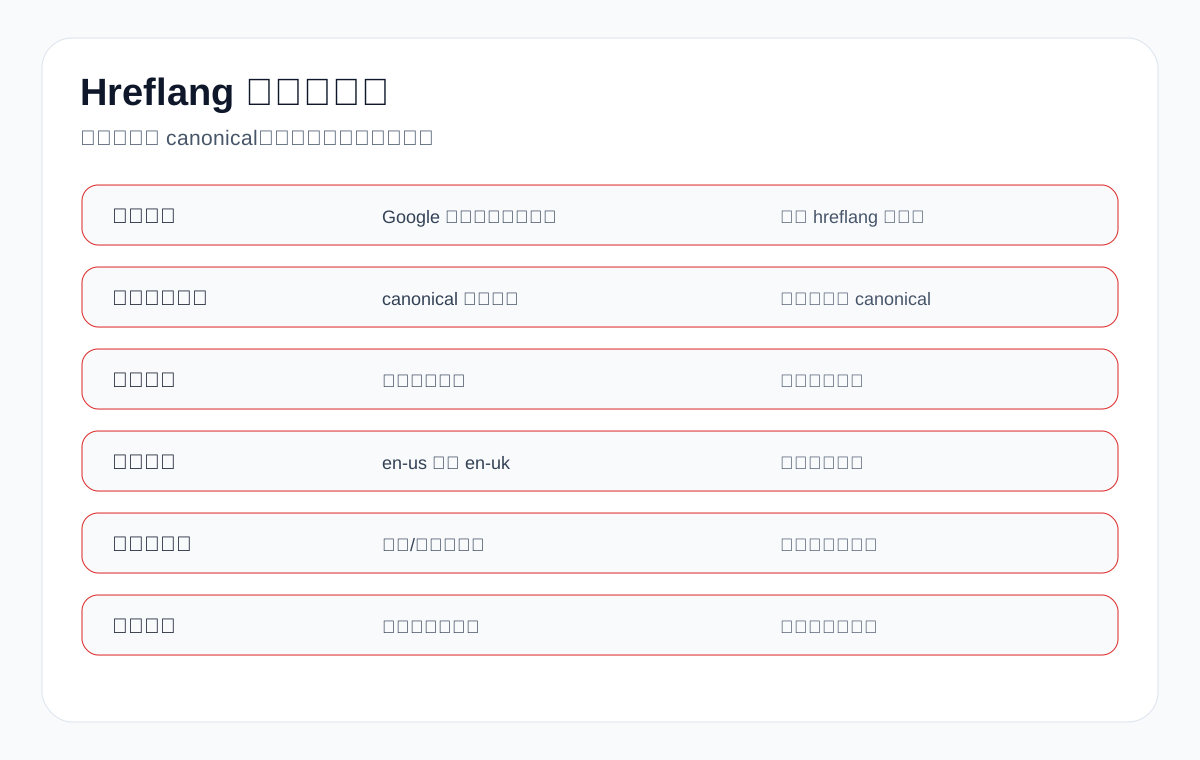
Canonical and hreflang conflict troubleshooting table
| Scenario | Incorrect setting | Correct setting | Checking tool |
|---|---|---|---|
| Local category page | canonical to the global English page | canonical self-reference | Source code/GSC |
| Parameter page | Pointing different filter combinations to each other | Keep only high-value combinations | Crawler |
| Translated page | noindex + hreflang | Only declare hreflang when indexable | GSC coverage |
| Paginated page | All pages canonical to page one | Handle according to the pagination strategy | Crawler |
| Out-of-stock product | Still pointing to sellable pages | Handle as a substitute relationship | GSC + inventory |
| Language selector page | Confusing canonical | Clear x-default | Source code |
Step 7: canonical must work together with hreflang
If all canonical tags on multilingual local pages point to the English main site, that tells Google the local pages are not the main version, and the hreflang signal is weakened.
Each indexable local version should generally be canonical to itself rather than all being canonical to one global page.
Applied to products such as custom metal parts, LED flood light, packaging machine, medical probe, cnc machining parts, ceramic dinnerware, waterproof connector, industrial valve supplier, and private label activewear manufacturer, the test is not whether language pages have been generated, but whether the page groups are equivalent, the markup is consistent, the content is localized, and buyers enter the correct market path.
Step 8: x-default suits the default entry point
x-default can be used for a language selector page, a global entry point, or a default version that cannot be clearly matched to a language region. It is not mandatory, but it helps multi-market sites.
If the site has a global catalog or a language selector page, consider x-default; do not arbitrarily point x-default at a country page.
Applied to products such as custom metal parts, LED flood light, packaging machine, medical probe, cnc machining parts, ceramic dinnerware, waterproof connector, industrial valve supplier, and private label activewear manufacturer, the test is not whether language pages have been generated, but whether the page groups are equivalent, the markup is consistent, the content is localized, and buyers enter the correct market path.
Step 9: Sitemaps can carry hreflang
Hreflang can be placed in the HTML head, an HTTP header, or an XML sitemap. Large sites can manage it more centrally with a sitemap, but it must stay consistent with the actual page URLs, canonical, and status.
Whichever method is used, spot-check it regularly.
Applied to products such as custom metal parts, LED flood light, packaging machine, medical probe, cnc machining parts, ceramic dinnerware, waterproof connector, industrial valve supplier, and private label activewear manufacturer, the test is not whether language pages have been generated, but whether the page groups are equivalent, the markup is consistent, the content is localized, and buyers enter the correct market path.
Export product example diagnosis table
| Product | Market differences | Hreflang risk | Content enhancement |
|---|---|---|---|
| custom metal parts | Different material and tolerance terminology | Different materials in the same product family pointing to each other | Add materials, precision, drawing upload |
| LED flood light | Different certifications, voltages, and installation scenarios | A US page showing EU certifications | Add UL/CE/voltage/height |
| packaging machine | Differences in packaging materials and industries | Application pages pointing to each other incorrectly | Separate by food/pharma/personal care |
| medical probe | Differences in compliance and device compatibility | Non-equivalent products pointing to each other | Add compatible devices and documentation |
| ceramic dinnerware | Differences in channel and packaging | A wholesale page pointing to a retail page | Add MOQ, packaging, samples |
| waterproof connector | Differences in IP rating, cable, and application | Specification pages pointing to each other indiscriminately | Add pin count, cable, environment |
Step 10: Content must be equivalent but can be localized
Equivalence does not mean word-for-word identity. Different markets can adjust currency, units, certifications, logistics, FAQs, and case studies, but the core product and core intent must stay the same.
The US page for LED flood light can discuss UL and 120V, and the German page can discuss CE and EU energy efficiency, but both should serve the same product family.
Applied to products such as custom metal parts, LED flood light, packaging machine, medical probe, cnc machining parts, ceramic dinnerware, waterproof connector, industrial valve supplier, and private label activewear manufacturer, the test is not whether language pages have been generated, but whether the page groups are equivalent, the markup is consistent, the content is localized, and buyers enter the correct market path.
Step 11: Category pages are the most error-prone
Category pages are usually the core of international SEO and are also the most likely to generate duplicate URLs because of filters, pagination, currency, and inventory.
If a waterproof connector category page has language, region, pin count, IP rating, sorting, and currency parameters, control which ones are indexable and which should not take part in hreflang.
Applied to products such as custom metal parts, LED flood light, packaging machine, medical probe, cnc machining parts, ceramic dinnerware, waterproof connector, industrial valve supplier, and private label activewear manufacturer, the test is not whether language pages have been generated, but whether the page groups are equivalent, the markup is consistent, the content is localized, and buyers enter the correct market path.
Step 12: Product pages need attention to specifications and inventory
The same product may differ in specifications, certifications, inventory, and delivery across markets. If the differences are large enough that the pages are not equivalent, do not simply point them to each other.
Compliance, compatible devices, and sterilization information for medical probe require particular caution.
Applied to products such as custom metal parts, LED flood light, packaging machine, medical probe, cnc machining parts, ceramic dinnerware, waterproof connector, industrial valve supplier, and private label activewear manufacturer, the test is not whether language pages have been generated, but whether the page groups are equivalent, the markup is consistent, the content is localized, and buyers enter the correct market path.
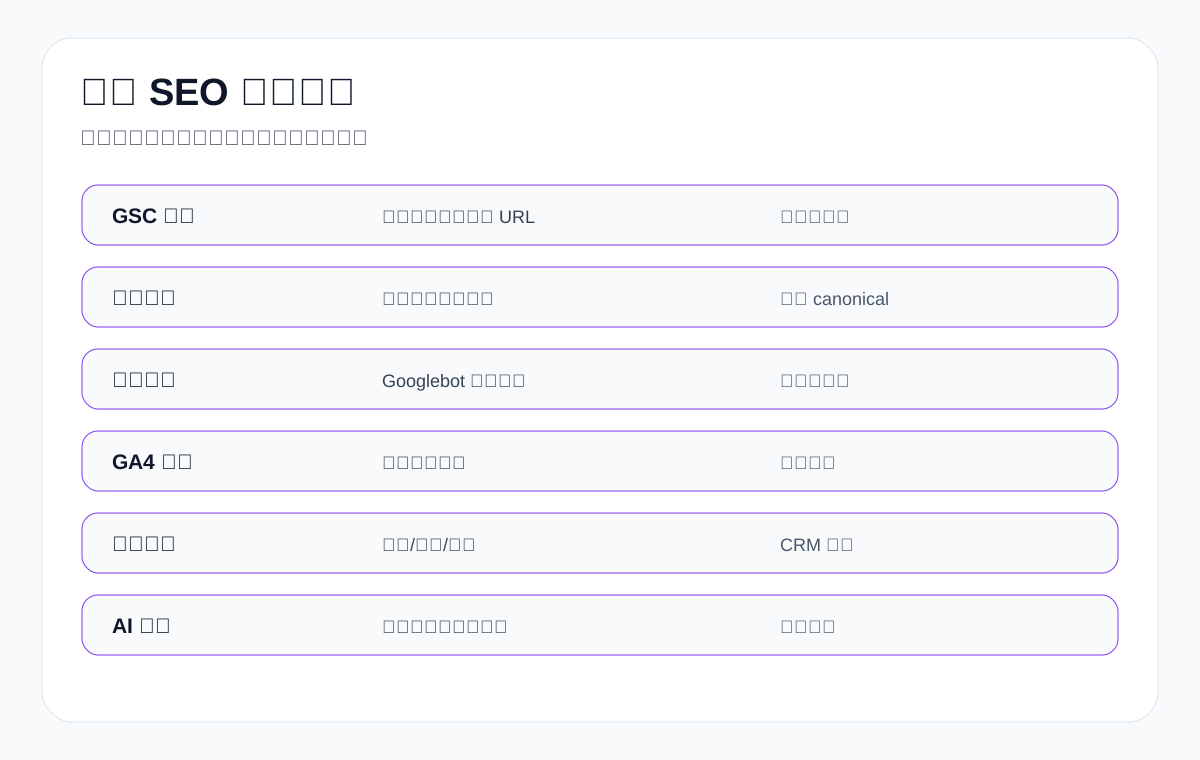
90-day review metrics
| Timeframe | Technical signal | Search signal | Business signal |
|---|---|---|---|
| 7 days | Whether source code and sitemap are updated | Whether GSC discovers the URLs | None |
| 30 days | Whether hreflang errors decrease | Whether country queries match | Whether inquiry countries change |
| 60 days | Whether local pages are indexed consistently | CTR and page matching | Whether paths lead into product pages |
| 90 days | Stable crawl frequency and coverage | Growth in target-market terms | CRM quality and order leads |
| Ongoing | Consistent markup for newly added markets | Whether AI citations are accurate | Whether sales feedback shows fewer misunderstandings |
Step 13: Do not let internal links jump across languages at random
If a user on a German page clicks a related product and lands on an English page, the experience suffers. Google also sees a confusing site relationship through internal links.
Link within the same language and market first, then provide a clear language switch.
Applied to products such as custom metal parts, LED flood light, packaging machine, medical probe, cnc machining parts, ceramic dinnerware, waterproof connector, industrial valve supplier, and private label activewear manufacturer, the test is not whether language pages have been generated, but whether the page groups are equivalent, the markup is consistent, the content is localized, and buyers enter the correct market path.
Step 14: Do not put noindex pages into an hreflang group
If a page is noindex but still takes part in hreflang, the signals conflict. Either make it indexable and add it to the page group, or do not use it as a target version.
Temporary test pages, out-of-stock pages, and low-quality translated pages need particular attention.
Applied to products such as custom metal parts, LED flood light, packaging machine, medical probe, cnc machining parts, ceramic dinnerware, waterproof connector, industrial valve supplier, and private label activewear manufacturer, the test is not whether language pages have been generated, but whether the page groups are equivalent, the markup is consistent, the content is localized, and buyers enter the correct market path.
Step 15: Validate by country with GSC
GSC lets you view performance by country, page, and query. When you find that a country consistently shows the wrong URL, check hreflang, canonical, internal links, and content language.
Do not look only at the site-wide average position.
Applied to products such as custom metal parts, LED flood light, packaging machine, medical probe, cnc machining parts, ceramic dinnerware, waterproof connector, industrial valve supplier, and private label activewear manufacturer, the test is not whether language pages have been generated, but whether the page groups are equivalent, the markup is consistent, the content is localized, and buyers enter the correct market path.
Hreflang basic rules table
| Rule | Correct practice | Incorrect pattern | Consequence |
|---|---|---|---|
| Self-reference | Each version declares itself | Declaring only other languages | Incomplete signals |
| Return links | A points to B and B points to A | One-way declaration | The markup may be ignored |
| Language codes | en-us, de-de, fr-fr | Inconsistent casing such as en-uk, zh-cn | Wrong region matching |
| canonical | Points to its own equivalent page | All point to the English main site | Local pages are hard to index |
| Content equivalence | Localized for the same product/intent | Different products pointing to each other | Confusion for users and search |
| x-default | Default entry or language selector page | Pointing arbitrarily to one market | Poor experience for unmatched users |
Step 16: Check return links with a crawler
Use a crawler or a self-written checker to sample the hreflang, canonical, status codes, language codes, and reciprocal returns in the head.
Focus the sample on core category pages, product pages, application pages, and inquiry pages.
Applied to products such as custom metal parts, LED flood light, packaging machine, medical probe, cnc machining parts, ceramic dinnerware, waterproof connector, industrial valve supplier, and private label activewear manufacturer, the test is not whether language pages have been generated, but whether the page groups are equivalent, the markup is consistent, the content is localized, and buyers enter the correct market path.
Step 17: International SEO must look at inquiry quality
Correct technical markup is only the foundation. Ultimately you have to look at the country, product, quantity, specifications, and sales follow-up quality that organic search brings in.
If the German directory brings a large number of inquiries from non-target countries, there may be a problem with market positioning or the language switch.
Applied to products such as custom metal parts, LED flood light, packaging machine, medical probe, cnc machining parts, ceramic dinnerware, waterproof connector, industrial valve supplier, and private label activewear manufacturer, the test is not whether language pages have been generated, but whether the page groups are equivalent, the markup is consistent, the content is localized, and buyers enter the correct market path.
Step 18: AI search also needs correct regional facts
AI answers may cite or summarize content from the official website. If pages for different countries are confused with one another, AI’s descriptions of the product, market, certifications, and delivery may also be inaccurate.
Clear language-region pages, tables, FAQs, and factual statements help ensure correct understanding.
Applied to products such as custom metal parts, LED flood light, packaging machine, medical probe, cnc machining parts, ceramic dinnerware, waterproof connector, industrial valve supplier, and private label activewear manufacturer, the test is not whether language pages have been generated, but whether the page groups are equivalent, the markup is consistent, the content is localized, and buyers enter the correct market path.
Export page hreflang mapping table
| Page type | Can it form an hreflang group | Key requirement | Example |
|---|---|---|---|
| Category page | Yes | Same product family, localized for different markets | LED flood light /en-us/ and /de/ |
| Product page | Yes | Same product or equivalent specifications | waterproof connector M12 |
| Application page | Yes | Same application scenario, localized | packaging machine for frozen food |
| Article page | Yes | Same question expressed in different languages | how to choose cnc machining parts |
| Contact page | Use caution | Consistent country service range | quote/sample request |
| Different product pages | Should not | Do not declare each other | A valve page must not point to a dinnerware page |
Step 19: Common misconception one: doing hreflang only on the homepage
Homepage cross-links are not enough. The pages that actually bring search value are category pages, product pages, application pages, and article pages.
Every core business page should have a corresponding strategy.
Applied to products such as custom metal parts, LED flood light, packaging machine, medical probe, cnc machining parts, ceramic dinnerware, waterproof connector, industrial valve supplier, and private label activewear manufacturer, the test is not whether language pages have been generated, but whether the page groups are equivalent, the markup is consistent, the content is localized, and buyers enter the correct market path.
Step 20: Common misconception two: mistaking canonical for a consolidation tool
Multilingual pages should not all be canonical to the English main site. Doing so may push local pages out of the index.
If a page is worth serving a local market, make it an indexable, independent version.
Applied to products such as custom metal parts, LED flood light, packaging machine, medical probe, cnc machining parts, ceramic dinnerware, waterproof connector, industrial valve supplier, and private label activewear manufacturer, the test is not whether language pages have been generated, but whether the page groups are equivalent, the markup is consistent, the content is localized, and buyers enter the correct market path.
Hreflang international SEO checklist
- List all language/region directories and target countries
- Build page groups for core category pages, product pages, and application pages
- Check that every page returns HTTP 200 and is indexable
- Check whether canonical is self-referencing
- Check whether hreflang includes a self-reference
- Check whether the pages in each group return links to one another
- Check whether the language-region codes are standard
- Confirm that x-default points to a suitable default entry
- Avoid putting noindex pages into an hreflang group
- Check whether the sitemap is in sync with the language versions
- Use GSC to observe wrong-page impressions by country and URL
- Use GA4 and CRM to judge target-market inquiry quality
Hreflang basic rules table
| Rule | Correct practice | Incorrect pattern | Consequence |
|---|---|---|---|
| Self-reference | Each version declares itself | Declaring only other languages | Incomplete signals |
| Return links | A points to B and B points to A | One-way declaration | The markup may be ignored |
| Language codes | en-us, de-de, fr-fr | Inconsistent casing such as en-uk, zh-cn | Wrong region matching |
| canonical | Points to its own equivalent page | All point to the English main site | Local pages are hard to index |
| Content equivalence | Localized for the same product/intent | Different products pointing to each other | Confusion for users and search |
| x-default | Default entry or language selector page | Pointing arbitrarily to one market | Poor experience for unmatched users |
Export page hreflang mapping table
| Page type | Can it form an hreflang group | Key requirement | Example |
|---|---|---|---|
| Category page | Yes | Same product family, localized for different markets | LED flood light /en-us/ and /de/ |
| Product page | Yes | Same product or equivalent specifications | waterproof connector M12 |
| Application page | Yes | Same application scenario, localized | packaging machine for frozen food |
| Article page | Yes | Same question expressed in different languages | how to choose cnc machining parts |
| Contact page | Use caution | Consistent country service range | quote/sample request |
| Different product pages | Should not | Do not declare each other | A valve page must not point to a dinnerware page |
Canonical and hreflang conflict troubleshooting table
| Scenario | Incorrect setting | Correct setting | Checking tool |
|---|---|---|---|
| Local category page | canonical to the global English page | canonical self-reference | Source code/GSC |
| Parameter page | Pointing different filter combinations to each other | Keep only high-value combinations | Crawler |
| Translated page | noindex + hreflang | Only declare hreflang when indexable | GSC coverage |
| Paginated page | All pages canonical to page one | Handle according to the pagination strategy | Crawler |
| Out-of-stock product | Still pointing to sellable pages | Handle as a substitute relationship | GSC + inventory |
| Language selector page | Confusing canonical | Clear x-default | Source code |
Export product example diagnosis table
| Product | Market differences | Hreflang risk | Content enhancement |
|---|---|---|---|
| custom metal parts | Different material and tolerance terminology | Different materials in the same product family pointing to each other | Add materials, precision, drawing upload |
| LED flood light | Different certifications, voltages, and installation scenarios | A US page showing EU certifications | Add UL/CE/voltage/height |
| packaging machine | Differences in packaging materials and industries | Application pages pointing to each other incorrectly | Separate by food/pharma/personal care |
| medical probe | Differences in compliance and device compatibility | Non-equivalent products pointing to each other | Add compatible devices and documentation |
| ceramic dinnerware | Differences in channel and packaging | A wholesale page pointing to a retail page | Add MOQ, packaging, samples |
| waterproof connector | Differences in IP rating, cable, and application | Specification pages pointing to each other indiscriminately | Add pin count, cable, environment |
90-day review metrics
| Timeframe | Technical signal | Search signal | Business signal |
|---|---|---|---|
| 7 days | Whether source code and sitemap are updated | Whether GSC discovers the URLs | None |
| 30 days | Whether hreflang errors decrease | Whether country queries match | Whether inquiry countries change |
| 60 days | Whether local pages are indexed consistently | CTR and page matching | Whether paths lead into product pages |
| 90 days | Stable crawl frequency and coverage | Growth in target-market terms | CRM quality and order leads |
| Ongoing | Consistent markup for newly added markets | Whether AI citations are accurate | Whether sales feedback shows fewer misunderstandings |
Supplement: How an export team should collaborate when troubleshooting hreflang
Hreflang troubleshooting cannot be left to technical staff alone. Export sales must confirm whether the different country markets really serve the same product and the same purchasing intent; product engineering must confirm whether specifications, certifications, materials, and compatible equipment are equivalent; operations staff must check GSC country impressions, index coverage, and GA4 paths; the content lead must check whether the local-language pages answer local buyers’ questions; and management must decide which markets deserve dedicated pages and which markets should temporarily use the global English page.
For example, if the German page for custom metal parts emphasizes DIN standards and precision tolerances while the US page emphasizes aerospace tolerance and drawing upload, they can still belong to the same product family; but if one page covers CNC machining parts and another covers sheet metal enclosure, they should not simply point to each other. The same goes for products such as LED flood light, packaging machine, medical probe, waterproof connector, and industrial valve supplier: first judge whether the pages are equivalent, then judge whether the markup is correct, and only then look at search performance and inquiry quality.
FAQ: Common questions about hreflang and international SEO
Does hreflang directly improve rankings?
No. It mainly helps language and region versions match the right users. Page quality, content, links, experience, and competition still affect rankings.
Do multilingual pages always need hreflang?
If there are multiple language or region versions, it is recommended. Otherwise Google may show the wrong version, especially between English-speaking countries or among multi-region pages.
What should I do when hreflang and canonical conflict?
First make sure each local version is canonical to itself, then set up hreflang cross-references. Do not set all language pages to canonical the English main site.
Is it okay to declare hreflang only in the sitemap?
Yes, but make sure the sitemap stays in sync with page status, canonical, URLs, and language versions. Large sites are better suited to centralized management, while small sites can also use the HTML head.
Is x-default mandatory?
It is not mandatory, but for multi-country sites it is usually recommended to set x-default on the language selector page or the global default page.
Can machine-translated pages join an hreflang group?
Technically yes, but low-quality translation hurts user experience and page quality. For priority markets, the search terms, parameters, certifications, FAQs, and inquiry wording should be localized by a human.
Should out-of-stock product pages still keep hreflang?
It depends on whether the page can still serve users. If a local version is unavailable for sale for a long time or has no substitute, it may no longer belong in the page group as an equivalent page.
How do I tell whether hreflang is working?
Look at the source code/sitemap, reciprocal returns, canonical, GSC country impressions, index coverage, and whether actual search results show the correct regional version.
Conclusion: Hreflang is a matching rule for international SEO, not a shortcut that replaces content quality
The purpose of doing hreflang well is to let export product pages such as custom metal parts, LED flood light, packaging machine, medical probe, cnc machining parts, ceramic dinnerware, waterproof connector, industrial valve supplier, and private label activewear manufacturer be understood, displayed, and inquired about in the right country and language. It needs to be reviewed alongside URL architecture, canonical, category page localization, product materials, sitemaps, internal links, GSC, GA4, CRM, and AI citations. Correct markup is only the baseline; what truly matters is getting buyers in the target market onto the right page so they can make a decision.
Official sources and the acceptance boundary for hreflang international SEO
The goal of hreflang is to help search systems understand language and region versions, not to make a page automatically earn cross-border visibility. When validating, look at markup, canonical, sitemap, accessibility, and the GSC country dimension together.
| Official source | What it is used to judge | Acceptance boundary |
|---|---|---|
| Google: Localized versions | Verify language-region versions, return links, and x-default | Correct markup does not mean every region will show it |
| Google: Consolidate duplicate URLs | Confirm the canonicalization relationship among multilingual pages | A canonical error weakens hreflang intent |
| Google: Sitemaps overview | Check whether language versions are submitted and discovered | A sitemap cannot replace page quality |
| Search Console Performance report | Observe language page performance by country and page | During low-data periods, record only the baseline |
| Google: SEO Starter Guide | Confirm the fundamentals of page titles, body content, and links | Language versions cannot rely on machine word replacement alone |
Low-data-period review table
| Check item | Fields to record | How to write it during a low-data period |
|---|---|---|
| Indexation entry points | index/follow, canonical, sitemap, internal links, HTTP status code | Record only the current accessible state; do not write search-result judgments |
| Content evidence | Page role, product or service materials, images, structured data, update date | When materials are insufficient, list the gaps; do not add invented case studies |
| Search Console | query, page, country, device, date window | If GSC shows zero rows, write zero rows; do not extrapolate rankings or clicks |
| GA4 review | Forms, downloads, email clicks, inquiry entry points, key events | If there are no events, fix tracking first; do not write conversion conclusions |
Continue reading this SEO series
If you are systematically working through export website SEO, we suggest continuing with the articles below. First clarify how crawling, indexing, content, links, and reviews relate to one another, then decide which page to change next.
- How to do mobile SEO: a guide to mobile-first indexing, speed, content consistency, and inquiry paths
- How to use Google Search Console: which data to look at first for export website SEO diagnosis
- The Google crawling, indexing, and ranking process: a diagnosis guide for export websites from indexation to inquiries
- How search engines work: a guide to crawling, indexing, ranking, and export website diagnosis
- Technical SEO audit checklist: a diagnosis guide for export website crawling, indexing, structure, and inquiry paths
- Sitemap technical guide: sitemap submission, indexation diagnosis, and troubleshooting common errors
{
“@context”: “https://schema.org”,
“@type”: “FAQPage”,
“mainEntity”: [
{
“@type”: “Question”,
“name”: “Hreflang basic rules tableRuleCorrect practiceIncorrect patternConsequenceSelf-referenceEach version declares itselfDeclaring only other languagesIncomplete signalsReturn linksA points to B and B points to AOne-way declarationThe markup may be ignoredLanguage codesen-us, de-de, fr-frInconsistent casing such as en-uk, zh-cnWrong region matchingcanonicalPoints to its own equivalent pageAll point to the English main siteLocal pages are hard to indexContent equivalenceLocalized for the same product/intentDifferent products pointing to each otherConfusion for users and searchx-defaultDefault entry or language selector pagePointing arbitrarily to one marketPoor experience for unmatched usersnStep 1: First understand what problem hreflang solvesHreflang is not a ranking accelerator but a language and region matching signal. It tells Google that the same content or the same intent has multiple equivalent versions in different languages and regions, and that the right version should be shown to the right user.If a US buyer searches for LED flood light but sees a German catalog, a German user sees the English main site when searching, or multiple language pages compete for indexation, then hreflang and the international SEO architecture need to be checked.nApplied to products such as custom metal parts, LED flood light, packaging machine, medical probe, cnc machining parts, ceramic dinnerware, waterproof connector, industrial valve supplier, and private label activewear manufacturer, the test is not whether language pages have been generated, but whether the page groups are equivalent, the markup is consistent, the content is localized, and buyers enter the correct market path.nStep 2: Do not treat hreflang as a translation buttonTranslation plugins can generate language pages, but hreflang requires correct URL groups, return links, self-references, canonical, sitemaps, and content equivalence.If any one link in the chain is wrong, Google may ignore the markup or even keep only one main version.nApplied to products such as custom metal parts, LED flood light, packaging machine, medical probe, cnc machining parts, ceramic dinnerware, waterproof connector, industrial valve supplier, and private label activewear manufacturer, the test is not whether language pages have been generated, but whether the page groups are equivalent, the markup is consistent, the content is localized, and buyers enter the correct market path.nStep 3: Define the language-region page groups firstEach hreflang group should revolve around the same product, category, application, or question. Pages for different products, different intents, or different stock statuses must not be forced to point to one another.The US category page for custom metal parts can correspond to the German category page, but it cannot correspond to the German-language page for ceramic dinnerware.nApplied to products such as custom metal parts, LED flood light, packaging machine, medical probe, cnc machining parts, ceramic dinnerware, waterproof connector, industrial valve supplier, and private label activewear manufacturer, the test is not whether language pages have been generated, but whether the page groups are equivalent, the markup is consistent, the content is localized, and buyers enter the correct market path.nExport page hreflang mapping tablePage typeCan it form an hreflang groupKey requirementExampleCategory pageYesSame product family, localized for different marketsLED flood light /en-us/ and /de/Product pageYesSame product or equivalent specificationswaterproof connector M12Application pageYesSame application scenario, localizedpackaging machine for frozen foodArticle pageYesSame question expressed in different languageshow to choose cnc machining partsContact pageUse cautionConsistent country service rangequote/sample requestDifferent product pagesShould notDo not declare each otherA valve page must not point to a dinnerware pagenStep 4: Language and region codes must be standardCommon codes include en-us, en-gb, de-de, fr-fr, es-es, and es-mx. Do not write non-standard region codes such as en-uk.Incorrect codes make it hard for search engines to understand the target market and also make diagnosis more complicated.nApplied to products such as custom metal parts, LED flood light, packaging machine, medical probe, cnc machining parts, ceramic dinnerware, waterproof connector, industrial valve supplier, and private label activewear manufacturer, the test is not whether language pages have been generated, but whether the page groups are equivalent, the markup is consistent, the content is localized, and buyers enter the correct market path.nStep 5: Every page must self-referenceA self-referencing hreflang is an important signal of a stable page group. A page must declare not only its other language and region versions but also itself.For example, /en-us/led-flood-light/ must include an en-us reference pointing to itself while also declaring equivalent pages such as en-gb, de-de, and x-default.nApplied to products such as custom metal parts, LED flood light, packaging machine, medical probe, cnc machining parts, ceramic dinnerware, waterproof connector, industrial valve supplier, and private label activewear manufacturer, the test is not whether language pages have been generated, but whether the page groups are equivalent, the markup is consistent, the content is localized, and buyers enter the correct market path.nStep 6: Reciprocal return links are essentialIf page A declares page B, page B must also declare page A. One-way markup often causes hreflang to be rejected.When a large export site adds a new language directory, the most common problem is that the new pages declare the old pages but the old pages do not declare the new pages in sync.nApplied to products such as custom metal parts, LED flood light, packaging machine, medical probe, cnc machining parts, ceramic dinnerware, waterproof connector, industrial valve supplier, and private label activewear manufacturer, the test is not whether language pages have been generated, but whether the page groups are equivalent, the markup is consistent, the content is localized, and buyers enter the correct market path.nCanonical and hreflang conflict troubleshooting tableScenarioIncorrect settingCorrect settingChecking toolLocal category pagecanonical to the global English pagecanonical self-referenceSource code/GSCParameter pagePointing different filter combinations to each otherKeep only high-value combinationsCrawlerTranslated pagenoindex + hreflangOnly declare hreflang when indexableGSC coveragePaginated pageAll pages canonical to page oneHandle according to the pagination strategyCrawlerOut-of-stock productStill pointing to sellable pagesHandle as a substitute relationshipGSC + inventoryLanguage selector pageConfusing canonicalClear x-defaultSource codenStep 7: canonical must work together with hreflangIf all canonical tags on multilingual local pages point to the English main site, that tells Google the local pages are not the main version, and the hreflang signal is weakened.Each indexable local version should generally be canonical to itself rather than all being canonical to one global page.nApplied to products such as custom metal parts, LED flood light, packaging machine, medical probe, cnc machining parts, ceramic dinnerware, waterproof connector, industrial valve supplier, and private label activewear manufacturer, the test is not whether language pages have been generated, but whether the page groups are equivalent, the markup is consistent, the content is localized, and buyers enter the correct market path.nStep 8: x-default suits the default entry pointx-default can be used for a language selector page, a global entry point, or a default version that cannot be clearly matched to a language region. It is not mandatory, but it helps multi-market sites.If the site has a global catalog or a language selector page, consider x-default; do not arbitrarily point x-default at a country page.nApplied to products such as custom metal parts, LED flood light, packaging machine, medical probe, cnc machining parts, ceramic dinnerware, waterproof connector, industrial valve supplier, and private label activewear manufacturer, the test is not whether language pages have been generated, but whether the page groups are equivalent, the markup is consistent, the content is localized, and buyers enter the correct market path.nStep 9: Sitemaps can carry hreflangHreflang can be placed in the HTML head, an HTTP header, or an XML sitemap. Large sites can manage it more centrally with a sitemap, but it must stay consistent with the actual page URLs, canonical, and status.Whichever method is used, spot-check it regularly.nApplied to products such as custom metal parts, LED flood light, packaging machine, medical probe, cnc machining parts, ceramic dinnerware, waterproof connector, industrial valve supplier, and private label activewear manufacturer, the test is not whether language pages have been generated, but whether the page groups are equivalent, the markup is consistent, the content is localized, and buyers enter the correct market path.nExport product example diagnosis tableProductMarket differencesHreflang riskContent enhancementcustom metal partsDifferent material and tolerance terminologyDifferent materials in the same product family pointing to each otherAdd materials, precision, drawing uploadLED flood lightDifferent certifications, voltages, and installation scenariosA US page showing EU certificationsAdd UL/CE/voltage/heightpackaging machineDifferences in packaging materials and industriesApplication pages pointing to each other incorrectlySeparate by food/pharma/personal caremedical probeDifferences in compliance and device compatibilityNon-equivalent products pointing to each otherAdd compatible devices and documentationceramic dinnerwareDifferences in channel and packagingA wholesale page pointing to a retail pageAdd MOQ, packaging, sampleswaterproof connectorDifferences in IP rating, cable, and applicationSpecification pages pointing to each other indiscriminatelyAdd pin count, cable, environmentnStep 10: Content must be equivalent but can be localizedEquivalence does not mean word-for-word identity. Different markets can adjust currency, units, certifications, logistics, FAQs, and case studies, but the core product and core intent must stay the same.The US page for LED flood light can discuss UL and 120V, and the German page can discuss CE and EU energy efficiency, but both should serve the same product family.nApplied to products such as custom metal parts, LED flood light, packaging machine, medical probe, cnc machining parts, ceramic dinnerware, waterproof connector, industrial valve supplier, and private label activewear manufacturer, the test is not whether language pages have been generated, but whether the page groups are equivalent, the markup is consistent, the content is localized, and buyers enter the correct market path.nStep 11: Category pages are the most error-proneCategory pages are usually the core of international SEO and are also the most likely to generate duplicate URLs because of filters, pagination, currency, and inventory.If a waterproof connector category page has language, region, pin count, IP rating, sorting, and currency parameters, control which ones are indexable and which should not take part in hreflang.nApplied to products such as custom metal parts, LED flood light, packaging machine, medical probe, cnc machining parts, ceramic dinnerware, waterproof connector, industrial valve supplier, and private label activewear manufacturer, the test is not whether language pages have been generated, but whether the page groups are equivalent, the markup is consistent, the content is localized, and buyers enter the correct market path.nStep 12: Product pages need attention to specifications and inventoryThe same product may differ in specifications, certifications, inventory, and delivery across markets. If the differences are large enough that the pages are not equivalent, do not simply point them to each other.Compliance, compatible devices, and sterilization information for medical probe require particular caution.nApplied to products such as custom metal parts, LED flood light, packaging machine, medical probe, cnc machining parts, ceramic dinnerware, waterproof connector, industrial valve supplier, and private label activewear manufacturer, the test is not whether language pages have been generated, but whether the page groups are equivalent, the markup is consistent, the content is localized, and buyers enter the correct market path.n90-day review metricsTimeframeTechnical signalSearch signalBusiness signal7 daysWhether source code and sitemap are updatedWhether GSC discovers the URLsNone30 daysWhether hreflang errors decreaseWhether country queries matchWhether inquiry countries change60 daysWhether local pages are indexed consistentlyCTR and page matchingWhether paths lead into product pages90 daysStable crawl frequency and coverageGrowth in target-market termsCRM quality and order leadsOngoingConsistent markup for newly added marketsWhether AI citations are accurateWhether sales feedback shows fewer misunderstandingsnStep 13: Do not let internal links jump across languages at randomIf a user on a German page clicks a related product and lands on an English page, the experience suffers. Google also sees a confusing site relationship through internal links.Link within the same language and market first, then provide a clear language switch.nApplied to products such as custom metal parts, LED flood light, packaging machine, medical probe, cnc machining parts, ceramic dinnerware, waterproof connector, industrial valve supplier, and private label activewear manufacturer, the test is not whether language pages have been generated, but whether the page groups are equivalent, the markup is consistent, the content is localized, and buyers enter the correct market path.nStep 14: Do not put noindex pages into an hreflang groupIf a page is noindex but still takes part in hreflang, the signals conflict. Either make it indexable and add it to the page group, or do not use it as a target version.Temporary test pages, out-of-stock pages, and low-quality translated pages need particular attention.nApplied to products such as custom metal parts, LED flood light, packaging machine, medical probe, cnc machining parts, ceramic dinnerware, waterproof connector, industrial valve supplier, and private label activewear manufacturer, the test is not whether language pages have been generated, but whether the page groups are equivalent, the markup is consistent, the content is localized, and buyers enter the correct market path.nStep 15: Validate by country with GSCGSC lets you view performance by country, page, and query. When you find that a country consistently shows the wrong URL, check hreflang, canonical, internal links, and content language.Do not look only at the site-wide average position.nApplied to products such as custom metal parts, LED flood light, packaging machine, medical probe, cnc machining parts, ceramic dinnerware, waterproof connector, industrial valve supplier, and private label activewear manufacturer, the test is not whether language pages have been generated, but whether the page groups are equivalent, the markup is consistent, the content is localized, and buyers enter the correct market path.nHreflang basic rules tableRuleCorrect practiceIncorrect patternConsequenceSelf-referenceEach version declares itselfDeclaring only other languagesIncomplete signalsReturn linksA points to B and B points to AOne-way declarationThe markup may be ignoredLanguage codesen-us, de-de, fr-frInconsistent casing such as en-uk, zh-cnWrong region matchingcanonicalPoints to its own equivalent pageAll point to the English main siteLocal pages are hard to indexContent equivalenceLocalized for the same product/intentDifferent products pointing to each otherConfusion for users and searchx-defaultDefault entry or language selector pagePointing arbitrarily to one marketPoor experience for unmatched usersnStep 16: Check return links with a crawlerUse a crawler or a self-written checker to sample the hreflang, canonical, status codes, language codes, and reciprocal returns in the head.Focus the sample on core category pages, product pages, application pages, and inquiry pages.nApplied to products such as custom metal parts, LED flood light, packaging machine, medical probe, cnc machining parts, ceramic dinnerware, waterproof connector, industrial valve supplier, and private label activewear manufacturer, the test is not whether language pages have been generated, but whether the page groups are equivalent, the markup is consistent, the content is localized, and buyers enter the correct market path.nStep 17: International SEO must look at inquiry qualityCorrect technical markup is only the foundation. Ultimately you have to look at the country, product, quantity, specifications, and sales follow-up quality that organic search brings in.If the German directory brings a large number of inquiries from non-target countries, there may be a problem with market positioning or the language switch.nApplied to products such as custom metal parts, LED flood light, packaging machine, medical probe, cnc machining parts, ceramic dinnerware, waterproof connector, industrial valve supplier, and private label activewear manufacturer, the test is not whether language pages have been generated, but whether the page groups are equivalent, the markup is consistent, the content is localized, and buyers enter the correct market path.nStep 18: AI search also needs correct regional factsAI answers may cite or summarize content from the official website. If pages for different countries are confused with one another, AI’s descriptions of the product, market, certifications, and delivery may also be inaccurate.Clear language-region pages, tables, FAQs, and factual statements help ensure correct understanding.nApplied to products such as custom metal parts, LED flood light, packaging machine, medical probe, cnc machining parts, ceramic dinnerware, waterproof connector, industrial valve supplier, and private label activewear manufacturer, the test is not whether language pages have been generated, but whether the page groups are equivalent, the markup is consistent, the content is localized, and buyers enter the correct market path.nExport page hreflang mapping tablePage typeCan it form an hreflang groupKey requirementExampleCategory pageYesSame product family, localized for different marketsLED flood light /en-us/ and /de/Product pageYesSame product or equivalent specificationswaterproof connector M12Application pageYesSame application scenario, localizedpackaging machine for frozen foodArticle pageYesSame question expressed in different languageshow to choose cnc machining partsContact pageUse cautionConsistent country service rangequote/sample requestDifferent product pagesShould notDo not declare each otherA valve page must not point to a dinnerware pagenStep 19: Common misconception one: doing hreflang only on the homepageHomepage cross-links are not enough. The pages that actually bring search value are category pages, product pages, application pages, and article pages.Every core business page should have a corresponding strategy.nApplied to products such as custom metal parts, LED flood light, packaging machine, medical probe, cnc machining parts, ceramic dinnerware, waterproof connector, industrial valve supplier, and private label activewear manufacturer, the test is not whether language pages have been generated, but whether the page groups are equivalent, the markup is consistent, the content is localized, and buyers enter the correct market path.nStep 20: Common misconception two: mistaking canonical for a consolidation toolMultilingual pages should not all be canonical to the English main site. Doing so may push local pages out of the index.If a page is worth serving a local market, make it an indexable, independent version.nApplied to products such as custom metal parts, LED flood light, packaging machine, medical probe, cnc machining parts, ceramic dinnerware, waterproof connector, industrial valve supplier, and private label activewear manufacturer, the test is not whether language pages have been generated, but whether the page groups are equivalent, the markup is consistent, the content is localized, and buyers enter the correct market path.nHreflang international SEO checklistnList all language/region directories and target countriesBuild page groups for core category pages, product pages, and application pagesCheck that every page returns HTTP 200 and is indexableCheck whether canonical is self-referencingCheck whether hreflang includes a self-referenceCheck whether the pages in each group return links to one anotherCheck whether the language-region codes are standardConfirm that x-default points to a suitable default entryAvoid putting noindex pages into an hreflang groupCheck whether the sitemap is in sync with the language versionsUse GSC to observe wrong-page impressions by country and URLUse GA4 and CRM to judge target-market inquiry qualitynHreflang basic rules tableRuleCorrect practiceIncorrect patternConsequenceSelf-referenceEach version declares itselfDeclaring only other languagesIncomplete signalsReturn linksA points to B and B points to AOne-way declarationThe markup may be ignoredLanguage codesen-us, de-de, fr-frInconsistent casing such as en-uk, zh-cnWrong region matchingcanonicalPoints to its own equivalent pageAll point to the English main siteLocal pages are hard to indexContent equivalenceLocalized for the same product/intentDifferent products pointing to each otherConfusion for users and searchx-defaultDefault entry or language selector pagePointing arbitrarily to one marketPoor experience for unmatched usersnExport page hreflang mapping tablePage typeCan it form an hreflang groupKey requirementExampleCategory pageYesSame product family, localized for different marketsLED flood light /en-us/ and /de/Product pageYesSame product or equivalent specificationswaterproof connector M12Application pageYesSame application scenario, localizedpackaging machine for frozen foodArticle pageYesSame question expressed in different languageshow to choose cnc machining partsContact pageUse cautionConsistent country service rangequote/sample requestDifferent product pagesShould notDo not declare each otherA valve page must not point to a dinnerware pagenCanonical and hreflang conflict troubleshooting tableScenarioIncorrect settingCorrect settingChecking toolLocal category pagecanonical to the global English pagecanonical self-referenceSource code/GSCParameter pagePointing different filter combinations to each otherKeep only high-value combinationsCrawlerTranslated pagenoindex + hreflangOnly declare hreflang when indexableGSC coveragePaginated pageAll pages canonical to page oneHandle according to the pagination strategyCrawlerOut-of-stock productStill pointing to sellable pagesHandle as a substitute relationshipGSC + inventoryLanguage selector pageConfusing canonicalClear x-defaultSource codenExport product example diagnosis tableProductMarket differencesHreflang riskContent enhancementcustom metal partsDifferent material and tolerance terminologyDifferent materials in the same product family pointing to each otherAdd materials, precision, drawing uploadLED flood lightDifferent certifications, voltages, and installation scenariosA US page showing EU certificationsAdd UL/CE/voltage/heightpackaging machineDifferences in packaging materials and industriesApplication pages pointing to each other incorrectlySeparate by food/pharma/personal caremedical probeDifferences in compliance and device compatibilityNon-equivalent products pointing to each otherAdd compatible devices and documentationceramic dinnerwareDifferences in channel and packagingA wholesale page pointing to a retail pageAdd MOQ, packaging, sampleswaterproof connectorDifferences in IP rating, cable, and applicationSpecification pages pointing to each other indiscriminatelyAdd pin count, cable, environmentn90-day review metricsTimeframeTechnical signalSearch signalBusiness signal7 daysWhether source code and sitemap are updatedWhether GSC discovers the URLsNone30 daysWhether hreflang errors decreaseWhether country queries matchWhether inquiry countries change60 daysWhether local pages are indexed consistentlyCTR and page matchingWhether paths lead into product pages90 daysStable crawl frequency and coverageGrowth in target-market termsCRM quality and order leadsOngoingConsistent markup for newly added marketsWhether AI citations are accurateWhether sales feedback shows fewer misunderstandingsnnSupplement: How an export team should collaborate when troubleshooting hreflangnHreflang troubleshooting cannot be left to technical staff alone. Export sales must confirm whether the different country markets really serve the same product and the same purchasing intent; product engineering must confirm whether specifications, certifications, materials, and compatible equipment are equivalent; operations staff must check GSC country impressions, index coverage, and GA4 paths; the content lead must check whether the local-language pages answer local buyers’ questions; and management must decide which markets deserve dedicated pages and which markets should temporarily use the global English page.nFor example, if the German page for custom metal parts emphasizes DIN standards and precision tolerances while the US page emphasizes aerospace tolerance and drawing upload, they can still belong to the same product family; but if one page covers CNC machining parts and another covers sheet metal enclosure, they should not simply point to each other. The same goes for products such as LED flood light, packaging machine, medical probe, waterproof connector, and industrial valve supplier: first judge whether the pages are equivalent, then judge whether the markup is correct, and only then look at search performance and inquiry quality.nFAQ: Common questions about hreflang and international SEOnDoes hreflang directly improve rankings?”,
“acceptedAnswer”: {
“@type”: “Answer”,
“text”: “No. It mainly helps language and region versions match the right users. Page quality, content, links, experience, and competition still affect rankings.”
}
},
{
“@type”: “Question”,
“name”: “Do multilingual pages always need hreflang?”,
“acceptedAnswer”: {
“@type”: “Answer”,
“text”: “If there are multiple language or region versions, it is recommended. Otherwise Google may show the wrong version, especially between English-speaking countries or among multi-region pages.”
}
},
{
“@type”: “Question”,
“name”: “What should I do when hreflang and canonical conflict?”,
“acceptedAnswer”: {
“@type”: “Answer”,
“text”: “First make sure each local version is canonical to itself, then set up hreflang cross-references. Do not set all language pages to canonical the English main site.”
}
},
{
“@type”: “Question”,
“name”: “Is it okay to declare hreflang only in the sitemap?”,
“acceptedAnswer”: {
“@type”: “Answer”,
“text”: “Yes, but make sure the sitemap stays in sync with page status, canonical, URLs, and language versions. Large sites are better suited to centralized management, while small sites can also use the HTML head.”
}
},
{
“@type”: “Question”,
“name”: “Is x-default mandatory?”,
“acceptedAnswer”: {
“@type”: “Answer”,
“text”: “It is not mandatory, but for multi-country sites it is usually recommended to set x-default on the language selector page or the global default page.”
}
}
]
}
This page is machine-translated from the Simplified Chinese version and awaiting human review. It has not yet been proofread.