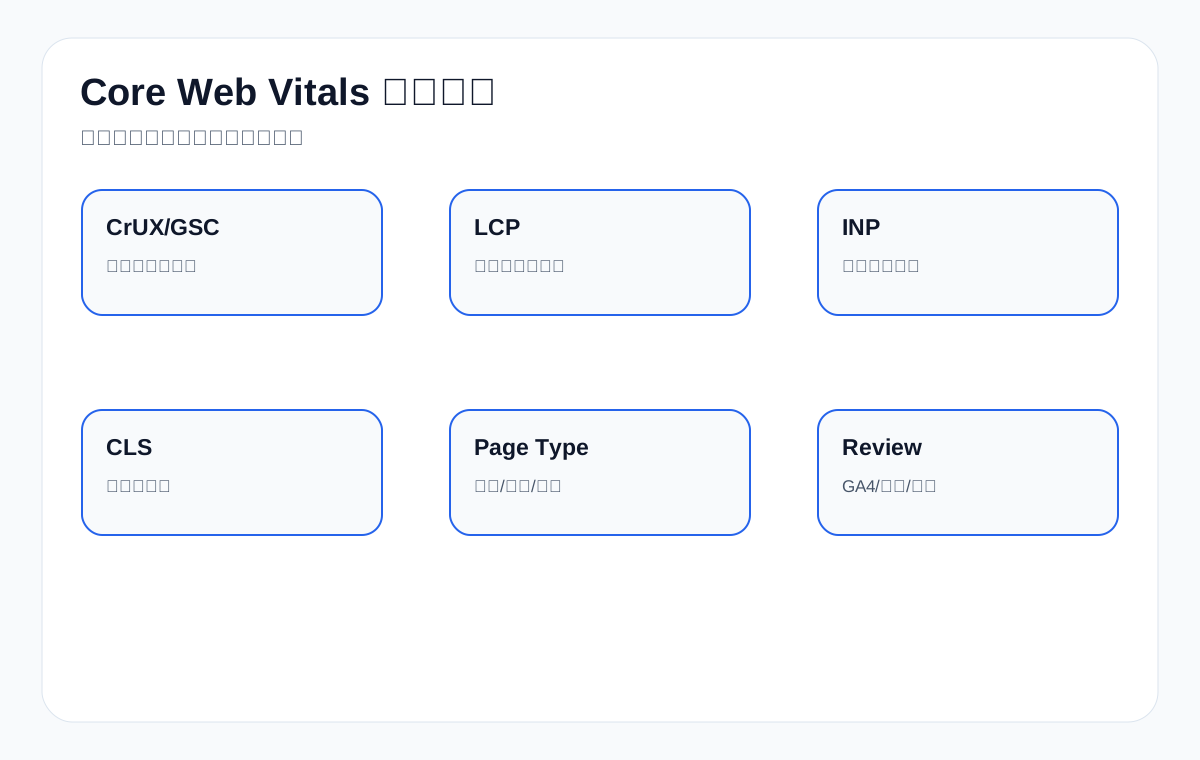
Page Speed and Core Web Vitals optimization is not about chasing a single tool score. It is about helping buyers in the target market see the core content faster, filter products more smoothly, and submit inquiries more reliably, while also letting Google judge whether the page experience meets the standard.
Website speed optimization (page speed optimization / Page Speed optimization) simply means making a web page open faster and work more smoothly: reducing load time and improving LCP/INP/CLS, while also letting Google judge whether the page experience meets the standard. In this article, “website speed optimization”, “page speed”, and “speed optimization” are different names for the same thing.
For foreign trade companies, speed issues on product pages such as custom metal parts, LED flood light, packaging machine, medical probe, cnc machining parts, ceramic dinnerware, waterproof connector, industrial valve supplier, and private label activewear manufacturer should be judged by page type: category pages focus on product images and filters, product pages focus on the main image, specifications, and RFQ, application pages focus on the above-the-fold text and images, articles focus on readability, and contact pages focus on form interaction.
Top1 benchmark conclusion: official metrics must map to foreign trade page types
This page uses the Google Search Central page experience documentation, the web.dev Core Web Vitals guide, the LCP/INP/CLS optimization documentation, and the PageSpeed Insights diagnostic logic as its authoritative baseline. The official material clearly defines LCP, INP, CLS, real user data, lab data, and page experience signals.
The gap in these baselines is that they do not tell foreign trade companies which speed problems affect product pages, category pages, inquiry forms, overseas country access, and B2B purchasing judgment first. This article fills in foreign trade page types, action checklists, risk trade-offs, and GSC/GA4/CRM reviews.
Core Web Vitals metric assessment table
| Metric | What to look at | Common problems | Priority action for foreign trade |
|---|---|---|---|
| LCP | Largest above-the-fold content load | Large images, slow server, blocking resources | Optimize product main images and above-the-fold modules |
| INP | User interaction response | Long JS tasks, laggy forms | Optimize filters, menus, RFQ forms |
| CLS | Layout stability | Images without dimensions, ads/pop-ups | Fix image and module dimensions |
| TTFB | Server response | Caching, database, geographic distance | Caching/CDN/hosting optimization |
| FID/legacy metrics | Historical interaction metric | Replaced by INP | Shift focus to INP |
| Mobile experience | Real user networks | Heavy images, many fonts, many plugins | Mobile-first testing |
Step 1: Use real user data to set priorities first
For Core Web Vitals, real user experience matters most. GSC and CrUX reflect real user visits, while Lighthouse is better for locating problems. Do not judge the whole site from a single lab score.
Foreign trade websites should look at speed problems by country, device, and page type, especially mobile in target markets.
Applied to products such as custom metal parts, LED flood light, packaging machine, medical probe, cnc machining parts, ceramic dinnerware, waterproof connector, industrial valve supplier, and private label activewear manufacturer, the goal of speed optimization is not to delete all content, but to make important images, specifications, evidence, FAQ, resources, and inquiry entry points faster, more stable, and easier to understand.
Step 2: LCP focuses on the main above-the-fold content
LCP is usually affected by product main images, above-the-fold banners, server response, CSS, fonts, and image loading.
For product pages and category pages, the main image must be both clear and lightweight; do not sacrifice purchasing judgment just to compress it.
Applied to products such as custom metal parts, LED flood light, packaging machine, medical probe, cnc machining parts, ceramic dinnerware, waterproof connector, industrial valve supplier, and private label activewear manufacturer, the goal of speed optimization is not to delete all content, but to make important images, specifications, evidence, FAQ, resources, and inquiry entry points faster, more stable, and easier to understand.
Step 3: INP focuses on interaction response
After INP replaced FID, it focuses more on response when users click, type, filter, open menus, and fill in forms.
A common problem on foreign trade sites is long tasks caused by filter plugins, form validation, chat tools, and analytics scripts.
Applied to products such as custom metal parts, LED flood light, packaging machine, medical probe, cnc machining parts, ceramic dinnerware, waterproof connector, industrial valve supplier, and private label activewear manufacturer, the goal of speed optimization is not to delete all content, but to make important images, specifications, evidence, FAQ, resources, and inquiry entry points faster, more stable, and easier to understand.
Speed priority by foreign trade page type
| Page type | What it affects most | Key checks | Examples |
|---|---|---|---|
| Category page | Product browsing and filtering | Product images, filter JS, pagination | LED flood light collection |
| Product page | Reading specifications and inquiries | Main image, variants, spec table, forms | waterproof connector product |
| Application page | Understanding use cases | Above-the-fold images, case images, internal links | packaging machine for food |
| Article page | Answering questions | Table of contents, images, code/tables | cnc machining guide |
| Resource page | Downloads and trust | PDFs, tables, buttons | medical probe datasheet |
| Contact page | Inquiry submission | Form scripts, validation, maps | RFQ form |
Step 4: CLS focuses on layout stability
High CLS usually comes from images without width and height, font swaps, pop-ups, ads, and dynamically inserted modules.
Product page spec tables, images, FAQ, recommended products, and inquiry buttons should all display in a stable way.
Applied to products such as custom metal parts, LED flood light, packaging machine, medical probe, cnc machining parts, ceramic dinnerware, waterproof connector, industrial valve supplier, and private label activewear manufacturer, the goal of speed optimization is not to delete all content, but to make important images, specifications, evidence, FAQ, resources, and inquiry entry points faster, more stable, and easier to understand.
Step 5: TTFB is the foundation but not everything
A slow server response drags down the above-the-fold experience, but optimizing the server alone does not necessarily fix image, JS, and layout problems.
WordPress/Shopify/WooCommerce sites need to look at caching, the database, CDN, theme, and plugins at the same time.
Applied to products such as custom metal parts, LED flood light, packaging machine, medical probe, cnc machining parts, ceramic dinnerware, waterproof connector, industrial valve supplier, and private label activewear manufacturer, the goal of speed optimization is not to delete all content, but to make important images, specifications, evidence, FAQ, resources, and inquiry entry points faster, more stable, and easier to understand.
Step 6: For category pages, fix product images and filters first
Category pages usually have many images, many filters, and many pages. Slow speed hurts how buyers browse a product family.
Category pages such as LED flood light and waterproof connector need to control image dimensions, filter JS, and pagination URLs.
Applied to products such as custom metal parts, LED flood light, packaging machine, medical probe, cnc machining parts, ceramic dinnerware, waterproof connector, industrial valve supplier, and private label activewear manufacturer, the goal of speed optimization is not to delete all content, but to make important images, specifications, evidence, FAQ, resources, and inquiry entry points faster, more stable, and easier to understand.
Speed problem troubleshooting table
| Symptom | Possible cause | How to check | How to fix |
|---|---|---|---|
| Slow LCP | Main image too large or slow server | PageSpeed/Waterfall | Compress images, preload, cache |
| Poor INP | Long JS tasks or too many plugins | Performance trace | Reduce scripts, defer non-critical JS |
| High CLS | Images/ads without dimensions | Lighthouse/DevTools | Set width, height, and placeholders |
| Slow on mobile | Fonts and images too heavy | Mobile network testing | Font subsetting and responsive images |
| Laggy forms | Third-party validation scripts | GA4 events/DevTools | Lazy load or make lightweight |
| Slow in some regions | Long distance for overseas access | RUM/CDN logs | CDN and edge caching |
Step 7: For product pages, fix the main image and RFQ first
Product pages affect inquiries. The main image, variants, spec table, downloadable resources, FAQ, and forms can all affect the experience.
Pages for custom metal parts and cnc machining parts must keep drawing upload and RFQ form responses stable.
Applied to products such as custom metal parts, LED flood light, packaging machine, medical probe, cnc machining parts, ceramic dinnerware, waterproof connector, industrial valve supplier, and private label activewear manufacturer, the goal of speed optimization is not to delete all content, but to make important images, specifications, evidence, FAQ, resources, and inquiry entry points faster, more stable, and easier to understand.
Step 8: Application pages must balance text, images, and the above-the-fold view
Application pages usually have large images and scenario descriptions. Images that are too heavy slow down LCP, while too few images hurt understanding.
A packaging machine for frozen food page should keep the key process diagram, but compress its size and defer non-above-the-fold images.
Applied to products such as custom metal parts, LED flood light, packaging machine, medical probe, cnc machining parts, ceramic dinnerware, waterproof connector, industrial valve supplier, and private label activewear manufacturer, the goal of speed optimization is not to delete all content, but to make important images, specifications, evidence, FAQ, resources, and inquiry entry points faster, more stable, and easier to understand.
Step 9: Test mobile by target market
Overseas buyers may visit from different countries and network environments. A fast desktop experience does not mean mobile is fine.
Markets in the Middle East, Latin America, and Southeast Asia especially need attention to mobile networks and CDN coverage.
Applied to products such as custom metal parts, LED flood light, packaging machine, medical probe, cnc machining parts, ceramic dinnerware, waterproof connector, industrial valve supplier, and private label activewear manufacturer, the goal of speed optimization is not to delete all content, but to make important images, specifications, evidence, FAQ, resources, and inquiry entry points faster, more stable, and easier to understand.
Optimization actions and risks table
| Action | Suitable scenario | Risk | Verification |
|---|---|---|---|
| Image compression | Product images too heavy | Distortion hurts purchasing judgment | Sample and check clarity |
| Lazy loading | Many images on long pages | Above-the-fold images lazy loaded by mistake | Check the LCP image |
| Removing plugins | Too many scripts | Missing functionality | Regression-test forms and filters |
| CDN | Slow overseas access | Caching old pages | Verify country access |
| Font optimization | Font blocking | Brand visual changes | Check Chinese and English rendering |
| Caching | Slow TTFB | Dynamic content not updating | Check forms/cart |
Step 10: Image optimization is not only about file size
Product images must balance clarity, format, dimensions, cropping, and alt text. Over-compression hurts purchasing judgment.
Products that need detail shots, such as medical probe and industrial valve supplier, need even more care.
Applied to products such as custom metal parts, LED flood light, packaging machine, medical probe, cnc machining parts, ceramic dinnerware, waterproof connector, industrial valve supplier, and private label activewear manufacturer, the goal of speed optimization is not to delete all content, but to make important images, specifications, evidence, FAQ, resources, and inquiry entry points faster, more stable, and easier to understand.
Step 11: Control fonts and third-party scripts
Fonts, chat tools, analytics, heatmaps, forms, payment, and comment scripts all affect loading and interaction.
Not every script has to be removed, but critical and non-critical scripts must be separated.
Applied to products such as custom metal parts, LED flood light, packaging machine, medical probe, cnc machining parts, ceramic dinnerware, waterproof connector, industrial valve supplier, and private label activewear manufacturer, the goal of speed optimization is not to delete all content, but to make important images, specifications, evidence, FAQ, resources, and inquiry entry points faster, more stable, and easier to understand.
Step 12: Regression-test caching and CDN
Caching/CDN can improve TTFB and static assets, but it may cause stale content, form errors, cart problems, or multilingual/multi-currency caching errors.
After launch, check the inquiry form, language switching, price/stock, and contact pages.
Applied to products such as custom metal parts, LED flood light, packaging machine, medical probe, cnc machining parts, ceramic dinnerware, waterproof connector, industrial valve supplier, and private label activewear manufacturer, the goal of speed optimization is not to delete all content, but to make important images, specifications, evidence, FAQ, resources, and inquiry entry points faster, more stable, and easier to understand.
90-day review metrics
| Time | Speed signal | Search signal | Business signal |
|---|---|---|---|
| 7 days | Lighthouse and key pages | None | Forms working normally |
| 30 days | Changes in GSC CWV URL groups | Impressions/clicks trend | Whether paths improved |
| 60 days | Country differences in RUM | Mobile performance | Inquiry submission rate |
| 90 days | Whether problem URLs decreased | Page stability | CRM lead quality |
| Ongoing | Impact of new content and plugins | Crawling and indexing | Sales feedback |
Step 13: Do not sacrifice conversion for a score
Some modules affect the score but matter for purchasing decisions, such as spec tables, certification images, resource downloads, and RFQ.
The right approach is to optimize how they are implemented, not simply delete valuable content.
Applied to products such as custom metal parts, LED flood light, packaging machine, medical probe, cnc machining parts, ceramic dinnerware, waterproof connector, industrial valve supplier, and private label activewear manufacturer, the goal of speed optimization is not to delete all content, but to make important images, specifications, evidence, FAQ, resources, and inquiry entry points faster, more stable, and easier to understand.
Step 14: Drive speed optimization by page group
GSC CWV usually reports by URL group. Fixing the shared problems of similar pages first is more efficient than blindly editing pages one by one.
For example, if all product pages have slow LCP, the cause may be a main image dimension rule.
Applied to products such as custom metal parts, LED flood light, packaging machine, medical probe, cnc machining parts, ceramic dinnerware, waterproof connector, industrial valve supplier, and private label activewear manufacturer, the goal of speed optimization is not to delete all content, but to make important images, specifications, evidence, FAQ, resources, and inquiry entry points faster, more stable, and easier to understand.
Step 15: Use GA4 to see how speed affects paths
After speed optimization, check whether the paths from category to product, article to product, and product to RFQ have improved.
If speed improved but inquiries did not change, content, price, trust, or form fields may still be a problem.
Applied to products such as custom metal parts, LED flood light, packaging machine, medical probe, cnc machining parts, ceramic dinnerware, waterproof connector, industrial valve supplier, and private label activewear manufacturer, the goal of speed optimization is not to delete all content, but to make important images, specifications, evidence, FAQ, resources, and inquiry entry points faster, more stable, and easier to understand.
Core Web Vitals metric assessment table
| Metric | What to look at | Common problems | Priority action for foreign trade |
|---|---|---|---|
| LCP | Largest above-the-fold content load | Large images, slow server, blocking resources | Optimize product main images and above-the-fold modules |
| INP | User interaction response | Long JS tasks, laggy forms | Optimize filters, menus, RFQ forms |
| CLS | Layout stability | Images without dimensions, ads/pop-ups | Fix image and module dimensions |
| TTFB | Server response | Caching, database, geographic distance | Caching/CDN/hosting optimization |
| FID/legacy metrics | Historical interaction metric | Replaced by INP | Shift focus to INP |
| Mobile experience | Real user networks | Heavy images, many fonts, many plugins | Mobile-first testing |
Step 16: AI search also needs accessible content
AI and search systems need access to the core content of a page. Over-reliance on JS, text inside images, or content hidden behind lazy loading hurts understanding.
Key specifications, FAQ, product descriptions, and internal links should be stably readable in the HTML.
Applied to products such as custom metal parts, LED flood light, packaging machine, medical probe, cnc machining parts, ceramic dinnerware, waterproof connector, industrial valve supplier, and private label activewear manufacturer, the goal of speed optimization is not to delete all content, but to make important images, specifications, evidence, FAQ, resources, and inquiry entry points faster, more stable, and easier to understand.
Step 17: Common mistake one: chasing a perfect score only
A perfect score does not mean the best business result. Foreign trade sites must balance speed, text and image information, and inquiry conversion.
The goal is to let buyers judge smoothly, not to turn the page into blank space.
Applied to products such as custom metal parts, LED flood light, packaging machine, medical probe, cnc machining parts, ceramic dinnerware, waterproof connector, industrial valve supplier, and private label activewear manufacturer, the goal of speed optimization is not to delete all content, but to make important images, specifications, evidence, FAQ, resources, and inquiry entry points faster, more stable, and easier to understand.
Step 18: Common mistake two: only compressing images
Images are only one part. The server, CSS, JS, fonts, third-party scripts, layout, and caching all affect the result.
Locate problems with the Waterfall and a Performance trace.
Applied to products such as custom metal parts, LED flood light, packaging machine, medical probe, cnc machining parts, ceramic dinnerware, waterproof connector, industrial valve supplier, and private label activewear manufacturer, the goal of speed optimization is not to delete all content, but to make important images, specifications, evidence, FAQ, resources, and inquiry entry points faster, more stable, and easier to understand.
Speed priority by foreign trade page type
| Page type | What it affects most | Key checks | Examples |
|---|---|---|---|
| Category page | Product browsing and filtering | Product images, filter JS, pagination | LED flood light collection |
| Product page | Reading specifications and inquiries | Main image, variants, spec table, forms | waterproof connector product |
| Application page | Understanding use cases | Above-the-fold images, case images, internal links | packaging machine for food |
| Article page | Answering questions | Table of contents, images, code/tables | cnc machining guide |
| Resource page | Downloads and trust | PDFs, tables, buttons | medical probe datasheet |
| Contact page | Inquiry submission | Form scripts, validation, maps | RFQ form |
Step 19: Common mistake three: not reviewing after optimization
Speed optimization is not a one-time action. New plugins, images, page modules, and tracking code all change the result.
Review regularly with GSC, RUM, GA4, and form data.
Applied to products such as custom metal parts, LED flood light, packaging machine, medical probe, cnc machining parts, ceramic dinnerware, waterproof connector, industrial valve supplier, and private label activewear manufacturer, the goal of speed optimization is not to delete all content, but to make important images, specifications, evidence, FAQ, resources, and inquiry entry points faster, more stable, and easier to understand.
Step 20: Common mistake four: ignoring the inquiry form
Forms are key to foreign trade conversion. If a form loads slowly, validation lags, or uploads fail, speed optimization has no business meaning.
RFQ, sample request, and drawing upload all need to be tested separately.
Applied to products such as custom metal parts, LED flood light, packaging machine, medical probe, cnc machining parts, ceramic dinnerware, waterproof connector, industrial valve supplier, and private label activewear manufacturer, the goal of speed optimization is not to delete all content, but to make important images, specifications, evidence, FAQ, resources, and inquiry entry points faster, more stable, and easier to understand.
Page Speed optimization execution checklist
- Use GSC Core Web Vitals to view real user URL groups
- Use PageSpeed Insights to separate real user data from lab diagnostics
- Sample category pages, product pages, application pages, article pages, and contact pages
- Locate the LCP element and optimize the main image/above-the-fold resources
- Use a Performance trace to find long INP tasks
- Set dimensions on images, ads, and embedded modules to prevent CLS
- Compress images while keeping product detail
- Defer non-critical JS and third-party scripts
- Check mobile access and access from target countries
- After caching/CDN goes live, regression-test forms and multilingual/multi-currency
- Use GA4 to see changes in paths and inquiry submissions
- Use CRM to judge whether lead quality improved
Core Web Vitals metric assessment table
| Metric | What to look at | Common problems | Priority action for foreign trade |
|---|---|---|---|
| LCP | Largest above-the-fold content load | Large images, slow server, blocking resources | Optimize product main images and above-the-fold modules |
| INP | User interaction response | Long JS tasks, laggy forms | Optimize filters, menus, RFQ forms |
| CLS | Layout stability | Images without dimensions, ads/pop-ups | Fix image and module dimensions |
| TTFB | Server response | Caching, database, geographic distance | Caching/CDN/hosting optimization |
| FID/legacy metrics | Historical interaction metric | Replaced by INP | Shift focus to INP |
| Mobile experience | Real user networks | Heavy images, many fonts, many plugins | Mobile-first testing |
Speed priority by foreign trade page type
| Page type | What it affects most | Key checks | Examples |
|---|---|---|---|
| Category page | Product browsing and filtering | Product images, filter JS, pagination | LED flood light collection |
| Product page | Reading specifications and inquiries | Main image, variants, spec table, forms | waterproof connector product |
| Application page | Understanding use cases | Above-the-fold images, case images, internal links | packaging machine for food |
| Article page | Answering questions | Table of contents, images, code/tables | cnc machining guide |
| Resource page | Downloads and trust | PDFs, tables, buttons | medical probe datasheet |
| Contact page | Inquiry submission | Form scripts, validation, maps | RFQ form |
Speed problem troubleshooting table
| Symptom | Possible cause | How to check | How to fix |
|---|---|---|---|
| Slow LCP | Main image too large or slow server | PageSpeed/Waterfall | Compress images, preload, cache |
| Poor INP | Long JS tasks or too many plugins | Performance trace | Reduce scripts, defer non-critical JS |
| High CLS | Images/ads without dimensions | Lighthouse/DevTools | Set width, height, and placeholders |
| Slow on mobile | Fonts and images too heavy | Mobile network testing | Font subsetting and responsive images |
| Laggy forms | Third-party validation scripts | GA4 events/DevTools | Lazy load or make lightweight |
| Slow in some regions | Long distance for overseas access | RUM/CDN logs | CDN and edge caching |
Optimization actions and risks table
| Action | Suitable scenario | Risk | Verification |
|---|---|---|---|
| Image compression | Product images too heavy | Distortion hurts purchasing judgment | Sample and check clarity |
| Lazy loading | Many images on long pages | Above-the-fold images lazy loaded by mistake | Check the LCP image |
| Removing plugins | Too many scripts | Missing functionality | Regression-test forms and filters |
| CDN | Slow overseas access | Caching old pages | Verify country access |
| Font optimization | Font blocking | Brand visual changes | Check Chinese and English rendering |
| Caching | Slow TTFB | Dynamic content not updating | Check forms/cart |
90-day review metrics
| Time | Speed signal | Search signal | Business signal |
|---|---|---|---|
| 7 days | Lighthouse and key pages | None | Forms working normally |
| 30 days | Changes in GSC CWV URL groups | Impressions/clicks trend | Whether paths improved |
| 60 days | Country differences in RUM | Mobile performance | Inquiry submission rate |
| 90 days | Whether problem URLs decreased | Page stability | CRM lead quality |
| Ongoing | Impact of new content and plugins | Crawling and indexing | Sales feedback |
Supplement: speed optimization priorities for different foreign trade website scenarios
Different website platforms have different speed bottlenecks. Common problems on WordPress foreign trade sites are bloated themes, too many plugins, nested Elementor modules, uncompressed images, and unstable caching rules; common problems on WooCommerce are product images, variants, cart fragments, filter plugins, and dynamic prices; common problems on Shopify are third-party apps, theme code, too many tracking scripts, collection images, and multi-market scripts; common problems on custom-built sites are blocking above-the-fold resources, slow APIs, a missing image strategy, and an oversized front-end bundle.
For engineering customization sites such as custom metal parts and cnc machining parts, speed optimization must not affect drawing upload, the material list, or RFQ; for image-driven products such as LED flood light and ceramic dinnerware, image clarity and loading speed must be balanced; for complex equipment such as packaging machine and industrial valve supplier, videos and PDF resources should be lazy loaded while keeping clear entry points; for medical probe and waterproof connector, spec tables and technical resources must not be hidden because of optimization. The standard for speed optimization is not “delete all heavy content”, but to present valuable content in a lighter, more stable way.
Website platform speed priorities table
| Platform | Common bottleneck | Priority action | Regression test |
|---|---|---|---|
| WordPress | Plugins, theme, images, caching | Caching, images, critical CSS, trimming plugins | Forms, navigation, mobile |
| WooCommerce | Variants, filters, cart scripts | Optimize product images and dynamic scripts | Product pages, inquiries, and cart |
| Shopify | Apps, theme JS, collection images | Remove low-value apps, compress images | Multi-market, product variants, forms |
| Custom-built site | APIs, front-end bundle, rendering strategy | Code splitting, caching, SSR/static generation | Core page types and the RFQ flow |
Supplement: how speed optimization can avoid hurting sales judgment
Large images, videos, spec tables, downloadable resources, and evidence modules on foreign trade pages do add page weight, but they may also be key to how buyers judge a supplier’s capability. When optimizing, judge the value of each module first: product detail images, certification images, installation images, packaging images, spec tables, and the RFQ form should not simply be deleted; they can be optimized through compression, responsive images, lazy loading, paginated display, collapsing while keeping the HTML, CDN, and lightweight scripts.
If a page deletes product application images and spec tables for a speed score, LCP may get faster, but inquiry quality will drop. The right goal is to present the core judgment information faster, while deferring or removing non-above-the-fold, non-critical, low-value resources. Speed optimization should serve purchasing decisions, not strip a page of its persuasiveness.
Supplement: rollback plan after speed optimization goes live
Speed optimization often involves caching, scripts, images, CDN, and form logic. Before launch, record the state of key pages; after launch, spot-check the homepage, core category pages, core product pages, application pages, contact pages, and mobile. Confirm in particular whether images are clear, spec tables complete, FAQ visible, forms submittable, files uploadable, language and currency correct, and analytics events still recorded.
If you find inquiry form errors, unselectable product variants, image loading failures, mixed-up country catalog caching, or lost GA4 events, restore the conversion-critical functions first, then continue optimizing the score. For a foreign trade website, the bottom line of speed optimization is not to break the path buyers use to complete their judgment and submit an inquiry.
FAQ: common questions about Page Speed and Core Web Vitals
Do Core Web Vitals directly determine rankings?
It is one of the signals related to page experience, not the only factor. Content relevance, quality, links, brand, and user demand still matter.
Does the PageSpeed score have to be 100?
No. What matters more is whether real user experience, core page types, and business paths improve.
If LCP is slow, what should be fixed first?
Find the LCP element first; it is often a large above-the-fold image, banner, product main image, or heading area. Then look at the server, CSS, fonts, and images.
What usually causes poor INP?
Common causes are long JS tasks, too many plugins, slow filter/menu/form responses, and blocking third-party scripts.
How do you fix high CLS?
Reserve dimensions for images, videos, ads, and embedded modules, and avoid layout shifts caused by fonts and dynamic modules.
Which pages should a foreign trade site optimize first?
Start with core category pages, core product pages, the contact/RFQ page, and pages that already have organic traffic.
Does compressing images hurt conversion?
Over-compression hurts purchasing judgment. Balance clarity and file size, and keep the key detail images.
How should you review after speed optimization?
Look at GSC CWV URL groups, GA4 paths, form submissions, inquiry quality, mobile performance in target countries, and sales feedback.
Supplement: why speed and inquiry quality should be reviewed together
After speed improves, if more users enter RFQ, the form completion rate is higher, and sales receive more complete information, the optimization is truly serving the business. If only the score goes up, but buyers leave sooner, product page bounces increase, and inquiries lack specifications and quantities, go back and check whether necessary content was deleted or the page path was broken.
Conclusion: speed optimization should serve foreign trade purchasing judgment
The ultimate goal of Page Speed and Core Web Vitals is to make product pages such as custom metal parts, LED flood light, packaging machine, medical probe, cnc machining parts, ceramic dinnerware, waterproof connector, industrial valve supplier, and private label activewear manufacturer display faster, interact more stably, and enter the inquiry path more smoothly in target markets. Do not delete valuable product evidence for a tool score, and do not ignore the slow images, slow forms, slow filters, and mobile experience that truly affect users. Reviewing speed metrics, page types, GSC, GA4, and CRM together is the more reliable way to optimize a foreign trade website.
Official sources and the boundaries of speed optimization
Page speed optimization must consider user experience and also how the business captures demand. A foreign trade website cannot focus on one score alone. A more reliable approach is to put Core Web Vitals, page experience, resource loading, GA4 events, and the inquiry path in the same review table.
| Official source | What it is good for | What it cannot directly show |
|---|---|---|
| Google page experience | Overall direction related to page experience and search experience | A single score cannot be written as a promise about search results |
| Core Web Vitals | User experience metrics such as LCP, INP, and CLS | It cannot replace judgments about content, indexing, links, and search intent |
| Core Web Vitals report | View mobile and desktop experience groups in Search Console | Report groups still need to be verified against specific URLs and page actions |
| PageSpeed Insights | Lab data, field data, and optimization suggestions | It cannot prove inquiry quality on its own |
| URL Inspection tool | Whether a single URL is crawlable, indexable, and renderable | It cannot replace real mobile access testing |
| GA4 events | Whether button, form, download, and inquiry actions are recorded | It cannot explain every change in search impressions |
Foreign trade website speed review table
| Module | Check these fields first | Change boundaries |
|---|---|---|
| Product page above the fold | LCP, main image size, above-the-fold text | Compress images and reduce blocking resources first; do not delete core product information |
| Inquiry path | INP, button response, form events | Optimize interaction latency; do not hide the CTA for a score |
| Layout stability | CLS, image dimensions, font loading | Give images and tables stable dimensions to avoid content shifts |
| Mobile | Viewport width, table overflow, tappable navigation | Make it readable and tappable first, then discuss visual fine-tuning |
Continue reading this SEO series
If you are systematically working through foreign trade website SEO, the following articles are a good next step. First clarify the relationships among crawling, indexing, content, links, and review, then decide which page to change next.
- Robots, Noindex, Canonical, and Sitemap: how to tell them apart — a foreign trade website indexing check guide
- How to handle redirects and 404s: a guide to foreign trade website migration, merging old pages, and fixing dead links
- Google crawling, indexing, and ranking process: a diagnostic guide from indexing to inquiries for foreign trade websites
- How search engines work: a guide to crawling, indexing, ranking, and foreign trade website diagnosis
- Technical SEO audit checklist: a diagnostic guide to crawling, indexing, structure, and the inquiry path for foreign trade websites
- Sitemap technical guide: sitemap submission, indexing diagnosis, and common error troubleshooting
{
“@context”: “https://schema.org”,
“@type”: “FAQPage”,
“mainEntity”: [
{
“@type”: “Question”,
“name”: “Core Web Vitals metric assessment tableMetricWhat to look atCommon problemsPriority action for foreign tradeLCPLargest above-the-fold content loadLarge images, slow server, blocking resourcesOptimize product main images and above-the-fold modulesINPUser interaction responseLong JS tasks, laggy formsOptimize filters, menus, RFQ formsCLSLayout stabilityImages without dimensions, ads/pop-upsFix image and module dimensionsTTFBServer responseCaching, database, geographic distanceCaching/CDN/hosting optimizationFID/legacy metricsHistorical interaction metricReplaced by INPShift focus to INPMobile experienceReal user networksHeavy images, many fonts, many pluginsMobile-first testing
Step 1: Use real user data to set priorities firstFor Core Web Vitals, real user experience matters most. GSC and CrUX reflect real user visits, while Lighthouse is better for locating problems. Do not judge the whole site from a single lab score.Foreign trade websites should look at speed problems by country, device, and page type, especially mobile in target markets.Applied to products such as custom metal parts, LED flood light, packaging machine, medical probe, cnc machining parts, ceramic dinnerware, waterproof connector, industrial valve supplier, and private label activewear manufacturer, the goal of speed optimization is not to delete all content, but to make important images, specifications, evidence, FAQ, resources, and inquiry entry points faster, more stable, and easier to understand.
Step 2: LCP focuses on the main above-the-fold contentLCP is usually affected by product main images, above-the-fold banners, server response, CSS, fonts, and image loading.For product pages and category pages, the main image must be both clear and lightweight; do not sacrifice purchasing judgment just to compress it.Applied to products such as custom metal parts, LED flood light, packaging machine, medical probe, cnc machining parts, ceramic dinnerware, waterproof connector, industrial valve supplier, and private label activewear manufacturer, the goal of speed optimization is not to delete all content, but to make important images, specifications, evidence, FAQ, resources, and inquiry entry points faster, more stable, and easier to understand.
Step 3: INP focuses on interaction responseAfter INP replaced FID, it focuses more on response when users click, type, filter, open menus, and fill in forms.A common problem on foreign trade sites is long tasks caused by filter plugins, form validation, chat tools, and analytics scripts.Applied to products such as custom metal parts, LED flood light, packaging machine, medical probe, cnc machining parts, ceramic dinnerware, waterproof connector, industrial valve supplier, and private label activewear manufacturer, the goal of speed optimization is not to delete all content, but to make important images, specifications, evidence, FAQ, resources, and inquiry entry points faster, more stable, and easier to understand.
Speed priority by foreign trade page typePage typeWhat it affects mostKey checksExamplesCategory pageProduct browsing and filteringProduct images, filter JS, paginationLED flood light collectionProduct pageReading specifications and inquiriesMain image, variants, spec table, formswaterproof connector productApplication pageUnderstanding use casesAbove-the-fold images, case images, internal linkspackaging machine for foodArticle pageAnswering questionsTable of contents, images, code/tablescnc machining guideResource pageDownloads and trustPDFs, tables, buttonsmedical probe datasheetContact pageInquiry submissionForm scripts, validation, mapsRFQ form
Step 4: CLS focuses on layout stabilityHigh CLS usually comes from images without width and height, font swaps, pop-ups, ads, and dynamically inserted modules.Product page spec tables, images, FAQ, recommended products, and inquiry buttons should all display in a stable way.Applied to products such as custom metal parts, LED flood light, packaging machine, medical probe, cnc machining parts, ceramic dinnerware, waterproof connector, industrial valve supplier, and private label activewear manufacturer, the goal of speed optimization is not to delete all content, but to make important images, specifications, evidence, FAQ, resources, and inquiry entry points faster, more stable, and easier to understand.
Step 5: TTFB is the foundation but not everythingA slow server response drags down the above-the-fold experience, but optimizing the server alone does not necessarily fix image, JS, and layout problems.WordPress/Shopify/WooCommerce sites need to look at caching, the database, CDN, theme, and plugins at the same time.Applied to products such as custom metal parts, LED flood light, packaging machine, medical probe, cnc machining parts, ceramic dinnerware, waterproof connector, industrial valve supplier, and private label activewear manufacturer, the goal of speed optimization is not to delete all content, but to make important images, specifications, evidence, FAQ, resources, and inquiry entry points faster, more stable, and easier to understand.
Step 6: For category pages, fix product images and filters firstCategory pages usually have many images, many filters, and many pages. Slow speed hurts how buyers browse a product family.Category pages such as LED flood light and waterproof connector need to control image dimensions, filter JS, and pagination URLs.Applied to products such as custom metal parts, LED flood light, packaging machine, medical probe, cnc machining parts, ceramic dinnerware, waterproof connector, industrial valve supplier, and private label activewear manufacturer, the goal of speed optimization is not to delete all content, but to make important images, specifications, evidence, FAQ, resources, and inquiry entry points faster, more stable, and easier to understand.
Speed problem troubleshooting tableSymptomPossible causeHow to checkHow to fixSlow LCPMain image too large or slow serverPageSpeed/WaterfallCompress images, preload, cachePoor INPLong JS tasks or too many pluginsPerformance traceReduce scripts, defer non-critical JSHigh CLSImages/ads without dimensionsLighthouse/DevToolsSet width, height, and placeholdersSlow on mobileFonts and images too heavyMobile network testingFont subsetting and responsive imagesLaggy formsThird-party validation scriptsGA4 events/DevToolsLazy load or make lightweightSlow in some regionsLong distance for overseas accessRUM/CDN logsCDN and edge caching
Step 7: For product pages, fix the main image and RFQ firstProduct pages affect inquiries. The main image, variants, spec table, downloadable resources, FAQ, and forms can all affect the experience.Pages for custom metal parts and cnc machining parts must keep drawing upload and RFQ form responses stable.Applied to products such as custom metal parts, LED flood light, packaging machine, medical probe, cnc machining parts, ceramic dinnerware, waterproof connector, industrial valve supplier, and private label activewear manufacturer, the goal of speed optimization is not to delete all content, but to make important images, specifications, evidence, FAQ, resources, and inquiry entry points faster, more stable, and easier to understand.
Step 8: Application pages must balance text, images, and the above-the-fold viewApplication pages usually have large images and scenario descriptions. Images that are too heavy slow down LCP, while too few images hurt understanding.A packaging machine for frozen food page should keep the key process diagram, but compress its size and defer non-above-the-fold images.Applied to products such as custom metal parts, LED flood light, packaging machine, medical probe, cnc machining parts, ceramic dinnerware, waterproof connector, industrial valve supplier, and private label activewear manufacturer, the goal of speed optimization is not to delete all content, but to make important images, specifications, evidence, FAQ, resources, and inquiry entry points faster, more stable, and easier to understand.
Step 9: Test mobile by target marketOverseas buyers may visit from different countries and network environments. A fast desktop experience does not mean mobile is fine.Markets in the Middle East, Latin America, and Southeast Asia especially need attention to mobile networks and CDN coverage.Applied to products such as custom metal parts, LED flood light, packaging machine, medical probe, cnc machining parts, ceramic dinnerware, waterproof connector, industrial valve supplier, and private label activewear manufacturer, the goal of speed optimization is not to delete all content, but to make important images, specifications, evidence, FAQ, resources, and inquiry entry points faster, more stable, and easier to understand.
Optimization actions and risks tableActionSuitable scenarioRiskVerificationImage compressionProduct images too heavyDistortion hurts purchasing judgmentSample and check clarityLazy loadingMany images on long pagesAbove-the-fold images lazy loaded by mistakeCheck the LCP imageRemoving pluginsToo many scriptsMissing functionalityRegression-test forms and filtersCDNSlow overseas accessCaching old pagesVerify country accessFont optimizationFont blockingBrand visual changesCheck Chinese and English renderingCachingSlow TTFBDynamic content not updatingCheck forms/cart
Step 10: Image optimization is not only about file sizeProduct images must balance clarity, format, dimensions, cropping, and alt text. Over-compression hurts purchasing judgment.Products that need detail shots, such as medical probe and industrial valve supplier, need even more care.Applied to products such as custom metal parts, LED flood light, packaging machine, medical probe, cnc machining parts, ceramic dinnerware, waterproof connector, industrial valve supplier, and private label activewear manufacturer, the goal of speed optimization is not to delete all content, but to make important images, specifications, evidence, FAQ, resources, and inquiry entry points faster, more stable, and easier to understand.
Step 11: Control fonts and third-party scriptsFonts, chat tools, analytics, heatmaps, forms, payment, and comment scripts all affect loading and interaction.Not every script has to be removed, but critical and non-critical scripts must be separated.Applied to products such as custom metal parts, LED flood light, packaging machine, medical probe, cnc machining parts, ceramic dinnerware, waterproof connector, industrial valve supplier, and private label activewear manufacturer, the goal of speed optimization is not to delete all content, but to make important images, specifications, evidence, FAQ, resources, and inquiry entry points faster, more stable, and easier to understand.
Step 12: Regression-test caching and CDNCaching/CDN can improve TTFB and static assets, but it may cause stale content, form errors, cart problems, or multilingual/multi-currency caching errors.After launch, check the inquiry form, language switching, price/stock, and contact pages.Applied to products such as custom metal parts, LED flood light, packaging machine, medical probe, cnc machining parts, ceramic dinnerware, waterproof connector, industrial valve supplier, and private label activewear manufacturer, the goal of speed optimization is not to delete all content, but to make important images, specifications, evidence, FAQ, resources, and inquiry entry points faster, more stable, and easier to understand.
90-day review metricsTimeSpeed signalSearch signalBusiness signal7 daysLighthouse and key pagesNoneForms working normally30 daysChanges in GSC CWV URL groupsImpressions/clicks trendWhether paths improved60 daysCountry differences in RUMobile performanceInquiry submission rate90 daysWhether problem URLs decreasedPage stabilityCRM lead qualityOngoingImpact of new content and pluginsCrawling and indexingSales feedback
Step 13: Do not sacrifice conversion for a scoreSome modules affect the score but matter for purchasing decisions, such as spec tables, certification images, resource downloads, and RFQ.The right approach is to optimize how they are implemented, not simply delete valuable content.Applied to products such as custom metal parts, LED flood light, packaging machine, medical probe, cnc machining parts, ceramic dinnerware, waterproof connector, industrial valve supplier, and private label activewear manufacturer, the goal of speed optimization is not to delete all content, but to make important images, specifications, evidence, FAQ, resources, and inquiry entry points faster, more stable, and easier to understand.
Step 14: Drive speed optimization by page groupGSC CWV usually reports by URL group. Fixing the shared problems of similar pages first is more efficient than blindly editing pages one by one.For example, if all product pages have slow LCP, the cause may be a main image dimension rule.Applied to products such as custom metal parts, LED flood light, packaging machine, medical probe, cnc machining parts, ceramic dinnerware, waterproof connector, industrial valve supplier, and private label activewear manufacturer, the goal of speed optimization is not to delete all content, but to make important images, specifications, evidence, FAQ, resources, and inquiry entry points faster, more stable, and easier to understand.
Step 15: Use GA4 to see how speed affects pathsAfter speed optimization, check whether the paths from category to product, article to product, and product to RFQ have improved.If speed improved but inquiries did not change, content, price, trust, or form fields may still be a problem.Applied to products such as custom metal parts, LED flood light, packaging machine, medical probe, cnc machining parts, ceramic dinnerware, waterproof connector, industrial valve supplier, and private label activewear manufacturer, the goal of speed optimization is not to delete all content, but to make important images, specifications, evidence, FAQ, resources, and inquiry entry points faster, more stable, and easier to understand.
Core Web Vitals metric assessment tableMetricWhat to look atCommon problemsPriority action for foreign tradeLCPLargest above-the-fold content loadLarge images, slow server, blocking resourcesOptimize product main images and above-the-fold modulesINPUser interaction responseLong JS tasks, laggy formsOptimize filters, menus, RFQ formsCLSLayout stabilityImages without dimensions, ads/pop-upsFix image and module dimensionsTTFBServer responseCaching, database, geographic distanceCaching/CDN/hosting optimizationFID/legacy metricsHistorical interaction metricReplaced by INPShift focus to INPMobile experienceReal user networksHeavy images, many fonts, many pluginsMobile-first testing
Step 16: AI search also needs accessible contentAI and search systems need access to the core content of a page. Over-reliance on JS, text inside images, or content hidden behind lazy loading hurts understanding.Key specifications, FAQ, product descriptions, and internal links should be stably readable in the HTML.Applied to products such as custom metal parts, LED flood light, packaging machine, medical probe, cnc machining parts, ceramic dinnerware, waterproof connector, industrial valve supplier, and private label activewear manufacturer, the goal of speed optimization is not to delete all content, but to make important images, specifications, evidence, FAQ, resources, and inquiry entry points faster, more stable, and easier to understand.
Step 17: Common mistake one: chasing a perfect score onlyA perfect score does not mean the best business result. Foreign trade sites must balance speed, text and image information, and inquiry conversion.The goal is to let buyers judge smoothly, not to turn the page into blank space.Applied to products such as custom metal parts, LED flood light, packaging machine, medical probe, cnc machining parts, ceramic dinnerware, waterproof connector, industrial valve supplier, and private label activewear manufacturer, the goal of speed optimization is not to delete all content, but to make important images, specifications, evidence, FAQ, resources, and inquiry entry points faster, more stable, and easier to understand.
Step 18: Common mistake two: only compressing imagesImages are only one part. The server, CSS, JS, fonts, third-party scripts, layout, and caching all affect the result.Locate problems with the Waterfall and a Performance trace.Applied to products such as custom metal parts, LED flood light, packaging machine, medical probe, cnc machining parts, ceramic dinnerware, waterproof connector, industrial valve supplier, and private label activewear manufacturer, the goal of speed optimization is not to delete all content, but to make important images, specifications, evidence, FAQ, resources, and inquiry entry points faster, more stable, and easier to understand.
Speed priority by foreign trade page typePage typeWhat it affects mostKey checksExamplesCategory pageProduct browsing and filteringProduct images, filter JS, paginationLED flood light collectionProduct pageReading specifications and inquiriesMain image, variants, spec table, formswaterproof connector productApplication pageUnderstanding use casesAbove-the-fold images, case images, internal linkspackaging machine for foodArticle pageAnswering questionsTable of contents, images, code/tablescnc machining guideResource pageDownloads and trustPDFs, tables, buttonsmedical probe datasheetContact pageInquiry submissionForm scripts, validation, mapsRFQ form
Step 19: Common mistake three: not reviewing after optimizationSpeed optimization is not a one-time action. New plugins, images, page modules, and tracking code all change the result.Review regularly with GSC, RUM, GA4, and form data.Applied to products such as custom metal parts, LED flood light, packaging machine, medical probe, cnc machining parts, ceramic dinnerware, waterproof connector, industrial valve supplier, and private label activewear manufacturer, the goal of speed optimization is not to delete all content, but to make important images, specifications, evidence, FAQ, resources, and inquiry entry points faster, more stable, and easier to understand.
Step 20: Common mistake four: ignoring the inquiry formForms are key to foreign trade conversion. If a form loads slowly, validation lags, or uploads fail, speed optimization has no business meaning.RFQ, sample request, and drawing upload all need to be tested separately.Applied to products such as custom metal parts, LED flood light, packaging machine, medical probe, cnc machining parts, ceramic dinnerware, waterproof connector, industrial valve supplier, and private label activewear manufacturer, the goal of speed optimization is not to delete all content, but to make important images, specifications, evidence, FAQ, resources, and inquiry entry points faster, more stable, and easier to understand.
Page Speed optimization execution checklist
Use GSC Core Web Vitals to view real user URL groupsUse PageSpeed Insights to separate real user data from lab diagnosticsSample category pages, product pages, application pages, article pages, and contact pagesLocate the LCP element and optimize the main image/above-the-fold resourcesUse a Performance trace to find long INP tasksSet dimensions on images, ads, and embedded modules to prevent CLSCompress images while keeping product detailDefer non-critical JS and third-party scriptsCheck mobile access and access from target countriesAfter caching/CDN goes live, regression-test forms and multilingual/multi-currencyUse GA4 to see changes in paths and inquiry submissionsUse CRM to judge whether lead quality improved
Core Web Vitals metric assessment tableMetricWhat to look atCommon problemsPriority action for foreign tradeLCPLargest above-the-fold content loadLarge images, slow server, blocking resourcesOptimize product main images and above-the-fold modulesINPUser interaction responseLong JS tasks, laggy formsOptimize filters, menus, RFQ formsCLSLayout stabilityImages without dimensions, ads/pop-upsFix image and module dimensionsTTFBServer responseCaching, database, geographic distanceCaching/CDN/hosting optimizationFID/legacy metricsHistorical interaction metricReplaced by INPShift focus to INPMobile experienceReal user networksHeavy images, many fonts, many pluginsMobile-first testing
Speed priority by foreign trade page typePage typeWhat it affects mostKey checksExamplesCategory pageProduct browsing and filteringProduct images, filter JS, paginationLED flood light collectionProduct pageReading specifications and inquiriesMain image, variants, spec table, formswaterproof connector productApplication pageUnderstanding use casesAbove-the-fold images, case images, internal linkspackaging machine for foodArticle pageAnswering questionsTable of contents, images, code/tablescnc machining guideResource pageDownloads and trustPDFs, tables, buttonsmedical probe datasheetContact pageInquiry submissionForm scripts, validation, mapsRFQ form
Speed problem troubleshooting tableSymptomPossible causeHow to checkHow to fixSlow LCPMain image too large or slow serverPageSpeed/WaterfallCompress images, preload, cachePoor INPLong JS tasks or too many pluginsPerformance traceReduce scripts, defer non-critical JSHigh CLSImages/ads without dimensionsLighthouse/DevToolsSet width, height, and placeholdersSlow on mobileFonts and images too heavyMobile network testingFont subsetting and responsive imagesLaggy formsThird-party validation scriptsGA4 events/DevToolsLazy load or make lightweightSlow in some regionsLong distance for overseas accessRUM/CDN logsCDN and edge caching
Optimization actions and risks tableActionSuitable scenarioRiskVerificationImage compressionProduct images too heavyDistortion hurts purchasing judgmentSample and check clarityLazy loadingMany images on long pagesAbove-the-fold images lazy loaded by mistakeCheck the LCP imageRemoving pluginsToo many scriptsMissing functionalityRegression-test forms and filtersCDNSlow overseas accessCaching old pagesVerify country accessFont optimizationFont blockingBrand visual changesCheck Chinese and English renderingCachingSlow TTFBDynamic content not updatingCheck forms/cart
90-day review metricsTimeSpeed signalSearch signalBusiness signal7 daysLighthouse and key pagesNoneForms working normally30 daysChanges in GSC CWV URL groupsImpressions/clicks trendWhether paths improved60 daysCountry differences in RUMobile performanceInquiry submission rate90 daysWhether problem URLs decreasedPage stabilityCRM lead qualityOngoingImpact of new content and pluginsCrawling and indexingSales feedback
Supplement: speed optimization priorities for different foreign trade website scenarios
Different website platforms have different speed bottlenecks. Common problems on WordPress foreign trade sites are bloated themes, too many plugins, nested Elementor modules, uncompressed images, and unstable caching rules; common problems on WooCommerce are product images, variants, cart fragments, filter plugins, and dynamic prices; common problems on Shopify are third-party apps, theme code, too many tracking scripts, collection images, and multi-market scripts; common problems on custom-built sites are blocking above-the-fold resources, slow APIs, a missing image strategy, and an oversized front-end bundle.
For engineering customization sites such as custom metal parts and cnc machining parts, speed optimization must not affect drawing upload, the material list, or RFQ; for image-driven products such as LED flood light and ceramic dinnerware, image clarity and loading speed must be balanced; for complex equipment such as packaging machine and industrial valve supplier, videos and PDF resources should be lazy loaded while keeping clear entry points; for medical probe and waterproof connector, spec tables and technical resources must not be hidden because of optimization. The standard for speed optimization is not “delete all heavy content”, but to present valuable content in a lighter, more stable way.
Website platform speed priorities tablePlatformCommon bottleneckPriority actionRegression testWordPressPlugins, theme, images, cachingCaching, images, critical CSS, trimming pluginsForms, navigation, mobileWooCommerceVariants, filters, cart scriptsOptimize product images and dynamic scriptsProduct pages, inquiries, and cartShopifyApps, theme JS, collection imagesRemove low-value apps, compress imagesMulti-market, product variants, formsCustom-built siteAPIs, front-end bundle, rendering strategyCode splitting, caching, SSR/static generationCore page types and the RFQ flow
Supplement: how speed optimization can avoid hurting sales judgment
Large images, videos, spec tables, downloadable resources, and evidence modules on foreign trade pages do add page weight, but they may also be key to how buyers judge a supplier’s capability. When optimizing, judge the value of each module first: product detail images, certification images, installation images, packaging images, spec tables, and the RFQ form should not simply be deleted; they can be optimized through compression, responsive images, lazy loading, paginated display, collapsing while keeping the HTML, CDN, and lightweight scripts.
If a page deletes product application images and spec tables for a speed score, LCP may get faster, but inquiry quality will drop. The right goal is to present the core judgment information faster, while deferring or removing non-above-the-fold, non-critical, low-value resources. Speed optimization should serve purchasing decisions, not strip a page of its persuasiveness.
Supplement: rollback plan after speed optimization goes live
Speed optimization often involves caching, scripts, images, CDN, and form logic. Before launch, record the state of key pages; after launch, spot-check the homepage, core category pages, core product pages, application pages, contact pages, and mobile. Confirm in particular whether images are clear, spec tables complete, FAQ visible, forms submittable, files uploadable, language and currency correct, and analytics events still recorded.
If you find inquiry form errors, unselectable product variants, image loading failures, mixed-up country catalog caching, or lost GA4 events, restore the conversion-critical functions first, then continue optimizing the score. For a foreign trade website, the bottom line of speed optimization is not to break the path buyers use to complete their judgment and submit an inquiry.
FAQ: common questions about Page Speed and Core Web Vitals
Do Core Web Vitals directly determine rankings?”,
“acceptedAnswer”: {
“@type”: “Answer”,
“text”: “It is one of the signals related to page experience, not the only factor. Content relevance, quality, links, brand, and user demand still matter.”
}
},
{
“@type”: “Question”,
“name”: “Does the PageSpeed score have to be 100?”,
“acceptedAnswer”: {
“@type”: “Answer”,
“text”: “No. What matters more is whether real user experience, core page types, and business paths improve.”
}
},
{
“@type”: “Question”,
“name”: “If LCP is slow, what should be fixed first?”,
“acceptedAnswer”: {
“@type”: “Answer”,
“text”: “Find the LCP element first; it is often a large above-the-fold image, banner, product main image, or heading area. Then look at the server, CSS, fonts, and images.”
}
},
{
“@type”: “Question”,
“name”: “What usually causes poor INP?”,
“acceptedAnswer”: {
“@type”: “Answer”,
“text”: “Common causes are long JS tasks, too many plugins, slow filter/menu/form responses, and blocking third-party scripts.”
}
},
{
“@type”: “Question”,
“name”: “How do you fix high CLS?”,
“acceptedAnswer”: {
“@type”: “Answer”,
“text”: “Reserve dimensions for images, videos, ads, and embedded modules, and avoid layout shifts caused by fonts and dynamic modules.”
}
}
]
}
This page is machine-translated from the Simplified Chinese version and awaiting human review. It has not yet been proofread.