Blog posts that are more likely to be mentioned by ChatGPT, AI Overviews, or other AI search tools are usually not generic marketing copy; they are content that clearly answers one specific question, contains verifiable facts, has a clear structure and complete tables, offers genuine FAQs, keeps product and company entities consistent, and connects to the relevant product pages, resource pages, and inquiry path. For export manufacturers, factories, and trading companies in China, the goal is not to make AI present the company in a prescribed way, but to make the website content easier to understand, cite, and restate accurately.
If you sell custom metal parts, LED flood lights, packaging machines, medical probes, CNC machining parts, ceramic dinnerware, waterproof connectors, industrial valves, or private label activewear, your blog topics should not revolve around abstract industry slogans. They should revolve around the questions overseas buyers actually ask: how to choose, what material, which certificate, for which application, datasheet, MOQ, sample, custom option, quote preparation.
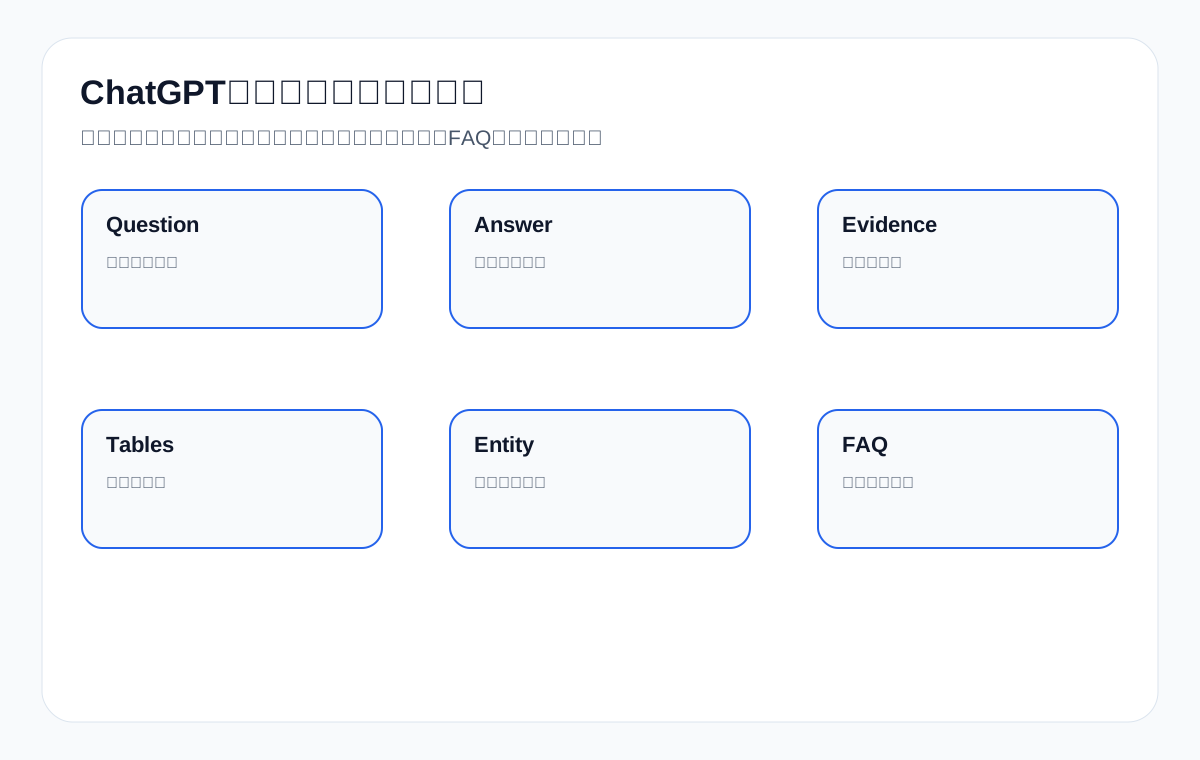
Official evidence boundary: blog posts can improve understandability, but cannot guarantee ChatGPT mentions
Whether a blog post is more likely to be mentioned by ChatGPT or other AI search capabilities cannot be concluded from subjective judgment. A foreign trade website must first verify whether the page can be crawled, indexed, and understood, whether the content facts are clear, whether answer passages can be excerpted, and whether the product pages and resource pages on the site can support the later inquiry path. AI/GEO samples can be observed, but they cannot replace Search Console, GA4, logs, and page facts.
If the site currently has no usable GSC query, page, or page-query row data, you cannot write in rankings, impressions, clicks, CTR, AI mentions, or inquiry changes. Content topic selection can still be optimized, but the conclusion must be downgraded to: whether the article is built around a real purchasing question, and whether it has clear definition passages, comparison passages, process passages, tables, FAQs, entity consistency, internal links, and checkable facts.
Official documentation and AI-friendly blog field mapping table
| Official documentation entry point | What it helps you judge | Blog post acceptance fields | What it cannot establish |
|---|---|---|---|
| Google Search Central: AI features and your website | AI search capabilities still depend on a page foundation that is accessible, indexable, and clearly written. | Definition passages, comparison passages, process passages, fact tables, FAQs, internal links, and page accessibility. | It cannot guarantee that AI answers will cite the official website. |
| Google Search Central: Creating helpful, reliable, people-first content | Content should serve real user questions and provide reliable, useful, checkable information. | Purchasing questions, product facts, applicable conditions, limitation boundaries, and details of experience. | A title that looks like a question is not enough to conclude that the content is useful. |
| Google Search Central: Search Essentials | A page needs to meet basic technical, policy, and content requirements to take part in Google Search. | HTTP 200, crawlable, indexable, main content visible, and no obvious violations. | Meeting basic requirements does not equal having search performance. |
| Google Search Central: SEO Starter Guide | Baseline practices for titles, page organization, links, images, and understandable content. | Whether the title matches a purchasing question, and whether the body has a clear hierarchy and relevant internal links. | It cannot replace a GSC review of a specific page. |
| Google Search Central: Structured data general guidelines | Structured data must match the visible page content and comply with policy. | Whether FAQ, Article, Breadcrumb, and other markup match the body content. | Schema cannot replace page facts and content quality. |
| Google Search Central: Sitemaps overview | A sitemap helps Google discover important URLs. | Whether articles, resource pages, product pages, and pillar pages are in the sitemap. | Being present in a sitemap does not mean the URL has been crawled, indexed, or shown. |
| Google Search Central: robots.txt introduction | robots.txt controls crawl access. | Whether blogs, resource pages, product pages, images, CSS, JS, or AI-related access paths are blocked by mistake. | robots cannot fix a lack of content facts. |
| Search Console Help: URL Inspection tool | The index status, crawl status, canonical, and the page version Google sees for a single URL. | Sampling checks on pilot articles, resource pages, and related product pages. | A single indexable URL does not mean there is search performance. |
| Search Console Help: Page indexing report | Page index status and the reasons pages are not indexed. | Whether AI-friendly articles are indexed and, if not, why. | An indexing report is not a mention or inquiry report. |
| Search Console Help: Performance report | query, page, country, device, clicks, impressions, CTR, average position. | Whether the article appears in query/page rows and whether it relates to product terms and question terms. | With no row data, you cannot write about improvements in rankings, impressions, clicks, or CTR. |
| Google Analytics Help: About events | GA4 events let you observe what users do next on the site. | Resource downloads, forms, email, WhatsApp, RFQ, and contact page events. | On-site events cannot replace GSC search performance. |
| OpenAI Platform: Bots | Distinguishing the access purposes of OAI-SearchBot, GPTBot, and ChatGPT-User. | Whether robots, logs, and public pages unintentionally block the relevant access paths. | It cannot show that ChatGPT will present the site in a prescribed way. |
| Bing Webmaster Blog: AI Performance | If visible in the account, you can observe AI citations, cited pages, and grounding query phrases. | Record Bing AI samples, GSC, GA4, logs, and sales feedback separately. | It does not represent all AI platforms. |
| IndexNow: Documentation | After a URL is added, updated, or deleted, you can notify participating search engines. | Whether notification happens after article, resource page, and product page updates. | It cannot replace content quality, crawl eligibility, and index eligibility. |
AI-friendly blog acceptance criteria: verify the content first, then the samples
| Acceptance layer | Evidence required | How a foreign trade website judges it | What fails |
|---|---|---|---|
| Real question | Questions from the purchasing, selection, installation, comparison, troubleshooting, resource download, or inquiry stage. | Carry the question with product terms such as LED flood light, custom metal parts, or packaging machine. | Chasing only trending terms without answering a business question. |
| Excerptable answers | Definition, comparison, process, and conclusion passages can be understood on their own. | Each passage states the applicable conditions and limitation boundaries. | Long opinion pieces with no restatable facts. |
| Fact density | Parameters, applications, materials, model ranges, testing criteria, error boundaries, and sources. | Let the article link back to product pages, category pages, resource pages, and the contact page. | Piling up jargon to look professional. |
| Page eligibility | HTTP status, robots, sitemap, index status, canonical. | Confirm that the article and related resource pages can all be discovered reasonably. | Discussing mention probability when the page is not indexed. |
| GSC review | query, page, country, device, clicks, impressions, CTR, average position. | Check whether the article appears in row data for product terms, question terms, or resource terms. | Writing about results with no GSC row data. |
| GA4/inquiry | Download, form, email, WhatsApp, RFQ, and contact page events. | See whether the article connects to real business actions. | Treating a rewrite of the article as an inquiry improvement. |
| AI/GEO samples | Platform, question, date, answer summary, cited URL, wrong facts, and screenshots. | Treat samples as observation records, not long-term results. | Turning one answer screenshot into a stable conclusion about a platform. |
How to downgrade acceptance for ChatGPT-mention articles when there is no GSC data
If the site currently has no usable GSC query, page, or page-query row data, the article cannot be written up as a search performance or AI mention report. It can first be written as a content asset and sample observation report.
| Missing evidence | What you can write | What you cannot write | Next review step |
|---|---|---|---|
| No GSC Performance rows | Whether the article is built around a real question, and whether it is crawlable, indexable, and in the sitemap. | Rankings, impressions, clicks, CTR, or trend improvements. | Keep 28-day and 90-day date ranges and wait for the first row data. |
| No URL Inspection sample | List the articles, resource pages, product pages, and category pages that need spot checks. | Asserting that the pages already take part in search. | Record index status, canonical, crawl time, and page version. |
| No GA4 events | Explain that download, form, email, WhatsApp, RFQ, and contact page events need to be configured. | That organic search inquiries have improved. | First make on-site actions observable. |
| No log samples | Explain that origin, CDN, or WAF logs are temporarily unavailable, and do not treat tool screenshots as crawl evidence. | That the relevant crawler has or has not crawled the site. | Obtain logs with clear coverage times, sources, and fields. |
| No AI samples | Build a table of platforms, questions, dates, answer summaries, cited URLs, and wrong facts. | That ChatGPT already mentions the official website. | Retest with a fixed question set across platforms and record it separately from page actions. |
II. The conclusion first: AI is more likely to cite “excerptable answer pages,” not random blog posts
When answering questions, ChatGPT or AI search tools are more likely to use content that is clearly structured, factually specific, verifiable, and complete in context. Generic marketing copy, repetitive short posts, and articles with opinions but no sources are not necessarily easy to cite even in large numbers.
Blog posts on foreign trade sites need to shift from “publishing updates” to “answering purchasing questions.” For example, how to choose a waterproof connector for outdoor lighting has more citation value than company news, because it answers a clear question and can include IP rating, pin count, material, application, and product links.
Content that AI understands more easily usually has: a direct answer at the start, layered headings, tables, steps, FAQs, product examples, resource links, author/company information, and consistent entity names.
Citable content characteristics table
| Characteristic | Why it helps | Foreign trade example |
|---|---|---|
| Clear question | AI knows what the page answers | how to choose LED flood light |
| Direct answer | Easy to excerpt | Give the conclusion and the audience at the start |
| Specific facts | Reduces inaccurate restatement | IP67, CE, MOQ, material |
| Clear tables | Easy to compare | wattage, application, certificate |
| Complete path | Users can keep verifying | product page, resource page, inquiry page |
III. Topics must come from purchasing questions, not trending terms
In the AI era, blog topics should come from buyer questions, sales feedback, GSC query terms, competitor SERPs, product documentation, and application scenarios. Do not chase only trends, and do not write only company news.
If a purchasing question branches into materials, applications, standards, risks, suppliers, and inquiry preparation, you can first break the main question into sub-questions using the Query Fan-Out guide, then decide which part the blog, the resource page, and the product page each answer.
Foreign trade companies can turn inquiry emails, sales chat records, and frequently asked customer questions into a topic library. For example “what is the best material for custom metal parts,” “how to choose packaging machine for powder,” “what certificate is needed for ceramic dinnerware.”
These questions are naturally close to purchasing decisions and are easier to connect to product pages and resource pages.
Topic source table
| Source | What it reveals | Topic example |
|---|---|---|
| Sales inquiries | Real customer questions | MOQ and sample policy for private label activewear |
| GSC query terms | Demand Google already understands | waterproof connector IP67 meaning |
| Competitor SERPs | Formats users expect | LED flood light buying guide |
| Product documentation | Verifiable facts | CNC machining tolerance chart |
| Application scenarios | Industry long-tail demand | packaging machine for coffee powder |
IV. Titles should read like question entry points, not internal announcements
Titles that suit AI and search usually express the question, product, scenario, and user intent clearly. Foreign trade websites should avoid vague titles such as “Company News,” “Industry Updates,” or “Product Advantages.”
For example, “How to Choose Waterproof Connector for Outdoor LED Lighting” is clearer than “Waterproof Connector Advantages”; “CNC Machining Tolerance Guide for Custom Metal Parts” is more specific than “Precision Manufacturing Knowledge.”
Chinese titles on the site should also face the customer and explain what judgment the article helps a foreign trade company make, rather than reading like an internal note.
Title rewrite table
| Weak title | Strong title direction | Reason |
|---|---|---|
| Product advantages introduction | How to Choose LED Flood Light for Parking Lot | Question and scenario are clear |
| Industry updates | Packaging Machine for Powder: Selection Guide | Product and application are clear |
| Technical knowledge | CNC Machining Tolerance Guide for Custom Metal Parts | Technical point and product are clear |
| FAQ | Waterproof Connector FAQ: IP Rating, Material, MOQ | Question scope is clear |
| Certificate notes | Ceramic Dinnerware Safety Certificates Explained | Resource value is clear |
V. Give the answer directly at the start, then expand the reasoning
Many articles spend too long on the opening, so neither AI nor users can quickly judge the page’s value. A better approach is to answer the question in the first paragraph: who it is for, what the core conclusion is, and which judgment criteria will follow.
For example, an article about choosing an LED flood light can state at the start: when choosing, look first at installation height and lighting area, then at wattage, lumens, IP rating, color temperature, heat dissipation, and certification; if it is for a parking lot, also check pole height and illuminance requirements.
A direct answer does not simplify the content; it makes the page easier to understand and excerpt.
Opening structure table
| Module | How to write it | Function |
|---|---|---|
| One-sentence definition | State directly what the topic is | Easy for AI to identify |
| Target audience | State who it is for | Matches the user |
| Core conclusion | Give the judgment principle first | Lowers reading cost |
| Structure ahead | State what will be covered | Sets expectations |
| Related entry points | Point to products and resources | Connects the conversion path |
VI. The body needs tables and judgment criteria, not just opinions
AI finds structured information easier to excerpt. Foreign trade blogs should make more use of tables, checklists, steps, comparisons, and matrices to help buyers judge. Tables are not for visual polish; they turn complex purchasing questions into comparable information.
For example, a waterproof connector article can have an IP rating comparison table, a material selection table, an application scenario table, and an inquiry resource checklist; a packaging machine article can have a selection table for different materials and packaging formats; custom metal parts can have a tolerance and cost impact table.
Long articles without tables easily turn into long stretches of explanation, while content with tables is easier for users and AI to grasp.
Table type table
| Table type | Suitable topic | Foreign trade example |
|---|---|---|
| Parameter comparison | Specification selection | IP67 vs IP68 connector |
| Application matrix | Scenario selection | LED flood light for parking lot/warehouse |
| Process checklist | Operating steps | packaging machine buying process |
| Risk checklist | Common misconceptions | custom metal parts tolerance mistakes |
| Quote request checklist | Conversion preparation | quantity, drawing, material |
VII. FAQs must come from real questions, not be invented to fill a structure
FAQ is a module that both AI and search engines understand easily, but it must come from real purchasing questions. Foreign trade companies can compile FAQs from sales emails, WhatsApp, forms, trade show conversations, and GSC question terms.
A good FAQ answers specific questions: what the MOQ is, whether a custom logo is supported, what drawings are needed, how long lead time is, which markets a certificate applies to, how to choose a material, and what the sample policy is.
Do not write self-praising questions such as “Is our quality good?” or “Why choose us?” A FAQ should be written from the buyer’s perspective.
FAQ source table
| Source | Question type | Example |
|---|---|---|
| Inquiry email | Quote preparation | What information is needed for quote? |
| Sales feedback | Deal blockers | Can you provide CE certificate? |
| GSC queries | Search questions | how to choose waterproof connector |
| Product documentation | Technical questions | What tolerance can CNC machining hold? |
| After-sales communication | Usage questions | How to maintain packaging machine? |
VIII. Entity consistency: company name, brand name, and product name must be unified
AI answers are easily affected by entity consistency. If the company name, brand name, and product name differ across the official website, about page, footer, social media, certificates, product pages, and resource pages, AI and search systems may struggle to confirm that they belong to the same entity.
A common situation for foreign trade companies is mixing a Chinese company name, an English company name, a brand name, a factory name, and an export company name. This should be explained clearly on the about page, in the footer, and on resource pages, and the main English name should stay consistent.
Product names should also be consistent. For example, waterproof connector, IP67 connector, and M12 waterproof connector should not be written as completely unrelated names on different pages.
Entity consistency table
| Entity | What must be unified | Risk |
|---|---|---|
| Company | English name, logo, domain | Brand confusion |
| Brand | Relationship between brand and company | AI cannot attribute it |
| Product | Standard English name and aliases | Query terms become fragmented |
| Certificate | Entity and product scope | Insufficient trust |
| Resources | Version and applicable pages | Incorrect citation |
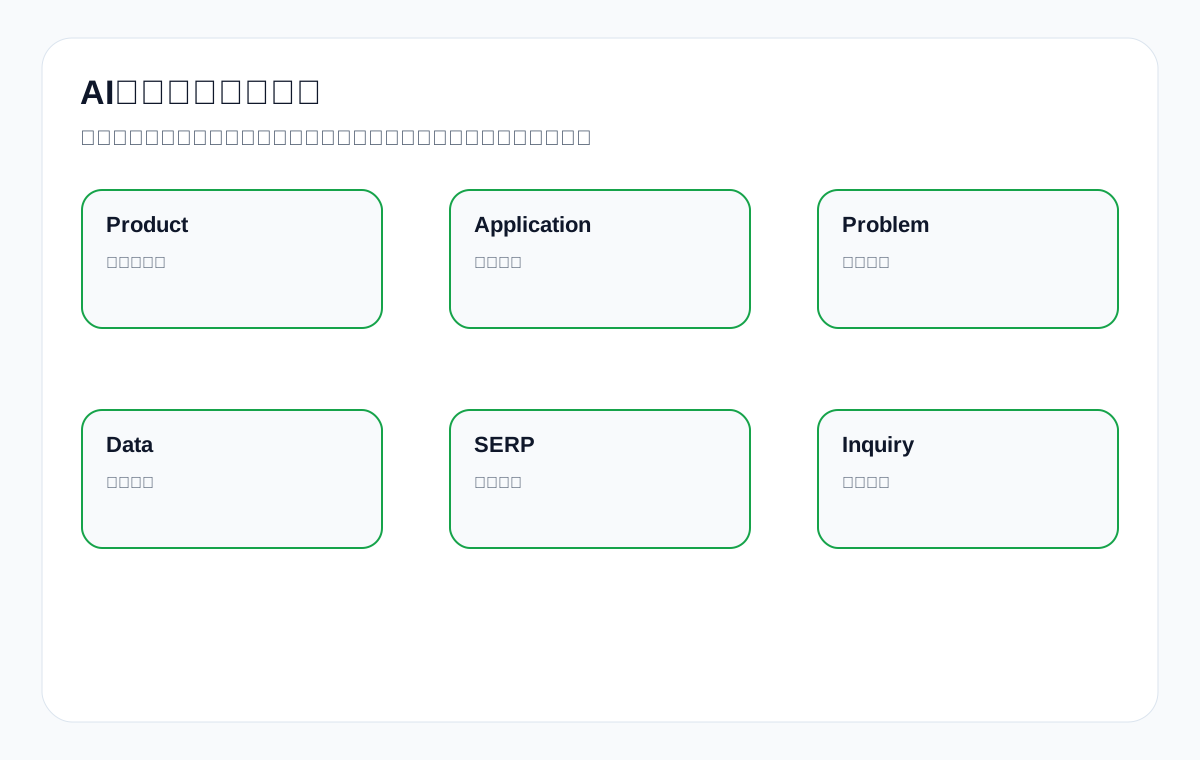
IX. Resource pages and blog posts must support each other
Blog posts can explain a question, but resource pages provide the evidence. Both AI and buyers need verifiable sources. A foreign trade website should link blog posts to resource pages such as datasheets, manuals, certificates, test reports, and catalogs.
For example, an article about ceramic dinnerware safety should link to material descriptions, testing standards, packaging tests, and certificate resources; an article about packaging machine selection should link to the equipment datasheet, operation videos, maintenance instructions, and the inquiry page.
When blog posts and resource pages support each other, they have more citation value than a single article standing alone.
Blog and resource coordination table
| Blog topic | Resources it should support | Function |
|---|---|---|
| LED flood light selection | datasheet, certificate | Verify parameters and certification |
| CNC tolerance guide | inspection report, drawing guide | Support drawing-based quoting |
| Packaging machine guide | manual, video, spec sheet | Support equipment decisions |
| Ceramic dinnerware safety | certificate, test report | Support compliance trust |
| Waterproof connector FAQ | IP rating datasheet | Support parameter explanations |
X. Content must add information gain, not just rewrite answers that already exist
In the AI era, a huge amount of content repeats the same answer. If an article only rephrases common opinions, it is hard for it to gain citation value. A foreign trade company’s advantage lies in its own product facts, factory experience, sales questions, and resources.
Information gain can come from: real parameter tables, selection experience, application limits, common misconceptions, inquiry resource checklists, certificate explanations, testing methods, packaging and shipping experience, and sales feedback.
For example, on “how to choose LED flood light,” ordinary articles all cover wattage and IP rating; you can add installation height, illuminance, application scenarios, heat dissipation, certification, and inquiry resources. That is gain.
Information gain source table
| Source | Content gain | Example |
|---|---|---|
| Product parameters | More specific | 100W, 150W, IP66, beam angle |
| Factory experience | More real | Common customization mistakes |
| Sales questions | Closer to purchasing | MOQ, lead time, sample |
| Test documentation | More credible | pressure test, inspection report |
| Application limits | More useful for judgment | Not suitable for high-temperature or high-humidity scenarios |
XI. Page citability check: can AI excerpt one accurate answer
After finishing an article, use a simple check: if AI or a user excerpts only one passage, does that passage answer the question accurately? If every passage depends on context, lacks a subject, has no data, and has no product scenario, it will not be cited accurately.
A good passage should contain a clear object, judgment conditions, and a conclusion. For example, “When choosing a waterproof connector, outdoor lighting scenarios usually start with IP rating, pin count, cable material, and rated current; for marine lighting, also pay attention to salt spray, sealing structure, and certification.”
This kind of passage has more citation value than “choosing the right product is very important.”
Citable passage checklist
| Check item | Passing behavior | Failing behavior |
|---|---|---|
| Clear object | State the product or question | Vague subject |
| Clear conditions | State the applicable scenario | Speaking in generalities |
| Clear conclusion | Give judgment criteria | Only slogans |
| Specific facts | Has parameters or resources | No evidence |
| Clear next step | Link to products or resources | No path |
XII. Images and diagrams must also serve understanding
Combining text and images is not just about illustrating. Both AI and users find flowcharts, matrix diagrams, parameter tables, selection diagrams, and application illustrations easier to understand. Images in foreign trade blogs should explain the question, not be unrelated stock images.
For example, a waterproof connector article can have an IP rating selection matrix, an LED flood light article can have a chart of installation height versus wattage, a packaging machine article can have a flowchart from material to equipment type, and a custom metal parts article can have a drawing-based inquiry checklist.
Images also need clear alt text and context.
Diagram type table
| Diagram | Suitable topic | Value |
|---|---|---|
| Flowchart | Selection steps | Lowers comprehension cost |
| Matrix diagram | Matching parameters and applications | Easy to compare |
| Illustration | Installation or structure | Explains product details |
| Screenshot | Tools and data | Supports operations |
| Checklist graphic | Inquiry resources | Drives conversion |
XIII. From blog to product page: AI citations cannot replace the inquiry path
Even if a blog post is mentioned by AI, if users cannot find the product page, resource page, and inquiry entry after landing on the website, it is hard to produce business results. AI visibility must be combined with the SEO conversion path.
Each blog post should link to at least one related category page, one related product or application page, one resource page or FAQ, and one inquiry path. That way, users arriving from AI or search can keep verifying and get in touch.
For example, a CNC tolerance guide should link to the custom metal parts capability page, the CNC machining parts page, the upload drawing page, and the inspection report explanation.
Blog to inquiry path table
| Blog topic | Pages it should link to | Conversion purpose |
|---|---|---|
| CNC tolerance guide | custom metal parts, upload drawing | Submit drawings |
| LED flood light guide | category page, application page, datasheet | Filter products |
| Packaging machine guide | Equipment category, video, inquiry page | Confirm equipment |
| Ceramic dinnerware safety | Certificate page, product page | Build trust |
| Waterproof connector FAQ | Product page, resource page | Confirm specifications |
XIV. In reviews, do not only look at whether AI mentions you; look at accuracy and lead quality
AI answers fluctuate, so a single test cannot be the only basis. Reviews should use a fixed query set and regularly record whether the brand is mentioned, whether the official website is cited, whether the description is accurate, whether competitors appear, and whether visits and inquiries result.
Also look at GSC query terms, GA4 behavior, resource downloads, form submissions, and sales feedback. If AI mentions you but describes you incorrectly, fix entities and resources; if there are visits but no inquiries, check the page path; if inquiries are more specific, the content is closer to purchasing needs.
Do not treat “being mentioned” as the final goal. The real goal is to be understood accurately and to generate higher-quality purchasing conversations.
AI citation review metrics
| Metric | What to look at | Action |
|---|---|---|
| Mention | Whether the brand/product appears | Record the query set |
| Citation | Whether the official website is cited | Strengthen resource pages |
| Accuracy | Whether the description is accurate | Correct page facts |
| GSC | Whether query terms grow | Add related pages |
| GA4 | Whether users keep clicking | Optimize the path |
| Inquiry | Whether inquiries are specific | Feed back into topic selection |
XV. The 2026 content topic selection process
An AI search content process suitable for foreign trade companies can be divided into six steps: collect purchasing questions, verify SERPs and AI answers, decide the page type, write a citable structure, link products and resources, and review data and inquiries.
This process avoids writing articles at random. Every topic should be able to state: which English question it answers, which product line it fits, whether an existing page already covers it, whether a new article is needed, how it links to products and resources, and how it will be reviewed.
If a topic cannot be connected to a product line and a purchasing question, publish it with caution.
Content topic selection process table
| Step | Action | Output |
|---|---|---|
| Collect questions | GSC, inquiries, sales feedback | Question library |
| Verify intent | Look at SERPs and AI answers | Page type |
| Decide the structure | Title, H2s, tables, FAQ | Outline |
| Add facts | Parameters, resources, applications | Content evidence |
| Add the path | Product, resource, inquiry links | Conversion entry points |
| Review | AI, GSC, GA4, inquiries | Next round of optimization |
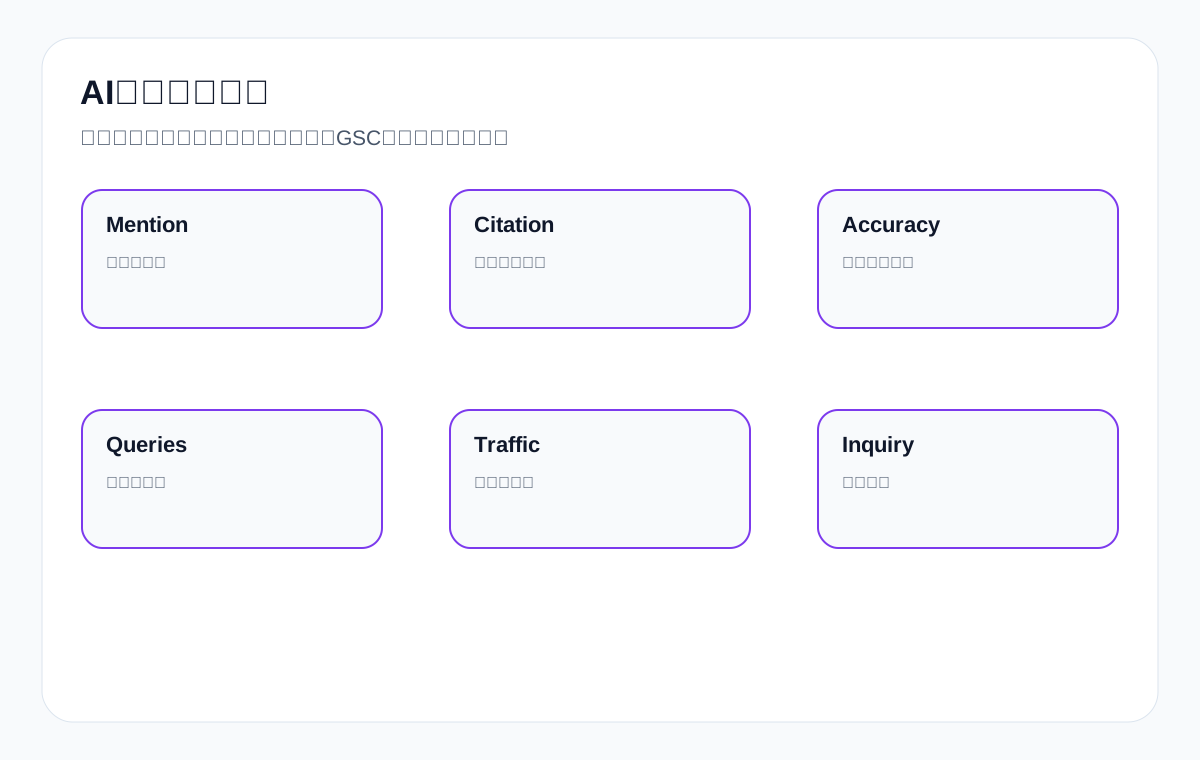
XVIII. How blog posts and resource pages divide the work: one article should not carry every task
AI understands a clear page system more easily than a single blog post carrying definitions, products, certificates, downloads, inquiries, and company introduction at the same time. Blog posts are suited to explaining questions and judgment methods, resource pages to carrying evidence, and product pages to showing parameters and the inquiry entry.
For example, a blog post about medical probe material can explain the logic of choosing different materials, cleaning methods, and application limits, but specific models, compatible equipment, certificates, and datasheets should link to product pages and resource pages. That way the content is complete without turning the blog into a cluttered page.
If all the information in a blog post is only described in words, with no resource pages or product pages to support it, AI may not be able to verify the source even if it cites the post.
Blog and page division of labor table
| Page | Responsible content | Should not carry |
|---|---|---|
| Blog post | Question explanations, steps, misconceptions, FAQ | All product parameters |
| Product page | Specifications, materials, images, MOQ | A long generic tutorial |
| Resource page | datasheet, manual, certificate | Download buttons with no context |
| Application page | Scenario questions and recommended products | Only a pile of industry names |
| Inquiry page | Resource checklist and submission path | Complex long-form text |
XIX. Applying E-E-A-T in foreign trade blogs: experience must be specific and verifiable
Both AI and search systems place more weight on trustworthy content. When writing blogs, foreign trade companies should not just write “we have rich experience,” but express experience as verifiable information: how materials are chosen, which scenarios are unsuitable, how testing is done, the scope of a certificate, common inquiry mistakes, and packaging test requirements.
Experience can come from factory production experience, sales inquiry questions, quality inspection processes, and application scenarios; Expertise can come from parameters, standards, drawings, and tests; Authoritativeness can come from resource pages, certificates, and industry references; Trust can come from company information, contact details, real photos, and consistent entity information.
For example, a custom metal parts article can explain how different tolerances affect cost and lead time, which is more credible than “high-precision machining.”
Foreign trade E-E-A-T implementation table
| Dimension | Foreign trade expression | Example |
|---|---|---|
| Experience | Real applications and problems | Customers often omit drawing tolerances |
| Expertise | Parameters and standards | IP67, CE, material grade |
| Authority | Resources and external signals | datasheet, certificate, test report |
| Trust | Consistent company and contact details | English company name, address, email |
| Review | Continuous updates | Add FAQs based on sales feedback |
XX. How to write definition passages that AI can excerpt
The definition passage is one of the things AI and users cite most easily. A good definition passage should state the object, the scope, the key conditions, and common misunderstandings. Do not write only an encyclopedia-style definition, and do not write an advertisement.
For example, “Waterproof connector is a connector designed to protect electrical connections from moisture, dust, and outdoor exposure. For outdoor LED lighting, buyers should check IP rating, pin count, cable material, rated current, and installation environment before requesting a quote.” This definition has both an object and purchasing judgment.
Chinese articles can use a similar structure: define first, then explain what to check in foreign trade purchasing, and then link to products and resources.
Definition passage formula table
| Element | How to write it | Example |
|---|---|---|
| Object | What this thing is | waterproof connector |
| Scope | What scenario it is used in | outdoor LED lighting |
| Judgment conditions | Which parameters to check | IP rating, pin count |
| Next step | How to keep verifying | datasheet, quote request |
| Boundary | What it is not suitable for | High temperature or special chemical environments require confirmation |
XXI. How to write comparison passages that AI can cite
Many purchasing questions are essentially comparisons: what is the difference between A and B, which material fits, which equipment fits a scenario. AI cites clearly structured comparison passages and tables more easily.
Foreign trade blogs can write about: IP67 vs IP68 waterproof connector, CNC milling vs CNC turning, powder packaging machine vs liquid filling machine, ceramic stoneware vs porcelain dinnerware. Each comparison must state the applicable conditions rather than simply saying which is better.
Comparison content should avoid absolutes. Purchasing choices usually depend on application, budget, certification, quantity, lead time, and the usage environment.
Comparison content framework
| Module | How to write it | Example |
|---|---|---|
| Objects compared | A vs B | IP67 vs IP68 |
| Core differences | List in a table | Protection rating, application environment |
| Applicable scenarios | Recommend by condition | Outdoor lighting vs prolonged immersion |
| Purchasing notes | Resources to provide with the inquiry | cable length, rated current |
| Related pages | Link products and resources | IP67 connector product page |
XXII. How to write process passages that AI can cite
Process passages are suited to answering “how to do it.” A foreign trade blog can break a complex purchasing question into steps: confirm the application scenario, confirm parameters, screen suppliers, download resources, submit an inquiry, and verify samples. Every step needs judgment criteria.
For example, choosing a packaging machine can follow six steps: confirm the material, confirm the packaging format, confirm capacity, confirm precision, confirm certification and after-sales service, and prepare samples and parameters for the inquiry. This kind of process has more citation value than “choose a professional manufacturer.”
Process passages are best paired with a table or flowchart so users and AI can understand them.
Process passage example table
| Step | Question | Resources |
|---|---|---|
| 1 | Where is the product used | application, environment |
| 2 | What are the key parameters | size, material, rating |
| 3 | What certificates are needed | CE, RoHS, FDA |
| 4 | How to compare suppliers | datasheet, test report |
| 5 | What to prepare for the inquiry | quantity, drawing, target market |
XXIII. Contradictory content on the site lowers AI accuracy
If different articles say different things about the same product parameter, MOQ, certification, material, or application, both AI and users can be confused. Foreign trade websites should regularly check content consistency, especially between product pages, resource pages, FAQs, and blog posts.
For example, one page says a waterproof connector supports IP67 and another says IP68 without explaining that they are different models; one page says MOQ 1000pcs and another says MOQ negotiable; one page says a CE certificate covers all products when it actually covers only some series. Such contradictions damage trust.
The solution is to build a product fact table, have all content cite the same set of sources, and state the applicable scope on the page.
Content consistency checklist
| Check item | Common contradiction | How to fix it |
|---|---|---|
| Parameters | Different wording on different pages | Build a standard parameter table |
| MOQ | Fixed values mixed with negotiable ones | State the conditions and scope |
| Certification | Unclear scope | Link to the certificate page |
| Applications | Overgeneralization | State what it suits and what it does not |
| Brand name | Multiple English names | Unify the entity name |
XXIV. How foreign trade blogs build topic clusters instead of scattered articles
Websites that AI understands more easily usually do not have only single articles; they form a topic cluster around a product line. A topic cluster includes a pillar guide, parameter explanations, application scenarios, resource pages, FAQs, and product pages. Each article has a clear position and supports the others through internal links.
For example, waterproof connector can form a cluster: how to choose waterproof connector as the pillar page, an IP rating guide as the parameter page, marine lighting connector as the application page, an M12 connector datasheet as the resource page, and a custom cable assembly FAQ as the question page. That way both AI and users can see a complete topic rather than isolated articles.
Topic clusters also reduce duplicate content. Before publishing a new topic, first decide whether it belongs to a pillar page, a subpage, an application page, or a resource page; if an existing page can carry it, update that page instead.
Topic cluster planning table
| Page role | Content topic | Link relationship |
|---|---|---|
| Pillar guide | How to choose waterproof connector | Links to all subpages |
| Parameter page | IP67 vs IP68 | Links back to the pillar page and product pages |
| Application page | Connector for marine lighting | Links to related products |
| Resource page | M12 connector datasheet | Supports product verification |
| FAQ page | MOQ, custom cable, sample | Leads to the inquiry page |
XXV. How to build an AI query set after content is published
After publishing an article, do not just wait for traffic. You can build a fixed AI query set, test the same questions every month, and record whether the brand is mentioned, whether the official website is cited, whether the answer is accurate, whether competitors appear, and what the wrong information is. The query set should cover products, applications, parameters, resources, and inquiry preparation.
For example, the LED flood light topic can test: how to choose LED flood light for parking lot, LED flood light IP rating guide, 100W LED flood light supplier, LED flood light datasheet. Every question should correspond to a page or resource asset on the website.
During review, do not judge failure because something did not appear once, and do not judge success because it appeared once. Look at trends, accuracy, and the visits/inquiries that follow.
AI query set record table
| Field | What to record | Purpose |
|---|---|---|
| Query question | A fixed English question | Keep it comparable |
| Mentioned or not | Whether the brand/product appears | Check coverage |
| Cited or not | Whether the official website URL is cited | Check the source |
| Accuracy | Whether the description is correct | Find content gaps |
| Follow-up actions | Add pages, add resources, revise FAQs | Create an iteration loop |
XXVI. Work backward from sales feedback to the next batch of AI-friendly content
Sales feedback is the most real source of blog topics for foreign trade. Questions customers ask repeatedly are often content opportunities. If customers always ask about MOQ, explain it on product pages and in the FAQ; if they always ask about certificates, build a certificate resource page; if they always ask about material selection, write a material guide.
Do not leave topic selection to guesswork by the content team. Every month, have sales list 10 high-frequency questions, 5 high-quality inquiries, and the reasons behind 5 invalid inquiries, then turn them into page updates or new content. That way articles stay closer to purchasing rather than only to tool keywords.
The essence of AI-friendly content is putting real purchasing conversations onto web pages in advance, so both users and AI can find clear answers.
Sales feedback to content action table
| Sales feedback | Content action | Target page |
|---|---|---|
| Customers always ask about MOQ | Add FAQs and inquiry notes | Product page / inquiry page |
| Customers ask for certificates | Build a certificate resource page | Resource page |
| Customers do not understand selection | Write a selection guide | Blog / pillar page |
| Customers send the wrong drawings | Write an inquiry resource checklist | Inquiry page |
| Customers ask about application limits | Add an application page and misconceptions | Application page |
XXVII. Content quality red lines: which articles should not be expected to earn AI citations
Not every blog post is suited to earning AI citations. Company events, internal notices, short news items, repeated introductions, opinion pieces without facts, and articles that only rewrite other people’s content are usually not suitable as AI citation assets. They can retain brand-record value, but they should not be an SEO/GEO priority.
Content truly worth investing in is pages that answer purchasing questions, contain product facts, support resource verification, can be updated over time, and can connect to the inquiry path. For low-value content, either keep it as brand news or merge it into a stronger page; do not keep pouring resources into it.
Content strategy must be willing to make trade-offs. A small amount of high-quality purchasing material usually has more long-term value than a large number of shallow articles.
Content not suited to being a priority for AI citations
| Content type | Problem | Recommendation |
|---|---|---|
| Company event news | Weak purchasing question | Keep it as brand news only |
| Short industry snippets | Insufficient facts | Merge or upgrade |
| Repeated product introductions | No information gain | Consolidate into product pages |
| Vague opinion pieces | Not verifiable | Add data and resources |
| Articles without internal links | No path | Add product and resource links |
XVI. FAQ: how blog posts can be more likely to be mentioned by ChatGPT
Does a longer article make it more likely to be mentioned by ChatGPT?
No. Length helps cover a question, but what matters more is a clear question, a clear structure, credible facts, complete tables and FAQs, and a page that solves a real purchasing problem.
Is more FAQ better?
No. FAQs must come from real inquiries, search terms, and purchasing questions. Repetitive, vague, or self-praising questions have no value.
Can being mentioned by ChatGPT be guaranteed?
No one can guarantee that it appears every time. What is controllable is improving content understandability, credible resources, entity consistency, and the review mechanism.
Should foreign trade blogs publish company news?
Company news can be published, but it should not be the main SEO content. More valuable are selection guides, application pages, resource explanations, parameter comparisons, and purchasing FAQs.
What is the relationship between AI citations and Google SEO?
The foundations are shared. Clear pages, real resources, structured content, internal links, and entity consistency all help both search and AI understanding.
How should the first batch of AI-friendly content be chosen?
Start with high-value product lines, real inquiry questions, existing GSC query terms, and topics with complete resources.
Do you need to cite external sources?
If standards, certifications, or industry definitions are involved, authoritative sources can be cited. But foreign trade product pages also need their own real resources.
Do images help with AI citations?
Images alone are not everything, but flowcharts, matrix diagrams, parameter diagrams, and clear alt text help users understand and make the page more complete.
How do you review an article after AI mentions it?
Use a fixed query set to record mentions, citations, and accuracy, then look at GSC, GA4, resource downloads, forms, and inquiry quality.
What if there are already many old articles?
First take stock of duplicates and weak articles, merge similar ones into a stronger pillar page, and add product and resource links.
XVII. Conclusion: blogging in the AI era is not about writing more, but about writing purchasing material that can be understood accurately
What kind of blog posts are more likely to be mentioned by ChatGPT? The answer is not a mysterious trick; it is content that is clear, specific, credible, structured, verifiable, and connected to products and resources. For foreign trade companies, blog posts need to be upgraded from “publishing content” to “building a library of purchasing-question resources.”
Every article should revolve around one real English purchasing question, answer it directly at the start, provide judgment criteria and tables in the body, add foreign trade product examples, FAQs, resource links, and an inquiry path, and then be reviewed with an AI query set, GSC, GA4, and sales feedback.
When your content helps overseas buyers understand your products faster and helps AI restate the facts more accurately, it truly has long-term search and AI visibility value.
Final checklist
| Check item | Completion standard |
|---|---|
| Topic source | Comes from purchasing questions, GSC, sales feedback, or resources |
| Title structure | Question, product, and scenario are clear |
| Body structure | Direct answer, tables, steps, FAQ |
| Factual evidence | Parameters, certificates, resources, and applications are real |
| Path connections | Links to product pages, resource pages, and the inquiry page |
| Review metrics | AI mentions, citations, accuracy, GSC, and inquiry quality |
{
“@context”: “https://schema.org”,
“@type”: “FAQPage”,
“mainEntity”: [
{
“@type”: “Question”,
“name”: “Top1/authoritative benchmark comparison cardnnComparison dimension Authoritative content strengths Foreign trade enterprise gaps How this article fills themnnAI citation logic Emphasizes clear answers and credible sources Lacks foreign trade product scenarios Adds English product terms and purchasing questionsnContent structure Covers definitions, FAQ, tables Lacks page paths Connects product pages/resource pages/inquiry pagesnEntity signals Discusses brand consistency Lacks factory/trading company resources Adds company, certificate, and product entitiesnReview metrics Mentions AI visibility monitoring Lacks an inquiry loop Adds GSC/GA4/sales feedbacknRisk boundaries Partly notes what is uncontrollable Still risks exaggerated promises States clearly that no specific position or frequency is promisednnII. The conclusion first: AI is more likely to cite “excerptable answer pages,” not random blog postsnWhen answering questions, ChatGPT or AI search tools are more likely to use content that is clearly structured, factually specific, verifiable, and complete in context. Generic marketing copy, repetitive short posts, and articles with opinions but no sources are not necessarily easy to cite even in large numbers.nBlog posts on foreign trade sites need to shift from “publishing updates” to “answering purchasing questions.” For example, how to choose a waterproof connector for outdoor lighting has more citation value than company news, because it answers a clear question and can include IP rating, pin count, material, application, and product links.nContent that AI understands more easily usually has: a direct answer at the start, layered headings, tables, steps, FAQs, product examples, resource links, author/company information, and consistent entity names.nCitable content characteristics tablennCharacteristic Why it helps Foreign trade examplennClear question AI knows what the page answers how to choose LED flood lightnDirect answer Easy to excerpt Give the conclusion and the audience at the startnSpecific facts Reduces inaccurate restatement IP67, CE, MOQ, materialnClear tables Easy to compare wattage, application, certificatenComplete path Users can keep verifying product page, resource page, inquiry pagennIII. Topics must come from purchasing questions, not trending termsnIn the AI era, blog topics should come from buyer questions, sales feedback, GSC query terms, competitor SERPs, product documentation, and application scenarios. Do not chase only trends, and do not write only company news.nIf a purchasing question branches into materials, applications, standards, risks, suppliers, and inquiry preparation, you can first break the main question into sub-questions using the Query Fan-Out guide, then decide which part the blog, the resource page, and the product page each answer.nForeign trade companies can turn inquiry emails, sales chat records, and frequently asked customer questions into a topic library. For example “what is the best material for custom metal parts,” “how to choose packaging machine for powder,” “what certificate is needed for ceramic dinnerware.”nThese questions are naturally close to purchasing decisions and are easier to connect to product pages and resource pages.nTopic source tablennSource What it reveals Topic examplennSales inquiries Real customer questions MOQ and sample policy for private label activewearnGSC query terms Demand Google already understands waterproof connector IP67 meaningnCompetitor SERPs Formats users expect LED flood light buying guidenProduct documentation Verifiable facts CNC machining tolerance chartnApplication scenarios Industry long-tail demand packaging machine for coffee powdernnIV. Titles should read like question entry points, not internal announcementsnTitles that suit AI and search usually express the question, product, scenario, and user intent clearly. Foreign trade websites should avoid vague titles such as “Company News,” “Industry Updates,” or “Product Advantages.”nFor example, “How to Choose Waterproof Connector for Outdoor LED Lighting” is clearer than “Waterproof Connector Advantages”; “CNC Machining Tolerance Guide for Custom Metal Parts” is more specific than “Precision Manufacturing Knowledge.”nChinese titles on the site should also face the customer and explain what judgment the article helps a foreign trade company make, rather than reading like an internal note.nTitle rewrite tablennWeak title Strong title direction ReasonnnProduct advantages introduction How to Choose LED Flood Light for Parking Lot Question and scenario are clearnIndustry updates Packaging Machine for Powder: Selection Guide Product and application are clearnTechnical knowledge CNC Machining Tolerance Guide for Custom Metal Parts Technical point and product are clearnFAQ Waterproof Connector FAQ: IP Rating, Material, MOQ Question scope is clearnCertificate notes Ceramic Dinnerware Safety Certificates Explained Resource value is clearnnV. Give the answer directly at the start, then expand the reasoningnMany articles spend too long on the opening, so neither AI nor users can quickly judge the page’s value. A better approach is to answer the question in the first paragraph: who it is for, what the core conclusion is, and which judgment criteria will follow.nFor example, an article about choosing an LED flood light can state at the start: when choosing, look first at installation height and lighting area, then at wattage, lumens, IP rating, color temperature, heat dissipation, and certification; if it is for a parking lot, also check pole height and illuminance requirements.nA direct answer does not simplify the content; it makes the page easier to understand and excerpt.nOpening structure tablennModule How to write it FunctionnnOne-sentence definition State directly what the topic is Easy for AI to identifynTarget audience State who it is for Matches the usernCore conclusion Give the judgment principle first Lowers reading costnStructure ahead State what will be covered Sets expectationsnRelated entry points Point to products and resources Connects the conversion pathnnVI. The body needs tables and judgment criteria, not just opinionsnAI finds structured information easier to excerpt. Foreign trade blogs should make more use of tables, checklists, steps, comparisons, and matrices to help buyers judge. Tables are not for visual polish; they turn complex purchasing questions into comparable information.nFor example, a waterproof connector article can have an IP rating comparison table, a material selection table, an application scenario table, and an inquiry resource checklist; a packaging machine article can have a selection table for different materials and packaging formats; custom metal parts can have a tolerance and cost impact table.nLong articles without tables easily turn into long stretches of explanation, while content with tables is easier for users and AI to grasp.nTable type tablennTable type Suitable topic Foreign trade examplennParameter comparison Specification selection IP67 vs IP68 connectornApplication matrix Scenario selection LED flood light for parking lot/warehousenProcess checklist Operating steps packaging machine buying processnRisk checklist Common misconceptions custom metal parts tolerance mistakesnQuote request checklist Conversion preparation quantity, drawing, materialnnVII. FAQs must come from real questions, not be invented to fill a structurenFAQ is a module that both AI and search engines understand easily, but it must come from real purchasing questions. Foreign trade companies can compile FAQs from sales emails, WhatsApp, forms, trade show conversations, and GSC question terms.nA good FAQ answers specific questions: what the MOQ is, whether a custom logo is supported, what drawings are needed, how long lead time is, which markets a certificate applies to, how to choose a material, and what the sample policy is.nDo not write self-praising questions such as “Is our quality good?” or “Why choose us?” A FAQ should be written from the buyer’s perspective.nFAQ source tablennSource Question type ExamplennInquiry email Quote preparation What information is needed for quote?nSales feedback Deal blockers Can you provide CE certificate?nGSC queries Search questions how to choose waterproof connectornProduct documentation Technical questions What tolerance can CNC machining hold?nAfter-sales communication Usage questions How to maintain packaging machine?nnVIII. Entity consistency: company name, brand name, and product name must be unifiednAI answers are easily affected by entity consistency. If the company name, brand name, and product name differ across the official website, about page, footer, social media, certificates, product pages, and resource pages, AI and search systems may struggle to confirm that they belong to the same entity.nA common situation for foreign trade companies is mixing a Chinese company name, an English company name, a brand name, a factory name, and an export company name. This should be explained clearly on the about page, in the footer, and on resource pages, and the main English name should stay consistent.nProduct names should also be consistent. For example, waterproof connector, IP67 connector, and M12 waterproof connector should not be written as completely unrelated names on different pages.nEntity consistency tablennEntity What must be unified RisknnCompany English name, logo, domain Brand confusionnBrand Relationship between brand and company AI cannot attribute itnProduct Standard English name and aliases Query terms become fragmentednCertificate Entity and product scope Insufficient trustnResources Version and applicable pages Incorrect citationnnFigure 2: Blog topics in the AI era should come from products, applications, resources, purchasing questions, and inquiry value.nIX. Resource pages and blog posts must support each othernBlog posts can explain a question, but resource pages provide the evidence. Both AI and buyers need verifiable sources. A foreign trade website should link blog posts to resource pages such as datasheets, manuals, certificates, test reports, and catalogs.nFor example, an article about ceramic dinnerware safety should link to material descriptions, testing standards, packaging tests, and certificate resources; an article about packaging machine selection should link to the equipment datasheet, operation videos, maintenance instructions, and the inquiry page.nWhen blog posts and resource pages support each other, they have more citation value than a single article standing alone.nBlog and resource coordination tablennBlog topic Resources it should support FunctionnnLED flood light selection datasheet, certificate Verify parameters and certificationnCNC tolerance guide inspection report, drawing guide Support drawing-based quotingnPackaging machine guide manual, video, spec sheet Support equipment decisionsnCeramic dinnerware safety certificate, test report Support compliance trustnWaterproof connector FAQ IP rating datasheet Support parameter explanationsnnX. Content must add information gain, not just rewrite answers that already existnIn the AI era, a huge amount of content repeats the same answer. If an article only rephrases common opinions, it is hard for it to gain citation value. A foreign trade company’s advantage lies in its own product facts, factory experience, sales questions, and resources.nInformation gain can come from: real parameter tables, selection experience, application limits, common misconceptions, inquiry resource checklists, certificate explanations, testing methods, packaging and shipping experience, and sales feedback.nFor example, on “how to choose LED flood light,” ordinary articles all cover wattage and IP rating; you can add installation height, illuminance, application scenarios, heat dissipation, certification, and inquiry resources. That is gain.nInformation gain source tablennSource Content gain ExamplennProduct parameters More specific 100W, 150W, IP66, beam anglenFactory experience More real Common customization mistakesnSales questions Closer to purchasing MOQ, lead time, samplenTest documentation More credible pressure test, inspection reportnApplication limits More useful for judgment Not suitable for high-temperature or high-humidity scenariosnnXI. Page citability check: can AI excerpt one accurate answernAfter finishing an article, use a simple check: if AI or a user excerpts only one passage, does that passage answer the question accurately? If every passage depends on context, lacks a subject, has no data, and has no product scenario, it will not be cited accurately.nA good passage should contain a clear object, judgment conditions, and a conclusion. For example, “When choosing a waterproof connector, outdoor lighting scenarios usually start with IP rating, pin count, cable material, and rated current; for marine lighting, also pay attention to salt spray, sealing structure, and certification.”nThis kind of passage has more citation value than “choosing the right product is very important.”nCitable passage checklistnnCheck item Passing behavior Failing behaviornnClear object State the product or question Vague subjectnClear conditions State the applicable scenario Speaking in generalitiesnClear conclusion Give judgment criteria Only slogansnSpecific facts Has parameters or resources No evidencenClear next step Link to products or resources No pathnnXII. Images and diagrams must also serve understandingnCombining text and images is not just about illustrating. Both AI and users find flowcharts, matrix diagrams, parameter tables, selection diagrams, and application illustrations easier to understand. Images in foreign trade blogs should explain the question, not be unrelated stock images.nFor example, a waterproof connector article can have an IP rating selection matrix, an LED flood light article can have a chart of installation height versus wattage, a packaging machine article can have a flowchart from material to equipment type, and a custom metal parts article can have a drawing-based inquiry checklist.nImages also need clear alt text and context.nDiagram type tablennDiagram Suitable topic ValuennFlowchart Selection steps Lowers comprehension costnMatrix diagram Matching parameters and applications Easy to comparenIllustration Installation or structure Explains product detailsnScreenshot Tools and data Supports operationsnChecklist graphic Inquiry resources Drives conversionnnXIII. From blog to product page: AI citations cannot replace the inquiry pathnEven if a blog post is mentioned by AI, if users cannot find the product page, resource page, and inquiry entry after landing on the website, it is hard to produce business results. AI visibility must be combined with the SEO conversion path.nEach blog post should link to at least one related category page, one related product or application page, one resource page or FAQ, and one inquiry path. That way, users arriving from AI or search can keep verifying and get in touch.nFor example, a CNC tolerance guide should link to the custom metal parts capability page, the CNC machining parts page, the upload drawing page, and the inspection report explanation.nBlog to inquiry path tablennBlog topic Pages it should link to Conversion purposennCNC tolerance guide custom metal parts, upload drawing Submit drawingsnLED flood light guide category page, application page, datasheet Filter productsnPackaging machine guide Equipment category, video, inquiry page Confirm equipmentnCeramic dinnerware safety Certificate page, product page Build trustnWaterproof connector FAQ Product page, resource page Confirm specificationsnnXIV. In reviews, do not only look at whether AI mentions you; look at accuracy and lead qualitynAI answers fluctuate, so a single test cannot be the only basis. Reviews should use a fixed query set and regularly record whether the brand is mentioned, whether the official website is cited, whether the description is accurate, whether competitors appear, and whether visits and inquiries result.nAlso look at GSC query terms, GA4 behavior, resource downloads, form submissions, and sales feedback. If AI mentions you but describes you incorrectly, fix entities and resources; if there are visits but no inquiries, check the page path; if inquiries are more specific, the content is closer to purchasing needs.nDo not treat “being mentioned” as the final goal. The real goal is to be understood accurately and to generate higher-quality purchasing conversations.nAI citation review metricsnnMetric What to look at ActionnnMention Whether the brand/product appears Record the query setnCitation Whether the official website is cited Strengthen resource pagesnAccuracy Whether the description is accurate Correct page factsnGSC Whether query terms grow Add related pagesnGA4 Whether users keep clicking Optimize the pathnInquiry Whether inquiries are specific Feed back into topic selectionnnXV. The 2026 content topic selection processnAn AI search content process suitable for foreign trade companies can be divided into six steps: collect purchasing questions, verify SERPs and AI answers, decide the page type, write a citable structure, link products and resources, and review data and inquiries.nThis process avoids writing articles at random. Every topic should be able to state: which English question it answers, which product line it fits, whether an existing page already covers it, whether a new article is needed, how it links to products and resources, and how it will be reviewed.nIf a topic cannot be connected to a product line and a purchasing question, publish it with caution.nContent topic selection process tablennStep Action OutputnnCollect questions GSC, inquiries, sales feedback Question librarynVerify intent Look at SERPs and AI answers Page typenDecide the structure Title, H2s, tables, FAQ OutlinenAdd facts Parameters, resources, applications Content evidencenAdd the path Product, resource, inquiry links Conversion entry pointsnReview AI, GSC, GA4, inquiries Next round of optimizationnnFigure 3: AI citation reviews should look at mentions, citations, accuracy, GSC, behavior, and inquiry quality.nnXVIII. How blog posts and resource pages divide the work: one article should not carry every tasknAI understands a clear page system more easily than a single blog post carrying definitions, products, certificates, downloads, inquiries, and company introduction at the same time. Blog posts are suited to explaining questions and judgment methods, resource pages to carrying evidence, and product pages to showing parameters and the inquiry entry.nFor example, a blog post about medical probe material can explain the logic of choosing different materials, cleaning methods, and application limits, but specific models, compatible equipment, certificates, and datasheets should link to product pages and resource pages. That way the content is complete without turning the blog into a cluttered page.nIf all the information in a blog post is only described in words, with no resource pages or product pages to support it, AI may not be able to verify the source even if it cites the post.nBlog and page division of labor tablenPage Responsible content Should not carrynBlog post Question explanations, steps, misconceptions, FAQ All product parametersnProduct page Specifications, materials, images, MOQ A long generic tutorialnResource page datasheet, manual, certificate Download buttons with no contextnApplication page Scenario questions and recommended products Only a pile of industry namesnInquiry page Resource checklist and submission path Complex long-form textnnXIX. Applying E-E-A-T in foreign trade blogs: experience must be specific and verifiablenBoth AI and search systems place more weight on trustworthy content. When writing blogs, foreign trade companies should not just write “we have rich experience,” but express experience as verifiable information: how materials are chosen, which scenarios are unsuitable, how testing is done, the scope of a certificate, common inquiry mistakes, and packaging test requirements.nExperience can come from factory production experience, sales inquiry questions, quality inspection processes, and application scenarios; Expertise can come from parameters, standards, drawings, and tests; Authoritativeness can come from resource pages, certificates, and industry references; Trust can come from company information, contact details, real photos, and consistent entity information.nFor example, a custom metal parts article can explain how different tolerances affect cost and lead time, which is more credible than “high-precision machining.”nForeign trade E-E-A-T implementation tablenDimension Foreign trade expression ExamplenExperience Real applications and problems Customers often omit drawing tolerancesnExpertise Parameters and standards IP67, CE, material gradenAuthority Resources and external signals datasheet, certificate, test reportnTrust Consistent company and contact details English company name, address, emailnReview Continuous updates Add FAQs based on sales feedbacknnXX. How to write definition passages that AI can excerptnThe definition passage is one of the things AI and users cite most easily. A good definition passage should state the object, the scope, the key conditions, and common misunderstandings. Do not write only an encyclopedia-style definition, and do not write an advertisement.nFor example, “Waterproof connector is a connector designed to protect electrical connections from moisture, dust, and outdoor exposure. For outdoor LED lighting, buyers should check IP rating, pin count, cable material, rated current, and installation environment before requesting a quote.” This definition has both an object and purchasing judgment.nChinese articles can use a similar structure: define first, then explain what to check in foreign trade purchasing, and then link to products and resources.nDefinition passage formula tablenElement How to write it ExamplenObject What this thing is waterproof connectornScope What scenario it is used in outdoor LED lightingnJudgment conditions Which parameters to check IP rating, pin countnNext step How to keep verifying datasheet, quote requestnBoundary What it is not suitable for High temperature or special chemical environments require confirmationnnXXI. How to write comparison passages that AI can citenMany purchasing questions are essentially comparisons: what is the difference between A and B, which material fits, which equipment fits a scenario. AI cites clearly structured comparison passages and tables more easily.nForeign trade blogs can write about: IP67 vs IP68 waterproof connector, CNC milling vs CNC turning, powder packaging machine vs liquid filling machine, ceramic stoneware vs porcelain dinnerware. Each comparison must state the applicable conditions rather than simply saying which is better.nComparison content should avoid absolutes. Purchasing choices usually depend on application, budget, certification, quantity, lead time, and the usage environment.nComparison content frameworknModule How to write it ExamplenObjects compared A vs B IP67 vs IP68nCore differences List in a table Protection rating, application environmentnApplicable scenarios Recommend by condition Outdoor lighting vs prolonged immersionnPurchasing notes Resources to provide with the inquiry cable length, rated currentnRelated pages Link products and resources IP67 connector product pagennXXII. How to write process passages that AI can citenProcess passages are suited to answering “how to do it.” A foreign trade blog can break a complex purchasing question into steps: confirm the application scenario, confirm parameters, screen suppliers, download resources, submit an inquiry, and verify samples. Every step needs judgment criteria.nFor example, choosing a packaging machine can follow six steps: confirm the material, confirm the packaging format, confirm capacity, confirm precision, confirm certification and after-sales service, and prepare samples and parameters for the inquiry. This kind of process has more citation value than “choose a professional manufacturer.”nProcess passages are best paired with a table or flowchart so users and AI can understand them.nProcess passage example tablenStep Question Resourcesn1 Where is the product used application, environmentn2 What are the key parameters size, material, ratingn3 What certificates are needed CE, RoHS, FDAn4 How to compare suppliers datasheet, test reportn5 What to prepare for the inquiry quantity, drawing, target marketnnXXIII. Contradictory content on the site lowers AI accuracynIf different articles say different things about the same product parameter, MOQ, certification, material, or application, both AI and users can be confused. Foreign trade websites should regularly check content consistency, especially between product pages, resource pages, FAQs, and blog posts.nFor example, one page says a waterproof connector supports IP67 and another says IP68 without explaining that they are different models; one page says MOQ 1000pcs and another says MOQ negotiable; one page says a CE certificate covers all products when it actually covers only some series. Such contradictions damage trust.nThe solution is to build a product fact table, have all content cite the same set of sources, and state the applicable scope on the page.nContent consistency checklistnCheck item Common contradiction How to fix itnParameters Different wording on different pages Build a standard parameter tablenMOQ Fixed values mixed with negotiable ones State the conditions and scopenCertification Unclear scope Link to the certificate pagenApplications Overgeneralization State what it suits and what it does notnBrand name Multiple English names Unify the entity namennnnXXIV. How foreign trade blogs build topic clusters instead of scattered articlesnWebsites that AI understands more easily usually do not have only single articles; they form a topic cluster around a product line. A topic cluster includes a pillar guide, parameter explanations, application scenarios, resource pages, FAQs, and product pages. Each article has a clear position and supports the others through internal links.nFor example, waterproof connector can form a cluster: how to choose waterproof connector as the pillar page, an IP rating guide as the parameter page, marine lighting connector as the application page, an M12 connector datasheet as the resource page, and a custom cable assembly FAQ as the question page. That way both AI and users can see a complete topic rather than isolated articles.nTopic clusters also reduce duplicate content. Before publishing a new topic, first decide whether it belongs to a pillar page, a subpage, an application page, or a resource page; if an existing page can carry it, update that page instead.nTopic cluster planning tablenPage role Content topic Link relationshipnPillar guide How to choose waterproof connector Links to all subpagesnParameter page IP67 vs IP68 Links back to the pillar page and product pagesnApplication page Connector for marine lighting Links to related productsnResource page M12 connector datasheet Supports product verificationnFAQ page MOQ, custom cable, sample Leads to the inquiry pagennXXV. How to build an AI query set after content is publishednAfter publishing an article, do not just wait for traffic. You can build a fixed AI query set, test the same questions every month, and record whether the brand is mentioned, whether the official website is cited, whether the answer is accurate, whether competitors appear, and what the wrong information is. The query set should cover products, applications, parameters, resources, and inquiry preparation.nFor example, the LED flood light topic can test: how to choose LED flood light for parking lot, LED flood light IP rating guide, 100W LED flood light supplier, LED flood light datasheet. Every question should correspond to a page or resource asset on the website.nDuring review, do not judge failure because something did not appear once, and do not judge success because it appeared once. Look at trends, accuracy, and the visits/inquiries that follow.nAI query set record tablenField What to record PurposenQuery question A fixed English question Keep it comparablenMentioned or not Whether the brand/product appears Check coveragenCited or not Whether the official website URL is cited Check the sourcenAccuracy Whether the description is correct Find content gapsnFollow-up actions Add pages, add resources, revise FAQs Create an iteration loopnnXXVI. Work backward from sales feedback to the next batch of AI-friendly contentnSales feedback is the most real source of blog topics for foreign trade. Questions customers ask repeatedly are often content opportunities. If customers always ask about MOQ, explain it on product pages and in the FAQ; if they always ask about certificates, build a certificate resource page; if they always ask about material selection, write a material guide.nDo not leave topic selection to guesswork by the content team. Every month, have sales list 10 high-frequency questions, 5 high-quality inquiries, and the reasons behind 5 invalid inquiries, then turn them into page updates or new content. That way articles stay closer to purchasing rather than only to tool keywords.nThe essence of AI-friendly content is putting real purchasing conversations onto web pages in advance, so both users and AI can find clear answers.nSales feedback to content action tablenSales feedback Content action Target pagenCustomers always ask about MOQ Add FAQs and inquiry notes Product page / inquiry pagenCustomers ask for certificates Build a certificate resource page Resource pagenCustomers do not understand selection Write a selection guide Blog / pillar pagenCustomers send the wrong drawings Write an inquiry resource checklist Inquiry pagenCustomers ask about application limits Add an application page and misconceptions Application pagennXXVII. Content quality red lines: which articles should not be expected to earn AI citationsnNot every blog post is suited to earning AI citations. Company events, internal notices, short news items, repeated introductions, opinion pieces without facts, and articles that only rewrite other people’s content are usually not suitable as AI citation assets. They can retain brand-record value, but they should not be an SEO/GEO priority.nContent truly worth investing in is pages that answer purchasing questions, contain product facts, support resource verification, can be updated over time, and can connect to the inquiry path. For low-value content, either keep it as brand news or merge it into a stronger page; do not keep pouring resources into it.nContent strategy must be willing to make trade-offs. A small amount of high-quality purchasing material usually has more long-term value than a large number of shallow articles.nContent not suited to being a priority for AI citationsnContent type Problem RecommendationnCompany event news Weak purchasing question Keep it as brand news onlynShort industry snippets Insufficient facts Merge or upgradenRepeated product introductions No information gain Consolidate into product pagesnVague opinion pieces Not verifiable Add data and resourcesnArticles without internal links No path Add product and resource linksnnnXVI. FAQ: how blog posts can be more likely to be mentioned by ChatGPTnDoes a longer article make it more likely to be mentioned by ChatGPT?”,
“acceptedAnswer”: {
“@type”: “Answer”,
“text”: “No. Length helps cover a question, but what matters more is a clear question, a clear structure, credible facts, complete tables and FAQs, and a page that solves a real purchasing problem.”
}
},
{
“@type”: “Question”,
“name”: “Is more FAQ better?”,
“acceptedAnswer”: {
“@type”: “Answer”,
“text”: “No. FAQs must come from real inquiries, search terms, and purchasing questions. Repetitive, vague, or self-praising questions have no value.”
}
},
{
“@type”: “Question”,
“name”: “Can being mentioned by ChatGPT be guaranteed?”,
“acceptedAnswer”: {
“@type”: “Answer”,
“text”: “No one can guarantee that it appears every time. What is controllable is improving content understandability, credible resources, entity consistency, and the review mechanism.”
}
},
{
“@type”: “Question”,
“name”: “Should foreign trade blogs publish company news?”,
“acceptedAnswer”: {
“@type”: “Answer”,
“text”: “Company news can be published, but it should not be the main SEO content. More valuable are selection guides, application pages, resource explanations, parameter comparisons, and purchasing FAQs.”
}
},
{
“@type”: “Question”,
“name”: “What is the relationship between AI citations and Google SEO?”,
“acceptedAnswer”: {
“@type”: “Answer”,
“text”: “The foundations are shared. Clear pages, real resources, structured content, internal links, and entity consistency all help both search and AI understanding.”
}
}
]
}
Keep reading this GEO series
If you are studying GEO and AI search visibility systematically, the following articles are a good way to continue. Understand the concepts first, then look at diagnosis, monitoring, content structure, and the boundaries of cooperation.
- What is GEO: how it differs from SEO and AEO, and what foreign trade websites should do
- What is the difference between brand authority and topical authority? How AI search and Google SEO see both
- Where does AI search optimization start: should a foreign trade website build a query set first or change content first?
- How to do GEO: what to change first, from page structure to citation probability
- What is Schema structured data: which types should foreign trade websites add for SEO and AI search
- How to build AI search visibility for B2B foreign trade: a guide to getting inquiry terms and solution terms into AI answers
This page is machine-translated from the Simplified Chinese version and awaiting human review. It has not yet been proofread.