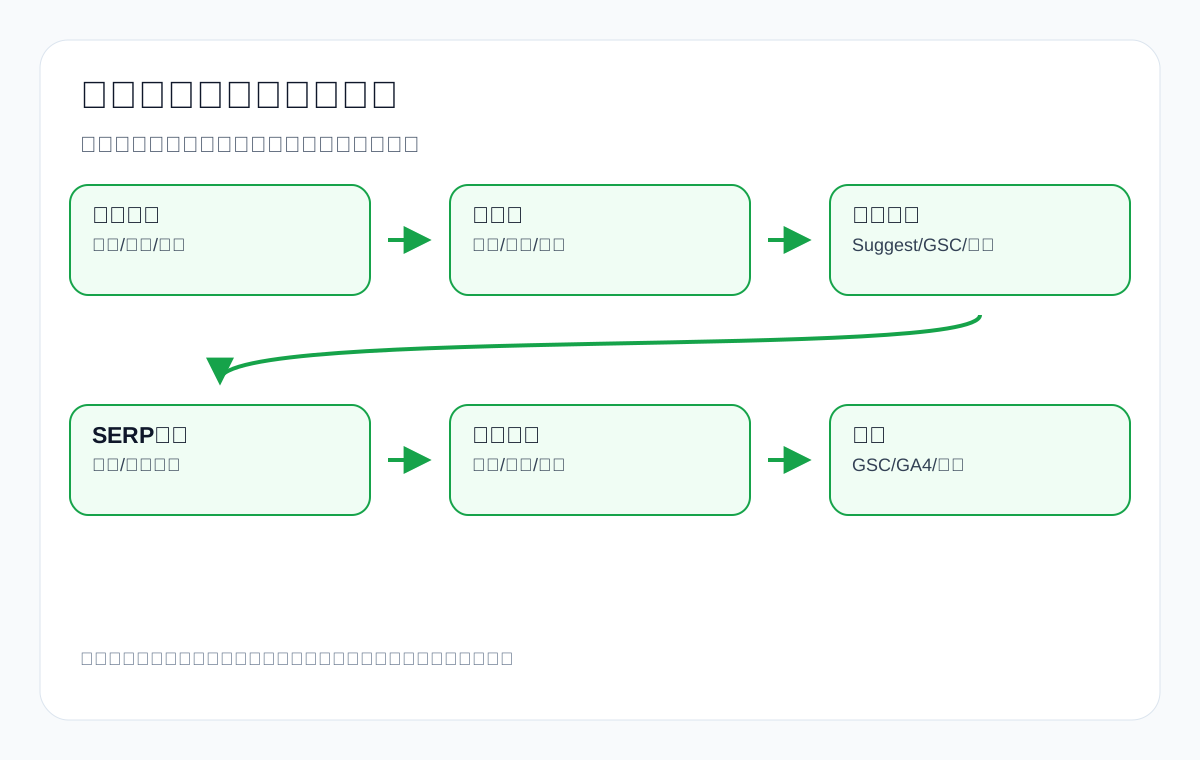
Keyword research for export-oriented foreign trade companies is not about exporting a search volume table, and it is not about writing an article just because a keyword has volume. A genuinely useful keyword research process weighs product materials, English wording, buyer questions, country markets, search intent, SERP page types, competition difficulty, page mapping, and inquiry review together. The final output is not a “keyword list” but a page map that can guide website development, content updates, and the inquiry path.
For example, custom metal parts, cnc machining parts, aluminum machined parts, and custom metal fabrication may look similar, but they may correspond to a capabilities page, a process page, a materials page, and a quote information page; LED flood light, outdoor flood light, warehouse lighting, and IP65 vs IP66 flood light may correspond to a category page, an application page, and a technical article respectively; packaging machine also needs to be split by powder, granule, liquid, small batch, and industry application. This article benchmarks authoritative keyword research guides such as Ahrefs and fills in the foreign trade B2B scenarios they cover less often.
Top1 and authoritative benchmark comparison: what the Ahrefs keyword research guide gets right
Ahrefs’ keyword research guide is one of the current strong benchmarks. It defines keyword research as discovering the valuable queries target customers type into Google and other search engines to find products, services, and information; it stresses looking not only at search volume but also at traffic potential, keyword difficulty, search intent, and business value. Ahrefs’ Keywords Explorer also supports filtering by search intent to help understand keywords at scale. Ahrefs’ keyword mapping guide further emphasizes that keywords need to be grouped by topic and intent and assigned to pages, while secondary keywords are usually subtopics under the same topic that do not warrant their own pages.
Backlinko, Semrush, Google Suggest, GSC, and other resources also emphasize search intent, related terms, competition, trends, and page types. Their strength is general process and tool explanation; the gap is the English product keyword breakdown, country markets, product page/category page/industry page/inquiry page mapping, low-volume high-value B2B keyword judgment, and inquiry review that foreign trade companies actually need. This article from Tianwen SEO Research fills in those gaps.
| Benchmark | What it gets right | Common gaps | How Tianwen SEO Research goes beyond |
|---|---|---|---|
| Ahrefs Keyword Research Guide | Emphasizes valuable queries, search volume, traffic potential, difficulty, intent, and business value | Tool- and general-SEO-oriented | Adds foreign trade product keywords, inquiry keywords, page types, and review |
| Ahrefs Keyword Mapping | Emphasizes assigning keywords to pages by topic and intent | Insufficient examples for foreign trade product/category pages | Adds a B2B page mapping matrix |
| Semrush/Backlinko | Emphasizes competition, SERP, and content planning | Prone to content-marketing bias | Adds product and purchasing paths |
| Google Suggest/GSC | Reflects real queries and on-site performance | Requires human intent judgment | Combines sales inquiries and page roles |
Step 1: Start from product materials, not tools
Foreign trade keyword research should first look at the company’s real product materials: product lines, materials, processes, specifications, application industries, certifications, target countries, MOQ, customization capability, lead times, quote information, after-sales, and common inquiry questions. Without product materials, keywords exported from tools easily drift away from actual supply capability.
| Material type | Keyword directions it can generate | Example |
|---|---|---|
| Product name | Main product keywords | LED flood light, packaging machine |
| Material/process | Material and process keywords | cnc machining parts, aluminum custom parts |
| Application industry | Scenario keywords | warehouse lighting, food powder packaging |
| Certification/standard | Trust and market keywords | CE LED flood light, IP67 connector |
| Purchasing questions | FAQ and long-tail questions | custom metal parts quote requirements |
| Target market | Country/region keywords | industrial valve supplier Germany |
Step 2: Build an English seed keyword pool
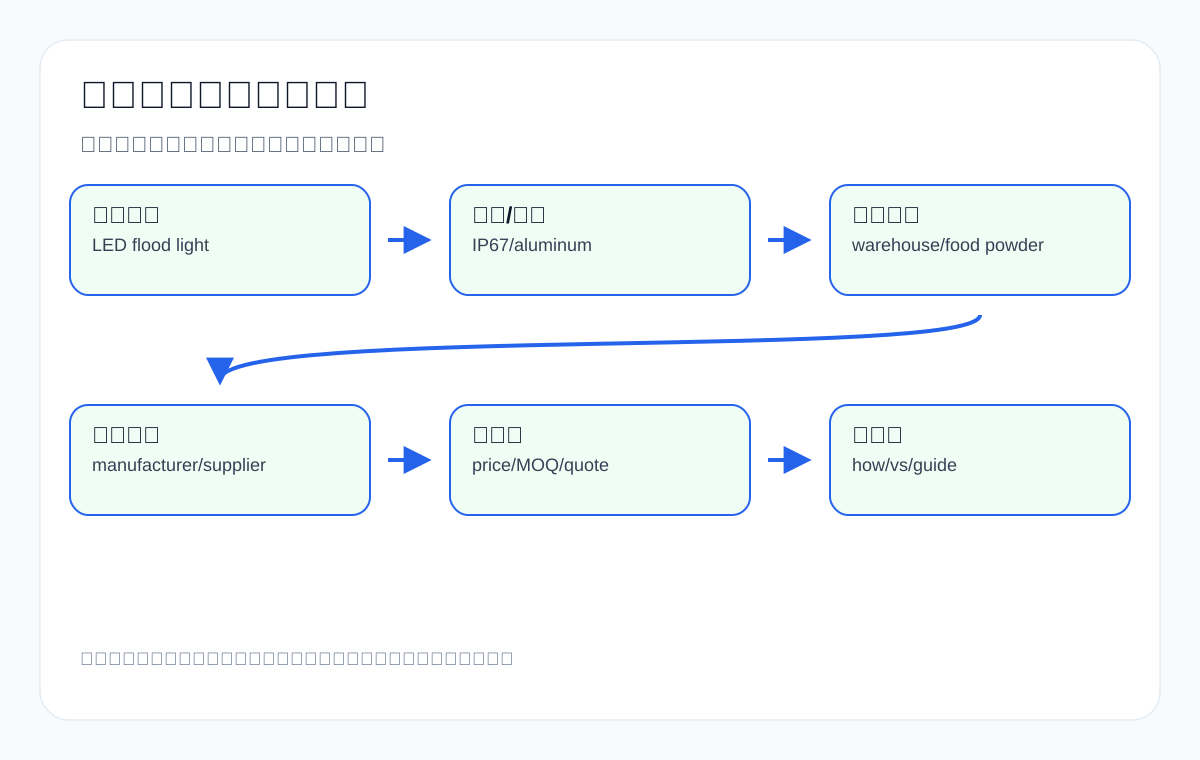
More seed keywords is not better; they should cover main product terms, synonyms, materials, processes, applications, suppliers, quotes, questions, and country markets. Foreign trade companies should especially note that internal Chinese naming does not necessarily match how overseas buyers search.
| Level | Example | Use |
|---|---|---|
| Main product term | waterproof connector | Category page/product page positioning |
| Synonyms | waterproof cable connector, outdoor connector | Compare search expressions |
| Material/specification | IP67, 2 pin, aluminum, stainless steel | Product parameters and subpages |
| Application scenario | solar, warehouse, food powder, marine | Industry pages and application pages |
| Supplier terms | manufacturer, supplier, factory, OEM | Commercial pages |
| Quote terms | price, quote, MOQ, sample | Inquiry FAQ |
| Question terms | how to choose, vs, guide, requirements | Technical articles and FAQ |
Step 3: Expand keyword sources
Foreign trade keyword expansion cannot rely on a single tool. Different sources answer different questions.
| Source | What it can reveal | How best to use it |
|---|---|---|
| Google Suggest | Real search autocomplete | Find long-tail questions and modifiers |
| People Also Ask | Question phrasing | Add FAQ and H2s |
| Competitor pages | Page structure and product keywords | Find gaps in categories, applications, and FAQ |
| GSC | Queries your own site already has | Find low-hanging fruit and content gaps |
| Trends | Seasonality and regional differences | Decide publish timing and country markets |
| Sales inquiries | High-value purchasing questions | Add quote, certification, sample, and MOQ questions |
| Keyword tools | Search volume, difficulty, related terms | Support prioritization |
Step 4: Determine search intent and page type
Search intent cannot rely on tool labels alone. The most reliable method is still to look at the current SERP: what page type Google’s first page is displaying, how the Top1 organizes its content, and whether it is a product page, category page, tutorial, comparison, video, image, platform page, brand page, or local result.
| Keyword | Likely intent | Recommended page type |
|---|---|---|
| custom metal parts manufacturer | Looking for a supplier | Capabilities page/commercial page |
| cnc machining tolerance guide | Technical learning | Technical article |
| LED flood light IP65 vs IP66 | Comparison judgment | Comparison article/FAQ |
| powder packaging machine | Material-scenario purchasing | Subcategory/industry page |
| medical probe sterilization | Technical/compliance question | Technical explainer page |
| ceramic dinnerware wholesale | B2B wholesale | Category page/commercial page |
| private label activewear MOQ | Pre-brand-customization question | FAQ/capabilities page |
Step 5: Evaluate search volume, difficulty, traffic potential, and business value
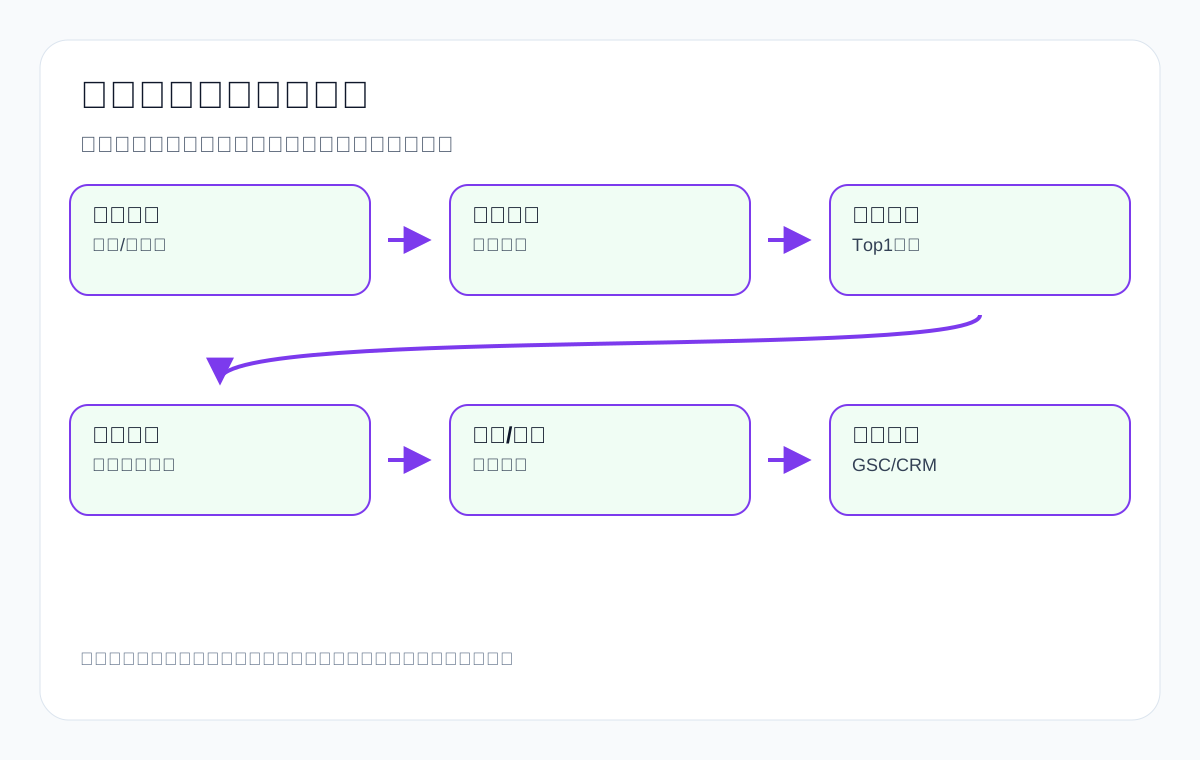
Tools such as Ahrefs emphasize search volume, traffic potential, difficulty, and business value. Foreign trade B2B cannot rank by search volume alone, because many high-value inquiry keywords have low search volume but strong order value and purchasing intent.
| Metric | Description | Foreign trade judgment |
|---|---|---|
| Search volume | Approximate demand size | Low-volume, high-value keywords cannot be ignored |
| Traffic potential | Total topic traffic one page can cover | Look at the ranking keywords of the top page, not just the main term |
| Keyword difficulty | Reference for competition intensity | Judge together with Top1 content and backlinks |
| Business value | Whether it is close to inquiry and purchasing | supplier, manufacturer, quote, MOQ are usually closer to commercial |
| Page match | Whether you have a suitable page to host it | When there is no page, first decide whether to create or update |
| Content gap | What Top1 does not cover | Foreign trade scenarios, tables, FAQ, evidence, and inquiry paths |
Step 6: Keyword grouping and page mapping
Keyword grouping is not by word length or search volume, but by search intent and page type. Keywords with the same intent are hosted by one main URL; only different intents get separate pages.
| Keyword group | Page type | URL action |
|---|---|---|
| custom metal parts, custom metal components | Capabilities page | One main page |
| cnc machining parts, cnc machined components | Process capabilities page | Can be its own page |
| custom metal parts quote, drawing requirements | FAQ/quote information | Can be a support page |
| LED flood light manufacturer, LED flood light supplier | Category page | One main commercial page |
| IP65 vs IP66 LED flood light | Technical comparison | Standalone article, link to category page |
Step 7: Prioritize content
| Priority | Condition | Action |
|---|---|---|
| P0 | High business value, existing product capability, competitive SERP | Do product/category pages first |
| P1 | Ranking 4–15 or already has impressions in GSC | Update old pages or reinforce |
| P2 | High-value long tail but low search volume | Make FAQ/support pages |
| P3 | Strongly seasonal | Plan 8–12 weeks ahead |
| P4 | Trendy but commercially weak | Handle lightly or observe |
Foreign trade case 1: custom metal parts keyword research process
| Step | Output | Page action |
|---|---|---|
| Product materials | Materials, processes, tolerances, surface treatment | Capabilities page modules |
| Seed keywords | custom metal parts, CNC machining parts | Main term and process terms |
| Expanded keywords | aluminum machined parts, quote requirements | Materials page and FAQ |
| SERP assessment | Mix of commercial pages + technical guides | Main commercial page + support articles |
| Review | Drawing inquiries, material keyword impressions | Add materials and quote information |
Foreign trade case 2: packaging machine keyword research process
| Keyword direction | Page type | Content module |
|---|---|---|
| packaging machine | Top-level category page | Machine types, industries, materials, selection entry |
| powder packaging machine | Subcategory/application page | Powder flowability, dosing, dust removal, cleaning |
| small business packaging machine | Selection article/FAQ | Semi-automatic vs fully automatic, budget, changeover |
| food packaging machine | Industry page | Food safety, cleaning, packaging materials |
| packaging machine price | Price factors page | Do not write fake prices; explain the factors |
Foreign trade case 3: private label activewear manufacturer keyword research process
| Keyword group | Purchasing question | Page action |
|---|---|---|
| private label activewear manufacturer | Find a factory that can do private label | Capabilities page |
| custom sportswear manufacturer | Custom sportswear supplier | Can be merged or a subpage |
| activewear MOQ | Starting with small batches | FAQ/quote information |
| activewear sample process | Sample garment process | Process article or capabilities page module |
| custom logo activewear | Logo process | Process module or support page |
How to judge keyword difficulty: do not look only at the KD number
Keyword difficulty tools have reference value, but foreign trade B2B cannot look at KD alone. Many high-value keywords have low search volume and incomplete tool data, and the real difficulty comes from the current top page type, brand strength, content depth, backlinks, product match, country market, and inquiry intent.
| Difficulty dimension | What to look at | Foreign trade judgment |
|---|---|---|
| Top1 page type | Whether it is a brand page, platform page, encyclopedia page, or supplier page | If Top1 is a large platform, look for niche keywords |
| Content depth | Whether there are tables, FAQ, images, videos, case scenarios | Whether we can add stronger foreign trade landing content |
| Commercial match | Whether the top pages actually sell similar products | If competitors are imprecise, there is an opportunity |
| Backlinks and brand | Whether it is occupied by big brands | New sites should start with long-tail and application keywords |
| SERP diversity | Whether there are small sites, forums, articles, videos | High diversity means an opportunity to enter |
| Inquiry value | Whether it is close to a purchase decision | High-value keywords should be planned even if difficult |
Country markets and keyword research
Foreign trade keyword research cannot look only at global data. The US, Germany, the Middle East, Southeast Asia, and South America may differ in how they express the same product, as well as in certifications, price sensitivity, and application scenarios.
| Market | Keyword focus | Page reinforcement |
|---|---|---|
| United States | warehouse, commercial, standard, supplier | Add specifications, certifications, applications, and delivery |
| European Union | CE, RoHS, energy saving, material safety | Add compliance and document explanations |
| Middle East | heat resistance, outdoor, dust, project | Add high-temperature, dust-proof, and engineering applications |
| Southeast Asia | price, spare parts, distributor, wholesale | Add MOQ, spare parts, distributors, and after-sales |
| South America | wholesale, importer, distributor, Spanish/Portuguese terms | Add language and logistics explanations |
For example, LED flood light in the US may need attention to warehouse lighting and DLC/UL, while in the Middle East more attention goes to outdoor, heat resistance, and dust protection; industrial valve supplier may focus more on oil and gas, water treatment, or mining in different markets.
How seasonality and trends feed into keyword research
Google Trends cannot serve as a search volume tool, but it can help judge seasonality and regional differences. Seasonal products should not wait until the peak arrives to be written; core pages should be planned 8–12 weeks ahead.
| Trend type | Keyword strategy | Foreign trade example |
|---|---|---|
| Long-term stable | Build pillar pages and category pages | custom metal parts |
| Seasonal rise | Update pages ahead of time | ceramic dinnerware holiday wholesale |
| Clear regional pattern | Add market sections or country pages | LED flood light Middle East |
| Short-term hot topic | Make FAQ or lightweight topic pages | New standards, new regulations |
| Continued decline | Invest cautiously, look for substitute keywords | Old model or old technology terms |
Competitor keyword research: learn from page structure, not keyword lists
Competitor research is not about copying the other side’s keywords, but about seeing how they organize pages. What H2s, tables, FAQ, product lists, downloadable materials, images, internal links, and inquiry entry points do the top pages have? Which foreign trade scenarios are not explained thoroughly? Those are where we can go beyond.
| Competitor module | What to observe | Our reinforcement direction |
|---|---|---|
| Title and opening paragraph | Whether it directly answers purchasing questions | Explain product, scenario, and boundaries faster |
| Product table | Whether specifications are complete | Add materials, MOQ, lead time, certifications |
| FAQ | Whether it answers real purchasing questions | Add quote information, samples, compliance |
| Images and videos | Whether there are scenarios and operating instructions | Add graphics and process explanations |
| Internal links | Whether products, industries, and articles are connected | Build a purchasing path |
| Trust information | Whether there are verifiable documents | Do not fabricate; state clearly what materials can be provided |
The relationship between keyword research and page building
After keyword research ends, the output should be page-building tasks, not just keywords. Each task should include the target query, search intent, page type, Top1 benchmark, content modules, image requirements, internal links, and review metrics.
| Output item | Description | Example |
|---|---|---|
| Target query | Main page intent | powder packaging machine |
| Page type | Category/industry/article/FAQ | Material application page |
| Top1 benchmark | Current No. 1’s strengths and gaps | Has a product table but lacks cleaning and dosing judgment |
| Content modules | Which H2s to add | Material flowability, bag type, capacity, cleaning |
| Graphic needs | Flowcharts, matrices, product images | Powder packaging machine selection flowchart |
| Internal links | Where links come from and where they go | Top category page → powder page → inquiry page |
| Review | Which data to look at | GSC queries, inquiry material information |
Content plan: what to write first and what to defer
Foreign trade companies have limited resources and cannot work on all keywords at once. The content plan should be ranked by business value, page foundation, competition difficulty, seasonal window, and inquiry feedback.
| Priority | Condition | Action | Example |
|---|---|---|---|
| P0 | Existing product capability + strong commercial intent + missing page | Build or reinforce immediately | waterproof connector supplier |
| P1 | Already has impressions in GSC but the page is weak | Update the old page | LED flood light IP65 vs IP66 |
| P2 | Low volume, high inquiry value | Make FAQ or long-tail articles | custom metal parts drawing requirements |
| P3 | Strongly seasonal | Plan ahead | ceramic dinnerware holiday wholesale |
| P4 | Relevant but commercially weak | Observe or handle lightly | General encyclopedia terms |
AI/GEO perspective in keyword research
AI search makes keyword research need to pay more attention to natural-language questions, definition sentences, comparison tables, and citable structures. Foreign trade companies should collect not only short keywords but also the complete questions buyers will ask.
| Traditional keyword | AI/GEO question phrasing | Page module |
|---|---|---|
| custom metal parts | What information is needed to quote custom metal parts? | Quote information FAQ |
| LED flood light | How to choose IP rating for outdoor LED flood light? | IP comparison table |
| packaging machine | Which packaging machine is suitable for sticky powder? | Material selection guide |
| medical probe | What documents are needed for custom medical probe sourcing? | Document checklist and boundaries |
| private label activewear | What is the MOQ and sample process for private label activewear? | MOQ/sample process FAQ |
Mining keywords from sales scripts
Questions that sales repeatedly explains are high-value content opportunities. Do not only ask what keywords the tool gives; also ask sales: what customers ask most often when requesting a quote, what is most easily misunderstood, and what most affects the quote.
| Sales question | Keyword opportunity | Page action |
|---|---|---|
| Customers never provide drawings | custom metal parts drawing requirements | Quote information page |
| Customers do not know whether the powder suits the machine | powder packaging machine for sticky powder | Material application article |
| Customers ask about MOQ | private label activewear MOQ | FAQ/capabilities page module |
| Customers ask about certification | CE LED flood light certificate | Certification explanation page |
| Customers ask about sample lead time | sample process for custom products | Inquiry process page |
Keyword research record sheet
| Field | Description |
|---|---|
| Keyword | English keyword |
| Intent | Informational, commercial, comparison, quote, application |
| Market | Target country or region |
| Page Type | Product page, category page, industry page, article, FAQ |
| Mapped URL | Hosting page |
| SERP Top1 | Title, URL, structure, strengths, and gaps |
| Priority | P0–P4 |
| Content Modules | H2s, tables, FAQ, and graphics to add |
| Internal Links | Source page and target page |
| Review Metrics | GSC, GA4, inquiries, AI answer observations |
Pre-publish checklist for keyword research
- Does it start from product materials and sales questions, rather than only from tools?
- Has the English product keyword wording been verified?
- Has the current SERP page type been checked?
- Are product pages, category pages, industry pages, article pages, FAQ, and inquiry pages distinguished?
- Are Top1 strengths and gaps recorded?
- Is it avoiding multiple pages hosting the same main intent?
- Does it include foreign trade product keywords, country markets, and purchasing questions?
- Does it have priorities and publish timing?
- Are internal links and conversion paths arranged?
- Are GSC/GA4/inquiry review metrics set?
Foreign trade case 4: waterproof connector keyword research process
waterproof connector keyword research should start from product specifications and application scenarios, not just one main term. Buyers may search by IP rating, pin number, cable diameter, application industry, installation method, and certification.
| Keyword group | Intent | Page action |
|---|---|---|
| waterproof connector supplier | Find a supplier | Category/commercial page |
| IP67 waterproof connector | Find a specific specification | Subcategory or product list |
| 2 pin waterproof connector | Find specific parameters | Specification page or product filter page |
| waterproof connector for solar panel | Application scenario | Solar application page |
| IP67 vs IP68 connector | Comparison judgment | Technical article/FAQ |
| waterproof connector sample MOQ | Pre-inquiry question | FAQ/quote information page |
The key to this keyword family is to distinguish supplier terms, specification terms, and application terms. Supplier terms should not be hosted by technical articles; technical comparison terms should not be squeezed into a product list in passing.
Foreign trade case 5: medical probe keyword research process
medical probe is a low-volume but high-value B2B keyword. Keyword research cannot look only at search volume; it must also consider device compatibility, materials, sterilization, packaging traceability, documents, and regulatory boundaries.
| Keyword direction | Purchasing question | Page action |
|---|---|---|
| medical probe manufacturer | Supply capability | Capabilities page |
| custom medical probe | Custom development | Customization process page |
| medical probe cable assembly | Product structure | Product page |
| medical probe sterilization | Compliance and use boundaries | Technical explainer |
| medical probe packaging | Packaging and traceability | FAQ/document checklist |
Pages like these cannot fabricate customer cases or certification data. Credible content comes from materials, processes, documents, boundaries, and purchasing information that can be explained, not from exaggerated results.
Foreign trade case 6: industrial valve supplier keyword research process
industrial valve supplier involves valve types, materials, pressure ratings, media, industry applications, standards, and supplier capability. Keyword research should separate the main commercial term from technical sub-terms.
| Keyword | Page type | Content module |
|---|---|---|
| industrial valve supplier | Commercial category page | Supply scope, industries, standards, inquiry information |
| ball valve manufacturer | Product subcategory | Material, pressure, connection type |
| valve for water treatment | Industry application page | Media, corrosion, maintenance, case scenarios |
| stainless steel valve | Material page/product page | Material differences and applications |
| industrial valve price | Price factors page | Do not write fixed prices; explain the factors |
How to handle keywords with high search volume that do not suit you
Some keywords have high search volume but do not match the company’s products, supply capability, target countries, or business model. Foreign trade companies should not chase them blindly for traffic.
| Mismatch case | Risk | Handling |
|---|---|---|
| Searcher is a consumer | High traffic but weak inquiries | Look for B2B modifiers: wholesale, manufacturer, supplier |
| Product is outside the supply scope | Brings invalid inquiries | Do not target it, or only state the boundary in FAQ |
| Country market cannot be served | Difficult to convert | Prioritize target market keywords |
| SERP is all large platforms | High competition cost | Look for long-tail application and specification keywords |
| Mixed meanings | Unclear page intent | Add modifiers or drop it |
How to handle keywords with very low search volume that sales say matter
In foreign trade B2B, many questions that are genuinely close to closing a deal have very low search volume. Examples include quote information, drawing formats, MOQ, sample lead times, certification documents, packaging traceability, and special materials. They are not necessarily suitable for a standalone long article, but they fit well in product pages, FAQ, quote information pages, or support articles.
| Low-volume keyword | Why it matters | Page placement |
|---|---|---|
| custom metal parts drawing requirements | Affects quote efficiency | Inquiry information FAQ |
| private label activewear sample process | High-frequency question from brand customers | Capabilities page process module |
| packaging machine cleaning requirements | Affects food/pharma applications | Industry application page |
| waterproof connector cable diameter | Affects product matching | Product parameter FAQ |
| medical probe packaging traceability | Affects compliance and trust | Technical explainer page |
How keyword research avoids cannibalization
Keyword research and keyword mapping must be done together. Every keyword group must be assigned a main URL to avoid duplicate pages.
| Cannibalization risk | Prevention |
|---|---|
| Separate page for each synonym | Merge into the main page, put secondary terms in H2/FAQ |
| Commercial keywords hosted by articles | Map commercial keywords to product/category pages |
| Product pages and industry pages have duplicate content | Product pages cover specifications, industry pages cover scenarios |
| Multiple pages have similar titles | Clarify the main term, page type, and boundaries |
| Internal links point in scattered directions | Point related anchor text to the main URL |
Keyword research and internal link planning
Once keyword research is complete, you should know how pages link to each other. Internal links are not added casually after publishing; they are part of the page architecture.
| Source page | Target page | Link purpose |
|---|---|---|
| Technical article | Product/category page | Move from question to product |
| Category page | Technical guide/FAQ | Help buyers judge |
| Industry page | Applicable products | From scenario to product |
| Product page | Inquiry information page | Reduce communication cost |
| Pillar page | All core subpages | Build a topic map |
What keyword research deliverables should look like
An executable foreign trade keyword research deliverable should not contain only keywords and search volume. It should include at least the following deliverables.
| Deliverable | Purpose |
|---|---|
| Keyword pool | Collect product terms, application terms, question terms, supplier terms |
| SERP benchmark table | Record Top1, page type, strengths, and gaps |
| Keyword mapping table | Assign keywords to URLs |
| Content priority table | Decide which pages to do first |
| Page outline | Guide writing and graphic modules |
| Internal link plan | Clarify page relationships |
| Review table | Record GSC, GA4, inquiries, and next actions |
90-day review rhythm
| Time | What to look at | Action |
|---|---|---|
| 7–14 days | Indexing, crawling, whether pages are normal | Fix technical issues and internal links |
| 30 days | Initial queries and impressions | Add FAQ or adjust titles |
| 60 days | Rankings, CTR, page paths | Fill content gaps and internal links |
| 90 days | Inquiry sources and quality | Update priorities and mapping |
Mistakes to avoid in keyword research
- Looking only at search volume, not business value and inquiry quality.
- Writing every keyword as a blog article.
- Not checking the current SERP page type.
- Translating internal Chinese product names directly without verifying overseas expressions.
- Ignoring low-volume, high-value B2B long-tail keywords.
- Not doing URL mapping, which causes keyword cannibalization.
- Looking only at tools, not at GSC and sales inquiries.
- Forcing contact pages, archive pages, and advertising pages into a long-form content plan.
Keyword research review metrics
| Metric | Cycle | What to look at | Action |
|---|---|---|---|
| GSC queries | 30–60 days | Whether target product keywords and long-tail questions appear | Add FAQ or create new pages |
| URL match | 30–60 days | Whether the main query lands on the target URL | Adjust internal links and mapping |
| CTR | 30–60 days | Whether titles match search intent | Change title/meta |
| Inquiry source | 60–90 days | Whether inquiries come from target pages or keyword groups | Optimize the conversion path |
| Inquiry quality | 60–90 days | Whether drawings, specifications, quantities, and target markets are provided | Add a document checklist |
| AI answer observation | 60–90 days | Whether the brand, URL, and definition sentences appear | Add citable paragraphs and evidence |
Complete example: building a page plan from one packaging machine seed keyword
Suppose a packaging machine factory has only one seed keyword, packaging machine. Step one, break down materials from product materials: powder, granule, liquid, paste; then break down bag types: pouch, sachet, bottle, box; then break down purchasing questions: speed, accuracy, cleaning, price, small business, food grade. Step two, look at the SERP to judge which keywords are category pages, which are articles, and which are FAQ. Step three, rank by business value.
| Keyword group | Page type | Priority | Content module |
|---|---|---|---|
| packaging machine manufacturer | Top category/capabilities page | P0 | Machine types, industries, materials, inquiry information |
| powder packaging machine | Subcategory/application page | P0 | Flowability, dosing, dust removal, cleaning |
| small business packaging machine | Selection article | P1 | Semi-automatic vs fully automatic, budget, capacity |
| packaging machine price | Price factors FAQ | P1 | Materials, speed, bag type, customization, after-sales |
| how to clean packaging machine | Technical article | P2 | Cleaning steps, food/pharma requirements, maintenance |
This example shows that keyword research is not about writing every keyword once, but about putting each keyword on the right page. The top category page hosts the main commercial term, the powder page hosts the material scenario, the small-equipment page hosts small-batch demand, the price page explains price factors, and the cleaning article serves technical questions and links back to the product page.
Keyword research quality acceptance table
| Acceptance item | Passing standard |
|---|---|
| Product materials | Covers products, materials, processes, applications, certifications, MOQ, and inquiry information |
| English wording | Main terms, synonyms, and country market expressions have been verified |
| SERP | Every core keyword has been checked against the current Top1 or an authoritative benchmark at least once |
| Intent | Every keyword group has a clear page type |
| Mapping | Every high-value keyword has a main URL |
| Content plan | Clearly states create, update, merge, keep, or defer |
| Foreign trade scenarios | Includes product keywords, purchasing questions, country markets, and inquiry paths |
| Review | Sets GSC, GA4, inquiry, and AI answer observation metrics |
FAQ: common questions about the keyword research process
Does keyword research start by finding the keywords with the highest search volume?
No. Foreign trade B2B should look at search volume, intent, business value, page type, competition difficulty, and inquiry quality together. Low-volume, high-value keywords may matter more than high-traffic generic keywords.
Should a product keyword be written as an article or built as a product page?
Look at the SERP and search intent. If the results page is mainly suppliers, manufacturers, and category pages, it should be hosted by a product or category page; if the results page is mainly how, guide, and vs, it suits an article or FAQ.
Which comes first, keyword research or keyword mapping?
Do keyword research first to build the keyword pool, then do mapping to assign keywords to pages. Without mapping, a keyword list easily turns into duplicate content.
Do foreign trade companies need to buy keyword tools?
Tools help, but they are not the only source. Google Suggest, GSC, competitor pages, Trends, sales inquiries, and SERP observation can all provide important signals.
Are inquiry keywords with low search volume worth writing?
If the business value is high, the purchasing intent is clear, and it solves common sales questions, it is worth including in FAQ, product page modules, or support articles.
How often should keyword research be reviewed?
Core products and high-value pages are best reviewed quarterly; when new products launch, markets change, GSC queries change, or inquiry questions change, they should be updated promptly.
How do you keep keyword research from getting messier over time?
Every keyword group must land on a page type and URL. Do not just save a keyword list; you must decide whether to create, update, merge, keep, or leave it for now.
After keyword research is done, what should be the first thing to do?
First check whether the existing website has pages that can host these keywords. If an old page can be updated, do not rush to create a new one; when there is no suitable page, move into content planning based on page type and business value.
How many keywords are enough for keyword research?
There is no fixed number. A small foreign trade site may need only 100–300 high-quality keyword groups to start, and the key is that each group maps to a page action. A few thousand keywords without intent and URLs are worth less than a few dozen that directly guide page building.
Can I research only English main terms and skip question keywords?
Not recommended. English main terms help determine page direction, while question keywords help add FAQ, technical articles, and AI-citation-friendly paragraphs. Foreign trade buyers often use question phrasing to judge whether a supplier is professional.
Next steps after keyword research is complete
After completing keyword research, do not go straight into writing. First sort existing pages, planned new pages, pages to merge, pages to update, and deferred pages into five categories, then confirm whether each page has a Top1 benchmark, graphic needs, internal link entry points, and review metrics. This keeps the team from creating new keyword cannibalization while writing new content.
Conclusion: the end point of keyword research is an executable page plan
Foreign trade keyword research is not about proving that a keyword has search volume, but about deciding how the website should organize its pages. A good process connects product materials, English wording, search intent, SERP types, competition intensity, business value, and inquiry questions, ultimately forming a map of product pages, category pages, industry pages, technical articles, FAQ, and inquiry pages.
If keyword research stops at a tool export, the website will become more scattered with every article; if every keyword can be mapped to a clear page role and reviewed with GSC, GA4, and inquiry sources, content building will look more and more like an asset. This cannot promise stable rankings or inquiry results, but it can significantly reduce ineffective content, bring each page closer to real purchasing needs, and give later content refreshes, internal link building, and inquiry reviews a consistent basis.
Official basis and keyword research acceptance boundaries
Keyword research cannot rely only on tool keyword lists. Foreign trade websites should look at English product keywords, purchasing questions, page roles, real GSC queries, and inquiry paths together. During low-data periods, first build a query set and page mapping, and do not write conclusions about search performance.
| Official source | What it is used to validate | Boundary that cannot be crossed |
|---|---|---|
| Google: SEO Starter Guide | Confirm how keywords enter titles, body text, links, and image context | A keyword appearing on a page does not mean it already has search performance |
| Google: Helpful content | Judge whether there is a real user task behind a keyword | Do not produce empty paragraphs just to fill a keyword list |
| Search Console Performance report | Use query/page to review the site’s real queries | A zero-row GSC report cannot be written as existing demand or existing rankings |
| Google Trends help | Observe trend, regional, and seasonal changes | Trends is not precise search volume or conversion data |
| GA4 events | Record form, download, and email clicks after keyword pages | Events cannot replace search impression evidence |
Low-data period review table
| Review item | Record field | Wording during low-data period |
|---|---|---|
| Search Console baseline | query, page, country, device, click, impression, date range | If GSC shows zero rows, write zero rows; do not extrapolate rankings, clicks, or impressions |
| GA4 events | Entry page, form, download, email click, WhatsApp, or other configured events | If events are not configured, write “to be configured”; do not infer inquiry results |
| Page eligibility | HTTP status, index/follow, canonical, sitemap, body text, internal links | Record only the current state; do not write technical passes as search results |
| Business boundaries | Executable actions, metrics to watch, next review date | Write observed, to-be-observed, and non-committable items separately |
The focus of acceptance here is to record official basis, Search Console, GA4, page status, and business actions separately. What can be promised is checking, fixing, adding evidence, and building review tables; what cannot be promised is a specified search position, specified AI citations, a specified number of inquiries, or specified platform presentation.
Continue reading this SEO series
If you are systematically organizing SEO for a foreign trade website, it is worth continuing with the articles below. First clarify the relationships among crawling, indexing, content, links, and review, then decide which page to change next.
- How to do competitor SEO analysis: a guide to page types, content gaps, and foreign trade inquiry opportunities
- How search engines work: a guide to crawling, indexing, ranking, and foreign trade website diagnosis
- How to do content SEO: a guide to search intent, information gain, and indexable content
- How to mine competitor keywords: from competitor pages and English product keywords to inquiry opportunities
- How to choose keyword tools: choose by diagnostic scenario, not by following a tool list
- How to do keyword mapping: a guide to foreign trade keyword mapping, page intent, and cannibalization fixes
{
“@context”: “https://schema.org”,
“@type”: “FAQPage”,
“mainEntity”: [
{
“@type”: “Question”,
“name”: “Does keyword research start by finding the keywords with the highest search volume?”,
“acceptedAnswer”: {
“@type”: “Answer”,
“text”: “No. Foreign trade B2B should look at search volume, intent, business value, page type, competition difficulty, and inquiry quality together. Low-volume, high-value keywords may matter more than high-traffic generic keywords.”
}
},
{
“@type”: “Question”,
“name”: “Should a product keyword be written as an article or built as a product page?”,
“acceptedAnswer”: {
“@type”: “Answer”,
“text”: “Look at the SERP and search intent. If the results page is mainly suppliers, manufacturers, and category pages, it should be hosted by a product or category page; if the results page is mainly how, guide, and vs, it suits an article or FAQ.”
}
},
{
“@type”: “Question”,
“name”: “Which comes first, keyword research or keyword mapping?”,
“acceptedAnswer”: {
“@type”: “Answer”,
“text”: “Do keyword research first to build the keyword pool, then do mapping to assign keywords to pages. Without mapping, a keyword list easily turns into duplicate content.”
}
},
{
“@type”: “Question”,
“name”: “Do foreign trade companies need to buy keyword tools?”,
“acceptedAnswer”: {
“@type”: “Answer”,
“text”: “Tools help, but they are not the only source. Google Suggest, GSC, competitor pages, Trends, sales inquiries, and SERP observation can all provide important signals.”
}
},
{
“@type”: “Question”,
“name”: “Are inquiry keywords with low search volume worth writing?”,
“acceptedAnswer”: {
“@type”: “Answer”,
“text”: “If the business value is high, the purchasing intent is clear, and it solves common sales questions, it is worth including in FAQ, product page modules, or support articles.”
}
}
]
}
This page is machine-translated from the Simplified Chinese version and awaiting human review. It has not yet been proofread.