Official acceptance boundaries: a service team owns the closed loop, an outsourcing team owns reviewable tasks
The difference between a foreign-trade website building and promotion service team and an outsourcing team is not who quotes a lower price, but who is responsible for strategy, permissions, the page system, data definitions, and the review loop. Foreign-trade companies need to separate the “owner” from the “executor” first: the owner must be able to judge page priorities, business risks, and data boundaries; the executor must be able to deliver specific tasks by URL, evidence, and acceptance criteria.
If the site currently has no usable GSC query, page, or page-query row data, you cannot write in rankings, impressions, clicks, CTR, AI adoption, or inquiry changes. Team selection can still be evaluated, but the report must be downgraded to: who is responsible for Search Console, GA4, page fixes, content facts, development collaboration, sales feedback, and AI/GEO sample records.
Mapping table: official documentation and team-division acceptance fields
| Official documentation entry point | What it helps you judge | Division-of-labor acceptance field | What it cannot establish |
|---|---|---|---|
| Google Search Central: Do you need an SEO? | Before hiring an SEO, you should understand basic search knowledge, require recommendations to be explainable by credible sources, and be wary of improper practices. | Who explains the basis for a recommendation, who confirms the risk, who retains publishing and deletion permissions. | You cannot judge a team as reliable based only on “full-service.” |
| Google Search Central: SEO Starter Guide | SEO fundamentals include page organization, titles, links, images, and understandable content. | Whether the service team can plan a page system, and whether the outsourcing team can modify specific URLs per task. | It cannot replace an audit of the current site. |
| Google Search Central: Search Essentials | For pages to take part in Google Search, they need to meet basic technical, policy, and content requirements. | Who is responsible for crawlability, indexability, visible content, and risk troubleshooting. | Meeting basic requirements does not equal having search performance. |
| Google Search Central: Search Console start guide | Search Console can be used to monitor, debug, and improve Google Search performance. | Who manages GSC permissions, who submits sitemaps, who reviews indexing and performance reports. | Third-party screenshots cannot replace official account data. |
| Search Console Help: Performance report | query, page, country, device, clicks, impressions, CTR, average position. | Whether the review breaks things down by page, query, country, and device. | Without row data, you cannot write about ranking, impressions, clicks, or CTR improvements. |
| Search Console Help: URL Inspection tool | The indexing status, crawl status, canonical, and page version Google sees for a single URL. | Who spot-checks the homepage, category pages, product pages, resource pages, and articles. | A single indexable URL does not mean the project is working. |
| Search Console Help: Page indexing report | Page indexing status and reasons for not being indexed. | Who handles duplicates, noindex, redirects, 404/410, and not-indexed reasons. | An indexing report is not an inquiry report. |
| Google Search Central: Sitemaps overview | Sitemaps help Google discover important URLs. | Who maintains the sitemap entry points for product pages, category pages, resource pages, and articles. | Being present in a sitemap does not mean it has been crawled, indexed, or shown. |
| Google Search Central: robots.txt introduction | robots.txt controls crawl access. | Who checks whether product catalogs, resource pages, images, CSS, JS, or AI-related access paths are blocked by mistake. | robots cannot solve content quality problems. |
| Google Search Central: Consolidate duplicate URLs | Duplicate URLs require canonical, redirects, internal links, and sitemaps to work together. | Who decides the primary page, who implements canonical, redirects, and internal link adjustments. | canonical is not a ranking promise. |
| Google Search Central: Structured data general guidelines | Structured data must match the visible content on the page and comply with policy. | Who confirms that Product, FAQ, Breadcrumb, and Article markup match the body content. | Schema cannot replace page facts. |
| Google Analytics Help: About events | GA4 events can show what users do next on the site. | Who defines form, email, WhatsApp, RFQ, download, and contact page events. | On-site events cannot replace GSC search performance. |
| Google Search Central: AI features and your website | AI search capabilities still depend on an accessible, indexable, clearly written page foundation. | Who is responsible for page facts, answer sections, resource pages, and AI/GEO sample records. | You cannot promise that an AI answer will definitely cite your site. |
| OpenAI Platform: Bots | Distinguish the access purposes of OAI-SearchBot, GPTBot, and ChatGPT-User. | Who checks whether robots, logs, and public pages unintentionally block the relevant access paths. | It cannot show that ChatGPT will display things in a specified way. |
| Bing Webmaster Blog: AI Performance | If visible in the account, you can observe AI citations, cited pages, and grounding query phrases. | Who records Bing AI samples, GSC, GA4, logs, and sales feedback separately. | It cannot represent all AI platforms. |
| IndexNow: Documentation | After a URL is added, updated, or deleted, you can notify participating search engines. | Who performs the notification action after key pages are updated. | It cannot replace content quality, crawl eligibility, or indexing eligibility. |
Acceptance checklist for service teams and outsourcing teams
| Acceptance layer | Service team should own | Outsourcing team can own | The company must retain |
|---|---|---|---|
| Strategy | Page priorities, product line paths, data definitions, risk boundaries. | Executing content, technical, internal link, or reporting actions per task. | Business goals, product facts, and final publication approval. |
| Permissions | Defining read-only, edit, publish, and delete permission boundaries. | Handling specific tasks within the authorized scope. | Payment, domain, server, deletion, and high-risk publishing permissions. |
| Pages | Judging the roles of product pages, category pages, resource pages, articles, and contact pages. | Changing titles, body copy, internal links, Schema, images, and tables by URL. | Product specifications, resource accuracy, and sales messaging. |
| Data | Defining how GSC, GA4, logs, AI/GEO samples, and sales feedback are combined for review. | Pulling reports, organizing screenshots, flagging anomalies. | Inquiry quality and deal feedback. |
| Delivery | Providing priorities, acceptance criteria, next-round plans, and uncontrollable boundaries. | Delivering completed tasks, evidence, and issue lists. | Whether to keep investing and how to allocate resources. |
How to downgrade a team-division report when there is no GSC data
If the site currently has no usable GSC query, page, or page-query row data, the team-division report cannot be written as a search performance report. It can first be written as a report on permissions, pages, events, and the review mechanism.
| Missing evidence | What you can write | What you cannot write | Next review step |
|---|---|---|---|
| No GSC Performance rows | Whether pages are crawlable, indexable, and in the sitemap, and whether the team completed specific actions. | Ranking, impressions, clicks, CTR, or trend improvements. | Keep the 28-day and 90-day date ranges and wait for the first batch of row data. |
| No URL Inspection sampling | List the homepage, category pages, product pages, resource pages, articles, and contact pages that need spot checks. | Asserting that core pages already take part in search. | Record indexing status, canonical, crawl time, and page version. |
| No GA4 events | Explain that download, form, email, WhatsApp, RFQ, and contact page events need to be configured. | That organic search inquiries have improved. | First make on-site actions observable. |
| No log samples | Explain that origin, CDN, or WAF logs are temporarily unavailable, and do not treat tool screenshots as crawl evidence. | Writing that the relevant crawler has already crawled the site. | Obtain logs with clear coverage time, source, and fields. |
| No AI samples | Build a table of platform, question, date, answer summary, cited URL, and incorrect facts. | Writing that an AI platform has already adopted the official site. | Re-test across platforms with a fixed question set, and record it separately from page actions. |
1. First, be clear: a service team and an outsourcing team are not the same concept
Many foreign-trade companies mix up a “foreign-trade website building and promotion service team” with an “outsourcing team.” Both may help you build a website, write content, edit pages, and publish articles, but their responsibility boundaries differ. A service team should generally be responsible for strategy, page structure, content quality, technical foundations, the inquiry path, and review results; an outsourcing team more commonly delivers by task, such as building a few pages, writing a few articles, or fixing a few technical issues.
For domestic export factories and trading companies, the real question is: who is responsible for judging which pages the English product terms custom metal parts, LED flood light, packaging machine, medical probe, cnc machining parts, and waterproof connector should map to? Who is responsible for writing pages that overseas buyers can understand? Who is responsible for looking at GSC, GA4, and inquiry quality? If no one owns these, and tasks are simply handed to outsourcing for execution, it is easy to produce a pile of pages with no customer acquisition loop.
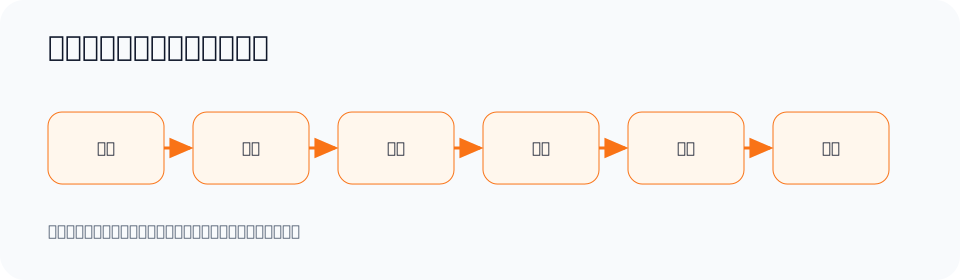
| Type | Main responsibility | Suitable scenario |
|---|---|---|
| Foreign-trade website building and promotion service team | Coordinated strategy, execution, technology, content, and review | The client lacks a complete customer acquisition system |
| Outsourcing execution team | Completing page, content, or technical work by task | The client has clear internal strategy and management capability |
| Hybrid model | Internal staff or a consultant set direction, outsourcing handles part of the execution | The client has project management and acceptance capability |
2. Top-1 benchmarking logic: you cannot just compare “cheap versus expensive”
Many articles simply compare service teams and outsourcing teams as “service teams are expensive but worry-free, outsourcing is cheap but needs management.” That framing is too coarse. What foreign-trade companies really need to compare is: who bears the judgment responsibility, who bears the execution responsibility, and who bears the review responsibility. If you have no one internally who understands Google data and English product pages, choosing cheap outsourcing may shift the management cost back onto yourself.
For example, if an industrial valve supplier wants to acquire customers through Google, an outsourcing team can help upload products, translate content, and build pages. But if no one judges whether valves should be split by material, pressure, medium, connection type, or industry application, the site structure may be wrong from the start. Adding content later only gets harder.
| Common comparison | The more critical question | What the client should verify |
|---|---|---|
| High or low price | Does the price include judgment or only execution | Delivery list and responsibility boundaries |
| Team size | Is there someone who understands foreign-trade customer acquisition in charge | Can they explain the relationship between product terms and pages |
| Delivery speed | Does speed sacrifice content quality | Can the page answer purchasing questions |
| Service period | Does it include review and adjustment | Do they look at GSC, GA4, and inquiry sources |
3. What a service team should be responsible for
A service team truly oriented toward foreign-trade customer acquisition cannot just build pages or write articles; it should connect the target market, English product terms, page structure, content expression, technical foundations, the inquiry path, and data review. A service team should at minimum be able to answer: why these pages first this month? Which queries do these pages serve? Which metrics do we look at after publication? If the data is not ideal, what do we change next?
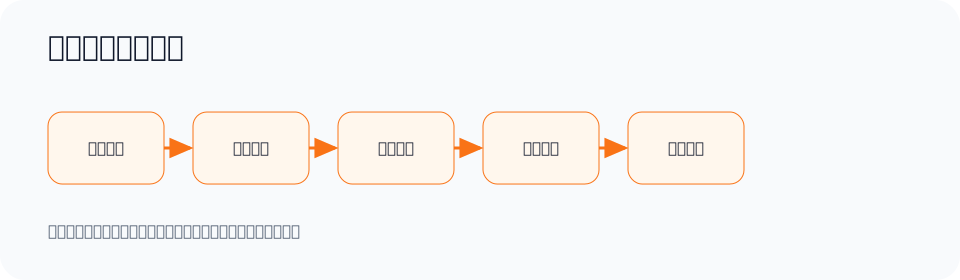
| Responsibility | Specific content | Client acceptance |
|---|---|---|
| Strategy | Target queries, page priorities, competitive gaps | A clear page list |
| Content | Products, applications, specifications, FAQ, inquiry prompts | Readable by buyers, not empty talk |
| Technology | Speed, mobile, indexing, internal links, forms | Verifiable on the front end and in GSC |
| Publication | Page launch, images, titles, internal link checks | No obvious errors or bad experience |
| Review | Query terms, clicks, inquiries, target countries | Clear actions for next month |
4. What an outsourcing team is suited to own
Outsourcing teams are not bad. The issue is that outsourcing is better suited to clear tasks with well-defined boundaries. If the client already has internal strategy, content standards, page structure, and an acceptance mechanism, an outsourcing team can effectively reduce execution costs. For example, if a page outline exists, let outsourcing write a first draft; if design standards exist, let outsourcing build pages; if a technical checklist exists, let outsourcing fix speed and forms.
But if it is unclear how pages should be split, what content should say, and how to read the data, and you hand the tasks to outsourcing anyway, you will likely get superficially complete deliverables. For foreign-trade companies, low-cost execution does not equal low risk.
| Tasks suited to outsourcing | Prerequisite | Situations not suited to outsourcing |
|---|---|---|
| Writing product pages from an outline | Product materials and content standards already exist | Letting outsourcing judge product strategy on its own |
| Batch organizing images | Naming and compression standards already exist | No one checks whether images match the product |
| Fixing a technical checklist | A clear issue list already exists | Letting outsourcing judge SEO priorities on its own |
| Page layout | Page structure and design standards already exist | Using layout as a substitute for content strategy |
5. The biggest risk of outsourced execution: no one owns the result
A common risk of outsourcing is that “the task is done, but no one owns the result.” Articles were delivered, but they do not target the English product terms; pages were built, but the form is hard to use; images were uploaded, but the site got slower; the technical issue was fixed, but GSC still reports a problem; there is a lot of content, but inquiries have not improved. The usual reason is that the executor is responsible only for the task, not for the customer acquisition loop.
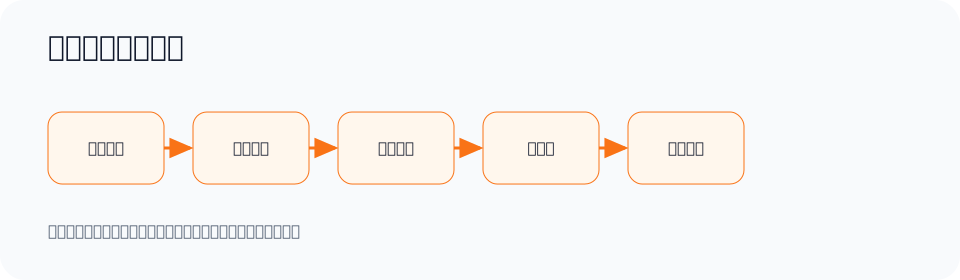
If the client has an internal project owner who can check whether each task fits the strategy, outsourcing can be used; if not, it is better to find a service team that can take on strategy and review, or first bring in a consultant to establish standards and then outsource part of the execution.
6. Who owns strategy: not who has the final say, but who can provide evidence
Strategy is not subjective guesswork. A foreign-trade website strategy should come from product materials, customer questions, GSC query terms, competitor pages, target countries, inquiry quality, and the current technical situation. If the service team owns strategy, it must produce evidence; if the client owns strategy internally, it must still give outsourcing clear inputs.
| Strategic question | Evidence source | Output |
|---|---|---|
| Which products to do first | Inquiry records, profit, target markets | List of key product pages |
| Which terms have opportunity | GSC, Google search results, competitor pages | Query-to-page mapping |
| How to split pages | Product structure, application scenarios, purchasing questions | Category pages, product pages, application pages |
| What content to add | Sales feedback, FAQ, competitor gaps | Tables, FAQ, images, and explanations |
| How to judge performance | GSC, GA4, inquiry sources | Monthly review metrics |
7. Who owns execution: split responsibility by page type
Execution is not a vague umbrella term. Foreign-trade website execution includes writing content, building pages, handling images, configuring forms, optimizing speed, checking mobile, submitting sitemaps, updating internal links, and reviewing data. Different tasks require different capabilities. A service team should be able to coordinate these tasks; an outsourcing team is suited to owning one part of them.
| Execution task | Capability needed | Better suited owner |
|---|---|---|
| Product page rewrite | Product understanding and foreign-trade expression | Service team or specialized content outsourcing |
| Page building | Website editing and front-end layout | Service team or page outsourcing |
| Technical optimization | Speed, indexing, forms, server foundations | Technical team |
| Data review | GSC, GA4, inquiry judgment | Service team or consultant |
| Asset organization | Images, videos, certificates, specifications | Client internal + outsourcing support |
8. Who owns the review: you cannot just send “what we did”
A foreign-trade customer acquisition review should not just list how many articles were published and how many pages were changed this month. A real review must answer: which pages got impressions? Which query terms appeared? Which pages got clicks but no inquiries? Which countries grew in traffic? Which inquiries were higher quality? What should we keep doing next month?
| Review dimension | Metrics to watch | Next action |
|---|---|---|
| Search performance | Impressions, clicks, CTR, query terms | Optimize titles and page content |
| Page performance | Landing pages, time on page, bounce, form clicks | Add FAQ and CTA |
| Inquiry performance | Product, country, quantity, customer type | Strengthen high-quality entry points |
| AI visibility | Whether official site information is cited | Add structured explanations and authoritative content |
| Technical health | Indexing, speed, errors, duplicate pages | Fix technical blockers |
9. Foreign-trade product examples: how different roles collaborate
Take packaging machine as an example. The client provides materials, capacity, videos, and common customer questions internally; the service team judges that application pages should be built for powder, granule, liquid, and food, among others; the outsourced content staff can write first drafts from the outline; the technical staff handles page speed, video loading, and forms; finally, the service team or consultant reviews GSC and inquiry data.
Take waterproof connector as an example. The client provides specification tables, IP ratings, cable types, and application industries internally; the strategy owner judges which specification terms deserve standalone pages; the executor optimizes category pages, product pages, and filter pages; the reviewer watches whether query terms such as 4 pin waterproof connector and M12 connector cable appear.
| Product line | What the strategy owner watches | What the execution owner watches | What the review owner watches |
|---|---|---|---|
| custom metal parts | Material, process, and application segmentation | Pages, drawing requirements, quality inspection notes | Whether inquiries provide drawings and quantities |
| LED flood light | Project scenarios and wattage terms | Categories, application pages, certification notes | Target countries and project inquiries |
| medical probe | Equipment applications and quality requirements | Specifications, materials, sterilization, FAQ | Medical industry inquiry quality |
| ceramic dinnerware | Hotels, restaurants, custom packaging | Series pages, packaging pages, breakage control | Wholesale and custom inquiries |
10. How to decide whether you need a service team or an outsourcing team
| Question | If the answer is “no” | Better recommendation |
|---|---|---|
| Can you judge the target query terms and page structure yourself | No | Service team or consultant |
| Can you give outsourcing a clear outline and acceptance criteria | No | Service team |
| Do you have someone who checks GSC and inquiry sources | No | Service team or consultant |
| Can you continuously manage multiple outsourcing tasks | No | Service team |
| Are you only missing one specific execution step | Yes | Outsourcing team |
11. Vague terms to avoid in contracts
If a contract only says “SEO optimization,” “promotion services,” “content development,” or “technical support,” it is easy to create misunderstandings. It is advisable to break vague terms into specific deliverables: which pages, how much content, who provides materials, who publishes, who checks, who reviews, and which metrics are watched.
| Vague wording | Clearer wording | Reason |
|---|---|---|
| Optimize the website | Which URLs and which modules to optimize | Avoid unclear scope |
| Write content | Which modules and product terms each piece includes | Avoid empty content |
| Technical support | Whether speed, forms, indexing, and mobile are each included | Avoid issues that no one owns |
| Monthly report | Includes GSC, GA4, inquiries, and next-month actions | Avoid sending only screenshots |
12. FAQ
1. Is an outsourcing team always unsuitable for a foreign-trade website?
No. Outsourcing suits clear tasks, but only on the premise that the client or a consultant can provide a clear strategy and acceptance criteria.
2. Is a service team always more expensive than an outsourcing team?
Usually a service team takes on more responsibility, so the cost may be higher. But you should look at the delivery boundary, not only at price.
3. Can we outsource first and find a service team later?
Yes, but if the early structure is wrong, the cost of later adjustments increases. At minimum, confirm the page structure and data foundation first.
4. How do we accept articles written by an outsourcing team?
Check whether they target foreign-trade buyers, whether they use product terms, and whether they include specific steps, tables, FAQ, inquiry prompts, and review metrics.
5. Should a service team be responsible for all results?
A service team should be responsible for controllable deliverables and review, but should not promise controllable definite rankings or inquiry volumes.
13. Conclusion: outsourcing solves tasks, a service team solves the loop
The difference between a foreign-trade website building and promotion service team and an outsourcing team is not fundamentally about the name, but about responsibility. Outsourcing is better suited to completing clear tasks, while a service team should be responsible for the loop from strategy to execution to review. For export factories and trading companies, if there are not enough people internally to manage strategy, content, technology, and data, choosing an outsourcing team that only executes shifts the risk onto yourself.
A more stable approach is to first assess your internal capabilities: can you define the page structure, can you set content standards, can you accept technical work, and can you read GSC and inquiries. If these capabilities are insufficient, prioritize a service team that can take on the loop; if these capabilities already exist, use outsourcing to supplement the execution steps, and efficiency will be higher.
14. If you have no internal project owner, do not split the work across many outsourcing vendors lightly
Some companies, to save budget, hand website building, content, technology, images, advertising, and data to different outsourcing vendors. It is theoretically workable, but only on the premise that someone internally can unify goals, check quality, set priorities, and review results. Without a project owner, multi-vendor collaboration easily leads to waiting on each other, inconsistent standards, and unclear responsibility.
For example, a company making LED flood light: the content outsourcing wrote a warehouse lighting page, the page outsourcing did not link it to the category page, the technical outsourcing did not check mobile, and the advertising outsourcing sent traffic straight to an incomplete page. In the end inquiries were few, and everyone said their own task was done. This problem is not that one vendor did not try hard; it is the lack of a loop owner.
| Split-outsourcing risk | Symptom | Solution |
|---|---|---|
| Misaligned goals | Each person only does their own task | Establish page and data goals first |
| Different quality standards | Content, design, and technical styles are inconsistent | Create a unified acceptance checklist |
| Blurred responsibility boundaries | No one handles problems when they appear | Define a single overall owner |
| Broken review | A lot was done, but the effect is unknown | Establish a monthly data review |
15. A service team must also be accepted: you cannot just hear “we do it all”
A service team saying it does everything does not mean it is reliable. Clients should see whether it truly has method and evidence: does it look at the product structure first, does it ask about target countries, does it check GSC, can it give examples using English foreign-trade product terms, and can it explain which results are controllable and which are not. A truly responsible team explains the boundaries clearly, rather than replacing specific deliverables with “full-service” and “worry-free.”
| Accepting a service team | Qualified behavior | Risk signal |
|---|---|---|
| Strategy explanation | Can explain why the pages are planned this way | Only says it is done by experience |
| Content example | Can write an example using product terms and purchasing questions | Only writes company introductions and empty selling points |
| Technical check | Can explain pre-launch and post-launch check items | Only looks at visual effects |
| Review approach | Can explain which data is watched and how to adjust | Only promises results, without explaining the process |
| Communication mechanism | Has milestones, owners, and outputs | Relies entirely on ad hoc communication |
16. An outsourcing team can also upgrade into a long-term partner, but conditions apply
Some outsourcing teams only execute at first, but if over long-term cooperation they can understand the client’s products, follow content standards, proactively report problems, and cooperate on data review, they can also become a stable partner. The key is that the client gives clear standards and provides continuous feedback.
For example, a content outsourcing vendor for custom metal parts may at first only write pages based on materials. After several rounds of feedback, if it can proactively point out “this page is missing tolerance notes,” “this material deserves its own FAQ,” and “this application can link to automation equipment parts,” it shows it has gradually moved from executor to understanding the business. Such an outsourcing vendor is worth keeping.
| Outsourcing upgrade signal | Explanation | Client action |
|---|---|---|
| Can understand product terms | No longer only does literal translation | Provide more sales feedback |
| Can proactively find gaps | Shows judgment awareness | Include them in review communication |
| Can adjust based on data | Willing to look at GSC and inquiries | Give monthly direction |
| Can keep quality stable | Deliverables are predictable | Build a long-term task pool |
17. Recommended responsibility allocation at different stages
From a new build to stable customer acquisition, a foreign-trade website has different responsibility allocations at different stages. The early stage needs unified strategy and foundational build-out, the middle stage needs continuous content and technical optimization, and the later stage needs data review and conversion improvement. Do not use the same cooperation model for every stage.
| Stage | Main goal | Service team responsibility | Outsourcing suited to participate |
|---|---|---|---|
| 0-3 months | Build structure and foundational pages | Page system, technical foundations, data configuration | Image organization, basic page layout |
| 3-6 months | Strengthen product and application content | Priorities and review | Writing content from outlines, creating charts |
| 6-12 months | Improve inquiry quality | Analyzing GSC, GA4, and inquiry sources | Expanding long-tail pages |
| Long term | Build a continuous content asset base | Strategy iteration and quality control | A stable execution task pool |
18. How to hand tasks to outsourcing so they are less likely to drift
If you decide to use outsourcing, the task description must be specific enough. Do not just say “write an article about packaging machine”; instead specify the target buyer, target query terms, page type, applications that must be included, tables, FAQ, inquiry prompts, expressions to avoid, reference pages, and the acceptance method.
| Task description item | Example | Purpose |
|---|---|---|
| Target product term | powder packaging machine | Avoid topic drift |
| Target customer | Purchasing at food and chemical powder factories | Set the tone |
| Must include | Materials, speed, precision, cleaning, sample testing | Ensure purchasing value |
| Page action | Prompt visitors to submit material and capacity requirements | Serve inquiries |
| Acceptance criteria | Tables, FAQ, foreign-trade examples, no empty talk | Improve delivery quality |
19. How to avoid a service team becoming a “hidden outsourcing broker”
Some teams look like service teams but in fact just forward tasks to different outsourcing vendors, without strategy, quality control, or review. Clients can judge through conversation: does the project owner understand your products, can they explain why each page is built, can they identify the cause of data changes, and can they give next month’s actions. If every conversation only says “it has been arranged” without a clear basis for judgment, be cautious.
| Judgment question | Reliable answer | Risky answer |
|---|---|---|
| Why do this page first | Because GSC shows impressions and inquiry value is high | Because it came up in the plan |
| What problem does this page solve | It serves a certain type of product term and purchasing question | It increases the amount of content |
| What if the data is not good | Check the title, content, internal links, and inquiry path | Wait a bit longer |
| What if client materials are insufficient | List the required materials and conduct interviews | Write generic content first |
20. The sales team must also participate, or the review will be distorted
Foreign-trade website optimization cannot look only at traffic data. The sales team knows whether inquiries are real, whether countries match, whether customers have purchasing power, and whether questions are specific. If a service team or outsourcing vendor has no access to sales feedback at all, it can only look at surface traffic, making it hard to judge whether pages truly bring value.
| Sales feedback | Value for optimization | Next action |
|---|---|---|
| Customers often ask about a certain specification | Shows the page lacks explanation | Add product pages and FAQ |
| Inquiries come from non-target countries | Shows positioning or channel may be off | Adjust content and market focus |
| Customers only ask about price | The page may not screen customers | Add MOQ, applications, and customization requirements |
| Customers provide detailed drawings | The page attracts high-quality demand | Strengthen similar entry points |
21. Common bad decisions
1. Treating low-cost outsourcing as a complete customer acquisition service
Low-cost outsourcing can do tasks, but it is not necessarily responsible for strategy and review. If the client lacks management capability, a low price may instead bring rework costs.
2. Assuming a full-service team means you do not need to provide materials
Foreign-trade website content depends on real product materials, sales questions, factory capabilities, and customer feedback. A service team can organize the expression, but cannot know your product details out of thin air.
3. Accepting all work by page count
Page count is only surface. You should look at whether pages serve the target queries, help buyers make judgments, and create a reviewable inquiry path.
4. Not giving outsourcing clear standards
Outsourcing tasks without standards easily turn into generic content. Foreign-trade product terms, buyer tone, tables, FAQ, and inquiry prompts must all be written into the requirements.
5. Ignoring data and sales feedback
Without data and sales feedback, you cannot judge whether a service team or outsourcing vendor is truly helping customer acquisition.
22. Additional FAQ
1. Can we just hire outsourcing to write articles?
Yes, but you need keywords, page roles, outlines, and acceptance criteria first. Otherwise the articles may not serve the product pages and inquiries.
2. Should a service team complete all the work itself?
Not necessarily. A service team can use specialized division of labor, but must be responsible for strategy, quality control, and review, rather than transferring all responsibility to others.
3. What if the outsourcing work is done wrong?
First check whether the task description was clear. If the standard was unclear, improve the standard first; if the standard was clear but the work still falls short, you need to replace the executor or strengthen quality control.
4. How do we judge whether a service team truly understands our industry?
Ask them to plan pages and analyze inquiry questions around one real product term. Whether they can articulate purchasing concerns matters more than showing case study screenshots.
5. Is long-term cooperation necessary?
If the goal is Google customer acquisition and AI visibility, continuous optimization is usually needed. You can start with a 1-3 month stage goal and then decide the long-term rhythm based on the review.
23. Final recommendation: define the owner first, then the execution model
Choosing between a foreign-trade website building and promotion service team and an outsourcing team is essentially a question of ownership. Who owns strategy, who owns execution, who owns quality, and who owns review must be clarified first. The owner can be internal client staff, a consultant, a service team, or a multi-party collaboration, but the role cannot be vacant.
Without an owner, the more you outsource, the more chaotic it gets; with an owner, outsourcing can become an efficient execution force; if a service team can take on the owner role and prove itself through data and page quality, it is better suited to foreign-trade companies that lack an internal team. For export factories and trading companies, choosing a partner is not about buying a name, but about moving the website continuously closer to real purchasing demand and inquiry results.
24. Breaking a project apart: what the owner must judge, and what can be outsourced
Take a private label activewear manufacturer website as an example. The client wants to get custom brand apparel inquiries through Google. The owner must first judge whether target customers are startup brands, gym brands, e-commerce sellers, or wholesalers; must decide whether pages are split by leggings, sports bra, tracksuit, fabric, custom logo, and packaging; and must decide whether the form collects style, size, fabric, logo, MOQ, and target market. These are strategy and conversion judgments and cannot simply be handed to outsourcing to improvise.
But once these judgments are made, much of the execution can be outsourced: organizing images, writing FAQ from outlines, creating size charts, compressing images, laying out pages, translating certificate descriptions, and entering product information. The difference is that execution can be delegated, but final quality and direction cannot go unmanaged.
| Project step | Must be judged by the owner | Can be outsourced for execution |
|---|---|---|
| Page structure | Split by product, application, or customization process | Build pages according to the structure |
| Content focus | Which questions buyers care about most | Expand paragraphs from the outline |
| Visual assets | Which images prove capability | Retouch, compress, upload |
| Form fields | What information the inquiry needs to collect | Configure the form and test email |
| Review metrics | Which pages and inquiry quality to watch | Organize report screenshots and data |
25. Which core powers the client should retain internally
Even when choosing a service team, the client should not give up judgment entirely. Foreign-trade companies understand their own products, prices, capacity, target customers, and sales feedback best, and this information determines whether the website is realistic. It is advisable for the client to retain at least three types of power internally: product fact confirmation, inquiry quality feedback, and business priority selection.
| What the client should retain | Why it cannot be fully outsourced | How to cooperate |
|---|---|---|
| Product facts | External people do not know the real specifications and limits | Confirm materials, specifications, certifications, lead times |
| Sales feedback | Only sales knows customer quality | Give monthly feedback on whether inquiries are valid |
| Business priorities | Profit, capacity, and market plans are decided by the company | Determine which product lines to do first |
| Brand boundaries | Commitments, prices, and delivery cannot be written freely | Review key statements |
For example, a medical probe page involves materials, precision, sterilization, and application equipment. An external team can write and lay out the page, but whether it can be described this way must be confirmed by product or technical staff. Otherwise the page may look complete while inconsistent with actual delivery.
26. Three-party collaboration table: service team, outsourcing team, and client
| Work content | Client | Service team | Outsourcing team |
|---|---|---|---|
| Product materials | Provide and confirm | Organize into page strategy | Enter or process as required |
| Target queries | Explain key markets and products | Research and map pages | Write content using the specified terms |
| Page content | Confirm facts and boundaries | Set structure and quality control | Write, lay out, and source images |
| Technical launch | Provide accounts and accept | Own launch checks | Execute specific changes |
| Inquiry review | Give quality feedback | Analyze data and actions | Organize baseline data |
27. Final acceptance checklist: judging whether the cooperation model was chosen correctly
After a period of cooperation, use the checklist below to judge whether the choice was right. If pages increased but the target queries, inquiry path, and data review remain unclear, it means only execution increased and no loop was established. If the number of pages is not large, but each page more clearly serves product terms, purchasing questions, and inquiries, the direction is more solid.
| Acceptance question | Qualified behavior | Unqualified behavior |
|---|---|---|
| Are pages clearer | Every page has product, application, FAQ, and CTA | Pages only got longer |
| Is the data reviewable | Query terms, pages, and inquiry sources are visible | Only knowing what was done |
| Is responsibility clear | Strategy, execution, and review all have owners | Blaming each other when problems appear |
| Is sales involved | Inquiry quality feeds into optimization | Only looking at traffic |
| Are next month’s actions clear | The next batch of pages is decided based on data | Continuing to publish content at random |
Both service teams and outsourcing teams can be part of foreign-trade website growth, but only on the premise that responsibility is clear, goals are clear, and acceptance is clear. For the client, the most important thing is not to hand off the work, but to ensure every delivery moves the website closer to real overseas purchasing demand.
Continue reading this SEO series
If you are systematically working through SEO for a foreign-trade website, it is worth continuing with the following articles. First clarify how crawling, indexing, content, links, and review relate, then decide which page to change next.
- What a Google SEO monthly review report should include: GSC, pages, and next steps
- How to read a Google SEO diagnosis report: which issues to fix first and which to observe
- How to judge the most reliable foreign-trade website building and promotion service team in China: look at diagnosis and evidence, not promises
- What Google foreign-trade customer acquisition optimization includes: technology, content, GSC review, and the delivery checklist
- How to choose a Google SEO outsourcing team: permissions, division of labor, review, and risk boundaries
- What is the difference between a Google foreign-trade website optimization consultant and a foreign-trade website building and promotion service team, and which is a better fit
{
“@context”: “https://schema.org”,
“@type”: “FAQPage”,
“mainEntity”: [
{
“@type”: “Question”,
“name”: “1. Is an outsourcing team always unsuitable for a foreign-trade website?”,
“acceptedAnswer”: {
“@type”: “Answer”,
“text”: “No. Outsourcing suits clear tasks, but only on the premise that the client or a consultant can provide a clear strategy and acceptance criteria.”
}
},
{
“@type”: “Question”,
“name”: “2. Is a service team always more expensive than an outsourcing team?”,
“acceptedAnswer”: {
“@type”: “Answer”,
“text”: “Usually a service team takes on more responsibility, so the cost may be higher. But you should look at the delivery boundary, not only at price.”
}
},
{
“@type”: “Question”,
“name”: “3. Can we outsource first and find a service team later?”,
“acceptedAnswer”: {
“@type”: “Answer”,
“text”: “Yes, but if the early structure is wrong, the cost of later adjustments increases. At minimum, confirm the page structure and data foundation first.”
}
},
{
“@type”: “Question”,
“name”: “4. How do we accept articles written by an outsourcing team?”,
“acceptedAnswer”: {
“@type”: “Answer”,
“text”: “Check whether they target foreign-trade buyers, whether they use product terms, and whether they include specific steps, tables, FAQ, inquiry prompts, and review metrics.”
}
},
{
“@type”: “Question”,
“name”: “5. Should a service team be responsible for all results?”,
“acceptedAnswer”: {
“@type”: “Answer”,
“text”: “A service team should be responsible for controllable deliverables and review, but should not promise controllable definite rankings or inquiry volumes.”
}
}
]
}
This page is machine-translated from the Simplified Chinese version and awaiting human review. It has not yet been proofread.