Google SEO is not an action where you change a page today and start generating steady inquiries tomorrow. For a new foreign-trade website, the first three months should be about watching “signals” rather than only the final rankings: whether Google can crawl the core pages, whether important product pages enter the index, whether real English query terms appear in GSC, whether long-tail terms begin to get impressions, whether GA4 records valid visits, and whether inquiries gradually match the product lines.
If you sell custom metal parts, LED flood light, packaging machine, medical probe, cnc machining parts, ceramic dinnerware, waterproof connector, industrial valve supplier, private label activewear manufacturer, the time SEO takes to show results is affected by product competition, site history, page quality, technical foundations, content evidence, external citations, and sales review. Do not ask “how long until I am definitely ranking”; ask “what verifiable signals should I see at each stage.”
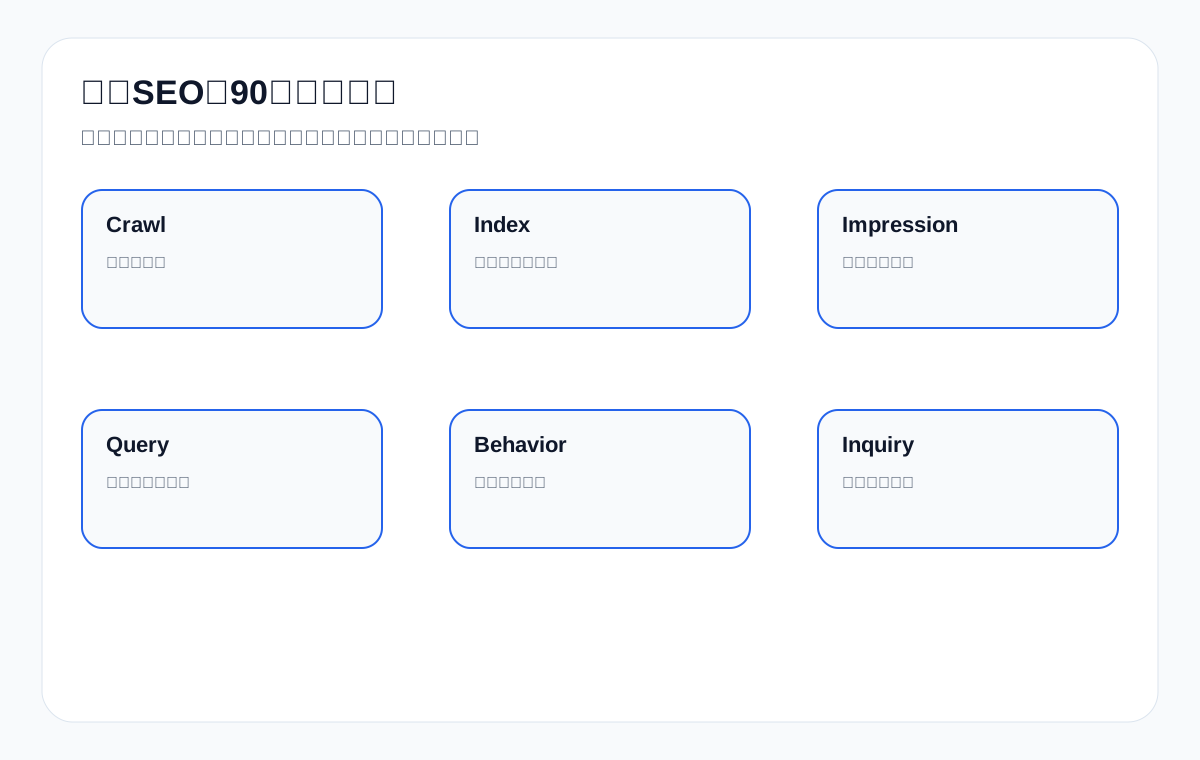
II. Benchmarking against the Top 1 and authoritative references: why you cannot just say 3 to 6 months
Among current authoritative references, Ahrefs’ “How Long Does SEO Take to Show Results?” stresses that the SEO cycle is affected by site history, competition difficulty, resource investment, content quality, and links, and uses data to show that many pages take a long time to reach the top. Search Engine Land’s SEO timeline material emphasizes 3-, 6-, and 12-month stages, along with crawling, re-evaluation, and stabilization periods. References such as Shopify also break SEO into audits, strategy, content, technical work, and monthly reviews. Although Google’s official documentation usually does not promise a specific timeline, it consistently stresses that crawling, indexing, content quality, page experience, and reprocessing all take time.
The strength of these references is that they are realistic, not exaggerated, and help businesses set expectations; the gap is that they explain too little about the Chinese foreign-trade B2B context. Foreign-trade companies care more about: when English product terms start to get impressions, when product pages get indexed, whether low-volume high-intent terms appear earlier than broad terms, how to review inquiry quality, and whether AI answers start to understand the official website. This article fills in those details.
Top 1 / authoritative reference gap card
| Reference content | Strengths | Gap for foreign-trade companies | What this article adds |
|---|---|---|---|
| Ahrefs SEO timeline | Data and influencing factors are clear | Lacks foreign-trade product pages and inquiry review | Adds product terms, page roles, and sales feedback |
| Search Engine Land timeline | Strong sense of stages, suitable for managing expectations | Does not detail the first 90 days of foreign-trade signals | Adds a GSC/GA4/inquiry/AI citation dashboard |
| Shopify timeline | Monthly tasks are clear | Leans e-commerce and general business | Converts it into the long B2B foreign-trade decision cycle |
| Google official documentation | Authoritative on the boundaries of crawl, index, and quality | Does not provide a business timeline | Uses official principles to explain why early stages focus on signals |
Boundaries of official evidence: the SEO timeline can only describe verifiable signals, not promised dates
Google’s official materials will not give a new foreign-trade site a single answer of “it will definitely show results in X months.” Search Central emphasizes baseline eligibility, crawling, indexing, content quality, page experience, canonical URLs, structured data, and Search Console data. In other words, 0-30 days, 31-60 days, 61-90 days, 3-6 months, and 6-12 months can only serve as review windows, not as written promises of results.
For foreign-trade products such as custom metal parts, LED flood light, packaging machine, medical probe, waterproof connector, and industrial valve supplier, SEO results must be broken into four layers: whether the technical foundation is in place, whether search performance appears, whether on-site behavior can be tracked, and whether inquiries match the product lines. If there is currently no usable GSC row data, you can only write “which fields to observe, how to build a baseline, and how to re-check next,” and you must not fabricate rankings, impressions, clicks, CTR, AI adoption, or changes in inquiries.
| Official source | What it supports | How to use it in the timeline | What it cannot prove |
|---|---|---|---|
| Google Search Central: How Search Works | Search involves processes such as discovery, crawling, indexing, and serving results. | Explains why a new site should first look at crawling, indexing, and page understanding rather than only final rankings. | Publishing a page does not mean it already participates in search results. |
| Google Search Central: Ranking systems guide | Ranking systems combine many signals, mainly understanding results at the page level while also referencing site-level signals. | Explains why timelines differ across product lines, competition intensity, and page quality. | You cannot write that a fixed number of months will produce a specified ranking. |
| Google Search Central: Creating helpful, reliable, people-first content | Content should be helpful, reliable, people-first, and provide clear facts and sources. | Judge whether product pages, resource pages, and application pages deserve long-term understanding by the search system. | More words do not directly equal results. |
| Google Search Central: SEO Starter Guide | Titles, body text, images, internal links, and site structure should help users and search systems understand the page. | Break first-90-day actions into titles, opening paragraphs, image alt text, internal links, product data, and FAQ. | Completing basic SEO does not mean immediate clicks or inquiries. |
| Google Search Central: Search Essentials | Search eligibility, accessibility, content quality, and spam baselines. | In the first stage, a new site should first check whether pages are eligible to be crawled, indexed, and shown. | Meeting basic eligibility does not mean existing search performance. |
| Google Search Central: Page experience | Core ranking systems tend to reward content with good page experience. | Check mobile reading, tables, images, above-the-fold content, CTA, and contact paths. | Page speed scores cannot replace content, indexing, and intent matching. |
| Google Search Central: Sitemaps overview | Sitemaps help Google discover important URLs. | In the first 30 days, confirm core product pages, category pages, resource pages, and articles are in the correct sitemap. | Presence in a sitemap does not mean crawled, indexed, or ranked. |
| Google Search Central: robots.txt introduction | robots.txt controls crawl access. | Confirm WordPress, Shopify, WooCommerce, or a custom site is not accidentally blocking core directories and resources. | Allowing crawling does not mean a page will be indexed. |
| Google Search Central: Consolidate duplicate URLs guide | Duplicate URLs need canonical tags, redirects, internal links, and sitemaps to work together. | Check whether product variants, parameter pages, multilingual pages, and old URLs are splitting signals. | A canonical is a consolidation strategy, not a ranking promise. |
| Search Console Help: URL Inspection tool | The index status, crawl status, canonical, and the page version Google sees for a single URL. | In the first 30 days, spot-check the homepage, core category pages, product pages, resource pages, and contact page. | A single URL being indexable does not mean existing search performance. |
| Search Console Help: Page indexing report | Page index status and reasons for non-indexing. | From day 31 to 90, group non-indexing reasons by duplicate, noindex, crawl, quality, and canonical. | The indexing report is not a clicks, rankings, or inquiries report. |
| Search Console Help: Performance report | query, page, clicks, impressions, CTR, average position, country, device. | From 3 to 6 months, observe by page and query whether search performance is starting to form an explainable trend. | Without GSC row data, you cannot write about rankings, impressions, clicks, CTR, or trend improvement. |
| Google Search Central: Debugging drops in Google Search traffic | Use Search Console trends, date ranges, and page dimensions to analyze changes in search traffic. | Break fluctuations into pages, queries, countries, devices, seasons, and page changes instead of making frequent random changes. | A single fluctuation cannot directly prove that a strategy failed. |
| Google Analytics Help: About events | GA4 can record form, email, WhatsApp, download, RFQ, and resource page behavior. | Connect downloads, contacts, forms, and RFQ behavior after search clicks into monthly reviews. | On-site events cannot replace Search Console search performance. |
| Google Search Central: AI features and your website | AI search still depends on pages being accessible, indexable, clearly written, and on basic SEO. | A new site can build an AI sample baseline, but should first get page facts, FAQ, resources, and entity information right. | You cannot promise that AI answers will definitely use your official website. |
| OpenAI Platform: Bots | Distinguish the purposes and access boundaries of OAI-SearchBot, GPTBot, and ChatGPT-User. | Combine robots.txt and logs to observe whether AI crawlers visit public pages. | Allowing crawler access does not mean ChatGPT search will show the official website. |
| Bing Webmaster Blog: AI Performance | If visible in the account, you can observe citations, cited pages, and grounding query phrases. | Record AI citations separately from GSC, GA4, and page facts. | A citation is not a Google ranking, answer position, or inquiry result. |
| IndexNow: Documentation | After a URL is added, updated, or deleted, a notification can be sent to participating search engines. | Record the notification time and URL after product pages, resource pages, and articles are updated. | A received notification does not mean crawled, indexed, or shown. |
0-12 month review table: stages are observation windows, not promises of results
The most professional way to express an SEO timeline is to write months as “what to verify” rather than “what you will necessarily get.” In the same industry, differences in site age, technical foundation, product data, competition intensity, budget, and sales cooperation all change how fast signals appear.
| Review window | Main verification | Evidence source | Conclusions you can write | Conclusions you cannot write |
|---|---|---|---|---|
| 0-30 days | GSC/GA4, sitemap, robots, index/follow, canonical, core URL list. | URL Inspection, page source, sitemap, GA4 configuration. | Whether the foundation is in place and which URLs need fixing. | Rankings, clicks, or inquiries have already improved. |
| 31-60 days | Whether core pages are indexed, and whether long-tail queries and a small amount of page performance appear. | Page indexing, Performance report, logs. | Which pages have early search signals and which still need content or technical work. | The strategy has already succeeded or failed. |
| 61-90 days | Whether query terms are close to the product line, whether pages address purchasing intent, and whether on-site behavior can be tracked. | GSC query/page, GA4 events, sales feedback. | Whether the direction can continue and which pages to prioritize for iteration. | Securing stable inquiries within a fixed period. |
| 3-6 months | Whether core page groups form a trend, and whether CTR, titles, content, and internal links are explainable. | GSC 28-day and 90-day comparisons, GA4, page change records. | Which types of product terms, application terms, and resource pages are worth deepening. | Every product line will show results at the same speed. |
| 6-12 months | Whether page assets, brand entity, external evidence, inquiry paths, and sales feedback form a closed loop. | GSC, GA4, logs, CRM, AI samples, page update records. | Which pages become long-term assets and which should be merged, rewritten, or deleted. | Specified keywords, AI answers, or inquiry volume can be directly controlled by SEO. |
When there is no GSC signal, the timeline must be downgraded to baseline building
If a site currently has no usable GSC query, page, or page-query row data, you cannot write that it already has rankings, impressions, clicks, CTR, average ranking trends, AI adoption, or changes in inquiries. At this point, the answer to “how long does SEO take” should be downgraded to “how long to build a reviewable baseline”: first make core pages crawlable, indexable, and understandable; then make GA4 and inquiry events trackable; finally, wait for GSC and on-site behavior to flow back.
| Missing data | What you can write | What you cannot write | Next step |
|---|---|---|---|
| No GSC Performance rows | List the query, page, country, device, clicks, impressions, CTR, and average position that should be observed. | Rankings, impressions, clicks, CTR, or trend improvement. | Export by 28 days and 90 days and keep the filter conditions. |
| No URL Inspection sampling | List the homepage, category pages, product pages, resource pages, and contact page that need checking. | Assert that all core pages already participate in search. | Record index status, canonical, crawl time, and page version. |
| No GA4 events | Explain that form, email, WhatsApp, download, RFQ, and resource page events need to be configured. | Organic search inquiries have already improved. | Review by source, page, event name, and product line. |
| No sales feedback | First build inquiry fields: product, country, parameters, application, budget, lead time, and resource gaps. | Write that inquiry quality has already improved. | Sales gives monthly feedback on validity and page gaps. |
| No AI samples | Build a table of platform, question, date, answer summary, cited URL, and incorrect facts. | Write that AI search has already adopted the official website. | Retest the same fixed question set across platforms, and record it separately from page actions. |
Delivery boundaries: you can deliver a review system, not results on external platforms
What a foreign-trade SEO team can deliver is technical diagnosis, page rewriting, stronger product evidence, internal links, data configuration, review tables, and follow-up actions; what it cannot deliver is a specified date, a specified ranking, a specified AI answer, a specified inquiry volume, or a specified closed deal. To explain “how long it takes” clearly, the point is not to give the boss a nice date, but to make every month produce verifiable evidence.
| Deliverable | Deliverable output | Acceptance materials | Boundary note |
|---|---|---|---|
| Technical foundation | Crawling, indexing, sitemap, robots, canonical, structured data, and mobile readability. | Source code, URL Inspection, sitemap, mobile checks, fix records. | Fixing the foundation does not mean immediate search performance. |
| Page assets | Content strengthening for product pages, category pages, application pages, resource pages, and articles. | Before-and-after page comparisons, product fields, internal links, FAQ, resource download entries. | Page assets cannot directly control rankings. |
| Data review | GSC, GA4, logs, AI samples, inquiries, and sales feedback reviewed in separate tables. | Date ranges, filter conditions, exported fields, change records. | Without data, you can only write “to be observed.” |
| Monthly iteration | Adjust titles, opening paragraphs, content, internal links, resources, and CTA by page priority. | Monthly action list and next review date. | Monthly actions are not a promise of results. |
III. The conclusion first: in the first 3 months, a new site should not look only at rankings
The most important thing in a new site’s first 3 months is to build a foundation that can be discovered, understood, and reviewed. Rankings may fluctuate a great deal, and many terms may not have stable positions yet; but if core pages are crawled, important product pages enter the index, long-tail queries begin to appear in GSC, pages get real visits, and the inquiry path is trackable, these are early signals that the direction is right.
What to look at in the first 3 months
| Stage | Key signals | What not to over-judge |
|---|---|---|
| 0-30 days | The site is crawlable, core pages are submitted, GSC/GA4 are configured, forms are trackable | Do not use rankings to judge success or failure |
| 31-60 days | Core product pages are indexed, long-tail queries appear, pages begin to get impressions | Do not expect high-competition terms to rank stably near the top |
| 61-90 days | Query terms expand, CTR can be analyzed, a small number of valid visits and inquiry signals appear | Do not treat a single week’s fluctuation as the final result |
IV. Why SEO takes time: crawling, indexing, understanding, trust, and competition
SEO is slow not because of some mysterious waiting period, but because the search system needs to discover pages, crawl content, judge page quality, understand search intent, compare competing pages, and observe external signals and user feedback. A new site has no historical data or external citations, so the search system needs more time to understand the site’s topic and credibility.
Factors that make SEO take time
| Factor | Why it affects timing | Foreign-trade example |
|---|---|---|
| Site history | Older sites have more crawl and trust foundations | A newly built waterproof connector site is slower than an industrial site that has operated for years |
| Competition intensity | The stronger the competition, the more complete the evidence needed | custom metal parts manufacturer is usually more competitive than long-tail parameter terms |
| Page quality | Insufficient content and evidence slow down understanding | An LED flood light page lacking parameters and certificates is hard to win |
| Technical foundation | Crawling, speed, mobile, and forms affect overall performance | Oversized product images or noindex mistakes slow progress |
| External citations | Relevant citations help discovery and trust | Citations from industry directories, customer partners, and technical blogs can help |
V. 0-30 days: first check whether the foundation is in place
The first month is mainly about checking whether the foundation is correct, not about rankings. Whether GSC is verified, whether the sitemap is submitted, whether core product and category pages are accessible, whether robots/noindex/canonical are normal, whether GA4 records organic search visits, and whether inquiry forms and download events can be tracked.
0-30 day checklist
| Check item | Passing signal | Situations to handle |
|---|---|---|
| GSC | Site verification is complete, and page and index data can be seen | No permission or blank data |
| sitemap | Core URLs are in the sitemap | Many worthless URLs mixed in or important pages missing |
| Core pages | Homepage, category pages, product pages, and contact page return 200 and are accessible | 404s, redirect errors, mobile unusable |
| Index control | Important pages are allowed to be indexed | noindex set by mistake, canonical errors |
| GA4/forms | Entry points and form events are trackable | Cannot tell where inquiries come from |
VI. 31-60 days: see whether indexing and long-tail impressions appear
From the second month, companies can check whether core pages enter the index, whether some long-tail queries appear in GSC, and whether pages get a small number of impressions and clicks. The common early signal for a new foreign-trade site is not a broad term reaching the first page, but product models, parameters, application scenarios, brand terms, or very specific question terms beginning to appear.
31-60 day early signals
| Signal | What it shows | Next step |
|---|---|---|
| Product pages are indexed | Google can discover and store the page | Keep adding parameters, FAQ, and internal links |
| Long-tail impressions appear | Pages begin to match specific queries | Analyze whether query terms land on the right pages |
| Brand terms get impressions | The brand entity begins to be recognized | Unify the company name, brand name, and resource pages |
| A small number of clicks | Titles and pages have some appeal | Optimize CTR and page landing |
| No impressions at all | There may be indexing, content, or internal link problems | Do URL-level diagnostics |
VII. 61-90 days: look at query expansion, page feedback, and inquiry paths
In the third month, you can start looking more carefully at GSC query terms, page performance, GA4 landing pages, and inquiry paths. Still do not fixate only on final rankings; instead, see whether pages begin to be understood correctly: whether the custom metal parts page shows terms related to machining, materials, and tolerances; whether the packaging machine page shows terms about materials and packaging methods; whether the waterproof connector page shows IP rating and application scenario terms.
61-90 day review table
| Dimension | What to look at | How to adjust |
|---|---|---|
| Query terms | Whether product, parameter, application, and supplier-related terms appear | Add content, adjust titles and page roles |
| Pages | Which URLs get impressions and clicks | Strengthen effective pages and fix pages that land the wrong traffic |
| Countries | Whether target markets begin to appear | Consider country pages or case/certificate content |
| Behavior | Whether visits view products, download resources, or click forms | Optimize CTA and resource modules |
| Inquiries | Whether product-matched inquiries appear | Have sales give quality feedback and add FAQ |
VIII. 3-6 months: start looking at trends, not single-point fluctuations
From 3 to 6 months, it is usually more appropriate to observe trends: whether target pages keep getting impressions, whether some long-tail terms move into more clickable positions, whether content and internal links drive product pages, and whether inquiry quality matches better than in the early stage. This stage may still fluctuate, but if the direction is right, you should see more pages being understood.
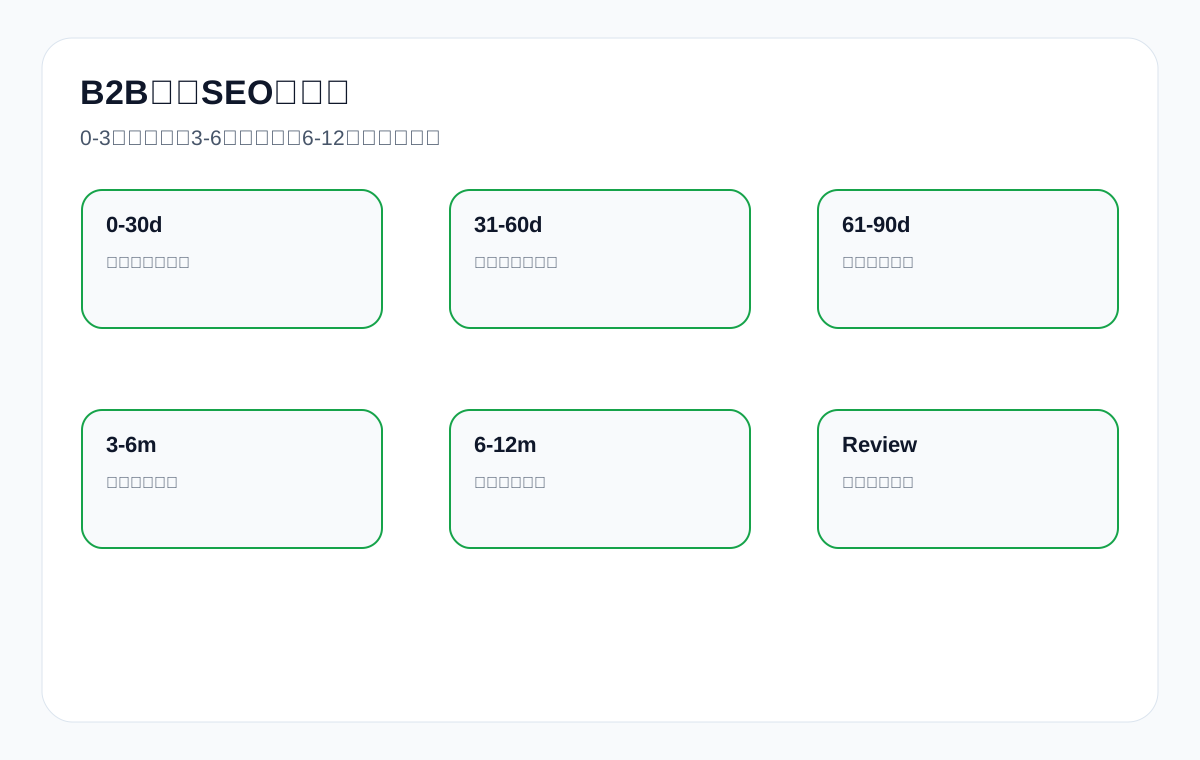
3-6 month trend assessment
| Good trend | Possible problem | Adjustment direction |
|---|---|---|
| More long-tail terms | Broad terms still have no clear position | Keep building application pages and product evidence |
| Product page impressions grow | Low click-through rate | Change titles and descriptions to strengthen purchasing value |
| Articles have traffic | No path to inquiries | Add related product internal links and CTAs |
| Inquiry quality improves | Volume is still low | Keep expanding high-value pages |
| AI answers begin to mention the brand | Few citations of the official website | Add resource pages and entity consistency |
IX. 6-12 months: look at stable traffic, page assets, and inquiry quality
From 6 to 12 months, it is more appropriate to judge whether SEO has formed assets. At this point, look at: which pages keep bringing impressions and clicks, which product lines have stable inquiries, which content earns external citations, which AI answers begin to understand the official website, and which pages need to be expanded into pillar content.
6-12 month assessment table
| Dimension | Healthy performance |
|---|---|
| Page assets | Core category pages, product pages, application pages, and resource pages keep getting impressions |
| Query structure | Not only brand terms, but also product, parameter, application, and supplier terms |
| Inquiry quality | Organic search inquiries better match product lines and target markets |
| Content reuse | Sales can use pages to answer customer questions |
| External citations | Link assets gain relevant industry citations |
| AI visibility | Brand and official website resources are more likely to be correctly mentioned in AI answers |
X. Timing differences across foreign-trade product lines: not all terms are equally fast
Product line timing differences
| Product line | Terms that show signals faster | Slower terms |
|---|---|---|
| custom metal parts | Long-tail terms for materials, tolerances, and surface treatment | manufacturer broad terms and high-competition commercial terms |
| LED flood light | Power, IP rating, and application scenario terms | Broad terms such as LED light supplier |
| packaging machine | Material + equipment terms, such as powder packaging machine | The broad term packaging machine |
| medical probe | Compliance, material, and compatible equipment terms | High-trust supplier terms |
| waterproof connector | IP rating, pin count, and application terms | The broad term connector supplier |
XI. Which early signals are worth celebrating
Positive early signals
| Signal | Why it matters |
|---|---|
| Core pages enter the index | Shows the foundation is crawlable and understandable |
| Long-tail product terms appear in GSC | Shows pages are starting to match real demand |
| Target countries get impressions | Shows the market direction may be right |
| Articles drive product page visits | Shows content and commercial pages are connected effectively |
| Resource downloads or form events appear | Shows pages have initial conversion behavior |
| Sales feedback says inquiries match better | Shows traffic quality is improving |
XII. Which situations mean the strategy needs adjusting
Signals that require adjustment
| Symptom | Possible cause | Adjustment action |
|---|---|---|
| Core pages are not indexed | Technical issues, weak content, insufficient internal links | Check noindex, canonical, content, and internal links |
| Impression terms are completely off target | Unclear page intent or inaccurate titles | Redo keyword mapping and titles |
| Articles have traffic but no inquiries | No path to product pages or CTAs | Add internal links, resource downloads, and product entries |
| Poor inquiry quality | The page attracts the wrong audience | Adjust terms, content, and form prompts |
| AI misreads the product | Unclear official website facts or inconsistent entities | Add evidence, FAQ, resources, and entity information |
XIII. GSC, GA4, inquiry, and AI citation review dashboard
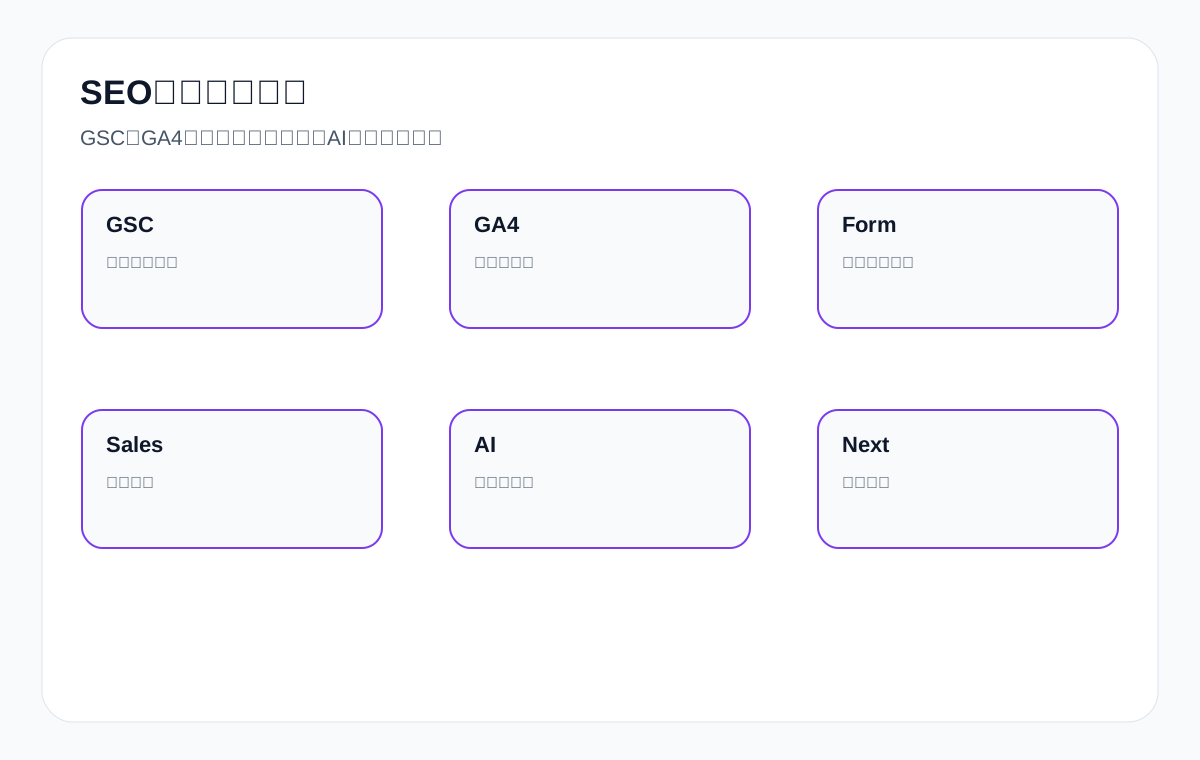
Review dashboard
| Data source | Metrics | Conclusion |
|---|---|---|
| GSC | Query terms, pages, countries, impressions, clicks, CTR | Judge whether the search side is progressing |
| GA4 | Landing pages, engagement, downloads, forms, WhatsApp | Judge whether on-site behavior is effective |
| Inquiries | Product, country, quantity, purchasing stage | Judge whether leads match the business |
| Sales feedback | Validity, frequently asked questions, reaction after quotation | Optimize pages and FAQ in reverse |
| AI citations | Brand mentions, official website citations, answer accuracy | Judge whether official website evidence is understood |
XIV. What to do each week in the first 3 months
12-week execution cadence
| Week | Key actions |
|---|---|
| Weeks 1-2 | Complete GSC/GA4/form tracking, sitemap, and core page checks |
| Weeks 3-4 | Upgrade the basic modules of the homepage, key category pages, product pages, and contact page |
| Weeks 5-6 | Publish the first batch of application pages and technical articles, and build internal links |
| Weeks 7-8 | Check indexing, query terms, page impressions, and form events |
| Weeks 9-10 | Adjust titles, FAQ, and page content based on query terms |
| Weeks 11-12 | Compile the 90-day review and determine the next batch of product lines and pages |
XV. FAQ: common questions about the Google SEO timeline
Does Google SEO always take 3 to 6 months to work?
Not necessarily. Basic signals may appear within days to weeks, but stable traffic and inquiries usually take longer, depending on site history, competition, page quality, and execution speed.
Is it normal for a new site to have no rankings in the first month?
Yes. In the first month, you should focus more on crawling, indexing, GSC data, GA4 tracking, and whether the core pages are in place.
Is it necessary to look at inquiries in the first 3 months?
Yes, but do not judge success or failure by inquiries alone. Early on, it is more important whether the inquiry path can be tracked and whether the small number of inquiries matches the product lines.
Why are there impressions but no clicks?
The title may not be attractive, the search intent may not match, the ranking position may be low, or the page description may be unclear. You need to look at the query terms and pages.
Why are there clicks but no inquiries?
The page may lack evidence, the CTA may be unclear, the form may be too difficult, the product may not match, or the visitor may be in an early research stage.
Is foreign-trade B2B SEO slower than B2C?
In many cases, yes, because the decision cycle is long, search volume is low, and trust requirements are high, but the value of a single valid inquiry is also higher.
Will AI search shorten the SEO timeline?
It will not simply shorten it. AI answers rely more on clear evidence, entity consistency, and credible sources, and still require the accumulation of page assets.
Should you give up if you see no obvious growth after 3 months?
Do not look only at growth; look at the basic signals. If there is no progress in indexing, queries, pages, and inquiry paths, then diagnose and adjust.
How long does it take to judge the direction of an SEO strategy?
Usually the first 90 days can determine the foundation and early direction, 3 to 6 months shows the trend, and 6 to 12 months shows more stable asset effects.
What should the boss look at each month?
Look at core page indexing, target queries, target countries, valid visits, inquiry quality, sales feedback, and next month’s page actions.
XVI. Why the timeline differs so much depending on site foundations
With the same SEO work, some websites see obvious long-tail growth in three months, while others are still building foundations after six months. The reason is often not “whether SEO was done” but a different starting point. Older sites have historical crawling, external citations, and content accumulation, while new sites must build topic and trust from zero; websites with complete product data are easier to understand, while websites with only promotional slogans need purchasing evidence added first.
Site foundation difference table
| Site status | Early performance | Optimization focus |
|---|---|---|
| Brand-new English site | Slow indexing and impressions, little data | First get technology, pages, tracking, and core content in place |
| Old site but thin content | Already crawled, but queries are inaccurate | Rewrite core category pages, product pages, and application pages |
| Old site with traffic but no inquiries | Article traffic may be high, but commercial pages are weak | Strengthen product pages, CTAs, resources, and inquiry forms |
| Many technical problems | Indexing and speed affect performance | First fix noindex, canonical, 404s, forms, and mobile |
| Factory site with complete resources | Easier to build in-depth pages | Prioritize turning certificates, parameters, drawings, and FAQ into pages |
XVII. Competition intensity: why broad terms are slow while long-tail terms show signals earlier
Foreign-trade companies often want to rank as quickly as possible for broad terms such as supplier and manufacturer, but these terms are highly competitive, broad in intent, and demanding in terms of page trust. A new site is more likely to get impressions first from long-tail terms, application terms, parameter terms, and question terms.
Term types and speed of results
| Term type | Example | Likelihood of early signals | Strategy |
|---|---|---|---|
| Broad commercial terms | custom metal parts manufacturer | Slow | Requires category pages, factory capabilities, external citations, and long-term accumulation |
| Parameter terms | LED flood light IP66 200W | Medium | Add parameter tables and application notes to product pages |
| Application terms | packaging machine for powder | Relatively fast | Build application pages and selection guides |
| Question terms | how to choose waterproof connector | Relatively fast | Write technical articles and lead to product pages |
| Certificate terms | medical probe ISO certificate | Medium | Build certificate resource pages and FAQ |
So if broad terms have no clear position in the first 90 days but long-tail terms begin to appear, it is not necessarily a failure. On the contrary, it shows the search system is understanding the site’s topic. The next step is to see whether these long-tail terms land on the right pages and to keep strengthening them with internal links and content evidence.
XVIII. Page publishing cadence: why you should not publish too many low-quality pages at once
Some companies publish a large number of articles or product pages at once in the hope of seeing results quickly. But if page quality is insufficient, the structure is chaotic, the content is duplicated, and there are no internal links or inquiry paths, it actually makes it harder for the search system to judge what matters. A better approach is to publish in batches, with each batch centered on one product line or one purchasing stage, and to build the pages completely before expanding.
Batch publishing recommendations
| Batch | Page mix | Review focus |
|---|---|---|
| Batch 1 | Homepage, key category pages, 3-5 core product pages, contact page | Basic indexing, forms, brand terms, and core page visits |
| Batch 2 | 1-2 application pages, 2-3 technical articles, resource pages | Long-tail queries, application terms, internal links from articles to product pages |
| Batch 3 | Expanded product pages, FAQ, downloadable resources, industry pages | Query coverage, downloads, inquiry quality |
| Batch 4 | External link assets, comparison pages, tool lists | External citations, AI citations, and deeper demand |
Record the date and URL after each batch goes live. Otherwise, when you later see GSC changes, it is hard to tell which page, title, internal link, or resource module caused them.
XIX. How long after a content update can it be re-evaluated
After a page is changed, Google needs to re-crawl and reprocess it. Different pages have different speeds: frequently crawled old pages may be faster, while deep product pages on a new site may be slower. Companies can use the GSC URL Inspection to check crawl time, but should not frequently submit all pages; it is more important to let core URLs be discovered naturally through internal links, sitemaps, and page quality.
Review timing after an update
| Type of change | What to look at short term | What to look at medium term |
|---|---|---|
| Titles and descriptions | In 1-3 weeks, look at the displayed title and CTR changes | In 30-60 days, look at clicks for target queries |
| Body expansion | In 2-4 weeks, look at new queries and indexing stability | In 60-90 days, look at long-tail coverage |
| Internal link adjustments | In 2-4 weeks, look at target page crawling and impressions | In 60 days, look at query expansion for target pages |
| Technical fixes | In days to weeks, look at status changes | In 30 days, look at invalid pages and experience metrics |
| Resource pages going live | In 2-6 weeks, look at indexing and visits | In 90 days, look at downloads and AI citations |
XX. Inquiries take longer to show results than traffic
In foreign-trade B2B, inquiries usually take longer to show results than search impressions. Buyers need to compare suppliers, confirm parameters, get internal approval, download resources, request quotes, and wait for replies. Early SEO may first bring article reading, resource downloads, and product page visits, and then gradually turn into forms or emails.
Stages from traffic to inquiries
| Stage | Possible signals | Page actions |
|---|---|---|
| Discovery | Articles or application pages get impressions | Clearly state the problem, standards, and next entry point |
| Research | Visits to product pages and resource pages increase | Add parameters, certificates, and downloads |
| Comparison | Multiple product pages or category pages are viewed | Add comparison tables and similar products |
| Preparing to inquire | Clicks on the contact page, forms, and WhatsApp increase | Optimize fields and response expectations |
| Valid inquiry | Sales confirms the product and country match | Write feedback back into FAQ and pages |
Therefore, having visits but few inquiries in the first 3 months is not necessarily a failure. The key is whether the visits come from target queries, whether they enter product and resource pages, and whether they generate downloads or form behavior.
XXI. The 5 situations bosses most easily misjudge
Misjudgments and correct explanations
| Misjudgment | Why it is inaccurate | Correct explanation |
|---|---|---|
| No inquiries in a month means no results | A new site first needs to be discovered and understood | First look at indexing, queries, and page behavior |
| A ranking drop means failure | Early ranking fluctuations are normal | Look at trends and page group performance |
| More traffic means success | It may be broad traffic or the wrong intent | Look at inquiry quality and product matching |
| More articles means faster results | Low-quality content dilutes the focus | Build deeper pages in batches by product line |
| A perfect tool score means results will come | Scores do not equal commercial value | Look at purchasing evidence and the conversion path |
XXII. How the sales team can help judge whether SEO is working
The sales team is key to judging whether foreign-trade SEO is truly getting close to the business. Sales does not need to understand SEO, but it must give feedback on which product the inquiry came from, what the customer asked, whether there is purchasing intent, whether the resources are sufficient, and why the customer continued or stopped communicating.
Sales feedback form
| Field | Example |
|---|---|
| Product match | A customer asks about waterproof connector; is it a key product line |
| Country market | Whether it comes from a target country or a serviceable region |
| Purchasing stage | Inquiry, sampling, project evaluation, price comparison, information gathering |
| Information completeness | Whether quantity, specifications, drawings, or application are provided |
| Common questions | MOQ, lead time, certificates, packaging, payment, customization |
| Page improvement suggestions | Which questions should be written into product pages or FAQ |
XXIII. When to look at AI search signals
In the early stage, a new site should not rely too much on AI answers for judgment, but it can build a baseline. Each month, sample a fixed set of questions, such as “best waterproof connector supplier for marine application” or “how to choose packaging machine for powder,” and observe whether AI mentions the brand, whether it cites the official website, and whether it misreads the product.
Early AI search signals
| Signal | Explanation | Page action |
|---|---|---|
| Brand is not mentioned | Common for new sites; no need to panic | Add official website evidence and entity consistency |
| Mentioned but official website not cited | Insufficient external sources or brand information | Strengthen resource pages and external citations |
| The answer misreads the product | Page facts are unclear | Correct product lines, parameters, and FAQ |
| Competitors appear frequently | Competitors have more complete resources or more citations | Analyze competitor evidence and page structure |
XXIV. Realistic expectations under different levels of resource investment
Resource investment and expectations
| Investment status | Realistic expectation for the first 3 months | Recommendation |
|---|---|---|
| Only a few articles | A small number of question-term impressions may appear | Must add product pages and internal links |
| Product pages and resources are complete | Long-tail product terms are more likely to appear | Expand application pages and FAQ |
| Development support is available | Technical problems can be handled quickly | Prioritize fixing indexing, speed, and form tracking |
| Sales feedback is available | Easier to improve inquiry quality | Write feedback back into pages every month |
| External citation resources are available | Trust accumulates faster | Build citable assets first, then expand |
XXV. Minimum viable dashboard for a new site’s first 90 days
90-day dashboard fields
| Field | How to record |
|---|---|
| Core URLs | Homepage, category pages, product pages, application pages, resource pages, contact page |
| Index status | Indexed, discovered but not indexed, not discovered, error |
| Query terms | Product terms, application terms, and question terms appearing in GSC |
| Countries | Whether target countries have impressions and visits |
| On-site behavior | Product page visits, downloads, forms, WhatsApp |
| Inquiry quality | A/B/C/D grade and sales notes |
| Next month’s actions | Change titles, add content, add internal links, fix technical issues, add resources |
XXVI. When to continue and when to adjust
If in the first 90 days core pages are indexed, long-tail queries appear, target countries begin to get impressions, and GA4 can record visits and events, then even if inquiries are still few, you should continue digging deeper along the product line. If after 90 days core pages are still not indexed, query terms are off target, forms cannot be tracked, and pages have no product evidence, then you should adjust the foundation instead of blindly publishing more content.
Continue or adjust assessment
| Situation | Judgment | Action |
|---|---|---|
| Indexing is normal, long-tail terms growing | The direction is basically right | Keep expanding application pages, resource pages, and internal links |
| Slow indexing, few core pages | There is a foundation problem | Check technical issues, weak content, and internal links |
| Many impressions, few clicks | A title or intent problem | Change titles and descriptions to match purchasing intent |
| Many clicks, few inquiries | A page landing or form problem | Add evidence, CTA, resources, and forms |
| Poor inquiry quality | A keyword or page positioning problem | Adjust target terms and page copy |
XXVII. Differences in the timeline across industry products
The speed of foreign-trade SEO also depends on the complexity of procurement in the industry. Standard products and low-ticket products may get visits and inquiries faster; custom parts, equipment, medical, and industrial project products usually take longer, because buyers need more resources, internal approval, and technical confirmation.
Industry product cycle differences
| Product type | Cycle characteristics | First 90-day focus |
|---|---|---|
| Standard lighting products | Clear parameters, many search terms, strong competition | Start with specification pages, application pages, and image speed |
| Custom metal parts | Complex demand; drawings and materials determine inquiry quality | Add processes, tolerances, materials, drawing upload, and case-based explanations |
| Packaging machinery | Big differences in materials and production lines; long consultation cycle | Build material application pages, selection tables, and sample testing processes |
| Medical accessories | High compliance and trust requirements | Add materials, certifications, traceability, compatible equipment, and resource pages |
| Ceramic dinnerware | Images, packaging, and customization matter greatly | Add sets, packaging, MOQ, customization, and application scenarios |
| Industrial valves | Driven by projects and industry scenarios | Add pressure ratings, materials, industry applications, and certificates |
Therefore, in the same 3 months, an LED flood light page may already show many parameter-term impressions, while a medical probe or industrial valve page may still be mostly at the indexing and small long-tail stage. You cannot use the same ruler to judge all product lines.
XXVIII. What to do each month: from waiting for results to active iteration
Many companies just “wait for results” when doing SEO. A better way is to have clear actions every month: build the foundation in the first month, look at indexing and long-tail terms in the second month, adjust based on query terms and behavior in the third month, and then keep strengthening around high-value pages each following month.
Monthly action table
| Month | Core task | Output |
|---|---|---|
| Month 1 | Technical foundation, tracking, core pages, product data sorting | GSC/GA4 configuration, core URL list, resource gaps |
| Month 2 | Publish the first batch of product pages, category pages, application pages, and articles | Page map, internal links, FAQ, and resource downloads |
| Month 3 | Adjust titles, content, and inquiry paths based on GSC and GA4 | 90-day review and next batch of page plans |
| Months 4-6 | Expand effective product lines and application pages, and add external link assets | Long-tail term growth, resource pages, and industry resources |
| Months 7-12 | Consolidate effective pages and handle competitive terms and conversion optimization | Stable inquiry review and page asset library |
XXIX. Content update priority: fix the pages that inform business decisions first
When resources are limited, the order of page updates should be ranked by business value. Do not change a low-value article first just because it is easy to change, and do not focus only on articles while ignoring product pages. The order of priority is usually: core category pages, key product pages, inquiry pages, resource pages, application pages, and articles that can drive traffic to commercial pages.
Page update priority
| Priority | Page | Reason |
|---|---|---|
| P0 | Unusable contact page, form, and core product pages | Directly affects conversion and visits |
| P1 | Key category pages and product pages | Carry commercial terms and supplier-screening terms |
| P2 | Application pages and resource pages | Affect long-tail terms, trust, and AI citations |
| P3 | High-impression articles and tutorials | Can drive product pages through internal links |
| P4 | Low-impression, low-value historical pages | Organize or merge when resources allow |
If GSC shows an article has impressions but it does not link to any product page, it is not an endpoint but an entry point. You should link the technical judgments in the article to related category pages, product pages, resource pages, and inquiry pages.
XXX. How to explain to the boss that “there is no final result yet, but the direction is right”
The hardest thing to communicate in the early stage of SEO is this: there are no obvious inquiries yet, but there are already some correct signals. You can explain it to the boss using four layers: foundation, search, behavior, and inquiries. The foundation layer looks at indexing and tracking, the search layer looks at query terms and impressions, the behavior layer looks at visits and downloads, and the inquiry layer looks at sales feedback.
Boss communication table
| Layer | Correct signal | Explanation |
|---|---|---|
| Foundation | Core pages are indexed and forms are trackable | The site has the foundation to be discovered and reviewed |
| Search | Long-tail product terms and target-country impressions appear | Google is starting to understand the product topic |
| Behavior | Visits to product pages, resource downloads, or contact page visits increase | Buyers are entering the evaluation path |
| Inquiries | A small number of inquiries match products and sales feedback is usable | You can continue optimizing pages and forms |
This kind of explanation is more convincing than “wait a few more months.” It lets the boss see the evidence at each stage and decide whether to keep investing in content, development, resources, and sales collaboration.
XXXI. How to avoid doing the wrong things in pursuit of speed
When you want results as fast as possible, the easiest mistakes are: piling up low-quality articles, buying irrelevant backlinks, frequently changing titles, deleting pages that have not yet accumulated data, stuffing all terms onto the homepage, and ignoring product resources and form tracking. These actions look proactive, but they may actually damage long-term assets.
Mistakes made in the rush for results
| Wrong action | Short-term temptation | Long-term problem |
|---|---|---|
| A large number of low-quality articles | Looks like frequent updates | Confusing topics that cannot address purchasing intent |
| Irrelevant backlinks | The number of links grows quickly | High risk and weak relevance |
| Frequently changing titles | Hope of an immediate CTR boost | Data cannot be judged and page signals become confusing |
| Ignoring product pages | Articles are easy to write | Commercial intent has nowhere to land |
| Not installing conversion tracking | Saves effort | Cannot prove the source and quality of inquiries |
XXXII. A real execution path starting from a new foreign-trade site
Suppose a new site mainly sells custom metal parts. In the first month, build the homepage, the custom metal parts category page, a CNC machining parts product line page, a materials and surface treatment resource page, and a drawing-upload inquiry page, while configuring GSC and GA4. In the second month, publish content such as tolerance guide, surface finish comparison, and materials for custom metal parts, and link the articles to the category page and inquiry page. In the third month, see whether terms such as tolerance, aluminum, stainless steel, surface finish, and drawing appear in GSC, and have sales give feedback on whether inquiry drawings are more complete.
If the main product is packaging machine, the path is different: first build category and application pages for powder packaging machine, granule packaging machine, and liquid packaging machine, then add material testing, packaging speed, bag types, automation level, after-sales spare parts, and the sample testing process. In the first 90 days, see whether material and application terms appear, rather than only looking at the broad term packaging machine.
If the main product is waterproof connector, the early focus is IP rating, pin count, wire diameter, materials, marine/outdoor/industrial application, datasheet, and drawing downloads. If terms such as IP67 waterproof connector or waterproof connector for outdoor cable appear in GSC early on, that is a more valuable signal than a broad term.
XXXIII. What a 90-day review report should include
90-day review report structure
| Section | Content |
|---|---|
| Execution review | Which pages went live, which technical issues were fixed, which resources were added |
| Index status | Whether core URLs are indexed and which still need work |
| Query term changes | New product terms, application terms, question terms, and target countries |
| Page performance | Which pages have impressions, clicks, visits, and events |
| Inquiry quality | Organic search inquiry volume, product matching, sales grade |
| Problem list | Which pages are not indexed, which terms are off target, which have poor conversion or insufficient resources |
| Next month’s plan | The next batch of pages, resources, technical work, and sales feedback actions |
This report should not only show pretty data; it should help the team decide the next step. If the 90-day report cannot list the next batch of priority pages, the review is not truly serving the business.
XXXIV. Final criteria for judging whether foreign-trade SEO is working
The final judgment of whether SEO is working is not about the position of a single word on a single day, but about whether the website has formed a sustainable customer acquisition asset: the target product line has a page system, core pages can be understood by search, buyers can find parameters and evidence, the inquiry path can be tracked, sales feedback can flow back, and content and resources can keep strengthening.
Final judgment criteria
| Criterion | Passing performance |
|---|---|
| Search coverage | Product terms, parameter terms, application terms, and question terms gradually expand |
| Page assets | Category pages, product pages, application pages, resource pages, and articles support each other |
| Inquiry path | Forms, downloads, WhatsApp, and contact entries are trackable |
| Sales quality | The proportion of valid inquiries and product matching improves |
| Review mechanism | Every month, data can be used to decide the next action |
| Risk boundary | Depends not on uncontrollable promises but on executable improvements |
XVI. Final checklist: do not miss these signals in a new site’s first 90 days
- GSC and GA4 are configured correctly.
- Core product pages, category pages, application pages, and the contact page are accessible.
- Important pages are allowed to be indexed, and canonical and sitemap are normal.
- Record the indexing and crawling baseline in the first 30 days.
- From day 31 to 60, observe whether long-tail English product terms appear.
- From day 61 to 90, analyze whether query terms land on the right pages.
- GA4 can record organic search entries, downloads, and form events.
- Sales gives monthly feedback on inquiry product, country, and validity.
- Article traffic can be directed through internal links to product pages and inquiry pages.
- Resource pages, certificate pages, and FAQ are gradually completed.
- Sample AI answers to observe brand mentions and official website citations.
- Every month, turn data into the next batch of page actions.
XVII. Final judgment: SEO results are not a date but a set of signals
There is no fixed answer to how long Google SEO takes that applies to every website. For a new foreign-trade site, the first 3 months are about basic signals, 3 to 6 months about trends, and 6 to 12 months about stable page assets and inquiry quality. What you can control is the technical foundation, page quality, product evidence, content depth, internal links, external citations, data review, and sales collaboration; what you cannot control is stable positions, changes in competition, and the speed at which the search system re-evaluates.
XXXV. If you can only do 5 things today
If you have just started SEO for a new foreign-trade site, do only 5 things today: first, confirm that GSC and GA4 can record data; second, check whether the homepage, key category pages, key product pages, and contact page are accessible and indexable; third, complete parameters, certificates, FAQ, and an inquiry entry point for one key product page; fourth, link one technical article to related product pages; fifth, build a 90-day review table.
These 5 things will not immediately bring stable inquiries, but they will turn the website from unreviewable into reviewable. As long as data starts to appear, every later title adjustment, content expansion, internal link addition, and form optimization can leave evidence.
For the boss, this is more reliable than a vague time promise; for the execution team, it turns waiting for results into continuous verification. After 90 days, when you look at the data again, you will know which pages are understood, which terms have potential, and which product lines are worth continued investment.
This is the most important early outcome of SEO for a new foreign-trade site: not immediately proving that all investment has produced a final return, but building a growth system that can continuously find problems, correct pages, and verify inquiry quality.
Once this system is running, expanding product lines later will be more stable.
A truly mature foreign-trade SEO review does not only ask “what rank is this term,” but asks: is the target product page indexed, do buyer queries appear, does the page address the right intent, is the resource credible enough, do inquiries match the product line, and can sales feedback keep improving the pages. As long as these signals keep getting better, SEO is moving from foundation building toward a customer acquisition asset.
{
“@context”: “https://schema.org”,
“@type”: “FAQPage”,
“mainEntity”: [
{
“@type”: “Question”,
“name”: “Search intent breakdownnnQuery typeUser’s real questionWhat this article answersnnHow long it takesWanting a realistic time expectationDivided into 0-3 months, 3-6 months, and 6-12 months to explain the signalsnFirst 3 months of a new siteNot knowing what to look at earlyLists crawl, index, impression, query, visit, and inquiry metricsnForeign-trade inquiriesHow traffic and inquiries are connectedLinks GSC, GA4, sales feedback, and page improvements togethernRisk boundariesAfraid of being misled by promisesExplains what is controllable, what is uncontrollable, and what can only be observednnII. Benchmarking against the Top 1 and authoritative references: why you cannot just say 3 to 6 monthsnAmong current authoritative references, Ahrefs’ ‘How Long Does SEO Take to Show Results?’ stresses that the SEO cycle is affected by site history, competition difficulty, resource investment, content quality, and links, and uses data to show that many pages take a long time to reach the top. Search Engine Land’s SEO timeline material emphasizes 3-, 6-, and 12-month stages, along with crawling, re-evaluation, and stabilization periods. References such as Shopify also break SEO into audits, strategy, content, technical work, and monthly reviews. Although Google’s official documentation usually does not promise a specific timeline, it consistently stresses that crawling, indexing, content quality, page experience, and reprocessing all take time.nThe strength of these references is that they are realistic, not exaggerated, and help businesses set expectations; the gap is that they explain too little about the Chinese foreign-trade B2B context. Foreign-trade companies care more about: when English product terms start to get impressions, when product pages get indexed, whether low-volume high-intent terms appear earlier than broad terms, how to review inquiry quality, and whether AI answers start to understand the official website. This article fills in those details.nTop 1 / authoritative reference gap cardnnReference contentStrengthsGap for foreign-trade companiesWhat this article addsnnAhrefs SEO timelineData and influencing factors are clearLacks foreign-trade product pages and inquiry reviewAdds product terms, page roles, and sales feedbacknSearch Engine Land timelineStrong sense of stages, suitable for managing expectationsDoes not detail the first 90 days of foreign-trade signalsAdds a GSC/GA4/inquiry/AI citation dashboardnShopify timelineMonthly tasks are clearLeans e-commerce and general businessConverts it into the long B2B foreign-trade decision cyclenGoogle official documentationAuthoritative on the boundaries of crawl, index, and qualityDoes not provide a business timelineUses official principles to explain why early stages focus on signalsnnnBoundaries of official evidence: the SEO timeline can only describe verifiable signals, not promised datesnGoogle’s official materials will not give a new foreign-trade site a single answer of ‘it will definitely show results in X months.’ Search Central emphasizes baseline eligibility, crawling, indexing, content quality, page experience, canonical URLs, structured data, and Search Console data. In other words, 0-30 days, 31-60 days, 61-90 days, 3-6 months, and 6-12 months can only serve as review windows, not as written promises of results.nFor foreign-trade products such as custom metal parts, LED flood light, packaging machine, medical probe, waterproof connector, and industrial valve supplier, SEO results must be broken into four layers: whether the technical foundation is in place, whether search performance appears, whether on-site behavior can be tracked, and whether inquiries match the product lines. If there is currently no usable GSC row data, you can only write ‘which fields to observe, how to build a baseline, and how to re-check next,’ and you must not fabricate rankings, impressions, clicks, CTR, AI adoption, or changes in inquiries.nnOfficial sourceWhat it supportsHow to use it in the timelineWhat it cannot provennGoogle Search Central: How Search WorksSearch involves processes such as discovery, crawling, indexing, and serving results.Explains why a new site should first look at crawling, indexing, and page understanding rather than only final rankings.Publishing a page does not mean it already participates in search results.nGoogle Search Central: Ranking systems guideRanking systems combine many signals, mainly understanding results at the page level while also referencing site-level signals.Explains why timelines differ across product lines, competition intensity, and page quality.You cannot write that a fixed number of months will produce a specified ranking.nGoogle Search Central: Creating helpful, reliable, people-first contentContent should be helpful, reliable, people-first, and provide clear facts and sources.Judge whether product pages, resource pages, and application pages deserve long-term understanding by the search system.More words do not directly equal results.nGoogle Search Central: SEO Starter GuideTitles, body text, images, internal links, and site structure should help users and search systems understand the page.Break first-90-day actions into titles, opening paragraphs, image alt text, internal links, product data, and FAQ.Completing basic SEO does not mean immediate clicks or inquiries.nGoogle Search Central: Search EssentialsSearch eligibility, accessibility, content quality, and spam baselines.In the first stage, a new site should first check whether pages are eligible to be crawled, indexed, and shown.Meeting basic eligibility does not mean existing search performance.nGoogle Search Central: Page experienceCore ranking systems tend to reward content with good page experience.Check mobile reading, tables, images, above-the-fold content, CTA, and contact paths.Page speed scores cannot replace content, indexing, and intent matching.nGoogle Search Central: Sitemaps overviewSitemaps help Google discover important URLs.In the first 30 days, confirm core product pages, category pages, resource pages, and articles are in the correct sitemap.Presence in a sitemap does not mean crawled, indexed, or ranked.nGoogle Search Central: robots.txt introductionrobots.txt controls crawl access.Confirm WordPress, Shopify, WooCommerce, or a custom site is not accidentally blocking core directories and resources.Allowing crawling does not mean a page will be indexed.nGoogle Search Central: Consolidate duplicate URLs guideDuplicate URLs need canonical tags, redirects, internal links, and sitemaps to work together.Check whether product variants, parameter pages, multilingual pages, and old URLs are splitting signals.A canonical is a consolidation strategy, not a ranking promise.nSearch Console Help: URL Inspection toolThe index status, crawl status, canonical, and the page version Google sees for a single URL.In the first 30 days, spot-check the homepage, core category pages, product pages, resource pages, and contact page.A single URL being indexable does not mean existing search performance.nSearch Console Help: Page indexing reportPage index status and reasons for non-indexing.From day 31 to 90, group non-indexing reasons by duplicate, noindex, crawl, quality, and canonical.The indexing report is not a clicks, rankings, or inquiries report.nSearch Console Help: Performance reportquery, page, clicks, impressions, CTR, average position, country, device.From 3 to 6 months, observe by page and query whether search performance is starting to form an explainable trend.Without GSC row data, you cannot write about rankings, impressions, clicks, CTR, or trend improvement.nGoogle Search Central: Debugging drops in Google Search trafficUse Search Console trends, date ranges, and page dimensions to analyze changes in search traffic.Break fluctuations into pages, queries, countries, devices, seasons, and page changes instead of making frequent random changes.A single fluctuation cannot directly prove that a strategy failed.nGoogle Analytics Help: About eventsGA4 can record form, email, WhatsApp, download, RFQ, and resource page behavior.Connect downloads, contacts, forms, and RFQ behavior after search clicks into monthly reviews.On-site events cannot replace Search Console search performance.nGoogle Search Central: AI features and your websiteAI search still depends on pages being accessible, indexable, clearly written, and on basic SEO.A new site can build an AI sample baseline, but should first get page facts, FAQ, resources, and entity information right.You cannot promise that AI answers will definitely use your official website.nOpenAI Platform: BotsDistinguish the purposes and access boundaries of OAI-SearchBot, GPTBot, and ChatGPT-User.Combine robots.txt and logs to observe whether AI crawlers visit public pages.Allowing crawler access does not mean ChatGPT search will show the official website.nBing Webmaster Blog: AI PerformanceIf visible in the account, you can observe citations, cited pages, and grounding query phrases.Record AI citations separately from GSC, GA4, and page facts.A citation is not a Google ranking, answer position, or inquiry result.nIndexNow: DocumentationAfter a URL is added, updated, or deleted, a notification can be sent to participating search engines.Record the notification time and URL after product pages, resource pages, and articles are updated.A received notification does not mean crawled, indexed, or shown.nnn0-12 month review table: stages are observation windows, not promises of resultsnThe most professional way to express an SEO timeline is to write months as ‘what to verify’ rather than ‘what you will necessarily get.’ In the same industry, differences in site age, technical foundation, product data, competition intensity, budget, and sales cooperation all change how fast signals appear.nnReview windowMain verificationEvidence sourceConclusions you can writeConclusions you cannot writenn0-30 daysGSC/GA4, sitemap, robots, index/follow, canonical, core URL list.URL Inspection, page source, sitemap, GA4 configuration.Whether the foundation is in place and which URLs need fixing.Rankings, clicks, or inquiries have already improved.n31-60 daysWhether core pages are indexed, and whether long-tail queries and a small amount of page performance appear.Page indexing, Performance report, logs.Which pages have early search signals and which still need content or technical work.The strategy has already succeeded or failed.n61-90 daysWhether query terms are close to the product line, whether pages address purchasing intent, and whether on-site behavior can be tracked.GSC query/page, GA4 events, sales feedback.Whether the direction can continue and which pages to prioritize for iteration.Securing stable inquiries within a fixed period.n3-6 monthsWhether core page groups form a trend, and whether CTR, titles, content, and internal links are explainable.GSC 28-day and 90-day comparisons, GA4, page change records.Which types of product terms, application terms, and resource pages are worth deepening.Every product line will show results at the same speed.n6-12 monthsWhether page assets, brand entity, external evidence, inquiry paths, and sales feedback form a closed loop.GSC, GA4, logs, CRM, AI samples, page update records.Which pages become long-term assets and which should be merged, rewritten, or deleted.Specified keywords, AI answers, or inquiry volume can be directly controlled by SEO.nnnWhen there is no GSC signal, the timeline must be downgraded to baseline buildingnIf a site currently has no usable GSC query, page, or page-query row data, you cannot write that it already has rankings, impressions, clicks, CTR, average ranking trends, AI adoption, or changes in inquiries. At this point, the answer to ‘how long does SEO take’ should be downgraded to ‘how long to build a reviewable baseline’: first make core pages crawlable, indexable, and understandable; then make GA4 and inquiry events trackable; finally, wait for GSC and on-site behavior to flow back.nnMissing dataWhat you can writeWhat you cannot writeNext stepnnNo GSC Performance rowsList the query, page, country, device, clicks, impressions, CTR, and average position that should be observed.Rankings, impressions, clicks, CTR, or trend improvement.Export by 28 days and 90 days and keep the filter conditions.nNo URL Inspection samplingList the homepage, category pages, product pages, resource pages, and contact page that need checking.Assert that all core pages already participate in search.Record index status, canonical, crawl time, and page version.nNo GA4 eventsExplain that form, email, WhatsApp, download, RFQ, and resource page events need to be configured.Organic search inquiries have already improved.Review by source, page, event name, and product line.nNo sales feedbackFirst build inquiry fields: product, country, parameters, application, budget, lead time, and resource gaps.Write that inquiry quality has already improved.Sales gives monthly feedback on validity and page gaps.nNo AI samplesBuild a table of platform, question, date, answer summary, cited URL, and incorrect facts.Write that AI search has already adopted the official website.Retest the same fixed question set across platforms, and record it separately from page actions.nnnDelivery boundaries: you can deliver a review system, not results on external platformsnWhat a foreign-trade SEO team can deliver is technical diagnosis, page rewriting, stronger product evidence, internal links, data configuration, review tables, and follow-up actions; what it cannot deliver is a specified date, a specified ranking, a specified AI answer, a specified inquiry volume, or a specified closed deal. To explain ‘how long it takes’ clearly, the point is not to give the boss a nice date, but to make every month produce verifiable evidence.nnDeliverableDeliverable outputAcceptance materialsBoundary notennTechnical foundationCrawling, indexing, sitemap, robots, canonical, structured data, and mobile readability.Source code, URL Inspection, sitemap, mobile checks, fix records.Fixing the foundation does not mean immediate search performance.nPage assetsContent strengthening for product pages, category pages, application pages, resource pages, and articles.Before-and-after page comparisons, product fields, internal links, FAQ, resource download entries.Page assets cannot directly control rankings.nData reviewGSC, GA4, logs, AI samples, inquiries, and sales feedback reviewed in separate tables.Date ranges, filter conditions, exported fields, change records.Without data, you can only write ‘to be observed.’nMonthly iterationAdjust titles, opening paragraphs, content, internal links, resources, and CTA by page priority.Monthly action list and next review date.Monthly actions are not a promise of results.nnnIII. The conclusion first: in the first 3 months, a new site should not look only at rankingsnThe most important thing in a new site’s first 3 months is to build a foundation that can be discovered, understood, and reviewed. Rankings may fluctuate a great deal, and many terms may not have stable positions yet; but if core pages are crawled, important product pages enter the index, long-tail queries begin to appear in GSC, pages get real visits, and the inquiry path is trackable, these are early signals that the direction is right.nWhat to look at in the first 3 monthsnnStageKey signalsWhat not to over-judgenn0-30 daysThe site is crawlable, core pages are submitted, GSC/GA4 are configured, forms are trackableDo not use rankings to judge success or failuren31-60 daysCore product pages are indexed, long-tail queries appear, pages begin to get impressionsDo not expect high-competition terms to rank stably near the topn61-90 daysQuery terms expand, CTR can be analyzed, a small number of valid visits and inquiry signals appearDo not treat a single week’s fluctuation as the final resultnnIV. Why SEO takes time: crawling, indexing, understanding, trust, and competitionnSEO is slow not because of some mysterious waiting period, but because the search system needs to discover pages, crawl content, judge page quality, understand search intent, compare competing pages, and observe external signals and user feedback. A new site has no historical data or external citations, so the search system needs more time to understand the site’s topic and credibility.nFactors that make SEO take timennFactorWhy it affects timingForeign-trade examplennSite historyOlder sites have more crawl and trust foundationsA newly built waterproof connector site is slower than an industrial site that has operated for yearsnCompetition intensityThe stronger the competition, the more complete the evidence neededcustom metal parts manufacturer is usually more competitive than long-tail parameter termsnPage qualityInsufficient content and evidence slow down understandingAn LED flood light page lacking parameters and certificates is hard to winnTechnical foundationCrawling, speed, mobile, and forms affect overall performanceOversized product images or noindex mistakes slow progressnExternal citationsRelevant citations help discovery and trustCitations from industry directories, customer partners, and technical blogs can helpnnV. 0-30 days: first check whether the foundation is in placenThe first month is mainly about checking whether the foundation is correct, not about rankings. Whether GSC is verified, whether the sitemap is submitted, whether core product and category pages are accessible, whether robots/noindex/canonical are normal, whether GA4 records organic search visits, and whether inquiry forms and download events can be tracked.n0-30 day checklistnnCheck itemPassing signalSituations to handlennGSCSite verification is complete, and page and index data can be seenNo permission or blank datansitemapCore URLs are in the sitemapMany worthless URLs mixed in or important pages missingnCore pagesHomepage, category pages, product pages, and contact page return 200 and are accessible404s, redirect errors, mobile unusablenIndex controlImportant pages are allowed to be indexednoindex set by mistake, canonical errorsnGA4/formsEntry points and form events are trackableCannot tell where inquiries come fromnnVI. 31-60 days: see whether indexing and long-tail impressions appearnFrom the second month, companies can check whether core pages enter the index, whether some long-tail queries appear in GSC, and whether pages get a small number of impressions and clicks. The common early signal for a new foreign-trade site is not a broad term reaching the first page, but product models, parameters, application scenarios, brand terms, or very specific question terms beginning to appear.n31-60 day early signalsnnSignalWhat it showsNext stepnnProduct pages are indexedGoogle can discover and store the pageKeep adding parameters, FAQ, and internal linksnLong-tail impressions appearPages begin to match specific queriesAnalyze whether query terms land on the right pagesnBrand terms get impressionsThe brand entity begins to be recognizedUnify the company name, brand name, and resource pagesnA small number of clicksTitles and pages have some appealOptimize CTR and page landingnNo impressions at allThere may be indexing, content, or internal link problemsDo URL-level diagnosticsnnVII. 61-90 days: look at query expansion, page feedback, and inquiry pathsnIn the third month, you can start looking more carefully at GSC query terms, page performance, GA4 landing pages, and inquiry paths. Still do not fixate only on final rankings; instead, see whether pages begin to be understood correctly: whether the custom metal parts page shows terms related to machining, materials, and tolerances; whether the packaging machine page shows terms about materials and packaging methods; whether the waterproof connector page shows IP rating and application scenario terms.n61-90 day review tablennDimensionWhat to look atHow to adjustnnQuery termsWhether product, parameter, application, and supplier-related terms appearAdd content, adjust titles and page rolesnPagesWhich URLs get impressions and clicksStrengthen effective pages and fix pages that land the wrong trafficnCountriesWhether target markets begin to appearConsider country pages or case/certificate contentnBehaviorWhether visits view products, download resources, or click formsOptimize CTA and resource modulesnInquiriesWhether product-matched inquiries appearHave sales give quality feedback and add FAQnnVIII. 3-6 months: start looking at trends, not single-point fluctuationsnFrom 3 to 6 months, it is usually more appropriate to observe trends: whether target pages keep getting impressions, whether some long-tail terms move into more clickable positions, whether content and internal links drive product pages, and whether inquiry quality matches better than in the early stage. This stage may still fluctuate, but if the direction is right, you should see more pages being understood.nFigure 2: B2B foreign-trade SEO should be reviewed in stages of 0-3 months, 3-6 months, and 6-12 months to see signals and trends.n3-6 month trend assessmentnnGood trendPossible problemAdjustment directionnnMore long-tail termsBroad terms still have no clear positionKeep building application pages and product evidencenProduct page impressions growLow click-through rateChange titles and descriptions to strengthen purchasing valuenArticles have trafficNo path to inquiriesAdd related product internal links and CTAsnInquiry quality improvesVolume is still lowKeep expanding high-value pagesnAI answers begin to mention the brandFew citations of the official websiteAdd resource pages and entity consistencynnIX. 6-12 months: look at stable traffic, page assets, and inquiry qualitynFrom 6 to 12 months, it is more appropriate to judge whether SEO has formed assets. At this point, look at: which pages keep bringing impressions and clicks, which product lines have stable inquiries, which content earns external citations, which AI answers begin to understand the official website, and which pages need to be expanded into pillar content.n6-12 month assessment tablennDimensionHealthy performancennPage assetsCore category pages, product pages, application pages, and resource pages keep getting impressionsnQuery structureNot only brand terms, but also product, parameter, application, and supplier termsnInquiry qualityOrganic search inquiries better match product lines and target marketsnContent reuseSales can use pages to answer customer questionsnExternal citationsLink assets gain relevant industry citationsnAI visibilityBrand and official website resources are more likely to be correctly mentioned in AI answersnnX. Timing differences across foreign-trade product lines: not all terms are equally fastnProduct line timing differencesnnProduct lineTerms that show signals fasterSlower termsnncustom metal partsLong-tail terms for materials, tolerances, and surface treatmentmanufacturer broad terms and high-competition commercial termsnLED flood lightPower, IP rating, and application scenario termsBroad terms such as LED light suppliernpackaging machineMaterial + equipment terms, such as powder packaging machineThe broad term packaging machinenmedical probeCompliance, material, and compatible equipment termsHigh-trust supplier termsnwaterproof connectorIP rating, pin count, and application termsThe broad term connector suppliernnXI. Which early signals are worth celebratingnPositive early signalsnnSignalWhy it mattersnnCore pages enter the indexShows the foundation is crawlable and understandablenLong-tail product terms appear in GSCShows pages are starting to match real demandnTarget countries get impressionsShows the market direction may be rightnArticles drive product page visitsShows content and commercial pages are connected effectivelynResource downloads or form events appearShows pages have initial conversion behaviornSales feedback says inquiries match betterShows traffic quality is improvingnnXII. Which situations mean the strategy needs adjustingnSignals that require adjustmentnnSymptomPossible causeAdjustment actionnnCore pages are not indexedTechnical issues, weak content, insufficient internal linksCheck noindex, canonical, content, and internal linksnImpression terms are completely off targetUnclear page intent or inaccurate titlesRedo keyword mapping and titlesnArticles have traffic but no inquiriesNo path to product pages or CTAsAdd internal links, resource downloads, and product entriesnPoor inquiry qualityThe page attracts the wrong audienceAdjust terms, content, and form promptsnAI misreads the productUnclear official website facts or inconsistent entitiesAdd evidence, FAQ, resources, and entity informationnnXIII. GSC, GA4, inquiry, and AI citation review dashboardnFigure 3: To judge whether SEO is working, look at search, visits, inquiries, sales feedback, and AI citations together.nReview dashboardnnData sourceMetricsConclusionnnGSCQuery terms, pages, countries, impressions, clicks, CTRJudge whether the search side is progressingnGA4Landing pages, engagement, downloads, forms, WhatsAppJudge whether on-site behavior is effectivenInquiriesProduct, country, quantity, purchasing stageJudge whether leads match the businessnSales feedbackValidity, frequently asked questions, reaction after quotationOptimize pages and FAQ in reversenAI citationsBrand mentions, official website citations, answer accuracyJudge whether official website evidence is understoodnnXIV. What to do each week in the first 3 monthsn12-week execution cadencennWeekKey actionsnnWeeks 1-2Complete GSC/GA4/form tracking, sitemap, and core page checksnWeeks 3-4Upgrade the basic modules of the homepage, key category pages, product pages, and contact pagenWeeks 5-6Publish the first batch of application pages and technical articles, and build internal linksnWeeks 7-8Check indexing, query terms, page impressions, and form eventsnWeeks 9-10Adjust titles, FAQ, and page content based on query termsnWeeks 11-12Compile the 90-day review and determine the next batch of product lines and pagesnnXV. FAQ: common questions about the Google SEO timelinenDoes Google SEO always take 3 to 6 months to work?”,
“acceptedAnswer”: {
“@type”: “Answer”,
“text”: “Not necessarily. Basic signals may appear within days to weeks, but stable traffic and inquiries usually take longer, depending on site history, competition, page quality, and execution speed.”
}
},
{
“@type”: “Question”,
“name”: “Is it normal for a new site to have no rankings in the first month?”,
“acceptedAnswer”: {
“@type”: “Answer”,
“text”: “Yes. In the first month, you should focus more on crawling, indexing, GSC data, GA4 tracking, and whether the core pages are in place.”
}
},
{
“@type”: “Question”,
“name”: “Is it necessary to look at inquiries in the first 3 months?”,
“acceptedAnswer”: {
“@type”: “Answer”,
“text”: “Yes, but do not judge success or failure by inquiries alone. Early on, it is more important whether the inquiry path can be tracked and whether the small number of inquiries matches the product lines.”
}
},
{
“@type”: “Question”,
“name”: “Why are there impressions but no clicks?”,
“acceptedAnswer”: {
“@type”: “Answer”,
“text”: “The title may not be attractive, the search intent may not match, the ranking position may be low, or the page description may be unclear. You need to look at the query terms and pages.”
}
},
{
“@type”: “Question”,
“name”: “Why are there clicks but no inquiries?”,
“acceptedAnswer”: {
“@type”: “Answer”,
“text”: “The page may lack evidence, the CTA may be unclear, the form may be too difficult, the product may not match, or the visitor may be in an early research stage.”
}
}
]
}
Continue reading this set of SEO resources
If you are systematically sorting out foreign-trade website SEO, it is recommended to continue with the following articles. First clarify the relationships among crawling, indexing, content, links, and review, then decide which page to change next.
- What is the difference between Google SEO and Baidu SEO: how to handle content, links, indexing, and inquiry review separately for foreign-trade websites
- What AI Overviews monitoring tools are there? What citations can be seen and what cannot
- What is SEO: a beginner’s guide for foreign-trade websites from crawling and indexing to ranking and inquiries
- How to do Google SEO: which steps to take first
- Google SEO tutorial: which fundamentals foreign-trade websites still cannot skip in 2026
- Google crawling, indexing, and ranking process: a diagnostic guide for foreign-trade websites from indexing to inquiries
This page is machine-translated from the Simplified Chinese version and awaiting human review. It has not yet been proofread.