Some pages clearly return 200 and open normally, yet Google is still unwilling to keep them, or they behave in Search Console like pages with no value. Many foreign trade companies read this as an “indexing problem”, but the real cause is often that the page looks present while offering no independent value.
Soft 404 and Thin Content do not happen only on content sites. Product pages, category pages, resource pages, FAQ pages, filter pages, country pages, and application pages on foreign trade websites can all run into them: the page has a title, images, and buttons, but it does not clearly answer a buyer’s question, and it has no specifications, documents, case studies, FAQ, internal links, or inquiry path.
This article is written for Chinese export manufacturers, factories, and trading companies. Using English product terms such as custom metal parts, LED flood light, packaging machine, medical probe, cnc machining parts, ceramic dinnerware, waterproof connector, industrial valve supplier, and private label activewear manufacturer, it explains: which pages are easily treated as soft 404 or thin content, why Google is unwilling to keep them, and whether you should strengthen, merge, redirect, noindex, or delete them.
Official diagnostic boundaries: judge Soft 404 and Thin Content together by page value, index status, and user intent
Soft 404 and Thin Content cannot be judged by word count alone, nor by whether the page returns 200. What Google cares about more is whether this URL has independent value, whether it can be crawled and indexed, and whether it clearly serves one user intent. For product pages, category pages, FAQ pages, resource pages, country pages, and discontinued product pages on foreign trade websites, you should first look at the page’s role, then decide whether to strengthen, merge, redirect, noindex, or delete it.
For foreign trade product terms such as custom metal parts, LED flood light, packaging machine, medical probe, and waterproof connector, whether a page is “thin” depends on whether it provides specifications, materials, application scenarios, certifications, FAQ, image captions, internal links, and an inquiry path. Being short does not necessarily make it thin; a very long page with no clear purchasing value may still have no reason to exist on its own.
Table mapping official resources to Soft 404/Thin Content diagnostic fields
| Official resource | What it is used to re-check | What it cannot directly prove |
|---|---|---|
| Google Search Central: Search Essentials | Crawling, indexing, content quality, and spam boundaries | You cannot judge from one template alone that every page must be deleted |
| Google Search Central: Creating helpful, reliable, people-first content | Whether the page helps users, is reliable, and addresses real demand | Word count cannot replace a helpfulness judgment |
| Google Search Central: SEO Starter Guide | Titles, content organization, links, images, and basic on-page SEO | It cannot prove that a page will recover external search performance |
| Search Console Help: Page indexing report | Whether a page is indexed and whether a soft 404 or other non-indexing reason appears | It cannot replace a judgment of the page’s business value |
| Search Console Help: URL Inspection tool | Current crawl, index, resource, and enhancement status of a single URL | It cannot replace bulk page governance |
| Search Console Help: Performance report | query, page, clicks, impressions, CTR, position | You cannot invent a trend from a page with no row data |
| Google Search Central: HTTP status codes and network errors | Real 404s, 410s, 5xx, network errors, and their crawl impact | You cannot treat every low-value page as a technical error |
| Google Search Central: Consolidate duplicate URLs | Whether duplicate pages, similar pages, and canonical are clear | It cannot replace a judgment of content differences and purchasing intent |
| Google Search Central: Redirections and Google Search | Redirect relationships after merging or migrating pages | You cannot force unrelated pages together |
| Google Search Central: noindex guidelines | Whether indexing should be blocked and whether important pages are hit by mistake | You cannot treat noindex as the default cleanup action |
| Google Search Central: Sitemaps overview | Whether key URLs enter the sitemap and are still submitted | It does not mean a page is necessarily eligible for search or will perform externally |
| Google Search Central: robots.txt introduction | Whether the crawl path is blocked | It cannot replace an index status check |
| Google Search Central: Structured data general guidelines | Whether structured data follows the general guidelines | It cannot replace factual page content |
| Google Search Central: Product structured data | Boundaries for structured fields such as price, availability, and reviews on product pages | You cannot use structured data to compensate for a vague product description |
| Google Analytics Help: About events | On-site events such as product page views, downloads, forms, and RFQ | It cannot replace Search Console index and query data |
| Google Search Central: AI features and your website | The basic relationship between page content, preview controls, and AI features | It cannot prove how AI answers will be presented |
| OpenAI Platform: Bots | Access rules for OpenAI-related crawlers and where to identify them in logs | It cannot replace page value and GSC data |
Soft 404 and Thin Content acceptance criteria: judge the page role first, then the action
| Page type | Fields that must be re-checked | Optional actions |
|---|---|---|
| Product page | Product specifications, model, material, application, image alt, FAQ, Product structured data, inquiry path | Strengthen, merge into the main product page, keep and monitor |
| Category page | Category description, visibility of the product list, filter page rules, canonical, internal links, pagination | Strengthen, merge, adjust canonical or indexing strategy |
| Resource page | Resource description, download entry, applicable products, FAQ, internal links, GA4 download event | Strengthen, merge into a resource center, keep as a support page |
| Country page/market page | Whether it has independent market information, shipping, certifications, case studies, and product differences | Strengthen, merge, noindex, delete |
| Delisted or discontinued page | Replacement product, stock status, explanatory text, redirect target, Search Console index status | Keep an explanation, redirect to the replacement page, 410 or noindex |
Delivery boundaries: page governance can be delivered, external platform results cannot be promised
A qualified Soft 404 and Thin Content diagnosis should deliver a URL list, page types, index status, GSC query/page row data, GA4 events, page roles, actions, risk notes, and a review date. You can deliver recommendations to strengthen, merge, redirect, noindex, delete, or keep and monitor; you cannot promise search positions, clicks, AI answer presentation, inquiry volume, or purchasing conversion.
If the site currently has no usable GSC query/page row data, conclusions must be downgraded to a page baseline: whether the URL is index/follow, whether it is in the sitemap, whether robots blocks it, whether canonical is clear, whether the page has independent purchasing intent, and whether GA4 can record download or inquiry actions. With no data, do not write trends or external results; write only page facts and the next observation points.
1. Conclusion first: Soft 404 is not just a status code, and thin content is not just a low word count
The point of a Soft 404 is not whether the page returns 404, but that Google believes the page, although it returns 200, looks more like a page with no real value. The point of Thin Content is also not a low word count, but that the page does not independently solve one clear problem.
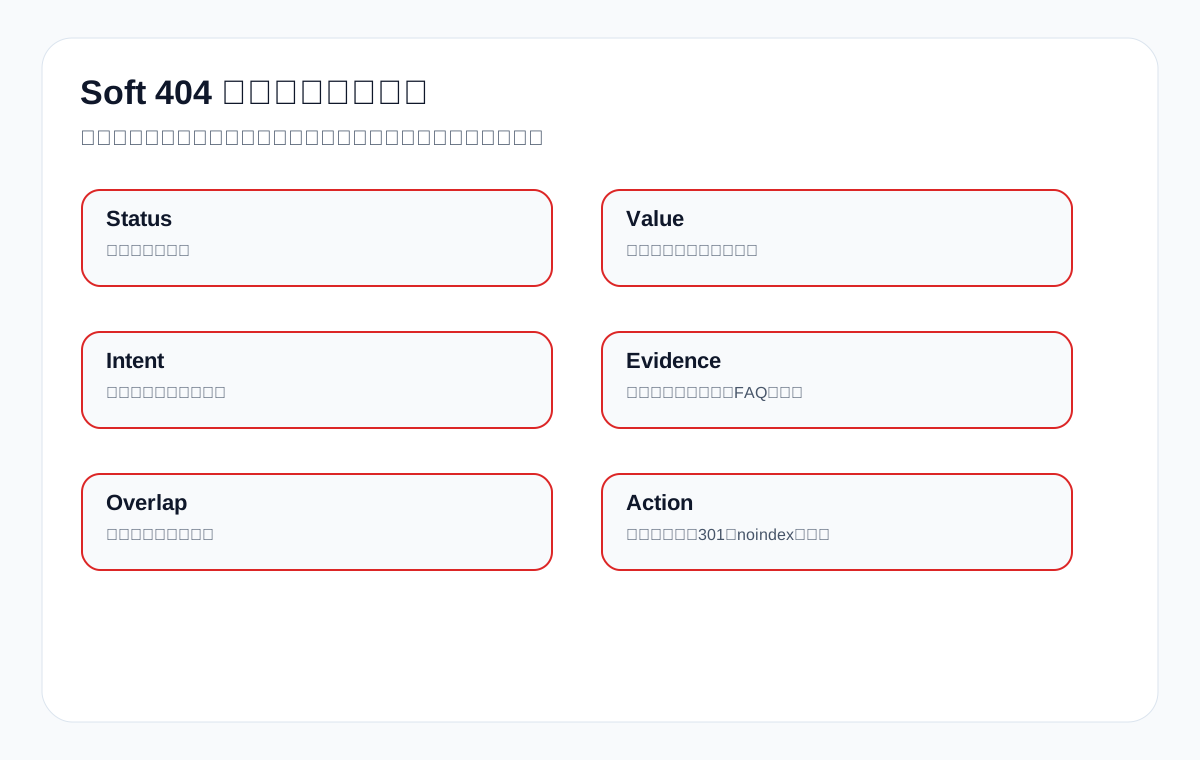
| Problem type | Surface state | Real risk | Foreign trade example |
|---|---|---|---|
| Soft 404 | Returns 200 but has no value that appears to exist | Google is unwilling to keep or show it | Empty product pages, out-of-stock items that still return a normal page |
| Thin Content | Has content but it is too thin or duplicated | Hard to earn impressions and clicks | A waterproof connector subpage with only a few lines of introduction |
| Duplicate weak pages | Multiple pages answer the same question | Signals are scattered | Several small packaging machine price pages |
| Placeholder pages | Built just to go live first | No purchasing judgment value | A country page with only a title and a contact button |
2. Which pages on foreign trade websites are most likely to become thin
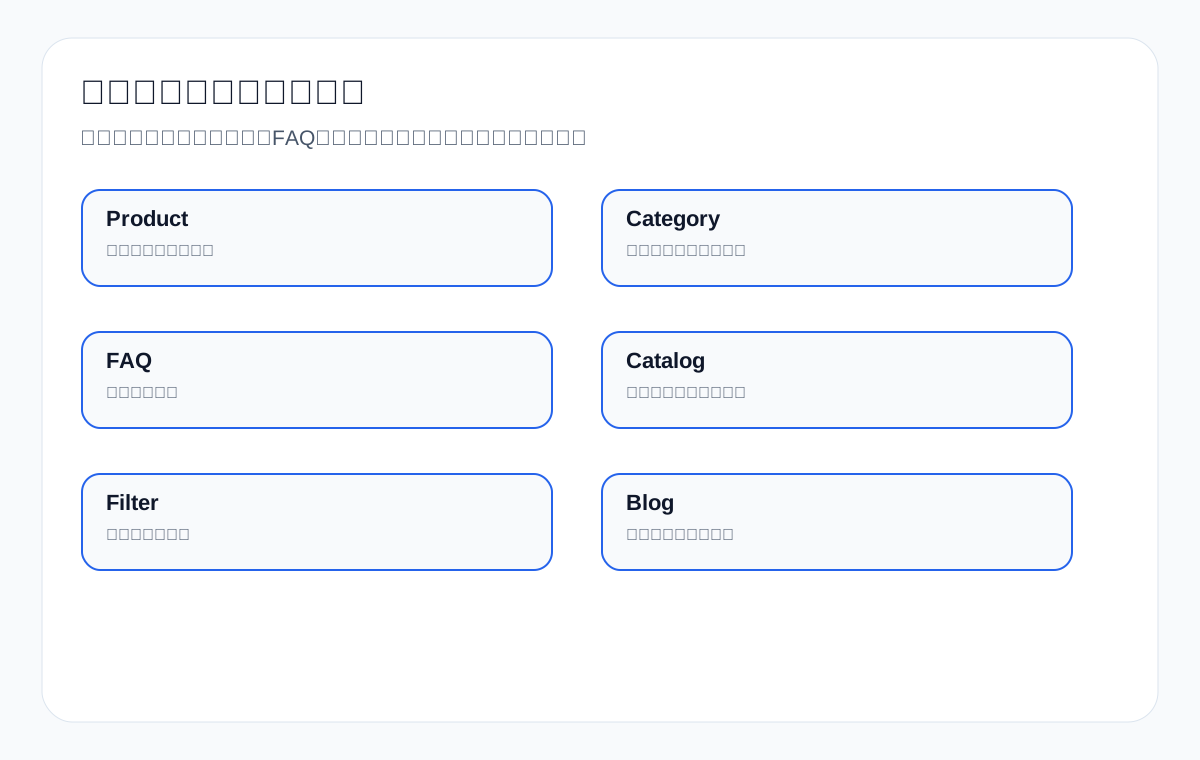
| Page type | Common thin content signs | What should be added |
|---|---|---|
| Product page | Only images, a model number, and one line of introduction | Specifications, applications, MOQ, documents, FAQ, case studies, CTA |
| Category page | Only a product list, with no category description | Series differences, selection criteria, application scenarios, internal links |
| Resource page | Only a download button, with no description of the resource | Resource contents, applicable models, use scenarios, contact entry |
| FAQ page | Every answer is only one sentence | Background, decision conditions, examples, links to product pages |
| Filter page | A large number of duplicated parameter combinations | Keep only combinations with search value, control indexing for the rest |
| Country/market page | Same content with the country name swapped | Local demand, certifications, shipping, case studies, and product focus |
3. Why Google is unwilling to keep such pages
Pages Google is unwilling to keep usually are not the ones that “will not open”, but the ones that do not deserve to be a standalone search result. If many pages on a foreign trade website simply change the title, model, or images without providing independent purchasing judgment information, they are easily weakened.
| Reason | Explanation | Foreign trade example |
|---|---|---|
| No independent search intent | The page does not clearly serve one question | A very narrow connector color page has no demand |
| Highly duplicated with other pages | Only the wording is slightly changed | Several ceramic dinnerware MOQ pages duplicate each other |
| No purchasing evidence | Users cannot judge whether it fits | A medical probe page has no certification or compatibility notes |
| No internal link support | The site itself does not value the page | A resource page is not linked from any product page |
| The page looks like a placeholder | The content is not enough to represent business capability | A country page with only the line “we ship to Germany” |
4. Do not ask how many words to add first; ask whether the page has a role
Many teams see thin content and immediately think about expanding it. But a better order is to judge the page role first: is it a product page, category page, FAQ page, resource page, industry page, or a page that should not exist on its own at all. Once the role is clear, you know what to add.
| Page role | What it should carry | Thin content repair focus |
|---|---|---|
| Product page | Let users judge whether the product fits | Specifications, applications, certifications, FAQ, inquiry entry |
| Category page | Help users choose a series and reach products | Series comparison, selection table, internal links |
| Industry page | Explain application scenarios and solutions | Operating conditions, case studies, recommended products, documents |
| Resource page | Provide documents that can be forwarded for evaluation | Resource description, download, applicable scope, contact |
| FAQ page | Answer real purchasing questions | Decision conditions, examples, links to related pages |
5. How to choose between strengthening, merging, redirecting, noindex, and deleting
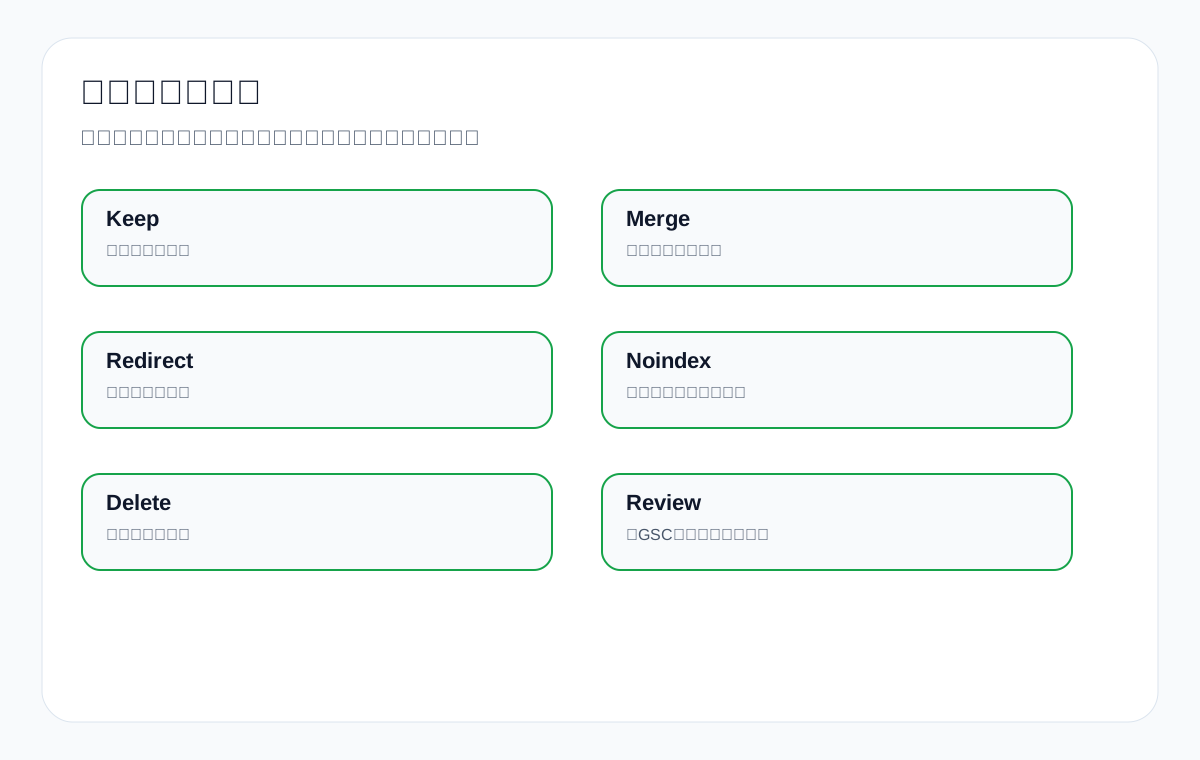
| Situation | Recommended action | Reason |
|---|---|---|
| Clear demand, business value, and evidence can be added | Strengthen | It deserves to exist on its own |
| Highly overlapping with another page | Merge | Concentrate signals and reduce internal competition |
| A stronger replacement page exists and the old page need not be kept | 301 redirect | Send users and signals to the better page |
| Useful to users but has low search value | noindex | Keep the function without taking part in search |
| No traffic, no links, no business value | Delete or return the correct status | Reduce low-value pages |
6. How to keep foreign trade product pages from becoming thin content
| Module | Why it matters | Example |
|---|---|---|
| Specification table | Helps quickly judge compatibility | Current, wire gauge, and IP rating of a waterproof connector |
| Application scenarios | Explains where the product is used | LED flood light used in warehouse and parking lot |
| Certifications and testing | Reduces purchasing risk | Material, sterilization, and certification of a medical probe |
| MOQ and lead time | Answers purchasing prerequisites | Sampling and MOQ for private label activewear |
| Document downloads | Supports internal evaluation | catalog, datasheet, inspection report |
| FAQ | Reduces repeated communication | Factors affecting the price of a packaging machine |
7. How to keep foreign trade category pages from becoming thin
A category page is not a container for a product list; it is a page that helps users choose a series and understand a product line. A category page with only product cards and no category description, selection logic, or application scenarios easily becomes thin.
| Content a category page should have | Function |
|---|---|
| Category definition | Explains what problem this type of product solves |
| Series comparison | Helps users choose among different models |
| Application scenarios | Connects industry demand with the product line |
| Selection table | Maps specifications, parameters, environment, and budget together |
| Links to documents and FAQ | Lets users keep evaluating |
| Inquiry entry | Lets buyers make contact with context |
8. Ten examples of thin pages on foreign trade sites
Case 1: custom metal parts
Only the line “we provide metal parts”, with no material, tolerance, process, or drawing entry.
Case 2: LED flood light
A separate page for each wattage, but the content is almost identical with no application differences.
Case 3: packaging machine
The price page only says “contact us for price”, with no configuration or price factors.
Case 4: medical probe
The product page has no compatible devices, materials, sterilization, or certification notes.
Case 5: cnc machining parts
The industry page only piles up industry names, with no machining capabilities or case studies.
Case 6: ceramic dinnerware
Color filter pages are heavily duplicated with no independent demand.
Case 7: waterproof connector
The IP rating page does not explain the applicable environment or specification differences.
Case 8: industrial valve supplier
Country pages only swap the country name, with no shipping, standards, or industry notes.
Case 9: private label activewear manufacturer
The MOQ page has only one line about the minimum order quantity, with no fabric, sampling, or packaging notes.
Case 10: stainless steel fasteners
The standards page has no material, coating, stock, or application boundaries.
9. How to use GSC to tell whether a page is thin or simply has no opportunity
| GSC behavior | Possible cause | Next step |
|---|---|---|
| No impressions for a long time | The page may have no demand or is not understood | Check search intent, internal links, and page value |
| Impressions but no clicks | The title, snippet, or page role does not match | Change the title and page structure |
| Clicks but no inquiries | Page evidence and CTA are insufficient | Add specifications, FAQ, documents, and an inquiry path |
| Indexed and then dropped out | Value is unstable or duplicated | Merge, strengthen, or normalize |
| Queries are very mixed | The page topic is unclear | Redo the page role and content structure |
10. The relationship between Thin Content and AI search visibility
Thin content affects not only traditional search but also AI search visibility. AI is more likely to cite pages that are clearly structured, fact-dense, and clearly bounded. A thin page with only vague descriptions is hard to use as a reliable source.
| Thin page problem | AI visibility risk | Repair direction |
|---|---|---|
| Too few facts | AI cannot extract reliable answers | Add specifications, definitions, tables, and FAQ |
| Unclear boundaries | AI easily overgeneralizes | Add applicable scope and limitations |
| Missing documents | Not suitable for citation | Add catalog, datasheet, and certificate descriptions |
| Duplicated pages | Entity relationships are confusing | Merge or clarify page division of labor |
12.5 Twelve questions for deciding whether a page deserves to exist on its own
When handling thin content, the biggest risk is expanding or deleting right away. A steadier approach is to use a set of questions first to judge whether this URL deserves to exist on its own.
| Question | If the answer is no, what it means |
|---|---|
| Does this page serve a clear search intent? | It may be only a placeholder or duplicate page |
| Does it clearly differ from other pages? | It may need to be merged |
| Does it help buyers make a judgment? | Specifications, documents, case studies, or FAQ need to be added |
| Does it have an on-site entry point? | It may be an orphan page or a low-priority page |
| Does it have GSC impressions or clicks? | Demand may be weak or the page is not understood |
| Can it link to product, resource, or inquiry pages? | It may not be able to serve the business path |
| Does it have an independent title and body structure? | It may be only a bulk-generated near-duplicate page |
| Does it have credible evidence? | It may lack purchasing judgment value |
| Is it replaced by other pages? | It may deserve a 301 to a stronger page |
| Is it useful only for user functions? | It may be suitable for noindex |
| Does it affect the focus of important pages? | It may need to be merged or cleaned up |
| Can it bring more mature inquiries? | If not, the page role needs to be redefined |
12.6 Example: fixing thin content on a product page
Suppose a waterproof connector product page has only one image, one model, and the line “high quality waterproof connector”. It is weak not because the word count is low, but because it does not answer the questions buyers care about.
| Missing content | What should be added | Why |
|---|---|---|
| Specifications | IP rating, current, voltage, wire gauge, pin count | Helps judge whether it fits the application |
| Applications | outdoor lighting, marine, industrial equipment | Explains the use scenario |
| Documents | datasheet, drawing, catalog | Makes internal purchasing evaluation easier |
| FAQ | MOQ, lead time, customization, certification, samples | Reduces repeated communication |
| Internal links | Series page, comparison page, inquiry page | Brings the page into the purchasing path |
Only after these contents are added does the page truly look like a product page rather than a placeholder URL.
12.7 Example: fixing thin content on a category page
Many foreign trade category pages have only a product list and no category description. For example, if an LED flood light category page lists only 50W, 100W, and 150W product cards without explaining how to choose based on warehouse, parking lot, outdoor engineering, IP rating, installation height, and beam angle, the category page is not strong enough for either search or purchasing judgment.
| Category page module | Example content |
|---|---|
| Category description | Which outdoor and industrial scenarios LED flood light suits |
| Selection table | Comparison of power, coverage, installation height, and IP rating |
| Application scenarios | warehouse, parking lot, stadium, construction site |
| Document entry | catalog, IES files, datasheet |
| FAQ | How to choose wattage, warranty length, whether OEM is supported |
12.8 Why FAQ pages also become thin
FAQ pages are often mistakenly assumed to suit SEO naturally, but if every answer is only one sentence, or the questions are too similar, the page becomes low value. A foreign trade FAQ should answer real purchasing questions and link to related products and documents.
| Thin FAQ | Better FAQ |
|---|---|
| What is the MOQ? Please contact us. | Explain that MOQ depends on product type, degree of customization, and packaging requirements, with a typical range and inquiry advice. |
| How long is the lead time? Usually very fast. | Distinguish between samples, regular orders, custom orders, and peak season. |
| Do you have certifications? Yes. | List the applicable scope of CE, RoHS, ISO, and so on, and link to the certificate description page. |
| Can you customize? Yes. | Explain logo, color, material, packaging, drawings, and the sampling process. |
12.9 How to keep resource pages from looking like an “empty download page”
If a resource page has only a download button, both Google and users find it hard to judge its value. A better resource page should explain what the document contains, which products it applies to, who should download it, and how to make contact after downloading.
| Resource page content | Function |
|---|---|
| Document name | Explains whether it is a catalog, datasheet, certificate, or manual |
| Applicable products | Links to the corresponding product and category pages |
| Document content summary | Lets search engines and users understand the file value |
| Version or update time | Reduces misuse of outdated documents |
| Inquiry entry | Turns a document request into business communication |
12.10 Country pages and market pages are the easiest to make thin
Many foreign trade companies want to build country pages for the USA, Germany, Saudi Arabia, Australia, and so on. If each page only swaps the country name and the content is exactly the same, it easily becomes thin content. Country pages must have real differences, such as certifications, logistics, application scenarios, industry demand, product focus, and case studies.
| Difference a country page should have | Example |
|---|---|
| Market applications | Outdoor lighting in the Middle East may care more about high temperatures and dust protection |
| Certification requirements | European markets care more about CE, RoHS, and compliance documents |
| Logistics and delivery | Lead times, packaging, and port requirements differ by market |
| Product focus | Different countries may push different series |
| Case studies or customer types | Real project experience makes a standalone page more worthwhile |
12.11 Thin Content repair priorities
Not every thin page is worth fixing right away. Priority should consider business value, search demand, page role, and repair cost.
| Priority | Page type | Reason |
|---|---|---|
| Highest | Core product pages, category pages, inquiry pages | Directly affect the business path |
| High | Resource pages, FAQ pages, industry pages | Affect purchasing judgment and AI visibility |
| Medium | Article pages with impressions but no clicks | Structural improvements may raise performance |
| Low | Pages with no demand, no internal links, and no business value | Consider merging, noindex, or deletion |
12.12 What to check before deleting a page
A thin page does not necessarily have to be deleted. Before deleting, check whether it has external links, historical inquiries, whether it serves certain long-tail queries, and whether it can be merged into a stronger page.
- Check whether GSC shows impressions and clicks.
- Check whether GA4 shows visits and conversion paths.
- Check whether there are external links or important internal links.
- Check whether sales uses the page to explain issues to customers.
- Check whether it can be merged into a product page, category page, or FAQ page.
- Check whether it needs a 301 to a stronger page.
- Check whether deleting it would affect navigation or document paths.
12.13 How to review after the fix
| Review metric | What to look at |
|---|---|
| GSC index status | Whether the page is kept or reprocessed |
| Impressions and clicks | Whether target queries start to appear or improve |
| Query relevance | Whether the page serves more correct search terms |
| GA4 path | Whether users enter product, document, and inquiry pages |
| Inquiry quality | Whether customer questions are more specific |
| AI mentions | Whether the page is more easily summarized accurately |
12.14 Compared with general SEO guides, what else should foreign trade sites check when fixing thin content
General SEO guides usually suggest adding original content, merging duplicate pages, deleting low-value pages, and fixing status codes. These suggestions are basic, but foreign trade websites must also look more at the purchasing scenario. That is because whether a page has value depends not only on whether the content is original, but also on whether it helps overseas buyers make a judgment.
| General advice | What foreign trade sites should also judge | Example |
|---|---|---|
| Add content | Whether the content contains purchasing evidence | Specifications, certifications, MOQ, lead time, document downloads |
| Merge duplicate pages | Whether product lines and series differences are preserved | Different waterproof connector series cannot simply be mixed into one page |
| Delete low-value pages | Whether sales finds it useful | Some resource pages have low traffic but sales often sends them to customers |
| Fix status codes | Whether there is a replacement path and an inquiry entry | A discontinued product page can guide users to a replacement series |
| Control indexing | Whether it affects country, language, and filter strategy | High-value filter pages can be kept; low-value parameter pages should be controlled |
12.15 Three typical error cases
Error case one: expanding every thin page into an article
A foreign trade site noticed that many product pages were on the thin side, so it expanded each product page into a very long article. But what the product pages actually lacked was a specification table, applications, documents, FAQ, and an inquiry entry, not a long general introduction. As a result, the word count went up while the purchasing judgment remained unclear. The right approach is to add modules based on the page role, not to write every page as a tutorial.
Error case two: deleting a resource page that has business value
A datasheet page did not have much search traffic and looked like a low-value page, but sales often sent it to customers for internal evaluation. Deleting it directly would harm sales communication. A better approach is to add a document description, link to product and inquiry pages, and judge whether it needs to be indexed, rather than deleting based on traffic alone.
Error case three: keeping a large number of nearly identical country pages
A website built pages for many countries, but the content only swapped the country name, while products, case studies, certifications, and logistics notes were all the same. Such pages easily become a collection of thin pages. When fixing them, keep the pages with real market differences and merge the rest into a regional description or a unified market page.
12.16 How to handle Soft 404 with out-of-stock, discontinued, and delisted products
Foreign trade websites often encounter discontinued products, upgraded series, and replaced models. If the page still returns 200 but has no purchasable or inquiry-able information, it may become a low-value page. How to handle it depends on whether there is a replacement product, whether there is historical traffic, whether there are external links, and whether it still has document value.
| Situation | Recommended handling | Reason |
|---|---|---|
| A direct replacement model exists | Keep an explanation and link to the replacement product, use 301 if necessary | Users have a clear next step |
| Discontinued but the documents still have value | Keep the resource page or noindex depending on the situation | Supports existing customers and after-sales queries |
| Out of stock but will return | Explain the status, expected time, and replacement options | Keeps the page from looking like an empty shell |
| Completely worthless and with no traffic | Delete or return the correct status | Reduce low-value pages |
| The page has external links and historical traffic | Carefully redirect to the most relevant page | Preserve user and link value |
12.17 The difference between thin content and duplicate pages
Thin content and duplicate content often appear together, but they are not the same thing. Thin content means the page itself lacks value; duplicate content means the value of multiple pages overlaps. When fixing, first distinguish the cause.
| Type | Signs | Fix |
|---|---|---|
| Single thin page | One page does not have enough information | Add purchasing evidence, FAQ, documents, and internal links |
| Multiple duplicate pages | Multiple pages cover the same thing | Merge, normalize, or redefine roles |
| Thin and duplicated | Multiple pages are all weak and similar | Pick the main page to strengthen, merge or redirect the rest |
| Thin functional page | Useful to users but not suited to search | Keep the function, consider noindex |
12.18 Internal SOP for foreign trade teams: how to check thin pages every month
| Step | Action | Output |
|---|---|---|
| Step 1 | Export low-impression, low-click, crawled-but-not-indexed pages | Candidate list |
| Step 2 | Classify by page type | Product, category, resource, FAQ, article, filter pages |
| Step 3 | Judge search demand and business value | Recommendations to keep, strengthen, merge, noindex, or delete |
| Step 4 | Handle core product lines first | High-priority repair list |
| Step 5 | Record changes and the review date | Monthly page quality ledger |
12.19 What each role should own
| Role | Judgment it owns | Reason |
|---|---|---|
| SEO/operations | GSC signals, page roles, index status | Judges whether a page has search value |
| Product/engineering | Specifications, certifications, materials, applicable boundaries | Avoids wrong or overgeneralized content |
| Sales | Questions customers often ask and inquiry quality | Judges whether the page serves real purchasing |
| Design/development | Page modules, document entries, internal links, and status codes | Ensures fixes actually land on the page |
| Owner | Decides whether to keep, merge, or delete | Avoids confusion from everyone working separately |
12.20 Acceptance criteria after fixing thin content
After the fix is complete, do not look only at word count. Better acceptance criteria should include page role, information completeness, internal links, document entries, and data review.
| Acceptance item | Qualified standard |
|---|---|
| Page role | Can state in one sentence what problem this URL solves |
| Purchasing evidence | Has specifications, applications, certifications, FAQ, or documents |
| Differentiation | Has a clear difference from similar pages |
| Internal links | Can enter product, document, FAQ, and inquiry paths |
| Technical status | Status code, canonical, and indexing strategy are correct |
| Review | Has GSC, GA4, and sales feedback observation points |
12.21 30-minute rapid audit process
| Time | Action | Goal |
|---|---|---|
| 0-5 minutes | Confirm the page type and target query | Know whether the page should exist on its own |
| 5-10 minutes | Check GSC impressions, clicks, and index status | Judge whether there are search signals |
| 10-15 minutes | Compare with similar pages | Decide whether to strengthen or merge |
| 15-20 minutes | Check purchasing evidence | See whether specifications, documents, FAQ, and case studies are sufficient |
| 20-25 minutes | Check internal links and the inquiry path | Confirm users can continue to product, document, and contact pages |
| 25-30 minutes | Decide the action | Strengthen, merge, 301, noindex, delete, or keep and monitor |
The point of this process is to quickly move a page from “feels thin” to “know why it is thin and how to handle it”. As long as it is run once a month on a fixed schedule, a foreign trade website can reduce many pages that look normal but actually have no value.
11. FAQ: common questions about Soft 404 and Thin Content
Is a Soft 404 always a technical error?
Not necessarily. Many times the page returns 200, but the content value appears not to exist.
Does Thin Content mean a low word count?
Not only a low word count, but a failure to independently solve a clear problem.
Must thin pages always be deleted?
Not necessarily. First judge whether strengthening, merging, redirecting, noindex, or deleting is more appropriate.
Do product pages with few specifications count as thin content?
If they cannot support a purchasing judgment, they may be on the thin side.
Is a category page with only a product list acceptable?
Usually not enough; it is best to add a category description, selection logic, and application scenarios.
What if FAQ answers are very short?
Add decision conditions, examples, related product links, and the next action.
Should country pages be built in large numbers?
Only when there are real market differences and content value is a standalone page suitable.
How do you judge whether a page is worth keeping?
Look at search demand, business value, independent content, internal links, and the inquiry path.
12. Conclusion: what Google is unwilling to keep is not short pages, but pages with no independent value
The core of Soft 404 and Thin Content is not whether a page returns 200, nor whether the word count reaches a certain number, but whether this URL deserves to exist as an independent page. To avoid thin pages, a foreign trade website must give every important URL a clear role: helping users choose a product, view documents, understand applications, compare options, or start an inquiry.
When you audit pages by this standard, you will not mechanically expand all content, nor easily delete pages with business value. The truly steady approach is to judge the page role first, then decide whether to strengthen, merge, redirect, noindex, or delete based on search demand, purchasing evidence, internal links, and the inquiry path.
A truly valuable page is not necessarily the longest, but it must have a clear role, real evidence, a clear path, and reviewable data.
For foreign trade companies, this matters more than mechanically chasing page count.
Judge first, then act, so you avoid mistakenly deleting valuable pages and avoid continuing to keep pages with no search or business meaning.
{
“@context”: “https://schema.org”,
“@type”: “FAQPage”,
“mainEntity”: [
{
“@type”: “Question”,
“name”: “Is a Soft 404 always a technical error?”,
“acceptedAnswer”: {
“@type”: “Answer”,
“text”: “Not necessarily. Many times the page returns 200, but the content value appears not to exist.”
}
},
{
“@type”: “Question”,
“name”: “Must thin pages always be deleted?”,
“acceptedAnswer”: {
“@type”: “Answer”,
“text”: “Not necessarily. First judge whether strengthening, merging, redirecting, noindex, or deleting is more appropriate.”
}
},
{
“@type”: “Question”,
“name”: “Is a category page with only a product list acceptable?”,
“acceptedAnswer”: {
“@type”: “Answer”,
“text”: “Usually not enough; it is best to add a category description, selection logic, and application scenarios.”
}
},
{
“@type”: “Question”,
“name”: “What if FAQ answers are very short?”,
“acceptedAnswer”: {
“@type”: “Answer”,
“text”: “Add decision conditions, examples, related product links, and the next action.”
}
},
{
“@type”: “Question”,
“name”: “Should country pages be built in large numbers?”,
“acceptedAnswer”: {
“@type”: “Answer”,
“text”: “Only when there are real market differences and content value is a standalone page suitable.”
}
}
]
}
Continue reading this SEO series
If you are working through foreign trade website SEO systematically, it is worth continuing with the articles below. First clarify how crawling, indexing, content, links, and review relate to each other, then decide which page to change next.
- How to build a content refresh strategy: separating content decay, demand changes, and old article updates
- How to check JavaScript SEO: a guide to navigation, lazy loading, pagination, and crawling foreign trade pages
- How Google crawling, indexing, and ranking work: a diagnostic guide for foreign trade websites from indexing to inquiries
- How search engines work: a guide to crawling, indexing, ranking, and foreign trade website diagnosis
- Technical SEO audit checklist: a diagnostic guide to crawling, indexing, structure, and inquiry paths on foreign trade websites
- Sitemap technical guide: sitemap submission, indexing diagnosis, and common error troubleshooting
This page is machine-translated from the Simplified Chinese version and awaiting human review. It has not yet been proofread.