1. What a Foreign Trade Independent Website Development Service Actually Delivers
Building a foreign trade independent website is not finished once the company profile, product images, and contact details are placed on a site. For domestic export factories and trading companies, what an independent website really has to solve is this: can overseas buyers find you through Google, AI search, industry terms, and product terms; once they enter the site, can they quickly judge whether you have production, customization, delivery, and communication capabilities; and after an inquiry is left, can the sales team know which product, which country, and which page this customer came from.
So the foreign trade independent website development service discussed by Tianwen SEO Research is not simply about making a good-looking page; it is about building a website asset that can be optimized over the long term around English product terms, product categories, industry applications, the inquiry path, SEO fundamentals, GSC reviews, and ongoing content expansion. Take terms such as custom metal parts, LED flood light, packaging machine, medical probe, cnc machining parts, ceramic dinnerware, waterproof connector, industrial valve supplier, and private label activewear manufacturer — what lies behind them is not page decoration but buyers looking for suppliers, specifications, applications, certifications, MOQ, lead times, and sample policies.
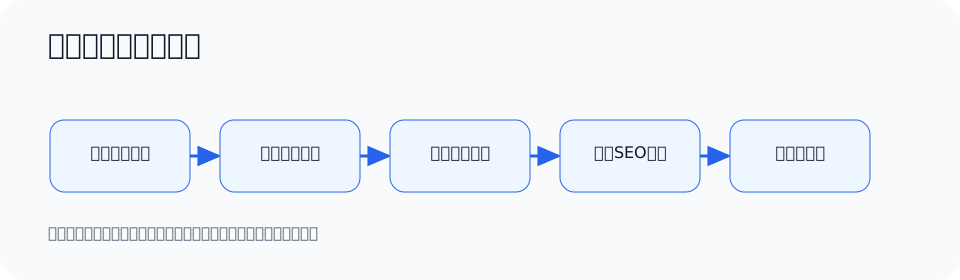
| Deliverable | What the client should see | Why it matters |
|---|---|---|
| Website structure | Clear homepage, product categories, product details, industry applications, resources, and contact pages | Lets both buyers and search engines understand the main business |
| Product presentation | Complete specifications, materials, processes, applications, certifications, and FAQ | Helps buyers decide whether an inquiry is worthwhile |
| SEO fundamentals | URLs, titles, internal links, image descriptions, crawlable structure | Builds the foundation for future Google customer acquisition |
| Inquiry path | Forms, email, WhatsApp, CTA, attribution setup | Reduces wasted traffic |
| Review mechanism | GSC, GA4, inquiry sources, and page performance are viewable | Shows what to optimize after launch |
2. Why a Foreign Trade Website Should Not Be Accepted on Looks Alone
When many foreign trade companies build an independent website for the first time, they focus on visual effects: whether the homepage hero image looks premium, whether the colors are consistent, whether the animations are rich. These things certainly matter, but if the site structure cannot carry search demand, even a beautiful site will struggle to acquire customers over the long term. On a packaging machine website, if the homepage looks great but category pages are not split by equipment type, packaging material, and application industry, and product pages have no parameters, videos, production line scenarios, or FAQ, buyers still will not know whether you can solve their packaging problem after they arrive.
A more reliable way to accept the work is to look at three things at the same time: first, whether search engines can crawl the main pages; second, whether buyers can understand your product capabilities; third, whether the team can keep optimizing based on data. Visual design should serve these three things, not force content and structure to accommodate visuals.
| Common acceptance approach | Risk | Better acceptance approach for foreign trade companies |
|---|---|---|
| Only checking whether the homepage is pretty | Product and inquiry pages are weak | Check whether product categories, detail pages, and application pages are complete |
| Only checking desktop | Poor experience for mobile buyers | Also check mobile speed, buttons, forms, and reading experience |
| Only counting pages | Many pages but no search intent | Plan pages around English product terms and purchasing scenarios |
| Only checking whether it is live | No basis for later optimization | Connect GSC, GA4, and inquiry attribution before launch |
3. How to Plan the Page System of a Foreign Trade Independent Website
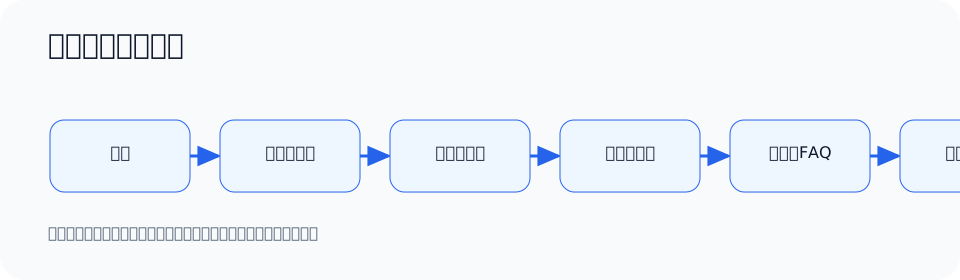
The page system of a foreign trade website should start from buyer searches and purchasing decisions, not from the company’s internal materials. The homepage explains who you are, what you do, and which customers you suit; product category pages carry broad category terms; product detail pages answer specification and inquiry questions; industry application pages explain how the product solves problems in different scenarios; resource pages and FAQ remove concerns; the contact page lets customers submit requirements quickly.
| Page type | Search terms it should carry | Content focus | Example |
|---|---|---|---|
| Product category page | Broad product terms | Product range, specification range, selection entry | LED flood light manufacturer |
| Product detail page | Specific model and parameter terms | Parameters, applications, certifications, downloads, FAQ | IP67 waterproof connector 4 pin |
| Industry application page | Application scenario terms | Pain points, solutions, product combinations | packaging machine for powder products |
| Customization capability page | Customization and machining terms | Materials, processes, tolerances, workflow, case-style explanations | custom metal parts manufacturer |
| Contact page | Brand terms and inquiry entry | Forms, communication channels, requirement prompts | request a quote |
4. What the Homepage Should Say: Not Self-Praise, but Fast Judgment
For the first screen of a foreign trade independent website homepage, vague slogans are not recommended. When buyers enter the site, what they care about is: are you the supplier I need? What is your product range? Do you support customization? Can you ship to my country? Do you have certifications, equipment, experience, and responsiveness? The homepage should therefore build trust with clear product positioning and scenario description.
For example, a factory making cnc machining parts should not write only “professional, honest, quality, service” on its homepage. A more effective statement is: CNC machining of aluminum alloy, stainless steel, copper parts, and engineering plastics, supporting small-batch prototyping and mass production, with common applications including medical equipment, automation equipment, auto parts, and electronic enclosures. That helps buyers decide faster whether to keep browsing.
| Homepage module | Suggested content | Value for customer judgment |
|---|---|---|
| First screen | Main products, target customers, core capabilities | Fast judgment of fit |
| Product entry | Display by category and application | Reduces search cost |
| Capability proof | Equipment, certifications, capacity, quality inspection process | Builds trust |
| Application industries | Explain solutions through industry scenarios | Shows buyers practical capability |
| Inquiry guidance | Tell customers what information to submit | Improves the qualified inquiry rate |
5. How to Write a Product Page That Is More Than Images Plus Specs
Product pages are one of the most important assets of a foreign trade independent website. On many sites, a product page has only images, a model number, and a spec table, which is not enough for buyers or search engines. Buyers need to know what scenarios the product suits, how to select it, what certifications it has, whether it can be customized, what the MOQ and lead time are, and how to communicate if problems arise. Search engines also need body text to understand which queries the page is relevant to.
Take medical probe as an example. A good product page should cover compatible equipment, materials, precision requirements, sterilization methods, connection methods, quality control, packaging, and common questions. With only a few images, buyers cannot tell whether you understand the purchasing requirements of the medical industry. Take ceramic dinnerware as another example. Besides tableware images, it should explain glaze color, firing temperature, food-contact safety, dishwasher suitability, hotel/restaurant scenarios, packaging, and breakage control.
| Product page module | Question it should answer | Example |
|---|---|---|
| Product overview | Who is this product for | industrial valve for chemical pipeline |
| Specifications | How buyers select a model | Size, material, pressure, temperature range |
| Application scenarios | Where the product is used | Factories, equipment, outdoor, medical, food service |
| Customization capability | Whether it can be produced to drawings or brand requirements | logo, color, material, tolerance, packaging |
| FAQ | The most common concerns before purchase | MOQ, samples, lead time, certifications, payment terms |
6. Category Pages and Industry Pages: The Middle Layer for Customer Acquisition
If a website has only a homepage and product detail pages, the structure is usually too thin. Category pages and industry pages are the middle layer that carries search demand. Category pages are suited to explaining the range, models, parameters, and selection of a product type; industry pages are suited to explaining how the product solves problems for a type of customer. For example, LED flood light can have a broad category page, an outdoor engineering lighting page, a sports field lighting page, and a warehouse lighting page; packaging machine can be split by applications such as powder, granules, liquid, food, and hardware parts.
These pages are not about increasing the page count, but about making sure buyers who enter from different search entries all see content relevant to their needs. If a buyer searches waterproof connector for marine equipment and lands on a generic connector list, they may not continue to inquire; if they land on a marine equipment waterproof connector application page and see IP ratings, corrosion-resistant materials, cable solutions, and FAQ, the chance of conversion is higher.
7. SEO Fundamentals Should Be Done at the Build Stage, Not Patched After Launch
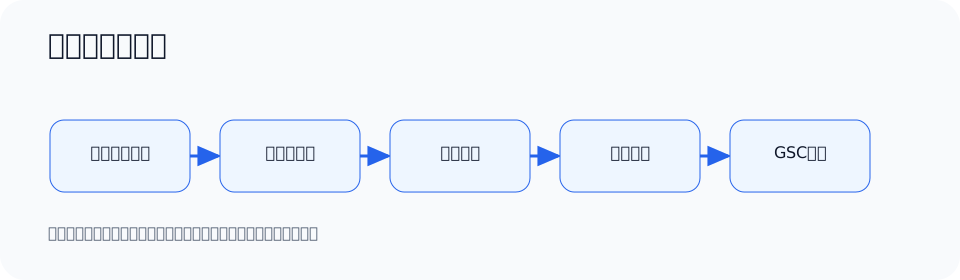
SEO fundamentals should be built into the structure during the website development stage. Patching them after launch often runs into problems such as URLs already indexed, navigation already fixed, messy product categories, images without descriptions, and duplicate page titles. Doing the fundamentals well at the build stage is not a promise of rankings; it gives the site the conditions to be crawled, understood, and reviewed.
| SEO fundamental | What to do at build time | How to check after launch |
|---|---|---|
| URL | Short, English, readable, organized by hierarchy | Check for duplicates and parameter noise |
| Titles | Include product terms, applications, and supplier positioning | Use GSC to check query match |
| Internal links | Homepage, categories, products, and applications link to one another | Check whether important pages are easy to reach |
| Images | File names and alt text describe the product and scenario | Check that images load and descriptions are correct |
| Structure | Clear H1, H2, tables, and FAQ | Check whether pages are readable and crawlable |
8. How to Design the Inquiry Path: Let Customers Know What to Submit
A foreign trade website form should not contain only “Name, Email, Message”. When buyers are willing to inquire, they usually already have specific requirements. The form and contact page should guide customers to submit the product name, specifications, quantity, target country, application scenario, whether customization is needed, and whether drawings or samples are available. That way sales receives information closer to a quotable request rather than a one-line “price please”.
Different businesses also need different prompts. A company doing custom metal parts should prompt customers to upload drawings, materials, tolerances, surface treatment, and quantity; a company doing private label activewear manufacturer should prompt for style, size, fabric, logo, packaging, MOQ, and target market. A good inquiry path reduces back-and-forth communication and helps the team judge traffic quality.
| Business type | What the form should prompt for | Sales review focus |
|---|---|---|
| Machining and customization | Drawings, material, tolerance, quantity | Whether the inquiry came from a core process page |
| Lighting products | Wattage, installation scenario, certification, quantity | Whether country and application match |
| Packaging equipment | Material, speed, packaging format, budget | Whether it came from an industry application page |
| Apparel customization | Style, fabric, size, branded packaging | Whether it came from the customization capability page |
9. How to Choose a Website Development Service: Look at the Method, Not Only the Quote
Quotes for foreign trade website development services vary widely. What clients really need to compare is not who is cheaper, but who can build the website into a customer acquisition asset that can be continuously optimized. A low-priced website without a clear product structure, without SEO fundamentals, without inquiry attribution, and without maintainability may cost more to modify later. A reasonable website development service should at least clearly explain page planning, content materials, technical fundamentals, launch checks, and the boundaries of later optimization.
| Comparison dimension | Questions to ask | Warning signs |
|---|---|---|
| Industry understanding | Can they understand English product terms and purchasing scenarios | They only show generic design mockups and do not ask about products or customers |
| Structure planning | Do they first work out the page system and keyword intent | They start by talking about page count and colors |
| Content capability | Can they turn product materials into content buyers can read | They only copy materials and do not add applications or FAQ |
| Technical fundamentals | Do they consider speed, mobile, crawling, and security | They only pursue complex animations |
| Review deliverables | Do they set up GSC, GA4, and inquiry sources | No way to view data after launch |
10. What Materials the Client Needs to Prepare Before the Project Starts
The clearer the materials prepared, the easier it is to turn the website into content that customers can read and search engines can understand. Foreign trade companies do not need to write full copy from the start, but they do need to provide real products, applications, processes, certifications, customer questions, and sales experience. The service team then organizes these materials into page structure and English expression.
| Material type | What to prepare | Purpose |
|---|---|---|
| Product materials | Categories, models, specifications, images, videos | Plan product pages and category pages |
| Business scope | Whether customization is offered, MOQ, lead time, country markets | Write the homepage and inquiry description |
| Sales questions | Customers often ask about price, certification, samples, packaging | Write FAQ and conversion content |
| Proof materials | Factory, equipment, certificates, testing, packaging | Build trust |
| Historical data | Inquiry sources, best-selling products, target countries | Set page priorities |
11. How to Review at 30, 60, and 90 Days After Launch
Launching a foreign trade independent website is only the beginning. After launch, you need to see whether pages are crawled, whether they get impressions, which query terms appear, which pages bring clicks, and which entries inquiries come from. Without reviews, the website easily stays in a “already finished” state; with reviews, you can know whether the next step is to add product pages, write industry pages, optimize category pages, or adjust the inquiry path.
| Time | Review focus | Possible action |
|---|---|---|
| 30 days | Indexing, crawling, speed, whether forms work | Fix technical issues and obvious content gaps |
| 60 days | GSC query terms, page impressions, click entries | Strengthen pages with impressions but low clicks |
| 90 days | Inquiry sources, countries, product interest | Expand high-intent product and application content |
| Ongoing | Whether AI search cites information from the official site | Add structured explanations, FAQ, and comparison tables |
12. Common Misconceptions
1. Assuming inquiries will come naturally once the site is live
Going live only gives the site a basis for display and optimization. Inquiries come from search demand, content quality, product competitiveness, the conversion path, and continuous review; launch cannot be equated with completed customer acquisition.
2. Building only the homepage and neglecting product and application pages
Overseas buyers more often enter a website through specific product terms and application terms. The homepage builds overall trust, while product pages and application pages are the key to carrying specific needs.
3. Translating Chinese materials directly into English
Literal translation tends to preserve internal phrasing and a Chinese sales tone. English content for foreign trade should address overseas buyers’ purchasing questions and explain specifications, applications, certifications, delivery, and risk control.
4. Looking only at the quote and not at later optimizability
If the website structure is unclear, pages cannot be maintained, and data cannot be reviewed, later SEO and advertising will both suffer.
5. Cramming all products onto one page
Companies with complex product lines should split pages by product category, application industry, and purchasing intent, so that one page does not carry too much search demand.
13. FAQ: Common Questions About Foreign Trade Independent Website Development Services
1. Does a foreign trade independent website have to use WordPress?
Not necessarily. WordPress’s advantages are mature content management, SEO extensions, and a mature maintenance ecosystem, which suits many foreign trade companies. But the decision ultimately depends on the team’s maintenance capability, product complexity, budget, and follow-up optimization plan.
2. Should keyword research be done before building the site?
It is advisable to do basic keyword and page intent research. The goal is not to settle on every term at once, but to avoid categories, URLs, and page structure deviating from how buyers search from the start.
3. If there are only a few products, are industry application pages still needed?
If the product can serve multiple industries or application scenarios, industry pages still have value. They help buyers understand how the product solves specific problems instead of only seeing parameters.
4. How long before a new site shows Google data?
It usually takes weeks to months to build up gradually. The exact time depends on industry competition, content quality, crawling, external trust, and update frequency. The timeframe cannot be written as a fixed promise.
5. After the website is finished, is ongoing content still needed?
Yes. For a foreign trade website, products, applications, FAQ, comparisons, selection guides, resource downloads, and industry questions can all be expanded continuously. Ongoing content is not about piling up quantity but about covering real purchasing needs.
6. How do we judge whether a website development service fits us?
See whether they first ask about products, customers, countries, inquiries, competitor pages, and follow-up reviews, rather than only asking what colors you like and how many pages you want.
14. A Final Website Build Checklist for Foreign Trade Companies
If you are a domestic export factory or trading company, you can use the checklist below to judge whether the independent website is worth continuing to invest in and optimize. It does not require every item to be perfect on launch day, but you should at least know which items are already in place and which need strengthening in the next stage.
| Check item | Passing performance | Warning signs |
|---|---|---|
| Positioning | The first screen clearly states the main products and target customers | Only vague slogans |
| Structure | Clear product, application, resource, and contact paths | All content piled onto a few pages |
| Content | Has specifications, applications, FAQ, and selection guidance | Only images and a one-line introduction |
| SEO fundamentals | Clear titles, URLs, internal links, and image descriptions | Duplicate page titles and messy URLs |
| Conversion | Clear forms and contact details that prompt for requirements | Customers do not know how to submit information |
| Review | Can view GSC, GA4, and inquiry sources | No data basis after launch |
An independent website truly suited to a foreign trade company should not merely display the company image; it should become the infrastructure for product presentation, search customer acquisition, inquiry handling, and continuous optimization. The value of a website development service should also be judged around these outcomes.
15. Three Types of Foreign Trade Companies Have Different Website Priorities
A foreign trade independent website cannot apply the same content structure to every company. For manufacturing factories, trading companies, and brand customization companies, buyers care about different questions, and page priorities differ. Factories need to show production, processes, quality inspection, and delivery capabilities; trading companies need to show product selection, supply chain integration, and response efficiency; brand customization companies need to show design, prototyping, packaging, MOQ, and long-term supply capability.
| Company type | Website focus | Suggested pages | Example terms |
|---|---|---|---|
| Manufacturing factory | Equipment, processes, capacity, quality inspection, certifications | Factory capability page, product process page, quality control page | cnc machining parts manufacturer |
| Trading company | Product portfolio, selection, delivery, communication, and after-sales | Product series page, sourcing solution page, industry application page | industrial valve supplier |
| Brand customization company | Customization process, samples, packaging, brand support | private label, OEM/ODM, prototyping process page | private label activewear manufacturer |
| Equipment company | Solutions, technical parameters, videos, installation, and after-sales | Application page, solution page, resource download page | packaging machine for food factory |
If the website does not distinguish these differences, it easily becomes generic lines like “we are professional, good quality, good service.” To buyers, these words have no decision value. What is truly useful is telling them: can you make their specifications, can you deliver consistently, how problems are handled, what materials are needed for a quote, and whether you have experience with similar applications.
16. When Content Materials Are Insufficient, How Should the Website Be Built First
Many foreign trade companies say: our materials are incomplete, we do not have many images, and our English is not good — does that mean we cannot build an independent website? The answer is not that you cannot, but that you should do it in stages. In the first stage, set up the main products, basic categories, core capabilities, and inquiry path; in the second stage, add product details, application scenarios, FAQ, and resource downloads; in the third stage, keep expanding pages based on GSC and inquiry data. Do not build an empty-shell website just because materials are insufficient, and do not wait until all materials are perfect to start.
| Material status | What to do in stage one | Later strengthening |
|---|---|---|
| Only product images and model numbers | First set up categories, basic parameters, and the inquiry entry | Add applications, FAQ, specification explanations, comparison tables |
| Has a Chinese catalog | Extract the product structure and selling points, rewrite in English buyer language | Add country markets, certifications, purchasing questions |
| Has historical inquiries | Organize frequently asked customer questions and high-frequency products | Expand high-intent product pages and industry pages |
| Has videos and factory materials | Place them on capability pages and product pages | Add quality control, process descriptions, delivery details |
For example, a waterproof connector company that starts with only product images and a model list can first split products by M series, IP rating, pin count, and cable type, then use FAQ to answer questions about waterproof rating, materials, samples, and custom cable lengths. Later, based on query terms that appear in GSC such as M12 waterproof connector and IP67 connector cable, it can add more detailed pages.
17. How Website Development Relates to Google SEO and GEO
Website development is the foundation; Google SEO and GEO are continuous optimization. Without a clear website structure, no matter how much content is written later, it easily becomes scattered; without readable product pages, both AI search and Google struggle to understand your supply capability; without review data, the team does not know which page to add next. The independent website development stage should prepare in advance the conditions that future SEO and AI visibility require.
This does not mean a website development service can promise definite rankings or inquiry numbers. A more reasonable statement is: through clear structure, crawlable pages, content readable by foreign trade buyers, tables, FAQ, image descriptions, and data reviews, the website gains a foundation for long-term optimization. Whether it can gain more impressions and inquiries later also depends on industry competition, product advantages, content depth, update frequency, external trust, and sales responsiveness.
| Stage | Foundation to build at the website stage | How later optimization connects |
|---|---|---|
| Google SEO | URLs, titles, categories, internal links, product content | Expand pages and optimize clicks based on GSC query terms |
| AI visibility | Clearly explain products, applications, FAQ, decision tables | Watch whether AI answers cite content from the official site |
| Advertising | Landing pages, forms, product selling points, trust proof | Optimize pages and keywords based on conversion data |
| Sales follow-up | Inquiry form fields and source records | Analyze which pages high-quality inquiries come from |
18. Foreign Trade Website Launch Checklist
At least one complete check should be done before launch. The purpose is not perfection but avoiding problems that clearly affect crawling, reading, and inquiries. This is especially true for foreign trade sites, where many visits come from different countries, devices, and network environments; speed, mobile, forms, and contact details should be guaranteed first.
| Check item | What to look at specifically | Impact if it fails |
|---|---|---|
| HTTP and SSL | Site-wide https works, no mixed content | Affects trust and access security |
| Mobile | Text readable, buttons tappable, forms submittable | Mobile buyers are lost |
| Speed | Compressed images, stable loading on key pages | Affects experience and crawling efficiency |
| Forms | Submissions succeed, emails are received, fields are clear | Loses inquiries outright |
| Indexing fundamentals | robots, sitemap, canonical, and titles are correct | Search engines struggle to understand |
| Data | GSC, GA4, and inquiry event setup | No review possible after launch |
19. What Counts as Strong Enough Content for a Foreign Trade Website
Strong content is not about having more words; it is about buyers being able to make a judgment after reading. A strong page usually has four features: first, it clearly states the product and who it serves; second, it explains capability with specific parameters, applications, and processes; third, it uses tables, FAQ, images, or videos to lower the cost of understanding; fourth, it tells buyers what information to prepare for the next inquiry.
For example, on a custom metal parts page, writing only “we provide high-quality metal machined parts” makes weak content; explaining machinable materials, equipment range, tolerance capability, surface treatment, drawing formats, prototyping lead time, common applications, quality inspection methods, packaging, and the materials needed for a quote comes much closer to what buyers need. The same applies to a LED flood light page: it should not state only wattage and brightness, but also installation height, beam angle, IP rating, certifications, outdoor environments, project applications, and sample testing.
| Strong content feature | Judgment the buyer gains | How it looks on the page |
|---|---|---|
| Specific product range | Knows whether you make this category | Clear categories and products |
| Real application scenarios | Knows whether you understand the industry’s needs | Has industry pages and case-style explanations |
| Selection and specification tables | Knows how to narrow down models | Has tables and parameter explanations |
| Inquiry preparation prompts | Knows what materials to submit | Clear forms and CTA |
| Review data entry | The company knows the direction for later optimization | GSC, GA4, and inquiry sources are viewable |
20. Conclusion: A Foreign Trade Independent Website Is a Long-Term Customer Acquisition Asset, Not a One-Off Page Project
For domestic export manufacturers and trading companies, the value of an independent website is not only displaying the company, but building a foundation that can continuously carry search, AI visibility, advertising landings, and inquiry reviews. A website development service should help the company connect products, customers, applications, content, technology, and data, rather than merely completing a page launch.
If you are preparing to build or redesign a foreign trade independent website, it is advisable to start with three questions: which English product terms will your overseas buyers search with? What do they most need to judge after entering the site? Which data will you use after launch to decide the next optimization step? Answer these three questions clearly, and the website’s structure, content, and design will be more solid.
This page was machine-translated from the Simplified Chinese version and is still pending human review.