The difference between Google SEO and Baidu SEO is not just a different search engine. It comes down to market, language, search intent, page system, link ecosystem, tool data, and conversion path. For export manufacturers, factories, and trading companies, the most dangerous move is to copy the experience of a Chinese Baidu site straight onto an English foreign-trade site: choosing keywords with a Chinese mindset, padding content with news articles, using the homepage to carry every product, and viewing links through the lens of domestic platforms, only to find that Google indexing, English product keywords, and inquiries are all unstable.
If you sell custom metal parts, LED flood light, packaging machine, medical probe, cnc machining parts, ceramic dinnerware, waterproof connector, industrial valve supplier, private label activewear manufacturer, Google SEO has to start from how overseas buyers search in English: how they describe products, how they compare suppliers, how they check certificates and documents, and how they prepare an inquiry. Baidu SEO experience can be a reference, but it cannot be copied directly.
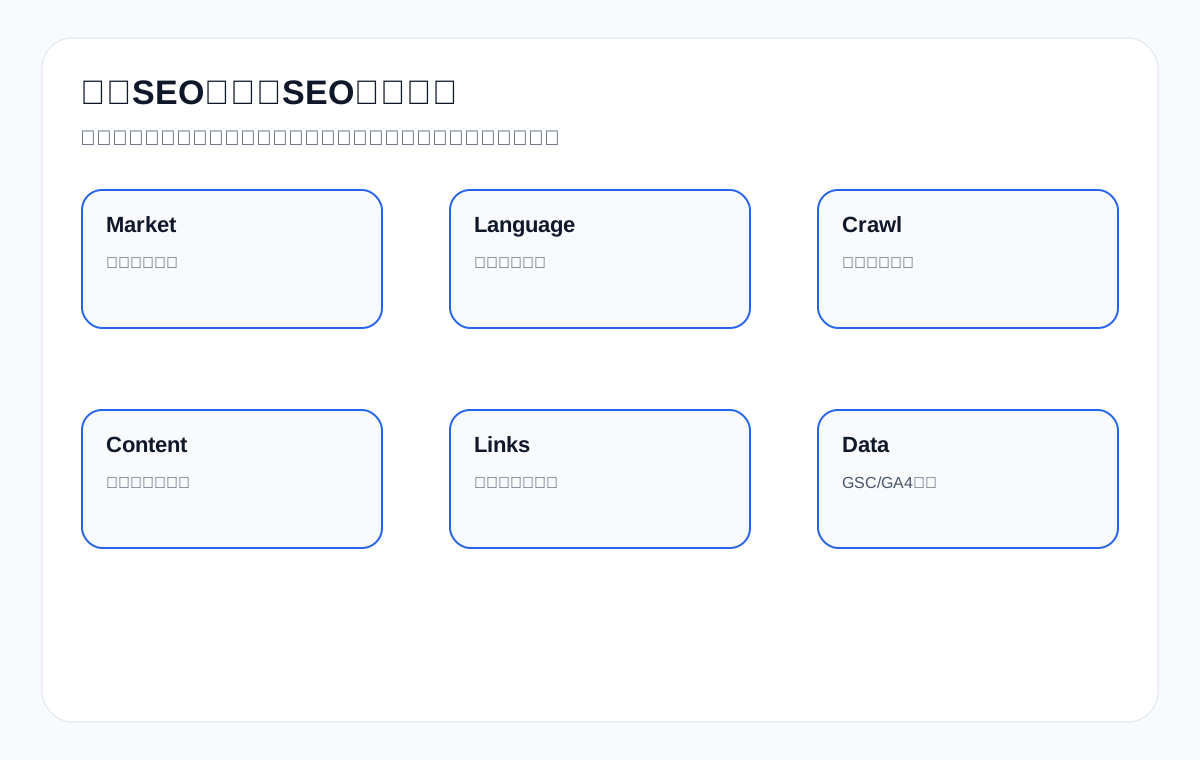
Official documentation boundaries: Google SEO and Baidu SEO cannot be compared on experience alone
Comparing Google SEO and Baidu SEO is easy to write as a matter of personal judgment. For foreign-trade companies, a more reliable approach is to break both sides into verifiable fields: on the Google side, look at Search Console, page indexing, sitemap, robots, canonical, hreflang, GA4, and the boundaries of AI search; on the Baidu side, look at the Baidu Search Resource Platform, Baiduspider, regular inclusion, URL submission, and site data. Read the official statements first, then the industry experience.
Baidu SEO experience is not entirely useless. Content quality, crawlability, clear pages, site structure, and broken-link handling are all basics that can be kept. But when building an English foreign-trade site, the query language, target market, purchasing path, page roles, link sources, data tools, and inquiry review all have to be redone. Translating Chinese-site experience directly onto an English site usually makes the homepage carry too many keywords, leaves product pages short of purchasing facts, and leaves GSC and GA4 data unable to explain business results.
If you currently have no GSC query or page rows, you cannot write that Google keywords have improved or that the English pages already show a click trend. At this stage you can only establish a baseline: whether English product keywords map to URLs, whether pages are in the sitemap, whether Google can index the target pages, whether GA4 can record inquiry actions, and whether the Baidu side is only domestic brand protection rather than the main foreign-trade battlefield.
Correspondence table between official documentation sources and Google/Baidu SEO difference acceptance fields
| Official documentation source | Corresponding difference | Foreign-trade website acceptance field | What cannot be concluded directly |
|---|---|---|---|
| Google Search Central: SEO Starter Guide | Google puts more emphasis on useful user-facing pages and clear structure. | Do English product pages answer specs, applications, certifications, MOQ, lead time, and FAQ? | You cannot just translate a Chinese introduction and call it English SEO content. |
| Google Search Central: Search Essentials | Crawling, indexing, and quality are the foundations of Google Search. | Are target product pages, category pages, and resource pages accessible and indexable? | You cannot treat the number of indexed pages as foreign-trade SEO success. |
| Search Console Help: Performance report | Google reviews with query, page, clicks, impressions, CTR, and average position. | English product keywords, page URLs, countries, and devices are recorded separately from clicks. | Without row data you cannot invent rankings, CTR, or page performance. |
| Google Analytics Help: About events | GA4 uses events to observe on-site behavior. | Whether RFQ, email, WhatsApp, document downloads, and sample requests can be observed. | You cannot read traffic volume directly as inquiry quality. |
| Google Search Central: Sitemaps overview | Google uses sitemaps to help discover important URLs. | Are core English category pages, product pages, application pages, and resource pages in the sitemap? | You cannot promise indexing just because a URL was submitted. |
| Google Search Central: robots.txt introduction | robots controls the boundaries of crawl access. | Whether Googlebot and related AI crawl paths are mistakenly blocked. | You cannot use robots to solve page quality problems. |
| Google Search Central: Preferred URL guidance | Google needs clear canonical and duplicate URL handling. | Do Chinese and English pages, parameter pages, category pages, and product pages have clear preferred URLs? | You cannot guarantee that the system will choose the declared URL. |
| Google Search Central: Localized versions | Multilingual and multi-region pages must handle language and region versions. | Do the English, Chinese, and other language versions have independent URLs and consistent content logic? | You cannot simply machine-translate a Chinese site into a multilingual site. |
| Google Search Central: AI features and your website | Google AI features still depend on accessible, indexable pages with clear content. | Can AI search understand English resource pages and product pages as credible sources? | You cannot promise that AI answers will use your official site. |
| OpenAI Platform: Bots | AI crawler access boundaries must be checked separately. | Whether OpenAI-related crawl access is mistakenly blocked by robots or server rules. | You cannot state that ChatGPT will display things in a specified way. |
| Baidu Search Resource Platform: Site information | On the Baidu side, you need to look at the site data and status inside the resource platform. | Whether the Chinese site or domestic brand protection pages have Baidu-side data. | You cannot use Baidu site data to infer Google foreign-trade performance. |
| Baidu Search Resource Platform: User guide | The Baidu platform offers resource submission methods such as regular inclusion, sitemap, and manual submission. | Baidu inclusion actions and Google sitemap/GSC actions are recorded separately. | You cannot move Baidu submission experience directly onto Google. |
| Baidu Search Resource Platform: URL submission channel | Baidu URL submission is one way to notify discovery. | Domestic site URL submission and the Google discovery chain for an English foreign-trade site are kept separate. | You cannot write submission as a promise of indexing or ranking. |
| Baidu Search Help Center: Baiduspider | Baiduspider crawling and robots boundaries need to be understood separately. | Baidu spider and Googlebot crawl rules are checked separately. | You cannot apply one crawling conclusion to both search engines. |
Google SEO and Baidu SEO migration acceptance checklist: which experience to keep and which must be redone
Moving from Baidu SEO to Google foreign-trade SEO is not about translating the titles, keywords, and articles once. Foreign-trade companies need to separate the items to keep from the items to redo. The basic technology can be kept; the search market and page system must be redone.
| Item | What Baidu experience can be kept | What Google foreign-trade must redo | Foreign-trade example |
|---|---|---|---|
| Keywords | Knowing to group by user questions. | Switch to English product terms, spec terms, application terms, and purchasing terms. | Waterproof connector becomes waterproof connector supplier, M12 connector IP67. |
| Page structure | Keeping clear navigation and category logic. | Establish a division of labor among the homepage, category pages, product pages, application pages, resource pages, and the RFQ page. | For LED flood light, do not let the homepage carry every wattage keyword. |
| Content quality | Keeping the principles of original, clear, and complete. | Add English purchasing facts, parameters, certifications, testing, FAQ, and document downloads. | The custom metal parts page states tolerance, material, drawing, and inspection. |
| Indexing discovery | Keeping awareness of sitemap, robots, and broken-link handling. | Recheck separately with GSC, sitemap, canonical, URL Inspection, and logs. | The packaging machine application page enters the sitemap and self-references canonical. |
| Links | Keeping awareness of internal links and external trust. | Move from publishing on domestic platforms to international industry directories, certifications, documents, and customer purchasing paths. | industrial valve supplier links come from standards, certifications, and document citations. |
| Review | Keeping the habit of looking at data regularly. | Judge with GSC, GA4, inquiry quality, and sales feedback together. | Whether ceramic dinnerware inquiries include MOQ, logo, and sample. |
When there is no GSC data, Baidu experience cannot replace Google review
If Google Search Console currently has no row data, you cannot substitute Baidu inclusion, Baidu rankings, Chinese-site performance, or manual search results for GSC conclusions. A more reliable approach is to establish the Google foreign-trade baseline first, then wait for data to appear.
| Current evidence | What can be judged | What cannot be judged | Next step |
|---|---|---|---|
| GSC query/page is 0 rows | The English page baseline, the index discovery chain, and the target URL list. | Google keyword rankings, CTR, and click growth. | Check weekly whether queries and pages appear. |
| Baidu resource platform has data | The Baidu-side status of the Chinese site or domestic brand protection pages. | The performance of the English foreign-trade site on Google. | Review the two data sets separately. |
| English pages just launched | Whether page facts, sitemap, robots, canonical, and GA4 events are complete. | That the pages have already entered stable foreign-trade purchasing search. | Run URL Inspection and observe logs first. |
| AI search sample just established | Whether the query set, platforms, dates, answer summaries, and citations can be rechecked. | That AI answers will keep using the official site. | Retest monthly; do not write it as a settled result. |
90-day switch review: Google, Baidu, AI search, and inquiries must be viewed separately
The difference between Google SEO and Baidu SEO ultimately comes down to how you review. Foreign-trade companies cannot use more Baidu inclusions to prove that Google foreign-trade SEO works, nor one AI answer mentioning the brand to prove the page strategy succeeded.
| Time | What to look at on the Google side | What to look at on the Baidu side | What to look at in AI search | What to look at on the business side |
|---|---|---|---|---|
| 30 days | Sitemap, indexing spot checks, target URLs, and whether GSC shows row data. | Chinese site data, Baiduspider crawling, and resource submission status. | Whether the query set is established and samples can be retested. | Whether GA4 events and inquiry fields can be recorded. |
| 60 days | Whether query/page match English product terms and whether CTR is abnormal. | Whether domestic brand terms and Chinese pages are stable. | Whether the brand, official URL, and third-party sources appear in the answers. | Product page visits, document downloads, and the RFQ path. |
| 90 days | Page performance, average position, clicks, and country and device trends. | Whether the Baidu side only serves domestic search or brand protection. | Whether changes in the AI samples relate to the page fact improvements. | Inquiry products, spec completeness, countries, and sales feedback. |
II. Conclusion first: foreign trade cannot move Baidu SEO directly onto Google SEO
Baidu SEO mostly happens in the Chinese search ecosystem, where the user language, platform habits, content environment, and indexing mechanisms all differ from Google English search. Google foreign-trade SEO faces overseas buyers, English product terms, international competitors, English documents, and cross-country search results.
A common misconception among domestic companies is: translating Chinese keywords literally into English; filling content with company news; putting all products on a single Products page; ignoring English resource and application pages; understanding backlinks through the mindset of posting on domestic platforms; and looking only at traffic volume instead of inquiry quality.
Google SEO requires rebuilding the page system: category pages carry supplier and category terms, product pages carry parameter and model terms, application pages carry industry scenarios, resource pages carry datasheet/manual/certificate, tutorial pages carry questions and comparisons, and the inquiry page carries quote preparation.
Baidu thinking vs. Google foreign-trade thinking
| Dimension | Common Baidu thinking | What Google foreign-trade SEO needs |
|---|---|---|
| Language | Chinese terms and domestic naming | English expressions used by overseas buyers |
| Pages | The homepage and news carry a large number of terms | Division of labor among categories, products, applications, and resources |
| Content | Update frequency and article count | Purchasing judgment and document depth |
| Links | Domestic platforms and directory thinking | International relevance and brand trust |
| Review | Rankings and traffic volume | GSC, GA4, inquiry quality |
III. Search intent differences: Baidu Chinese users and Google overseas buyers are not the same group
Baidu Chinese search may contain more domestic services, prices, tutorials, brands, and platform information. Google foreign-trade search more often involves English product terms, supplier terms, parameter terms, application terms, document terms, and purchasing questions.
For example, a domestic user may search for the Chinese term for waterproof connector manufacturer, while an overseas buyer may search waterproof connector supplier, IP67 connector manufacturer, M12 4 pin waterproof connector, waterproof connector for marine lighting. Different terms mean different pages.
So a foreign-trade site cannot translate directly from Chinese terms; it must find real English expressions in overseas buyer emails, inquiries, competitor sites, GSC, industry directories, and SERPs.
Search intent difference table
| Chinese approach | English foreign-trade query | Target page |
|---|---|---|
| Waterproof connector manufacturer | waterproof connector supplier | Category page / capability page |
| LED flood light price | LED flood light bulk price factors | FAQ / inquiry page |
| Metal machining parts | custom metal parts / CNC machining parts | Capability page / product page |
| How to choose a packaging machine | how to choose packaging machine | Tutorial page |
| Custom ceramic dinnerware | private label ceramic dinnerware manufacturer | Capability page / category page |
IV. Content differences: Google foreign-trade content emphasizes purchasing decision material
Baidu site content is sometimes oriented toward information, news, Q&A, and Chinese introductions; Google foreign-trade site content should be more like a purchasing reference library. Overseas buyers need materials, specifications, applications, certifications, MOQ, lead time, packaging, testing, document downloads, and inquiry preparation.
For example, an industrial valve page cannot only say that quality is reliable; it should describe materials, pressure ratings, connection types, applicable media, test standards, and documents; a medical probe page should describe materials, compatible equipment, cleaning methods, and compliance boundaries.
Google and AI systems also understand content more easily when it is clearly structured, with tables, FAQs, and document links.
Content focus difference table
| Page | Common way of writing on a Baidu Chinese site | What a Google foreign-trade site should add |
|---|---|---|
| Product page | Product introduction and advantages | Parameters, applications, documents, inquiry |
| Category page | Product list | Product range, filtering, FAQ |
| Article page | Industry news | Selection steps, tables, cases |
| Resource page | Rare, or downloads only | Document descriptions and related products |
| About page | Company profile | Factory capability, certificates, entity consistency |
V. Indexing logic differences: the point is not the number of indexed pages, but getting the right pages into the index
Whether Baidu or Google, more indexed pages is not always better. Google foreign-trade SEO should focus more on whether core pages are indexed: product category pages, main product pages, application pages, resource pages, tutorial pages, and the contact page. Low-value filter pages, internal search pages, and duplicate tag pages do not necessarily need to be indexed.
Many foreign-trade sites submit a large number of thin articles to Google while ignoring that core product pages are not indexed. The result looks like there are many pages, but the pages that can actually carry English product terms are weak.
Use GSC to distinguish Crawled not indexed, Discovered not indexed, Duplicate, Indexed, and other statuses, and handle them according to business value.
Indexing focus table
| Page type | Should it be a priority for indexing | Reason |
|---|---|---|
| Core category page | Yes | Carries category and supplier terms |
| Main product page | Yes | Carries model and parameter terms |
| Application page | Yes | Carries scenario terms |
| Resource page | Yes | Carries verification and AI citations |
| Low-value filter page | Not necessarily | May be duplicate and low value |
| Internal search page | Usually no | Content is unstable |
VI. Link differences: Google foreign-trade SEO looks more at international relevance and credible sources
Baidu and Google handle the link ecosystem differently, but for a foreign-trade site the point is not quantity but relevance, credibility, and naturalness. International B2B links should come from industry media, trade shows, associations, customer documents, technical documentation, partners, product directories, and citable content.
Domestic companies often understand backlinks as a link-posting task, which is very risky in Google foreign-trade SEO. A more reliable approach is to build citable assets: datasheet, manual, certificate, selection guide, comparison table, application guide.
When the content itself has document value, links and AI citations come more naturally.
Backlink and trust signal table
| Source | Value | Note |
|---|---|---|
| Industry media | Strong relevance | Content must have document value |
| Trade show / association | Entity trust | Information must be consistent |
| Customer / partner | Business endorsement | Respect privacy and authorization |
| Technical document citations | Sustainable value | Resource pages must be clear |
| Low-quality directories | Higher risk | Do not chase quantity |
VII. Tool differences: Baidu Search Resource Platform and GSC see things differently
Baidu SEO uses the Baidu Search Resource Platform; Google foreign-trade SEO must use Google Search Console, GA4, PageSpeed, Rich Results Test, and server/form data. Different tools mean different interpretations of metrics.
GSC shows English query terms, target countries, pages, devices, indexing status, and click-through rate. GA4 shows user paths, product clicks, document downloads, and form submissions. The inquiry system or CRM shows lead quality.
Do not evaluate a Google foreign-trade site with the mindset of a Baidu ranking tool. Google foreign-trade SEO needs to be broken down by country, language, page, and inquiry quality.
Tool comparison table
| Dimension | Commonly used for Baidu SEO | Commonly used for Google foreign-trade SEO |
|---|---|---|
| Webmaster tools | Baidu Search Resource Platform | Google Search Console |
| Behavior analysis | Baidu Tongji, etc. | GA4 |
| Technical testing | Baidu-related tools | PageSpeed, Rich Results |
| Query terms | Chinese keywords | English product terms and countries |
| Conversion | Forms / phone | Inquiries, document downloads, sales feedback |
VIII. Internationalization differences: language, country, and search results all need to be viewed separately
Google foreign-trade SEO faces different countries and languages. Buyers in the United States, the United Kingdom, Germany, the Middle East, and Southeast Asia may express things differently, and SERP results differ too. Baidu SEO is usually more concentrated in the Chinese domestic context.
Foreign-trade companies need to define the target market. Not all English terms are equally important, and not all countries’ traffic is worth chasing. In GSC, look at countries and query terms; in GA4, look at countries and conversions; and sales should report back which market leads are effective.
If there is a multilingual site, hreflang, consistent language versions, URL structure, and localized expression also need to be done well.
Internationalization checklist
| Check item | Foreign-trade SEO requirement | Risk |
|---|---|---|
| Target countries | Define the main markets | Traffic spread out with no conversion |
| Language expression | Use common local English terms | Literal translation from Chinese |
| hreflang | Correct mutual referencing among language versions | Confused language versions |
| Units and standards | Match market habits | Unclear parameters |
| Sales feedback | Look at quality by country | Only looking at total traffic |
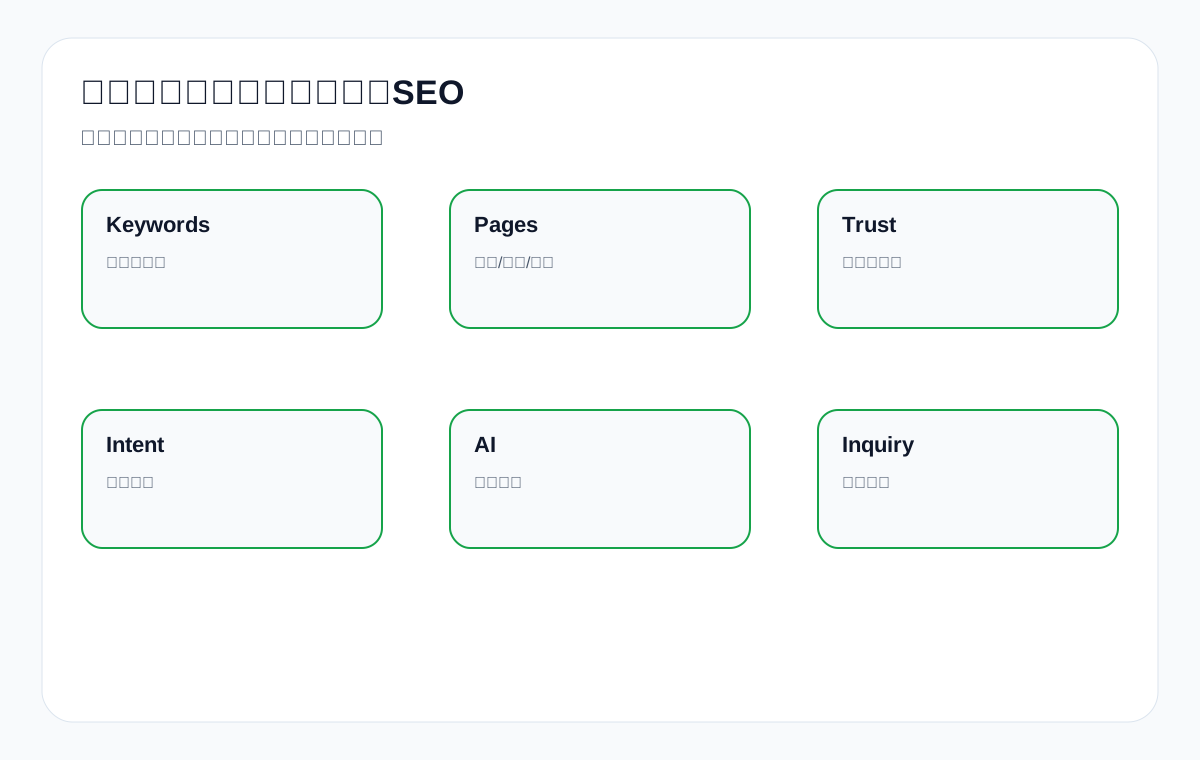
IX. AI search differences: a Google foreign-trade site must also consider answer-type search
Baidu has AI capabilities as well, but the research tools foreign-trade customers commonly use may include Google AI Overviews, ChatGPT, Perplexity, Gemini, and others. Google foreign-trade SEO content needs to be easier for answers to understand and cite.
This means pages need clear definitions, structured tables, FAQs, resource pages, a consistent company entity, product parameters, and external trust signals. Not to control AI answers, but to make the facts on the official site clearer.
For example, if a waterproof connector page clearly explains IP67, M12, pin count, application, and datasheet, it is easier for AI tools to understand than a page with only marketing copy.
AI search preparation table
| Element | Google foreign-trade site action | Value |
|---|---|---|
| Clear definition | Explain the product and application at the start of the page | Easier answer excerpting |
| Tables and FAQ | Parameters, selection, misconceptions | Easier structured understanding |
| Resource pages | datasheet, certificate | Provide credible sources |
| Entity consistency | Company, brand, and products unified | Reduce confusion |
| Review | Query set monitoring | Check accuracy and citations |
X. Page structure differences: an English foreign-trade site must build out the purchasing path
A Baidu Chinese site sometimes relies on the homepage, section pages, and article pages; an English foreign-trade site needs a complete purchasing path. After buyers enter from a question, they should be able to continue to products, documents, applications, FAQ, and inquiry.
For example, entering from how to choose LED flood light should lead to the LED flood light category page, parking lot application, 100W/200W product pages, datasheet, and inquiry page.
Page structure is not only for search engines; it also lets buyers quickly judge whether the company is worth contacting.
Purchasing path table
| Entry page | Next page | Purpose |
|---|---|---|
| Tutorial page | Category page / product page | From learning to selection |
| Category page | Subcategory / application page | Narrow the choice |
| Product page | Resource page / inquiry page | Verify and submit the requirement |
| Resource page | Product page / contact page | From verification to contact |
| Application page | Related products | From scenario to product |
XI. What must be redone when migrating from a Baidu site to a Google foreign-trade site
If a company already has a Chinese Baidu site and plans an English Google site, translating the whole site directly is not recommended. Product line review, English keywords, page structure, document preparation, titles and descriptions, internal links, Schema, GSC/GA4, and the inquiry form should all be redone.
Chinese articles can serve as source material, but they must be rewritten according to English search intent. Chinese industry news is not necessarily suitable for an English site; an English site needs selection guides, application guides, datasheets, comparisons, FAQs, and quote preparation.
During migration, also avoid Chinese paths, Chinese image alt text, Chinese form fields, and Chinese documents mixing into English pages.
Migration redo checklist
| Item | Why it must be redone | Foreign-trade action |
|---|---|---|
| Keywords | Literal Chinese translation is inaccurate | Validate with English SERPs and inquiries |
| Page structure | Chinese sections are not the same as a purchasing path | Divide category / product / application / resource roles |
| Content | News is not purchasing material | Rewrite selection and parameters |
| Forms | Chinese fields do not suit overseas customers | English inquiry information checklist |
| Data | Baidu data cannot replace GSC | Connect GSC and GA4 |
XII. Case: why LED flood light cannot just be a translation of a Chinese site
A Chinese site might say LED flood light factory direct sales, quality guaranteed. If an English foreign-trade site only translates this as high quality LED flood light manufacturer, it is still not enough. Overseas buyers need wattage, lumen, IP rating, beam angle, mounting height, application, certificates, MOQ, and lead time.
Google SEO pages should be layered: an LED flood light manufacturer category page, 100W/200W product pages, a parking lot lighting application page, a how to choose LED flood light tutorial page, a datasheet resource page, and an inquiry page.
Only then can it cover the different intents of supplier, product, application, how-to, datasheet, and quote.
LED flood light page restructure
| Common content on a Chinese site | What the English site should add | Target intent |
|---|---|---|
| Factory introduction | Product range and certifications | Supplier screening |
| Product list | Wattage and parameter filtering | Product comparison |
| Project cases | parking lot/warehouse application pages | Scenario search |
| News articles | Selection guide and FAQ | Question search |
| Contact information | Inquiry information checklist | Quote preparation |
XIII. Case: why custom metal parts should start from drawing inquiries
A Chinese site may emphasize precision metalworking capability. An English Google site needs to explain custom metal parts, CNC machining parts, sheet metal fabrication, tolerance, surface finish, drawing formats, inspection report, and upload drawing for quote.
Overseas buyers will not just look at slogans; they will look at what materials you can machine, your precision range, surface treatment, inspection methods, whether you can do small batches, and how you quote.
Therefore Google SEO content should connect to inquiry preparation, not just serve as a company introduction.
custom metal parts foreign-trade SEO restructure
| Page | Terms carried | Content focus |
|---|---|---|
| Capability page | custom metal parts manufacturer | Processes, materials, equipment, quality |
| Process page | CNC machining parts | Precision, materials, applications |
| Tutorial page | custom metal parts tolerance | Tolerance and cost impact |
| Resource page | inspection report sample | Inspection and reports |
| Inquiry page | upload drawing for quote | File formats and document checklist |
XIV. Review differences: Google foreign-trade SEO must look at inquiry quality
Baidu SEO review may focus more on Chinese-term rankings and traffic; Google foreign-trade SEO must look at English query terms, target countries, page entry points, document downloads, form submissions, and inquiry quality.
If a country has a lot of traffic but no valid inquiries, judge whether the target market is mismatched; if a page has little traffic but high inquiry quality, keep strengthening it; if a tutorial page has high traffic but no product clicks, strengthen internal links and CTAs.
Sales feedback is an indispensable part of foreign-trade SEO review.
Google foreign-trade review table
| Metric | What to look at | Judgment |
|---|---|---|
| GSC query terms | Whether English product terms are in place | Search understanding |
| Country | Whether traffic comes from target markets | Market match |
| GA4 behavior | Product clicks, downloads, forms | User path |
| Inquiry fields | Product, quantity, specifications | Lead specificity |
| Sales feedback | Validity and quote stage | Business value |
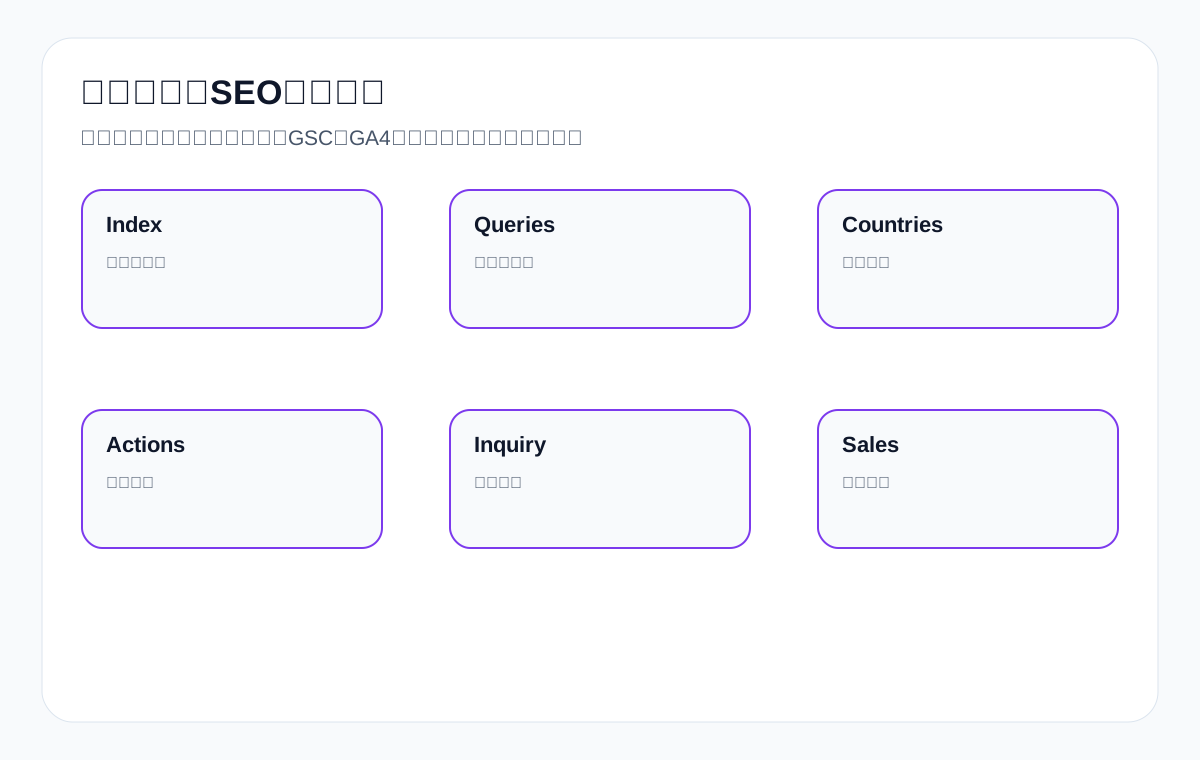
XVII. Crawling and site technology differences: an English foreign-trade site must first be globally accessible
For Baidu SEO, many companies focus on domestic access, ICP filing, domestic servers, and Baiduspider crawling. For Google foreign-trade SEO, focus on overseas access speed, HTTPS, mobile experience, international CDN, server stability, robots, canonical, hreflang, and the crawlability of English pages.
If the target market is the United States and Europe but the English site loads slowly there, product images are huge, and the form is hard to use on mobile, both Google and buyers are affected. The technical foundation is not just for tool scores; it is to let overseas users and Googlebot reliably access core pages.
In addition, a multilingual website must avoid Chinese and English pages getting mixed up. The title, description, content, Schema, image alt, and form fields of English pages should all serve English-speaking buyers.
Technical difference checklist
| Check item | Common focus of a Baidu Chinese site | Focus of a Google foreign-trade site |
|---|---|---|
| Access region | Stable domestic access | Access speed in target countries |
| Language versions | Mostly Chinese pages | Clear English/multilingual structure |
| Mobile | Basic adaptation | Usable for overseas buyers’ initial screening |
| Images and documents | Mainly display | Compression, alt, document descriptions |
| hreflang | Rarely used | Must be checked on multilingual sites |
XVIII. Homepage role differences: a Google foreign-trade site cannot let the homepage carry every keyword
Many Chinese sites pile a large number of keywords onto the homepage, hoping it will carry several business terms. If an English foreign-trade site does the same, the homepage theme often becomes muddled. The homepage should explain the company positioning, core product lines, trust evidence, and entry points, rather than ranking for every category and product page.
For example, for a packaging machine manufacturer, the homepage can explain automated packaging equipment supply capability, main product lines, target industries, certifications, and contact entry points; powder packing machine, liquid filling machine, and food packaging machine should be carried by their own category or application pages.
The value of the homepage is distributing authority and building trust, not stuffing every English product term into it.
Homepage and inner page division of labor table
| Search intent | Suitable for the homepage | More suitable page |
|---|---|---|
| Brand terms | Suitable | Homepage |
| Core capability summary | Partly suitable | Homepage + capability page |
| Specific category terms | Not suitable to put all on the homepage | Category page |
| Model and parameter terms | Not suitable | Product page |
| Application scenario terms | Not suitable | Application page |
XIX. Section structure differences: Products on an English site is not an all-purpose section
Many foreign-trade sites have only one Products section listing all products. For Google SEO this is usually not enough. Product lines, subcategories, application pages, resource pages, and tutorial pages need a clear hierarchy so users and search engines understand how products relate.
For example, waterproof connector can be split into M12 connector, IP67 connector, custom cable assembly, connector for outdoor lighting, and datasheet; custom metal parts can be split into CNC machining, sheet metal fabrication, aluminum parts, surface finish, and tolerance guide.
Section structure is not about being as complex as possible; it is organized by search demand and product lines. Every section needs independent value and an internal link path.
English site section design table
| Section | Role | Foreign-trade example |
|---|---|---|
| Products | Product line entry | LED flood light, connector |
| Applications | Carries scenario terms | parking lot lighting, marine use |
| Resources | Carries documents and tutorials | datasheet, manual, guide |
| Capabilities | Carries customization capability | CNC machining, private label |
| Contact/Quote | Carries inquiries | upload drawing, request sample |
XX. Content update frequency differences: not daily posting, but continuously completing key pages
Chinese SEO sometimes emphasizes update frequency, and companies post news every day. Google foreign-trade SEO should focus more on whether pages actually get stronger. Publishing shallow articles every day is not as good as completing core category pages, product pages, application pages, and resource pages.
Updates can happen on existing pages: adding parameters, adding FAQs, adding application images, updating certificates, adding video summaries, adding document downloads, and improving internal links. For Google and buyers, these updates are more valuable than irrelevant news.
A foreign-trade SEO content plan should be scheduled by product line and purchasing stage, not by a rule that one article must be published every day.
Update method comparison table
| Update method | Value | Foreign-trade recommendation |
|---|---|---|
| Posting a short news item every day | Usually low | Use with caution |
| Updating product page parameters | High | Do first |
| Adding application pages | High | Do by market and industry |
| Organizing resource pages | High | Supports purchasing and AI citations |
| Expanding tutorials | Medium-high | Guide toward products and documents |
XXI. Foreign-trade inquiry path differences: Google traffic must be able to reach quote preparation
A Baidu Chinese site may rely mainly on phone, WeChat, and online chat; a common path on an English foreign-trade site is forms, email, WhatsApp, document downloads, drawing uploads, and sample requests. SEO pages must support these paths.
Product pages should tell users what information is needed for a quote, such as quantity, drawing, material, application, target market, and certificate requirement. Tutorial pages and resource pages should also guide users into products and inquiries.
If a page has traffic but no inquiries, it is not necessarily an SEO failure; the inquiry path may be unclear, the form too complex, the documents insufficient, or the target terms too early in intent.
Inquiry path checklist
| Page | Next step | Form/CTA point |
|---|---|---|
| Tutorial page | See related products | Recommend categories and documents |
| Category page | Filter products | Product range and FAQ |
| Product page | Request a quote or download documents | Parameters, MOQ, document checklist |
| Resource page | Contact to confirm | Applicable products and versions |
| Inquiry page | Submit the requirement | Product, quantity, application, files |
XXII. Competitor differences: Google benchmarks against global results, not domestic peers
For Baidu SEO, companies often benchmark against domestic peers’ Chinese sites; for Google foreign-trade SEO, the real competitors may come from the United States, Germany, India, Turkey, Vietnam, Southeast Asia, or international B2B platforms. When the benchmark changes, the content standard changes too.
For example, Google results for industrial valve supplier may include international manufacturers, directory sites, industry media, and technical documents. Your pages need to be clearer than theirs in product range, parameters, certifications, documents, FAQ, and inquiry path.
Do not only look at what domestic peers write. Look at the page types, structure, tables, documents, FAQ, images, video, author, and trust evidence of the top pages in the current Google results.
Competitor benchmark field table
| Field | What to look at | Our reinforcement |
|---|---|---|
| Page type | Category, product, tutorial, or resource | Choose the right page to carry it |
| Content structure | H2, tables, FAQ | Cover and complete foreign-trade scenarios |
| Product information | Parameters, applications, certificates | Add real documents |
| Conversion path | Forms, downloads, contact | Reduce inquiry friction |
| Trust evidence | Qualifications, documents, external citations | Build document assets |
XXIII. Localization differences: English does not mean all markets are the same
Google foreign-trade SEO often faces multiple countries. Buyers in the United States, the United Kingdom, Germany, the Middle East, and Southeast Asia may focus on different units, certifications, expressions, and purchasing processes. English pages can serve as the base, but important markets need relevant standards and scenarios reflected in the content.
For example, LED flood light aimed at the US market may need to mention DLC, UL, or lighting scenarios; for the European market, CE, RoHS, and energy efficiency may matter more; industrial valve has different requirements for standards, materials, and test documents in different markets. Page content should state the scope of application and avoid showing all markets the same vague introduction.
Baidu SEO is more about the Chinese domestic context, while Google SEO must put country, language, standards, and purchasing habits into the review.
Market localization checklist
| Dimension | What to check | Foreign-trade example |
|---|---|---|
| Units | Whether metric/imperial is clear | mm, inch, W, lumen |
| Certifications | Whether the target market recognizes them | CE, UL, RoHS, FDA |
| Terminology | Whether locals search this way | activewear vs sportswear |
| Application | Whether it fits local scenarios | parking lot, warehouse, marine |
| Inquiry | Whether necessary information is collected | Quantity, specifications, target market |
XXIV. Multilingual site differences: do not let hreflang, URLs, and content get muddled
If a foreign-trade site has English, Spanish, German, French, and other versions, you cannot just translate the Chinese site into multilingual pages. Every language version needs a clear URL, hreflang, canonical, language content, and corresponding documents.
Common problems include: English pages mixed with Chinese text, Schema fields still in Chinese, image alt not translated, incorrect hreflang cross-references, an English page canonicalized to a Chinese page, and Chinese form prompts. All of these affect user experience and search understanding.
A multilingual site does not have to start with many languages. Do the English main site and core target markets well first, then expand to other languages, to avoid copying a pile of low-quality pages.
Multilingual site checklist
| Item | Correct approach | Risk |
|---|---|---|
| URL structure | Clear /en/, /de/, or separate domains | Mixed languages |
| hreflang | Accurate cross-referencing among language versions | Pointing to the wrong version |
| canonical | Points to the main version in the current language | Wrong cross-language consolidation |
| Page content | Complete expression in the target language | Machine translation with no proofreading |
| Form and documents | Localized fields and prompts | Users afraid to submit |
XXV. Backlink building differences: from publishing on Chinese platforms to international trust assets
For Baidu SEO, companies may be used to publishing content on Chinese platforms, news sources, Q&A sites, and directories. Google foreign-trade SEO needs more international relevance and real trust sources. Low-quality backlinks not only help little but may also bring risk.
A foreign-trade site is better suited to building citable English documents: selection guides, parameter tables, certificate descriptions, industry applications, test reports, video summaries, white papers, and FAQs. Then gain natural mentions through trade shows, associations, industry media, partners, authorized customer cases, and supply chain platforms.
Backlinks are not about posting links first; they are about first having content worth citing. Without document assets, backlink building easily turns into a low-quality task.
International backlink trust source table
| Source | Suitable content | Note |
|---|---|---|
| Industry media | Technical guides, trends, applications | Content must have original material |
| Trade shows and associations | Company and product information | Consistent information |
| Partners | Application and supply chain introductions | Authorization and authenticity |
| Technical documents | datasheet, manual, report | Pages must be accessible |
| Customer cases | Application results and project background | Protect customer privacy |
XXVI. Which Baidu experience can be kept and which must be redone
Not all Baidu SEO experience is useless. Accessible pages, clear titles, useful content, reasonable internal links, stable technology, and continuous review are still valuable basic principles. What must be redone is the language, search intent, page system, document depth, internationalization, and data review.
If a company has accumulated Chinese content in the past, it can be treated as a product reference library, but it must be reorganized around English buyers’ questions. For example, Chinese product advantages can become English product parameters and application descriptions; Chinese FAQ can become FAQ; Chinese cases can become application pages, but target markets and product details must be added.
Keep the principles, redo the expression: this is a fairly reliable migration method.
Keep and redo table
| Item | Can be kept | Must be redone |
|---|---|---|
| Technical foundation | HTTPS, speed, structure | Overseas access and multilingual |
| Content and documents | Product facts and FAQ | English expression and page structure |
| Keyword approach | Grouping by demand | English product terms and SERP validation |
| Internal link principles | Relevant pages interlink | Purchasing-path orientation |
| Review habits | Continuously looking at data | GSC, GA4, inquiry quality |
XXVII. The 90-day switch roadmap for Google foreign-trade SEO
If a company is moving from Baidu SEO to Google foreign-trade SEO, it can switch over 90 days. The first 30 days are for basic auditing and rebuilding English terms; days 31-60 restructure core pages; days 61-90 connect data review and the second batch of content.
The first 30 days focus on confirming target markets, product lines, English query terms, GSC/GA4, indexing status, and the page map. Days 31-60 focus on adding category pages, product pages, application pages, resource pages, FAQ, and internal links. Days 61-90 check whether query terms land on the right pages, whether users click products and documents, and whether inquiries are more specific.
This roadmap is more reliable than translating a large number of Chinese articles at the start, and it makes it easier for the sales team to see change.
90-day switch roadmap table
| Period | Focus | Deliverable | Review metric |
|---|---|---|---|
| 0-30 days | Audit and English terms | Product lines, query terms, page map | Indexing and current-state baseline |
| 31-60 days | Core page restructuring | Category pages, product pages, application pages, resource pages | Query terms and page entry points |
| 61-90 days | Review and expansion | Second batch content plan | Inquiry quality and AI accuracy |
XXVIII. Judging success: do not look at Google foreign-trade SEO with Baidu ranking habits
Google foreign-trade SEO success should not be judged only by what position a term ranks. A fuller judgment includes: whether core pages are indexed, whether English product terms land on the right pages, whether target countries match, whether users view products and documents, whether inquiries are more specific, and whether sales considers the leads more effective.
For example, a custom metal parts page may not immediately rank near the top, but if GSC shows more long-tail terms related to tolerance, surface finish, and upload drawing, and inquiries start coming with drawings and material requirements, that is a valuable early signal.
Both Baidu SEO and Google foreign-trade SEO need review, but a Google foreign-trade site must connect search data with business data.
Success metric table
| Metric | How to view it | Foreign-trade meaning |
|---|---|---|
| Indexing | Whether core pages are in the index | Pages have a search foundation |
| Query terms | Whether English product terms are in place | Intent match |
| Country | Whether traffic comes from target markets | Traffic quality |
| Behavior | Document downloads and form events | Purchasing progress |
| Sales feedback | Whether inquiries are valid | Business value |
XV. FAQ: common questions about the difference between Google SEO and Baidu SEO
I have done Baidu SEO. Can I do Google SEO directly?
Experience is a useful reference, but it cannot be copied directly. English keywords, search intent, the page system, the link ecosystem, and data tools all have to be redone.
Can Chinese articles be translated into English site content?
They can serve as source material, but they cannot be machine-translated. They must be rewritten around overseas buyers’ questions, English product terms, and SERP formats.
Does Google SEO care more about backlinks?
Links are still important, but a foreign-trade site should value relevance, credible sources, and citable documents more than quantity.
Do fast Baidu indexing methods work for Google?
Not necessarily. Google looks more at page value, internal links, canonicalization, and overall quality. The point is not the number of submissions, but whether important pages are worth indexing.
Should a foreign-trade site find keywords with Chinese or English thinking?
It must use English buyer expressions and validate them with inquiries, competitors, GSC, industry directories, and SERPs, not just literal Chinese translation.
What is the relationship between Google SEO and AI search optimization?
The basics are shared. Pages that are crawlable, clearly written, consistent in entity, and credible in their documents are better suited to both search and AI understanding.
Is a blog still useful for a foreign-trade website?
It is useful, but the blog should serve selection, comparison, documents, and internal links; it cannot replace category pages and product pages.
How often should Google SEO be reviewed?
Technical and indexing items can be checked in the short term. Content and inquiries are best reviewed every 4 to 12 weeks, together with sales feedback.
Can a Baidu site and an English site use the same page structure?
That is not recommended. The English site should rebuild category, product, application, resource, and inquiry pages around the overseas purchasing path.
Can foreign-trade SEO promise specific rankings?
No specific ranking can be promised. What can be controlled is the page assets, technical foundation, content quality, link relationships, and review mechanisms.
If you can only remember one sentence: Baidu experience can help you understand the basic logic of search optimization, but Google foreign-trade SEO must be designed anew around overseas buyers, English product terms, international competition results, and inquiry quality.
XVI. Conclusion: Google SEO is not the English version of Baidu SEO
The difference between Google SEO and Baidu SEO comes down, for a foreign-trade company, to this: you cannot simply translate the keywords, sections, articles, and link experience of a Chinese site onto an English site. Foreign-trade Google SEO must start from overseas buyers’ English search intent and redesign the page system.
Category pages, product pages, application pages, resource pages, tutorial pages, and inquiry pages must each take on different tasks. Content needs parameters, tables, FAQ, certificates, documents, and real purchasing questions. Review needs to look at GSC, GA4, country, page path, inquiry quality, and sales feedback.
If a company truly treats Google SEO as building foreign-trade page assets rather than as an English copy of Baidu SEO, then English product terms, AI visibility, and inquiry quality have a foundation for long-term improvement.
Final checklist
| Check item | Google foreign-trade SEO requirement |
|---|---|
| English terms | Come from overseas buyer expressions, not just literal Chinese translation |
| Page system | Division of labor among category, product, application, resource, tutorial, and inquiry |
| Content depth | Complete parameters, applications, certificates, FAQ, and documents |
| Link relationships | In-body internal links support the purchasing path |
| Tool review | GSC, GA4, inquiry quality, and sales feedback |
| AI readiness | Consistent entity, citable documents, answer accuracy review |
{
“@context”: “https://schema.org”,
“@type”: “FAQPage”,
“mainEntity”: [
{
“@type”: “Question”,
“name”: “Top1/Authoritative Benchmark Comparison CardnnDimension What authoritative content covers well Gap for foreign-trade companies How this article reinforcesnnSearch engine rule explanations Google and Baidu ecosystem differences Lacks foreign-trade page implementation Add product pages/category pages/resource pagesnContent judgment Covers originality and quality Lacks English purchasing intent Add English product terms and application termsnLink ecosystem Covers backlinks and internal links Lacks international B2B trust sources Add certificates, documents, industry citationsnTool data Covers GSC/Baidu webmaster tools Lacks an inquiry closed loop Add GA4/CRM/sales feedbacknAI search Traditional comparisons rarely touch on it Lacks AI visibility scenarios Add AI answer accuracynnII. Conclusion first: foreign trade cannot move Baidu SEO directly onto Google SEOnBaidu SEO mostly happens in the Chinese search ecosystem, where the user language, platform habits, content environment, and indexing mechanisms all differ from Google English search. Google foreign-trade SEO faces overseas buyers, English product terms, international competitors, English documents, and cross-country search results.nA common misconception among domestic companies is: translating Chinese keywords literally into English; filling content with company news; putting all products on a single Products page; ignoring English resource and application pages; understanding backlinks through the mindset of posting on domestic platforms; and looking only at traffic volume instead of inquiry quality.nGoogle SEO requires rebuilding the page system: category pages carry supplier and category terms, product pages carry parameter and model terms, application pages carry industry scenarios, resource pages carry datasheet/manual/certificate, tutorial pages carry questions and comparisons, and the inquiry page carries quote preparation.nBaidu thinking vs. Google foreign-trade thinkingnnDimension Common Baidu thinking What Google foreign-trade SEO needsnnLanguage Chinese terms and domestic naming English expressions used by overseas buyersnPages The homepage and news carry a large number of terms Division of labor among categories, products, applications, and resourcesnContent Update frequency and article count Purchasing judgment and document depthnLinks Domestic platforms and directory thinking International relevance and brand trustnReview Rankings and traffic volume GSC, GA4, inquiry qualitynnIII. Search intent differences: Baidu Chinese users and Google overseas buyers are not the same groupnBaidu Chinese search may contain more domestic services, prices, tutorials, brands, and platform information. Google foreign-trade search more often involves English product terms, supplier terms, parameter terms, application terms, document terms, and purchasing questions.nFor example, a domestic user may search for the Chinese term for waterproof connector manufacturer, while an overseas buyer may search waterproof connector supplier, IP67 connector manufacturer, M12 4 pin waterproof connector, waterproof connector for marine lighting. Different terms mean different pages.nSo a foreign-trade site cannot translate directly from Chinese terms; it must find real English expressions in overseas buyer emails, inquiries, competitor sites, GSC, industry directories, and SERPs.nSearch intent difference tablennChinese approach English foreign-trade query Target pagennWaterproof connector manufacturer waterproof connector supplier Category page/capability pagenLED flood light price LED flood light bulk price factors FAQ/inquiry pagenMetal machining parts custom metal parts / CNC machining parts Capability page/product pagenHow to choose a packaging machine how to choose packaging machine Tutorial pagenCustom ceramic dinnerware private label ceramic dinnerware manufacturer Capability page/category pagennIV. Content differences: Google foreign-trade content emphasizes purchasing decision materialnBaidu site content is sometimes oriented toward information, news, Q&A, and Chinese introductions; Google foreign-trade site content should be more like a purchasing reference library. Overseas buyers need materials, specifications, applications, certifications, MOQ, lead time, packaging, testing, document downloads, and inquiry preparation.nFor example, an industrial valve page cannot only say that quality is reliable; it should describe materials, pressure ratings, connection types, applicable media, test standards, and documents; a medical probe page should describe materials, compatible equipment, cleaning methods, and compliance boundaries.nGoogle and AI systems also understand content more easily when it is clearly structured, with tables, FAQs, and document links.nContent focus difference tablennPage Common way of writing on a Baidu Chinese site What a Google foreign-trade site should addnnProduct page Product introduction and advantages Parameters, applications, documents, inquirynCategory page Product list Product range, filtering, FAQnArticle page Industry news Selection steps, tables, casesnResource page Rare, or downloads only Document descriptions and related productsnAbout page Company profile Factory capability, certificates, entity consistencynnV. Indexing logic differences: the point is not the number of indexed pages, but getting the right pages into the indexnWhether Baidu or Google, more indexed pages is not always better. Google foreign-trade SEO should focus more on whether core pages are indexed: product category pages, main product pages, application pages, resource pages, tutorial pages, and the contact page. Low-value filter pages, internal search pages, and duplicate tag pages do not necessarily need to be indexed.nMany foreign-trade sites submit a large number of thin articles to Google while ignoring that core product pages are not indexed. The result looks like there are many pages, but the pages that can actually carry English product terms are weak.nUse GSC to distinguish Crawled not indexed, Discovered not indexed, Duplicate, Indexed, and other statuses, and handle them according to business value.nIndexing focus tablennPage type Should it be a priority for indexing ReasonnnCore category page Yes Carries category and supplier termsnMain product page Yes Carries model and parameter termsnApplication page Yes Carries scenario termsnResource page Yes Carries verification and AI citationsnLow-value filter page Not necessarily May be duplicate and low valuenInternal search page Usually no Content is unstablennVI. Link differences: Google foreign-trade SEO looks more at international relevance and credible sourcesnBaidu and Google handle the link ecosystem differently, but for a foreign-trade site the point is not quantity but relevance, credibility, and naturalness. International B2B links should come from industry media, trade shows, associations, customer documents, technical documentation, partners, product directories, and citable content.nDomestic companies often understand backlinks as a link-posting task, which is very risky in Google foreign-trade SEO. A more reliable approach is to build citable assets: datasheet, manual, certificate, selection guide, comparison table, application guide.nWhen the content itself has document value, links and AI citations come more naturally.nBacklink and trust signal tablennSource Value NotennIndustry media Strong relevance Content must have document valuenTrade show/association Entity trust Information must be consistentnCustomer/partner Business endorsement Respect privacy and authorizationnTechnical document citations Sustainable value Resource pages must be clearnLow-quality directories Higher risk Do not chase quantitynnVII. Tool differences: Baidu Search Resource Platform and GSC see things differentlynBaidu SEO uses the Baidu Search Resource Platform; Google foreign-trade SEO must use Google Search Console, GA4, PageSpeed, Rich Results Test, and server/form data. Different tools mean different interpretations of metrics.nGSC shows English query terms, target countries, pages, devices, indexing status, and click-through rate. GA4 shows user paths, product clicks, document downloads, and form submissions. The inquiry system or CRM shows lead quality.nDo not evaluate a Google foreign-trade site with the mindset of a Baidu ranking tool. Google foreign-trade SEO needs to be broken down by country, language, page, and inquiry quality.nTool comparison tablennDimension Commonly used for Baidu SEO Commonly used for Google foreign-trade SEOnnWebmaster tools Baidu Search Resource Platform Google Search ConsolenBehavior analysis Baidu Tongji, etc. GA4nTechnical testing Baidu-related tools PageSpeed, Rich ResultsnQuery terms Chinese keywords English product terms and countriesnConversion Forms/phone Inquiries, document downloads, sales feedbacknnVIII. Internationalization differences: language, country, and search results all need to be viewed separatelynGoogle foreign-trade SEO faces different countries and languages. Buyers in the United States, the United Kingdom, Germany, the Middle East, and Southeast Asia may express things differently, and SERP results differ too. Baidu SEO is usually more concentrated in the Chinese domestic context.nForeign-trade companies need to define the target market. Not all English terms are equally important, and not all countries’ traffic is worth chasing. In GSC, look at countries and query terms; in GA4, look at countries and conversions; and sales should report back which market leads are effective.nIf there is a multilingual site, hreflang, consistent language versions, URL structure, and localized expression also need to be done well.nInternationalization checklistnnCheck item Foreign-trade SEO requirement RisknnTarget countries Define the main markets Traffic spread out with no conversionnLanguage expression Use common local English terms Literal translation from Chinesenhreflang Correct mutual referencing among language versions Confused language versionsnUnits and standards Match market habits Unclear parametersnSales feedback Look at quality by country Only looking at total trafficnnFigure 2: Foreign-trade companies need to switch from Chinese Baidu thinking to English product terms, a page system, and inquiry review.nIX. AI search differences: a Google foreign-trade site must also consider answer-type searchnBaidu has AI capabilities as well, but the research tools foreign-trade customers commonly use may include Google AI Overviews, ChatGPT, Perplexity, Gemini, and others. Google foreign-trade SEO content needs to be easier for answers to understand and cite.nThis means pages need clear definitions, structured tables, FAQs, resource pages, a consistent company entity, product parameters, and external trust signals. Not to control AI answers, but to make the facts on the official site clearer.nFor example, if a waterproof connector page clearly explains IP67, M12, pin count, application, and datasheet, it is easier for AI tools to understand than a page with only marketing copy.nAI search preparation tablennElement Google foreign-trade site action ValuennClear definition Explain the product and application at the start of the page Easier answer excerptingnTables and FAQ Parameters, selection, misconceptions Easier structured understandingnResource pages datasheet, certificate Provide credible sourcesnEntity consistency Company, brand, and products unified Reduce confusionnReview Query set monitoring Check accuracy and citationsnnX. Page structure differences: an English foreign-trade site must build out the purchasing pathnA Baidu Chinese site sometimes relies on the homepage, section pages, and article pages; an English foreign-trade site needs a complete purchasing path. After buyers enter from a question, they should be able to continue to products, documents, applications, FAQ, and inquiry.nFor example, entering from how to choose LED flood light should lead to the LED flood light category page, parking lot application, 100W/200W product pages, datasheet, and inquiry page.nPage structure is not only for search engines; it also lets buyers quickly judge whether the company is worth contacting.nPurchasing path tablennEntry page Next page PurposennTutorial page Category page/product page From learning to selectionnCategory page Subcategory/application page Narrow the choicenProduct page Resource page/inquiry page Verify and submit the requirementnResource page Product page/contact page From verification to contactnApplication page Related products From scenario to productnnXI. What must be redone when migrating from a Baidu site to a Google foreign-trade sitenIf a company already has a Chinese Baidu site and plans an English Google site, translating the whole site directly is not recommended. Product line review, English keywords, page structure, document preparation, titles and descriptions, internal links, Schema, GSC/GA4, and the inquiry form should all be redone.nChinese articles can serve as source material, but they must be rewritten according to English search intent. Chinese industry news is not necessarily suitable for an English site; an English site needs selection guides, application guides, datasheets, comparisons, FAQs, and quote preparation.nDuring migration, also avoid Chinese paths, Chinese image alt text, Chinese form fields, and Chinese documents mixing into English pages.nMigration redo checklistnnItem Why it must be redone Foreign-trade actionnnKeywords Literal Chinese translation is inaccurate Validate with English SERPs and inquiriesnPage structure Chinese sections are not the same as a purchasing path Divide category/product/application/resource rolesnContent News is not purchasing material Rewrite selection and parametersnForms Chinese fields do not suit overseas customers English inquiry information checklistnData Baidu data cannot replace GSC Connect GSC and GA4nnXII. Case: why LED flood light cannot just be a translation of a Chinese sitenA Chinese site might say LED flood light factory direct sales, quality guaranteed. If an English foreign-trade site only translates this as high quality LED flood light manufacturer, it is still not enough. Overseas buyers need wattage, lumen, IP rating, beam angle, mounting height, application, certificates, MOQ, and lead time.nGoogle SEO pages should be layered: an LED flood light manufacturer category page, 100W/200W product pages, a parking lot lighting application page, a how to choose LED flood light tutorial page, a datasheet resource page, and an inquiry page.nOnly then can it cover the different intents of supplier, product, application, how-to, datasheet, and quote.nLED flood light page restructurennCommon content on a Chinese site What the English site should add Target intentnnFactory introduction Product range and certifications Supplier screeningnProduct list Wattage and parameter filtering Product comparisonnProject cases parking lot/warehouse application pages Scenario searchnNews articles Selection guide and FAQ Question searchnContact information Inquiry information checklist Quote preparationnnXIII. Case: why custom metal parts should start from drawing inquiriesnA Chinese site may emphasize precision metalworking capability. An English Google site needs to explain custom metal parts, CNC machining parts, sheet metal fabrication, tolerance, surface finish, drawing formats, inspection report, and upload drawing for quote.nOverseas buyers will not just look at slogans; they will look at what materials you can machine, your precision range, surface treatment, inspection methods, whether you can do small batches, and how you quote.nTherefore Google SEO content should connect to inquiry preparation, not just serve as a company introduction.ncustom metal parts foreign-trade SEO restructurennPage Terms carried Content focusnnCapability page custom metal parts manufacturer Processes, materials, equipment, qualitynProcess page CNC machining parts Precision, materials, applicationsnTutorial page custom metal parts tolerance Tolerance and cost impactnResource page inspection report sample Inspection and reportsnInquiry page upload drawing for quote File formats and document checklistnnXIV. Review differences: Google foreign-trade SEO must look at inquiry qualitynBaidu SEO review may focus more on Chinese-term rankings and traffic; Google foreign-trade SEO must look at English query terms, target countries, page entry points, document downloads, form submissions, and inquiry quality.nIf a country has a lot of traffic but no valid inquiries, judge whether the target market is mismatched; if a page has little traffic but high inquiry quality, keep strengthening it; if a tutorial page has high traffic but no product clicks, strengthen internal links and CTAs.nSales feedback is an indispensable part of foreign-trade SEO review.nGoogle foreign-trade review tablennMetric What to look at JudgmentnnGSC query terms Whether English product terms are in place Search understandingnCountry Whether traffic comes from target markets Market matchnGA4 behavior Product clicks, downloads, forms User pathnInquiry fields Product, quantity, specifications Lead specificitynSales feedback Validity and quote stage Business valuennFigure 3: Google foreign-trade SEO review looks at English query terms, countries, page entry points, inquiry quality, and sales feedback.nnXVII. Crawling and site technology differences: an English foreign-trade site must first be globally accessiblenFor Baidu SEO, many companies focus on domestic access, ICP filing, domestic servers, and Baiduspider crawling. For Google foreign-trade SEO, focus on overseas access speed, HTTPS, mobile experience, international CDN, server stability, robots, canonical, hreflang, and the crawlability of English pages.nIf the target market is the United States and Europe but the English site loads slowly there, product images are huge, and the form is hard to use on mobile, both Google and buyers are affected. The technical foundation is not just for tool scores; it is to let overseas users and Googlebot reliably access core pages.nIn addition, a multilingual website must avoid Chinese and English pages getting mixed up. The title, description, content, Schema, image alt, and form fields of English pages should all serve English-speaking buyers.nTechnical difference checklistnCheck item Common focus of a Baidu Chinese site Focus of a Google foreign-trade sitenAccess region Stable domestic access Access speed in target countriesnLanguage versions Mostly Chinese pages Clear English/multilingual structurenMobile Basic adaptation Usable for overseas buyers’ initial screeningnImages and documents Mainly display Compression, alt, document descriptionsnhreflang Rarely used Must be checked on multilingual sitesnnXVIII. Homepage role differences: a Google foreign-trade site cannot let the homepage carry every keywordnMany Chinese sites pile a large number of keywords onto the homepage, hoping it will carry several business terms. If an English foreign-trade site does the same, the homepage theme often becomes muddled. The homepage should explain the company positioning, core product lines, trust evidence, and entry points, rather than ranking for every category and product page.nFor example, for a packaging machine manufacturer, the homepage can explain automated packaging equipment supply capability, main product lines, target industries, certifications, and contact entry points; powder packing machine, liquid filling machine, and food packaging machine should be carried by their own category or application pages.nThe value of the homepage is distributing authority and building trust, not stuffing every English product term into it.nHomepage and inner page division of labor tablenSearch intent Suitable for the homepage More suitable pagenBrand terms Suitable HomepagenCore capability summary Partly suitable Homepage + capability pagenSpecific category terms Not suitable to put all on the homepage Category pagenModel and parameter terms Not suitable Product pagenApplication scenario terms Not suitable Application pagennXIX. Section structure differences: Products on an English site is not an all-purpose sectionnMany foreign-trade sites have only one Products section listing all products. For Google SEO this is usually not enough. Product lines, subcategories, application pages, resource pages, and tutorial pages need a clear hierarchy so users and search engines understand how products relate.nFor example, waterproof connector can be split into M12 connector, IP67 connector, custom cable assembly, connector for outdoor lighting, and datasheet; custom metal parts can be split into CNC machining, sheet metal fabrication, aluminum parts, surface finish, and tolerance guide.nSection structure is not about being as complex as possible; it is organized by search demand and product lines. Every section needs independent value and an internal link path.nEnglish site section design tablenSection Role Foreign-trade examplenProducts Product line entry LED flood light, connectornApplications Carries scenario terms parking lot lighting, marine usenResources Carries documents and tutorials datasheet, manual, guidenCapabilities Carries customization capability CNC machining, private labelnContact/Quote Carries inquiries upload drawing, request samplennXX. Content update frequency differences: not daily posting, but continuously completing key pagesnChinese SEO sometimes emphasizes update frequency, and companies post news every day. Google foreign-trade SEO should focus more on whether pages actually get stronger. Publishing shallow articles every day is not as good as completing core category pages, product pages, application pages, and resource pages.nUpdates can happen on existing pages: adding parameters, adding FAQs, adding application images, updating certificates, adding video summaries, adding document downloads, and improving internal links. For Google and buyers, these updates are more valuable than irrelevant news.nA foreign-trade SEO content plan should be scheduled by product line and purchasing stage, not by a rule that one article must be published every day.nUpdate method comparison tablenUpdate method Value Foreign-trade recommendationnPosting a short news item every day Usually low Use with cautionnUpdating product page parameters High Do firstnAdding application pages High Do by market and industrynOrganizing resource pages High Supports purchasing and AI citationsnExpanding tutorials Medium-high Guide toward products and documentsnnXXI. Foreign-trade inquiry path differences: Google traffic must be able to reach quote preparationnA Baidu Chinese site may rely mainly on phone, WeChat, and online chat; a common path on an English foreign-trade site is forms, email, WhatsApp, document downloads, drawing uploads, and sample requests. SEO pages must support these paths.nProduct pages should tell users what information is needed for a quote, such as quantity, drawing, material, application, target market, and certificate requirement. Tutorial pages and resource pages should also guide users into products and inquiries.nIf a page has traffic but no inquiries, it is not necessarily an SEO failure; the inquiry path may be unclear, the form too complex, the documents insufficient, or the target terms too early in intent.nInquiry path checklistnPage Next step Form/CTA pointnTutorial page See related products Recommend categories and documentsnCategory page Filter products Product range and FAQnProduct page Request a quote or download documents Parameters, MOQ, document checklistnResource page Contact to confirm Applicable products and versionsnInquiry page Submit the requirement Product, quantity, application, filesnnXXII. Competitor differences: Google benchmarks against global results, not domestic peersnFor Baidu SEO, companies often benchmark against domestic peers’ Chinese sites; for Google foreign-trade SEO, the real competitors may come from the United States, Germany, India, Turkey, Vietnam, Southeast Asia, or international B2B platforms. When the benchmark changes, the content standard changes too.nFor example, Google results for industrial valve supplier may include international manufacturers, directory sites, industry media, and technical documents. Your pages need to be clearer than theirs in product range, parameters, certifications, documents, FAQ, and inquiry path.nDo not only look at what domestic peers write. Look at the page types, structure, tables, documents, FAQ, images, video, author, and trust evidence of the top pages in the current Google results.nCompetitor benchmark field tablenField What to look at Our reinforcementnPage type Category, product, tutorial, or resource Choose the right page to carry itnContent structure H2, tables, FAQ Cover and complete foreign-trade scenariosnProduct information Parameters, applications, certificates Add real documentsnConversion path Forms, downloads, contact Reduce inquiry frictionnTrust evidence Qualifications, documents, external citations Build document assetsnnnnXXIII. Localization differences: English does not mean all markets are the samenGoogle foreign-trade SEO often faces multiple countries. Buyers in the United States, the United Kingdom, Germany, the Middle East, and Southeast Asia may focus on different units, certifications, expressions, and purchasing processes. English pages can serve as the base, but important markets need relevant standards and scenarios reflected in the content.nFor example, LED flood light aimed at the US market may need to mention DLC, UL, or lighting scenarios; for the European market, CE, RoHS, and energy efficiency may matter more; industrial valve has different requirements for standards, materials, and test documents in different markets. Page content should state the scope of application and avoid showing all markets the same vague introduction.nBaidu SEO is more about the Chinese domestic context, while Google SEO must put country, language, standards, and purchasing habits into the review.nMarket localization checklistnDimension What to check Foreign-trade examplenUnits Whether metric/imperial is clear mm, inch, W, lumennCertifications Whether the target market recognizes them CE, UL, RoHS, FDAnTerminology Whether locals search this way activewear vs sportswearnApplication Whether it fits local scenarios parking lot, warehouse, marinenInquiry Whether necessary information is collected Quantity, specifications, target marketnnXXIV. Multilingual site differences: do not let hreflang, URLs, and content get muddlednIf a foreign-trade site has English, Spanish, German, French, and other versions, you cannot just translate the Chinese site into multilingual pages. Every language version needs a clear URL, hreflang, canonical, language content, and corresponding documents.nCommon problems include: English pages mixed with Chinese text, Schema fields still in Chinese, image alt not translated, incorrect hreflang cross-references, an English page canonicalized to a Chinese page, and Chinese form prompts. All of these affect user experience and search understanding.nA multilingual site does not have to start with many languages. Do the English main site and core target markets well first, then expand to other languages, to avoid copying a pile of low-quality pages.nMultilingual site checklistnItem Correct approach RisknURL structure Clear /en/, /de/, or separate domains Mixed languagesnhreflang Accurate cross-referencing among language versions Pointing to the wrong versionncanonical Points to the main version in the current language Wrong cross-language consolidationnPage content Complete expression in the target language Machine translation with no proofreadingnForm and documents Localized fields and prompts Users afraid to submitnnXXV. Backlink building differences: from publishing on Chinese platforms to international trust assetsnFor Baidu SEO, companies may be used to publishing content on Chinese platforms, news sources, Q&A sites, and directories. Google foreign-trade SEO needs more international relevance and real trust sources. Low-quality backlinks not only help little but may also bring risk.nA foreign-trade site is better suited to building citable English documents: selection guides, parameter tables, certificate descriptions, industry applications, test reports, video summaries, white papers, and FAQs. Then gain natural mentions through trade shows, associations, industry media, partners, authorized customer cases, and supply chain platforms.nBacklinks are not about posting links first; they are about first having content worth citing. Without document assets, backlink building easily turns into a low-quality task.nInternational backlink trust source tablenSource Suitable content NotenIndustry media Technical guides, trends, applications Content must have original materialnTrade shows and associations Company and product information Consistent informationnPartners Application and supply chain introductions Authorization and authenticitynTechnical documents datasheet, manual, report Pages must be accessiblenCustomer cases Application results and project background Protect customer privacynnXXVI. Which Baidu experience can be kept and which must be redonenNot all Baidu SEO experience is useless. Accessible pages, clear titles, useful content, reasonable internal links, stable technology, and continuous review are still valuable basic principles. What must be redone is the language, search intent, page system, document depth, internationalization, and data review.nIf a company has accumulated Chinese content in the past, it can be treated as a product reference library, but it must be reorganized around English buyers’ questions. For example, Chinese product advantages can become English product parameters and application descriptions; Chinese FAQ can become FAQ; Chinese cases can become application pages, but target markets and product details must be added.nKeep the principles, redo the expression: this is a fairly reliable migration method.nKeep and redo tablenItem Can be kept Must be redonenTechnical foundation HTTPS, speed, structure Overseas access and multilingualnContent and documents Product facts and FAQ English expression and page structurenKeyword approach Grouping by demand English product terms and SERP validationnInternal link principles Relevant pages interlink Purchasing-path orientationnReview habits Continuously looking at data GSC, GA4, inquiry qualitynnXXVII. The 90-day switch roadmap for Google foreign-trade SEOnIf a company is moving from Baidu SEO to Google foreign-trade SEO, it can switch over 90 days. The first 30 days are for basic auditing and rebuilding English terms; days 31-60 restructure core pages; days 61-90 connect data review and the second batch of content.nThe first 30 days focus on confirming target markets, product lines, English query terms, GSC/GA4, indexing status, and the page map. Days 31-60 focus on adding category pages, product pages, application pages, resource pages, FAQ, and internal links. Days 61-90 check whether query terms land on the right pages, whether users click products and documents, and whether inquiries are more specific.nThis roadmap is more reliable than translating a large number of Chinese articles at the start, and it makes it easier for the sales team to see change.n90-day switch roadmap tablenPeriod Focus Deliverable Review metricn0-30 days Audit and English terms Product lines, query terms, page map Indexing and current-state baselinen31-60 days Core page restructuring Category pages, product pages, application pages, resource pages Query terms and page entry pointsn61-90 days Review and expansion Second batch content plan Inquiry quality and AI accuracynnXXVIII. Judging success: do not look at Google foreign-trade SEO with Baidu ranking habitsnGoogle foreign-trade SEO success should not be judged only by what position a term ranks. A fuller judgment includes: whether core pages are indexed, whether English product terms land on the right pages, whether target countries match, whether users view products and documents, whether inquiries are more specific, and whether sales considers the leads more effective.nFor example, a custom metal parts page may not immediately rank near the top, but if GSC shows more long-tail terms related to tolerance, surface finish, and upload drawing, and inquiries start coming with drawings and material requirements, that is a valuable early signal.nBoth Baidu SEO and Google foreign-trade SEO need review, but a Google foreign-trade site must connect search data with business data.nSuccess metric tablenMetric How to view it Foreign-trade meaningnIndexing Whether core pages are in the index Pages have a search foundationnQuery terms Whether English product terms are in place Intent matchnCountry Whether traffic comes from target markets Traffic qualitynBehavior Document downloads and form events Purchasing progressnSales feedback Whether inquiries are valid Business valuennnXV. FAQ: common questions about the difference between Google SEO and Baidu SEOnI have done Baidu SEO. Can I do Google SEO directly?”,
“acceptedAnswer”: {
“@type”: “Answer”,
“text”: “Experience is a useful reference, but it cannot be copied directly. English keywords, search intent, the page system, the link ecosystem, and data tools all have to be redone.”
}
},
{
“@type”: “Question”,
“name”: “Can Chinese articles be translated into English site content?”,
“acceptedAnswer”: {
“@type”: “Answer”,
“text”: “They can serve as source material, but they cannot be machine-translated. They must be rewritten around overseas buyers’ questions, English product terms, and SERP formats.”
}
},
{
“@type”: “Question”,
“name”: “Does Google SEO care more about backlinks?”,
“acceptedAnswer”: {
“@type”: “Answer”,
“text”: “Links are still important, but a foreign-trade site should value relevance, credible sources, and citable documents more than quantity.”
}
},
{
“@type”: “Question”,
“name”: “Do fast Baidu indexing methods work for Google?”,
“acceptedAnswer”: {
“@type”: “Answer”,
“text”: “Not necessarily. Google looks more at page value, internal links, canonicalization, and overall quality. The point is not the number of submissions, but whether important pages are worth indexing.”
}
},
{
“@type”: “Question”,
“name”: “Should a foreign-trade site find keywords with Chinese or English thinking?”,
“acceptedAnswer”: {
“@type”: “Answer”,
“text”: “It must use English buyer expressions and validate them with inquiries, competitors, GSC, industry directories, and SERPs, not just literal Chinese translation.”
}
}
]
}
Keep reading this SEO series
If you are working through foreign-trade website SEO systematically, it is worth continuing with the articles below. First clarify how crawling, indexing, content, links, and review relate to each other, then decide which page to change next.
- Why Google SEO traffic keeps getting harder: the real reasons beyond AI Overviews
- How long Google SEO takes to work: what signals to watch in the first 3 months, months 3 to 6, and month 12
- How to do content SEO: a guide to search intent, information gain, and indexable content
- How to do keyword research: a process for foreign-trade product terms, search intent, and page mapping
- How to mine competitor keywords: from competitor pages and English product terms to inquiry opportunities
- How to choose keyword tools: choose by diagnostic scenario, not by working through a tool checklist
This page is machine-translated from the Simplified Chinese version and awaiting human review. It has not yet been proofread.