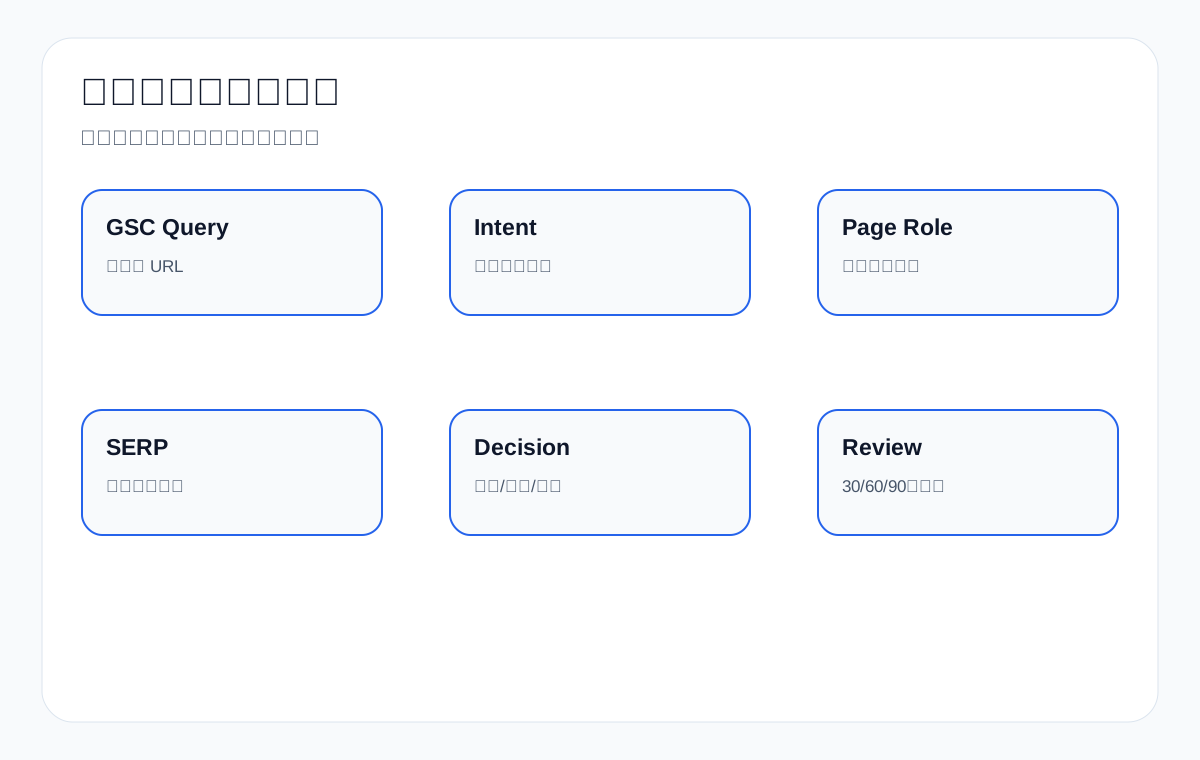
The core of keyword cannibalization diagnosis is not mechanically checking “which pages use the same keyword”, but judging whether multiple pages are competing for the same search intent, which leaves Google unsure which page to show and sends buyers to the wrong page.
For export-oriented businesses, product terms such as custom metal parts, LED flood light, packaging machine, medical probe, cnc machining parts, ceramic dinnerware, waterproof connector, industrial valve supplier and private label activewear manufacturer will naturally appear on category pages, product pages, application pages, article pages and inquiry pages. What really needs diagnosing is this: do these pages have a clear division of work and support one another, or do they compete for the same query and the same purchasing intent?
Benchmark takeaway from top-ranking pages: generic cannibalization guides must land on export website page roles
This page uses keyword cannibalization guides from Ahrefs, Semrush, Moz and others, along with Google Search Console query/page diagnosis logic, as its baseline. Mainstream guides explain what cannibalization is, how to use rankings and queries to find multiple competing URLs, and how to merge or rewrite pages.
The gap in these baselines is that they rarely judge export websites’ category pages, product pages, application pages, resource pages, inquiry pages, multilingual pages and B2B long-tail terms separately. This article adds export page roles, GSC fields, a handling decision table, internal link adjustments and inquiry quality review.
Cannibalization judgment table
| Symptom | Is it certainly cannibalization | What to focus on | Action |
|---|---|---|---|
| Multiple URLs show for the same term | Not necessarily | Whether intent and page roles conflict | Separate intent first |
| The ranking URL switches frequently | Possibly | Which page matches the SERP better | Define the primary page |
| An article competes for category terms | Common cannibalization | Whether the article carries commercial intent | Internal links / merge / rewrite |
| A product page competes for category terms | It depends | Whether it is a product-family term | Strengthen the category page |
| Multiple articles on the same topic | Possibly | Whether they repeatedly answer the same question | Merge or split |
| Pages for different countries use the same term | Not necessarily | Whether language/region differs | Check hreflang |
Step 1: First judge whether it is real cannibalization
Keyword cannibalization is not as simple as “multiple pages containing the same term”. The real problem is multiple pages carrying the same search intent, which leaves Google unsure which page is best to show.
Many pages on an export website will naturally mention the same product term; the key is whether the page roles conflict.
With products such as custom metal parts, LED flood light, packaging machine, medical probe, cnc machining parts, ceramic dinnerware, waterproof connector, industrial valve supplier and private label activewear manufacturer, the point is not whether the product term appears on every page, but whether each page serves a different purchasing stage and a different search intent.
Step 2: Multiple URLs for the same term are not necessarily a problem
Category pages, product pages, article pages and application pages may all mention LED flood light, but they should carry product families, models, questions and scenarios respectively.
If each page has a clear intent, this is not cannibalization but topical coverage.
With products such as custom metal parts, LED flood light, packaging machine, medical probe, cnc machining parts, ceramic dinnerware, waterproof connector, industrial valve supplier and private label activewear manufacturer, the point is not whether the product term appears on every page, but whether each page serves a different purchasing stage and a different search intent.
Step 3: GSC is the first diagnostic entry point
Use GSC to see which URLs correspond to the same query, and which URL has more stable clicks, impressions and position.
If the same query frequently switches between multiple URLs, you need to look deeper.
With products such as custom metal parts, LED flood light, packaging machine, medical probe, cnc machining parts, ceramic dinnerware, waterproof connector, industrial valve supplier and private label activewear manufacturer, the point is not whether the product term appears on every page, but whether each page serves a different purchasing stage and a different search intent.
Export website page role table
| Page type | Suitable for | Not suitable for | Example |
|---|---|---|---|
| Category page | Product family, supplier, manufacturer | Single-question tutorials | LED flood light supplier |
| Product page | Model, specifications, materials | General product-family encyclopedia | M12 waterproof connector |
| Article page | how to, what is, vs | Strong commercial terms | how to choose cnc machining |
| Application page | “for” scenario terms | General company introduction | packaging machine for food |
| Resource page | datasheet, manual, catalog | Broad traffic terms | medical probe datasheet |
| Inquiry page | quote, sample, RFQ | Technical explanation terms | custom metal parts quote |
Step 4: Read SERP intent together
Whether search results currently favor category pages, product pages, articles or tool pages affects our choice of primary page.
If the SERP is full of category pages, an article capturing the term is usually not a good thing.
With products such as custom metal parts, LED flood light, packaging machine, medical probe, cnc machining parts, ceramic dinnerware, waterproof connector, industrial valve supplier and private label activewear manufacturer, the point is not whether the product term appears on every page, but whether each page serves a different purchasing stage and a different search intent.
Step 5: Page roles must be clear
Every page needs a clear role: category, product, application, article, resource, inquiry.
Unclear roles are the most common cause of cannibalization.
With products such as custom metal parts, LED flood light, packaging machine, medical probe, cnc machining parts, ceramic dinnerware, waterproof connector, industrial valve supplier and private label activewear manufacturer, the point is not whether the product term appears on every page, but whether each page serves a different purchasing stage and a different search intent.
Step 6: Category pages and articles conflict most easily
Many export websites use articles to write commercial terms, so the article gains impressions while the category page stays weak.
Articles should explain the question and link to the category page, not replace it.
With products such as custom metal parts, LED flood light, packaging machine, medical probe, cnc machining parts, ceramic dinnerware, waterproof connector, industrial valve supplier and private label activewear manufacturer, the point is not whether the product term appears on every page, but whether each page serves a different purchasing stage and a different search intent.
Handling decision table
| Situation | Recommended action | Notes | Review |
|---|---|---|---|
| Highly duplicate content | Merge into the primary page | Keep valuable sections | Watch query growth for the primary page |
| Different intents mixed on one page | Split or rewrite | One main intent per page | Watch URL matching |
| An article competes with a commercial page | Strengthen the commercial page and change internal links | Make the article a supporting page | Watch category/product clicks |
| Outdated article | Update or 301 | Do not keep thin pages | Watch indexing and paths |
| Multilingual mismatch | Fix hreflang/canonical | Do not merge by mistake | Watch country URLs |
| Duplicate product variants | Consolidate into one main product page | Keep important specifications | Watch product inquiries |
Step 7: Product pages and category pages should be separated by level
Product pages carry models and specifications, while category pages carry product families and selection.
waterproof connector supplier fits a category page better, while M12 4 pin waterproof connector fits a product page better.
With products such as custom metal parts, LED flood light, packaging machine, medical probe, cnc machining parts, ceramic dinnerware, waterproof connector, industrial valve supplier and private label activewear manufacturer, the point is not whether the product term appears on every page, but whether each page serves a different purchasing stage and a different search intent.
Step 8: Duplicate articles should be merged
When multiple articles answer the same question, they scatter topical signals and internal links.
They can be merged into one stronger guide and then tidied up with 301s or internal links.
With products such as custom metal parts, LED flood light, packaging machine, medical probe, cnc machining parts, ceramic dinnerware, waterproof connector, industrial valve supplier and private label activewear manufacturer, the point is not whether the product term appears on every page, but whether each page serves a different purchasing stage and a different search intent.
Step 9: Judge historical content by its historical value
Cannibalization cannot be handled by simple deletion. Look at traffic, backlinks, inquiries, indexing and content value.
Valuable sections should be merged into the primary page.
With products such as custom metal parts, LED flood light, packaging machine, medical probe, cnc machining parts, ceramic dinnerware, waterproof connector, industrial valve supplier and private label activewear manufacturer, the point is not whether the product term appears on every page, but whether each page serves a different purchasing stage and a different search intent.
GSC cannibalization diagnosis fields
| Field | How to read it | Risk signal | Action |
|---|---|---|---|
| Query | Which URLs appear for the same query | URLs change frequently | Confirm the primary page |
| Page | Which queries the page gets | Muddled intents | Rewrite the topic |
| CTR | Many impressions, few clicks | Title/page mismatch | Change title and description |
| Position | Multiple URLs fluctuate | Signals are scattered | Merge or add internal links |
| Country | Country mismatch | Multilingual issue | Fix hreflang |
| Date | Timing of changes | Anomaly after a redesign | Check URL changes |
Step 10: Internal link anchor text amplifies confusion
If all articles use the same anchor text pointing to different pages, it is harder for search systems to identify the primary page.
Anchor text and target URLs should be unified according to page roles.
With products such as custom metal parts, LED flood light, packaging machine, medical probe, cnc machining parts, ceramic dinnerware, waterproof connector, industrial valve supplier and private label activewear manufacturer, the point is not whether the product term appears on every page, but whether each page serves a different purchasing stage and a different search intent.
Step 11: Titles and H1s should also differ
When multiple page titles all use the same core term, the confusion gets worse.
Titles should reflect differences in intent, such as supplier, how to choose, for warehouse, datasheet.
With products such as custom metal parts, LED flood light, packaging machine, medical probe, cnc machining parts, ceramic dinnerware, waterproof connector, industrial valve supplier and private label activewear manufacturer, the point is not whether the product term appears on every page, but whether each page serves a different purchasing stage and a different search intent.
Step 12: Merging is not the only option
Handling options include merging, rewriting, splitting, adjusting internal links, changing titles, noindexing low-value pages and 301 redirecting old pages.
Decide based on page value and intent.
With products such as custom metal parts, LED flood light, packaging machine, medical probe, cnc machining parts, ceramic dinnerware, waterproof connector, industrial valve supplier and private label activewear manufacturer, the point is not whether the product term appears on every page, but whether each page serves a different purchasing stage and a different search intent.
90-day review table
| Timing | Search signal | Page signal | Business signal |
|---|---|---|---|
| 7 days | Whether the main URL is crawled | Whether 301s/internal links take effect | None |
| 30 days | Whether queries concentrate on the main URL | CTR and impression changes | Path improvement |
| 60 days | Whether ranking fluctuation decreases | Page dwell time and bounces | Inquiry relevance |
| 90 days | Whether topic coverage is stable | Supporting page internal links | CRM quality |
| Ongoing | Whether new content overlaps | Content update plan | Sales feedback |
Step 13: Do not misjudge multilingual and regional pages
The same term appearing on pages for different languages/regions is not necessarily cannibalization; it may be an hreflang or region-matching issue.
First judge whether the language and region page groups are correct.
With products such as custom metal parts, LED flood light, packaging machine, medical probe, cnc machining parts, ceramic dinnerware, waterproof connector, industrial valve supplier and private label activewear manufacturer, the point is not whether the product term appears on every page, but whether each page serves a different purchasing stage and a different search intent.
Step 14: Ecommerce filter pages can also cannibalize
Category pages, filter pages, tag pages and search pages may all compete for the same term.
Keep only valuable filter pages and control indexing for the rest.
With products such as custom metal parts, LED flood light, packaging machine, medical probe, cnc machining parts, ceramic dinnerware, waterproof connector, industrial valve supplier and private label activewear manufacturer, the point is not whether the product term appears on every page, but whether each page serves a different purchasing stage and a different search intent.
Step 15: AI search also needs a clear primary page
If multiple pages on a website cover the same topic with no primary/secondary hierarchy, AI answers may cite them inconsistently or describe them in a muddled way.
The relationship between primary pages, supporting pages and internal links must be clear.
With products such as custom metal parts, LED flood light, packaging machine, medical probe, cnc machining parts, ceramic dinnerware, waterproof connector, industrial valve supplier and private label activewear manufacturer, the point is not whether the product term appears on every page, but whether each page serves a different purchasing stage and a different search intent.
Cannibalization judgment table
| Symptom | Is it certainly cannibalization | What to focus on | Action |
|---|---|---|---|
| Multiple URLs show for the same term | Not necessarily | Whether intent and page roles conflict | Separate intent first |
| The ranking URL switches frequently | Possibly | Which page matches the SERP better | Define the primary page |
| An article competes for category terms | Common cannibalization | Whether the article carries commercial intent | Internal links / merge / rewrite |
| A product page competes for category terms | It depends | Whether it is a product-family term | Strengthen the category page |
| Multiple articles on the same topic | Possibly | Whether they repeatedly answer the same question | Merge or split |
| Pages for different countries use the same term | Not necessarily | Whether language/region differs | Check hreflang |
Step 16: Review whether the main URL is stable
After handling, do not look only at a single day’s rankings; look at whether queries concentrate over 30–90 days, whether CTR improves and whether the inquiry path is clear.
Fixing cannibalization takes time.
With products such as custom metal parts, LED flood light, packaging machine, medical probe, cnc machining parts, ceramic dinnerware, waterproof connector, industrial valve supplier and private label activewear manufacturer, the point is not whether the product term appears on every page, but whether each page serves a different purchasing stage and a different search intent.
Step 17: Common mistake one: deleting pages as soon as you see a repeated term
A repeated term does not equal cannibalization. Look at intent, page roles, GSC and the SERP first.
Deleting by mistake can cost long-tail coverage.
With products such as custom metal parts, LED flood light, packaging machine, medical probe, cnc machining parts, ceramic dinnerware, waterproof connector, industrial valve supplier and private label activewear manufacturer, the point is not whether the product term appears on every page, but whether each page serves a different purchasing stage and a different search intent.
Step 18: Common mistake two: every page trying to rank for the main term
If every page competes for the main term, there ends up being no primary page.
Build one primary page and make the rest supporting pages.
With products such as custom metal parts, LED flood light, packaging machine, medical probe, cnc machining parts, ceramic dinnerware, waterproof connector, industrial valve supplier and private label activewear manufacturer, the point is not whether the product term appears on every page, but whether each page serves a different purchasing stage and a different search intent.
Export website page role table
| Page type | Suitable for | Not suitable for | Example |
|---|---|---|---|
| Category page | Product family, supplier, manufacturer | Single-question tutorials | LED flood light supplier |
| Product page | Model, specifications, materials | General product-family encyclopedia | M12 waterproof connector |
| Article page | how to, what is, vs | Strong commercial terms | how to choose cnc machining |
| Application page | “for” scenario terms | General company introduction | packaging machine for food |
| Resource page | datasheet, manual, catalog | Broad traffic terms | medical probe datasheet |
| Inquiry page | quote, sample, RFQ | Technical explanation terms | custom metal parts quote |
Step 19: Common mistake three: changing only the title, not the content
Even if the titles are differentiated, the body text is still mixed, so the problem is not fully solved.
Body text, internal links, FAQ and CTA must all be consistent.
With products such as custom metal parts, LED flood light, packaging machine, medical probe, cnc machining parts, ceramic dinnerware, waterproof connector, industrial valve supplier and private label activewear manufacturer, the point is not whether the product term appears on every page, but whether each page serves a different purchasing stage and a different search intent.
Step 20: Common mistake four: not handling old URLs after merging
After merging content, handle old URLs, internal links and the sitemap.
Otherwise the old pages may still interfere.
With products such as custom metal parts, LED flood light, packaging machine, medical probe, cnc machining parts, ceramic dinnerware, waterproof connector, industrial valve supplier and private label activewear manufacturer, the point is not whether the product term appears on every page, but whether each page serves a different purchasing stage and a different search intent.
Keyword cannibalization diagnosis checklist
- Export target queries and their corresponding pages from GSC
- Identify the impressions and clicks of multiple URLs under the same query
- Judge which page type the SERP currently favors
- Label each URL with a page role
- Judge whether it is the same intent or complementary coverage
- Choose the primary page and supporting pages
- Merge highly duplicate content
- Rewrite pages with mixed intents
- Adjust internal link anchor text and target URLs
- Handle old URLs, sitemap and canonical
- Review at 30/60/90 days whether queries have concentrated
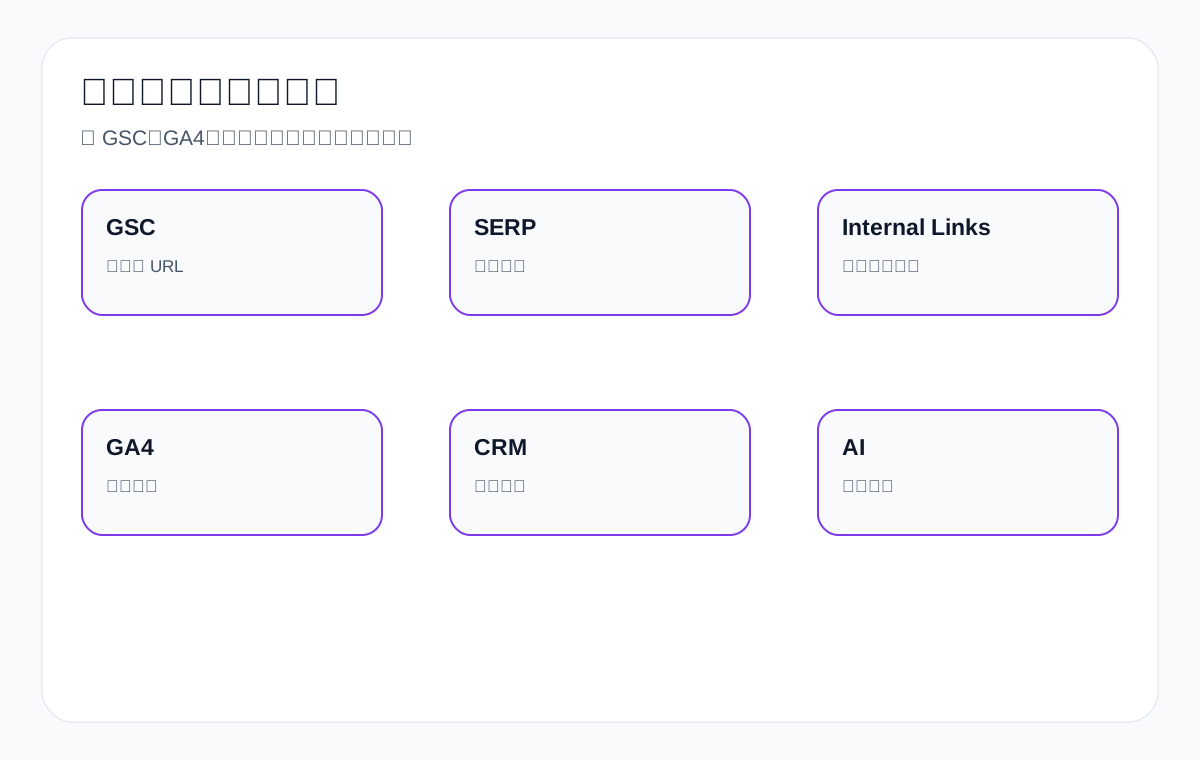
- Combine with GA4/CRM to see changes in inquiry quality
Cannibalization judgment table
| Symptom | Is it certainly cannibalization | What to focus on | Action |
|---|---|---|---|
| Multiple URLs show for the same term | Not necessarily | Whether intent and page roles conflict | Separate intent first |
| The ranking URL switches frequently | Possibly | Which page matches the SERP better | Define the primary page |
| An article competes for category terms | Common cannibalization | Whether the article carries commercial intent | Internal links / merge / rewrite |
| A product page competes for category terms | It depends | Whether it is a product-family term | Strengthen the category page |
| Multiple articles on the same topic | Possibly | Whether they repeatedly answer the same question | Merge or split |
| Pages for different countries use the same term | Not necessarily | Whether language/region differs | Check hreflang |
Export website page role table
| Page type | Suitable for | Not suitable for | Example |
|---|---|---|---|
| Category page | Product family, supplier, manufacturer | Single-question tutorials | LED flood light supplier |
| Product page | Model, specifications, materials | General product-family encyclopedia | M12 waterproof connector |
| Article page | how to, what is, vs | Strong commercial terms | how to choose cnc machining |
| Application page | “for” scenario terms | General company introduction | packaging machine for food |
| Resource page | datasheet, manual, catalog | Broad traffic terms | medical probe datasheet |
| Inquiry page | quote, sample, RFQ | Technical explanation terms | custom metal parts quote |
Handling decision table
| Situation | Recommended action | Notes | Review |
|---|---|---|---|
| Highly duplicate content | Merge into the primary page | Keep valuable sections | Watch query growth for the primary page |
| Different intents mixed on one page | Split or rewrite | One main intent per page | Watch URL matching |
| An article competes with a commercial page | Strengthen the commercial page and change internal links | Make the article a supporting page | Watch category/product clicks |
| Outdated article | Update or 301 | Do not keep thin pages | Watch indexing and paths |
| Multilingual mismatch | Fix hreflang/canonical | Do not merge by mistake | Watch country URLs |
| Duplicate product variants | Consolidate into one main product page | Keep important specifications | Watch product inquiries |
GSC cannibalization diagnosis fields
| Field | How to read it | Risk signal | Action |
|---|---|---|---|
| Query | Which URLs appear for the same query | URLs change frequently | Confirm the primary page |
| Page | Which queries the page gets | Muddled intents | Rewrite the topic |
| CTR | Many impressions, few clicks | Title/page mismatch | Change title and description |
| Position | Multiple URLs fluctuate | Signals are scattered | Merge or add internal links |
| Country | Country mismatch | Multilingual issue | Fix hreflang |
| Date | Timing of changes | Anomaly after a redesign | Check URL changes |
90-day review table
| Timing | Search signal | Page signal | Business signal |
|---|---|---|---|
| 7 days | Whether the main URL is crawled | Whether 301s/internal links take effect | None |
| 30 days | Whether queries concentrate on the main URL | CTR and impression changes | Path improvement |
| 60 days | Whether ranking fluctuation decreases | Page dwell time and bounces | Inquiry relevance |
| 90 days | Whether topic coverage is stable | Supporting page internal links | CRM quality |
| Ongoing | Whether new content overlaps | Content update plan | Sales feedback |
Supplement: how cannibalization shows up in different export scenarios
Keyword cannibalization on export websites is often not obvious at a glance. A custom metal parts website may have a “materials page” and a “process page” both competing for the same custom metal fabrication query; an LED flood light website may have a “category page”, a “warehouse application page” and a “selection article” all competing for LED flood light supplier; a packaging machine website may have multiple articles answering how to choose packaging machine, with no clear primary guide; a medical probe website may have product pages, resource pages and compliance pages all covering the same probe compatibility topic; a waterproof connector website may have attribute pages, category pages and product pages all competing for terms like IP67 connector.
These situations cannot be solved with a single action. If the materials page and the process page have different intents, rewrite their titles and internal links so they carry material and process respectively; if the category page and the application page compete, make clear that the category page carries the product family and the application page carries the scenario; when multiple articles repeat each other, merge them into one primary guide and move over valuable tables, FAQs and case leads from the historical content. The key to diagnosis is whether the pages are really competing for the same purchasing question, not just keyword overlap.
Export cannibalization scenario judgment table
| Scenario | Possible conflict | Primary page | Supporting page |
|---|---|---|---|
| Product family term | Category page vs article page | Category page | Selection article |
| Model/specification term | Product page vs category page | Product page | Category page recommendation block |
| Application scenario term | Application page vs product page | Application page | Related product pages |
| Technical question term | Multiple articles | Complete guide | FAQ/resource page |
| Resource download term | PDF vs HTML page | Resource description page | PDF file |
Supplement: division of work after handling cannibalization
Handling keyword cannibalization usually requires content, technical, operations and sales to work together. The content owner merges or rewrites pages, the technical owner handles 301s, canonical, noindex, the sitemap and old URLs, the operations owner reviews GSC/GA4, and the sales owner reports back on whether inquiries are more relevant after the change. Without a division of work, cannibalization handling easily stalls at the stage of “knowing there is a problem”.
For example, if an industrial valve supplier website decides to merge old “valve material guide” articles into one primary guide, the content owner organizes the materials, operating conditions and FAQ, the technical owner handles the old URLs, operations updates internal links and the sitemap, and sales watches whether inquiries more clearly include medium, pressure, temperature and material. Only then is the work not simply deleting articles, but making the page system clearer.
Cannibalization handling division of work table
| Role | Responsibility | Deliverable | Review time |
|---|---|---|---|
| Content | Merge/rewrite/split | Primary and supporting pages | Before launch |
| Technical | 301, canonical, sitemap | URL handling list | 7 days |
| Operations | GSC/GA4/internal links | Query and path report | 30–60 days |
| Sales | Inquiry quality feedback | Changes in customer questions | 60–90 days |
Supplement: when merging, rewriting, splitting and keeping are appropriate
Cannibalization handling cannot have only one answer, “merge”. Merging suits the case where multiple pages answer the same question, the content is highly duplicate, and one page is clearly better suited to be the primary page; rewriting suits a page that has value in itself but whose title, body text and internal links have mixed in another intent; splitting suits a page that covers a product family, an application scenario, a technical question and an inquiry action at the same time, leaving the topic too scattered; keeping suits the case where multiple pages share keywords but have different intents, complementary paths and stable GSC data.
For example, if a private label activewear manufacturer page covers fabric, sampling, sizing, packaging, brand customization and supplier selection at the same time, it can be kept as the main service/category page and split into supporting content such as fabric guide, sample process, size chart and private label packaging. If a ceramic dinnerware website has several short articles on “how to choose ceramic dinnerware”, they should be merged into one complete guide that links to the series pages and the inquiry page. If a waterproof connector website has both a product page and an IP rating article mentioning IP67 connector, as long as the product page carries the model and the article explains the standard, they do not necessarily have to be merged.
Handling option selection table
| Option | Suitable when | Not suitable when | Key action |
|---|---|---|---|
| Merge | Duplicate content with the same intent | Pages with complementary intents | Keep strong content and handle old URLs |
| Rewrite | Page has value but the topic is muddled | Page has no value at all | Redefine title, H2s, FAQ, internal links |
| Split | One page mixes multiple intents | Too little content to support it | Build a primary page and supporting pages |
| Keep | Same term, different intents | URLs frequently compete | Strengthen differentiation and internal links |
| Reduce indexing | Low-value duplicate pages | Has backlink or inquiry value | Assess before acting |
Supplement: new problems to avoid when handling cannibalization
Handling cannibalization most easily creates three new problems. First, after merging, the old URL does not redirect correctly or internal links still point to the old page, so search engines and users keep entering the old path; second, the primary page becomes too long but poorly structured, so even though the content is merged, the intent is still muddled; third, deleting supporting pages loses long-tail coverage, so traffic for question terms and application terms declines.
Therefore, back up and record old page data before handling; during handling, keep valuable sections, tables, FAQs, images and backlink targets; after handling, update internal links, the sitemap, canonical, titles and related page recommendations. When reviewing, look not only at the main term but also at long-tail terms, product page paths, inquiry quality and sales feedback.
Risk control table
| Risk | Cause | Prevention | Review |
|---|---|---|---|
| Old URL loses value | No handover was done | 301 or a clear replacement | Check GSC and logs |
| Primary page too scattered | Mechanical merging | Rework the structure and table of contents | Check query matching |
| Long-tail decline | Supporting pages deleted by mistake | Keep supporting content | Check impressions for question terms |
| Confusing internal links | Old anchor text not changed | Unify target pages | Crawl internal links |
| Inquiry path broken | Commercial page weakened | Keep CTAs and product recommendations | Check GA4/CRM |
FAQ: common questions about keyword cannibalization
Does having the same keyword on multiple pages mean cannibalization?
Not necessarily. It depends on whether search intent and page roles conflict.
Does cannibalization always require merging pages?
Not necessarily. You can also rewrite, split, adjust internal links, change titles or control indexing of low-value pages.
How do you find cannibalization in GSC?
Look at which pages get impressions and clicks under the same query, and whether the URL switches frequently.
What should I do if an article outranks the category page?
Usually strengthen the category page, turn the article into supporting content and point internal links to the category page.
Is it normal for both a product page and a category page to rank?
If they carry model terms and product family terms respectively, that is a normal division of work; if they both compete for the same supplier term, you need to diagnose it.
Do multilingual pages count as cannibalization?
Not necessarily. Check hreflang, canonical and regional intent first.
Will merging old articles lose traffic?
If done properly, keeping valuable content and setting up redirects and internal links usually helps concentrate signals.
How long after handling should I check the results?
Usually observe queries, URL concentration, clicks, paths and inquiry quality over 30–90 days.
Supplement: the criteria for finishing the judgment
Cannibalization handling is complete not because the number of pages has dropped, but because target queries have a more stable main URL, supporting pages bring complementary long-tail traffic, user paths are clearer, the inquiries sales receives are closer to the target products, and future page updates have a clear basis and a list of review metrics.
Conclusion: the goal of keyword cannibalization diagnosis is to give every page its own job
When handling keyword cannibalization, export websites do not delete every repeated term; they make the category pages, product pages, application pages, article pages and inquiry pages related to products such as custom metal parts, LED flood light, packaging machine, medical probe, cnc machining parts, ceramic dinnerware, waterproof connector, industrial valve supplier and private label activewear manufacturer each carry a clear role. The clearer the division of work between pages, the easier it is for search systems to identify the primary page, and the easier it is for buyers to enter the right path.
Official sources and the boundaries of keyword competition diagnosis
Keyword cannibalization should be judged by queries, pages, intent and canonicalization signals. You cannot conclude that two pages compete just because they mention the same term.
| Official source | What it can support | Boundaries not to cross |
|---|---|---|
| Search Console Performance report | See by query and page whether the same query rotates across multiple pages | Without query rows, competition cannot be determined |
| Google: Consolidate duplicate URLs | Judge whether similar pages need canonicalization or merging | canonical is not an all-purpose substitute for content strategy |
| Google: Helpful content | Judge whether a page has an independent user task and information gain | Changing only the title does not resolve intent conflict |
| Google: SEO Starter Guide | Check whether titles, links and page structure are clear | After basic changes you still need data observation |
| Google: Ranking systems guide | Understand that the system weighs multiple pages and signals together | Cannot guarantee that rankings will rise steadily after merging |
Diagnosis acceptance table
| Check item | Fields to record | How to write during low-data periods |
|---|---|---|
| Indexing basics | index/follow, canonical, sitemap, robots, HTTP status code | Write only the currently accessible state, not effect conclusions |
| Page evidence | Title, body text, images, links, structured data, update time | If material is missing, list the gaps; do not invent cases |
| Search data | GSC query/page/date/country/device | If GSC has zero rows, write zero rows; do not extrapolate rankings |
| Conversion observation | GA4 events, forms, downloads, inquiry entry points | If there are no events, fix data collection first, then judge |
Continue reading this SEO series
If you are systematically working through SEO for export websites, consider continuing with the following articles. First sort out the relationships between crawling, indexing, content, links and review, then decide which page to change next.
- URL Inspection in practice: how to read the page version Google currently sees
- How to build a content refresh strategy: telling apart content decay, demand shifts and old article updates
- How to do content SEO: a guide to search intent, information gain and indexable content
- How to do keyword research: product terms, search intent and page mapping for export websites
- How to mine competitor keywords: from competitor pages and English product terms to inquiry opportunities
- How to choose keyword tools: select by diagnostic scenario, not by working through a tool list
{
“@context”: “https://schema.org”,
“@type”: “FAQPage”,
“mainEntity”: [
{
“@type”: “Question”,
“name”: “Does cannibalization always require merging pages?”,
“acceptedAnswer”: {
“@type”: “Answer”,
“text”: “Not necessarily. You can also rewrite, split, adjust internal links, change titles or control indexing of low-value pages.”
}
},
{
“@type”: “Question”,
“name”: “How do you find cannibalization in GSC?”,
“acceptedAnswer”: {
“@type”: “Answer”,
“text”: “Look at which pages get impressions and clicks under the same query, and whether the URL switches frequently.”
}
},
{
“@type”: “Question”,
“name”: “What should I do if an article outranks the category page?”,
“acceptedAnswer”: {
“@type”: “Answer”,
“text”: “Usually strengthen the category page, turn the article into supporting content and point internal links to the category page.”
}
},
{
“@type”: “Question”,
“name”: “Is it normal for both a product page and a category page to rank?”,
“acceptedAnswer”: {
“@type”: “Answer”,
“text”: “If they carry model terms and product family terms respectively, that is a normal division of work; if they both compete for the same supplier term, you need to diagnose it.”
}
},
{
“@type”: “Question”,
“name”: “Do multilingual pages count as cannibalization?”,
“acceptedAnswer”: {
“@type”: “Answer”,
“text”: “Not necessarily. Check hreflang, canonical and regional intent first.”
}
}
]
}
This page is machine-translated from the Simplified Chinese version and awaiting human review. It has not yet been proofread.