Keyword Mapping is the process of assigning keyword research results to specific URLs. It is not about building a spreadsheet; it is about answering a more critical question: which page should be the one to carry a given English product term, material term, application term, problem term, country term, supplier term, or quote term? If this step is skipped, an export website easily ends up with keyword cannibalization, mixed page intent, product pages and article pages competing with each other, and blurred boundaries between category pages and industry pages — and in the end, every page covers a little of everything but no page is strong enough.
For example, custom metal parts, cnc machining parts, custom CNC parts, aluminum machined parts, and metal fabrication parts all look related, but they should not all be mechanically split into separate articles. LED flood light, outdoor flood light, warehouse lighting, and IP65 vs IP66 flood light are not the same type of page either. The job of Keyword Mapping is to first judge, based on the SERP and purchasing intent, which terms should be merged into the same page and which should be split into product pages, category pages, industry application pages, FAQs, or technical articles.
Benchmarking against the Top1 and authoritative references: what SEO Brothers gets right
SEO Brothers’ Keyword Mapping guide is one of the current strong benchmarks. It defines keyword mapping as assigning keywords to specific pages based on search intent, and stresses that keyword research tells you what to target while keyword mapping decides which page carries what. It also emphasizes that mapping lets teams know each page’s priority keywords, guides internal link anchor text, and avoids duplicate content and new content dispersing signals against old content. Its process includes keyword research, checking current relevance, building a mapping document, matching intent to page type, and handling scenarios such as existing sites and redesigns.
Keyword cannibalization guides from Wix, Search Engine Journal, Backlinko, and others also stress that when multiple pages target the same or similar keywords and the same search intent, they may split ranking signals, confuse users, and let the wrong page rank. Their strength is explaining cannibalization and how to fix it; their gap is that most examples lean toward generic websites and do not break down English product terms, product pages, category pages, industry application pages, technical articles, inquiry pages, and GSC reviews into an executable matrix for export manufacturers in China.
| Benchmark | What it gets right | Common gaps | How this site goes further |
|---|---|---|---|
| SEO Brothers Keyword Mapping | Clear definition, complete process, emphasis on keywords to pages, internal links, and avoiding duplication | Leans toward generic project management and SEO spreadsheets | Adds an export product-term-to-page-type matrix and inquiry paths |
| Wix Cannibalization Guide | Stresses that multiple pages on one site competing for the same intent hurts experience and performance | Insufficient boundaries between export product pages and category pages | Adds handling for competition among product pages, category pages, and industry pages |
| Search Engine Journal | Covers identifying and eliminating keyword cannibalization | Insufficient scenarios for separating commercial pages from article pages | Adds GSC judgment of multiple URLs for the same term and primary URL selection |
| Backlinko Keyword Cannibalization | Stresses maintaining a keyword-to-URL map to prevent overlap | Lacks export B2B product-term cases | Demonstrates with custom metal parts, LED flood light, and more |
Keyword Mapping is not keyword grouping
Keyword grouping merely puts similar terms together; Keyword Mapping goes further and decides which URL carries those terms. Many export companies have keyword lists but no mapping, so content keeps growing and the structure keeps getting messier.
| Item | Keyword grouping | Keyword Mapping |
|---|---|---|
| Core question | Which terms are similar | Which page carries which intent |
| Output | Term groups / topic paths | URL, page type, primary term, secondary terms, internal links |
| Basis for judgment | Semantic similarity, word roots, search volume | SERP page type, purchasing stage, page role |
| Risk | Grouping without implementation | It also goes stale if not maintained well |
| Value | Organizing a keyword list | Guiding page creation, updates, consolidation, and internal linking |
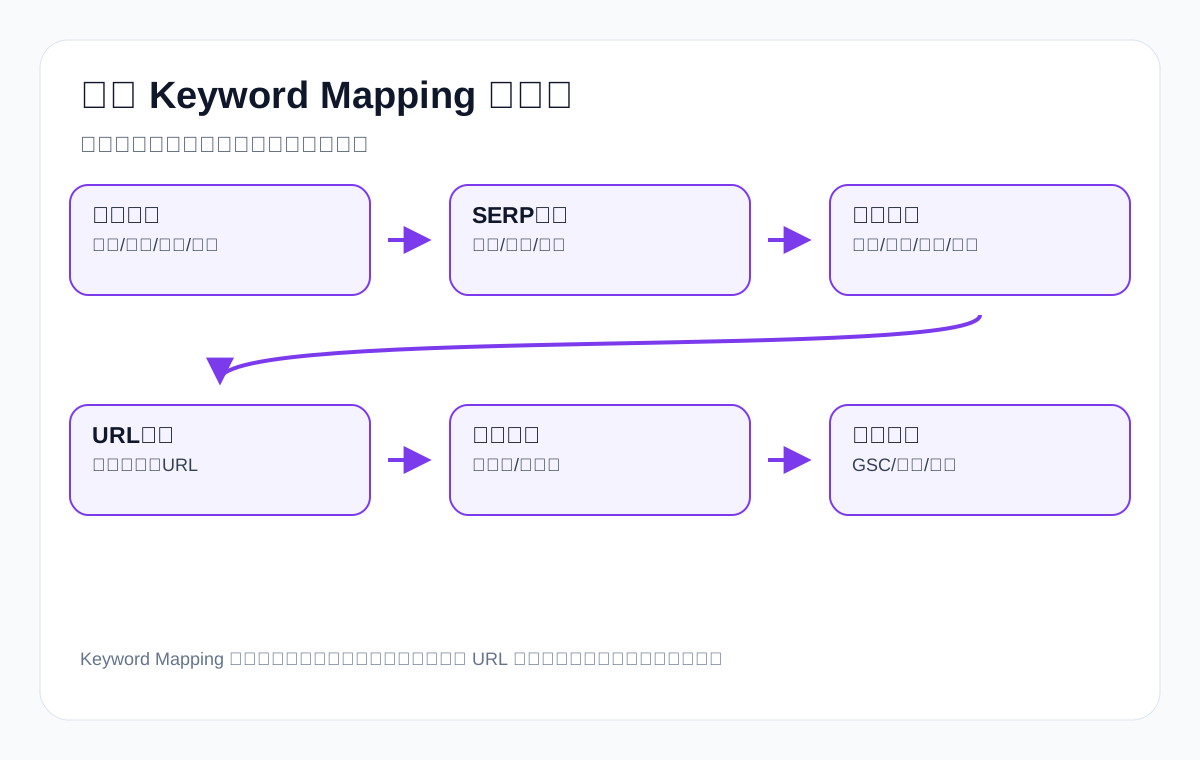
The 8-step process of keyword mapping for export websites
Step 1: Build an English product term pool
The pool should at least include primary product terms, synonyms, material terms, process terms, application terms, industry terms, country terms, supplier terms, quote terms, question terms, and model terms. Do not collect only one primary term.
Step 2: Judge SERP intent
For every core term, look at the current Google results: are the top pages product pages, category pages, tutorials, comparisons, videos, images, platform pages, or brand pages? The page type determines the mapping direction.
Step 3: Merge the same search intent
If the Top10 results for several terms overlap heavily, the page type is the same, and the user question is the same, they should usually be carried by the same URL.
Step 4: Split different purchasing stages
Definition, selection, suppliers, price, application, certification, installation, maintenance, and inquiry materials may need different pages.
Step 5: Choose the primary URL
If several pages already compete for the same intent, choose as the primary URL the one with the strongest content, the best historical performance, the most suitable URL, and the clearest conversion path.
Step 6: Handle weak pages
Weak pages can be merged, redirected, rewritten for a different intent, set to noindex, or kept for observation. Do not keep expanding all of them.
Step 7: Rebuild internal links
Anchor text and in-body links on all related pages should point to the primary URL, and supporting pages should link back to the primary URL while explaining the relationship.
Step 8: Review with GSC and inquiries
Mapping is not a one-off spreadsheet. After publishing, review queries, URLs, CTR, rankings, inquiry paths, and whether multiple URLs still compete for the same term.
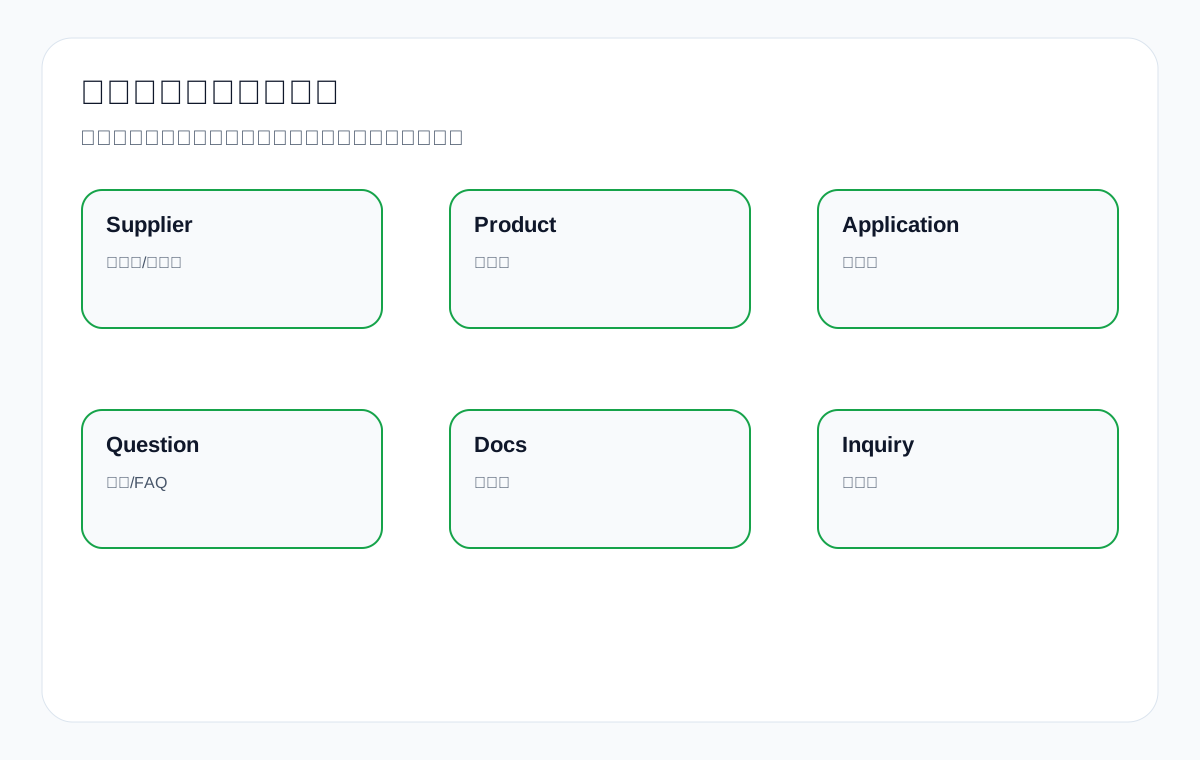
Export product terms to page type matrix
| Term type | Example | Recommended page | Page task |
|---|---|---|---|
| Primary product term | LED flood light | Category page / product series page | Carry commercial and selection needs |
| Material/process term | cnc machining parts, aluminum machined parts | Capability page / technical guide | Explain process, materials, precision, and quote materials |
| Application term | warehouse lighting, food powder packaging | Industry application page | Carry scenario questions |
| Question term | IP65 vs IP66 flood light | FAQ / technical article | Answer judgment and comparison |
| Supplier term | industrial valve supplier | Commercial landing page / category page | Show supply capability and inquiry path |
| Quote term | custom metal parts quote | Inquiry materials page / FAQ | Explain what materials are needed |
| Country term | LED flood light supplier Germany | Market page or localized section | Add certification, logistics, and market demand |
| Brand customization term | private label activewear manufacturer | OEM/ODM capability page | Explain fabric, samples, MOQ, packaging, and delivery |
How to judge whether two terms should be merged or split
| Judgment dimension | Suitable for merging into one page | Suitable for splitting into different pages |
|---|---|---|
| SERP overlap | Heavy Top10 overlap, same page type | Clearly different top results |
| Search intent | Users want to solve the same problem | One is looking for a supplier, the other for a tutorial |
| Purchasing stage | Both are learning or both are comparing | One is learning definitions, the other is preparing to request a quote |
| Content depth | One page can cover it completely | Covering it on one page would be too broad |
| Conversion path | The user’s next step is the same | Different next steps, e.g., viewing a product vs downloading materials |
| Internal links | Can serve as H2/FAQ under the same topic | Needs a primary/secondary page or different hubs |
Keyword cannibalization is not “the same term appearing,” but the same intent competing for the same position
The same keyword appearing on multiple pages is not necessarily cannibalization. It is normal for a product page, a category page, and an article page to all mention waterproof connector. The real problem is when multiple pages try to rank for the same primary intent, making it hard for the search system to judge which URL fits best.
| Situation | Cannibalization? | Explanation | Handling |
|---|---|---|---|
| Category page and article page both mention LED flood light | Not necessarily | If the category page carries commercial terms and the article covers IP comparison | Use internal links to make primary/secondary clear |
| Two articles both cover IP65 vs IP66 | High risk | Same question repeated | Merge or redefine boundaries |
| Product page and industry page both mention warehouse lighting | Not necessarily | Product page covers specs, industry page covers application | Cross-link and differentiate titles |
| Three pages all compete for custom metal parts manufacturer | High risk | Commercial primary term repeated | Choose a primary URL, redirect weak pages or change their intent |
| FAQ and article both answer quote materials | Depends | If the FAQ answers briefly and the article goes deep, they can coexist | FAQ links to the full guide |
How GSC uncovers keyword cannibalization
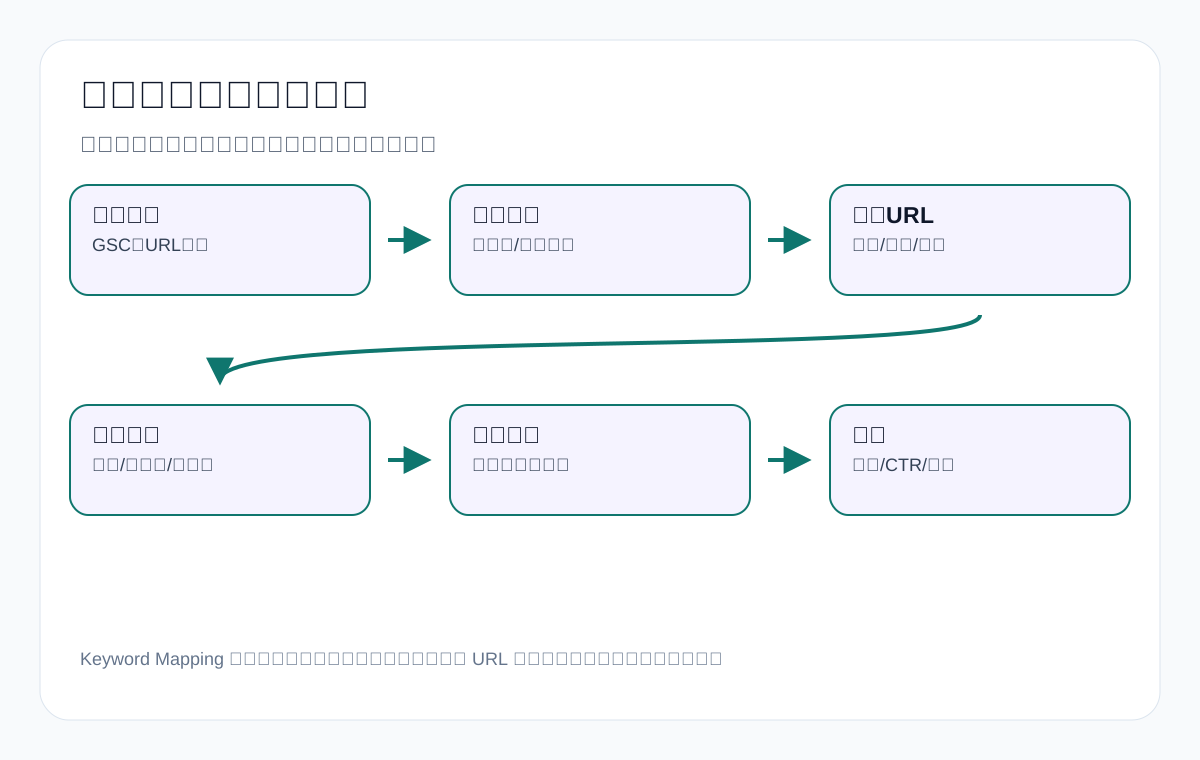
Google Search Console is the core data source for finding cannibalization. The method is to check which URLs get impressions and clicks for each query. If the same query keeps switching between multiple URLs, and those pages share the same intent, it needs handling.
| GSC signal | Possible meaning | Next step |
|---|---|---|
| One query maps to multiple URLs | Possible cannibalization or legitimate multiple intents | Check the SERP and page types |
| The ranking URL keeps changing | Google is unsure of the main page | Choose a primary URL, adjust internal links |
| A commercial page is replaced by an article | The article took over a commercial term | The article links to the commercial page; the commercial page gets more content |
| CTR is scattered | Multiple pages get impressions but clicks are weak | Merge title intent or strengthen the main page |
| The inquiry page gets no impressions while the article does | The conversion path is broken | The article guides users to the inquiry page or product page |
Export case 1: how to map the custom metal parts term family
| Keyword | Intent | Page type | Recommended URL role |
|---|---|---|---|
| custom metal parts | Looking for custom metal parts capability | Capability page / category page | Primary URL |
| cnc machining parts | Looking for CNC machined parts | Process capability page | Sub-capability page |
| aluminum machined parts | Material + process | Material subpage or section | Decide on splitting based on the SERP |
| custom metal parts quote | Quote materials | FAQ / quote materials page | Inquiry support page |
| metal parts surface finish | Technical judgment | Technical article | Support page |
| precision metal parts manufacturer | Supplier commercial term | Commercial landing page | May be merged into the main capability page |
The key here is: do not write every term as a separate article. The main capability page should carry the commercial primary term, the process page carries CNC, the material page or article carries material judgment, and the quote materials page carries pre-inquiry questions. Connect them with internal links so they do not compete for the primary term.
Export case 2: how to map the LED flood light term family
| Keyword | Intent | Page type | Action |
|---|---|---|---|
| LED flood light manufacturer | Looking for a supplier | Category / commercial page | Main page |
| outdoor LED flood light | Outdoor product selection | Category page or subcategory | Can be merged or split into a subcategory |
| IP65 vs IP66 flood light | Technical comparison | Technical article / FAQ | Links to the category page |
| warehouse lighting | Application scenario | Industry application page | Links to the product page |
| LED flood light wattage guide | Selection question | Guide article | Supports the category page |
Export case 3: how to map the packaging machine term family
| Keyword | Intent | Page type | Notes |
|---|---|---|---|
| packaging machine | Broad product / supplier | Main category page | Do not carry every material subdivision |
| powder packaging machine | Material scenario | Subcategory / industry page | Cover powder flowability and metering |
| small business packaging machine | Small-batch needs | Selection page / FAQ | Compare semi-automatic and fully automatic |
| food packaging machine | Industry application | Industry page | Add hygiene, cleaning, and materials |
| packaging machine price | Price judgment | Quote factors page | Do not write fake fixed prices |
Which fields a Keyword Mapping table should include
| Field | Description | Example |
|---|---|---|
| Keyword | Target keyword | waterproof connector |
| Intent | Informational, commercial, comparison, quote, application | Commercial + selection |
| Page Type | Product page, category page, article page, FAQ | Category page |
| Mapped URL | The URL that carries it | /waterproof-connectors/ |
| Primary/Secondary | Primary or secondary term | Primary |
| SERP Notes | Top page types and gaps | Top1 has a spec table and FAQ |
| Current URL | The URL currently ranking | Old article |
| Action | Create, update, merge, keep, noindex | Strengthen the category page, add article internal links |
| Internal Links | Source page and anchor text | IP67 guide → waterproof connector |
| Review Date | Review time | 30/60/90 days |
The 6 actions for fixing cannibalization
| Action | When it applies | Export example |
|---|---|---|
| Merge | Multiple pages with the same intent, none of them strong enough | Merge several short CNC machining tolerance articles |
| 301 redirect | A weak page no longer needs to be kept | Redirect the old waterproof connector page to the new category page |
| Rewrite boundaries | The page has value but the intent is duplicated | Turn a generic packaging machine article into a powder scenario |
| Strengthen the main page | The primary URL content is not strong enough | Add specs, FAQ, and product lists to the category page |
| Rebuild internal links | On-site anchor text is scattered | Have related articles all point to the main category page |
| noindex/keep | Low value or no need for a search entry point | Thank-you pages, ad test pages, internal download pages |
Export case 4: how to map the waterproof connector term family
The waterproof connector term family gets messy easily, because it includes the primary product term as well as IP ratings, application scenarios, cable specs, installation methods, and industry terms. Correct mapping separates commercial terms, technical questions, and application scenarios.
| Keyword | Intent | Page type | Page role |
|---|---|---|---|
| waterproof connector supplier | Looking for a supplier | Category page / commercial page | Primary URL |
| IP67 connector | Looking for a specific rating product | Subcategory or product page | Possibly standalone |
| IP67 vs IP68 connector | Comparison judgment | Technical article / FAQ | Support page |
| outdoor cable connector | Application scenario | Industry / application page | Scenario page |
| waterproof connector cable diameter | Spec question | FAQ / product spec section | Product page module |
| solar waterproof connector | Industry application | Solar application page | Can be a separate page |
If all these terms are crammed into one page, the page becomes long but unclear; if every term gets its own page, it creates a large number of thin pages. The right approach is to let the category page carry the supplier primary term, the IP comparison article answer the judgment, the industry page carry solar/outdoor scenarios, and the product page carry models and specs.
Export case 5: how to map the medical probe term family
Terms like medical probe are more sensitive, because they involve device compatibility, materials, sterilization, packaging traceability, and compliance documents. When mapping, do not rely only on search volume; look at purchasing risk and documentation requirements.
| Keyword | Intent | Page type | Notes |
|---|---|---|---|
| medical probe manufacturer | Supplier capability | Capability page | Explain compatibility scope and document boundaries |
| medical probe cable assembly | Product/process | Product page | Add materials, connectors, traceability |
| medical probe sterilization | Technical/compliance | Technical article | Do not exceed what the company can verify |
| medical probe packaging | Packaging requirements | FAQ / process page | Explain packaging and shipping boundaries |
| custom medical probe | Custom inquiry | Inquiry materials page | List compatible devices and drawing materials |
This type of content must not be split into a large number of pages just to occupy terms. Every URL must have verifiable information and clear boundaries, otherwise it easily becomes thin or untrustworthy content.
Export case 6: how to map the ceramic dinnerware term family
ceramic dinnerware has both B2B purchasing and consumer searches. Export manufacturers should avoid building pages around retail user intent by mistake. When mapping, distinguish wholesale, material, sets, packaging, microwave safety, brand customization, and target markets.
| Keyword | Intent | Page type | Action |
|---|---|---|---|
| ceramic dinnerware manufacturer | B2B supplier | Commercial capability page | Primary URL |
| ceramic dinnerware wholesale | Wholesale purchasing | Category page | Add MOQ, packaging, sets |
| stoneware vs porcelain dinnerware | Material comparison | Technical article | Links to the product category |
| microwave safe ceramic dinnerware | Safety question | FAQ / technical page | Explain testing and applicable boundaries |
| custom dinnerware with logo | Brand customization | OEM/ODM page | Add logo, packaging, sample process |
GSC in practice: how to confirm whether cannibalization is real
Cannibalization cannot be judged on gut feeling alone. GSC query-to-URL data provides more reliable signals. It is recommended to follow the steps below.
Step 1: Choose core queries
Filter target queries in the Performance report, for example waterproof connector, custom metal parts, LED flood light manufacturer. Do not start by looking at every term.
Step 2: Look at the Pages dimension
After clicking into a query, switch to Pages to see how many URLs that query maps to. If a commercial term keeps getting impressions from multiple URLs over time, and the page intent is the same, cannibalization may exist.
Step 3: Compare time ranges
Look at the last 3 months versus the previous 3 months to see whether the URL has switched. If Google sometimes shows the article and sometimes the category page, the main page signal is unstable.
Step 4: Judge whether coexistence is reasonable
If the category page carries commercial terms and the article carries question terms, that is reasonable coexistence; if two articles answer the same question, it looks more like cannibalization.
Step 5: Set the primary URL and actions
Once the primary URL is determined, weak pages should either be merged, rewritten for a different intent, or linked to the primary URL through internal links.
| GSC finding | Judgment | Action |
|---|---|---|
| The same commercial term ranks via an article | Possible page type mismatch | Strengthen the category page, link the article to the category page |
| Two articles alternate in display | Same intent duplicated | Merge or rewrite boundaries |
| Both a product page and a category page are displayed | Possibly reasonable | Look at the SERP and click performance |
| An old page keeps getting clicks | The old page has value | Do not delete it outright; merge signals first |
| A weak page gets impressions but no clicks | Has potential or is noise | Rewrite, add internal links, or noindex |
Internal link restructuring: links must change after mapping is done
If the mapping table decides that a certain URL is the main page but on-site internal links still point scattered to multiple old pages, cannibalization will not truly be resolved. Internal link restructuring should revolve around the primary URL and page roles.
| Source page | Old link problem | New link strategy |
|---|---|---|
| Technical article | Randomly links to multiple similar product pages | Link to the main category page, which then distributes to sub-products |
| Product page | Only links to the contact page | Add links to materials, applications, FAQ, and inquiry materials pages |
| Category page | Only lists product cards | Link to selection guides, industry applications, and FAQ |
| Industry page | Does not link to specific products | Link to applicable products and technical judgment |
| Pillar page | No page map | Organize links by product/material/application/question |
Mapping decision table before creating a new page
Before creating any new page, always ask first: can an existing page carry this? If an old page can be updated, do not rush to create a new one; if the new need is independent, then create a new page.
| Question | If the answer is yes | If the answer is no |
|---|---|---|
| Does an existing page already carry the same intent | Update the old page | Continue judging |
| Does the SERP show a different page type | Consider creating a new page | Merge into the old page |
| Can the content be fully covered within the old page | Make it an H2/FAQ | Create a subpage |
| Does the new term have commercial or inquiry value | Raise its priority | Observe first |
| Does the new page have an internal link entry point | Can be published | Plan internal links first |
How to protect Keyword Mapping during a website redesign
When an export website is redesigned, changes themes, changes URLs, migrates to multiple languages, or rebuilds product categories, keyword mapping is an important document for protecting SEO assets. Without mapping, a redesign easily deletes originally ranking URLs, renames them, or places them on the wrong pages.
| Redesign risk | Mapping protection action |
|---|---|
| Old URLs are deleted | Confirm whether they have keyword and inquiry value, and set up 301s |
| Category structure changes | Re-map primary terms to the new category pages |
| Product pages are merged | Keep the strongest URL or set up clear redirects |
| Multilingual URLs change | Sync hreflang and internal links |
| Article archives change | Protect high-value articles and internal link entry points |
Mapping quality checklist
- Does every high-value keyword have a unique primary URL?
- Does every primary URL have a clear page type?
- Are commercial terms carried first by product pages, category pages, and capability pages?
- Are question terms carried by FAQs, technical articles, or guides?
- Are application terms carried by industry pages or scenario pages?
- Do multiple articles answer the same question?
- Do a category page and an article page compete for the same commercial term?
- Does internal link anchor text point to the primary URL?
- Has a decision been made for each weak page: merge, rewrite, redirect, or keep?
- Does GSC still show the same query mapping to multiple URLs with the same intent?
Common misconceptions
- Treating identical keywords as cannibalization without looking at search intent.
- Creating a new page whenever search volume appears, without checking whether an existing URL can carry it.
- Letting blog articles compete for commercial terms that should be carried by category pages.
- Having every page’s anchor text point to a different URL, which scatters signals.
- Building a mapping table but never changing titles, content, or internal links.
- Not looking at current SERP page types and judging intent only by tool labels.
- Not factoring in inquiry quality, and prioritizing terms with high traffic but low commercial value.
- Force-fitting contact pages, archive pages, and ad pages into long-form content planning.
How different team roles use Keyword Mapping
Keyword Mapping is not just a spreadsheet for SEO staff. For an export company, it should serve the owner, sales, content editors, product managers, and website maintainers at the same time. Each role cares about different questions, but they all need the same page map.
| Role | Question of concern | What mapping provides |
|---|---|---|
| Owner/manager | Which pages are worth investing in | High-value terms, page priorities, commercial paths |
| Sales | What buyers ask | Question terms, quote terms, country terms, FAQ gaps |
| Content editor | What to write and what not to duplicate | Target URL, primary term, secondary terms, page type |
| Product manager | How to organize product information | Categories, models, materials, applications, and document needs |
| Website maintenance | How to handle URLs, internal links, and redirects | Primary URL, weak-page actions, canonical/301/noindex |
Without mapping, sales may keep asking for new articles, content editors may repeat the same topic, and website maintainers may delete old URLs that still rank. Mapping brings these actions back to the same page architecture.
Working back from inquiry questions to Keyword Mapping
Keyword tools tell you what users are searching for; inquiry records tell you what real buyers are asking. When export companies build mapping, they should also bring the questions sales receives into the keyword library.
| Inquiry question | Mapped term type | Recommended page |
|---|---|---|
| Can you quote with 3D drawing? | Quote materials term | custom metal parts quote requirements FAQ |
| Do you support small MOQ for private label? | MOQ/brand customization term | private label activewear MOQ page |
| Is IP66 enough for outdoor warehouse? | Technical comparison term | IP65 vs IP66 LED flood light article |
| Can this machine pack sticky powder? | Material application term | powder packaging machine application page |
| Do you have CE certificate? | Certification term | Product page FAQ or certification explanation page |
These questions may have low search volume, but they are very close to inquiries and deals. When mapping, do not look only at search volume; consider whether the question affects purchasing decisions.
How Mapping works together with content refreshes
Check mapping before refreshing historical content. Otherwise you may expand a weak page that should have been merged into a 12,000-word article, making cannibalization worse.
| What you find before refreshing | Mapping judgment | Action |
|---|---|---|
| An old article and a category page compete for a commercial term | The commercial term should be carried by the category page | Strengthen the category page, turn the old article into a tutorial, and add internal links |
| Two old articles answer the same question | Same search intent | Merge into one strong article |
| An old article has backlinks but an outdated intent | The URL has value | Keep the URL and rewrite it for the current intent |
| A product page has no content but targets a commercial term | The page type is right but the content is weak | Add specs, FAQ, applications, and inquiry materials |
| An article covers several different intents | It needs splitting | Keep the main intent and split out new pages |
Mapping and website architecture: product categories cannot be named arbitrarily
Category naming on an export website affects how users and search systems understand it. Category names should not follow only internal company habits; they should also consider how buyers search. For example, internally it may be called “lighting products,” but buyers search for LED flood light, high bay light, street light; internally it may be called “machining service,” but buyers search for cnc machining parts, custom metal parts, precision metal parts.
| Internal naming | Buyer phrasing | Recommendation |
|---|---|---|
| Metal Products | custom metal parts, CNC machining parts | Use the phrasing buyers search more often in category pages |
| Lighting | LED flood light, high bay light | Split categories by product line |
| Packing Equipment | packaging machine, powder packaging machine | Broad category + material subcategories |
| Connectors | waterproof connector, IP67 connector | Organize by application and rating |
| Sportswear | private label activewear manufacturer | Capability page carries brand customization terms |
Mapping and multilingual sites: do not just translate keywords
Multilingual export sites cannot simply machine-translate an English mapping into every language. German, Spanish, Arabic, and French markets may have different search phrasing and purchasing concerns. Mapping should keep the main logic while allowing localized adjustments.
| Multilingual issue | Risk | Recommendation |
|---|---|---|
| Directly translating English keywords | Does not match local search phrasing | Validate with local SERPs and Trends |
| Inconsistent URL structures across languages | Internal links and hreflang get messy | Build a language-version URL map |
| Different local market certifications | Page content does not match | Add local certification and regulation sections |
| Different page intent across languages | The same term maps to different page types | Re-judge page types by market |
Mapping review cycle: when it needs to be redone
Keyword Mapping is not something you finish and never change. It must be updated when product lines, markets, search results, inquiry questions, and website structures change.
| Trigger | Why update | Action |
|---|---|---|
| A new product line is added | A new page role is needed | Expand product terms and page types |
| New queries appear in GSC | User needs have changed | Add FAQs, update old pages, or create new pages |
| SERP page types change | The original page may no longer match | Re-judge the primary URL |
| Website redesign | URLs and internal links will change | Protect primary URLs and 301s |
| Cannibalization appears | Signals are scattered | Merge, rewrite, rebuild internal links |
| Inquiry questions change | Purchasing concerns have changed | Add quote materials and application pages |
Bad example: cramming every LED lighting term into one article
Some websites write a single “LED lights complete guide” that covers LED flood light, street light, high bay light, solar light, warehouse lighting, parking lot lighting, IP rating, wattage, installation, price, and supplier all at once. It looks comprehensive, but the page intent is too broad and commercial terms, application terms, and technical questions are mixed together, making it hard for users to find answers quickly.
| Mixed content | Where it should be split |
|---|---|
| LED flood light supplier | LED flood light category/commercial page |
| warehouse lighting design | Warehouse lighting industry application page |
| IP65 vs IP66 | Technical comparison article/FAQ |
| LED light price | Quote factors page or FAQ |
| solar LED light | Standalone product category page |
A strong page is not one that “covers everything,” but one that covers a single intent completely. The value of mapping is deciding the boundaries before you write.
Bad example: splitting every custom metal parts term into short pages
The other extreme is opening a page for every term: custom metal parts, custom metal components, custom metal fabrication, custom CNC parts, precision metal parts, aluminum metal parts. Each page has only a few hundred words and the content is highly similar, so in the end no page builds enough authority.
| Wrong approach | Better approach |
|---|---|
| A separate thin page for every near-synonym | One strong capability page to carry the main intent |
| Repeating the company introduction on every page | Split modules by materials, processes, and quote materials |
| No internal link hierarchy | All supporting articles point to the main capability page |
| URLs cannot be maintained | Build a keyword-to-URL map |
Post-publishing review metrics
| Metric | Cycle | What to look at | Notes |
|---|---|---|---|
| GSC query to URL | 30–60 days | Whether the same query is concentrating on the primary URL | Judge whether cannibalization has eased |
| Primary URL ranking | 30–90 days | Whether the main page is more stable | Look at trends, not single-day fluctuations |
| CTR | 30–60 days | Whether titles and page types match better | Adjust title/meta when necessary |
| GA4 paths | 30–90 days | Whether articles guide users to product/category/inquiry pages | Judge internal link paths |
| Inquiry quality | 60–90 days | Whether inquiries are closer to the target products and markets | Commercial value review |
| AI answer observation | 60–90 days | Whether brand, URL, and definition sentences appear | For trend observation only |
FAQ: common questions about Keyword Mapping
What is the difference between Keyword Mapping and keyword research?
Keyword research answers “what users search for,” while Keyword Mapping answers “which page carries which search intent.” Without mapping, even a complete keyword list can lead to a messy site structure.
Can one keyword map to only one page?
The main intent should usually have one primary URL, but the same keyword can appear naturally on related pages. The key is not to let multiple pages compete for the same primary intent.
If different pages all mention the same product term, is that cannibalization?
Not necessarily. Category pages, product pages, industry pages, and article pages can all mention the same product term, as long as they serve different search intents and their relationship is made clear through internal links.
After finding cannibalization, is a 301 redirect always required?
Not necessarily. You can merge, rewrite boundaries, strengthen the main page, adjust internal links, use noindex, or keep it for observation. The action depends on the page’s value and the degree of intent overlap.
For an export site, should product page mapping or article mapping come first?
Usually start with product pages, category pages, and industry pages, because they directly affect commercial terms and inquiry paths; then do technical articles and FAQs as supporting content.
How often should the Keyword Mapping table be updated?
Core pages are recommended for quarterly review; when new products, new articles, redesigns, cannibalization, or obvious changes in GSC queries occur, it should be updated promptly.
Can mapping rely only on automatic intent labels from tools?
Not recommended. Tool labels can be a reference, but the final judgment should look at current SERP page types, purchasing stage, page role, and inquiry value.
Should the Mapping table include inquiry sources?
It is recommended. Export websites ultimately serve purchasing and inquiries; GSC queries only show search performance, while inquiry sources and sales feedback help judge which terms truly have commercial value and which only bring low-quality visits.
Conclusion: Keyword Mapping is the foundation of an export website’s content architecture
An export website is not stronger simply because it has more articles; it is stronger when every important search intent has a suitable page to carry it. Keyword Mapping assigns English product terms, material terms, application terms, country terms, question terms, and quote terms to product pages, category pages, industry pages, technical articles, and inquiry pages, giving every URL a clear role and giving internal links and content updates a direction.
Truly effective mapping is not a one-off spreadsheet, but continuous review using SERPs, GSC, GA4, inquiry sources, and page performance. Which terms should be merged, which should be split, which old pages should be updated, and which should be retired or noindexed should all be judged around search intent and the purchasing path. This cannot promise stable rankings or inquiry results, but it can significantly reduce the risk of a content library becoming more disorganized as it grows, and give every page a better chance to serve the right purchasing question.
Official references and acceptance boundaries for Keyword Mapping
The value of Keyword Mapping is matching query intent one-to-one with page roles. Acceptance should look at page mapping, crawlable internal links, canonical relationships, real GSC queries, and GA4 events, not just how complete the keyword list is.
| Official source | What it verifies | Boundaries that cannot be crossed |
|---|---|---|
| Google: SEO Starter Guide | Mapping keywords to titles, body text, links, and image context | A complete keyword list does not mean pages satisfy intent |
| Google: Helpful content | Judging whether each page solves a clear task | Do not manufacture duplicate thin pages for similar terms |
| Google: Make links crawlable | Confirming there are real crawlable links between page clusters | JS navigation cannot replace internal links |
| Google: Canonical consolidation | Handling the canonical relationship between pages with similar intent | canonical cannot solve content duplication itself |
| Search Console Performance report | Using query/page to verify whether mapping matches real queries | Do not extrapolate demand from zero rows |
| GA4 events | Recording inquiries and material actions after the mapped page | Events cannot replace search evidence |
Low-data-period review table
| Review item | Recorded fields | How to write during a low-data period |
|---|---|---|
| Search Console baseline | query, page, country, device, click, impression, date range | If GSC has zero rows, write zero rows; do not extrapolate rankings, clicks, or impressions |
| GA4 events | Entry page, forms, downloads, email clicks, WhatsApp or other configured events | If events are not configured, write “to be configured”; do not infer inquiry results |
| Page eligibility | HTTP status, index/follow, canonical, sitemap, body text, internal links | Record only the current state; do not present technical passes as search results |
| Business boundaries | Executable actions, indicators to watch, next review date | Separate what has been observed, what is to be watched, and what cannot be promised |
The focus of acceptance here is to record official references, Search Console, GA4, page status, and business actions separately. What can be promised is checking, correcting, adding evidence, and building review tables; what cannot be promised is a specific search position, specific AI citation, specific number of inquiries, or specific platform presentation.
Continue reading this SEO series
If you are systematically working through SEO for an export website, it is worth continuing with the articles below. First clarify how crawling, indexing, content, links, and review relate to each other, then decide which page to change next.
- Canonical tags in practice: when to consolidate signals and when you hurt indexing
- How to do content pruning: a guide to deleting, merging, updating, and reviewing historical content on an export website
- How to do content SEO: a guide to search intent, information gain, and indexable content
- How to do keyword research: export product terms, search intent, and the page mapping process
- How to mine competitor keywords: from competitor pages and English product terms to inquiry opportunities
- How to choose keyword tools: select by diagnostic scenario, not by working through a tool list
{
“@context”: “https://schema.org”,
“@type”: “FAQPage”,
“mainEntity”: [
{
“@type”: “Question”,
“name”: “What is the difference between Keyword Mapping and keyword research?”,
“acceptedAnswer”: {
“@type”: “Answer”,
“text”: “Keyword research answers “what users search for,” while Keyword Mapping answers “which page carries which search intent.” Without mapping, even a complete keyword list can lead to a messy site structure.”
}
},
{
“@type”: “Question”,
“name”: “Can one keyword map to only one page?”,
“acceptedAnswer”: {
“@type”: “Answer”,
“text”: “The main intent should usually have one primary URL, but the same keyword can appear naturally on related pages. The key is not to let multiple pages compete for the same primary intent.”
}
},
{
“@type”: “Question”,
“name”: “If different pages all mention the same product term, is that cannibalization?”,
“acceptedAnswer”: {
“@type”: “Answer”,
“text”: “Not necessarily. Category pages, product pages, industry pages, and article pages can all mention the same product term, as long as they serve different search intents and their relationship is made clear through internal links.”
}
},
{
“@type”: “Question”,
“name”: “After finding cannibalization, is a 301 redirect always required?”,
“acceptedAnswer”: {
“@type”: “Answer”,
“text”: “Not necessarily. You can merge, rewrite boundaries, strengthen the main page, adjust internal links, use noindex, or keep it for observation. The action depends on the page’s value and the degree of intent overlap.”
}
},
{
“@type”: “Question”,
“name”: “For an export site, should product page mapping or article mapping come first?”,
“acceptedAnswer”: {
“@type”: “Answer”,
“text”: “Usually start with product pages, category pages, and industry pages, because they directly affect commercial terms and inquiry paths; then do technical articles and FAQs as supporting content.”
}
}
]
}
This page is machine-translated from the Simplified Chinese version and awaiting human review. It has not yet been proofread.