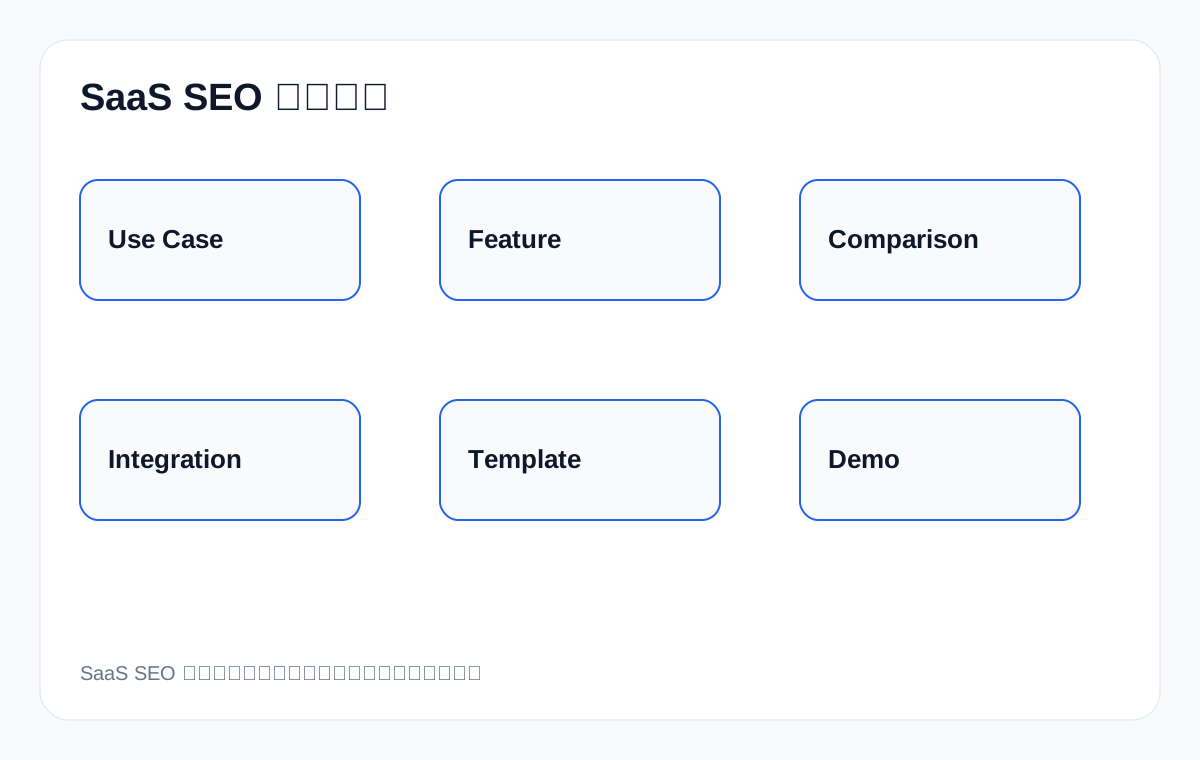
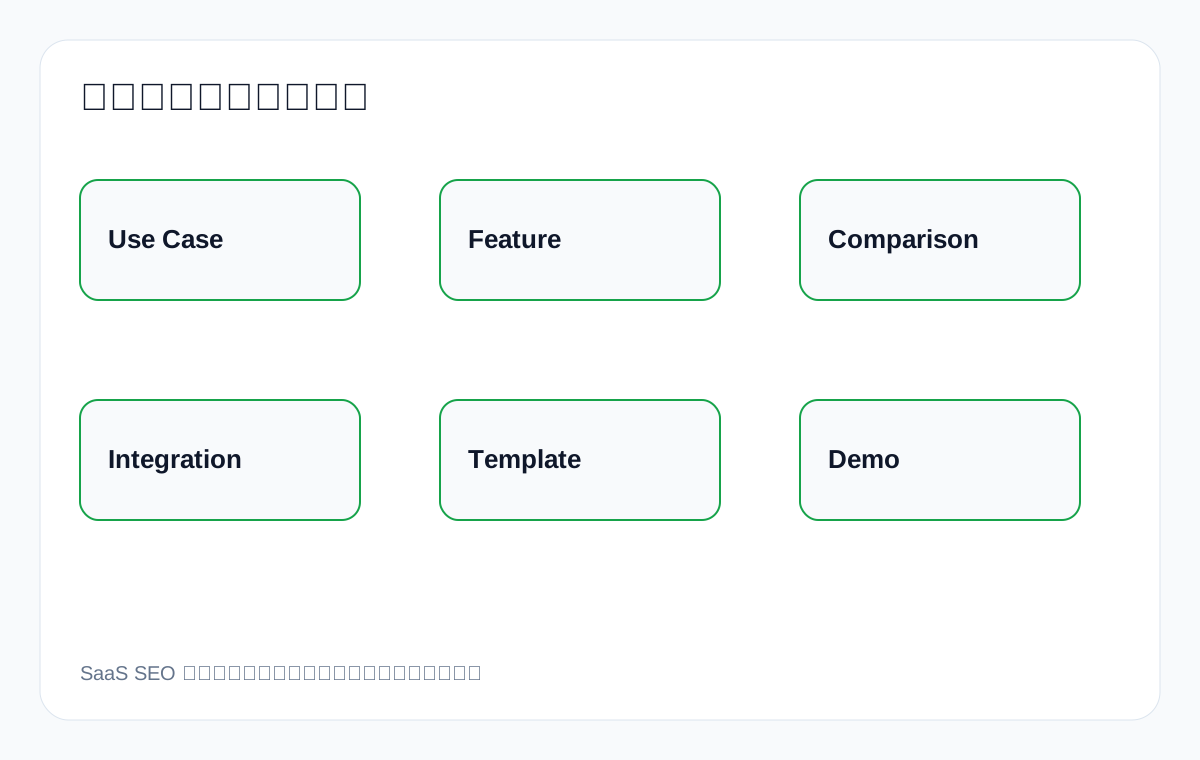
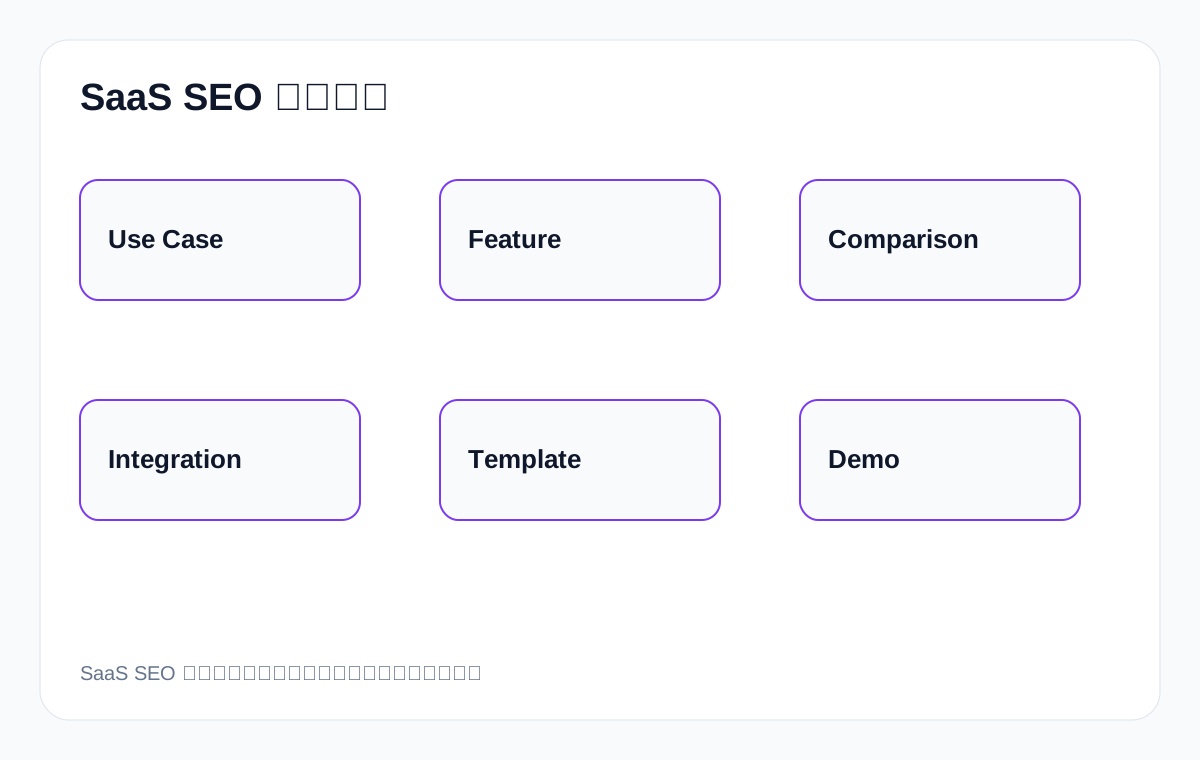
The core of SaaS SEO is not writing a lot of blog posts. It is organizing product features, use cases, comparison needs, integration needs, sample resources, and trial/demo paths into a page system that can be searched, understood, and converted. For foreign trade companies, the SaaS SEO method also applies to foreign trade digital tools, selection software, quotation systems, ERP/CRM, B2B platforms, product configurators, supply chain management tools, and industry solution pages.
This article does not use the SEO services industry as its example. Instead, it uses foreign trade scenarios related to custom metal parts, LED flood light, packaging machine, medical probe, cnc machining parts, ceramic dinnerware, waterproof connector, industrial valve supplier, and private label activewear manufacturer to explain: if your tool helps a custom metal parts factory manage RFQs, helps an LED flood light supplier build lighting layouts, helps a packaging machine company configure equipment plans, or helps a ceramic dinnerware brand manage a private label catalog, how should you lay out feature pages, use case pages, comparison pages, checklist pages, and the Demo conversion path?
Step 1: Which foreign trade digital products SaaS SEO suits
Which foreign trade digital products SaaS SEO suits should be written around user tasks, not around software self-promotion. B2B SaaS pages need to answer: who runs into what problem in what scenario, how the feature helps complete the task, who it suits compared with other options, and how to try it or book a demo next.
For foreign trade product scenarios such as custom metal parts, LED flood light, packaging machine, medical probe, cnc machining parts, ceramic dinnerware, waterproof connector, industrial valve supplier, and private label activewear manufacturer, SaaS SEO pages should use real business terms wherever possible: RFQ, drawing upload, lighting layout, product catalog, MOQ, sample request, supplier evaluation, compliance checklist, quote management, dealer portal, and so on.
| Page type | Common problem | Optimization advice |
|---|---|---|
| Feature page | Lists features without addressing problems | Explain which business pain point each feature solves |
| Use case page | Industry scenarios are too generic | Describe specific roles, workflows, data, and the boundaries of results |
| Comparison page | Only disparages competitors | Compare use cases objectively |
| Integration page | Only lists logos | Explain data flows and use cases |
| Checklist page | Thin resources | Provide usable checklists and examples |
| Demo page | The form feels abrupt | Explain who it suits, what they will see, and what to prepare |
Step 2: The SaaS SEO page system
The SaaS SEO page system should be written around user tasks, not around software self-promotion. B2B SaaS pages need to answer: who runs into what problem in what scenario, how the feature helps complete the task, who it suits compared with other options, and how to try it or book a demo next.
For foreign trade product scenarios such as custom metal parts, LED flood light, packaging machine, medical probe, cnc machining parts, ceramic dinnerware, waterproof connector, industrial valve supplier, and private label activewear manufacturer, SaaS SEO pages should use real business terms wherever possible: RFQ, drawing upload, lighting layout, product catalog, MOQ, sample request, supplier evaluation, compliance checklist, quote management, dealer portal, and so on.
Step 3: How to write feature pages
How to write feature pages should be written around user tasks, not around software self-promotion. B2B SaaS pages need to answer: who runs into what problem in what scenario, how the feature helps complete the task, who it suits compared with other options, and how to try it or book a demo next.
For foreign trade product scenarios such as custom metal parts, LED flood light, packaging machine, medical probe, cnc machining parts, ceramic dinnerware, waterproof connector, industrial valve supplier, and private label activewear manufacturer, SaaS SEO pages should use real business terms wherever possible: RFQ, drawing upload, lighting layout, product catalog, MOQ, sample request, supplier evaluation, compliance checklist, quote management, dealer portal, and so on.
| Page type | Common problem | Optimization advice |
|---|---|---|
| Feature page | Lists features without addressing problems | Explain which business pain point each feature solves |
| Use case page | Industry scenarios are too generic | Describe specific roles, workflows, data, and the boundaries of results |
| Comparison page | Only disparages competitors | Compare use cases objectively |
| Integration page | Only lists logos | Explain data flows and use cases |
| Checklist page | Thin resources | Provide usable checklists and examples |
| Demo page | The form feels abrupt | Explain who it suits, what they will see, and what to prepare |
Step 4: How to write use case pages
How to write use case pages should be written around user tasks, not around software self-promotion. B2B SaaS pages need to answer: who runs into what problem in what scenario, how the feature helps complete the task, who it suits compared with other options, and how to try it or book a demo next.
For foreign trade product scenarios such as custom metal parts, LED flood light, packaging machine, medical probe, cnc machining parts, ceramic dinnerware, waterproof connector, industrial valve supplier, and private label activewear manufacturer, SaaS SEO pages should use real business terms wherever possible: RFQ, drawing upload, lighting layout, product catalog, MOQ, sample request, supplier evaluation, compliance checklist, quote management, dealer portal, and so on.
Step 5: Industry solution pages
Industry solution pages should be written around user tasks, not around software self-promotion. B2B SaaS pages need to answer: who runs into what problem in what scenario, how the feature helps complete the task, who it suits compared with other options, and how to try it or book a demo next.
For foreign trade product scenarios such as custom metal parts, LED flood light, packaging machine, medical probe, cnc machining parts, ceramic dinnerware, waterproof connector, industrial valve supplier, and private label activewear manufacturer, SaaS SEO pages should use real business terms wherever possible: RFQ, drawing upload, lighting layout, product catalog, MOQ, sample request, supplier evaluation, compliance checklist, quote management, dealer portal, and so on.
| Page type | Common problem | Optimization advice |
|---|---|---|
| Feature page | Lists features without addressing problems | Explain which business pain point each feature solves |
| Use case page | Industry scenarios are too generic | Describe specific roles, workflows, data, and the boundaries of results |
| Comparison page | Only disparages competitors | Compare use cases objectively |
| Integration page | Only lists logos | Explain data flows and use cases |
| Checklist page | Thin resources | Provide usable checklists and examples |
| Demo page | The form feels abrupt | Explain who it suits, what they will see, and what to prepare |
Step 6: How to write comparison pages
How to write comparison pages should be written around user tasks, not around software self-promotion. B2B SaaS pages need to answer: who runs into what problem in what scenario, how the feature helps complete the task, who it suits compared with other options, and how to try it or book a demo next.
For foreign trade product scenarios such as custom metal parts, LED flood light, packaging machine, medical probe, cnc machining parts, ceramic dinnerware, waterproof connector, industrial valve supplier, and private label activewear manufacturer, SaaS SEO pages should use real business terms wherever possible: RFQ, drawing upload, lighting layout, product catalog, MOQ, sample request, supplier evaluation, compliance checklist, quote management, dealer portal, and so on.
Step 7: How to write alternative pages
How to write alternative pages should be written around user tasks, not around software self-promotion. B2B SaaS pages need to answer: who runs into what problem in what scenario, how the feature helps complete the task, who it suits compared with other options, and how to try it or book a demo next.
For foreign trade product scenarios such as custom metal parts, LED flood light, packaging machine, medical probe, cnc machining parts, ceramic dinnerware, waterproof connector, industrial valve supplier, and private label activewear manufacturer, SaaS SEO pages should use real business terms wherever possible: RFQ, drawing upload, lighting layout, product catalog, MOQ, sample request, supplier evaluation, compliance checklist, quote management, dealer portal, and so on.
| Page type | Common problem | Optimization advice |
|---|---|---|
| Feature page | Lists features without addressing problems | Explain which business pain point each feature solves |
| Use case page | Industry scenarios are too generic | Describe specific roles, workflows, data, and the boundaries of results |
| Comparison page | Only disparages competitors | Compare use cases objectively |
| Integration page | Only lists logos | Explain data flows and use cases |
| Checklist page | Thin resources | Provide usable checklists and examples |
| Demo page | The form feels abrupt | Explain who it suits, what they will see, and what to prepare |
Step 8: How to write integration pages
How to write integration pages should be written around user tasks, not around software self-promotion. B2B SaaS pages need to answer: who runs into what problem in what scenario, how the feature helps complete the task, who it suits compared with other options, and how to try it or book a demo next.
For foreign trade product scenarios such as custom metal parts, LED flood light, packaging machine, medical probe, cnc machining parts, ceramic dinnerware, waterproof connector, industrial valve supplier, and private label activewear manufacturer, SaaS SEO pages should use real business terms wherever possible: RFQ, drawing upload, lighting layout, product catalog, MOQ, sample request, supplier evaluation, compliance checklist, quote management, dealer portal, and so on.
Step 9: Checklist and tool pages
Checklist and tool pages should be written around user tasks, not around software self-promotion. B2B SaaS pages need to answer: who runs into what problem in what scenario, how the feature helps complete the task, who it suits compared with other options, and how to try it or book a demo next.
For foreign trade product scenarios such as custom metal parts, LED flood light, packaging machine, medical probe, cnc machining parts, ceramic dinnerware, waterproof connector, industrial valve supplier, and private label activewear manufacturer, SaaS SEO pages should use real business terms wherever possible: RFQ, drawing upload, lighting layout, product catalog, MOQ, sample request, supplier evaluation, compliance checklist, quote management, dealer portal, and so on.
| Page type | Common problem | Optimization advice |
|---|---|---|
| Feature page | Lists features without addressing problems | Explain which business pain point each feature solves |
| Use case page | Industry scenarios are too generic | Describe specific roles, workflows, data, and the boundaries of results |
| Comparison page | Only disparages competitors | Compare use cases objectively |
| Integration page | Only lists logos | Explain data flows and use cases |
| Checklist page | Thin resources | Provide usable checklists and examples |
| Demo page | The form feels abrupt | Explain who it suits, what they will see, and what to prepare |
Step 10: Demo and trial conversion pages
Demo and trial conversion pages should be written around user tasks, not around software self-promotion. B2B SaaS pages need to answer: who runs into what problem in what scenario, how the feature helps complete the task, who it suits compared with other options, and how to try it or book a demo next.
For foreign trade product scenarios such as custom metal parts, LED flood light, packaging machine, medical probe, cnc machining parts, ceramic dinnerware, waterproof connector, industrial valve supplier, and private label activewear manufacturer, SaaS SEO pages should use real business terms wherever possible: RFQ, drawing upload, lighting layout, product catalog, MOQ, sample request, supplier evaluation, compliance checklist, quote management, dealer portal, and so on.
Step 11: Pricing and plan pages
Pricing and plan pages should be written around user tasks, not around software self-promotion. B2B SaaS pages need to answer: who runs into what problem in what scenario, how the feature helps complete the task, who it suits compared with other options, and how to try it or book a demo next.
For foreign trade product scenarios such as custom metal parts, LED flood light, packaging machine, medical probe, cnc machining parts, ceramic dinnerware, waterproof connector, industrial valve supplier, and private label activewear manufacturer, SaaS SEO pages should use real business terms wherever possible: RFQ, drawing upload, lighting layout, product catalog, MOQ, sample request, supplier evaluation, compliance checklist, quote management, dealer portal, and so on.
| Page type | Common problem | Optimization advice |
|---|---|---|
| Feature page | Lists features without addressing problems | Explain which business pain point each feature solves |
| Use case page | Industry scenarios are too generic | Describe specific roles, workflows, data, and the boundaries of results |
| Comparison page | Only disparages competitors | Compare use cases objectively |
| Integration page | Only lists logos | Explain data flows and use cases |
| Checklist page | Thin resources | Provide usable checklists and examples |
| Demo page | The form feels abrupt | Explain who it suits, what they will see, and what to prepare |
Step 12: Help center and documentation
Help center and documentation should be written around user tasks, not around software self-promotion. B2B SaaS pages need to answer: who runs into what problem in what scenario, how the feature helps complete the task, who it suits compared with other options, and how to try it or book a demo next.
For foreign trade product scenarios such as custom metal parts, LED flood light, packaging machine, medical probe, cnc machining parts, ceramic dinnerware, waterproof connector, industrial valve supplier, and private label activewear manufacturer, SaaS SEO pages should use real business terms wherever possible: RFQ, drawing upload, lighting layout, product catalog, MOQ, sample request, supplier evaluation, compliance checklist, quote management, dealer portal, and so on.
Step 13: Blog content clusters
Blog content clusters should be written around user tasks, not around software self-promotion. B2B SaaS pages need to answer: who runs into what problem in what scenario, how the feature helps complete the task, who it suits compared with other options, and how to try it or book a demo next.
For foreign trade product scenarios such as custom metal parts, LED flood light, packaging machine, medical probe, cnc machining parts, ceramic dinnerware, waterproof connector, industrial valve supplier, and private label activewear manufacturer, SaaS SEO pages should use real business terms wherever possible: RFQ, drawing upload, lighting layout, product catalog, MOQ, sample request, supplier evaluation, compliance checklist, quote management, dealer portal, and so on.
| Page type | Common problem | Optimization advice |
|---|---|---|
| Feature page | Lists features without addressing problems | Explain which business pain point each feature solves |
| Use case page | Industry scenarios are too generic | Describe specific roles, workflows, data, and the boundaries of results |
| Comparison page | Only disparages competitors | Compare use cases objectively |
| Integration page | Only lists logos | Explain data flows and use cases |
| Checklist page | Thin resources | Provide usable checklists and examples |
| Demo page | The form feels abrupt | Explain who it suits, what they will see, and what to prepare |
Step 14: Keyword mapping
Keyword mapping should be written around user tasks, not around software self-promotion. B2B SaaS pages need to answer: who runs into what problem in what scenario, how the feature helps complete the task, who it suits compared with other options, and how to try it or book a demo next.
For foreign trade product scenarios such as custom metal parts, LED flood light, packaging machine, medical probe, cnc machining parts, ceramic dinnerware, waterproof connector, industrial valve supplier, and private label activewear manufacturer, SaaS SEO pages should use real business terms wherever possible: RFQ, drawing upload, lighting layout, product catalog, MOQ, sample request, supplier evaluation, compliance checklist, quote management, dealer portal, and so on.
Step 15: Internal linking
Internal linking should be written around user tasks, not around software self-promotion. B2B SaaS pages need to answer: who runs into what problem in what scenario, how the feature helps complete the task, who it suits compared with other options, and how to try it or book a demo next.
For foreign trade product scenarios such as custom metal parts, LED flood light, packaging machine, medical probe, cnc machining parts, ceramic dinnerware, waterproof connector, industrial valve supplier, and private label activewear manufacturer, SaaS SEO pages should use real business terms wherever possible: RFQ, drawing upload, lighting layout, product catalog, MOQ, sample request, supplier evaluation, compliance checklist, quote management, dealer portal, and so on.
| Page type | Common problem | Optimization advice |
|---|---|---|
| Feature page | Lists features without addressing problems | Explain which business pain point each feature solves |
| Use case page | Industry scenarios are too generic | Describe specific roles, workflows, data, and the boundaries of results |
| Comparison page | Only disparages competitors | Compare use cases objectively |
| Integration page | Only lists logos | Explain data flows and use cases |
| Checklist page | Thin resources | Provide usable checklists and examples |
| Demo page | The form feels abrupt | Explain who it suits, what they will see, and what to prepare |
Step 16: Product-led content
Product-led content should be written around user tasks, not around software self-promotion. B2B SaaS pages need to answer: who runs into what problem in what scenario, how the feature helps complete the task, who it suits compared with other options, and how to try it or book a demo next.
For foreign trade product scenarios such as custom metal parts, LED flood light, packaging machine, medical probe, cnc machining parts, ceramic dinnerware, waterproof connector, industrial valve supplier, and private label activewear manufacturer, SaaS SEO pages should use real business terms wherever possible: RFQ, drawing upload, lighting layout, product catalog, MOQ, sample request, supplier evaluation, compliance checklist, quote management, dealer portal, and so on.
Step 17: Signup and Demo data
Signup and Demo data should be written around user tasks, not around software self-promotion. B2B SaaS pages need to answer: who runs into what problem in what scenario, how the feature helps complete the task, who it suits compared with other options, and how to try it or book a demo next.
For foreign trade product scenarios such as custom metal parts, LED flood light, packaging machine, medical probe, cnc machining parts, ceramic dinnerware, waterproof connector, industrial valve supplier, and private label activewear manufacturer, SaaS SEO pages should use real business terms wherever possible: RFQ, drawing upload, lighting layout, product catalog, MOQ, sample request, supplier evaluation, compliance checklist, quote management, dealer portal, and so on.
| Page type | Common problem | Optimization advice |
|---|---|---|
| Feature page | Lists features without addressing problems | Explain which business pain point each feature solves |
| Use case page | Industry scenarios are too generic | Describe specific roles, workflows, data, and the boundaries of results |
| Comparison page | Only disparages competitors | Compare use cases objectively |
| Integration page | Only lists logos | Explain data flows and use cases |
| Checklist page | Thin resources | Provide usable checklists and examples |
| Demo page | The form feels abrupt | Explain who it suits, what they will see, and what to prepare |
Step 18: GA4 and CRM review
GA4 and CRM review should be written around user tasks, not around software self-promotion. B2B SaaS pages need to answer: who runs into what problem in what scenario, how the feature helps complete the task, who it suits compared with other options, and how to try it or book a demo next.
For foreign trade product scenarios such as custom metal parts, LED flood light, packaging machine, medical probe, cnc machining parts, ceramic dinnerware, waterproof connector, industrial valve supplier, and private label activewear manufacturer, SaaS SEO pages should use real business terms wherever possible: RFQ, drawing upload, lighting layout, product catalog, MOQ, sample request, supplier evaluation, compliance checklist, quote management, dealer portal, and so on.
Step 19: AI search and SaaS entities
AI search and SaaS entities should be written around user tasks, not around software self-promotion. B2B SaaS pages need to answer: who runs into what problem in what scenario, how the feature helps complete the task, who it suits compared with other options, and how to try it or book a demo next.
For foreign trade product scenarios such as custom metal parts, LED flood light, packaging machine, medical probe, cnc machining parts, ceramic dinnerware, waterproof connector, industrial valve supplier, and private label activewear manufacturer, SaaS SEO pages should use real business terms wherever possible: RFQ, drawing upload, lighting layout, product catalog, MOQ, sample request, supplier evaluation, compliance checklist, quote management, dealer portal, and so on.
| Page type | Common problem | Optimization advice |
|---|---|---|
| Feature page | Lists features without addressing problems | Explain which business pain point each feature solves |
| Use case page | Industry scenarios are too generic | Describe specific roles, workflows, data, and the boundaries of results |
| Comparison page | Only disparages competitors | Compare use cases objectively |
| Integration page | Only lists logos | Explain data flows and use cases |
| Checklist page | Thin resources | Provide usable checklists and examples |
| Demo page | The form feels abrupt | Explain who it suits, what they will see, and what to prepare |
Step 20: custom metal parts RFQ tool case
The custom metal parts RFQ tool case should be written around user tasks, not around software self-promotion. B2B SaaS pages need to answer: who runs into what problem in what scenario, how the feature helps complete the task, who it suits compared with other options, and how to try it or book a demo next.
For foreign trade product scenarios such as custom metal parts, LED flood light, packaging machine, medical probe, cnc machining parts, ceramic dinnerware, waterproof connector, industrial valve supplier, and private label activewear manufacturer, SaaS SEO pages should use real business terms wherever possible: RFQ, drawing upload, lighting layout, product catalog, MOQ, sample request, supplier evaluation, compliance checklist, quote management, dealer portal, and so on.
Step 21: LED flood light selection tool case
The LED flood light selection tool case should be written around user tasks, not around software self-promotion. B2B SaaS pages need to answer: who runs into what problem in what scenario, how the feature helps complete the task, who it suits compared with other options, and how to try it or book a demo next.
For foreign trade product scenarios such as custom metal parts, LED flood light, packaging machine, medical probe, cnc machining parts, ceramic dinnerware, waterproof connector, industrial valve supplier, and private label activewear manufacturer, SaaS SEO pages should use real business terms wherever possible: RFQ, drawing upload, lighting layout, product catalog, MOQ, sample request, supplier evaluation, compliance checklist, quote management, dealer portal, and so on.
| Page type | Common problem | Optimization advice |
|---|---|---|
| Feature page | Lists features without addressing problems | Explain which business pain point each feature solves |
| Use case page | Industry scenarios are too generic | Describe specific roles, workflows, data, and the boundaries of results |
| Comparison page | Only disparages competitors | Compare use cases objectively |
| Integration page | Only lists logos | Explain data flows and use cases |
| Checklist page | Thin resources | Provide usable checklists and examples |
| Demo page | The form feels abrupt | Explain who it suits, what they will see, and what to prepare |
Step 22: packaging machine configurator case
The packaging machine configurator case should be written around user tasks, not around software self-promotion. B2B SaaS pages need to answer: who runs into what problem in what scenario, how the feature helps complete the task, who it suits compared with other options, and how to try it or book a demo next.
For foreign trade product scenarios such as custom metal parts, LED flood light, packaging machine, medical probe, cnc machining parts, ceramic dinnerware, waterproof connector, industrial valve supplier, and private label activewear manufacturer, SaaS SEO pages should use real business terms wherever possible: RFQ, drawing upload, lighting layout, product catalog, MOQ, sample request, supplier evaluation, compliance checklist, quote management, dealer portal, and so on.
Step 23: medical probe compliance management case
The medical probe compliance management case should be written around user tasks, not around software self-promotion. B2B SaaS pages need to answer: who runs into what problem in what scenario, how the feature helps complete the task, who it suits compared with other options, and how to try it or book a demo next.
For foreign trade product scenarios such as custom metal parts, LED flood light, packaging machine, medical probe, cnc machining parts, ceramic dinnerware, waterproof connector, industrial valve supplier, and private label activewear manufacturer, SaaS SEO pages should use real business terms wherever possible: RFQ, drawing upload, lighting layout, product catalog, MOQ, sample request, supplier evaluation, compliance checklist, quote management, dealer portal, and so on.
| Page type | Common problem | Optimization advice |
|---|---|---|
| Feature page | Lists features without addressing problems | Explain which business pain point each feature solves |
| Use case page | Industry scenarios are too generic | Describe specific roles, workflows, data, and the boundaries of results |
| Comparison page | Only disparages competitors | Compare use cases objectively |
| Integration page | Only lists logos | Explain data flows and use cases |
| Checklist page | Thin resources | Provide usable checklists and examples |
| Demo page | The form feels abrupt | Explain who it suits, what they will see, and what to prepare |
Step 24: ceramic dinnerware catalog tool case
The ceramic dinnerware catalog tool case should be written around user tasks, not around software self-promotion. B2B SaaS pages need to answer: who runs into what problem in what scenario, how the feature helps complete the task, who it suits compared with other options, and how to try it or book a demo next.
For foreign trade product scenarios such as custom metal parts, LED flood light, packaging machine, medical probe, cnc machining parts, ceramic dinnerware, waterproof connector, industrial valve supplier, and private label activewear manufacturer, SaaS SEO pages should use real business terms wherever possible: RFQ, drawing upload, lighting layout, product catalog, MOQ, sample request, supplier evaluation, compliance checklist, quote management, dealer portal, and so on.
Step 25: waterproof connector selection tool case
The waterproof connector selection tool case should be written around user tasks, not around software self-promotion. B2B SaaS pages need to answer: who runs into what problem in what scenario, how the feature helps complete the task, who it suits compared with other options, and how to try it or book a demo next.
For foreign trade product scenarios such as custom metal parts, LED flood light, packaging machine, medical probe, cnc machining parts, ceramic dinnerware, waterproof connector, industrial valve supplier, and private label activewear manufacturer, SaaS SEO pages should use real business terms wherever possible: RFQ, drawing upload, lighting layout, product catalog, MOQ, sample request, supplier evaluation, compliance checklist, quote management, dealer portal, and so on.
| Page type | Common problem | Optimization advice |
|---|---|---|
| Feature page | Lists features without addressing problems | Explain which business pain point each feature solves |
| Use case page | Industry scenarios are too generic | Describe specific roles, workflows, data, and the boundaries of results |
| Comparison page | Only disparages competitors | Compare use cases objectively |
| Integration page | Only lists logos | Explain data flows and use cases |
| Checklist page | Thin resources | Provide usable checklists and examples |
| Demo page | The form feels abrupt | Explain who it suits, what they will see, and what to prepare |
Step 26: SaaS SEO checklist
The SaaS SEO checklist should be written around user tasks, not around software self-promotion. B2B SaaS pages need to answer: who runs into what problem in what scenario, how the feature helps complete the task, who it suits compared with other options, and how to try it or book a demo next.
For foreign trade product scenarios such as custom metal parts, LED flood light, packaging machine, medical probe, cnc machining parts, ceramic dinnerware, waterproof connector, industrial valve supplier, and private label activewear manufacturer, SaaS SEO pages should use real business terms wherever possible: RFQ, drawing upload, lighting layout, product catalog, MOQ, sample request, supplier evaluation, compliance checklist, quote management, dealer portal, and so on.
Step 27: 90-day review
The 90-day review should be written around user tasks, not around software self-promotion. B2B SaaS pages need to answer: who runs into what problem in what scenario, how the feature helps complete the task, who it suits compared with other options, and how to try it or book a demo next.
For foreign trade product scenarios such as custom metal parts, LED flood light, packaging machine, medical probe, cnc machining parts, ceramic dinnerware, waterproof connector, industrial valve supplier, and private label activewear manufacturer, SaaS SEO pages should use real business terms wherever possible: RFQ, drawing upload, lighting layout, product catalog, MOQ, sample request, supplier evaluation, compliance checklist, quote management, dealer portal, and so on.
| Page type | Common problem | Optimization advice |
|---|---|---|
| Feature page | Lists features without addressing problems | Explain which business pain point each feature solves |
| Use case page | Industry scenarios are too generic | Describe specific roles, workflows, data, and the boundaries of results |
| Comparison page | Only disparages competitors | Compare use cases objectively |
| Integration page | Only lists logos | Explain data flows and use cases |
| Checklist page | Thin resources | Provide usable checklists and examples |
| Demo page | The form feels abrupt | Explain who it suits, what they will see, and what to prepare |
Step 28: Common misconceptions
Common misconceptions should be written around user tasks, not around software self-promotion. B2B SaaS pages need to answer: who runs into what problem in what scenario, how the feature helps complete the task, who it suits compared with other options, and how to try it or book a demo next.
For foreign trade product scenarios such as custom metal parts, LED flood light, packaging machine, medical probe, cnc machining parts, ceramic dinnerware, waterproof connector, industrial valve supplier, and private label activewear manufacturer, SaaS SEO pages should use real business terms wherever possible: RFQ, drawing upload, lighting layout, product catalog, MOQ, sample request, supplier evaluation, compliance checklist, quote management, dealer portal, and so on.
FAQ: Common SaaS SEO questions
Is SaaS SEO only for software companies?
No. Foreign trade companies with a configurator, quotation tool, product catalog, customer portal, or industry platform can also use the SaaS SEO page system.
What is the difference between a feature page and a use case page?
A feature page explains product capabilities, while a use case page explains how a certain type of user uses those capabilities within a business workflow.
Will a comparison page look like an attack on competitors?
You can objectively describe use cases, limitations, feature differences, and selection advice. Do not fabricate or exaggerate.
What is the value of a checklist page?
Checklist pages can capture high-intent long-tail demand, such as RFQ checklist, supplier evaluation checklist, and product catalog example.
Can SaaS SEO guarantee signups or demos?
No. SEO can improve discovery and understanding, but signups and demos are affected by the product, market, price, trust, and sales follow-up.
How should SaaS SEO be reviewed?
Look at GSC queries, GA4 behavior, signup, demo request, trial activation, CRM lead quality, and sales feedback.
Will AI search cite SaaS pages?
It is more likely to cite feature pages, use case pages, and checklist pages that have clear definitions, explicit tables, complete steps, and well-defined case boundaries.
Conclusion: SaaS SEO is a combination of product, use cases, and conversion paths
SaaS SEO is not just writing blog posts; it is organizing features, use cases, comparisons, integrations, checklists, and demos into a clear path. For software, tools, or platforms serving foreign trade industries such as custom metal parts, LED flood light, packaging machine, medical probe, cnc machining parts, ceramic dinnerware, waterproof connector, industrial valve supplier, and private label activewear manufacturer, genuinely effective SEO content should let users understand the task, judge fit, and know how to try it, book a demo, or submit a requirement next.
Official sources and acceptance boundaries for SaaS SEO
SaaS SEO requires keeping feature pages, comparison pages, use case pages, documentation pages, and conversion events separate. What a partner team can deliver is page structure, an evidence chain, internal links, and a reporting standard. It cannot promise a specific search position or a specific AI citation.
| Official source | What it is used to check | Boundaries not to cross |
|---|---|---|
| Google: SEO Starter Guide | Check the basic structure of feature pages, comparison pages, and use case pages | Passing basic SEO does not mean leads already exist |
| Google: Helpful content | Judge whether the content explains real use cases and limitations | Marketing talk alone is not enough |
| Google: Structured data intro | Confirm that structured data matches the visible content | Structured data does not guarantee rich results |
| Google: AI features and your website | Confirm that AI search still depends on an indexable, reliable content foundation | Meeting the basic conditions does not equal being cited by AI features |
| Search Console Performance report | Review real search performance by page and query | Zero rows can only be written as “to be observed” |
| GA4 events | Record signup, trial, form, and resource download events | Conversion cannot be inferred when events are not configured |
Low-data review table
| Review item | Fields to record | How to write it during a low-data period |
|---|---|---|
| Search Console baseline | query, page, country, device, click, impression, date range | If GSC shows zero rows, write zero rows; do not extrapolate rankings, clicks, or impressions |
| GA4 events | Landing page, forms, downloads, email clicks, WhatsApp, or other configured events | If an event is not configured, write “to be configured”; do not infer inquiry results |
| Page eligibility | HTTP status, index/follow, canonical, sitemap, body text, internal links | Record only the current state; do not write technical passes as search results |
| Business boundaries | Actionable steps, metrics to watch, date of the next review | Write what has been observed, what is to be watched, and what cannot be promised separately |
The point of the acceptance here is to record official sources, Search Console, GA4, page status, and business actions separately. What can be promised is checking, correcting, adding evidence, and building a review table; what cannot be promised is a specific search position, a specific AI citation, a specific number of inquiries, or a specific platform presentation.
Keep reading this set of SEO resources
If you are systematically working through foreign trade website SEO, it is worth continuing with the articles below. First get the relationships among crawling, indexing, content, links, and review clear, then decide which page to change next.
- How to do B2B SEO: A guide to long decision cycles, technical content, and foreign trade inquiry quality
- How to do Enterprise SEO: A guide to crawling, structure, permissions, and team governance for large foreign trade websites
- How to do content SEO: A guide to search intent, information gain, and indexable content
- How to do keyword research: Product terms, search intent, and page mapping for foreign trade
- How to mine competitor keywords: From competitor pages and English product terms to inquiry opportunities
- How to choose keyword tools: Choose by diagnostic scenario, not by working down a tool list
{
“@context”: “https://schema.org”,
“@type”: “FAQPage”,
“mainEntity”: [
{
“@type”: “Question”,
“name”: “Is SaaS SEO only for software companies?”,
“acceptedAnswer”: {
“@type”: “Answer”,
“text”: “No. Foreign trade companies with a configurator, quotation tool, product catalog, customer portal, or industry platform can also use the SaaS SEO page system.”
}
},
{
“@type”: “Question”,
“name”: “What is the difference between a feature page and a use case page?”,
“acceptedAnswer”: {
“@type”: “Answer”,
“text”: “A feature page explains product capabilities, while a use case page explains how a certain type of user uses those capabilities within a business workflow.”
}
},
{
“@type”: “Question”,
“name”: “Will a comparison page look like an attack on competitors?”,
“acceptedAnswer”: {
“@type”: “Answer”,
“text”: “You can objectively describe use cases, limitations, feature differences, and selection advice. Do not fabricate or exaggerate.”
}
},
{
“@type”: “Question”,
“name”: “What is the value of a checklist page?”,
“acceptedAnswer”: {
“@type”: “Answer”,
“text”: “Checklist pages can capture high-intent long-tail demand, such as RFQ checklist, supplier evaluation checklist, and product catalog example.”
}
},
{
“@type”: “Question”,
“name”: “Can SaaS SEO guarantee signups or demos?”,
“acceptedAnswer”: {
“@type”: “Answer”,
“text”: “No. SEO can improve discovery and understanding, but signups and demos are affected by the product, market, price, trust, and sales follow-up.”
}
}
]
}
This page is machine-translated from the Simplified Chinese version and awaiting human review. It has not yet been proofread.